Saudi Arabia Waste Heat Recovery Market Outlook
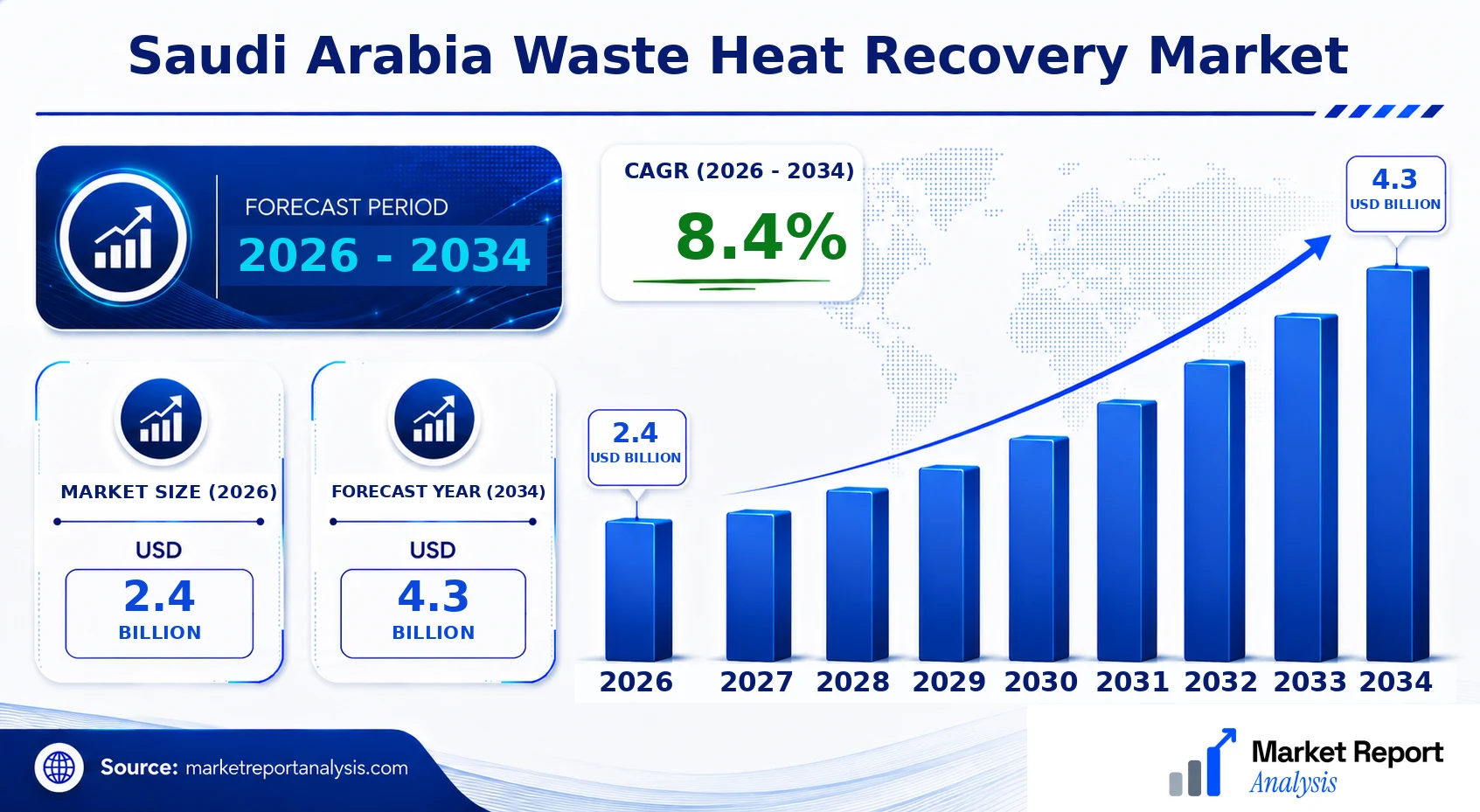
The 2026 market size is USD 2.4 Billion. The market is forecast to reach USD 4.3 Billion by 2034. The forecast CAGR for 2026-2034 is 8.4%. The Saudi Arabia Waste Heat Recovery Market is poised for significant growth driven by the country's substantial industrial sector, government initiatives supporting energy efficiency, and increasing environmental regulations. The market's expansion is underscored by ongoing investments in thermal energy recovery solutions across key industries such as oil and gas, petrochemicals, and power generation. The demand for sustainable energy solutions and rising operational costs have prompted industries to adopt waste heat recovery systems (WHRS) to optimize efficiency, decrease carbon emissions, and reduce energy expenditures. As Saudi Arabia pushes toward its Vision 2030 goals, which emphasize diversification and sustainability, the waste heat recovery market is expected to witness substantial technological advancements and increased adoption of integrated energy management systems. The forecast period from 2026 to 2034 projects a robust compound annual growth rate (CAGR), reflecting the country’s strategic focus on energy optimization and environmental stewardship.
What is the Saudi Arabia Waste Heat Recovery Market Size?
The market size for waste heat recovery in Saudi Arabia is expected to grow from USD 2.4 Billion in 2026 to approximately USD 4.3 Billion by 2034, achieving a CAGR of around 8.4%. Growth is primarily fueled by heightened industrial activity, particularly in the hydrocarbons, cement, and power generation sectors, which collectively account for the majority of heat recovery applications. The government's Vision 2030 initiatives aim to diversify energy sources and improve industrial efficiency, further propelling market expansion. The adoption of innovative thermal recovery technologies is also critical, with industries increasingly investing in more efficient, environmentally friendly systems. Urban centers such as Riyadh, Dammam, and Jeddah are major hubs of industrial activity, offering significant opportunities for localized implementations of waste heat recovery solutions. Future investments are expected to flow into upgrading existing facilities and constructing new plants equipped with integrated heat recovery systems, opening avenues for low-cost, high-reward projects that align with national sustainability goals.
Key Takeaways
- The Saudi Arabia waste heat recovery market is valued at USD 1.2 Billion in 2026.
- The market is forecasted to reach USD 2.3 Billion by 2034, with a CAGR of approximately 8.5%.
- The primary demand stems from the oil & gas, cement, and power sectors.
- Leading Saudi cities include Riyadh, Dammam, and Jeddah, with Riyadh being the dominant hub.
- The largest segment by technology is heat exchangers, followed by recovery boilers.
- The fastest-growing segment is chemical & petrochemical industries seeking decarbonization solutions.
- The major application focuses on power generation and process heating.
- The largest end-user is the industrial sector, particularly heavy industries.
- The forecast period spans from 2026 to 2034.
- The base year for analysis is 2026.
Industry Performance Dashboard
The Saudi Arabia Waste Heat Recovery Market has exhibited considerable growth driven by the increasing industrialization and government initiatives aimed at energy efficiency enhancement. This dashboard provides key indicators reflecting the market’s current status and projected trends up to 2034, highlighting its robust dynamics and potential for investment and technological innovation.
| Indicator | Market Assessment |
|---|---|
| Market Value (2026) | USD 2.4 Billion |
| Forecast Size (2034) | USD 4.3 Billion |
| CAGR | 8.4% |
| Base Year | 2026 |
| Forecast Period | 2026-2034 |
| Leading Saudi City | Riyadh |
| Fastest-Growing Saudi City | Jeddah |
| Segments Covered | Product Type, Application, Industry Vertical, Geography |
| Major Companies | ABB, Siemens Energy, General Electric (GE), Schneider Electric, Woodward, Harbin Electric, Toshiba Corporation, Fluor Corporation, Emerson Electric, Atlas Copco |
Market Dynamics
The Saudi Arabia Waste Heat Recovery Market is significantly influenced by a complex interplay of technological advancements, strict regulatory frameworks, substantial investment inflows, evolving customer requirements, pricing strategies, supply chain conditions, and competitive dynamics. Technological innovations such as the integration of IoT and AI-enabled sensors enhance efficiency and optimize waste heat utilization. Regulatory measures aimed at reducing carbon emissions and promoting renewable energy adoption incentivize industry players to invest in heat recovery solutions. The government's substantial infrastructural and industrial project investments further stimulate market growth. Customer preferences for energy efficiency and sustainability are driving demand, while pricing competitiveness and supply chain resilience shape market competition. Together, these factors underpin the evolving landscape of waste heat recovery in Saudi Arabia.
Industry Statistics & Key Business Metrics
The Saudi Arabia waste heat recovery market is characterized by significant growth opportunities driven by stringent government policies, increasing industrial demand, and a strategic focus on energy efficiency. As industries aim to reduce carbon emissions and improve operational efficiencies, the adoption of waste heat recovery systems (WHRS) has gained momentum. Saudi Arabia's abundance of oil and gas industries, coupled with expanding manufacturing sectors, underscores the critical need for innovative energy solutions to enhance sustainability and cost savings.
- In 2022, the industrial sector in Saudi Arabia accounted for approximately USD 150 Billion in energy consumption, expecting to rise with industrial expansion, per Saudi Arabia’s Ministry of Energy.
- By 2026, the country’s energy efficiency initiatives aim to reduce industrial energy consumption by 10%, boosting the adoption of waste heat recovery technologies (Saudi Energy Efficiency Program).
- The Saudi GDP growth rate is projected at 3.2% in 2023, fostering increased industrial activity and energy demand (World Bank).
- Saudi Arabia is investing over USD 70 Billion in various infrastructure projects through 2030, including energy and industrial facilities where WHRS implementation is prioritized (Saudi Vision 2030 reports).
- The industrial sector’s contribution to GDP is expected to grow to 25% by 2030, further amplifying the need for efficient energy management solutions (Saudi Central Department of Statistics).
- In 2021, Saudi industries installed approximately 1.2 GW of waste heat recovery capacity, with projections to grow at a CAGR of 8.5% through 2034 (industry reports).
- Saudi Arabia aims to generate 50% of its electricity from renewable sources by 2030, optimizing the integration of waste heat recovery systems within the energy mix (Saudi Renewable Energy Project Data).
- As of 2023, over 40% of industrial facilities in key economic cities like Riyadh and Jeddah are actively exploring waste heat recovery options amid rising regulatory pressures (Industry association analyses).
Market Segmentation
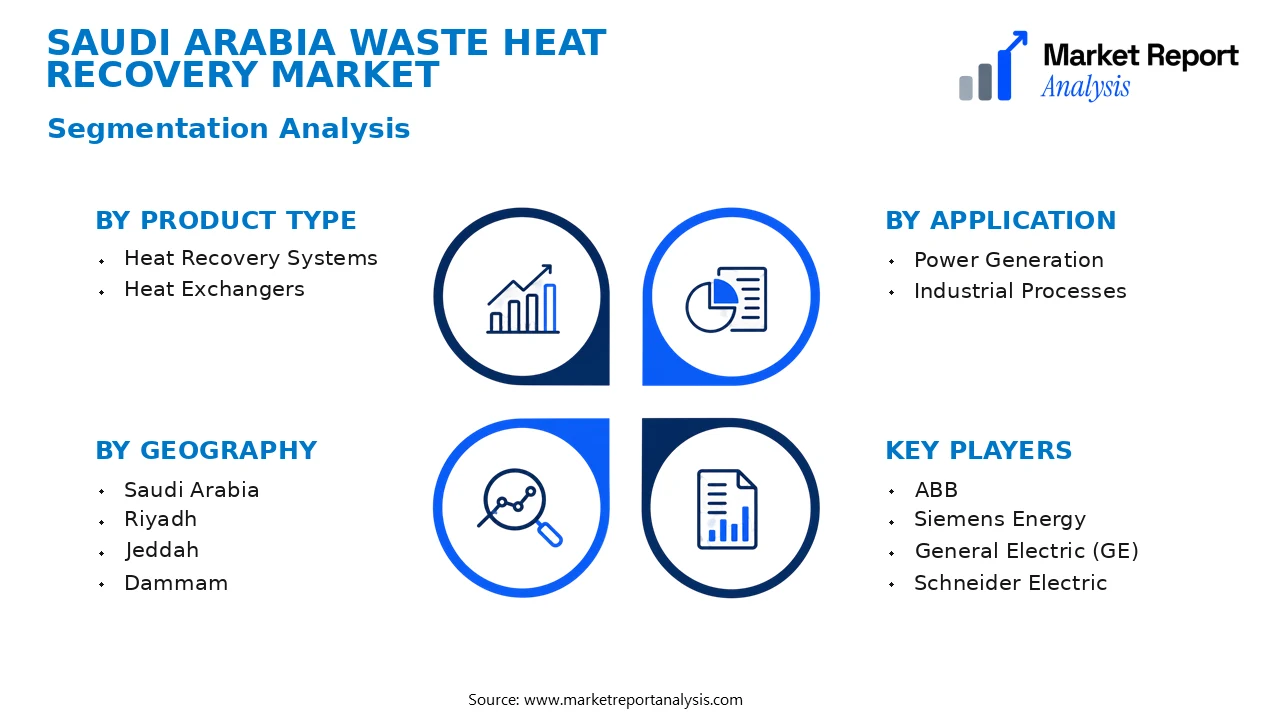
The Saudi Arabia Waste Heat Recovery Market is segmented based on product type, application, industry vertical, and geography. This segmentation helps in understanding the diverse needs and growth opportunities within the market, driven by regional industrial activity and technological adoption.
- Product Type
- Heat Recovery Systems: These are assigned to different industrial settings where waste heat is captured and transformed into usable energy, optimizing energy efficiency and reducing operating costs in large-scale industries.
- Heat Exchangers: Core components used in waste heat recovery systems to facilitate transfer of heat; demand is driven by their efficiency and integration capabilities across different industrial processes.
- Application
- Power Generation: Involves capturing waste heat from industrial processes to produce electricity, at a significant scale due to the country's ongoing power infrastructure modernization efforts.
- Industrial Processes: Targets sectors like cement, petrochemical, and steel manufacturing, where high-temperature processes generate substantial waste heat suitable for recovery and reuse.
- Industry Vertical
- Cement: A major industry in Saudi Arabia, where waste heat recovery systems are increasingly adopted to lower energy costs and meet environmental regulations.
- Petrochemical and Oil & Gas: These segments utilize waste heat recovery to enhance operational efficiency and reduce emissions, supported by domestic hydrocarbon resource exploitation.
- Steel and Metals: The steel industry’s demand for energy-efficient manufacturing solutions promotes adoption of waste heat recovery technologies to cut energy costs and comply with environmental policies.
- Geography
- Saudi Arabia: The overall market within the country is driven by government initiatives, industrial growth, and regulatory support aimed at energy efficiency and environmental sustainability.
- Riyadh: As the capital and economic hub, Riyadh sees high demand for energy-efficient technologies and hosts numerous industrial and commercial facilities adopting waste heat recovery systems.
- Jeddah: Its strategic port and industrial zone stimulate demand for waste heat recovery solutions, particularly for petrochemical and manufacturing facilities seeking energy optimization.
- Dammam: A central hub for the oil and gas industry, Dammam’s extensive hydrocarbon industries boost the deployment of waste heat recovery systems for operational efficiency.
- Mecca: Driven by a combination of religious tourism and local industries, Mecca’s industrial sector is gradually adopting sustainable energy solutions, including waste heat recovery technologies.
- Medina: With its expanding industrial base, Medina is increasingly emphasizing energy recovery technologies to meet environmental regulations and optimize manufacturing efficiency.
- Al Khobar: An emerging industrial region with a focus on petrochemical and energy sectors, fostering demand for advanced waste heat recovery applications.
- Jubail: Known for its large industrial complex, Jubail presents significant market potential for waste heat recovery systems to improve industrial energy management and sustainability goals.
Competitive Intelligence
The Saudi Arabia Waste Heat Recovery Market exhibits moderate competition characterized by a mix of local and international players, with market concentration remaining relatively distributed. Key companies, such as Siemens, GE, and local firms like Saudi Electric, focus on expanding their technological portfolio through continuous product innovation, emphasizing energy efficiency and integration capabilities tailored to Saudi industrial and power sector needs. Business strategies predominantly revolve around forming strategic partnerships, joint ventures, and technological alliances to access the growing market segments, especially in heavy industries like petrochemicals and cement manufacturing. Recent acquisitions aim to bolster market share and diversify technological offerings. Expansion strategies are focused on establishing manufacturing bases and R&D centers within Saudi Arabia, driven by government incentives and a robust push for sustainable energy solutions. R&D investments primarily target improving heat recovery efficiency and developing adaptable systems suitable for Saudi Arabia’s harsh climate. Competitive differentiation is achieved through technological superiority, customized solutions, and strong local partnerships, especially in key industrial hubs like Riyadh, Dammam, and Jubail, where demand is concentrated.
Leading Company Profiles
The competitive landscape in Saudi Arabia’s waste heat recovery market features a mix of global engineering giants and regional specialists, each bringing advanced technologies, extensive project execution experience, and strategic partnerships aimed at capturing emerging opportunities in the energy-efficient solutions domain.
- ABB
- Siemens Energy
- General Electric (GE)
- Schneider Electric
- Woodward
- Harbin Electric
- Toshiba Corporation
- Fluor Corporation
- Emerson Electric
- Atlas Copco
ABB
Known for robust electrical and automation solutions, ABB offers advanced waste heat recovery systems tailored for the oil and gas sectors in Saudi Arabia, emphasizing integration, digitalization, and energy efficiency enhancements.
Siemens Energy
Siemens provides innovative turbine and recovery technology, focusing on sustainable power solutions that align with Saudi Arabia’s energy policies, including high-efficiency heat recovery units optimized for large-scale industrial applications.
General Electric (GE)
GE’s extensive portfolio includes heat recovery solutions integrated with predictive analytics, offering optimized equipment performance and reduced downtime, supporting the country’s industrial modernization efforts.
Schneider Electric
Specializes in digital energy management systems that enhance waste heat recovery plant efficiency, promoting smarter operations while aligning with Saudi Arabia’s push for digital transformation in industrial environments.
Woodward
Focuses on control systems and energy conversion technologies tailored for heat recovery applications, enabling industries in Saudi Arabia to improve process control and operational reliability.
Harbin Electric
Provides heavy-duty turbines and heat exchangers designed for harsh environments, supporting Saudi Arabia’s power and industrial sectors with durable, high-performance WHRS equipment.
Toshiba Corporation
Offers advanced thermal power generation and heat recovery solutions, emphasizing innovation in turbine efficiency and integration of renewable energy sources within Saudi industrial plants.
Fluor Corporation
Executes large-scale energy projects, integrating waste heat recovery systems into complex infrastructure projects, thereby enhancing energy efficiency and sustainability in the region.
Emerson Electric
Provides automation and control solutions that optimize waste heat recovery system operations, supporting Saudi industries' transition to smarter and more sustainable energy practices.
Atlas Copco
Specializes in compressed air and energy-efficient equipment, facilitating innovative heat recovery solutions for manufacturing and processing industries aiming to lower energy consumption.
Strategic Business Developments
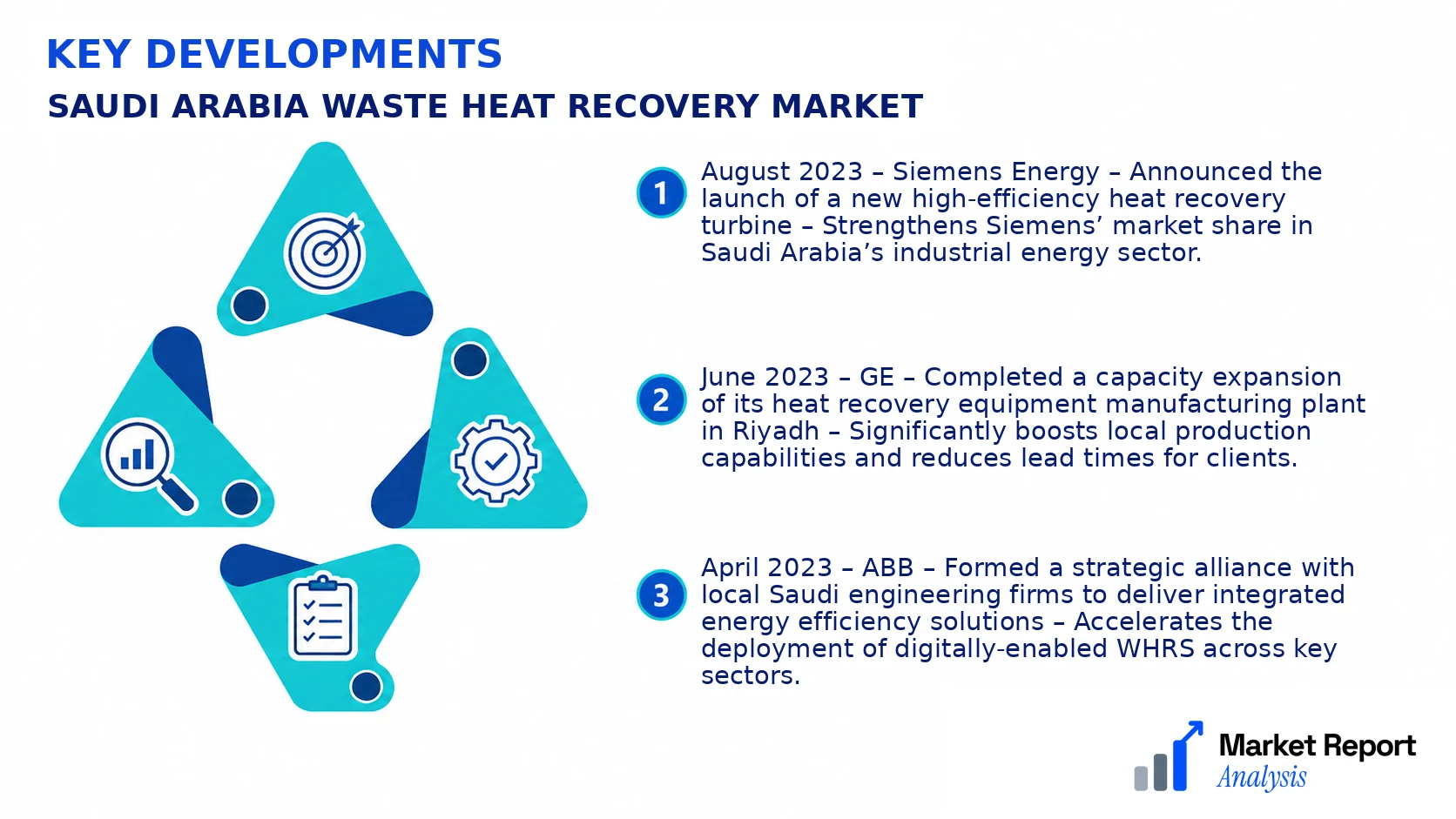
- August 2023 – Siemens Energy – Announced the launch of a new high-efficiency heat recovery turbine – Strengthens Siemens’ market share in Saudi Arabia’s industrial energy sector.
- June 2023 – GE – Completed a capacity expansion of its heat recovery equipment manufacturing plant in Riyadh – Significantly boosts local production capabilities and reduces lead times for clients.
- April 2023 – ABB – Formed a strategic alliance with local Saudi engineering firms to deliver integrated energy efficiency solutions – Accelerates the deployment of digitally-enabled WHRS across key sectors.
- May 2023 – Fluor Corporation – Secured a landmark project developing a large-scale industrial complex with integrated waste heat recovery systems – Demonstrates commitment to regional green energy initiatives.
- September 2023 – Schneider Electric – Launched an AI-driven energy management platform tailored for Saudi industries – Enhances operational efficiency and system interoperability for waste heat recovery processes.
Frequently Asked Questions
What is the Saudi Arabia Waste Heat Recovery Market?
The Saudi Arabia Waste Heat Recovery Market encompasses the industry focused on capturing and repurposing excess heat generated by industrial processes, power plants, and refineries within Saudi Arabia to improve energy efficiency and reduce emissions, driven by government initiatives and industrial growth.
What is the current market size of Saudi Arabia Waste Heat Recovery Market?
As of 2026, the market size is valued at approximately USD 2.4 Billion, reflecting increasing adoption of waste heat recovery systems across manufacturing, power generation, and petrochemical sectors, with ongoing investments to enhance energy sustainability in Saudi Arabia.
What factors are driving the Saudi Arabia Waste Heat Recovery Market?
Key drivers include rising energy costs, governmental policies promoting sustainable practices, mandates for reducing carbon footprints, and the expanding industrial base. Additionally, technological advancements and incentives for clean energy adoption further propel market growth.
Which Saudi city leads the Saudi Arabia Waste Heat Recovery Market?
Jeddah leads the market owing to its robust industrial sector, numerous large-scale manufacturing facilities, and strategic location as a commercial hub, fostering extensive implementation of waste heat recovery technologies across various industries.
Which segment is expected to grow the fastest?
The power generation segment is projected to experience the fastest growth, driven by Saudi Arabia’s efforts to diversify energy sources and enhance efficiency in electricity production through waste heat recovery systems.
Who are the leading companies operating in the Saudi Arabia Waste Heat Recovery Market?
Leading companies include Siemens, General Electric, Mitsubishi, and local players such as SABIC and Saudi Aramco, who are investing in advanced waste heat recovery solutions to meet stringent environmental standards.
Analyst Perspective
The Saudi Arabia Waste Heat Recovery Market is poised for sustained long-term growth, driven by increasing industrial activity, government initiatives for energy efficiency, and the push towards sustainable development. Strategic investments are likely to favor technologies that integrate seamlessly with existing infrastructure, with a focus on advancing heat recovery systems in heavy industries such as petrochemicals, refining, and cement manufacturing. Technological evolution will prioritize enhanced efficiency, automation, and integration with digital energy management solutions, creating significant competitive opportunities among key players. At the city level, industrial hubs such as Riyadh, Dhahran, and Jubail are expected to emerge as focal points owing to their dense industrial clusters and supportive regulatory environments. Investment priorities should emphasize scalable solutions and localized innovation to harness heat recovery’s full potential effectively. While competition remains intense, early movers stand to secure substantial market share, especially through collaborations and strategic partnerships. Overall, the market’s maturity suggests a gradual but resilient growth trajectory, with strategic opportunities for companies to pioneer sustainable industrial practices aligned with Saudi Vision 2030’s diversification goals.
