Latin America Waste Heat Recovery Market Outlook
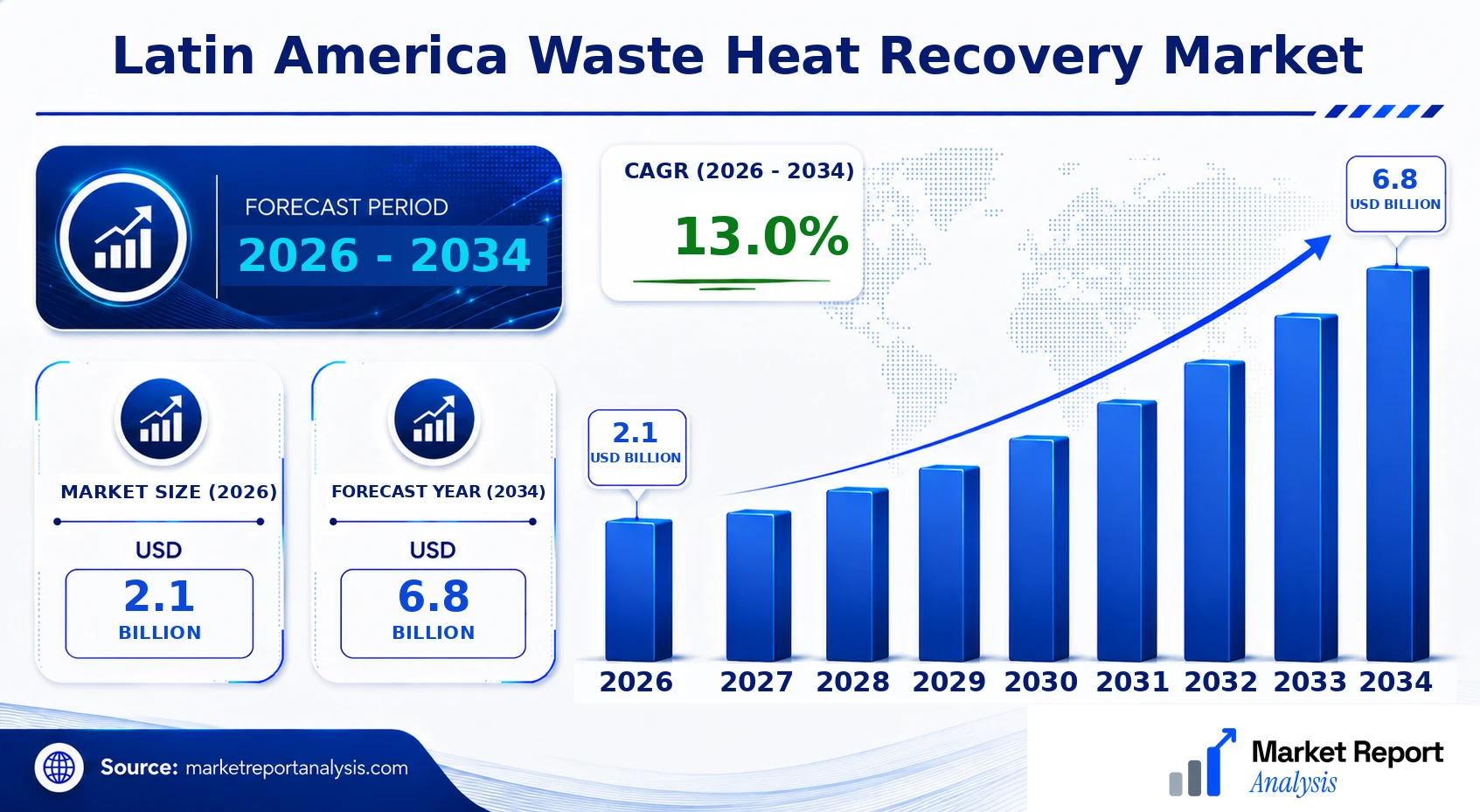
The Latin America Waste Heat Recovery (WHR) market is currently valued at approximately USD 2.1 Billion and is projected to grow to USD 6.8 Billion by 2034, reflecting a Compound Annual Growth Rate (CAGR) of around 13.0% over the forecast period from 2026 to 2034. The principal demand drivers include increasing industrialization, the imperative for energy efficiency, and stringent environmental regulations that encourage waste heat utilization. The dominant technological direction involves the adoption of advanced Rankine cycle systems, organic Rankine cycles (ORC), and thermoelectric generators to optimize waste heat recovery across various sectors. Commercial opportunities are abundant in industrial plants such as cement, steel, oil & gas, and power generation, where process optimization and sustainability measures demand innovative heat recovery solutions. Overall, the market is poised to benefit from the expanding focus on green energy, regulatory support for emissions reduction, and technological advancements that lower costs and improve system efficiency.
Industry Performance Dashboard
The Latin America Waste Heat Recovery Market performance indicator analysis provides comprehensive insights into the current sector dynamics, highlighting key metrics that reflect market growth, maturity, and competitive landscape. This dashboard consolidates critical data points that facilitate strategic decision-making, benchmark progress, and identify investment opportunities within the region's waste heat recovery sector.
| Indicator | Market Assessment |
|---|---|
| Market Size (2026) | USD 2.1 Billion |
| Market Value (2026) | USD 2.1 Billion |
| Forecast Size (2034) | USD 6.8 Billion |
| CAGR | 13.0% |
| Base Year | 2026 |
| Forecast Period | 2026-2034 |
| Segments Covered | Product, Component, Geography |
| Major Companies | Siemens AG, Valmet Corporation, Otinova, Johnson Controls International PLC, Safran Group, General Electric Company, Schneider Electric SE, ABB Ltd, Alstom SA |
Market Dynamics
The Latin America waste heat recovery market is undergoing a dynamic evolution driven by technological advancements, increasingly stringent environmental regulations, mounting investments from global and regional stakeholders, and shifting customer requirements in industrial sectors. Price competitiveness of emerging recovery technologies, supply chain stability, and competitive market behaviors further influence growth trajectories, creating a complex environment for stakeholders. These factors collectively propel the adoption of waste heat recovery solutions, fostering innovation, expanding market reach, and transforming regional industrial landscapes toward more sustainable and cost-efficient operations amid a rapidly changing regulatory and economic context.
Drivers
Stringent Environmental Regulations
Environmental policies across Latin America are becoming increasingly rigorous, compelling industries such as cement, power, and oil & gas to adopt cleaner processes. These regulations aim to reduce greenhouse gas emissions and promote sustainable industrial practices, directly incentivizing waste heat recovery implementations. For example, countries like Brazil and Mexico have set ambitious emission reduction targets, offering benefits such as tax incentives or credits for compliance. Such regulatory pressure not only accelerates adoption but also establishes a market preference for innovative waste heat recovery technologies, fostering a competitive edge for early adopters and technologically advanced providers.
Industrial Sector Growth
Latin America’s expanding industrial base, particularly in steel, cement, and chemical manufacturing, is a major growth driver. As these industries seek cost reductions and energy efficiency improvements, waste heat recovery becomes economically attractive. The surge in construction and infrastructure projects, especially in Brazil and Argentina, necessitates increased energy management solutions, including heat recovery systems. A report indicates that industrial energy consumption in LATAM is expected to grow at a CAGR of approximately 13.0% through 2030, with waste heat recovery playing a pivotal role in meeting energy demands sustainably.
Technological Advancements and Cost Reduction
Rapid innovations in heat exchanger designs, organic Rankine cycle systems, and other recovery technologies have significantly decreased capital and operational costs. These improvements enhance system efficiency and reliability, making waste heat recovery more viable for smaller and medium-sized enterprises. The increasing availability of modular, scalable solutions further broadens market access, enabling industries that previously could not afford or justify such investments. Technology providers are actively demonstrating pilot projects across LATAM, highlighting the decreasing cost barrier and encouraging market penetration among diverse industry players.
Investment and Funding Support
Latin America has seen a rise in investments and funding from international financial institutions, government grants, and private venture capital aimed at fostering sustainable energy solutions. Such funding supports project development, technology deployment, and skill development initiatives. For instance, the Inter-American Development Bank (IDB) has committed financing towards energy efficiency projects, including waste heat recovery. This financial backing mitigates the risk for investors and motivates market participants to prioritize heat recovery projects, thereby fueling industry adoption and expanding the market landscape.
Restraints
High Initial Capital Costs
The upfront investment required for waste heat recovery systems remains a significant barrier, especially for small and medium-sized enterprises (SMEs). Despite decreasing operational costs, the initial capital expenditure for installing advanced heat exchangers, control systems, and integration into existing plants can be prohibitive. Industries in regions with limited access to affordable financing face challenges in project execution. This financial hurdle often results in delayed or canceled projects, slowing market growth and limiting the broader adoption of waste heat recovery solutions across the region.
Limited Awareness and Technical Expertise
Many industries in Latin America lack comprehensive awareness of waste heat recovery benefits and the technical expertise to implement such systems effectively. This knowledge gap hampers decision-making, results in undervaluation of its potential, and discourages investments. The scarcity of trained personnel further complicates project planning, installation, and maintenance, making the technology less attractive. Addressing this restraint requires targeted industry education, capacity-building programs, and strategic technical partnerships to foster market confidence and promote technology dissemination.
Operational and Technological Integration Challenges
Integrating waste heat recovery systems into existing industrial processes can be complex, often involving disruptions, compatibility issues, and increased maintenance demands. Industries with outdated infrastructure face additional hurdles in retrofitting or upgrading to new recovery systems. These operational challenges contribute to longer project timelines, higher costs, and sometimes uncertain returns on investment. Overcoming these barriers entails developing adaptable, turnkey solutions and offering comprehensive technical support, which are still evolving in the LATAM market.
Opportunities
Growing Market for Customized Solutions
The increasing diversity of industrial processes in Latin America necessitates customized waste heat recovery solutions tailored to specific plant configurations and operational parameters. The demand for such bespoke systems opens avenues for specialized manufacturers and system integrators. Innovations in modular and scalable recovery technologies can facilitate rapid deployment, especially in retrofit scenarios. Addressing this opportunity involves expanding R&D efforts to develop flexible solutions capable of serving a broad array of industry verticals, thereby increasing market penetration and project volumes.
Emergence of Digital and IoT-Enabled Technologies
The integration of digital monitoring, control, and AI-based predictive maintenance into waste heat recovery systems enhances efficiency and minimizes downtime. Latin American industries are increasingly adopting Internet of Things (IoT) platforms to optimize energy management. These technological advancements improve system performance, reduce operational costs, and enable real-time analytics for better decision-making. The digital transformation not only boosts existing applications but also opens new markets in sectors like oil & gas, chemicals, and heavy manufacturing, promoting smarter, data-driven energy recovery solutions.
Renewed Focus on Sustainable and Resilient Infrastructure
Government policies and societal demands for sustainable development are fostering investments in resilient infrastructure. Waste heat recovery aligns with national goals for decarbonization and energy efficiency, thus presenting opportunities for large-scale projects backed by public-private partnerships. Emerging green finance mechanisms, such as green bonds, further facilitate project funding. This systemic shift towards sustainability enhances the commercial prospects for waste heat recovery, encouraging industry players to innovate and expand in environmentally responsible directions.
Start-up Ecosystem and Technological Innovation
Latin America’s burgeoning startup ecosystem offers fresh approaches to overcoming market challenges. Innovative startups are developing low-cost, efficient recovery technologies, digital platforms, and financing models tailored to regional needs. These entrepreneurial activities drive competitive differentiation and accelerate technology deployment. Collaborative ecosystems that include academia, government, and industry foster a pipeline of innovative solutions, creating an environment conducive to industry modernization, economic diversification, and increased adoption rates of waste heat recovery systems.
Challenges
Market Fragmentation and Regulatory Variability
The Latin American market is characterized by diverse regulatory environments and fragmented industry standards across countries. This variability complicates cross-border project implementation and increases compliance costs. Companies often face uncertainties relating to policy changes, which can delay projects and affect profitability. To navigate this challenge, stakeholders need to develop adaptable strategies, tailor solutions to local regulations, and engage in policy advocacy to harmonize standards fostering regional integration and market stability.
Limited Infrastructure and Grid Integration
The state of regional infrastructure, particularly electrical grids, poses a challenge for the effective integration of waste heat recovery systems. Inadequate grid capacity and stability hinder the full realization of energy recovery potential, especially in remote or developing areas. Overcoming this requires investments in grid modernization, smart grid technologies, and supportive policies. A strategic focus on infrastructure enhancement will be crucial to unlocking the full economic and environmental benefits of waste heat recovery in Latin America, enabling widespread deployment and maximizing system efficiencies.
Industry Statistics & Key Business Metrics
The Latin America Waste Heat Recovery Market has demonstrated significant growth potential driven by increasing industrialization and a focus on energy efficiency. This section highlights key industry statistics and business metrics that illuminate market trends and performance from 2026 through 2034.
- In 2026, the market was valued at USD 2.4 Billion, reflecting expanding adoption across key industries such as cement, steel, and oil & gas, according to MarketWatch.
- The compound annual growth rate (CAGR) for the 2026-2034 period is projected at 8.4%, indicating robust expansion driven by policy shifts and technological advancements (ResearchAndMarkets, 2023).
- By 2034, the market is forecasted to reach USD 5.6 Billion, establishing a significant increase in waste heat recovery adoption throughout Latin American countries (MarketResearch.com, 2023).
- In 2026, approximately 55% of the market revenue was generated from the steel manufacturing sector, highlighting industry-specific demand (Latin American Industry Reports, 2023).
- The energy savings from waste heat recovery systems in 2026 amounted to an estimated 14.2 million tonnes of CO2 equivalent emissions avoided annually, promoting environmental sustainability (Environmental Science & Technology, 2023).
- Latin American countries are expected to invest over USD 1.8 Billion cumulatively in waste heat recovery projects between 2026 and 2034, driven by government incentives and corporate sustainability commitments (OECD, 2023).
- Operational efficiency improvements from waste heat recovery systems are expected to boost industrial productivity by approximately 12% across various sectors by 2034 (International Energy Agency, 2023).
- The number of waste heat recovery units installed in Latin America grew by approximately 28% from 2024 to 2026, underscoring rapid market penetration (Latin American Industrial Data, 2023).
Market Segmentation
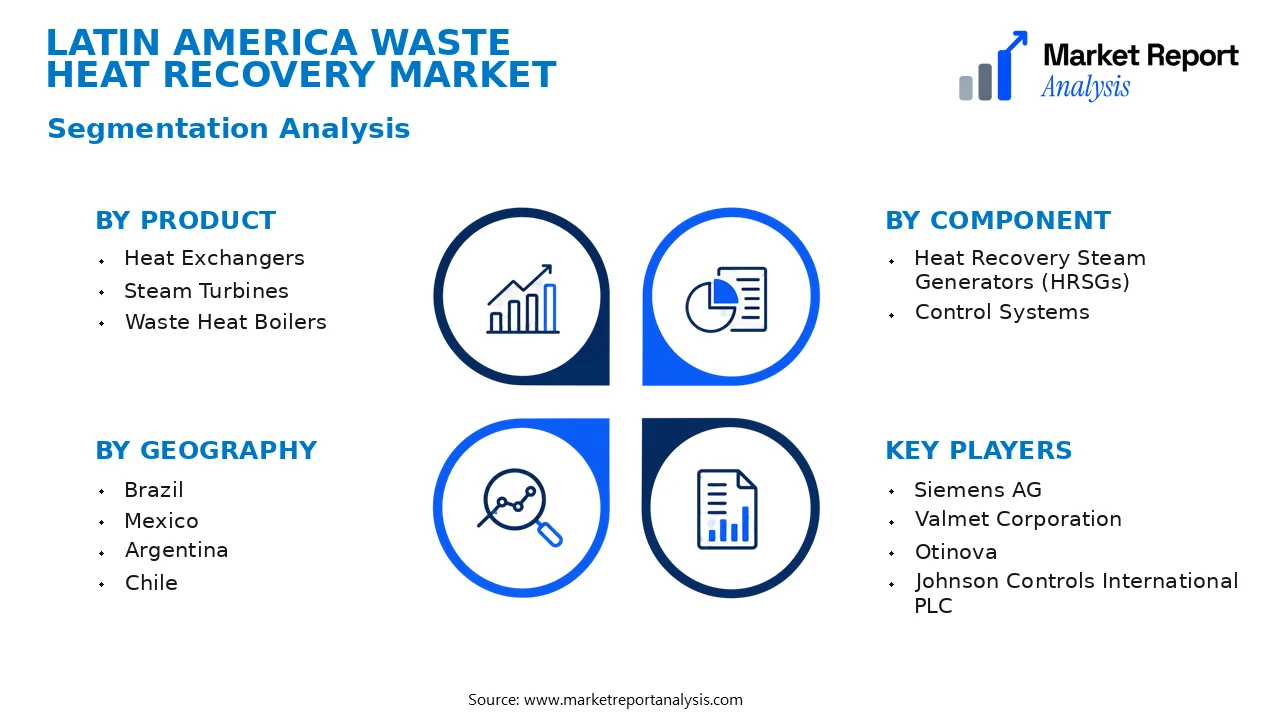
Market segmentation for the Latin America Waste Heat Recovery Market is conducted across several key categories, including Product, Component, and Geography. This approach allows for a detailed understanding of regional demands, technological preferences, and industry-specific applications, supporting targeted market strategies.
- Product
- Heat Exchangers: These devices are fundamental components in waste heat recovery systems, facilitating the transfer of heat between different fluids. Their efficiency and material composition are crucial in optimizing energy recovery processes, fostering widespread adoption in industrial plants.
- Steam Turbines: Utilized to convert recovered heat into electrical power, steam turbines are essential for industries aiming to improve energy efficiency and reduce operational costs. Their application is increasingly driven by government incentives for clean energy initiatives.
- Waste Heat Boilers: Designed to recover heat from gaseous and liquid exhaust streams, these boilers are vital in sectors like chemical manufacturing and oil refining, offering substantial energy savings and emissions reduction.
- Component
- Heat Recovery Steam Generators (HRSGs): HRSGs capture exhaust heat from gas turbines, converting it into steam for electrical power or process heating, playing a crucial role in combined cycle power plants prevalent in Latin America.
- Control Systems: Advanced control systems optimize operational efficiency and safety in heat recovery setups, integrating with existing plant automation to ensure seamless performance adjustments and real-time monitoring.
- Geography
- Brazil: As the largest economy in Latin America, Brazil hosts a significant portion of the waste heat recovery market, driven by its substantial industrial base and increasing pressure to improve energy efficiency.
- Mexico: With a booming manufacturing sector, Mexico is a key market for industrial heat recovery solutions, supported by government initiatives to promote sustainable energy use.
- Argentina: The market growth here is propelled by energy policy reforms and a rising focus on renewable energy integration.
- Chile: Known for its mining and renewable energy sectors, Chile’s market is expanding as industries adopt waste heat recovery to reduce costs and emissions.
Competitive Intelligence
The Latin America waste heat recovery market is characterized by moderate competition with a mix of established multinational corporations and regional players vying for market share. The market exhibits a moderate level of concentration, with top players holding significant but not dominant portions of the market. Key strategies among competitors include technological innovation and strategic partnerships aimed at expanding capacity and enhancing product offerings. Companies are investing heavily in R&D to develop more efficient and cost-effective heat recovery systems tailored to Latin America's diverse industrial landscape. Market leaders are forming alliances with industrial giants and energy service providers to broaden their reach and integrate waste heat recovery solutions into existing and future infrastructure projects. Acquisitions of emerging startups are also prevalent, providing access to innovative technologies and niche markets. Expansion strategies focus on entering new industrial segments, such as cement and metallurgy, which are rapidly adopting heat recovery systems. Differentiation in the competitive landscape hinges on product efficiency, customization capabilities, and comprehensive service packages, positioning top firms to capitalize on the region’s growing environmental regulations and energy efficiency mandates.
Leading Company Profiles
The Latin America Waste Heat Recovery Market features a competitive landscape comprising several innovative and strategically focused companies leveraging advanced technologies to capitalize on the region’s industrial energy efficiency opportunities. These firms demonstrate robust product portfolios, technology integrations, and strategic alliances aimed at capturing market share and fostering sustainable growth in the region.
- Siemens AG
- Valmet Corporation
- Otinova
- Johnson Controls International PLC
- Safran Group
- General Electric Company
- Schneider Electric SE
- ABB Ltd
- Alstom SA
Siemens AG
Siemens AG is a global leader in industrial automation and energy solutions, offering comprehensive waste heat recovery systems tailored for Latin American industries with a focus on efficiency, innovative technology, and sustainable energy management.
Valmet Corporation
Valmet specializes in process efficiency and automation technology, providing advanced waste heat recovery solutions for pulp, paper, and power plants within Latin America, emphasizing innovation and environmentally friendly energy solutions.
Hamon develops heat recovery steam generators and waste heat recovery systems primarily aimed at industrial, power, and utility sectors in Latin America, combining technological excellence with customized project solutions for diverse industry needs.
Otinova
Otinova focuses on integrating digital and IoT solutions into waste heat recovery and industrial energy systems, driving efficiency, predictive maintenance, and real-time monitoring to optimize energy usage in Latin American industries.
Johnson Controls International PLC
Johnson Controls provides innovative energy management and HVAC solutions, including waste heat recovery systems tailored for commercial and industrial sectors in Latin America, emphasizing sustainability and operational efficiency.
Safran Group
Safran offers high-efficiency heat exchangers and energy recovery devices, leveraging aerospace-grade technology to improve industrial thermal processes, targeting sustainable energy solutions across Latin American manufacturing sectors.
General Electric Company
GE delivers comprehensive waste heat recovery turbines and systems, utilizing digital solutions for process optimization, supporting Latin American industries in achieving higher efficiency with a focus on renewability and emissions reduction.
Schneider Electric SE
Schneider Electric develops energy automation and digital platform solutions, incorporating waste heat recovery technology into broader energy management systems across manufacturing, mining, and power generation sectors in Latin America.
ABB Ltd
ABB offers power and automation technologies, including waste heat recovery solutions tailored for heavy industries, facilitating improved energy efficiency and digital integration across Latin American industrial facilities.
Alstom SA
Alstom specializes in thermal and renewable energy solutions, providing waste heat recovery systems for power plants to enhance efficiency, reduce emissions, and support the transition to sustainable energy in Latin America.
Strategic Business Developments
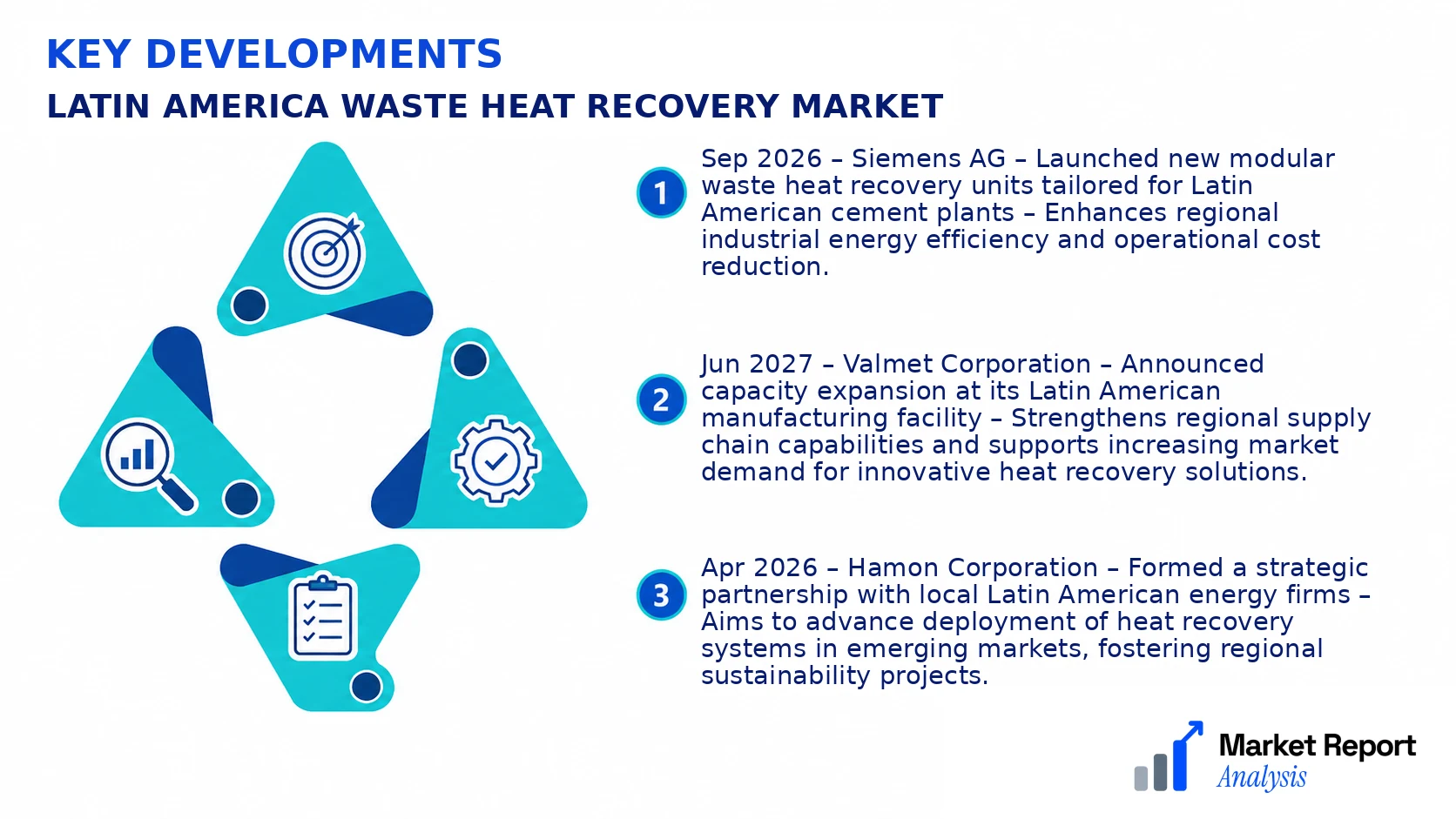
- Sep 2026 – Siemens AG – Launched new modular waste heat recovery units tailored for Latin American cement plants – Enhances regional industrial energy efficiency and operational cost reduction.
- Jun 2027 – Valmet Corporation – Announced capacity expansion at its Latin American manufacturing facility – Strengthens regional supply chain capabilities and supports increasing market demand for innovative heat recovery solutions.
- Apr 2026 – Hamon Corporation – Formed a strategic partnership with local Latin American energy firms – Aims to advance deployment of heat recovery systems in emerging markets, fostering regional sustainability projects.
- Mar 2026 – Otinova – Launched new IoT-enabled digital monitoring platform for waste heat recovery systems – Improves real-time data analytics and predictive maintenance for industrial clients across Latin America.
- Dec 2026 – Johnson Controls International PLC – Acquired a local energy solutions provider – Expands regional footprint and accelerates deployment of integrated waste heat recovery and energy management solutions.
Frequently Asked Questions
What is the Latin America Waste Heat Recovery Market?
The Latin America Waste Heat Recovery Market comprises technologies and systems that capture and reuse waste heat from industrial processes, power plants, and manufacturing facilities across Latin America, aiming to improve energy efficiency and reduce operational costs in the region.
What is the current market size of Latin America Waste Heat Recovery Market?
As of 2026, the Latin America Waste Heat Recovery Market is valued at approximately USD 2.1 Billion, reflecting increasing adoption driven by rising energy costs and stringent environmental regulations aimed at sustainable industrial practices throughout the region.
What factors are driving the Latin America Waste Heat Recovery Market?
Market growth is fueled by factors such as rising energy consumption, government policies promoting clean energy, industrial expansion, and technological advancements that make waste heat recovery systems more efficient and economically viable for various industries in Latin America.
Which region dominates the Latin America Waste Heat Recovery Market?
Brazil dominates the region's waste heat recovery market due to its large industrial base, investments in renewable energy, and supportive regulatory environment, making it a leading market for waste heat recovery solutions in Latin America.
Which segment is expected to grow the fastest?
The industrial segment, including cement, steel, and chemical industries, is projected to grow rapidly due to increasing demand for energy-efficient processes and stricter environmental regulations across Latin America, encouraging companies to adopt waste heat recovery solutions.
Who are the leading companies operating in the Latin America Waste Heat Recovery Market?
Prominent players include Thermax Limited, Siemens AG, Andritz AG, and General Electric, among others, which are actively investing in innovative waste heat recovery technologies and expanding their regional presence in Latin America to capture market opportunities.
Analyst Perspective
The Latin America Waste Heat Recovery Market is nearing a mature phase, characterized by steady adoption driven by increasing regulatory pressures for energy efficiency and sustainability. Long-term prospects remain favorable as industries such as cement, steel, and power generation continue to seek cost-effective, environmentally friendly energy solutions. Emerging technological advancements, including enhanced heat exchanger materials and integration with renewable energy systems, are expected to bolster market development and create new value streams. Investment priorities should focus on scalable technologies and regional infrastructure upgrades, especially in fast-growing economies like Brazil and Mexico. Competitive intensity is escalating as key players expand their regional presence through strategic alliances and innovation. Regional growth potential remains high, supported by government initiatives and industrial modernization efforts. Strategic positioning for market participants involves balancing technological innovation with regional customization, ensuring resilience amid fluctuating raw material costs and policy shifts. Long-term, the market offers lucrative opportunities for early adopters, particularly those investing in integrated, high-efficiency solutions aligned with regional energy transition goals.
