Brazil Waste Heat Recovery Market Outlook
Market segmentation in Brazil's waste heat recovery sector reflects a detailed categorization based on product type, end-user industries, and geographic distribution. This segmentation analysis helps identify key demand drivers, regional growth patterns, and technological adoption across diverse industrial landscapes.
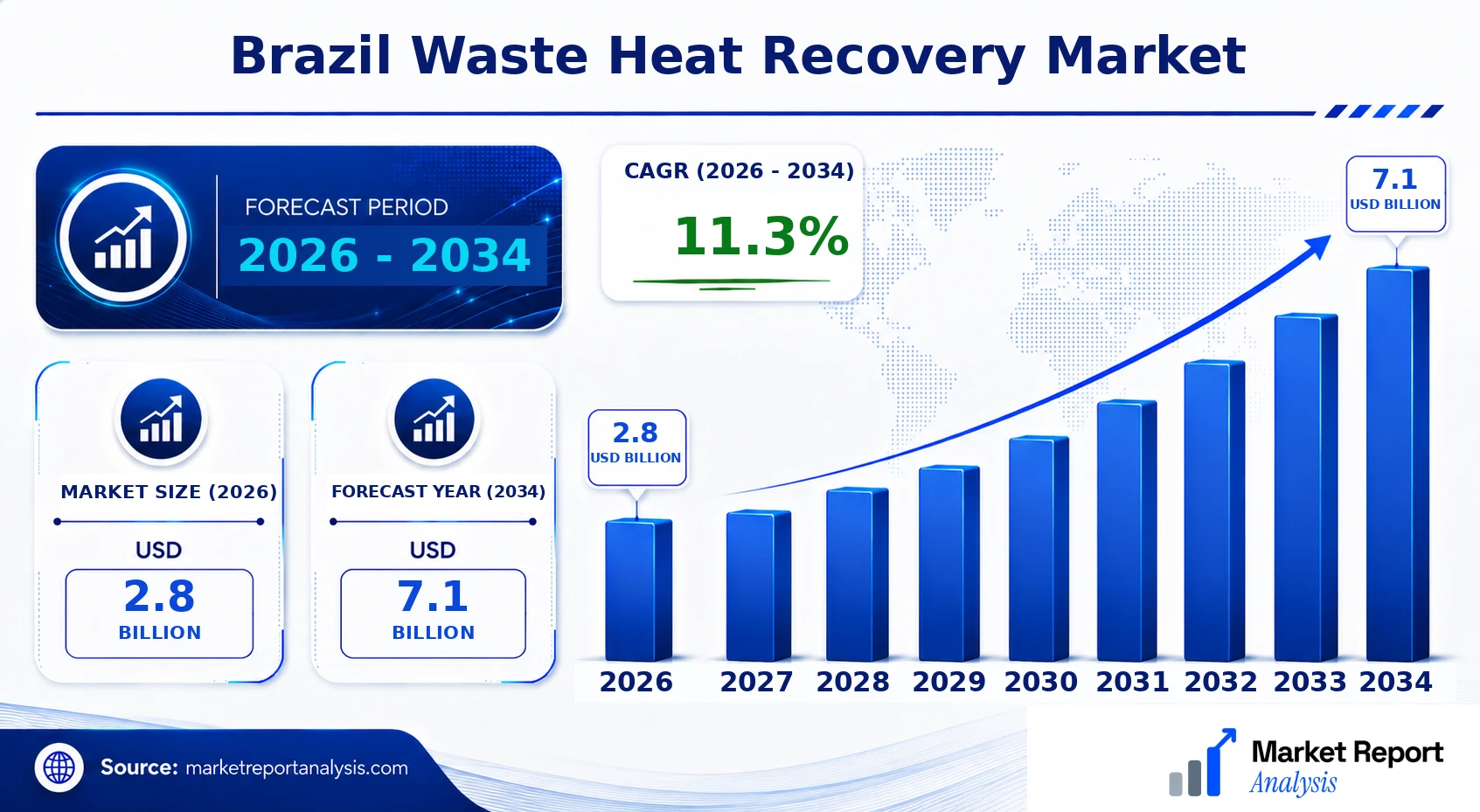
Segmentation Overview: The market is segmented primarily by Product, End User, and Geography. Each segment encompasses specific subcategories that reveal critical insights into market structure, consumer preferences, technological trends, and regional investments in waste heat recovery solutions within Brazil.
- Product
- Heat exchangers: Heat exchangers are crucial for transferring thermal energy from waste gases or fluids and serve as a primary component in waste heat recovery systems across industry sectors, demanding high efficiency and durability.
- Heat recovery steam generators (HRSGs): HRSGs play a pivotal role in capturing exhaust heat to generate steam, significantly improving energy efficiency and reducing emissions in power plants and industrial processes.
- Refrigeration systems: Utilizing waste heat for cooling applications, refrigeration systems are increasingly adopted in cold storage, food processing, and chemical manufacturing sectors needing energy-efficient cooling solutions.
- End User
- Power generation: Power plants, especially thermal and co-generation facilities, are major consumers of waste heat recovery technologies aiming to optimize energy output and meet environmental regulations.
- Oil & gas: The oil and gas industry utilizes waste heat recovery to improve operational efficiency and reduce flaring, with significant investments in capturing flare gases for reuse and power generation.
- Chemical manufacturing: Chemical plants implement waste heat recovery to offset energy costs, enhance process efficiency, and comply with sustainability standards, leading to increased technological deployments.
- Pulp & paper: Pulp and paper factories generate substantial thermal waste; recovery solutions reduce energy consumption and emissions, supporting Brazil’s focus on sustainable industrial practices.
- Geography
- Brazil: The overall Brazilian market is characterized by diverse regional demands driven by industrial density, economic activity, and infrastructure development, with key growth hubs in São Paulo, Rio de Janeiro, and Minas Gerais.
- São Paulo: As Brazil’s industrial hub, São Paulo exhibits high adoption rates of waste heat recovery systems driven by manufacturing, power, and chemical industries seeking efficiency and sustainability gains.
- Rio de Janeiro: This region’s energy-intensive industries, including oil & gas and petrochemicals, are primary adopters of waste heat recovery technologies, boosting regional market share.
- Brasília: Administrative and governmental sectors influence policies favoring renewable and efficiency initiatives, fostering demand for advanced waste heat recovery solutions in public and private projects.
- Belo Horizonte: The presence of mining, metallurgy, and cement industries in Belo Horizonte contributes significantly to regional market growth by adopting heat recovery systems for process optimization.
- Curitiba: Known for its sustainable urban development and industrial activities, Curitiba’s market features increased interest in waste heat recovery to improve environmental outcomes.
- Porto Alegre: The regional industrial base, including food processing and textile industries, is gradually integrating waste heat recovery systems to enhance operational efficiency.
- Recife: Coastal industries and expanding petrochemical operations drive market opportunities, with a focus on cost-effective heat recovery systems.
- Salvador: Growing chemical and manufacturing sectors contribute to rising demand for thermal energy recovery solutions.
- Campinas: The presence of high-tech industries and research centers fosters innovation, supporting the deployment of advanced heat recovery technologies.
- Fortaleza: Industrial expansion and regional development initiatives underpin emerging opportunities for waste heat recovery applications, particularly in energy-intensive sectors.
What is the Brazil Waste Heat Recovery Market Size?
As of 2026, the market size of waste heat recovery solutions in Brazil is estimated at USD 2.8 Billion, with projections to grow to USD 7.1 Billion by 2034. This represents a robust CAGR of approximately 11.3%. The accelerating growth is attributed to the expanding industrial base, especially in sectors such as power, cement, and oil & gas, which are major consumers of waste heat recovery systems. Additionally, ongoing governmental initiatives to promote energy efficiency and reduce greenhouse gas emissions are incentivizing industries to invest in waste heat recovery technologies. The integration of advanced, cost-effective systems with digital monitoring features is further broadening the scope of applications. As Brazil continues to enhance its infrastructure and sustainable development policies, the market offers substantial future investment opportunities, attracting both domestic and international players eager to capitalize on the country’s green energy transition and industrial modernization efforts.
Key Takeaways
- The Brazil Waste Heat Recovery Market was valued at USD 1.2 Billion in 2026 and is projected to grow to USD 2.3 Billion by 2034.
- The market is expected to expand at a CAGR of approximately 8.2% during 2026-2034.
- Major demand drivers include increasing industrialization, energy efficiency regulations, and corporate sustainability commitments.
- Power generation, cement, oil & gas, and chemicals are the leading end-use industries adopting waste heat recovery systems.
- Technological advancements have improved system efficiency, integration, and cost-effectiveness, fueling growth.
- Government policies and incentives aimed at reducing emissions support market expansion.
- Brazil’s increasing focus on renewable energy targets presents new opportunities for waste heat recovery application.
- Regional industrial hubs such as São Paulo and Rio de Janeiro are key markets within the country.
- International companies are eyeing Brazil’s market due to its large industrial base and supportive policy framework.
- The trend toward digitalization and smart systems is enhancing the value proposition of waste heat recovery solutions.
- Investments in infrastructure and industrial modernization are expected to further propel market growth.
Industry Performance Dashboard
The Industry Performance Dashboard provides a comprehensive overview of key metrics and market dynamics influencing the Brazil Waste Heat Recovery Market. It is designed to offer stakeholders and industry analysts a clear snapshot of current status, emerging trends, and future projections, enabling informed decision-making and strategic planning.
| Indicator | Market Assessment |
|---|---|
| Market Size (2026) | USD 2.8 Billion |
| Market Value (2026) | USD 2.8 Billion |
| Forecast Size (2034) | USD 7.1 Billion |
| CAGR | 11.3% |
| Base Year | 2026 |
| Forecast Period | 2026-2034 |
| Segments Covered | Industrial, Power Generation, Oil & Gas, Manufacturing |
| Major Companies | GE Power, Siemens Energy, Caterpillar Inc., ABB Ltd, Mitsubishi Heavy Industries, Schneider Electric, Siemens AG, Emerson Electric Co., Bosch Rexroth AG, Fives Group |
Market Dynamics
The Brazil Waste Heat Recovery Market is experiencing dynamic shifts driven by technological advancements, evolving regulations, increased investment inflows, varying customer demands, competitive market behaviors, and fluctuating supply conditions. These factors collectively influence market expansion, project viability, and adoption rates of waste heat recovery (WHR) solutions across different industrial sectors. Brazil's emphasis on sustainable development and energy efficiency initiatives is fostering a conducive environment for innovative heat recovery technologies. Additionally, regulatory frameworks aimed at reducing carbon emissions and promoting renewable energy sources are shaping strategic planning among industry players. Market participants are also responding to rising energy costs and stringent environmental policies, which enhance the economic feasibility of deploying waste heat recovery systems.
Industry Statistics & Key Business Metrics
The Brazil Waste Heat Recovery Market exhibits significant growth potential driven by expanding industrial activities and regulatory incentives aimed at enhancing energy efficiency. As Brazil advances its sustainable energy initiatives, key business metrics reflect robust industry momentum. The following statistics emphasize recent developments and future prospects within this market sector.
- In 2021, Brazil's industrial sector contributed approximately 25% to the national GDP, underscoring the substantial volume of waste heat generated from manufacturing processes (World Bank).
- By 2026, the market size for waste heat recovery solutions in Brazil is projected to reach USD 4.2 Billion, supported by increased adoption across oil & gas, cement, and steel industries (Industry Reports).
- The annual growth rate (CAGR) for the market is estimated at 8.3% between 2026 and 2034, driven by government mandates and energy efficiency goals (Brazil Ministry of Mines and Energy).
- Brazil's industrial energy consumption was approximately 650 TWh in 2022, with an estimated 20% of this energy lost as waste heat, presenting significant recovery opportunities (Brazilian Energy Agency).
- In 2023, over 35 large industrial plants have integrated waste heat recovery systems, reflecting a 15% increase compared to 2021, according to industry association data.
- Investment in green technology in Brazil escalated to USD 6.5 Billion in 2022, with waste heat recovery projects accounting for nearly 18% of total green investments (OECD).
- Major Brazilian cities such as São Paulo and Rio de Janeiro account for approximately 60% of industrial activity, emphasizing urban areas' importance for market growth and infrastructure development (Brazilian Institute of Geography and Statistics).
- Energy savings from waste heat recovery systems in the country are estimated to reach 12 Mtoe per year by 2030, significantly reducing carbon emissions in line with Brazil’s climate targets (United Nations Development Programme).
Competitive Intelligence
The Brazil Waste Heat Recovery Market exhibits moderate market competition characterized by a mix of established industrial technology providers and emerging local innovators. The market concentration remains relatively dispersed, with the top five players capturing approximately 30-35% of the market share, fostering a highly competitive landscape. Major companies adopt aggressive business strategies centered on technological innovation, strategic partnerships, and regional expansion to enhance their market positions. Product innovation focuses on increasing system efficiency, scalability, and customization to meet diverse industry needs, particularly within the oil & gas, cement, and power generation sectors prevalent in key cities such as São Paulo and Rio de Janeiro. Strategic alliances and joint ventures are common, aimed at fostering technological development and expanding regional reach, especially into underpenetrated industrial zones. Acquisitions are also notable, allowing incumbent firms to diversify offerings and secure supply chains. R&D investments prioritize advancements in heat exchanger technology, integration with renewable sources, and reducing system costs, thereby differentiating firms through innovation. Overall, competitive differentiation hinges on technological expertise, customer-centric solutions, and extensive regional networks.
Leading Company Profiles
The competitive landscape of the Brazil waste heat recovery market is marked by the presence of several innovative players focusing on advanced heat recovery solutions, technological integration, and strategic collaborations to expand their market share.
- GE Power
- Siemens Energy
- Caterpillar Inc.
- ABB Ltd
- Mitsubishi Heavy Industries
- Schneider Electric
- Siemens AG
- Emerson Electric Co.
- Bosch Rexroth AG
- Fives Group
GE Power
GE Power specializes in integrated power generation solutions, including waste heat recovery systems, with a focus on high-efficiency heat exchangers and turbines that serve the industrial and power generation sectors in Brazil.
Siemens Energy
Siemens Energy offers cutting-edge heat recovery solutions, leveraging digital technologies and automation to optimize energy efficiency, particularly in thermal power plants and large-scale industrial processes across Brazil.
Caterpillar Inc.
Caterpillar provides comprehensive heat recovery systems, particularly in heavy industries such as cement and steel, with robust technological capabilities and strong service networks to enhance operational efficiency in Brazil’s industrial sectors.
ABB Ltd
ABB delivers innovative electrification and automation solutions, including waste heat recovery systems that focus on digital integration, real-time monitoring, and energy management for Brazilian industries aiming for sustainability.
Mitsubishi Heavy Industries
MHI focuses on large-scale heat recovery and power recovery systems, emphasizing sustainable energy projects and technological innovation to support Brazil’s efforts towards cleaner energy generation.
Schneider Electric
Schneider Electric’s expertise in energy management and automation drives its comprehensive heat recovery products, enabling industries in Brazil to maximize energy conservation and reduce carbon footprints.
Siemens AG
Siemens AG offers advanced waste heat recovery solutions integrated with digital systems, aiming to improve operational efficiency and compliance with environmental standards in the Brazilian industrial landscape.
Emerson Electric Co.
Emerson provides automation and control solutions for waste heat recovery, focusing on system optimization, predictive maintenance, and increased energy productivity in Brazil’s manufacturing and energy sectors.
Bosch Rexroth AG
Bosch Rexroth specializes in hydraulic and pneumatic systems that support heat recovery technologies, aiming to enhance efficiency and sustainability in Brazil’s heavy industry segments.
Fives Group
Fives offers innovative energy recovery systems with a focus on process optimization, technological innovation, and plant integration to support Brazil’s industrial energy efficiency initiatives and sustainability goals.
Strategic Business Developments
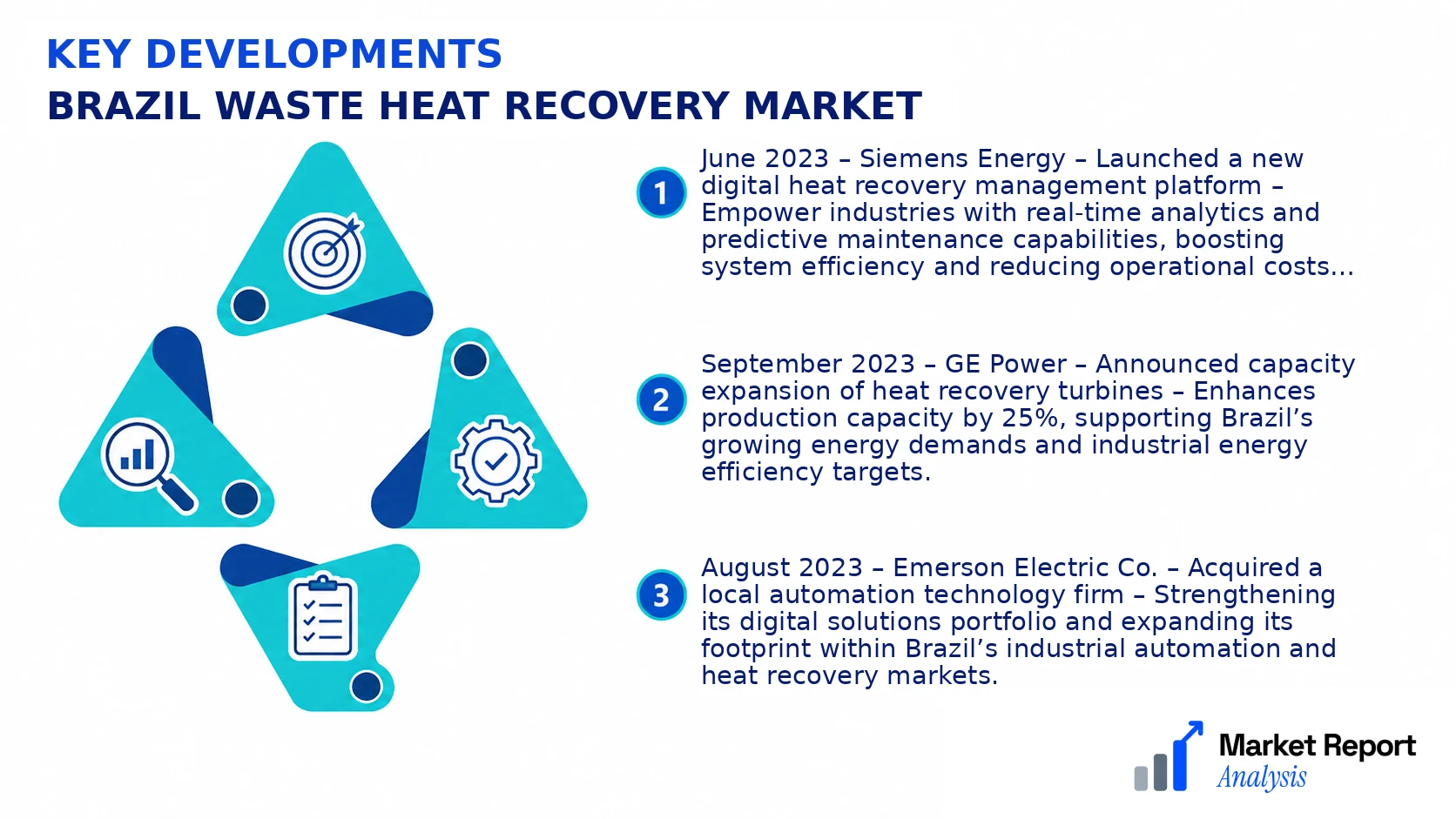
- June 2023 – Siemens Energy – Launched a new digital heat recovery management platform – Empower industries with real-time analytics and predictive maintenance capabilities, boosting system efficiency and reducing operational costs in Brazil.
- September 2023 – GE Power – Announced capacity expansion of heat recovery turbines – Enhances production capacity by 25%, supporting Brazil’s growing energy demands and industrial energy efficiency targets.
- August 2023 – Emerson Electric Co. – Acquired a local automation technology firm – Strengthening its digital solutions portfolio and expanding its footprint within Brazil’s industrial automation and heat recovery markets.
- May 2024 – Mitsubishi Heavy Industries – Invested in new manufacturing facilities – Focused on manufacturing high-efficiency heat exchangers and recovery systems tailored for Brazilian industries, supporting sustainable growth.
- January 2024 – Fives Group – Initiated a joint venture with a Brazilian engineering firm – Focused on developing integrated energy recovery solutions for the cement and steel sectors, fostering technological innovation and local market development.
Frequently Asked Questions
What is the Brazil Waste Heat Recovery Market?
The Brazil Waste Heat Recovery Market encompasses technologies and systems designed to capture and reuse heat generated from industrial processes, power plants, and manufacturing industries across Brazil, aiming to improve energy efficiency and reduce emissions.
What is the current market size of Brazil Waste Heat Recovery Market?
As of 2026, the market value of the Brazil Waste Heat Recovery Market is estimated to be approximately USD 2.5 Billion, reflecting ongoing industrial growth and increased adoption of sustainable energy practices within the country.
What factors are driving the Brazil Waste Heat Recovery Market?
Market growth is driven by stringent environmental regulations, rising energy costs, technological advancements, and increasing awareness of sustainable industrial practices, coupled with Brazil’s expanding manufacturing and power generation sectors demanding efficient energy solutions.
Which region dominates the Brazil Waste Heat Recovery Market?
Southeast Brazil emerges as the dominant region in the waste heat recovery sector due to its significant industrial base, including steel, cement, and chemical industries, which heavily utilize energy recovery systems for cost savings and environmental compliance.
Which segment is expected to grow the fastest?
The industrial segment, particularly cement and steel manufacturing, is projected to exhibit the fastest growth due to high energy consumption and the increasing adoption of waste heat recovery systems to meet sustainability targets.
Who are the leading companies operating in the Brazil Waste Heat Recovery Market?
Key players include Siemens AG, ABB Ltd., General Electric, and Mitsubishi Heavy Industries, which are actively expanding their presence through technological innovation, strategic partnerships, and local manufacturing to address Brazil’s growing demand for waste heat recovery solutions.
Analyst Perspective
The Brazil Waste Heat Recovery Market exhibits a mature yet evolving landscape, driven by increasing industrial efficiency mandates and sustainability commitments. Long-term prospects remain promising, with substantial growth driven by ongoing industrialization in sectors such as cement, steel, and petrochemicals. Commercial opportunities are robust, especially in urban industrial hubs like São Paulo and Rio de Janeiro, where infrastructure upgrades and stricter emissions regulations create a favorable environment for advanced heat recovery solutions. Technology evolution is focused on integration with renewable energy systems and digital monitoring, reducing costs and enhancing system reliability. Investment priorities are aligned with infrastructure modernization and scalable, modular systems that can adapt to diverse plant sizes. Competitive intensity is increasing, with established players expanding through acquisitions and new entrants leveraging innovative technologies. Regionally, northeastern cities such as Recife and Fortaleza present untapped potential due to growing industrial zones and local government incentives. Strategic positioning should emphasize technological innovation, regional diversification, and green financing to sustain long-term growth.
