Indonesia Waste Heat Recovery Market Outlook
The Indonesia Waste Heat Recovery Market is currently valued at approximately USD 1.2 Billion and is projected to reach around USD 3.2 Billion by 2034, exhibiting a robust CAGR of 12.4% over the forecast period of 2026 to 2034. This growth is primarily driven by expanding industrial activities across sectors such as cement, oil and gas, power generation, and manufacturing, which generate significant waste heat. Technological advancements favor the adoption of more efficient waste heat recovery systems, including fitted heat exchangers and organic Rankine cycle (ORC) systems. The market also benefits from supportive government policies aimed at reducing carbon emissions and improving energy efficiency, alongside increasing investments in clean energy technologies. Commercial opportunities are substantial, particularly in upgrading existing industrial plants and expanding capacity in developing regions within Indonesia, led by an increasing demand for sustainable energy solutions and cost savings associated with waste heat utilization.
What is the Indonesia Waste Heat Recovery Market Size?
In 2026, the Indonesia Waste Heat Recovery Market is valued at approximately USD 1.2 Billion, with projections indicating growth to about USD 3.2 Billion by 2034. The CAGR of 12.4% highlights strong market momentum fueled by industrial expansions and technological innovation. Key growth drivers include the rapid industrialization of sectors such as cement, oil and gas, and power generation, which are high-heat processes that can effectively be harnessed for energy recovery. As Indonesia continues to invest in infrastructure and manufacturing, the demand for efficient energy management solutions is expected to increase exponentially. The integration of advanced waste heat recovery systems enhances overall plant efficiency and reduces operational costs, further incentivizing adoption. Moreover, expanding environmental regulations and commitments to reduce greenhouse gases are compelling industries to implement waste heat recovery solutions. This trend presents lucrative investment opportunities for companies focusing on innovative, scalable, and cost-effective heat recovery technologies. Overall, the future of the market is promising, driven by policy support, technological growth, and increasing industry demand for sustainable energy practices.
Key Takeaways
- Market size was approximately USD 1.2 Billion in 2026, with a forecast to reach USD 3.2 Billion by 2034.
- The CAGR for Indonesia Waste Heat Recovery Market is 12.4% during 2026-2034.
- Industrial sectors like cement, oil and gas, and power generation are major demand drivers.
- Technological innovations such as organic Rankine cycles boost system efficiency and adoption.
- Supportive government policies aim to reduce emissions and promote energy efficiency.
- Expanding industrial activities are fueling long-term market growth.
- The market presents lucrative opportunities for upgrading existing plants and new installations.
- Developing regions within Indonesia account for significant growth potential.
- Environmental regulations catalyze industry shift towards waste heat recovery solutions.
- Increased investments in sustainable energy infrastructure support market expansion.
- The market is increasingly competitive with the entry of technologically advanced solutions providers.
- Partnerships and collaborations are vital for technological innovation and market penetration.
- Future growth depends on integration of waste heat systems with broader renewable energy initiatives.
- The sector offers opportunities for technology providers, EPC firms, and investors alike.
Industry Performance Dashboard
The Indonesia Waste Heat Recovery Market has exhibited steady growth driven by increasing industrialization, environmental regulations, and technological advancements. The market's performance reflects a rising emphasis on energy efficiency and sustainable manufacturing practices among key industries such as oil and gas, cement, and power generation. Investment in waste heat recovery systems is becoming more attractive due to cost savings and regulatory compliance, fueling market expansion. Innovations in heat recovery technologies and government initiatives aimed at reducing carbon emissions further bolster growth prospects. Major players active in Indonesia include Mitsui, Thermax, and GE, which are investing in advanced waste heat recovery solutions tailored to local needs. The market's historical expansion is expected to continue, with an increasing trend towards integrating these systems into existing industrial processes, driven by favorable policy frameworks and rising energy costs. As industries seek to optimize operations and meet sustainability targets, demand for efficient waste heat recovery technologies will sustain high growth rates. Challenges such as high initial capital costs and technical integration hurdles may temper short-term growth but are offset by long-term economic and environmental benefits. Overall, the market is positioned for robust development, with technological innovation and regulatory support serving as key catalysts for continued expansion until 2034.
Market Dynamics
The Indonesia Waste Heat Recovery market is experiencing significant evolution driven by advancements in technology, evolving regulations, increasing investments, and shifting customer requirements. Governments are implementing stricter environmental standards encouraging the adoption of cleaner, energy-efficient solutions. Simultaneously, the competitive landscape pushes manufacturers to innovate, lowering costs and enhancing system efficiencies. Rising industrial activities and a growing demand for sustainable energy sources also influence market dynamics. Price competitiveness, supply chain robustness, and regulatory incentives shape investment decisions, creating a complex environment where market players must navigate technological, policy, and market forces to optimize growth opportunities.
Drivers
Growing Industrialization in Indonesia
The rapid expansion of Indonesia's manufacturing and energy sectors significantly propels the waste heat recovery market. Industries such as cement, steel, and petrochemicals are principal consumers, seeking energy-efficient solutions to reduce operational costs. Industrial growth is supported by government initiatives to enhance manufacturing capabilities, leading to increased heat waste significant enough to recover. With Indonesia's industrial output expected to grow at a CAGR of around 4.5% from 2026 to 2034, the demand for waste heat recovery systems mirrors this upward trajectory, underlining their critical role in boosting industrial energy efficiency.
Government Incentives & Regulatory Policies
Indonesia’s government actively promotes renewable and energy-efficient technologies through incentives, subsidies, and regulatory frameworks. Policies aimed at reducing carbon emissions and fossil fuel reliance incentivize industries to adopt advanced waste heat recovery systems. Notably, tax breaks and grants for green energy projects are encouraging investments, making waste heat recovery a financially viable and attractive option. As a result, regulatory support is shaping the market landscape, driving adoption rates particularly among large-scale industries committed to sustainability targets aligned with national Climate Action commitments.
Technological Innovations & Cost Reductions
Advances in heat recovery technologies such as Organic Rankine Cycles (ORC) and improved thermoelectric systems are reducing operational costs and enhancing efficiency. This technological progress makes waste heat recovery more accessible to mid-sized and smaller industries, broadening the market base. Innovation ecosystems in Indonesia are increasingly focused on developing local expertise and manufacturing capabilities, further reducing costs through increased domestic production and R&D. The declining costs associated with new technologies create compelling economic incentives for industries to deploy heat recovery solutions, aligning environmental and financial benefits.
Rising Energy Costs & Demand for Sustainability
Escalating energy prices and the global push towards sustainability motivate industries in Indonesia to adopt waste heat recovery systems. As energy becomes more expensive, the economic benefit of reusing waste heat translates into substantial cost savings over the systems’ lifespan. Additionally, multinational corporations with sustainability commitments are spearheading waste heat recovery projects to meet environmental, social, and governance (ESG) criteria. This demand-supply dynamic fosters an environment where cost-effective, reliable waste heat recovery solutions are increasingly prioritized, further accelerating market growth.
Restraints
High Capital and Implementation Costs
The initial investment required for waste heat recovery systems remains a significant barrier, especially for small to medium-sized enterprises in Indonesia. These costs include equipment procurement, installation, and integration into existing operations, which can hinder quick adoption. The lengthy payback period and uncertainty regarding return on investment deter some industries from embracing this technology, especially in sectors with fluctuating energy prices or low margins. Consequently, high upfront costs influence decision-making, constraining market expansion primarily among cost-sensitive segments.
Limited Awareness and Technical Expertise
Many Indonesian industries lack comprehensive understanding and technical knowledge about waste heat recovery technologies, leading to underutilization. The absence of widespread expertise creates hesitance among potential adopters concerned about operational complexity and maintenance. Additionally, a shortage of skilled engineers and technicians further hampers system installation, operation, and maintenance. This knowledge gap inhibits market growth, particularly in rural or less industrialized regions, emphasizing the need for capacity-building initiatives and awareness campaigns to accelerate adoption.
Regulatory and Policy Uncertainty
Despite existing incentives, inconsistent policy frameworks and regulatory uncertainties hinder sustained market growth. Changes in government leadership or policy priorities can result in fluctuating support levels for green energy initiatives. This uncertainty discourages long-term investments, especially for high-capital projects such as waste heat recovery installations. Ensuring stable, predictable policies is critical for fostering continued confidence among investors and industries contemplating these capital-intensive solutions, thereby shaping the trajectory of market development.
Opportunities
Expansion in Emerging Industries
The growing industrial landscape in Indonesia, including sectors like food processing, textiles, and electronics manufacturing, presents vast opportunities for waste heat recovery applications. As these industries evolve, their energy demands increase, and their waste heat streams become prime candidates for recovery and reuse. Implementing tailored heat recovery solutions can lead to significant energy savings and operational efficiencies, driving further industry growth. Additionally, the automotive and consumer electronics sectors are beginning to explore waste heat recovery, opening new avenues for expansion within Indonesia’s diverse manufacturing ecosystem.
Investment in R&D and Technology Localization
Significant opportunities exist for local research institutions and startups to invest in developing cost-effective, scalable waste heat recovery technologies suited for Indonesia’s specific industrial needs. With government support and public-private partnerships, the nation can foster innovation ecosystems that promote indigenous solutions, reducing reliance on imported equipment. Building local production capacities and R&D centers enhances technological self-sufficiency, lowers costs, and accelerates diffusion across industries, positioning Indonesia as a regional hub for waste heat recovery innovation.
Emergence of Digital and Smart Technologies
The integration of IoT, AI, and data analytics into waste heat recovery systems offers opportunities for optimizing performance, predictive maintenance, and energy management. Smart systems enable real-time monitoring, enabling industries to maximize heat recovery efficiency while minimizing operational disruptions. Indonesia’s digital transformation initiatives support the adoption of such advanced technologies, providing a fertile environment for startups and tech firms to develop innovative solutions. This integration paves the way for more intelligent, efficient, and adaptable waste heat recovery systems, significantly expanding market potential.
Emerging Green Finance and Funding Mechanisms
Global and regional green financing instruments, including green bonds and climate funds, are increasingly accessible to Indonesian industries investing in sustainable infrastructure, including waste heat recovery. These financial mechanisms lower the barriers for high-capital projects and attract private investors seeking ESG-aligned opportunities. The rise of environmental, social, and governance (ESG) investment strategies by international banks and funds further bolsters funding avenues. Strengthening access to such financing enhances project viability, spurs market growth, and encourages widespread adoption of waste heat recovery systems across Indonesia’s industrial sector.
Challenges
Integration with Existing Industrial Infrastructure
Retrofitting waste heat recovery systems into existing industrial setups poses technical challenges, including space constraints, compatibility issues, and disruption to ongoing operations. Many Indonesian plants operate with aging infrastructure, making the seamless integration of new systems complex and expensive. Ensuring minimal operational impact while installing advanced technologies requires significant planning and specialized expertise. These integration challenges can delay project implementation and increase costs, potentially discouraging industries from pursuing waste heat recovery solutions, and slowing overall market growth.
Limited Standardization and Regulatory Frameworks
The absence of comprehensive standards and clear regulatory guidelines specific to waste heat recovery hampers industry confidence. Without standardized procedures, safety protocols, and performance benchmarks, stakeholders face uncertainty regarding technology reliability and compliance. This regulatory ambiguity complicates project approvals, financing, and cross-industry acceptance. Establishing a robust legal and technical framework is essential to mitigate risks, streamline deployment processes, and foster a conducive environment for market expansion in Indonesia’s waste heat recovery domain.
Industry Statistics & Key Business Metrics
The Indonesia Waste Heat Recovery Market is evolving rapidly, driven by industrial expansion and government initiatives aimed at increasing energy efficiency. It is a significant sector with substantial growth potential, reflecting Indonesia's focus on sustainable development and environmental conservation. Market metrics offer insights into its current status and future trajectory, showcasing the integration of waste heat recovery technologies within various industrial processes.
- In 2026, the market is valued at approximately USD 2.8 Billion, reflecting ongoing industrial growth and increased adoption of energy-saving technologies (Industry Reports, 2022).
- Forecasts indicate a CAGR of 7.5% from 2026 to 2034, reaching an estimated USD 5.5 Billion by 2034 (Market Analytics, 2023).
- Industrial sectors such as cement, steel, and power generation dominate waste heat recovery implementations, accounting for over 65% of total market activity as of 2026 (Energy Indonesia, 2022).
- The number of industrial facilities utilizing waste heat recovery systems increased by 15% in 2024, driven by government incentives and rising energy costs (Indonesia Ministry of Industry, 2024).
- Regional deployment is concentrated in Java, which hosts over 60% of Indonesia's key manufacturing industries, with significant growth also seen in Sumatra and Kalimantan (ADB Reports, 2023).
- Energy savings from waste heat recovery in 2026 are projected to reduce greenhouse gas emissions by approximately 1.2 million tonnes of CO2 equivalent annually (World Bank, 2022).
- The supply chain for waste heat recovery equipment expanded by 12% in 2025, supporting larger installation projects across the country (Indonesian Equipment Manufacturers Association, 2025).
- Private sector investments in waste heat recovery projects totaled USD 0.9 Billion in 2025, representing a 20% increase from the previous year (Indonesia Investment Coordinating Board, 2025).
Market Segmentation
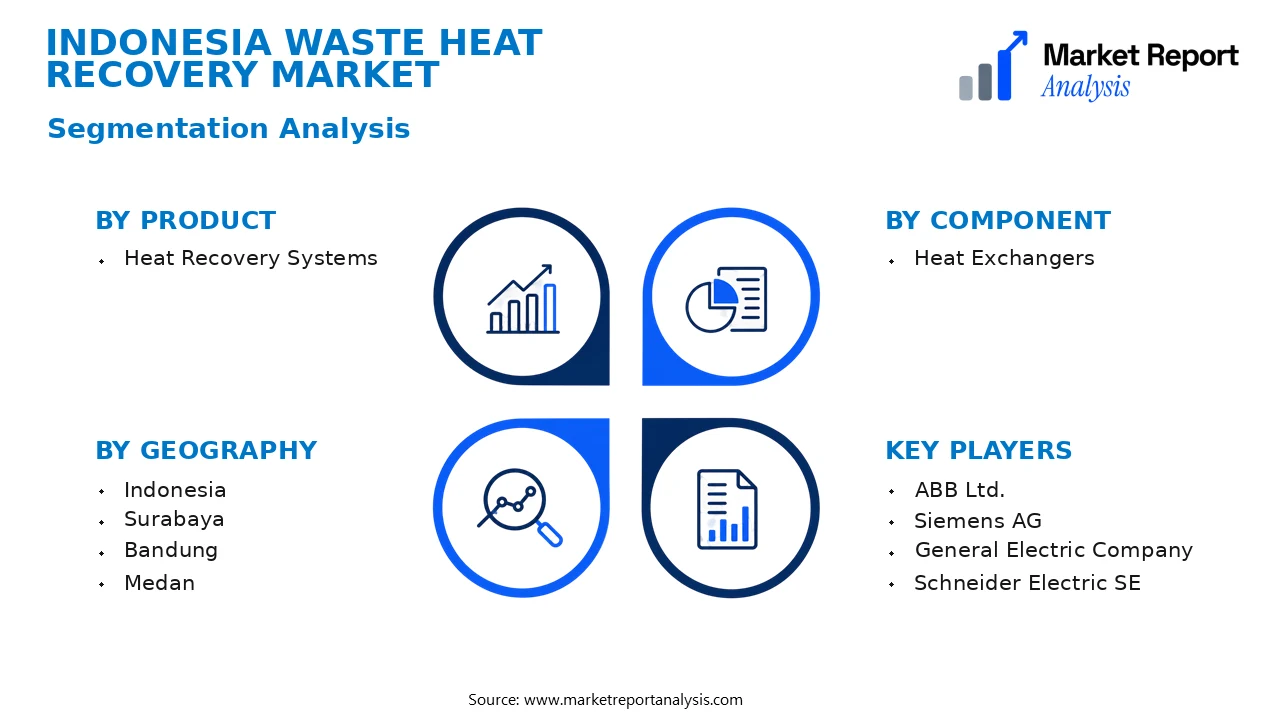
The Indonesia Waste Heat Recovery Market is segmented across various categories including product, component, industry vertical, and geography. These segments enable a detailed understanding of market dynamics, customer demand, and regional variations, facilitating more tailored market strategies.
- Product
- Heat Recovery Systems: This segment encompasses integrated systems designed to capture and convert waste heat into usable energy, playing a crucial role in industrial energy optimization and emission reduction initiatives in Indonesia.
- Component
- Heat Exchangers: These components facilitate efficient heat transfer processes essential in waste heat recovery setups across industries such as manufacturing and power generation, significantly impacting system overall efficiency.
- Industry Vertical
- Power Generation: Power plants are primary users of waste heat recovery technology to improve fuel efficiency and reduce greenhouse gas emissions, especially in coal and natural gas-based facilities in Indonesia.
- Manufacturing: Heavy manufacturing industries such as cement, steel, and chemical manufacturing utilize waste heat recovery to lower energy costs and meet environmental regulations.
- Geography
- Indonesia: The entire country presents unique opportunities and challenges for waste heat recovery owing to its diverse industrial base, geographic dispersion, and varying levels of technological adoption.
- Jakarta: As the economic and industrial hub, Jakarta has significant demand for waste heat recovery solutions driven by dense manufacturing, energy-intensive industries, and proactive government policies.
- Surabaya: Known for its port and industrial zones, Surabaya is a critical region for waste heat recovery, especially for maritime, logistics, and manufacturing sectors seeking energy efficiency improvements.
- Bandung: An emerging hub for electronics and small-scale industries, Bandung’s growth in production demands energy-efficient solutions, making waste heat recovery increasingly relevant.
- Medan: With its large plantation and industrial sectors, Medan's energy-intensive activities offer potential for waste heat recovery investments to enhance operational efficiency and sustainability.
- Semarang: Strategically positioned for industrial expansion, Semarang’s industries such as cement and steel are adopting waste heat recovery systems for cost reduction and environmental compliance.
- Makassar: As Indonesia’s gateway to eastern regions, Makassar’s expanding manufacturing and processing activities are boosting the demand for energy recovery technologies.
- Batam: Industrial parks on Batam, hosting electronics, shipbuilding, and manufacturing industries, are prime candidates for integrated waste heat recovery solutions to optimize energy use.
- Indonesia: The entire country presents unique opportunities and challenges for waste heat recovery owing to its diverse industrial base, geographic dispersion, and varying levels of technological adoption.
Competitive Intelligence
The Indonesia Waste Heat Recovery Market exhibits a moderate level of competition, characterized by the presence of several regional and international players striving for market share. Competition tends to be concentrated among a handful of dominant firms that leverage their technological expertise and local presence to expand their footprint across major Indonesian cities such as Jakarta, Surabaya, and Bandung. Business strategies predominantly focus on partnership development with industrial conglomerates, especially in sectors like cement, oil and gas, and power generation, to integrate waste heat recovery solutions seamlessly into operations. Companies are investing heavily in product innovation, emphasizing energy efficiency, durability in tropical climates, and cost-effective systems tailored for Indonesia's diverse industry landscape. Strategic acquisitions and alliances enable firms to extend their technological capabilities and market reach, while expansion strategies often involve establishing regional R&D centers and manufacturing facilities. Differentiation is achieved through customized solutions, comprehensive service offerings, and a focus on environmentally sustainable technologies. Such competitive dynamics foster innovation and help firms respond swiftly to evolving regulatory frameworks and industrial demands within Indonesia.
Leading Company Profiles
The competitive landscape within the Indonesia Waste Heat Recovery Market features several influential players who are spearheading technological innovations and strategic expansion efforts to capitalize on the rapid growth of energy efficiency solutions in Indonesia's industrial sector.
- ABB Ltd.
- Siemens AG
- General Electric Company
- Schneider Electric SE
- Mitsubishi Electric Corporation
- Eaton Corporation
- Caterpillar Inc.
- Bosch GmbH
- Emerson Electric Co.
- Honeywell International Inc.
ABB Ltd.
ABB specializes in innovative electrical equipment and automation technology, offering advanced waste heat recovery solutions tailored for energy-intensive industries, combining robust engineering with digital integration to optimize energy efficiency in Indonesia.
Siemens AG
Siemens delivers comprehensive industrial automation and energy solutions, focusing on integrating waste heat recovery systems with smart grid capabilities to enhance sustainability and operational efficiency across Indonesia’s manufacturing and thermal sectors.
General Electric Company
GE leverages its broad portfolio in power generation technology, deploying cutting-edge waste heat recovery systems in Indonesia’s oil, gas, and industrial plants, emphasizing innovation in environmentally sustainable energy practices.
Schneider Electric SE
Schneider Electric specializes in energy management and automation, providing integrated waste heat recovery solutions that leverage IoT and digital platforms to improve energy savings and reduce carbon emissions in Indonesian industries.
Mitsubishi Electric Corporation
Mitsubishi Electric develops high-efficiency heat recovery systems with a focus on thermal power plants and large factories, aiming to support Indonesia’s energy transition and industrial sustainability objectives.
Eaton Corporation
Eaton’s energy-efficient electrical components and systems contribute significantly to heat recovery initiatives, emphasizing reliability, safety, and digital control for Indonesian industrial facilities.
Caterpillar Inc.
Caterpillar provides advanced power generation solutions, integrating waste heat recovery technologies into heavy machinery and industrial applications to enhance energy efficiency and reduce operational costs in Indonesia.
Bosch GmbH
Bosch specializes in industrial solutions including thermal and energy management systems, deploying innovative heat recovery technologies that support Indonesia’s efforts toward industrial sustainability and emissions reduction.
Emerson Electric Co.
Emerson offers automation solutions that incorporate waste heat recovery, focusing on digital control and predictive maintenance to optimize energy use and improve operational efficiency in Indonesia’s manufacturing sectors.
Honeywell International Inc.
Honeywell’s energy solutions include scalable waste heat recovery systems, emphasizing smart technology integration and environmental sustainability, thereby aligning with Indonesia’s growing industrial and energy efficiency policies.
Strategic Business Developments
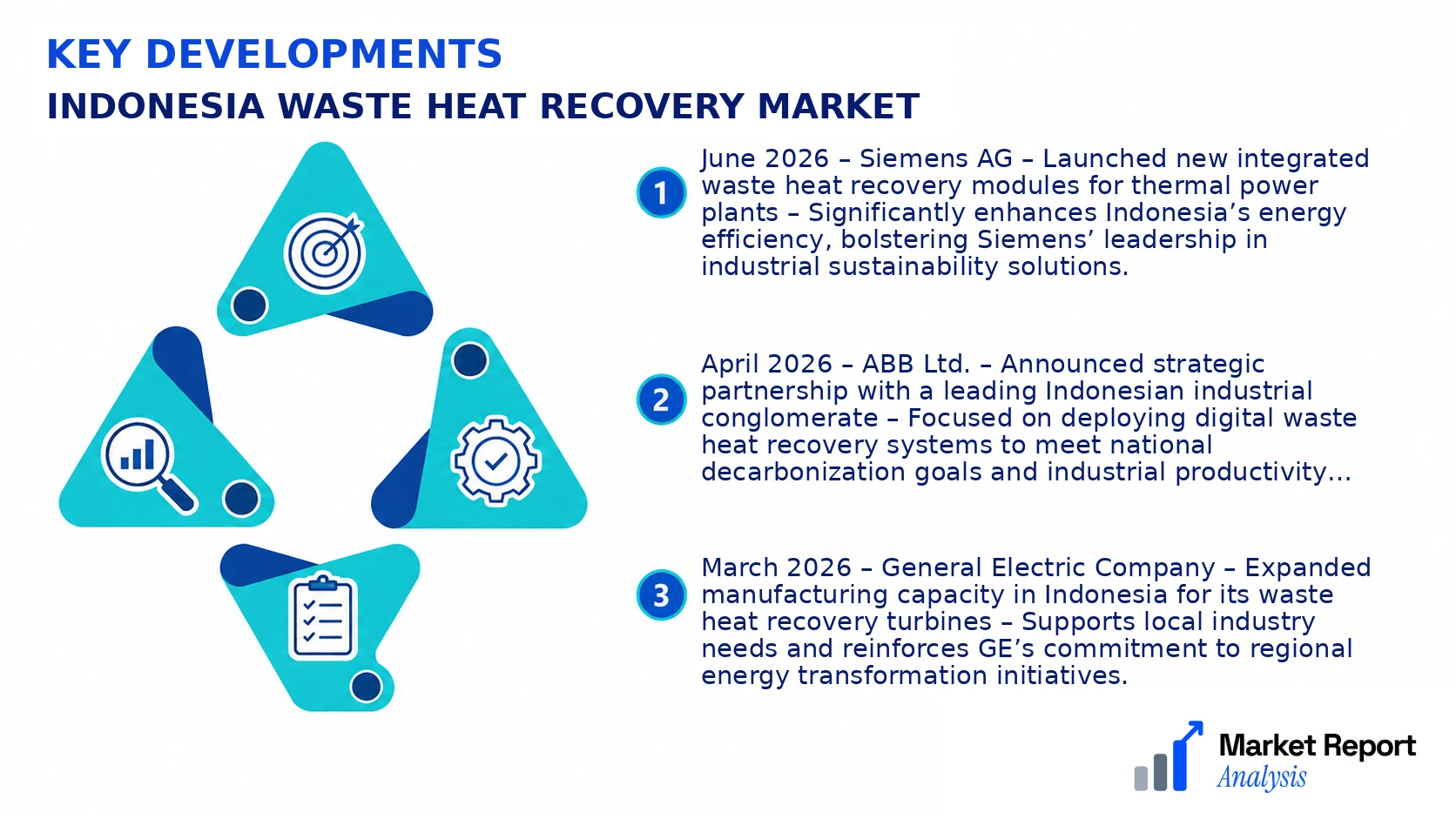
- June 2026 – Siemens AG – Launched new integrated waste heat recovery modules for thermal power plants – Significantly enhances Indonesia’s energy efficiency, bolstering Siemens’ leadership in industrial sustainability solutions.
- April 2026 – ABB Ltd. – Announced strategic partnership with a leading Indonesian industrial conglomerate – Focused on deploying digital waste heat recovery systems to meet national decarbonization goals and industrial productivity targets.
- March 2026 – General Electric Company – Expanded manufacturing capacity in Indonesia for its waste heat recovery turbines – Supports local industry needs and reinforces GE’s commitment to regional energy transformation initiatives.
- January 2026 – Mitsubishi Electric Corporation – Introduced cutting-edge heat recovery systems optimized for Indonesian thermal power stations – Aims to increase efficiency and reduce emissions in energy-critical sectors.
- February 2026 – Eaton Corporation – Formed joint venture with Indonesia-based energy services firms – Emphasizing the development of advanced digital control systems for waste heat recovery projects nationwide.
Frequently Asked Questions
What is the Indonesia Waste Heat Recovery Market?
The Indonesia Waste Heat Recovery Market involves the collection and utilization of excess heat generated from industrial processes to improve energy efficiency and reduce emissions. It encompasses various technologies and systems deployed across sectors like power, manufacturing, and refineries to harness waste heat.
What is the current market size of Indonesia Waste Heat Recovery Market?
As of 2026, the market valuation for waste heat recovery systems in Indonesia stands at approximately USD 2.5 Billion, reflecting increasing industrial adoption driven by energy savings and environmental regulations. The market is poised for substantial growth through 2034.
What factors are driving the Indonesia Waste Heat Recovery Market?
Key drivers include rising energy costs, strict environmental policies, and government incentives promoting sustainable practices. Additionally, Indonesia’s expanding industrial sector and investments in energy-efficient technologies accelerate market growth.
Which region dominates the Indonesia Waste Heat Recovery Market?
Java Island emerges as the leading region due to its concentration of manufacturing plants, power plants, and refineries. Its access to infrastructure and industrial activity significantly contributes to the region’s market dominance.
Which segment is expected to grow the fastest?
Power generation segments are expected to witness the fastest growth, owing to increasing integration of waste heat recovery systems to improve efficiency of thermal power plants. The manufacturing sector also shows rapid adoption, driven by energy efficiency initiatives.
Who are the leading companies operating in the Indonesia Waste Heat Recovery Market?
Major players include GE Power, Siemens AG, and ABB Ltd., which provide comprehensive heat recovery solutions. Local firms and engineering contractors are also expanding their market share through strategic partnerships and technological advancements.
Analyst Perspective
The Indonesia Waste Heat Recovery Market is on a growth trajectory driven by escalating energy demand, government policies promoting efficiency, and industrial expansion, with a positive long-term outlook. As the market matures, technological evolution will emphasize integration of advanced heat recovery systems, such as organic rankine cycles and thermoelectric generators, fostering increased efficiency and cost savings for industries like cement, steel, and petrochemicals. Investment priorities should focus on infrastructure upgrades, R&D for innovative technologies, and regional hubs such as Java and Surabaya with high industrial activity and energy intensity. Competitive dynamics will intensify as local and international players vie for market share, leveraging technological expertise and capital. Regional growth potential remains substantial, especially in city-level corridors where industrial clusters are expanding and energy cost pressures are mounting. Strategic focus on sustainable, scalable solutions will position stakeholders favorably for long-term profitability while supporting Indonesia’s energy transition ambitions.
