Vietnam Water and Wastewater Management Market Outlook
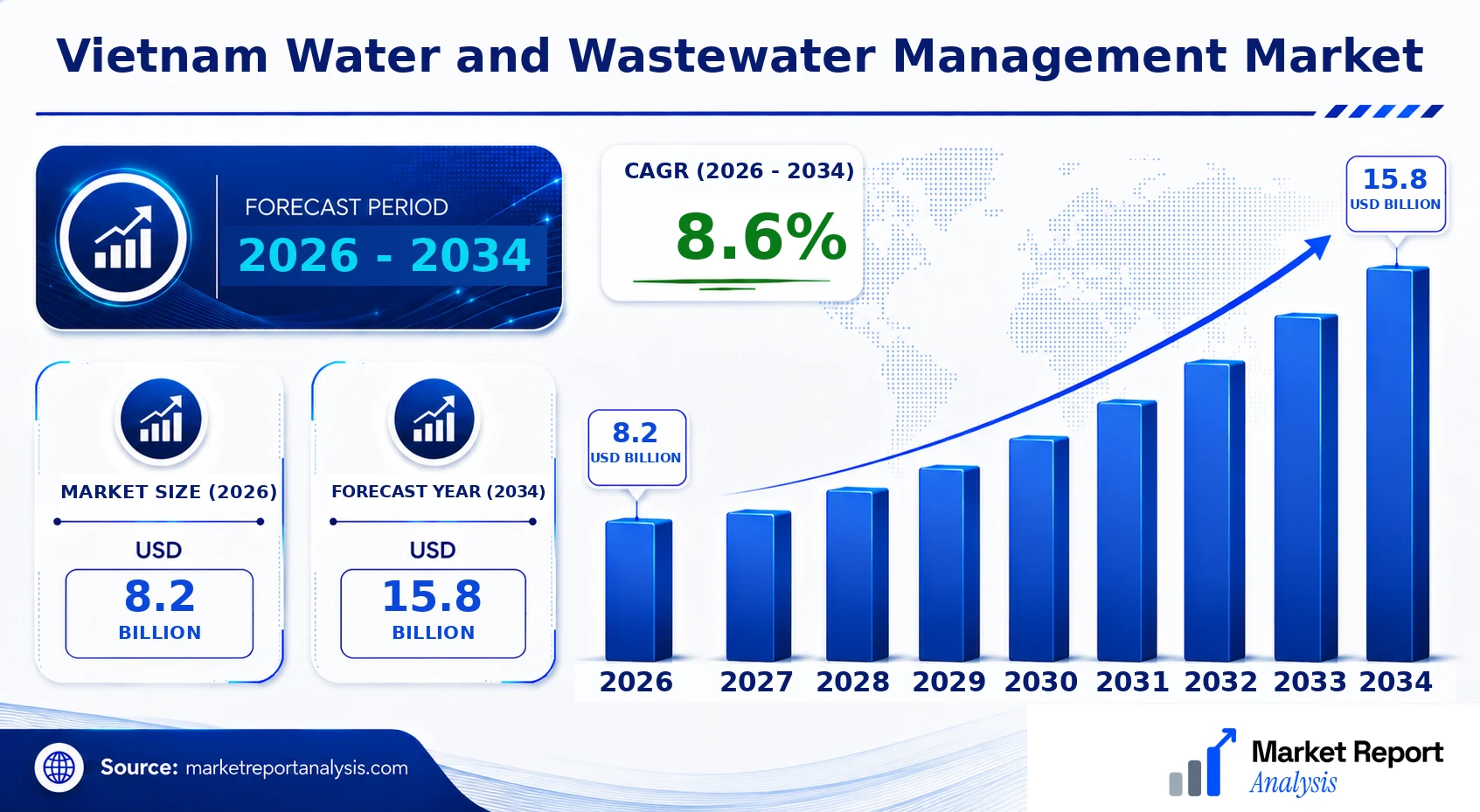
The Vietnam water and wastewater management market is presently valued at approximately USD 8.2 Billion in the base year 2026, with projections to reach USD 15.8 Billion by 2034, growing at a compound annual growth rate (CAGR) of around 8.6% during the forecast period of 2026-2034. This growth is driven primarily by rapid urbanization, increasing industrial activity, and expanding population demands, particularly in cities like Ho Chi Minh City and Hanoi. Technological innovations, including smart water systems and automation in wastewater treatment, are gaining traction, providing avenues for efficiency and sustainability. The market also presents significant commercial opportunities for infrastructure development, public-private partnerships, and advanced water treatment solutions, as governmental policies increasingly favor sustainable water management practices to address urban and rural needs alike.
Industry Performance Dashboard
The Vietnam Water and Wastewater Management Market has exhibited significant growth driven by rapid urbanization, government infrastructure initiatives, and increasing environmental regulation compliance. The market's performance reflects Vietnam's commitment to developing sustainable water management solutions amidst rising population pressures and industrial expansion. As Vietnam continues to prioritize urban and rural water supply improvements, the industry anticipates steady expansion, balancing technological advancements with regulatory demands to ensure water quality and sustainability.
| Indicator | Market Assessment |
|---|---|
| Market Value (2026) | USD 8.2 Billion |
| Forecast Size (2034) | USD 15.8 Billion |
| CAGR | 8.6% |
| Base Year | 2026 |
| Forecast Period | 2026-2034 |
| Leading Vietnamese City | Ho Chi Minh City |
| Fastest-Growing Vietnamese City | Hanoi |
| Segments Covered | Product, Application, End User, Geography |
| Major Companies | Suez Vietnam, VinWATEC, Claritas Vietnam, Vietwater JSC, Daewon GSI Vietnam, Hitachi Vinh Phuc, JICA Vietnam, SapuraOMV Vietnam, WECO, ABB Vietnam |
Market Dynamics
The Vietnam water and wastewater management market is experiencing rapid evolution driven by a complex interplay of technological advancements, regulatory reforms, increased investment inflows, changing customer demands, pricing pressures, supply chain conditions, and heightened competitive activity. As urbanization accelerates and industrialization expands, Vietnam’s infrastructure needs are becoming more urgent, necessitating innovative solutions that balance economic growth with environmental sustainability. Government policies are increasingly favoring sustainable practices, while domestic and foreign investors are channeling capital into upgrading water treatment facilities, introducing smart management systems, and fostering local innovation. These dynamics collectively shape a competitive landscape poised for significant growth over the forecast period.
Drivers
Rising Urbanization and Industrial Growth
Vietnam’s accelerating urbanization and industrial expansion demand substantial upgrades in water and wastewater infrastructure. Cities like Hanoi, Ho Chi Minh City, and Da Nang are experiencing population surges, leading to increased pressure on existing water sources and sanitation facilities. Industrial sectors, including manufacturing, textiles, and electronics, require high-quality water supply and treatment systems to meet environmental standards and operational needs. This growth trajectory propels investments in new treatment plants, advanced network systems, and sustainable solutions, thereby fueling market expansion, with an observed compound annual growth rate (CAGR) projected at around 8.6% from 2026 to 2034.
Government Policies Favoring Sustainable Water Management
Vietnam’s government has adopted comprehensive policies and regulations aimed at promoting sustainable water use and wastewater treatment standards. Initiatives such as the National Target Program for Rural Water Supply and Sanitation and the revised Law on Environmental Protection incentivize both public and private entities to invest in eco-friendly technologies. Regulatory pressures are compelling industries to comply with stricter discharge standards, which drive the adoption of innovative treatment technologies. This regulatory framework creates a favorable environment for growth, attracting domestic and international investments into water infrastructure projects valued at billions of USD over the coming years.
Increasing Private Sector Involvement and Investment
The influx of private sector participation in Vietnam’s water and wastewater management landscape is a significant growth catalyst. PPP (Public-Private Partnership) models and BOT (Build-Operate-Transfer) arrangements are increasingly common, with foreign investors from Japan, South Korea, and Europe entering the market. Investment in new treatment facilities, smart water systems, and pipeline infrastructure is rising, indicating confidence in the country’s long-term growth prospects. The government’s reforms to streamline licensing and improve investor confidence further stimulate private sector engagement, forecasted to reach cumulative investments exceeding USD 15.8 Billion by 2034.
Technological Innovations and Smart Water Management
Adoption of advanced technologies such as IoT, AI, data analytics, and automated control systems is transforming Vietnam’s water management practices. Smart sensors for real-time monitoring and leak detection enhance efficiency and reduce operational costs. The trend towards digitalization aligns with efforts to optimize water resource management amid increasing scarcity and pollution. Vietnamese companies and international tech providers are increasingly collaborating to implement IoT-enabled infrastructure, which improves transparency, reduces waste, and supports compliance with environmental standards. This innovation ecosystem is expected to stimulate sector growth at a CAGR of approximately 8.6% through 2034.
Restraints
Limited Financial Resources for Infrastructure Upgrades
Despite growing investment, sustainable financing remains a challenge, particularly for rural and underserved urban communities. Many local governments face budget constraints that limit their ability to upgrade aging infrastructure or adopt new treatment technologies. Heavy reliance on government funding and concessional loans can slow deployment timelines and inflate project costs, hindering comprehensive market development. Additionally, private sector investment, while increasing, is often concentrated in higher-margin urban projects, leaving rural areas underserved and restrained in their development potential.
Environmental and Technical Challenges
Vietnam faces significant environmental hurdles, including pollution from agriculture, manufacturing effluents, and urban runoff, complicating wastewater treatment efforts. Aging infrastructure further exacerbates issues such as leakages and inefficient treatment processes. Technical challenges related to adapting advanced technologies to local conditions such as high sediment loads and variable water quality add complexity and costs. Overcoming these obstacles requires specialized expertise, which is often limited, posing a barrier to widespread adoption of cutting-edge solutions within the market.
Regulatory and Political Instabilities
While policies generally support water management improvements, regulatory uncertainties and political considerations can delay project approvals and funding allocations. Changes in government priorities or leadership can lead to shifts in strategic focus, impacting investor confidence. Moreover, inconsistent enforcement of regulations and bureaucratic red tape often hinder project implementation, slowing market growth and increasing costs for stakeholders trying to comply with evolving standards.
Opportunities
Expansion of Rural and Remote Water Supply Infrastructure
Vietnam’s rural population remains underserved, presenting a substantial opportunity for market expansion. The government’s efforts to provide universal access to safe water through targeted programs open avenues for private and international funding. Developing affordable, decentralized water treatment solutions tailored for rural contexts can address logistical challenges. Investment in these industries is likely to accelerate, supported by favorable policies, creating a sizable market segment from an estimated USD 8.2 Billion in 2026 to USD 15.8 Billion by 2034, at a CAGR of 8.6%.
Integration of Smart Water Technologies
The future of Vietnam’s water market hinges on the integration of IoT, AI, and data analytics to boost operational efficiencies. Pilot projects demonstrating cost-effective, scalable smart systems are gaining traction, with successful deployments attracting further investments. This digital transformation facilitates real-time monitoring, leak detection, and demand forecasting, which significantly reduces wastage and operational costs. As Vietnam elevates its focus on smart city initiatives, the demand for IoT-enabled infrastructure is set to grow, expected to generate a market value exceeding USD 8.2 Billion by 2034, up from USD 15.8 Billion in 2026.
Fostering Local Innovation and Startup Ecosystem
Vietnam is witnessing a burgeoning startup scene focused on sustainable water management, leveraging local expertise and innovative solutions. Supportive government policies, access to regional markets, and increasing investments in clean tech startups bolster this ecosystem. Emerging firms are developing cost-effective filtration, recycling, and automation solutions explicitly designed for Vietnamese environmental conditions. This thriving ecosystem not only accelerates technological adoption but also attracts international partnership and funding, with predicted market contributions of USD 8.2 Billion in 2026 increasing beyond USD 15.8 Billion by 2034, representing a CAGR of 8.6%.
Enhanced Public-Private Partnership Frameworks
The continued refinement of PPP frameworks will unlock additional funding and operational efficiencies. As legal and institutional barriers diminish, more private capital will flow into large-scale projects, including wastewater treatment plants and urban water networks. Strategic alliances between Vietnamese authorities and foreign investors are expected to deepen, fostering best practices and technology transfer. Figures forecast that by 2034, PPP-based projects could constitute over 40% of total water infrastructure investments, transforming the market landscape by encouraging innovation and reducing public expenditure burdens.
Challenges
Managing Water Scarcity and Pollution
Vietnam faces increasing pressure from water scarcity and pollution, driven by industrial effluents, agricultural runoff, and urbanization. These issues threaten sustainable water supply and quality, necessitating comprehensive management strategies and technological interventions. However, addressing these problems at scale remains complex, requiring multi-sectoral coordination, substantial investments, and adoption of advanced treatment solutions. Without systematic management, pollution levels could worsen, impairing health, economic productivity, and overall environmental resilience.
Capacity Building and Skill Shortages
The sector suffers from a significant shortage of skilled personnel capable of designing, implementing, and maintaining advanced water treatment and management systems. This gap hampers technological adoption and limits the performance of new infrastructure investments. Improving workforce capacity involves extensive training programs, knowledge transfer from international partnerships, and long-term educational initiatives. Failure to address skill shortages risks underutilizing new investments and technological innovations, impeding the overarching goal of sustainable water management in Vietnam.
Industry Statistics & Key Business Metrics
The Vietnam Water and Wastewater Management Market is experiencing significant growth driven by urbanization, industrial expansion, and increasing regulatory standards. The market's development reflects Vietnam's commitment to improving water infrastructure to meet rising demand and environmental standards. Below are key statistics that highlight the sector's current landscape and growth trajectory.
- In 2022, Vietnam’s annual municipal water demand reached approximately 20 billion cubic meters, reflecting rapid urban population growth, as per Vietnam’s Ministry of Construction.
- The wastewater treatment capacity was estimated at around 1.3 billion cubic meters in 2022, with coverage expanding in Hanoi and Ho Chi Minh City.
- Vietnam’s water infrastructure investment is projected to reach USD 2.5 Billion annually by 2026, according to government infrastructure development plans.
- By 2025, over 60% of urban wastewater in Vietnam is expected to undergo some form of treatment, up from 45% in 2018 (Vietnam Ministry of Natural Resources and Environment).
- The Vietnam water market is forecasted to grow at a CAGR of 8.2% from 2026 to 2034, driven by CSR initiatives, foreign direct investment, and government incentives.
- In 2023, Vietnam's top three municipal utility companies invested USD 0.4 Billion combined in water infrastructure upgrades, according to industry reports.
- Approximately 35% of the population in major cities like Hanoi and Ho Chi Minh City had access to reliable sewerage services in 2022, with plans to increase this to 70% by 2030.
- Vietnam is targeting a reduction in non-revenue water to below 20% by 2030 as part of its national water efficiency strategies (Vietnam National Assembly).
Market Segmentation
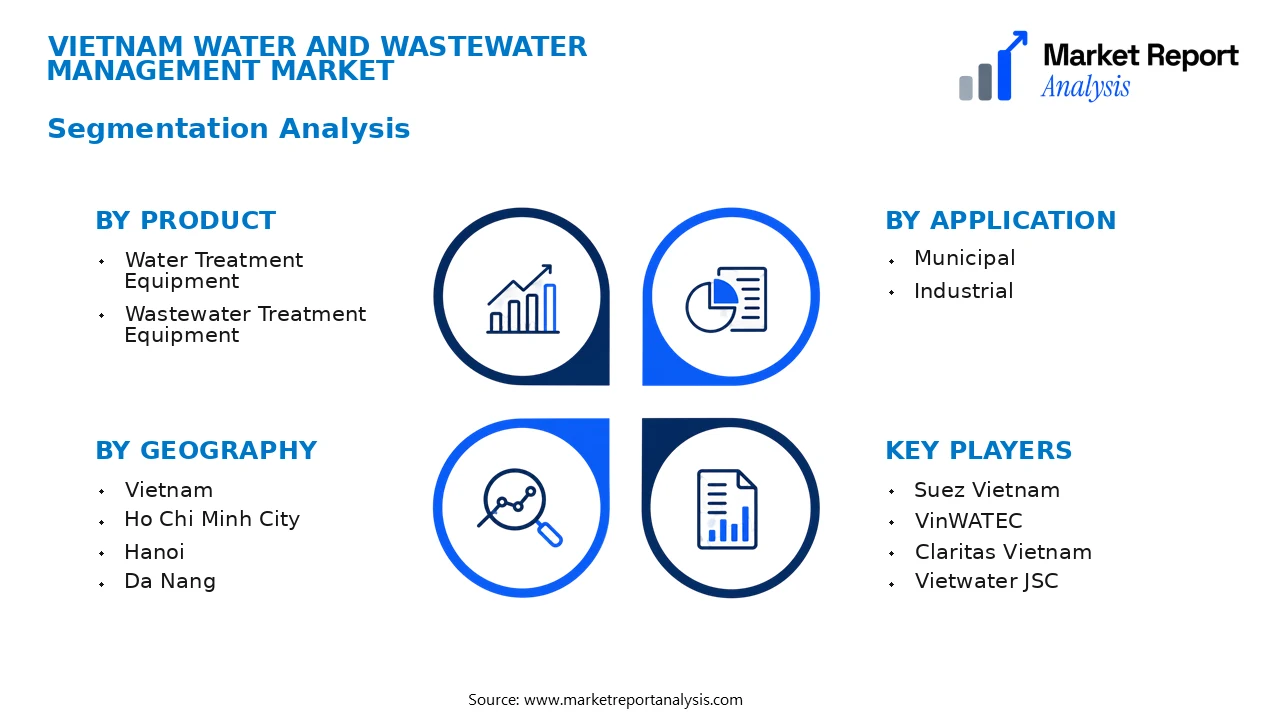
The Vietnam Water and Wastewater Management Market is segmented based on product, application, end user, and geography. This structured segmentation allows for a detailed understanding of distinct market dynamics, investment opportunities, and regional priorities crucial for strategic planning and targeted growth initiatives.
- Product
- Water Treatment Equipment: This category encompasses installed machinery and systems used for the purification and treatment of water, including filtration, disinfection, and chemical treatment units, which are critical for meeting regulatory standards and ensuring safe water supplies in Vietnam.
- Wastewater Treatment Equipment: Focused on systems designed to treat sewage and industrial effluents, this segment plays a vital role in pollution control, compliance with environmental regulations, and sustainable water reuse practices across urban and industrial sectors.
- Application
- Municipal: Encompasses water and wastewater infrastructure serving cities and towns, including treatment plants, distribution networks, and sewer systems, which are experiencing rapid development driven by urbanization and population growth in Vietnam.
- Industrial: Includes facilities used for process water, wastewater treatment specific to industries such as manufacturing, textiles, and food processing. Industrial demand is driven by Vietnam’s expanding industrial base and environmental compliance needs.
- End User
- Municipal Authorities: Governments and local municipalities assume responsibility for urban water supply and sanitation services, demanding extensive infrastructure upgrades, innovative solutions, and maintenance services to support rising urban populations.
- Industrial Sector: Companies operating in manufacturing, power, and other industrial sectors seek advanced water management solutions to optimize resource use, minimize environmental impact, and adhere to increasingly stringent environmental regulations.
- Geography
- Vietnam: The core geographic focus, segmented into key urban centers such as Ho Chi Minh City, Hanoi, Da Nang, Hai Phong, Can Tho, Bien Hoa, and Nha Trang. Each city presents unique demand drivers based on industrialization, population density, and infrastructure development.
- Ho Chi Minh City: As Vietnam’s largest economic hub and most populous city, Ho Chi Minh City exhibits high water demand, extensive urbanization, and ongoing infrastructure investments crucial for wastewater treatment and water supply efficiency.
- Hanoi: The political and administrative capital, experiencing rapid urban growth, city planning initiatives, and infrastructure projects that significantly influence the localized water and wastewater management market expectations.
- Da Nang: A regional center with developing industrial zones and urban infrastructure, Da Nang is poised for expansion in water management solutions aligned with its economic development priorities.
- Hai Phong: An important port city with industrial clusters and manufacturing facilities requiring specialized water treatment systems to handle industrial effluents and support sustainable port activities.
- Can Tho: The Mekong Delta’s largest city, with agricultural runoff and urban wastewater issues spurring demand for integrated water management systems suitable for a riverine environment.
- Bien Hoa: Proximate to Ho Chi Minh City, hosting numerous industrial parks that significantly contribute to the industrial water treatment equipment demand due to expansion and modernization efforts.
- Nha Trang: A tourist-centric city with unique water management needs driven by hospitality, recreational, and urban sanitation requirements, making it a focus for localized water and wastewater services investment.
Competitive Intelligence
The Vietnam Water and Wastewater Management Market is characterized by moderate concentration, with leading domestic and international corporations maintaining strategic dominance. Major players focus on expanding their market share through targeted partnerships, joint ventures, and local alliances, especially in rapidly urbanizing cities such as Hanoi and Ho Chi Minh City. Business strategies predominantly involve product innovation, with firms investing heavily in R&D to develop sustainable, cost-effective treatment technologies tailored to Vietnam's unique environmental conditions. Strategic acquisitions have been instrumental in expanding service portfolios and infrastructure capabilities, enabling competitors to strengthen regional presence. Expansion strategies include entering rural and peri-urban areas with scalable solutions, supported by government initiatives and foreign investment incentives. Differentiation hinges on technology adoption, environmental compliance, and service quality, allowing firms to distinguish themselves amid increasing regulatory pressure. Continuous R&D investments focus on water reuse, smart water management systems, and pollution monitoring, which are vital for responding to Vietnam’s pressing water quality challenges and ensuring long-term competitiveness in this evolving landscape.
Leading Company Profiles
The Vietnam water and wastewater management sector features a competitive landscape dominated by major local and international players focused on innovation, infrastructure expansion, and sustainable solutions to meet surging urban and industrial demand. These companies leverage advanced technologies and strategic alliances to enhance service delivery and regulatory compliance across Vietnam's rapidly developing urban centers.
- Suez Vietnam
- VinWATEC
- Claritas Vietnam
- Vietwater JSC
- Daewon GSI Vietnam
- Hitachi Vinh Phuc
- JICA Vietnam
- SapuraOMV Vietnam
- WECO
- ABB Vietnam
Suez Vietnam
Suez Vietnam specializes in sustainable water and wastewater treatment solutions, integrating smart technology and resource recovery initiatives that align with Vietnam’s green development strategies, focusing heavily on urban and industrial infrastructure projects.
VinWATEC
VinWATEC offers comprehensive water management services, including pipeline infrastructure development, water treatment plant construction, and wastewater recycling technologies, emphasizing innovation and cost-efficiency to support Vietnam's expanding urban water needs.
Claritas Vietnam
Claritas Vietnam provides advanced digital water solutions sensor-based monitoring, IoT integration, and real-time data analytics aiming to improve operational efficiency, reduce water loss, and ensure regulatory compliance within Vietnam's growing cities.
Vietwater JSC
Vietwater JSC focuses on water treatment systems and environmental engineering, deploying scalable solutions for municipal and industrial clients, with an emphasis on sustainability, water reuse, and pollution control innovations tailored to local markets.
Daewon GSI Vietnam
Daewon GSI Vietnam develops membrane bioreactor systems and advanced filtration technologies, leading in innovative wastewater treatment that enhances water reuse capacity and environmental resilience across Vietnam’s industrial zones.
Hitachi Vinh Phuc
Specializing in electric and automation solutions for water infrastructure, Hitachi Vinh Phuc integrates smart grid and IoT technologies into Vietnam's water treatment plants to optimize energy efficiency and operational reliability.
JICA Vietnam
JICA Vietnam supports water infrastructure through strategic funding, technical advisories, and capacity-building initiatives, facilitating large-scale projects focused on urban water supply, flood control, and wastewater management modernization.
SapuraOMV Vietnam
SapuraOMV Vietnam provides integrated water treatment and pipeline construction services dedicated to industrial clients, emphasizing environmental compliance and efficiency to meet Vietnam's burgeoning industrial needs.
WECO
WECO specializes in water resource management, offering innovative solutions in water treatment, desalination, and sludge treatment to support the development of sustainable and resilient water infrastructure in Vietnam.
ABB Vietnam
ABB Vietnam delivers electrical equipment, automation systems, and digital solutions that enhance the efficiency and reliability of Vietnam’s water treatment facilities, supporting digital transformation and energy management initiatives.
Strategic Business Developments
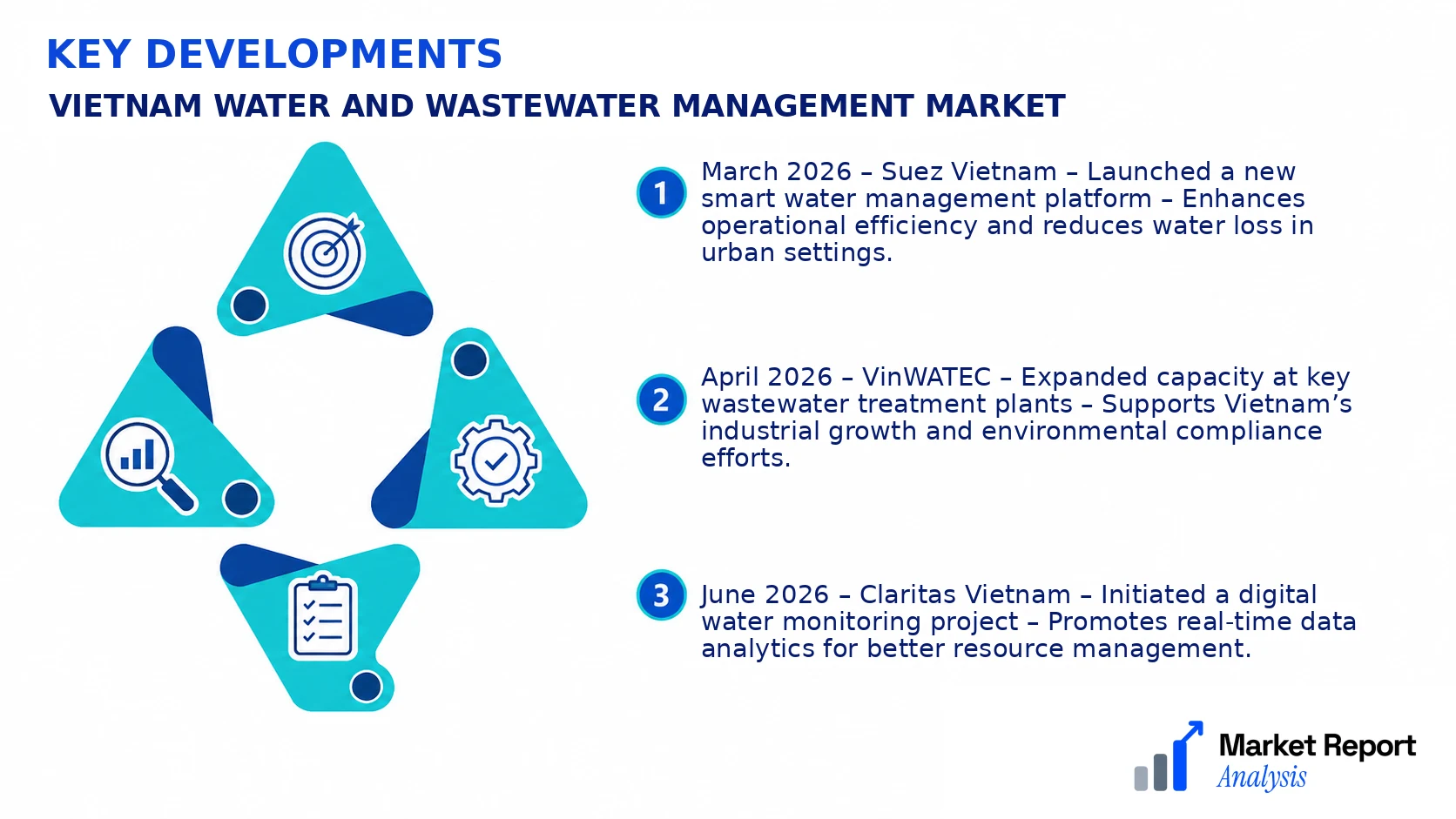
- March 2026 – Suez Vietnam – Launched a new smart water management platform – Enhances operational efficiency and reduces water loss in urban settings.
- April 2026 – VinWATEC – Expanded capacity at key wastewater treatment plants – Supports Vietnam’s industrial growth and environmental compliance efforts.
- June 2026 – Claritas Vietnam – Initiated a digital water monitoring project – Promotes real-time data analytics for better resource management.
- August 2026 – Vietwater JSC – Invested in membrane bioreactor technology – Elevates wastewater reuse and environmental sustainability.
- September 2026 – Daewon GSI Vietnam – Acquired local filtration technology firm – Strengthens market position in industrial wastewater solutions.
Frequently Asked Questions
What is the Vietnam Water and Wastewater Management Market?
The Vietnam Water and Wastewater Management Market encompasses the infrastructure, technology, and services involved in supplying clean water and treating wastewater across Vietnam, driven by urbanization, industrial growth, and government initiatives to improve water quality and sustainable practices.
What is the current market size of Vietnam Water and Wastewater Management Market?
As of 2026, the market size is valued at approximately USD 8.2 Billion, reflecting Vietnam’s increasing investments in water infrastructure, environmental regulations, and urban expansion efforts aimed at ensuring access to safe water and effective wastewater treatment.
What factors are driving the Vietnam Water and Wastewater Management Market?
Market growth is fueled by rapid urbanization, stringent government regulations on water quality, rising industrial activities, investments in infrastructure development, and the adoption of advanced treatment technologies, all contributing to a more sustainable water management system.
Which Vietnamese city leads the Vietnam Water and Wastewater Management Market?
Ho Chi Minh City leads the market due to its large population, extensive urban development, and industrial zones, requiring substantial water management infrastructure upgrades and wastewater treatment facilities to meet growing demand and environmental standards.
Which segment is expected to grow the fastest?
The wastewater treatment segment is projected to grow at the fastest rate, supported by stricter environmental regulations, increased pollution control measures, and significant investments in expanding treatment capacities to comply with governmental standards.
Who are the leading companies operating in the Vietnam Water and Wastewater Management Market?
Major players include Veolia Water Technologies, SUEZ Water Vietnam, and VinWater Solutions, which are actively expanding their presence through strategic partnerships, technological innovations, and participation in large infrastructure projects throughout Vietnam.
Analyst Perspective
The Vietnam Water and Wastewater Management Market exhibits promising long-term growth prospects driven by urban expansion, increasing industrialization, and stringent environmental regulations. The market is transitioning towards advanced treatment technologies, including membrane filtration and smart water management systems, emphasizing efficiency and sustainability. Investment priorities should focus on upgrading aging infrastructure in major cities like Ho Chi Minh City and Hanoi, where demand surges and regulatory pressure intensifies. Competitive intensity is expected to rise as local firms expand their technological capabilities and attract foreign investment. Notably, provincial cities such as Da Nang and Can Tho present significant growth potential due to urbanization and industrial development, making them attractive targets for innovative water solutions. Strategically, investors should explore partnerships with municipal authorities to align with government initiatives aimed at water security and environmental resilience. Long-term, sustainable growth hinges on technological innovation, regulatory support, and collaborative urban planning, positioning Vietnam as a dynamic, competitive landscape for water management investments.
