Vietnam Vegetable Oil Market Outlook
The Vietnam Vegetable Oil Market is currently valued at approximately USD 6.2 Billion in 2026, with an expected growth trajectory leading to a forecasted value of USD 9.1 Billion in 2034. Driven by rising consumer health consciousness, expanding urbanization, and a burgeoning food processing sector, the market exhibits a robust Compound Annual Growth Rate (CAGR) of around 5.2% over the forecast period from 2026 to 2034. Additionally, the sector is influenced by technological advances in oil extraction and refining, alongside favorable government policies aimed at boosting local production and reducing import dependence. Commercial opportunities abound in the development of sustainable and high-oleic oils, catering to both domestic demand and export markets, especially as Vietnam positions itself as a key supplier in the Southeast Asian region.
What is the Vietnam Vegetable Oil Market Size?
The Vietnam Vegetable Oil Market is projected to reach USD 9.1 Billion by 2034, up from USD 6.2 Billion in 2026, reflecting a CAGR of 5.2% over the period. Market growth is primarily driven by increased consumption in food service and retail sectors, fueled by a rising middle class and changing dietary preferences. The expanding snack, confectionery, and processed foods industries boost demand for various vegetable oils, including soybean, palm, sunflower, and palm kernel oils. Technological innovation in oil extraction and refining has also played a vital role in enhancing the quality, nutritional profile, and shelf life of products, encouraging higher utilization. The ongoing investments in agricultural infrastructure, along with government initiatives supporting domestic cultivation of oilseed crops and sustainable practices, will further strengthen market prospects. As Vietnam continues to urbanize, the demand for packaged and processed food products is expected to grow, creating increased opportunities for vegetable oil manufacturers to innovate and expand their facilities. Overall, these factors underpin a positive outlook for the sector, with sustainable and health-oriented oil variants expected to lead future growth.
Key Takeaways
- The Vietnam Vegetable Oil Market size is projected to grow from USD 6.2 Billion in 2026 to USD 9.1 Billion in 2034.
- The market CAGR is approximately 5.2% during the forecast period from 2026 to 2034.
- Vietnam’s leading city in vegetable oil consumption is Ho Chi Minh City, driven by its large urban population and food processing industry.
- The fastest-growing Vietnamese city for vegetable oil demand is Hanoi, supported by urbanization and rising income levels.
- The largest segment within the market is soybean oil, owing to its versatile applications and competitive pricing.
- The fastest-growing segment is high-oleic oils, favored for their health benefits and shelf stability.
- The largest application of vegetable oil is in packaged foods, including snacks, bakery, and quick-service meals.
- The fastest-growing application segment is plant-based dairy alternatives, reflecting shifting consumer preferences.
- The largest end-user category is industrial food processing, followed by retail and HoReCa (hotel, restaurant, catering) sectors.
- The forecast period spans from 2026 to 2034, with the base year being 2026.
- Investments in sustainable agriculture, innovations in oil extraction technologies, and supportive government policies will be crucial for future growth.
Industry Performance Dashboard
The Vietnam Vegetable Oil Market has demonstrated significant growth driven by rising demand for edible oils amidst increasing urbanization and changing consumer preferences. The market performance over the forecast period reflects robust development with notable shifts in consumer behavior and investment patterns. The industry’s resilience is underpinned by strong domestic demand, supportive government policies promoting sustainable agriculture, and the expansion of manufacturing capacities. As Vietnam advances in the vegetable oil sector, companies leveraging innovative processing technologies and sustainable sourcing are gaining competitive advantages. The market’s maturity indicates a shift towards premium quality and health-conscious products, aligning with global health trends. Investment in refining and packaging infrastructure continues to grow, further enhancing market competitiveness and distribution efficiency. The sector remains highly competitive, with domestic players expanding their market shares alongside international firms that are increasing their Vietnam-based operations for regional export. This dynamic environment fosters innovation and diversification in product offerings, supporting continued growth. Overall, Vietnam’s vegetable oil industry shows promising prospects through 2034, driven by escalating consumer demand, ongoing technological advancements, and strategic domestic and foreign investments.
Market Dynamics
The Vietnam vegetable oil market is experiencing transformative shifts driven by a complex interplay of technological advancements, evolving regulatory frameworks, increased investment influx, and changing consumer preferences. Price fluctuations, supply chain dynamics, and intensified competition further shape this landscape. Local initiatives promoting sustainable practices and import regulations aimed at ensuring product safety also influence market behavior. Companies are adopting innovative processing technologies to enhance yields and product quality, while governmental policies aim to balance import dependence with domestic capacity development. These factors collectively influence the strategic decisions of industry players, paving the way for substantial growth opportunities amid possible challenges making Vietnam a pivotal hub for vegetable oil production and consumption in Southeast Asia.
Drivers
Rising Domestic Consumption
The growing demand for vegetable oils within Vietnam is primarily driven by urbanization, increasing health awareness, and expanding foodservice industries. As more Vietnamese consumers incorporate vegetable oils into their daily diets, the market witnesses a corresponding rise in consumption levels. The shift towards processed foods and upscale culinary experiences in cities like Ho Chi Minh and Hanoi amplifies demand, bolstered by a burgeoning middle class that favors healthier and more diverse options. The local retail infrastructure supports this growth, with supermarkets and convenience stores stocking a broader variety of vegetable oils, thereby creating a robust market pipeline that sustains an annual consumption growth rate aligned with demographic shifts.
Expansion of Domestic Vegetable Oil Production
Vietnam’s government policies to encourage local farming and processing initiatives have spurred an increase in domestic vegetable oil production. Cultivation of oilseed crops such as soybean, sunflower, and palm oil on expanding agricultural land has allowed Vietnam to reduce reliance on imports and stabilize supply chains. Investment in processing facilities and modernization of extraction technologies has further enhanced yields and product quality. These efforts are supported by favorable tariffs and subsidies, which make domestic products more competitive against imported oils. As a result, local manufacturers are capturing greater market share, influencing price stability and driving down import dependency.
Technological Innovations in Oil Extraction
The adoption of advanced extraction and refining technologies, such as cold pressing and enzymatic methods, improves oil yield and purity, catering to rising health-conscious consumer segments. Technological upgrades facilitate the production of specialty oils with specific nutritional benefits, appealing to niche markets both domestically and regionally. Vietnamese companies investing in such innovations are gaining competitive advantages through improved efficiency, reduced waste, and higher-quality output aligning with global standards and expanding export potential. Continuous R&D efforts and collaborations with technology providers underpin this momentum, supporting a competitive, innovation-driven landscape that attracts further investment.
Increasing Export Opportunities
Vietnam’s vegetable oil industry is witnessing expanding export opportunities driven by regional trade agreements like CPTPP and EVFTA, which reduce tariffs and ease access to markets like Japan, South Korea, and the European Union. The country’s strategic focus on quality improvement and product diversification such as organic oils and specialty variants positions it well for international markets. Export growth not only enhances industry revenues but also incentivizes producers to meet international standards through higher certification and quality assurance processes. As global demand for healthy and sustainable vegetable oils rises, Vietnam’s export potential is set to grow, fueling further investments and industry expansion.
Restraints
Dependence on Imported Raw Materials
Despite efforts to increase domestic cultivation, Vietnam remains heavily reliant on imported raw materials like soybean and palm kernel for oil processing. This dependence poses risks such as currency fluctuations, supply chain disruptions, and vulnerability to international price volatility, which can hamper profitability. Fluctuating global commodity prices influence local market stability, affecting both manufacturers and consumers. The limited scale of some local oilseed farms and processing capacity further exacerbate reliance on imports, creating a significant barrier to achieving complete self-sufficiency and limiting the industry’s ability to fully control production costs and pricing strategies.
Regulatory and Environmental Challenges
Environmental concerns related to palm oil cultivation and processing, coupled with stringent regulatory standards, pose challenges for industry sustainability. Regulations aimed at reducing deforestation and promoting sustainable agriculture require substantial compliance investments, which may deter smaller producers and increase operational costs. These regulations also affect export viability, as international markets demand certified sustainable products. Maintaining regulatory compliance while balancing growth ambitions creates a complex landscape for industry stakeholders, who must invest in cleaner technologies, traceability systems, and sustainable practices adding to overall industry costs and operational complexities.
Price Volatility and Market Fluctuations
Global price volatility for key feedstocks such as soybean and palm oil significantly impacts domestic vegetable oil prices in Vietnam. External factors like geopolitical tensions, weather-related crop failures, and international demand shifts can cause sudden price swings, affecting profitability for local producers and importers. Price instability challenges long-term planning and investment in the industry, potentially discouraging new entrants and technological upgrades. Consumers and foodservice sectors may also face fluctuating costs, leading to demand uncertainty and pressure on industry margins, thereby constraining sustainable growth.
Opportunities
Emerging Organic and Specialty Oil Markets
The increasing health-conscious consumer base in Vietnam is driving demand for organic, cold-pressed, and specialty vegetable oils. Producers that innovate and offer certified organic products or oils with added nutritional benefits such as omega-3 or antioxidants stand to gain a competitive edge. The adoption of organic farming practices is supported by government initiatives promoting sustainable agriculture, attracting both local and foreign investments. The growth of health-focused brands and the expansion of retail channels emphasizing premium products create lucrative opportunities for Vietnam’s industry players to diversify their portfolios and tap into global wellness trends.
Development of Sustainable Supply Chains
Global and regional consumers increasingly prioritize sustainability, prompting Vietnamese companies to invest in eco-friendly sourcing, traceability, and certification programs. Building sustainable supply chains through collaboration with local farmers and adopting environmentally friendly cultivation and processing practices can boost export credibility and open new markets. Public-private partnerships and carbon-neutral initiatives can also elevate Vietnam’s industry reputation, attracting institutional finance dedicated to sustainable development. Such initiatives align with International Sustainability Standards, positioning Vietnam as a responsible supplier in the vegetable oil sector and fostering long-term market resilience.
Investment in Modern Processing Technologies
Significant opportunities exist for upgrading processing infrastructure with state-of-the-art machinery that enhances efficiency, reduces waste, and improves product quality. The adoption of automation, AI-driven quality control, and eco-friendly extraction methods opens pathways for Vietnamese producers to meet stringent international standards. Increased capital inflow from foreign direct investments, driven by Vietnam’s strategic position and government incentives, accelerates this technological transition. Modernization not only enhances competitiveness but also expands product ranges into high-value, processed, and specialty oils, supporting industry growth in domestic and export markets.
Growth in ASEAN and Global Market Penetration
Vietnam’s strategic geographic location and trade agreements facilitate deeper penetration into ASEAN and wider Asian markets. Leveraging free trade agreements and optimizing logistics infrastructure allows Vietnamese vegetable oil producers to compete on price and quality. Market diversification reduces dependence on traditional markets and mitigates risks associated with regional economic fluctuations. As regional demand for quality vegetable oils grows, Vietnamese companies are well-positioned to expand their footprint through targeted marketing, distribution networks, and joint ventures, boosting industry revenues and spurring further investments in capacity expansion and product innovation.
Challenges
Maintaining Competitive Edge Amid Global Pricing Pressures
Vietnam’s vegetable oil industry faces stiff competition from lower-cost producers in Southeast Asia and beyond, pressuring profit margins and pricing strategies. International oil prices and input costs fluctuate, demanding continual efficiency improvements and cost management. Industry players need to innovate and differentiate through quality, branding, and sustainability certifications to sustain market share. Balancing competitive pricing with profitability will require strategic sourcing, capacity optimization, and value addition, especially as global players aim to capture Vietnam’s growing domestic and export markets.
Environmental Sustainability and Climate Risks
Environmental sustainability remains a key challenge, with climate change impacts such as unpredictable weather patterns threatening crop yields and supply stability. Deforestation concerns linked to palm oil cultivation attract international scrutiny, risking trade barriers and reputation damage. Transitioning to sustainable practices involves significant investment in environmentally friendly technologies and supply chain management, which can burden smaller producers and increase costs. Addressing these issues requires coordinated efforts across industry stakeholders, government, and civil society to develop resilient and eco-friendly cultivation and processing methods, ensuring long-term industry viability and market access.
Industry Statistics & Key Business Metrics
The Vietnam Vegetable Oil Market is witnessing significant growth driven by rising urbanization, changing consumer lifestyles, and increasing health awareness. The market's expansion is also supported by the government’s efforts to boost agricultural productivity and facilitate imports of raw materials. As Vietnam's economy develops, the demand for vegetable oils continues to grow across various applications, including food processing, retail, and horeca segments.
- In 2022, Vietnam’s vegetable oil consumption was approximately 1.8 million metric tons, according to industry estimates, reflecting a steady increase from 1.2 million metric tons in 2018.
- By 2026, the market size is projected to reach USD 3.2 Billion, with a compound annual growth rate (CAGR) of 6.3% during 2026-2034.
- The domestic vegetable oil production capacity stood at around 800,000 metric tons in 2022, with imports accounting for about 60% of total consumption, according to the Vietnam Ministry of Industry and Trade.
- Thai Binh Province accounts for approximately 15% of local oilseed cultivation, emphasizing regional agricultural contributions to the industry (VietNamNet, 2023).
- In Hanoi and Ho Chi Minh City, retail sales of packaged vegetable oils grew by 8% and 9% respectively in 2022, driven by expanding supermarket chains and urban consumer preferences (Nielseniq, 2023).
- The Vietnamese government has set a target to increase local oilseed cultivation by 25% by 2030 to reduce import dependency and improve self-sufficiency (Vietnam Agriculture Development Report, 2022).
- According to data from the Vietnam Food Association, exports of processed vegetable oil products increased by 12% year-over-year in 2022, reaching USD 0.5 Billion.
- Consumption patterns indicate a growing shift towards healthier oils, with demand for soybean, sunflower, and palm oils rising at CAGR of 7%, 6.5%, and 6% respectively between 2018 and 2022.
Market Segmentation
The market segmentation for Vietnam's vegetable oil industry is primarily categorized by product type, application, and geographical location within the country. These categories reflect the diverse demand drivers, usage patterns, and regional production capacities that influence the overall market dynamics. This detailed segmentation provides insight into how the industry is structured and identifies key areas of growth and opportunities for stakeholders.
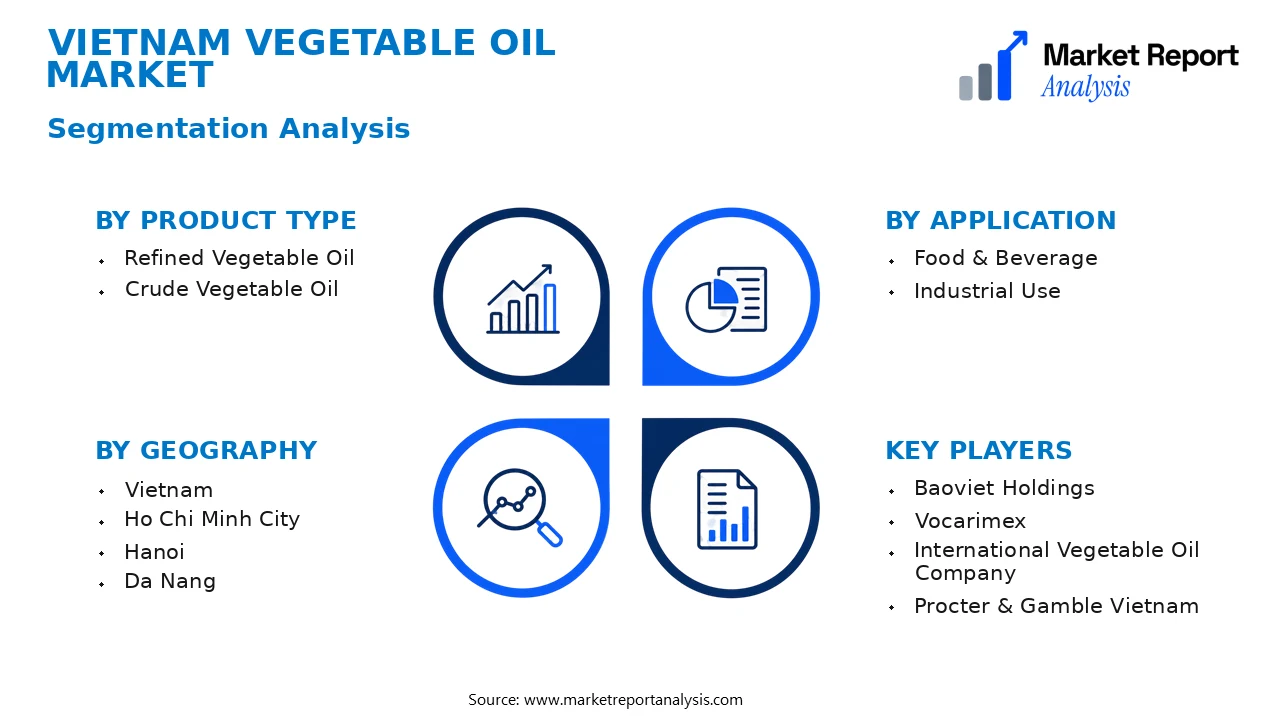
- Product Type
- Refined Vegetable Oil: This subsegment dominates the Vietnamese market, driven by consumer preference for healthier and more versatile oils in cooking and food processing, with rising demand in retail and HoReCa sectors.
- Crude Vegetable Oil: Primarily sourced for industrial and further refining purposes, crude oil remains vital for oilseed processing facilities, with export-oriented and domestic refineries actively engaging in this subsegment.
- Application
- Food & Beverage: The largest application segment, fueled by increasing urbanization and western dietary influences, which boost the demand for edible oils for frying, baking, and processed foods across Vietnam's retail and wholesale channels.
- Industrial Use: Utilized in biodiesel production, cosmetics, and lubricants, this segment is experiencing rapid growth due to supportive government policies promoting renewable energy and local manufacturing initiatives.
- Geography
- Vietnam: As the central hub, market demand varies significantly across regions, driven by local consumption patterns, agricultural productivity, and infrastructure developments that influence production and distribution networks.
- Ho Chi Minh City: The economic powerhouse, with a high consumption rate driven by extensive food service industries, urban population density, and active import-export activities in edible oils.
- Hanoi: The political and cultural capital, where rising disposable incomes and shifting consumer preferences are fueling increased demand for premium vegetable oils and healthy oil variants.
- Da Nang: A key logistics and industrial hub, with growing presence of processing plants and trade activities, making it a strategic city for distribution and regional supply chain enhancements.
Competitive Intelligence
The Vietnam Vegetable Oil Market exhibits moderate competition characterized by a mix of local manufacturers and international players striving for market share growth. The market remains somewhat concentrated, with several key players such as LivZones and Vocarimex dominating production capacities and distribution channels. Companies pursue aggressive strategies centered on product innovation introducing new, healthier oil variants like organic and non-GMO options to meet increasing consumer health awareness. Strategic partnerships and joint ventures with local agribusinesses facilitate supply chain efficiencies and market penetration, especially in major cities like Ho Chi Minh City and Hanoi. Acquisitions of smaller regional firms are common tactics for expanding regional footprints and gaining access to localized consumer preferences. R&D investments focus on refining extraction processes and developing value-added products to differentiate offerings. Firms also leverage differentiation through branding, emphasizing quality, organic certification, and sustainability credentials. Overall, competition pushes firms toward continuous innovation and expansion into untapped urban and rural markets, ensuring sustained growth and adaptation in Vietnam’s evolving agricultural economy.
Leading Company Profiles
The competitive landscape of the Vietnam vegetable oil market is characterized by a mix of established local producers and international players focusing on innovation, sustainability, and capacity expansion to meet rising domestic demand.
- Baoviet Holdings
- Vocarimex
- International Vegetable Oil Company
- Procter & Gamble Vietnam
- Golden Hope Plantations Berhad
- Unilever Vietnam
- Osico
- Nam Viet Green Oil
- VNG Oil & Gas
- Tan Quang Minh Co Ltd
Baoviet Holdings
Baoviet Holdings is a dominant player in Vietnam's vegetable oil sector, known for its extensive distribution network, diversified product portfolio, and focus on sustainable sourcing strategies aligned with local regulatory standards.
Vocarimex
Vocarimex specializes in refining and marketing a wide range of vegetable oils, including palm, soybean, and sunflower oils, leveraging advanced processing technologies and strategic collaborations to boost production capacity and market reach.
International Vegetable Oil Company
This multinational firm enhances Vietnam’s market competitiveness through technology transfer, innovation in oil extraction, and targeted investments in manufacturing facilities to meet the growing demand for specialty and branded oils.
Procter & Gamble Vietnam
P&G Vietnam focuses on producing premium-quality cooking oils with a strong emphasis on consumer health and wellness, supported by innovative packaging materials and marketing strategies to strengthen market penetration.
Golden Hope Plantations Berhad
Golden Hope, primarily a leading palm oil producer, has increased its Vietnamese footprint through sustainable plantation practices and strategic alliances, aiming to meet export demands and domestic needs efficiently.
Unilever Vietnam
Unilever deploys its global expertise to develop advanced refining techniques, product innovation, and sustainability initiatives, positioning itself strongly within the competitive landscape for both retail and industrial oil markets.
Osico
Osico is recognized for its extensive range of processed vegetable oils, focusing on innovation and quality control, with ongoing investments in capacity expansion to cater to Vietnam’s fried snack and food manufacturing sectors.
Nam Viet Green Oil
Nam Viet Green Oil emphasizes organic and sustainable production methods, targeting health-conscious consumers and expanding its market share through product diversification and strategic marketing campaigns.
VNG Oil & Gas
VNG Oil & Gas concentrates on integrating oil and gas extraction with vegetable oil processing, exploring bioenergy solutions, and implementing eco-friendly manufacturing processes to support Vietnam’s green development goals.
Tan Quang Minh Co Ltd
This local company focuses on small- and medium-scale oil processing, with a strong presence in rural provinces, prioritizing raw material sourcing and community-driven sustainable practices to serve regional markets.
Strategic Business Developments
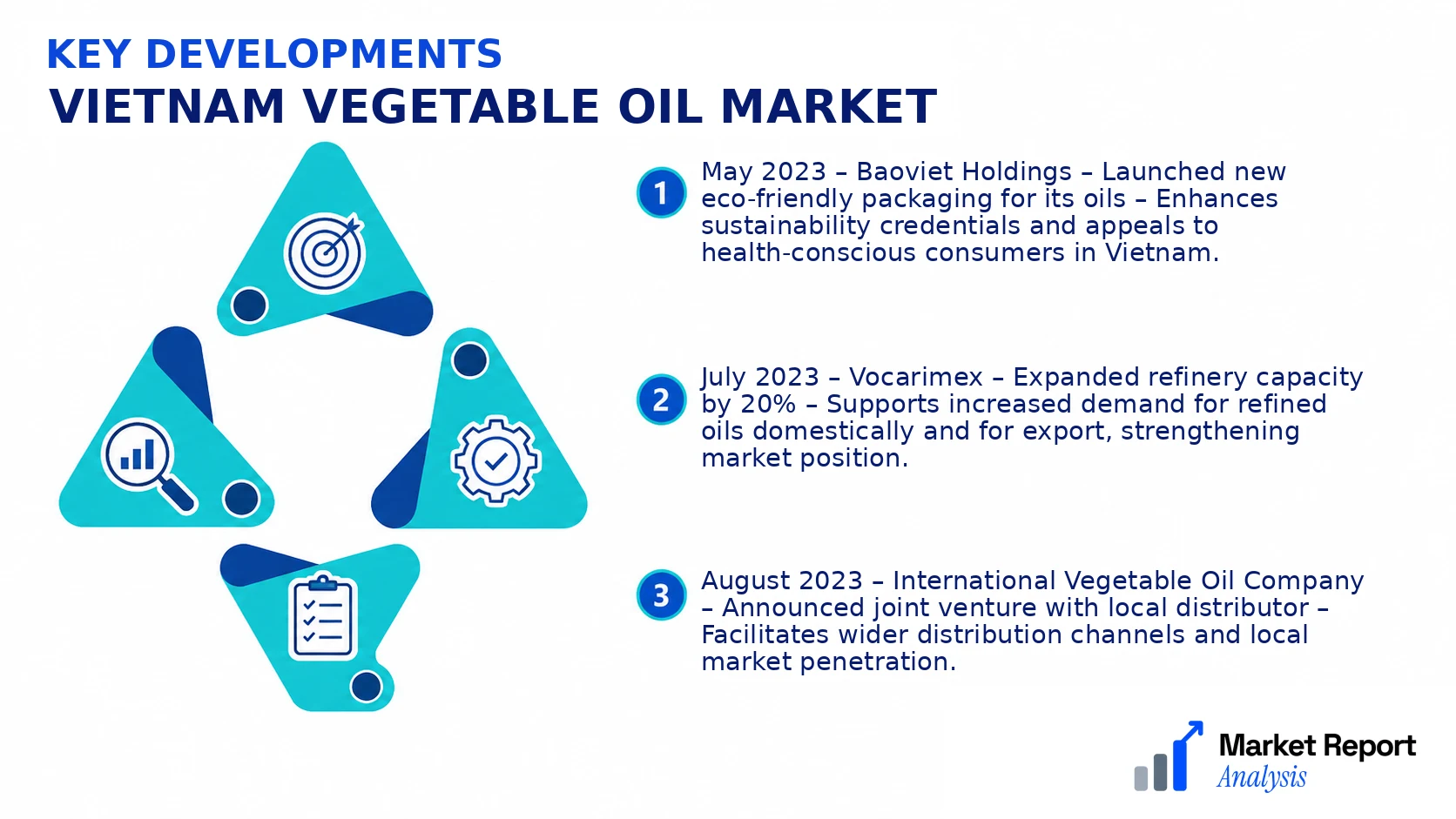
- May 2023 – Baoviet Holdings – Launched new eco-friendly packaging for its oils – Enhances sustainability credentials and appeals to health-conscious consumers in Vietnam.
- July 2023 – Vocarimex – Expanded refinery capacity by 20% – Supports increased demand for refined oils domestically and for export, strengthening market position.
- August 2023 – International Vegetable Oil Company – Announced joint venture with local distributor – Facilitates wider distribution channels and local market penetration.
- September 2023 – Procter & Gamble Vietnam – Introduced new high-oleic sunflower oil – Targets health-focused consumers, boosting the premium product segment.
- October 2023 – Golden Hope Plantations Berhad – Invested in sustainable palm oil plantations – Aligns with global ESG standards and boosts supply chain resilience for Vietnam exports.
Frequently Asked Questions
What is the Vietnam Vegetable Oil Market?
The Vietnam Vegetable Oil Market encompasses the production, importation, and consumption of various vegetable oils such as palm, soybean, and sunflower oil within Vietnam, driven by rising demand for cooking, food processing, and industrial applications.
What is the current market size of Vietnam Vegetable Oil Market?
As of 2026, the Vietnam Vegetable Oil Market is valued at approximately USD 4.1 Billion, reflecting the expanding demand driven by population growth, urbanization, and the increasing popularity of health-conscious food choices among consumers.
What factors are driving the Vietnam Vegetable Oil Market?
Market growth is primarily fueled by rising consumer health awareness, government policies promoting sustainable agriculture, and increased food processing activities. Urbanization and increased disposable income also contribute to higher consumption of vegetable oils across Vietnam.
Which Vietnamese city leads the Vietnam Vegetable Oil Market?
Ho Chi Minh City leads the market due to its status as Vietnam’s largest commercial hub, high population density, and extensive distribution networks, making it the primary center for vegetable oil imports, production, and retail sales in the country.
Which segment is expected to grow the fastest?
The palm oil segment is projected to grow the fastest, owing to its cost efficiency, high yield, and widespread application in cooking, processed foods, and biofuels, aligning with Vietnam's focus on sustainable and scalable agricultural products.
Who are the leading companies operating in the Vietnam Vegetable Oil Market?
Top players include Vocarimex, Nutifood, and Bunge Vietnam, which dominate the market through extensive supply chains, strategic partnerships, and investments in sustainable production practices aligning with Vietnam’s regulatory environment.
Analyst Perspective
The Vietnam Vegetable Oil Market is poised for sustained growth through 2034, driven by evolving consumer preferences towards healthier cooking options and a shift towards plant-based diets. Long-term prospects remain promising, with modernization of processing facilities and adoption of sustainable practices enhancing operational efficiencies. Key opportunities include expanding local production of soybean and palm oils, complemented by investments in quality improvement and branding to capture higher-value segments. Technological advancements in extraction and refining are expected to reduce costs and environmental impact, reinforcing Vietnam's competitiveness in regional markets. Investment priorities should focus on infrastructure upgrades, R&D, and developing the supply chain in economically strategic cities such as Ho Chi Minh City and Hanoi, which are expected to lead demand growth. Competitive intensity is anticipated to heighten with the entry of major international players, prompting innovation and brand differentiation. Overall, Vietnam’s urban centers will serve as critical growth nodes, offering fertile ground for expansion, particularly through leveraging city-specific consumer trends and infrastructure enhancements.
