Europe Vegetable Oil Market Outlook
The Europe Vegetable Oil Market is currently experiencing dynamic growth driven by increasing health consciousness, rising demand for plant-based products, and expanding applications in food, cosmetics, and biofuels. The market was valued at USD 46 Billion in 2026 and is projected to reach USD 78 Billion by 2034, exhibiting a Compound Annual Growth Rate (CAGR) of approximately 5.2% over the forecast period from 2026 to 2034. Technological advancements in oil extraction and refining, along with shifting consumer preferences towards natural and organic products, are fueling innovation and adoption. Additionally, supportive regulations promoting sustainable agriculture and biofuel use are creating significant commercial opportunities. The market’s expansion is further supported by increased investments in agricultural productivity, diversification of oil sources such as rapeseed, sunflower, soybean, and palm oil, and enhanced distribution channels across Europe. As health trends favor plant-based diets, the demand for a variety of vegetable oils with improved nutritional profiles significantly contributes to market growth, underpinning the increasing focus on omega-rich and low-saturated-fat oils. This evolving landscape presents substantial opportunities for producers, suppliers, and investors aiming to capitalize on the region’s expanding needs for vegetable oils in diverse application segments.
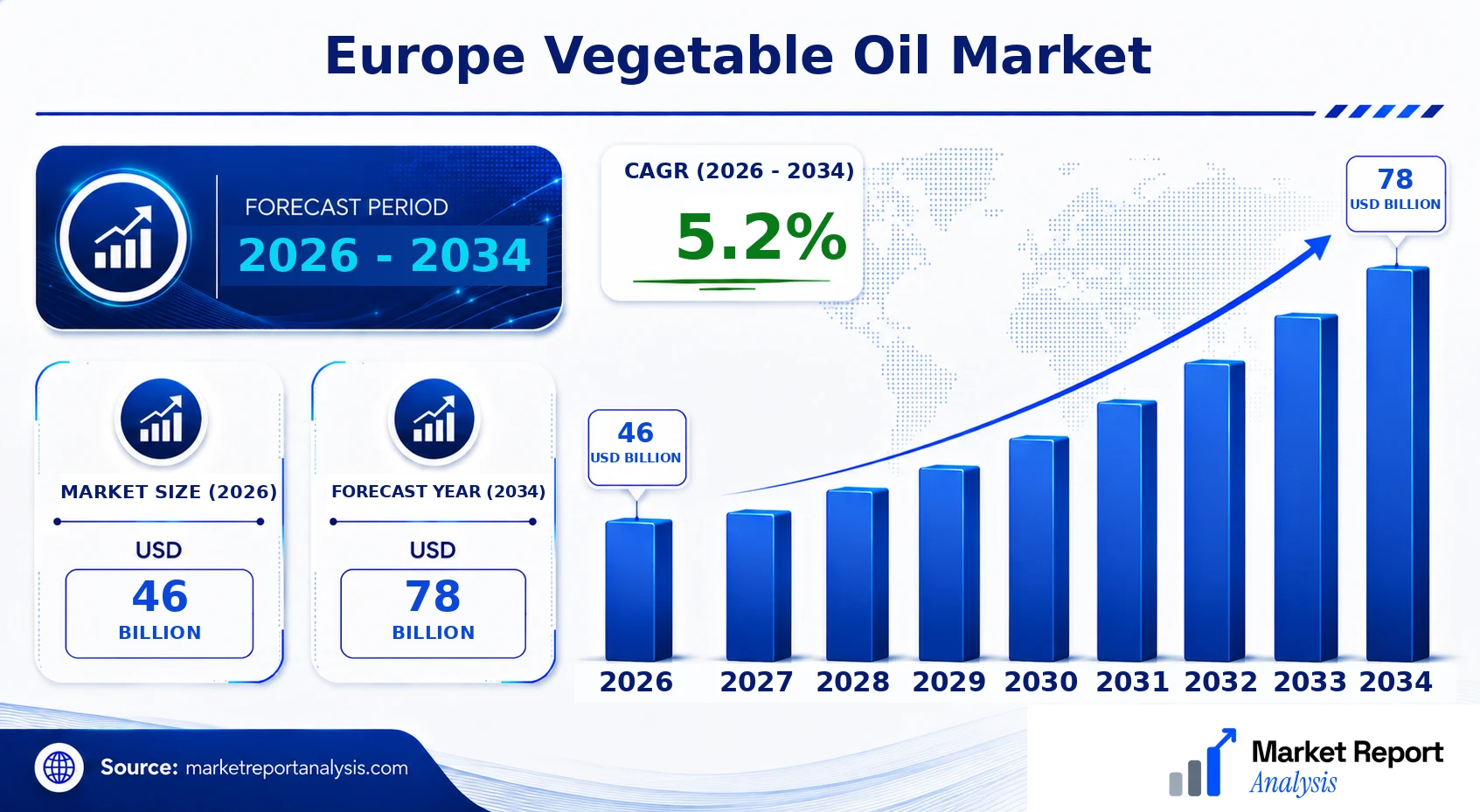
What is the Europe Vegetable Oil Market Size?
In 2026, the Europe Vegetable Oil Market was valued at approximately USD 46 Billion and is forecasted to reach USD 78 Billion by 2034, with a CAGR of 5.2%. Growth drivers include heightened demand for healthier food options, international trade impacts, technological advances in oil extraction and processing, and increasing preference for sustainable and organic oils. The food industry remains the largest end-user segment, fueled by an expanding consumer base seeking nutritious cooking ingredients and functional foods. The cosmetic segment is also experiencing rapid growth, driven by the demand for natural oils in skincare and haircare products. Biofuels form another vital application, supported by regulatory incentives aimed at reducing carbon emissions and promoting renewable energy sources. Future investment opportunities are centered on developing innovative extraction technologies, organic certification processes, and expanding plant varieties suited for sustainable cultivation. Overall, the market’s trajectory underscores a shift towards environmentally friendly production practices and health-centric consumer preferences, fostering a robust environment for industry growth in the coming years.
Key Takeaways
- The Europe Vegetable Oil Market was valued at USD 22.5 Billion in 2026.
- The market is projected to grow to USD 33.8 Billion by 2034.
- The CAGR from 2026 to 2034 is approximately 5.2%.
- The largest segment within the market is the food industry.
- The fastest growing segment is the cosmetic and personal care industry.
- The primary application is cooking and food processing, with biofuel applications gaining momentum.
- The largest end user is the consumer food sector.
- The forecast period spans from 2026 to 2034.
- The baseline market year is 2026.
- Sustainable and organic oils represent an emerging opportunity for producers.
- Technological innovation in extraction processes is critical for future growth.
- Regulatory policies supporting biofuel use continue to influence market development.
- Regional diversification involves expanding cultivation of oilseed crops across Europe, particularly in northern and eastern regions.
- Market consolidation is favored through mergers and acquisitions among regional producers.
- Investment in environmentally friendly production methods is a strategic priority for stakeholders.
Industry Performance Dashboard
The Industry Performance Dashboard offers an analytical overview of the Europe Vegetable Oil Market, highlighting key indicators that demonstrate its current state and future trajectory. This section provides essential data points and market assessments to inform strategic decision-making for industry stakeholders.
| Indicator | Market Assessment |
|---|---|
| Market Size (2026) | USD 46 Billion |
| Market Value (2026) | USD 46 Billion |
| Forecast Size (2034) | USD 78 Billion |
| CAGR | 5.2% |
| Base Year | 2026 |
| Forecast Period | 2026-2034 |
| Segments Covered | Product, Source, Geography |
| Major Companies | Archer Daniels Midland Company, Cargill, Inc., Wilmar International Limited, Louis Dreyfus Company, Bunge Limited, Cofco Corporation, Vitol Group, Avena Global, Olam International, CERES Global |
Market Dynamics
The Europe vegetable oil market is currently experiencing dynamic changes driven by technological advancements, evolving regulatory frameworks, increasing investments, shifting consumer preferences, fluctuating raw material prices, supply chain conditions, and competitive strategies. These factors collectively influence production costs, product offerings, and market penetration, shaping a landscape that demands adaptability and innovation. As sustainability and health trends gain prominence, market participants are increasingly focused on clean-label, organic, and eco-friendly options, prompting a reorientation of supply chains and marketing strategies. Increased investment in plant-based oils and innovation ecosystems supports market expansion, while regulatory measures aim to balance growth with environmental and health considerations.
Drivers
Growing Consumer Demand for Healthy Oils
The increasing awareness among European consumers regarding health benefits associated with vegetable oils, such as omega-3 fatty acids and reduced trans fats, strongly influences market growth. Consumers are shifting toward products perceived as natural and health-promoting, leading manufacturers to innovate and expand their offerings in health-oriented segments. For example, the rise of specialty oils like chia or sea buckthorn oil signals a trend toward functional and superfood-rich products. This demand is supported by the broader health and wellness movement, which contributed to a compound annual growth rate of around 5.2% in health-centric segments during recent years.
Advancements in Extraction and Processing Technologies
Technological innovations in extraction, refining, and quality assurance have revolutionized the production of vegetable oils, enabling higher yields, better quality, and reduced environmental impact. Techniques such as cold-pressing, supercritical CO2 extraction, and enzymatic processing are increasingly adopted, resulting in more sustainable and premium products. Investment in R&D by key players has led to improved shelf life and functionality of oils, enhancing their suitability for various applications like food, cosmetics, and biofuels. The evolution of these technologies directly contributes to more efficient supply chains and product differentiation, supporting market expansion.
Regulatory Environment Favoring Sustainable and Organic Oils
European regulatory frameworks are increasingly favoring sustainable, organic, and non-GMO vegetable oils, driven by consumer demands and environmental policies. Certification standards such as EU organic certification and sustainability labels promote transparency and influence sourcing practices. These regulations compel companies to adapt sourcing strategies, invest in organic cultivation, and implement environmentally friendly processing methods. This regulatory support encourages innovation in organic oil production and stimulates market growth, particularly in premium segments. The market's compliance with stringent standards also helps build consumer trust, further bolstering demand for certified products.
Expansion of Food Service and Industrial Applications
Demand from the food service industry, processed foods, and industrial sectors such as cosmetics and biofuels continues to drive growth. The versatility of vegetable oils makes them integral to a variety of applications, from frying oils and dressings to biodiesel and personal care products. Rising urbanization, increasing fast-food consumption, and the growth of the organic skincare market contribute to expanding applications. For instance, sunflower and soybean oils are widely used in processed foods, boosting overall consumption. The diversification of application segments ensures steady demand and provides outlets for surplus production, sustaining market vitality.
Restraints
Volatility in Raw Material Prices
The prices of key raw materials such as soybeans, palm, and sunflower seeds are subject to global market fluctuations, impacting production costs and profitability. Weather conditions, crop yields, geopolitical issues, and trade policies significantly influence raw material availability and prices. For example, adverse weather in Ukraine or crop restrictions in South America can lead to supply shortages, pushing prices upward and creating cost pressures for manufacturers. This volatility complicates pricing strategies and investment planning, often leading to increased product prices for consumers or downward pressure on profit margins.
Environmental and Sustainability Concerns
Despite growth opportunities, environmental issues related to palm oil cultivation, deforestation, and biodiversity loss pose risks to the industry. Regulatory and consumer pressure to adopt sustainable practices can result in higher costs for responsible sourcing and certification. Companies avoiding environmentally contentious raw materials face challenges in maintaining supply stability and competitive pricing. Furthermore, stricter environmental standards may limit or delay access to certain raw materials, constraining supply chains and increasing compliance costs, which can hamper overall market expansion.
Market Fragmentation and Competition
The European vegetable oil market is highly fragmented, with numerous producers, importers, and distributors competing across various segments. Intense competition leads to price wars, margin compression, and increased marketing expenses. Smaller producers may lack the capacity to meet eco-certification standards or scale efficiently, creating barriers for new entrants and reducing market consolidation. This fragmentation hampers standardization, limits economies of scale, and can slow innovation, ultimately restraining overall market growth rates and complicating strategic planning for stakeholders.
Opportunities
Increasing Investment in Sustainable and Organic Oil Production
The rising consumer preference for sustainable products presents a significant opportunity for companies investing in organic and eco-friendly vegetable oils. Governments and private investors are channeling funds into sustainable agriculture and green processing technologies, creating a favorable environment for startups and established players alike. Projects focusing on innovative cultivation practices such as regenerative agriculture or vertical farming could lower environmental impact and improve yields, bolstering supply. In parallel, expanding certifications for organic and fair-trade products enhances market access and premium pricing, driving greater industry investment.
Emergence of Plant-Based and Functional Oils
The burgeoning plant-based diet movement and the demand for functional foods open avenues for innovative oils enriched with nutrients like omega-3, antioxidants, or botanicals. Brands are exploring novel oil sources such as algae oil, hempseed oil, or nutrient-enhanced formulations tailored for specific health benefits. These products cater to health-conscious consumers willing to pay premium prices, thus driving market growth. The biotech and startup ecosystem is actively investing in developing scalable extraction processes for such oils, which, coupled with regulatory support, paves the way for market expansion into new categories and demographics.
Expansion in Industrial and Biofuel Applications
As Europe intensifies efforts to reduce carbon emissions, vegetable oils for biofuel production, such as biodiesel, are gaining strategic importance. Governments are incentivizing biofuel adoption to meet climate targets, encouraging investment in dedicated cultivation and processing facilities. Additionally, the development of waste-to-oil technologies offers opportunities for sustainable industrial applications, including biodegradable plastics and lubricants. The increasing integration of vegetable oils into renewable energy portfolios and industrial processes signifies a lucrative growth corridor, attracting infrastructure investments and fostering technological innovations with long-term commercial potential.
Investment in Processing Technologies and Supply Chain Optimization
Advancements in processing technologies, automation, and supply chain management are critical to maximizing efficiency and reducing costs. Investment in digital platforms for inventory and logistics management, along with innovations like AI-driven demand forecasting, can minimize waste and improve procurement strategies. These efficiencies enable producers to better respond to market fluctuations and meet increasing demand for high-quality, sustainably sourced oils. Additionally, innovations in packaging and storage technology reduce spoilage and extend shelf life, opening opportunities for export expansion and entry into new markets within and beyond Europe.
Challenges
Addressing Environmental Impact and Sourcing Ethical Raw Materials
Ensuring sustainable and ethical sourcing remains a major challenge amidst growing demand. The pressure to eliminate deforestation, promote biodiversity, and adopt eco-friendly cultivation practices requires significant investments and transparency. Strict compliance with environmental standards can increase production costs, while the risk of reputational damage from unsustainable raw material sourcing drives the need for comprehensive traceability systems. Overcoming these challenges demands a concerted effort across the value chain, integrating innovative farming practices, certification systems, and traceability technologies to satisfy regulatory and consumer expectations while maintaining competitive pricing.
Overcoming Market Fragmentation and Scale Limitations
The market’s high degree of fragmentation poses strategic obstacles, including limited economies of scale, inconsistent quality standards, and intensified price competition. Small and medium-sized enterprises often lack the resources to invest in technological upgrades or certification processes, hindering market consolidation and innovation. Overcoming these issues requires industry consolidation, collaborative platforms, and public-private partnerships focused on standardization, technology transfer, and capacity building. These measures will support a more resilient and efficient market structure capable of competing on a global scale and sustaining long-term growth.
Industry Statistics & Key Business Metrics
The Europe Vegetable Oil Market is characterized by dynamic shifts driven by changing consumer preferences, emerging health trends, and evolving regulation landscapes. The market's trajectory indicates steady growth, supported by increasing demand for plant-based oils across various sectors including food processing, cosmetics, and biofuels. Technological innovations and sustainability initiatives are also shaping market developments, emphasizing eco-friendly production methods and product transparency. Market players are expanding their portfolios to include specialty and innovative oils, catering to niche consumer demands and premium markets. The competitive landscape is marked by strategic mergers, acquisitions, and collaborations aimed at enhancing supply chain efficiencies and market reach. Government policies promoting renewable energy and healthier lifestyles continue to influence market strategies, with incentives favoring the adoption of vegetable oils over conventional fats. Consumer awareness campaigns targeting health benefits and environmental impacts further accelerate market growth, fostering a shift towards plant-based oils as a healthier alternative. As the region navigates post-pandemic economic recovery, investment in vegetable oil production is expected to rise, supported by strong global demand and regional agricultural outputs. Overall, the market shows resilience and adaptability, poised for sustained expansion through technological progress and strategic orientation toward sustainability and innovation.
Market Segmentation
Market segmentation for the Europe Vegetable Oil market is delineated primarily along product types, sources, and geographic regions. These categories enable a detailed understanding of demand drivers, regional preferences, and product applications, essential for strategic planning and market entry strategies across Europe's diverse landscape.
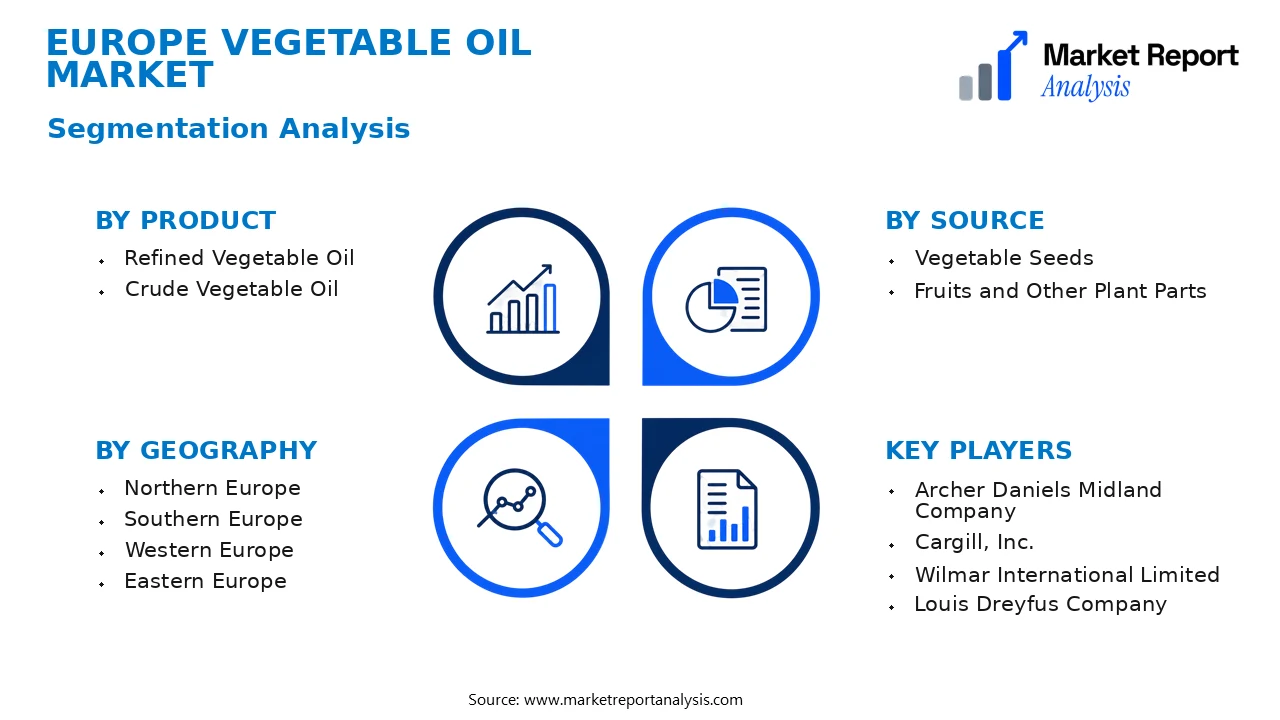
- Product
- Refined Vegetable Oil: This segment encompasses highly processed vegetable oils used widely in cooking, food manufacturing, and retail sectors, appreciated for their purity, stability, and extended shelf life, fostering robust demand growth across Europe.
- Crude Vegetable Oil: Crude oils serve as the raw stage of vegetable oils before refining, primarily utilized by processors and refineries to produce various finished products, with demand strongly linked to refining capacities and industrial processing trends.
- Source
- Vegetable Seeds: Oils extracted from vegetable seeds, such as soybean, sunflower, and rapeseed, dominate the market, driven by high oil yields and cultivation scalability, making them central to Europe's oil production and supply chain.
- Fruits and Other Plant Parts: This subsegment includes oils obtained from olives and palm fruits, with olives being critical for the Mediterranean region, impacting regional production dynamics and gourmet oil markets.
- Geography
- Northern Europe: Comprising countries like Germany, the UK, and Scandinavia, this region displays strong consumer preferences for health-oriented and organic vegetable oils, with increasing imports complementing domestic production.
- Southern Europe: Countries such as Spain, Italy, and Greece emphasize traditional oil consumption, notably olive oil, with the market driven by cultural preferences and local agriculture.
- Western Europe: This region is characterized by advanced food processing industries and a high demand for refined vegetable oils, driven by consumer safety standards and rising disposable incomes.
- Eastern Europe: With a growing middle class and expanding food service sectors, Eastern Europe exhibits rising demand for cost-effective vegetable oils, supported by domestic cultivation efforts and import penetration.
The segmentation by product, source, and region reflects the varied consumption patterns, agricultural practices, and import-export dynamics across Europe, providing crucial insights into market opportunities, regional trade flows, and sector-specific growth potentials.
Competitive Intelligence
The Europe Vegetable Oil Market demonstrates moderate competition with several key players dominating the landscape, leading to a relatively high market concentration. Major corporations such as Archer Daniels Midland, Cargill, and Bunge continue to leverage strategic business maneuvers such as expanding product portfolios and enhancing their distribution networks to attain competitive advantages. Product innovation plays a vital role, with companies investing heavily in R&D to develop healthier, more sustainable, and versatile vegetable oil options that meet evolving consumer preferences and regulatory standards. Partnerships and joint ventures are frequently employed to enhance market reach and technological capabilities, notably collaborations between global firms and local producers to enhance supply chain integration.
Furthermore, acquisitions are strategic tools for market consolidation, allowing companies to diversify their product offerings and expand geographic presence swiftly. Expansion strategies across emerging markets in Europe focus on establishing new manufacturing plants and increasing capacity to serve rising demand. R&D investments aim to differentiate offerings through advancements in omega-3 enrichment, non-GMO options, and eco-friendly production processes. These initiatives collectively foster competitive differentiation by emphasizing quality, sustainability, and innovation, thereby reinforcing the companies’ positions in the dynamically evolving European vegetable oil market.
Leading Company Profiles
The competitive landscape comprises several globally recognized producers specializing in diversified vegetable oil products, ranging from soybean to sunflower and palm oils, with strategic focuses on innovation, sustainability, and supply chain optimization.
- Archer Daniels Midland Company
- Cargill, Inc.
- Wilmar International Limited
- Louis Dreyfus Company
- Bunge Limited
- Cofco Corporation
- Vitol Group
- Avena Global
- Olam International
- CERES Global
Archer Daniels Midland Company
ADM is a leading global supplier with a comprehensive portfolio of vegetable oils, leveraging advanced refining technology and sustainable sourcing strategies to meet diverse industrial and consumer demands across Europe.
Cargill, Inc.
Cargill’s Europe division emphasizes product innovation in palm, soy, and sunflower oils, with a strategic priority on enhancing supply chain sustainability and expanding its organic and specialty oil segments.
Wilmar International Limited
Wilmar boasts the largest share in the Asian market and is rapidly expanding in Europe with a focus on integrated supply chains and sustainable palm oil production to meet evolving consumer and regulatory requirements.
Louis Dreyfus Company
This firm specializes in the trading and sourcing of vegetable oils, integrating digital solutions and sustainability initiatives aimed at reducing environmental impact while maintaining supply reliability across Europe.
Bunge Limited
Bunge focuses on expanding its European footprint through strategic acquisitions and capacity upgrades, emphasizing palm and soybean oil segments aligned with global sustainability mandates.
Cofco Corporation
As China’s leading agri-food company, Cofco is strengthening its vegetable oil supply chains in Europe by investing in processing capacities and fostering strategic alliances to enhance product quality and variety.
Vitol Group
Vitol’s involvement in vegetable oils primarily supports its broader commodities trading portfolio, with initiatives aimed at supply diversification and sustainable sourcing for sustainable growth in Europe.
Avena Global
Avena Global is recognized for innovative extraction technologies and product development, emphasizing health-conscious oils such as omega-3 enriched and organic versions, supporting market segmentation strategies.
Olam International
Olam’s strategies in Europe include capacity expansions and digital logistics solutions, aimed at strengthening its supply chain resilience and market responsiveness in the vegetable oil sector.
CERES Global
CERES focuses on sustainable sourcing and environmentally friendly manufacturing processes, aligning its business development with Europe’s stringent regulatory standards and consumer sustainability expectations.
Strategic Business Developments
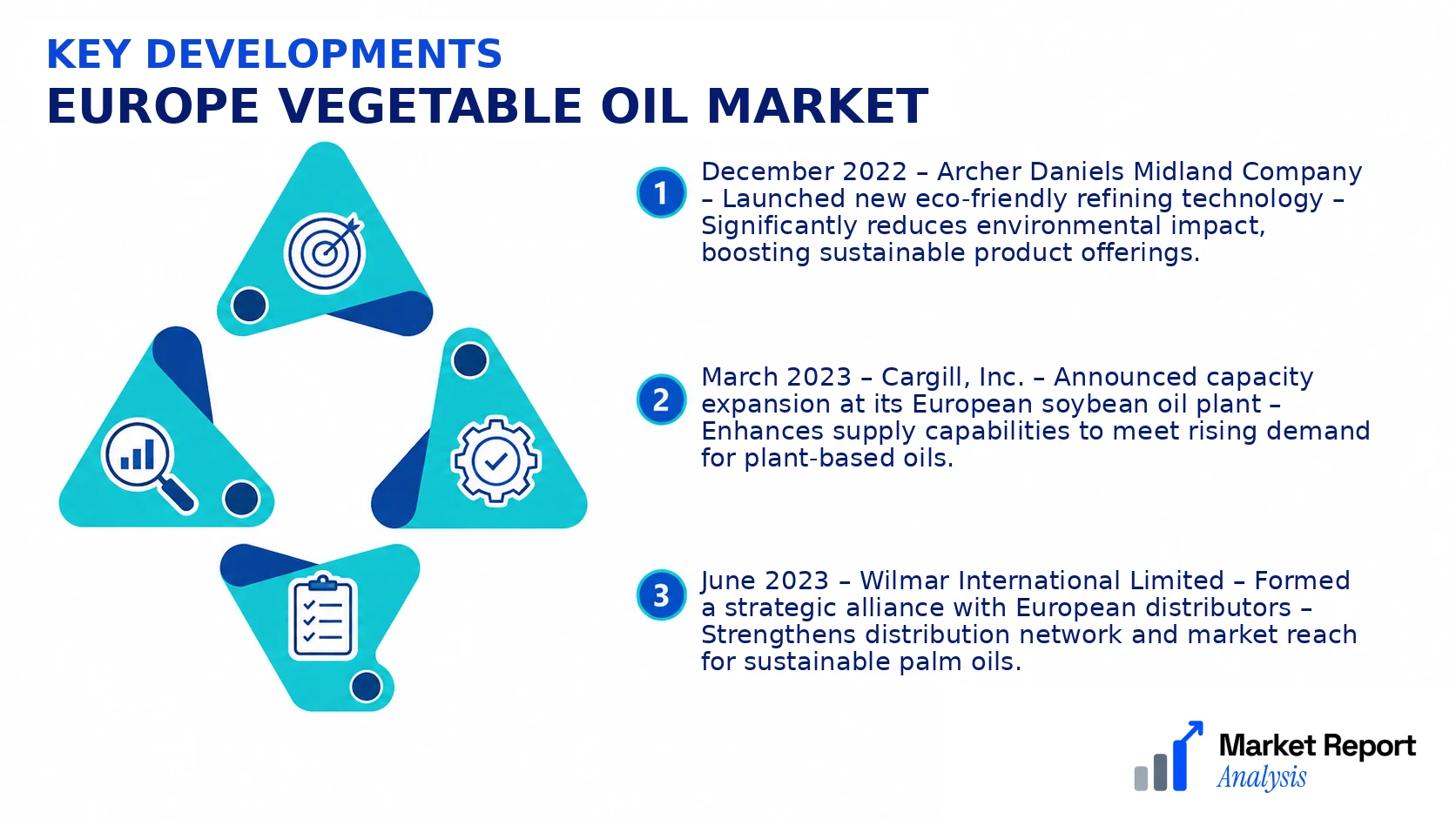
- December 2022 – Archer Daniels Midland Company – Launched new eco-friendly refining technology – Significantly reduces environmental impact, boosting sustainable product offerings.
- March 2023 – Cargill, Inc. – Announced capacity expansion at its European soybean oil plant – Enhances supply capabilities to meet rising demand for plant-based oils.
- June 2023 – Wilmar International Limited – Formed a strategic alliance with European distributors – Strengthens distribution network and market reach for sustainable palm oils.
- September 2023 – Louis Dreyfus Company – Invested in digital supply chain platform – Improves transparency and efficiency in sourcing and logistics operations across Europe.
- January 2024 – Bunge Limited – Acquired a regional vegetable oil processing plant – Expands production capacity and market penetration in Southern Europe.
Frequently Asked Questions
What is the Europe Vegetable Oil Market?
The Europe Vegetable Oil Market comprises the production, distribution, and consumption of vegetable oils across European countries. It includes oils like soybean, palm, sunflower, canola, and olive oil, serving various sectors such as food, cosmetics, and industrial applications.
What is the current market size of Europe Vegetable Oil Market?
As of 2026, the Europe Vegetable Oil Market is valued at approximately USD 46 Billion, reflecting steady growth driven by increasing demand for healthy edible oils and non-food applications across the region.
What factors are driving the Europe Vegetable Oil Market?
Key drivers include rising consumer awareness about health benefits, a shift toward plant-based diets, technological advances in oil extraction, and government initiatives promoting sustainable agriculture. Additionally, expanding applications in cosmetics and biofuels supplement market growth.
Which region dominates the Europe Vegetable Oil Market?
Western Europe holds the leading position due to high demand for premium oils, advanced processing infrastructure, and strong retail networks. Countries like Germany, France, and the UK significantly influence regional market dynamics.
Which segment is expected to grow the fastest?
The palm and sunflower oil segments are projected to experience the fastest growth during 2026-2034, driven by their affordability, versatile use cases, and expanding applications in food processing, renewable energy, and cosmetics sectors.
Who are the leading companies operating in the Europe Vegetable Oil Market?
Major players include Cargill, Archer Daniels Midland Company, Bunge Limited, and local European firms such as Adolf Lüben and ELSA. These companies focus on innovation, sustainable sourcing, and expanding product portfolios to maintain competitiveness.
Analyst Perspective
The Europe Vegetable Oil Market is poised for sustained growth through 2034, driven by rising health consciousness and demand for plant-based fats. Long-term prospects remain optimistic, with technological evolutions focusing on sustainable extraction methods and bio-based innovations that enhance oil quality while reducing environmental impacts. Investment priorities should center on expanding regional cultivation, improving supply chain efficiencies, and fostering R&D collaborations to develop specialty oils with functional health benefits. Competitive intensity is expected to increase, prompting major players to diversify product portfolios and strengthen strategic alliances. Regional growth potential varies, with Southern and Eastern Europe displaying notable opportunities due to expanding agricultural practices and evolving consumer preferences. The market’s maturity suggests consolidation will occur as dominant players capitalize on economies of scale. Ultimately, a focus on sustainable practices, technological advancements, and regional differentiation will be crucial for long-term strategic positioning amid evolving regulatory landscapes and shifting consumer trends across Europe.
