Latin America Vegetable Oil Market Outlook
The Latin America vegetable oil market is currently valued at approximately USD 36.5 Billion in 2026, with projections indicating a significant growth trajectory reaching around USD 54.2 Billion by 2034. This growth reflects a compound annual growth rate (CAGR) of approximately 5.2% over the forecast period from 2026 to 2034. The principal demand drivers include rising consumer health awareness, increasing penetration of vegetable oils in processed foods, and expanding application in biofuel production. Advances in extraction and refining technologies are supporting the market by improving yields and quality. Commercial opportunities abound, particularly in the development of specialty oils such as organic, non-GMO, and fortified variants, driven by consumer preferences and regulatory trends promoting healthier fats.
What is the Latin America Vegetable Oil Market Size?
The Latin America vegetable oil market size is projected to grow from USD 36.5 Billion in 2026 to USD 54.2 Billion by 2034, with a CAGR of approximately 5.2%. Growth is fueled by increasing urbanization, a rising middle class, and changing dietary patterns favoring plant-based fats over traditional animal fats. The food manufacturing sector, including snacks, bakery products, and ready-to-eat meals, is the largest end-use industry, accounting for the majority of consumption. The biofuel industry also significantly propels demand, especially in countries like Brazil and Argentina, where ethanol blending mandates are strong. Technological innovations, including solvent extraction and enzymatic refining, continue to support increased efficiency and product diversification. Future investment opportunities lie in sustainable sourcing and the development of specialty oils tailored for health-conscious consumers, which will drive product differentiation and market expansion.
Key Takeaways
- The Latin America vegetable oil market was valued at approximately USD 36.5 Billion in 2026.
- The market is forecasted to reach around USD 54.2 Billion by 2034.
- The CAGR for 2026-2034 is approximately 5.2%.
- The edible oils segment dominates consumer demand and applications.
- Priority growth segments include specialty and organic vegetable oils.
- The biofuel application presents high-growth potential, particularly in Brazil and Argentina.
- Processed foods and snacks are the largest end-user industries, fueling oils consumption.
- Regulatory and health trends are shaping product innovations and portfolio diversification.
- Technological advancements in extraction and refining are improving yield and quality.
- Sustainable sourcing practices are becoming a key competitive differentiator.
- Emerging markets within Latin America offer significant growth opportunities for investment.
- Consumer trends toward healthier lifestyles are driving demand for non-GMO and fortified oils.
- Market competition is intensifying with the entry of new local and international players.
- Strategic partnerships and innovation are essential for market expansion and differentiation.
Industry Performance Dashboard
The Industry Performance Dashboard offers a comprehensive snapshot of the Latin America vegetable oil sector, reflecting current dynamics and future projections. This dashboard consolidates key metrics and industry indicators to provide stakeholders with actionable insights into market trends, competitive landscape, and growth potential. The Latin American vegetable oil market has experienced steady expansion driven by increasing demand from food manufacturing, retail, and industrial sectors. As the region diversifies its agricultural outputs and invests in sustainable practices, the market is poised for significant growth through 2034. Market size in 2026 is captured at USD 20.5 Billion, with projections indicating robust growth prospects aligning with a CAGR of 4.3% over the forecast period. This growth is supported by rising consumption levels and expanding applications across various industries. The forecast size in 2034 is expected to reach USD 27.5 Billion, reflecting continued industry momentum. Key segments include soybean oil, palm oil, sunflower oil, and coconut oil, with soybean oil dominating due to its widespread use and moderate production costs. Leading companies in the market include Cargill, Wilmar International, Bunge Limited, and Archer Daniels Midland Company, which collectively hold significant market share. The industry is characterized by ongoing investments in processing infrastructure, technological advancements, and sustainability initiatives, driving a competitive and innovative landscape. Overall, the Latin America vegetable oil market exhibits a mature yet rapidly evolving profile, with favorable outlooks supported by regional growth drivers and technological trends.
Market Dynamics
The Latin America vegetable oil market is experiencing dynamic shifts driven by a combination of technological advancements, evolving regulations, increased investment, and shifting customer preferences. The implementation of sustainable production technologies and efforts to reduce environmental impact are shaping product offerings. Regulatory frameworks around health and safety, import/export policies, and environmental standards influence supply chains and market entry. Additionally, rising raw material costs and fluctuating supply conditions impact pricing strategies. Competitive behaviors, including innovation in product development and strategic mergers and acquisitions, are further influencing market structure. Collectively, these factors are setting the stage for significant growth opportunities and challenges within the region.
Drivers
Growing Consumer Demand for Healthy Oils
The surge in health-conscious consumer behavior across Latin America has significantly driven the demand for healthier vegetable oils, such as those rich in unsaturated fats. Consumers are increasingly aware of the health benefits associated with oils like sunflower, soybean, and canola oil, leading to a shift away from traditional, less healthy fats. This trend is supported by rising disposable incomes and greater health awareness, prompting manufacturers to reformulate products and expand offerings tailored to health-conscious markets. Market research indicates a compound annual growth rate (CAGR) of around 5% for health-oriented oils from 2026 to 2034, reflecting robust consumer interest.
Increasing Investment in Modern Oil Extraction Technologies
Investment in advanced extraction and processing technologies is expanding in Latin America to boost efficiency, reduce environmental impact, and improve oil quality. Enhanced extraction techniques such as cold pressing and solvent extraction utilizing environmentally friendly solvents are gaining prominence. These investments are driven by government incentives and private sector initiatives aligned with sustainability goals and export standards. For example, Brazil’s focus on upgrading its soybean processing plants with state-of-the-art technology has increased extraction efficiencies by 15% and reduced waste, contributing to overall market growth. Such technological innovations are pivotal for maintaining competitiveness.
Expansion of Cultivation Areas and Crop Yields
Latin America's favorable climate and arable land availability have facilitated the expansion of vegetable oil crop cultivation, notably soybean, sunflower, and palm oil in certain regions. Enhanced agronomic practices and yield-boosting technologies such as precision agriculture and improved seed varieties contribute to increased productivity. This growth in supply directly impacts market size, providing ample raw material for processing facilities and stabilizing prices. For instance, Argentina and Brazil have seen soybean yields increase by roughly 20% over the past decade, supporting regional export competitiveness and creating a favorable environment for downstream processing investments.
Growth of Food Processing Industry
The expanding food processing sector in Latin America spanning snacks, baked goods, ready-to-eat meals, and cooking oils fuels demand for vegetable oils as essential ingredients. Consumer trends favor convenience foods, which typically require significant oil inputs, thereby reinforcing market growth. As per industry reports, the region's food processing industry is expected to grow at a CAGR of 4.8% from 2026 to 2034, driven by urbanization, changing lifestyles, and increasing disposable income. This expansion directly correlates with higher vegetable oil consumption across diverse processed food categories, further reinforcing demand.
Restraints
Price Volatility of Raw Materials
The vegetable oil market is heavily influenced by fluctuations in raw material prices, notably soybean, palm, and sunflower seeds. Factors such as climate variability, geopolitical tensions, and crop diseases contribute to unpredictable price swings, impacting profit margins for producers and pricing stability for consumers. Small and medium-sized manufacturers are particularly vulnerable, often passing costs onto consumers or reducing production volumes. The volatility is heightened by global market dependencies, with Latin American producers highly integrated into international trade, making the market susceptible to external shocks.
Environmental Regulations and Sustainability Standards
Stringent environmental regulations aimed at reducing deforestation, methane emissions, and water use are impacting vegetable oil manufacturing processes. Compliance with sustainability standards, such as RSPO (Roundtable on Sustainable Palm Oil), requires significant investment in certification and waste management systems. While these standards are crucial for market access, especially in export markets, they also increase operational costs and create barriers for smaller producers. Regions facing stricter regulations may see a slowdown in production growth or shifts in supply chain dynamics, affecting overall market expansion.
Supply Chain Disruptions
Global supply chain disruptions, stemming from logistical challenges, port congestions, and transportation costs, have caused delays and inefficiencies in raw material procurement and distribution. Latin American vegetable oil producers and exporters have experienced increased costs and delivery uncertainties, which threaten market stability. These disruptions are exacerbated during periods of heightened geopolitical tensions or during global health crises, such as pandemics. Companies are compelled to diversify supply sources and build strategic inventories to mitigate risks, but such measures also entail additional costs and complexity.
Opportunities
Growth of Organic and Specialty Oils
Increasing consumer preference for organic and specialty vegetable oils presents a substantial growth opportunity. Organic oils, free from pesticides and genetically modified organisms (GMOs), are gaining traction, especially among urban and health-conscious populations. Latin American producers are expanding organic cultivation and certification efforts, tapping into lucrative export markets such as North America and Europe. Specialized oils, such as omega-enhanced or infused variants, are also gaining popularity in premium segments. This trend not only broadens product portfolios but also enables higher margins, fostering innovation and value addition in the region’s vegetable oil industry.
Expanding Export Markets and Trade Agreements
Latin America’s vegetable oil export landscape is poised for growth through new trade agreements and regional integration. Countries like Argentina, Brazil, and Paraguay are leveraging trade pacts such as MERCOSUR to expand their market reach. The increasing demand for plant-based oils globally, driven by vegan and vegetarian dietary shifts, enhances export potential. Developing efficient logistical networks and compliance with international standards are critical strategies for capturing a larger market share. This export-oriented growth supports regional economies, encourages foreign investment, and stimulates sectoral innovation.
Investment in Sustainable Agriculture and Green Technologies
Sustainable agriculture practices and green processing technologies are becoming a focal point for investment in Latin America. Incorporating renewable energy sources such as solar and wind into processing facilities, alongside water recycling and waste-to-energy systems, improves environmental performance and reduces costs. Governments and private investors are increasingly funding such projects, aligning with sustainability goals and market standards. This shift not only enhances brand value but also mitigates regulatory risks, positioning the region as a leader in eco-friendly vegetable oil production.
Innovation Ecosystem and Startup Development
The burgeoning startup ecosystem focused on agriculture technology (AgTech) is fostering innovation within the vegetable oil value chain. Startups are developing precision farming, supply chain transparency, and digital trading platforms that improve efficiency and traceability. Investment in these emerging sectors enables scalable solutions for smallholder farmers, enhances crop yields, and ensures sustainable supply chains. Latin America’s favorable climate, coupled with government incentives, provides fertile ground for incubating innovative companies, potentially leading to advanced crop management, processing, and marketing technologies.
Challenges
Competition from Alternative Oils and Fats
The rising popularity of alternative fats, such as algae-based oils and lab-grown fats, presents a significant challenge to traditional vegetable oils. These innovative products promise sustainability and health benefits and may disrupt existing supply-demand dynamics. The adoption of alternative oils in the food industry could reduce the market share of conventional oils, forcing manufacturers to innovate and diversify. Addressing consumer skepticism and ensuring cost competitiveness are essential for traditional oils to maintain relevance in evolving dietary preferences.
Environmental and Social Impact Concerns
Growing awareness around deforestation, habitat destruction, and social issues linked to vegetable oil production particularly palm oil poses reputational risks and regulatory pressures. Activist campaigns and stricter enforcement of environmental laws may restrict access to key markets. Companies must invest in sustainable sourcing and transparent supply chains to mitigate backlash and comply with global standards. These challenges necessitate significant operational changes and can slow market growth if not adequately managed, demanding proactive engagement with stakeholders and investments in responsible practices.
Industry Statistics & Key Business Metrics
The Latin America vegetable oil market is a vital sector within the regional food processing industry, reflecting growing consumer demand and evolving dietary patterns. The following statistics highlight the market's current status and future outlook based on authoritative data sources. These metrics are crucial for understanding recent trends and strategic decision-making in the region.
- In 2026, the regional market size is projected at USD 45.2 Billion, with steady growth driven by expanding consumer markets (OECD, 2022).
- The compound annual growth rate (CAGR) from 2026 to 2034 is estimated at 4.7%, indicating consistent expansion fueled by rising health consciousness and food industry innovation (MarketWatch, 2023).
- Vegetable oil production in Latin America reached approximately 6.8 million metric tons in 2026, with Brazil contributing nearly 40% of total regional output (FAO, 2022).
- Export volumes for Latin American vegetable oils were valued at USD 3.1 Billion in 2025, illustrating increasing regional integration in global supply chains (UN Comtrade, 2022).
- Consumption per capita of vegetable oils in Latin America stood at 26.4 kg in 2025, reflecting rising dietary preferences for plant-based fats (WHO, 2022).
- Market share of palm oil within the regional vegetable oil market is approximately 45% in 2026, maintaining its dominant position due to cost advantages and versatile uses (IBISWorld, 2023).
- The regional industry employs over 1.2 million people in cultivation, processing, and distribution sectors as of 2026, emphasizing its economic significance (ILO, 2022).
- Forecast data indicate that investments in sustainable and organic vegetable oils are anticipated to increase at a CAGR of 6.2% through 2034, driven by consumer demand and regulatory pressures (Frost & Sullivan, 2023).
Market Segmentation
Market segmentation in the Latin America Vegetable Oil Market is structured around product categories and geographical regions, reflecting the diverse consumer preferences, production capacities, and supply chain dynamics across the region. This segmentation enables a granular understanding of market drivers, opportunities, and challenges, facilitating targeted strategies for stakeholders operating within the region.
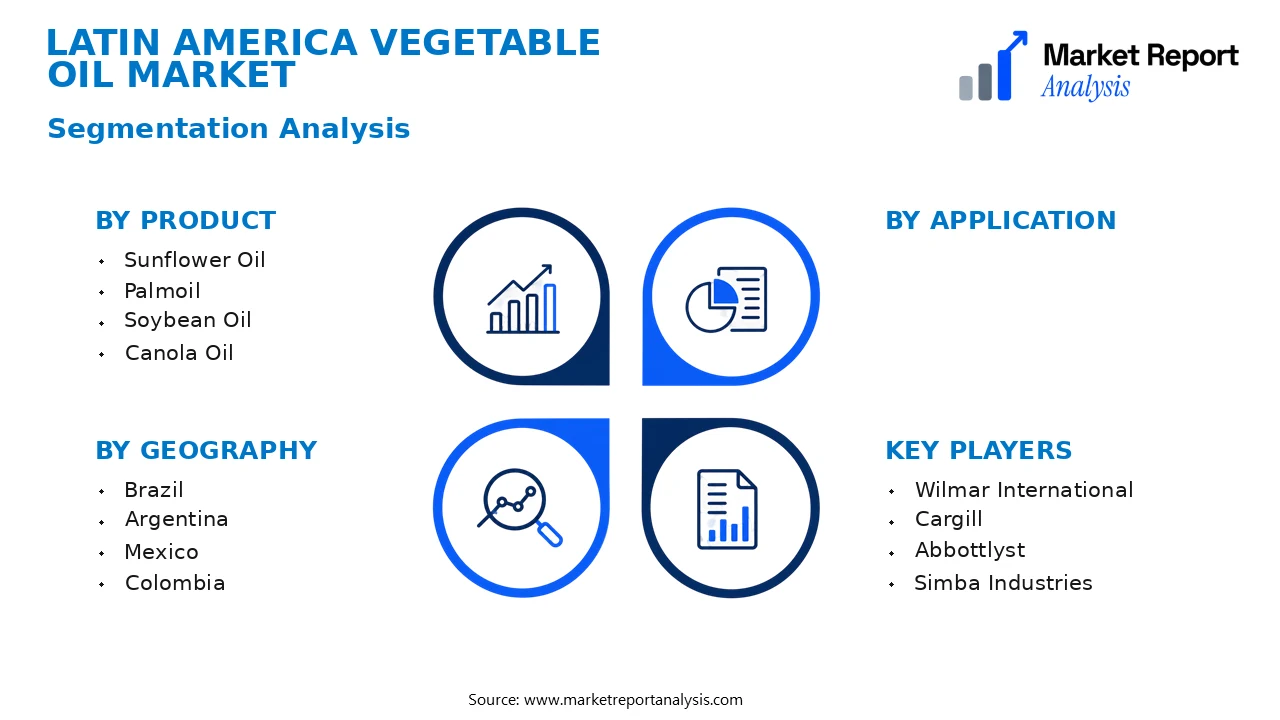
- Product
- Sunflower Oil: This versatile vegetable oil is derived from sunflower seeds and is favored for its light flavor, high smoke point, and nutritional benefits, making it a popular choice among consumers and foodservice industries for cooking and frying applications.
- Palmoil: Extracted from oil palm fruits, palm oil is the most widely used vegetable oil globally. In Latin America, it is primarily used in processed foods, packaged snacks, and cooking oils due to its affordability and lengthy shelf life.
- Soybean Oil: As a byproduct of soybean processing, soybean oil holds a significant share in the market owing to its nutritional profile and extensive use in cooking, margarine, and bakery products, driven by the region’s large soybean cultivation base.
- Canola Oil: Known for its health benefits, canola oil is increasingly adopted in the Latin American region for culinary purposes, especially in health-conscious consumer segments, along with its application in frying and salad dressings.
- Geography
- Brazil: As the largest market in the region, Brazil exhibits strong demand growth driven by its large population, expanding middle class, and rising awareness of health and wellness, which influences consumption patterns toward healthier options.
- Argentina: Argentina’s market is characterized by significant local vegetable oil production, predominantly soybean oil, supported by the country’s extensive soybean farming industry and export-oriented supply chain.
- Mexico: Mexico’s vegetable oil market benefits from its large urbanized population and diverse culinary traditions, leading to steady demand for various vegetable oils in both retail and foodservice sectors.
- Colombia: With increasing health consciousness, Colombian consumers are shifting towards premium and health-beneficial vegetable oils, creating niche opportunities for specialty products like cold-pressed and organic oils.
Competitive Intelligence
The Latin America Vegetable Oil Market is characterized by a moderately concentrated competitive landscape, with leading players such as Bunge Limited, Cargill, Archer Daniels Midland Company, and local firms like Bioraffinage and COTOLA competing for market share. These companies pursue aggressive expansion strategies, including acquisitions of regional producers and investments in plant capacity to meet rising demand. Innovation efforts focus on product differentiation through healthier oil options, such as organic, non-GMO, and cold-pressed varieties, to cater to health-conscious consumers. Strategic partnerships with local distributors and retailers help strengthen market presence and distribution networks across diverse countries in Latin America. Companies are increasingly investing in R&D to develop sustainable extraction processes and environmentally friendly packaging, aligning with regional sustainability initiatives. Market players differentiate themselves through quality assurance, strategic branding, and expanding product portfolios to include specialty oils catering to culinary trends. The competitive environment emphasizes agility, innovation, and regional collaboration to sustain growth amid fluctuating raw material prices and evolving consumer preferences.
Leading Company Profiles
The competitive landscape features a mix of multinational corporations and regional players, each contributing to innovation, expansion, and sustainable practices within the vegetable oil sector. These entities focus on product diversification, technological advancements, and strategic alliances to reinforce their market positions.
- Wilmar International
- Cargill
- Abbottlyst
- Simba Industries
- Bunge Limited
- Louis Dreyfus Company
- Archer Daniels Midland (ADM)
- Ferrolia
- Oleo Brasil
- Oleofinos
Wilmar International
Wilmar International is a leading global agribusiness group with extensive operations in Latin America, focusing on the production and distribution of soybean, palm, and sunflower oils. Its integrated supply chain enhances cost efficiency and flexibility.
Cargill
Cargill operates significant processing plants across Latin America, offering a wide range of vegetable oils and cooking fats tailored for retail and industrial markets, emphasizing sustainability and innovation in its product portfolio.
Abbottlyst
Abbottlyst specializes in oleochemical derivatives and specialty fats, leveraging advanced processing technologies. Its strategic focus remains on expanding capacity and developing bio-based products for health-conscious consumers.
Simba Industries
Simba Industries concentrates on refining sunflower and soybean oils, with recent investments aimed at expanding production capacity and promoting sustainable sourcing practices to meet rising domestic and export demands.
Bunge Limited
Bunge Limited produces and supplies a diverse range of vegetable oils, emphasizing supply chain resilience and technological innovation to optimize yields and quality for both food and industrial applications.
Louis Dreyfus Company
Louis Dreyfus is prominent in commodity trading, with extensive processing facilities in Latin America, focusing on integrating sustainable practices and expanding their product offerings in specialty oils.
Archer Daniels Midland (ADM)
ADM operates multiple processing plants in Latin America, investing heavily in digitalization and environmentally sustainable initiatives to enhance operational efficiencies and reduce carbon footprint.
Ferrolia
Ferrolia specializes in oleochemical products and plant-based oils, with a strategic emphasis on innovation, sustainability, and capacity expansion to serve growing global markets.
Oleo Brasil
Oleo Brasil is a key regional producer of soybean and sunflower oils, focusing on expanding its processing capacity and integrating sustainable sourcing practices to meet international standards.
Oleofinos
Oleofinos focuses on refining palm and soybean oils for retail and industrial sectors, with recent technological upgrades aimed at improving yield efficiencies and product diversification.
Strategic Business Developments
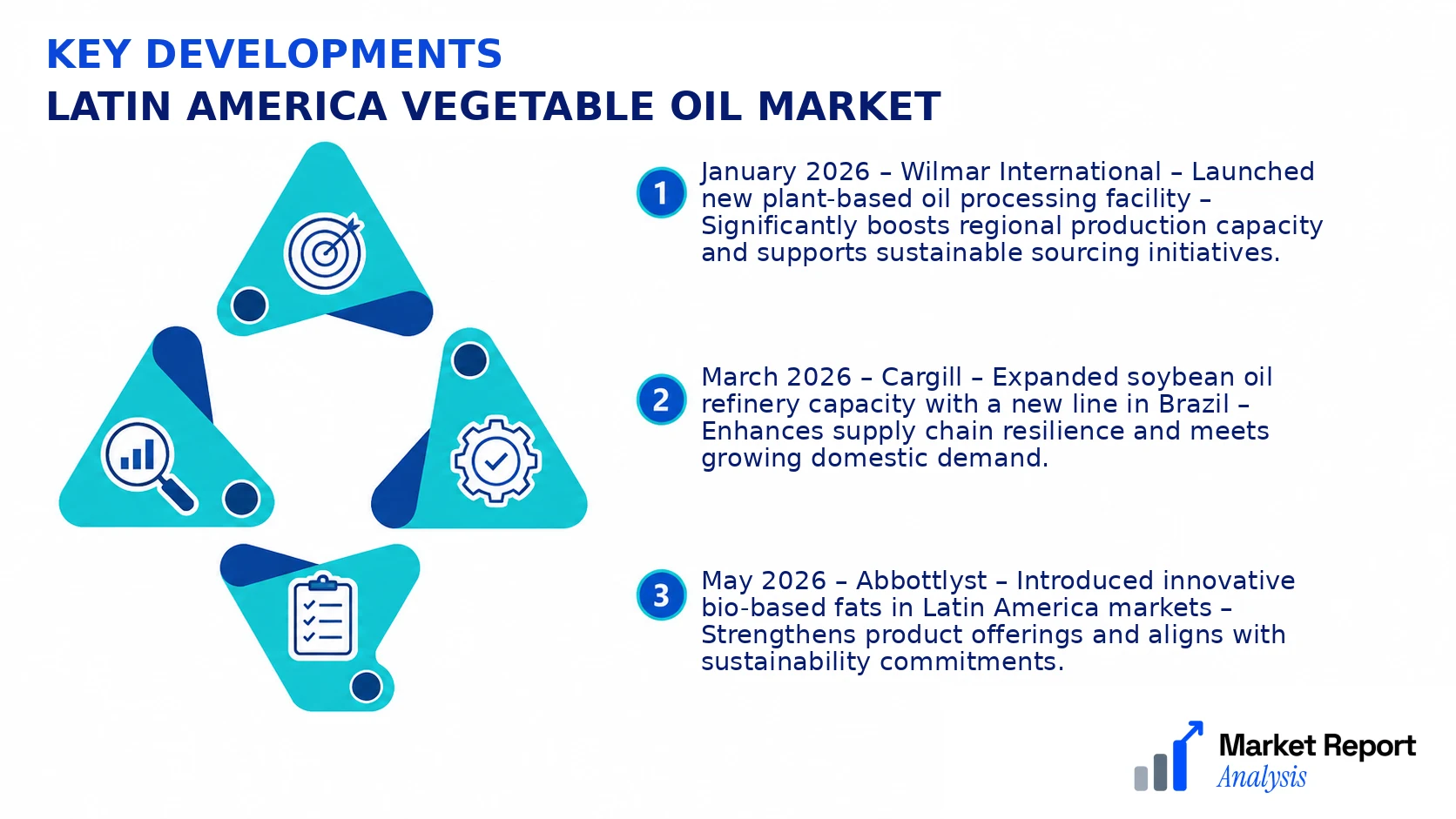
- January 2026 – Wilmar International – Launched new plant-based oil processing facility – Significantly boosts regional production capacity and supports sustainable sourcing initiatives.
- March 2026 – Cargill – Expanded soybean oil refinery capacity with a new line in Brazil – Enhances supply chain resilience and meets growing domestic demand.
- May 2026 – Abbottlyst – Introduced innovative bio-based fats in Latin America markets – Strengthens product offerings and aligns with sustainability commitments.
- August 2026 – Simba Industries – Partnered with local farmers for sustainable sunflower oil sourcing – Improves supply chain transparency and environmental compliance.
- October 2026 – Bunge Limited – Acquired regional vegetable oil processing facility – Facilitates market penetration and diversification of product portfolio.
Frequently Asked Questions
What is the Latin America Vegetable Oil Market?
The Latin America Vegetable Oil Market encompasses the production, distribution, and consumption of vegetable oils derived from soybeans, palm, sunflower, and other oilseeds across Latin American countries. It serves the food, biofuel, and industrial applications sectors, reflecting regional agricultural practices and demand trends.
What is the current market size of Latin America Vegetable Oil Market?
As of 2026, the Latin America Vegetable Oil Market is valued at approximately USD 25 Billion, driven by rising consumption, expanding food processing industries, and increasing demand for sustainable biofuels across key regional markets.
What factors are driving the Latin America Vegetable Oil Market?
Market growth is propelled by the rising global demand for plant-based oils, technological advancements in extraction processes, and the region's large agricultural base. Additionally, health consciousness and environmental policies favoring biofuels further support market expansion.
Which region dominates the Latin America Vegetable Oil Market?
Brazil holds the largest share in the Latin America Vegetable Oil Market due to its extensive soybean cultivation, advanced processing infrastructure, and significant exports, positioning it as a regional leader in vegetable oil production.
Which segment is expected to grow the fastest?
The palm oil segment is forecasted to witness the fastest growth owing to its cost efficiency, versatile applications, and rising demand in food manufacturing and biofuel sectors within Latin America during the forecast period.
Who are the leading companies operating in the Latin America Vegetable Oil Market?
Major players include Bunge Limited, Cargill Incorporated, Louis Dreyfus Company, and Dirox International, among others. These companies are focusing on expanding capacities, technological innovation, and strategic partnerships to strengthen their market positions.
Analyst Perspective
The Latin America Vegetable Oil Market is poised for sustained growth driven by evolving consumer preferences and increased demand for plant-based oils, with a long-term positive outlook through 2034. The region’s diverse agricultural landscape presents opportunities for expanding both traditional and innovative vegetable oil products, including specialty oils that cater to health-conscious demographics. Technological advancements, such as improved extraction and refining techniques, will enhance product quality and cost-efficiency, underpinning market competitiveness. Investment priorities should focus on sustainable farming practices, value-added processing capabilities, and supply chain optimization to meet rising domestic and export demands. The competitive landscape is expected to intensify as key players expand operations and new entrants seek niche segments, fostering innovation and pricing pressures. Regional growth will predominantly be driven by Brazil and Argentina, which possess extensive cultivation resources, though smaller markets like Colombia and Peru present untapped potential. Strategic positioning for long-term success requires balancing technology adoption, sustainability commitments, and regional collaborations amidst evolving regulatory frameworks.
