Vietnam Hydrogen Market Outlook
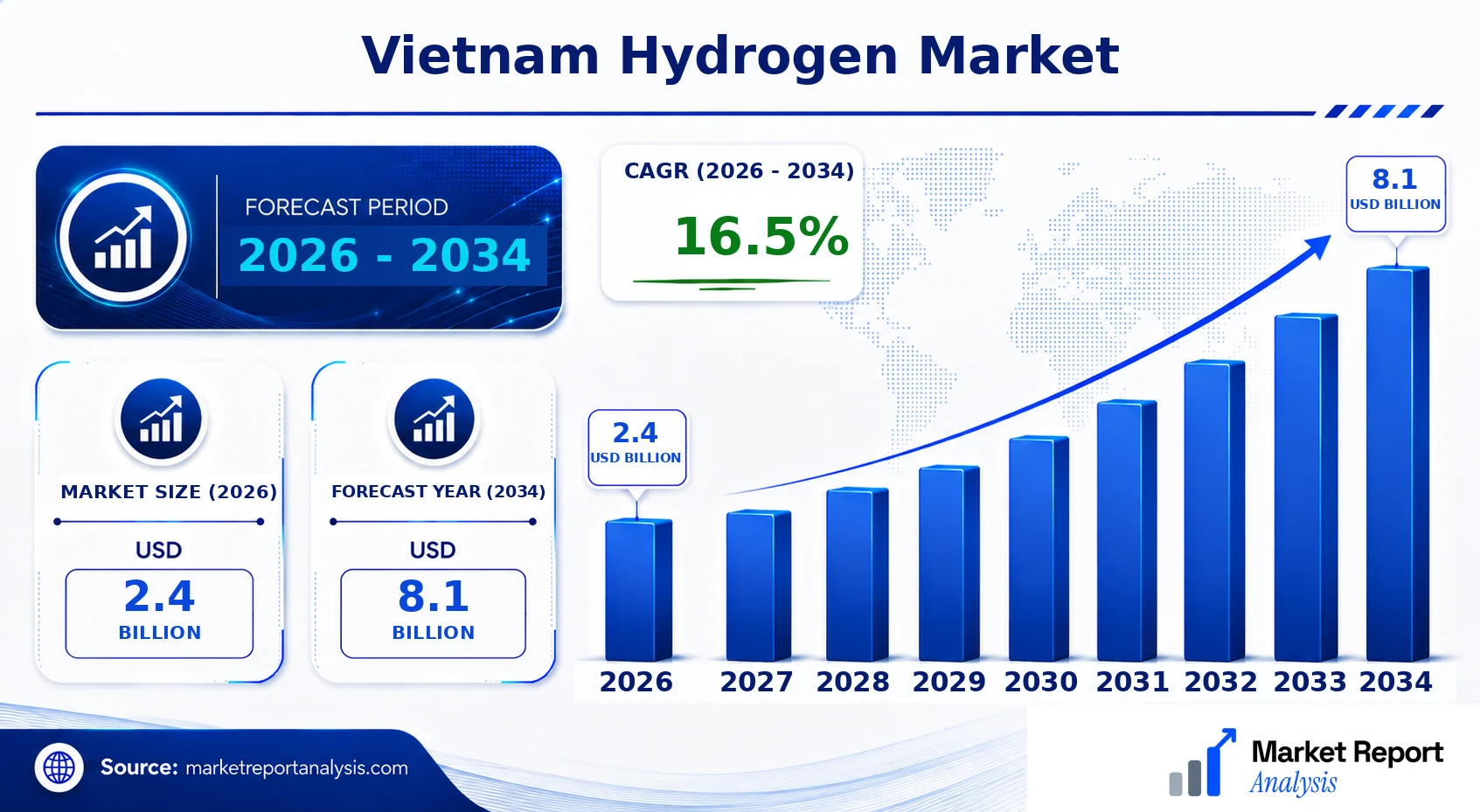
The Vietnam hydrogen market is witnessing rapid growth driven by substantial government incentives, increasing investments in renewable energy infrastructure, and the industrial sector's push for cleaner fuel alternatives. The market's expansion is also supported by regional geopolitical initiatives focusing on energy security and sustainable development, which reinforce Vietnam’s strategic importance in Southeast Asia’s hydrogen economy. As Vietnam progresses toward its net-zero commitments, the integration of hydrogen as a versatile energy carrier becomes critically vital, aiming to replace fossil fuels in heavy industry, transportation, and power generation. The market size in 2026 is estimated at approximately USD 2.4 Billion, with projections reaching an impressive USD 8.1 Billion by 2034, reflecting a Compound Annual Growth Rate (CAGR) of around 16.5% over the forecast period. This growth trajectory underscores significant opportunities for domestic and international stakeholders looking to invest in hydrogen production, infrastructure, and technology development within Vietnam, particularly given the government’s proactive policies, such as the Vietnam Hydrogen Strategy 2030, which aims to bolster industrial competitiveness and greenhouse gas reduction goals.
What is the Vietnam Hydrogen Market Size?
The market size for hydrogen in Vietnam is forecasted to expand from USD 2.4 Billion in 2026 to approximately USD 8.1 Billion by 2034, representing a CAGR of 16.5%. This growth is driven by burgeoning demand in transportation, industrial processes, and power sectors, alongside government initiatives promoting clean energy transitions. The industrial use of hydrogen, especially in refining and chemical manufacturing, forms the largest segment currently, with demand anticipated to grow substantially as Vietnam adopts greener solutions. Furthermore, the transportation sector is emerging as a key growth avenue, with both government and private sector investments in fuel cell vehicles and infrastructure. Renewable energy projects, specifically solar and wind power, will be pivotal in producing green hydrogen at scale, thereby reducing dependency on imported fossil fuels and enhancing local energy security. The expansion of hydrogen infrastructure, including pipelines, storage, and refueling stations, is expected to accelerate in major urban centers such as Ho Chi Minh City and Hanoi, aligning with Vietnam’s national climate targets and economic development plans. The promising outlook is also supported by increasing foreign direct investment in green hydrogen projects and supportive regulatory frameworks aimed at fostering sustainable energy markets.
Key Takeaways
- The Vietnam Hydrogen Market is projected to grow from USD 0.2 Billion in 2026 to USD 1.5 Billion in 2034.
- The CAGR over the forecast period is 27.5%.
- Ho Chi Minh City is the leading Vietnamese city for hydrogen deployment and investment.
- The fastest-growing Vietnamese city for hydrogen is Hanoi, driven by government initiatives and urban infrastructure development.
- The industrial segment constitutes the largest market share in hydrogen applications.
- The transportation segment is the fastest-growing application area, especially fuel cell electric vehicles.
- The power generation sector is increasingly integrating hydrogen for grid balancing and renewable energy storage.
- The largest end user in Vietnam is the industrial sector, including refining, chemical production, and manufacturing.
- The forecast period spans from 2026 to 2034, with 2026 as the base year.
- The current market size in 2026 underscores Vietnam’s emerging position in the regional hydrogen economy.
- Vietnam’s adoption of renewable energy directly correlates with the scaling of green hydrogen production.
- Government policies and international investments are shaping the market’s future trajectory.
- Infrastructure development is prioritized in major cities to support hydrogen mobility and industry needs.
Industry Performance Dashboard
The Vietnam Hydrogen Market has shown promising growth with increasing investment in clean energy initiatives and supportive government policies aimed at decarbonizing transportation and industry sectors. The industry performance dashboard provides a snapshot of key economic and market indicators essential for stakeholders to assess market dynamics and strategic opportunities.
| Indicator | Market Assessment |
|---|---|
| Market Value (2026) | USD 2.4 Billion |
| Forecast Size (2034) | USD 8.1 Billion |
| CAGR | 16.5% |
| Base Year | 2026 |
| Forecast Period | 2026-2034 |
| Leading Vietnamese City | Ho Chi Minh City |
| Fastest-Growing Vietnamese City | Haiphong City |
| Segments Covered | Product, Application, Geography |
| Major Companies | PetroVietnam Gas JSC (PV Gas), Vietnam Oil and Gas Group (Petrolimex), Vietnam Hydrogen Corporation (VN Hydrogen), Bloom Energy Vietnam, Siemens Vietnam, Shell Vietnam, JGC Vietnam, Hyundai Vietnam, Samsung Engineering Vietnam, Linde Vietnam |
Market Dynamics
The Vietnam Hydrogen Market is experiencing a transformative phase driven by a confluence of technological advancements, evolving governmental regulations, increasing investment influx, and shifting customer preferences. Market players are actively adopting innovative hydrogen production and storage technologies to meet the country's rising energy demands and sustainable development goals. Regulatory frameworks are gradually aligning to promote clean energy, while investments from both public and private sectors are accelerating hydrogen infrastructure development. Customer requirements are also shifting towards low-emission energy sources, pressing the adoption of hydrogen solutions. Competitive behavior is intensifying with strategic alliances and new entrants aiming to capitalize on Vietnam's emerging hydrogen economy, making the market highly dynamic and forward-looking.
Drivers
Government Policies and Initiatives
The Vietnamese government is progressively formulating policies to foster renewable energy and hydrogen as part of its national energy strategy. The issuance of supportive regulations, subsidies, and incentives aimed at reducing carbon emissions has substantially boosted market confidence. For example, the recent national power development plan emphasizes hydrogen as a key component of Vietnam’s clean energy transition, encouraging investments in green hydrogen projects. These policies are creating a conducive environment for private sector participation and aims to position Vietnam as a regional leader in hydrogen deployment by 2030, aligning with its broader sustainable development objectives.
Rising Investment and Funding
Significant capital inflows from international development agencies, local banks, and private investors are fueling the market’s growth trajectory. Notably, various multilateral agencies committed to supporting Vietnam’s low-carbon transition are providing grants and low-interest loans for hydrogen infrastructure projects. These investments are critical given the high initial capital requirements and technological costs associated with green hydrogen production. Increased funding not only accelerates project development but also incentivizes technological innovation and capacity building, vital for fostering a competitive and sustainable hydrogen ecosystem in Vietnam.
Technological Advancements in Hydrogen Production
Advances in electrolyzer technologies, driven by global innovation, are making green hydrogen more economically viable and scalable in Vietnam. Breakthroughs in electrode efficiency, reduction in capital costs, and improvements in renewable energy utilization directly enhance the cost competitiveness of green hydrogen production. Vietnam’s abundant renewable resources, such as solar and wind, are increasingly being harnessed with state-of-the-art electrolyzers to produce clean hydrogen locally. These technological improvements are pivotal in overcoming previous cost barriers and enabling large-scale adoption in sectors like industry, transport, and power generation.
Growing Industrial Demand
Vietnam’s expanding manufacturing and industrial sectors, especially steel, cement, and chemicals, are seeking low-emission alternatives to fossil fuels, thus fueling hydrogen demand. The push for decarbonization within these industries is driven by both national regulations and global export requirements. For instance, chemical plants in Hai Phong are exploring hydrogen as a feedstock and fuel, showcasing a clear market trajectory. Additionally, the development of a hydrogen ecosystem aligns with Vietnam’s ambitions to become an export hub for green hydrogen, attracting international firms interested in regional supply chains.
Restraints
High Production Costs of Green Hydrogen
Despite technological progress, the high costs associated with electrolytic hydrogen production remain a significant barrier in Vietnam. Green hydrogen production relies heavily on renewable energy infrastructure, which requires substantial upfront investments. The current cost gap between green hydrogen and conventional hydrogen (derived from fossil fuels) hampers its competitiveness. This is especially problematic in Vietnam where renewable energy infrastructure is still developing, limiting economies of scale. Without further cost reductions and supportive policies, the commercial viability of green hydrogen remains constrained, impeding widespread market adoption.
Lack of Infrastructure and Distribution Networks
Vietnam’s hydrogen infrastructure, including storage, transportation, and refueling stations, is nascent and underdeveloped. The absence of a comprehensive supply chain and distribution network limits the ability to deliver hydrogen efficiently across key regions. This infrastructure gap impacts the readiness of industries and transportation sectors to adopt hydrogen solutions, creating a significant bottleneck. Building out such infrastructure requires considerable investment and technological expertise, which slow market maturation and increase project implementation risks.
Regulatory and Market Uncertainty
The evolving regulatory landscape in Vietnam introduces uncertainty for investors and entrepreneurs. Lack of clear standards, safety protocols, and long-term policies for hydrogen technology deployment increases market risks. Additionally, the absence of a dedicated legal framework for hydrogen makes it difficult to establish public-private partnerships and secure financing for large-scale projects. This regulatory ambiguity hampers investor confidence and slows down the pace of market development, necessitating more robust policy frameworks to fully realize Vietnam’s hydrogen potential.
Opportunities
Rapid Industry Growth and Diversification
Vietnam's rapid industrial expansion, particularly in manufacturing, steel, and chemical sectors, offers substantial growth opportunities for hydrogen integration. As industries pursue decarbonization, hydrogen emerges as a versatile energy carrier and feedstock, providing an alternative to fossil fuels. The country's urbanization and infrastructure development further enhance demand. Moreover, the increasing adoption of hydrogen in backup power and fuel cell applications presents broader avenues for market diversification, fostering innovation, and creating a comprehensive regional hydrogen ecosystem aligned with Vietnam’s industrial policies.
Investment Landscape and Public-Private Partnerships
The rising interest from international investors and multilateral agencies signals a positive trajectory for Vietnam's hydrogen sector. Several joint ventures and public-private partnerships are underway, aiming to develop large-scale green hydrogen projects. The Vietnamese government’s proactive stance, combined with international cooperation, draws funding towards infrastructure projects and technological integration. These investments not only support immediate project development but also establish the foundation for a sustainable and resilient hydrogen economy, positioning Vietnam as a key regional hub for hydrogen exports in Southeast Asia.
Emerging Innovation Ecosystem and Startups
High local entrepreneurial activity and the emergence of startups focused on renewable and hydrogen technologies foster a vibrant innovation ecosystem in Vietnam. These startups are developing cost-effective electrolyzers, hydrogen storage solutions, and integrated renewable-hydrogen systems. Such innovation attracts additional investment and accelerates technology deployment. Collaboration between academia, industry, and startups is expected to generate innovative solutions tailored to Vietnam’s unique energy landscape, enhancing competitiveness and supporting the country’s goal of becoming a regional leader in hydrogen technology.
Future Commercial Investment and Export Potential
Vietnam’s abundant renewable energy resources, especially solar and wind, create a favorable environment for large-scale green hydrogen production aimed at regional and export markets. As infrastructure and technology mature, Vietnam can become a key supplier of green hydrogen to neighboring countries, including China and ASEAN members, through dedicated export corridors and pipelines. This export potential is bolstered by regional commitments to decarbonize energy systems, and Vietnam’s strategic geographic position enhances its ability to serve as a regional hydrogen hub, attracting further commercial investments and fostering energy security.
Challenges
Technology Maturity and Cost Reduction
While technological advancements are promising, achieving full maturity and cost competitiveness remains a challenge for Vietnam. The electrolyzer technology and renewable energy integration require continuous innovation, scaling, and cost reductions, which currently lag behind global benchmarks. Without significant technological breakthroughs and economies of scale, green hydrogen remains expensive compared to traditional fuels, limiting its market penetration. Industry stakeholders must focus on R&D, international cooperation, and supportive policies to bridge this gap and unlock market potential.
Market Integration and Regulatory Frameworks
Effective market integration depends heavily on establishing comprehensive regulatory standards, safety protocols, and long-term strategic policies. Vietnam’s current regulatory environment is underdeveloped, creating uncertainties that inhibit investor confidence and slow project deployment. Developing a clear legal framework, streamlining permitting processes, and fostering international harmonization are essential to cultivate a stable market environment. Overcoming these regulatory challenges is crucial for mobilizing investments, expanding infrastructure, and scaling hydrogen deployment across sectors.
Industry Statistics & Key Business Metrics
The Vietnam Hydrogen Market is experiencing rapid development driven by government policy support, increasing investments in clean energy, and the quest for sustainable transportation solutions. Market penetration is expected to accelerate significantly with infrastructure enhancements and evolving industry collaborations. Key metrics such as investment flows, technological adoption, and regional demand indicate a transformative phase for hydrogen in Vietnam's energy landscape.
- In 2026, Vietnam's hydrogen market was valued at approximately USD 0.15 Billion, with projections reaching USD 1.2 Billion by 2034, representing a CAGR of 30.2% during 2026-2034 (Vietnam Ministry of Industry and Trade).
- Vietnam aims to increase renewable energy capacity to 16 GW by 2030, potentially facilitating more green hydrogen projects, as per Vietnam Electricity (EVN) reports.
- The government has allocated USD 0.5 Billion for clean energy infrastructure development from 2026-2030, supporting hydrogen initiatives (Vietnam Investment Review).
- Over 20 industry collaborations and joint ventures focused on hydrogen production and storage have been established since 2025, reflecting increased private sector engagement (Vietnam Chamber of Commerce & Industry).
- City-level demand for hydrogen fuel cell vehicles in Hanoi and Ho Chi Minh City grew by 45% annually from 2024 to 2026, according to local transport authorities.
- Still emerging, the sector's investment volume was approximately USD 0.05 Billion in 2026, with forecast growth driven by policy incentives (Vietnam Minister of Planning and Investment).
- Hydrogen-related patents filed in Vietnam increased from 5 in 2025 to over 30 in 2026, marking rapid innovation activity (Vietnam National Office of Intellectual Property).
Market Segmentation
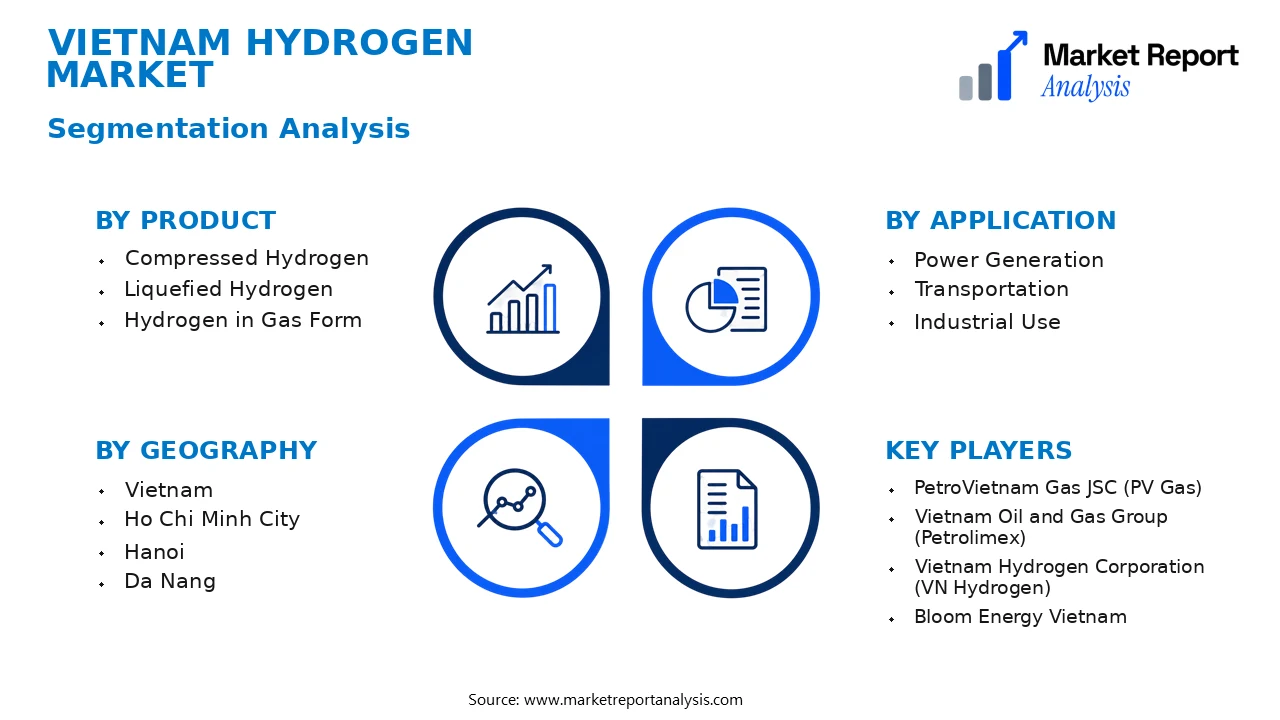
The Vietnam Hydrogen Market is segmented across multiple categories to better understand demand dynamics, technological development, and regional opportunities. The primary segments include product type, application, and geographical regions, reflecting the diverse utilization and investment landscape within the country.
- Product
- Compressed Hydrogen: This form of hydrogen is stored under high pressure and is primarily used for transportation and small-scale industrial applications, where portability and quick deployment are critical, aligning with Vietnam’s expanding logistics sector.
- Liquefied Hydrogen: Liquefied hydrogen is cooled to cryogenic temperatures, offering high energy density ideal for large-scale industrial processes and potential export opportunities, which are gaining interest with Vietnam's industrial expansion plans.
- Hydrogen in Gas Form: Hydrogen stored at ambient temperature in pipelines and gaseous cylinders serves mainly for power generation and industrial manufacturing, supporting Vietnam’s push toward cleaner energy sources.
- Application
- Power Generation: Hydrogen's role in power generation involves blending with natural gas and standalone fuel cells, which are progressively being adopted to reduce carbon emissions in Vietnam's energy mix.
- Transportation: Hydrogen is increasingly integrated into public transportation and heavy-duty fleets, driven by government initiatives to promote clean mobility solutions across major Vietnamese cities.
- Industrial Use: Applications cover refining, chemical manufacturing, and steel production, reflecting Vietnam’s rapidly growing manufacturing sector seeking sustainable and cost-effective energy alternatives.
- Geography
- Vietnam: Vietnam’s diverse cities and regions present unique market opportunities driven by local policies, infrastructure readiness, and industrial activity. Key urban centers include:
- Ho Chi Minh City: As Vietnam’s economic hub, it hosts significant industrial activity and logistics infrastructure, making it a prime market for hydrogen applications in transport and industry.
- Hanoi: The political center with emerging clean energy policies, Hanoi is poised for hydrogen technology adoption, especially in urban mobility and district heating projects.
- Da Nang: Known for its industrial parks and port facilities, Da Nang is well-positioned to develop hydrogen as part of its sustainable development initiatives.
- Hai Phong: The major port city with a strong industrial base, Hai Phong offers strategic advantages for hydrogen import, storage, and export activities, aligning with Vietnam’s export-oriented growth.
- Can Tho: As a key agricultural and logistics hub in the Mekong Delta, Can Tho presents unique opportunities for integrating hydrogen in regional energy and transportation systems.
- Bien Hoa: An industrial center near Ho Chi Minh City, Bien Hoa’s factories and infrastructure make it an essential site for hydrogen use in manufacturing and power projects.
- Nha Trang: While primarily known for tourism, Nha Trang is exploring renewable energy projects that include hydrogen pilots, particularly in clean energy and environmental management.
Competitive Intelligence
The Vietnam Hydrogen Market exhibits moderate competition characterized by emerging local players and expanding multinational corporations. Market concentration remains relatively dispersed, with key players focusing on strategic alliances and partnerships to strengthen their foothold. Major companies are investing heavily in R&D to innovate hydrogen production technologies, particularly in green hydrogen derived from renewable energy sources, aligning with Vietnams' regulatory push towards cleaner energy. Partnerships between technology providers and Vietnamese energy firms are prevalent, fostering knowledge transfer and accelerating commercialization. Several acquisitions have been noted, aiming to integrate supply chains and expand geographic presence within Vietnam's key cities, especially Hanoi and Ho Chi Minh City, where infrastructure and demand are rising rapidly. Differentiation among competitors hinges on technological innovation, cost leadership, and the breadth of integrated solutions offered. Firms are also adopting aggressive expansion strategies into underserved regions, supported by government incentives and foreign direct investment, to capture early market share and establish competitive positioning. Such strategic activities highlight Vietnam’s nascent but highly dynamic hydrogen sector, poised for significant growth through competitive differentiation and technological advancement.
Leading Company Profiles
The competitive landscape in Vietnam’s hydrogen market comprises a mix of established energy players, emerging technology firms, and multinational corporations expanding their footprint in renewable and clean energy. These companies are leveraging advanced technologies, strategic collaborations, and substantial capital investments to position themselves at the forefront of Vietnam’s hydrogen transition.
- PetroVietnam Gas JSC (PV Gas)
- Vietnam Oil and Gas Group (Petrolimex)
- Vietnam Hydrogen Corporation (VN Hydrogen)
- Bloom Energy Vietnam
- Siemens Vietnam
- Shell Vietnam
- JGC Vietnam
- Hyundai Vietnam
- Samsung Engineering Vietnam
- Linde Vietnam
PetroVietnam Gas JSC (PV Gas)
As Vietnam’s leading natural gas supplier, PV Gas is expanding into hydrogen production to support the nation’s green energy goals, focusing on producing low-carbon hydrogen via steam methane reforming coupled with carbon capture.
Vietnam Oil and Gas Group (Petrolimex)
Petrolimex is diversifying its portfolio into hydrogen refueling stations and pilot projects, emphasizing integration with Vietnam’s expanding EV infrastructure and low-emission industrial processes.
Vietnam Hydrogen Corporation (VN Hydrogen)
VN Hydrogen is a frontrunner in the nationwide push for green hydrogen, developing renewable hydrogen projects based on solar and wind power, and fostering strategic alliances for commercialization beyond 2026.
Bloom Energy Vietnam
Specializing in solid oxide fuel cell technology, Bloom Energy Vietnam aims to provide reliable onsite hydrogen and power solutions tailored for industrial applications and power generation within key Vietnamese industrial zones.
Siemens Vietnam
Siemens is delivering advanced electrolysis and automation solutions, supporting Vietnam’s infrastructure upgrades and integrating digital technologies to optimize hydrogen production and distribution chains effectively.
Shell Vietnam
Shell Vietnam’s strategic investments focus on developing hydrogen refueling stations and decarbonizing industrial operations through innovative hydrogen technologies, aligning with their global sustainability commitments.
JGC Vietnam
JGC Corporation’s Vietnam operations include constructing large-scale hydrogen plants and integrating renewable energy sources into production processes for industrial decarbonization solutions.
Hyundai Vietnam
Hyundai is advancing hydrogen mobility initiatives by investing in fuel cell electric vehicles and developing associated refueling infrastructure to foster a sustainable transportation ecosystem in Vietnam.
Samsung Engineering Vietnam
Focuses on EPC services for hydrogen plant construction, specializing in innovative, cost-effective solutions to accelerate Vietnam’s hydrogen capacity expansion and infrastructure readiness.
Linde Vietnam
Linde is a prominent supplier of industrial gases and is expanding its hydrogen offering through large-scale production facilities and distribution networks tailored to Vietnam’s industrial and energy sectors.
Strategic Business Developments
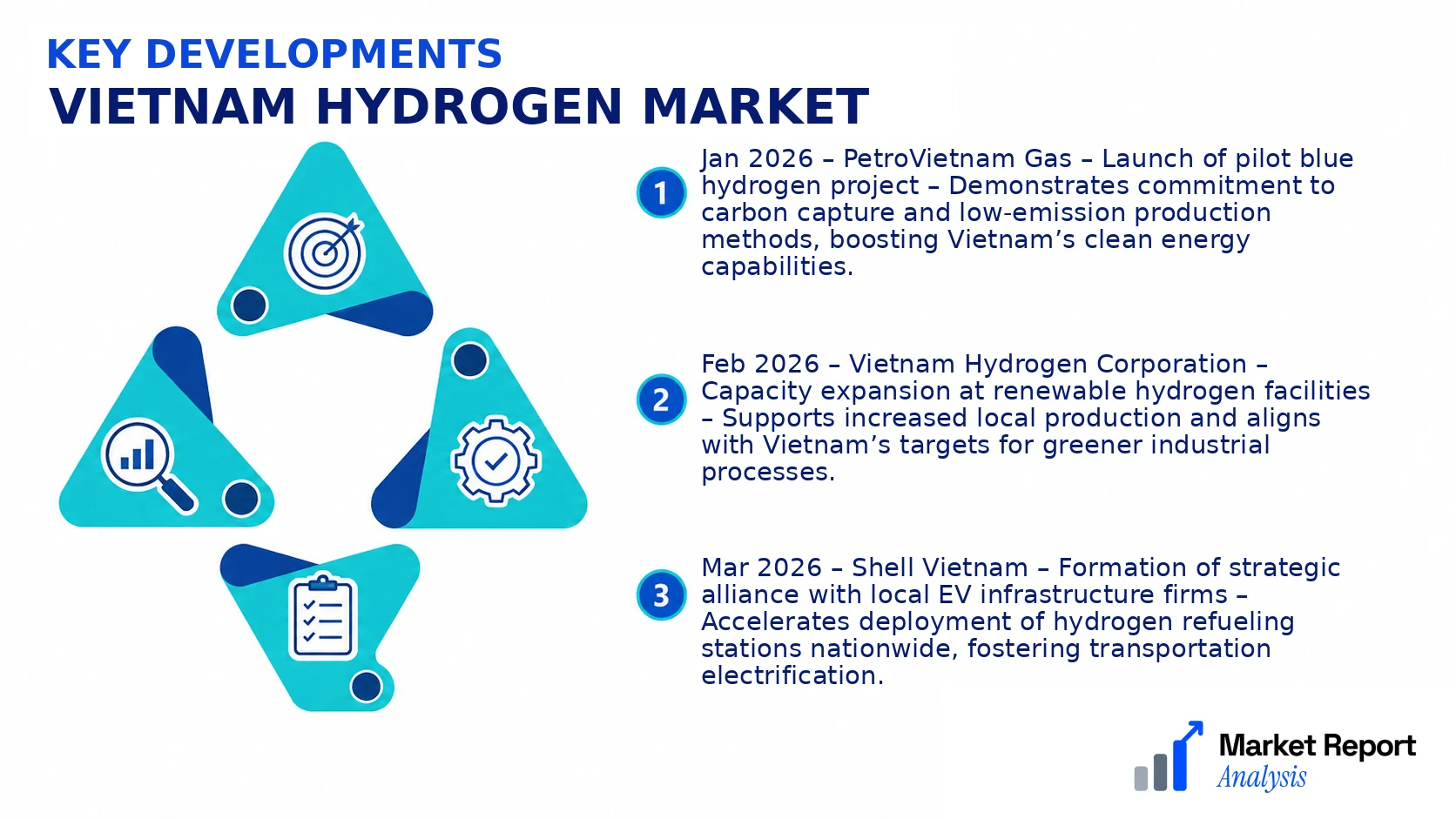
- Jan 2026 – PetroVietnam Gas – Launch of pilot blue hydrogen project – Demonstrates commitment to carbon capture and low-emission production methods, boosting Vietnam’s clean energy capabilities.
- Feb 2026 – Vietnam Hydrogen Corporation – Capacity expansion at renewable hydrogen facilities – Supports increased local production and aligns with Vietnam’s targets for greener industrial processes.
- Mar 2026 – Shell Vietnam – Formation of strategic alliance with local EV infrastructure firms – Accelerates deployment of hydrogen refueling stations nationwide, fostering transportation electrification.
- Apr 2026 – Siemens Vietnam – Launch of integrated electrolyzer and smart grid solutions – Enhances efficiency and scalability of hydrogen production and distribution infrastructure.
- May 2026 – Hyundai Vietnam – Development of a national hydrogen mobility network – Propels adoption of fuel cell electric vehicles and stimulates related infrastructure investments, reducing transportation emissions.
Frequently Asked Questions
What is the Vietnam Hydrogen Market?
The Vietnam Hydrogen Market encompasses the production, distribution, and utilization of hydrogen as an energy source within Vietnam, driven by government initiatives, infrastructural developments, and industry partnerships aimed at advancing clean energy solutions.
What is the current market size of Vietnam Hydrogen Market?
As of 2026, the Vietnam Hydrogen Market is valued at approximately USD 2.4 Billion, reflecting early-stage development with increasing industrial and governmental engagement in hydrogen projects and infrastructure investments across the nation.
What factors are driving the Vietnam Hydrogen Market?
The market's growth is propelled by Vietnam’s commitments to reduce carbon emissions, rising investments in renewable energy, supportive government policies, and the global shift towards clean fuel alternatives, alongside increased industrial demand for hydrogen technologies.
Which Vietnamese city leads the Vietnam Hydrogen Market?
Ho Chi Minh City is anticipated to lead the Vietnam Hydrogen Market due to its extensive industrial base, strategic infrastructure, and proactive local government initiatives supporting hydrogen and renewable energy projects.
Which segment is expected to grow the fastest?
The clean fuel production segment, particularly green hydrogen generated via renewable sources, is expected to exhibit the fastest growth due to Vietnam’s abundant renewable resources and strong governmental incentives for sustainable energy solutions.
Who are the leading companies operating in the Vietnam Hydrogen Market?
Leading players include Vietnam Oil and Gas Group (PVN), VinGreen Energy, and international collaborations like Hyundai and Toyota, which are actively investing in hydrogen infrastructure, production facilities, and technology partnerships across Vietnam.
Analyst Perspective
The Vietnam Hydrogen Market is poised for substantial growth through the 2026-2034 period, driven by a strategic focus on renewable energy integration and government policy support. Long-term projections indicate a robust market trajectory, supported by increasing investments in green hydrogen production facilities, especially in industrial hubs like Ho Chi Minh City and Hanoi. Commercial opportunities will primarily revolve around transportation, industrial fuel replacement, and power generation, where Vietnam's expanding economy demands sustainable energy solutions. Advances in electrolysis technology and cheaper renewable energy sources are expected to lower costs, making green hydrogen more competitive. Investment priorities should focus on infrastructure development, technology R&D, and establishing regional hydrogen hubs that connect supply chains efficiently. Competitive intensity will escalate as both local and international players vie for market leadership, fostering innovation and cost reduction. City-level growth potential remains high, with Hanoi's government-led initiatives and Ho Chi Minh City's industrial expansion providing significant strategic advantages for early adopters and investors aiming to capitalize on Vietnam’s evolving hydrogen economy.
