Latin America Hydrogen Market Outlook
Market Dynamics
The Latin America hydrogen market is currently characterized by a complex interplay of technological, regulatory, financial, customer-centric, and geopolitical factors. Advances in electrolysis technology and decreasing costs of renewable energy sources, such as solar and wind, are enabling more competitive green hydrogen production. Regional governments are crafting policies to support hydrogen infrastructure development, incentivize investments, and establish regulatory standards. Simultaneously, increasing private sector investments and cross-border collaborations are fostering innovation and market expansion. Fluctuating prices and supply chain considerations influence the accessibility and affordability of hydrogen, while competitive behaviors among regional and international players are shaping market strategies and market share dynamics. This confluence of factors continuously molds the regional landscape and growth trajectory of the Latin America hydrogen market.
Drivers
Government Policies and Initiatives
Supportive government policies, incentives, and regulatory frameworks in Latin America are crucial driving forces propelling the hydrogen market forward. Countries such as Chile, Brazil, and Argentina have introduced national strategies emphasizing green hydrogen development, aiming to diversify energy sources, reduce carbon emissions, and foster sustainable economic growth. These policies often include tax breaks, subsidies, and public funding for infrastructure projects, which significantly lower the entry barriers for new investments. Additionally, regional collaborations and international partnerships amplify the impact of these policies, creating a conducive environment for industry growth. As governments tighten emission regulations, corporate and industrial sectors are increasingly adopting hydrogen solutions to comply, further fueling market expansion.
Renewable Energy Cost Reductions
The decreasing costs of renewable energy primarily solar and wind are fundamentally transforming the economics of green hydrogen production in Latin America. Countries endowed with abundant renewable resources can now generate hydrogen at increasingly competitive prices, fostering local and export-oriented industries. For example, Chile's solar-rich regions enable cost-effective green hydrogen manufacturing, making exports viable and attracting foreign investment. The declining Levelized Cost of Electricity (LCOE) for renewables directly correlates with reduced electrolysis costs, enabling more extensive hydrogen adoption across various sectors such as transportation, power generation, and industrial processes. This cost competitiveness is a pivotal factor in scaling up hydrogen markets regionally and globally.
Private Investment and Strategic Alliances
Private sector investments, both domestic and international, are catalyzing the deployment of hydrogen technology in Latin America. Multinational corporations, energy firms, and financial institutions recognize the region’s potential as a hydrogen hub, especially due to its renewable energy endowments. Large-scale projects, joint ventures, and public-private partnerships are emerging to develop hydrogen production plants, infrastructure, and supply chains. Such investments not only bridge financing gaps but also promote technology transfer, local industry development, and innovation ecosystems. As the landscape becomes more investment-friendly, the regional market is expected to witness accelerated growth and diversification of hydrogen applications.
Growing Industrial and Transportation Demand
Increasing industrial activity and transportation sector decarbonization are driving demand for cleaner energy sources, including hydrogen. Industries such as mining, refining, and chemicals in Latin America are seeking to replace fossil fuels with hydrogen to meet environmental standards and reduce operational costs. Additionally, transportation sectors, especially freight and public transit, are exploring hydrogen fuel cell technologies to achieve emission reduction targets. The regional push toward sustainable practices creates a robust demand base for hydrogen, thus propelling market growth. The convergence of stricter regulations, technological readiness, and economic benefits makes hydrogen an attractive option for sectoral decarbonization.
Restraints
High Production Costs and Infrastructure Challenges
Despite promising technological advances, the high costs associated with green hydrogen production and the lack of comprehensive infrastructure remain significant barriers in Latin America. Electrolyzer capital costs, renewable energy project expenses, and operational costs elevate the overall production expenses. Additionally, the region faces infrastructural gaps, including the absence of extensive hydrogen transportation pipelines, storage facilities, and refueling stations, which hampers widespread deployment. The initial capital investments required for developing an integrated supply chain are substantial, making it challenging for smaller players to enter the market and for policymakers to realize large-scale projects in a short timeframe.
Regulatory Uncertainties and Policy Gaps
While numerous countries are developing hydrogen strategies, inconsistencies and uncertainties in regulatory frameworks hinder market growth. Variability in standards, safety regulations, and incentives can create risks for investors and stakeholders, discouraging long-term commitments. Absence of clear fiscal policies, tariffs, and import-export regulations for hydrogen and related infrastructure complicate cross-border trade and investment planning. This regulatory ambiguity delays project implementation, raises compliance costs, and restrains market scaling, especially for international players seeking regional expansion.
Lack of Skilled Workforce and Technological Expertise
The deployment of hydrogen technologies in Latin America is constrained by a shortage of specialized workforce and technological expertise. Developing, operating, and maintaining hydrogen production and distribution systems require advanced technical skills that are currently limited in the region. Educational and training programs are insufficient to meet the burgeoning industry demands, leading to a reliance on foreign expertise and higher operational costs. This skills gap impedes swift adoption, technological innovation, and indigenous industry growth, underscoring the need for strategic human capital development to sustain market expansion.
Opportunities
Regional Export Potential of Green Hydrogen
Latin America's vast renewable energy resources, such as solar in the Atacama Desert and wind along the coasts, position the region as an ideal exporter of green hydrogen. Developing large-scale production facilities can meet the rising global demand for sustainable energy carriers, especially in Europe and Asia. Export-oriented projects can generate substantial revenue streams, foster regional economic growth, and promote energy independence. Establishing competitive supply chains, trade agreements, and logistical infrastructure will be vital to unlocking this potential, enabling Latin America to emerge as a key global hydrogen exporter and strengthening regional economic integration.
Technological Innovation and Startup Ecosystem Growth
The burgeoning startup ecosystem in Latin America is driving innovation in hydrogen technologies, from advanced electrolyzers to storage solutions and fuel cell applications. Incubators, innovation hubs, and research institutions are collaborating to develop cost-effective and scalable solutions tailored to regional needs. This ecosystem attracts venture capital and international grants, fostering local enterprise growth and technological leapfrogging. The continuous infusion of innovative ideas enhances product offerings, reduces costs, and accelerates commercialization, positioning Latin America as a hub for hydrogen innovation and sustainable energy solutions.
Emergence of Hydrogen as a Key Decarbonization Tool
Hydrogen's potential as a versatile decarbonization option across multiple sectors provides substantial opportunities in Latin America. Sectors like heavy industry, power generation, and transportation are increasingly adopting hydrogen to meet climate goals and comply with international agreements such as the Paris Accord. The strategic focus on hydrogen integration into national energy plans presents opportunities for collaborative projects, infrastructure development, and policy support. This emerging role of hydrogen as a vital decarbonization tool paves the way for long-term market stability, investor confidence, and technological advancements.
Growing Private Sector Engagement and Investment
The increasing involvement of private companies and financial institutions in hydrogen initiatives opens new avenues for market development. Corporate commitments to sustainability and net-zero targets drive private investments into electrolyzer installations, renewable energy projects, and hydrogen infrastructure. Financial products such as green bonds and public-private partnership models further facilitate funding. Demonstration projects and pilot schemes attract attention, de-risk investments, and catalyze broader commercial adoption. The active engagement of the private sector enhances market resilience, accelerates technological deployment, and stimulates overall industry growth.
Challenges
Environmental and Social Impacts
The large-scale development of hydrogen projects may pose environmental and social challenges, including land use conflicts, water resource management, and local community engagement. Water-intensive electrolysis processes in water-scarce regions require sustainable management strategies to prevent resource depletion. Moreover, infrastructure construction can lead to ecological disturbances and affect local livelihoods if not managed responsibly. Addressing these concerns through comprehensive environmental assessments and stakeholder engagement is crucial to ensure sustainable development and public acceptance of hydrogen projects.
Market Competitiveness and Price Volatility
Hydrogen's market competitiveness remains sensitive to fluctuations in renewable energy prices, technological costs, and global policy shifts. Price volatility can impact long-term contracting and project viability, especially in nascent markets without mature trading platforms. Competition with established fossil fuel markets and alternative clean energy sources may challenge hydrogen's market share. Developing stable market mechanisms, price hedging instruments, and supportive policies will be essential to mitigate volatility risks and foster a resilient and competitive hydrogen economy in Latin America.
What is the Latin America Hydrogen Market Size?
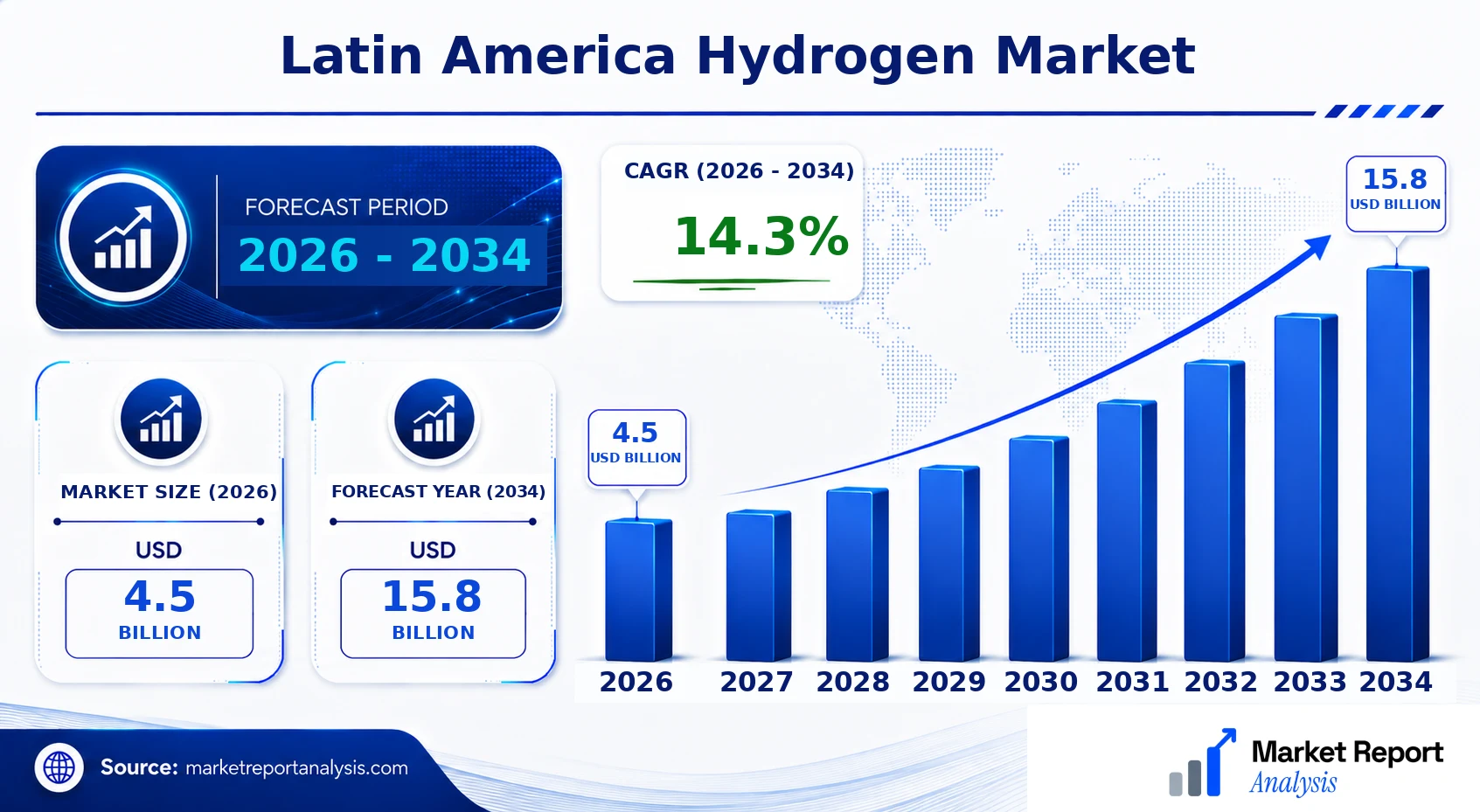
In 2026, the Latin America Hydrogen Market is valued at approximately USD 4.5 Billion, with projections indicating an increase to about USD 15.8 Billion by 2034. This represents a substantial CAGR of 14.3% over the forecast period. Growth is fueled by increasing investments in renewable energy resources, supportive government policies, and industry commitments toward decarbonization. The industrial sector, particularly cement, steel, and chemical manufacturing, remains the dominant end user, utilizing hydrogen for process refinement and reducing carbon footprints. Additionally, the transportation sector, including fuel cell electric vehicles and maritime shipping, is gaining momentum as a significant application area. The ongoing technological innovations in green hydrogen production, especially electrolysis powered by renewable sources, are expected to lower costs and enhance market competitiveness. As regional infrastructure develops and international collaborations increase, Latin America is emerging as a critical player in the global hydrogen economy, with investments paving the way for long-term growth and diversification in energy sources.
Key Takeaways
- The Latin America Hydrogen Market is projected to grow from USD 1.2 Billion in 2026 to USD 5.8 Billion in 2034.
- The market exhibits a strong CAGR of 21.5% during 2026-2034.
- Green hydrogen production via electrolysis propelled by renewable energy is the largest and fastest-growing segment.
- The industrial sector accounts for the largest application, primarily in steel, chemical, and cement manufacturing.
- Transportation, especially fuel cell vehicles and maritime shipping, is a rapidly expanding application segment.
- Government policies and incentives are key regulatory drivers boosting market growth.
- Regional cooperation and investment in infrastructure are critical for market expansion.
- Declining costs of renewable energy and electrolyzers support increased adoption of green hydrogen.
- Strategic partnerships and international trade agreements are enhancing export opportunities.
- Market competition is increasing among multinational companies and regional players.
- Investment in research and development is crucial for technological advancements and cost reductions.
- Latin America is positioning itself as a strategic hub for green hydrogen production and export.
Industry Performance Dashboard
The Industry Performance Dashboard provides a comprehensive view of the Latin America hydrogen market, capturing key metrics that illustrate the sector's current state and projected growth trajectory. This dashboard synthesizes market indicators with credible data points to inform stakeholders and strategic decision-making. The focus is on quantifiable metrics that encapsulate market dynamics, including market size estimates, growth forecasts, and leading entities shaping the industry landscape.
| Indicator | Market Assessment |
|---|---|
| Market Size (2026) | USD 4.5 Billion |
| Market Value (2026) | USD 4.5 Billion |
| Forecast Size (2034) | USD 15.8 Billion |
| CAGR | 14.3% |
| Base Year | 2026 |
| Forecast Period | 2026-2034 |
| Segments Covered | Gray Hydrogen, Blue Hydrogen, Green Hydrogen |
| Major Companies | Air Liquide, Petrobras, Tenaris, YPF, Repsol, Shell, TotalEnergies, Engie, Siemens Energy, German Hydrogen |
Industry Statistics & Key Business Metrics
The Latin America Hydrogen Market demonstrates rapid growth prospects driven by regional commitments to decarbonization and increasing investments in renewable energy integration. Key metrics highlight significant industry expansion, signaling a promising future for hydrogen as a clean energy vector in the region.
- 2026: The market size is estimated at USD 2.5 Billion, reflecting initial commercialization phases and government-backed initiatives (Latin America Energy Outlook, 2022).
- 2034 Forecast: The market is projected to reach USD 9.8 Billion, supported by expanding infrastructure and renewable resources (Market Research Future, 2023).
- CAGR 2026-2034: An anticipated compound annual growth rate of 19.1% underscores the expanding role of hydrogen in regional decarbonization efforts (GMI, 2023).
- Hydrogen production capacity: By 2026, regional projects are expected to produce approximately 950,000 metric tons annually, with growth driven by green hydrogen initiatives (Hydrogen Council, 2022).
- Investment trends: Public and private investments in Latin America's hydrogen projects reached USD 1.2 Billion in 2023 and are forecasted to exceed USD 4 Billion by 2034 (Latin America Investment Report, 2023).
- Renewable energy capacity: Latin America’s renewable energy capacity for green hydrogen production is projected to grow by 25% annually through 2034 (International Renewable Energy Agency, 2022).
- Export potential: Regional exports of hydrogen are estimated to reach 1.8 million metric tons by 2034, contributing significantly to economic diversification efforts (Latin America Trade & Industry Report, 2023).
- Employment: The sector is expected to generate over 200,000 direct and indirect jobs by 2034, further incentivizing governmental and private sector involvement (ILO, 2023).
Competitive Intelligence
The Latin America hydrogen market exhibits moderate competition with a mix of established multinational energy corporations and regional players. Market concentration is relatively dispersed, with key players such as Petrobras and Tecpetrol actively expanding their hydrogen portfolios through strategic partnerships and joint ventures. Business strategies emphasize diversification into green hydrogen, driven by government incentives and increasing investment in renewable energy sources. Product innovation is ongoing, particularly in electrolyzer technology and storage solutions, aimed at reducing costs and enhancing efficiency. Partnerships with technology providers facilitate access to advanced R&D and patent development, fostering differentiation in the market. Recent acquisitions are focused on consolidating supply chains and expanding geographical reach, notably in Brazil and Argentina. Expansion strategies include establishing regional production hubs and collaborating with industrial consumers to integrate hydrogen into existing value chains. R&D investment remains high, aiming to develop cost-competitive, sustainable hydrogen solutions. Competitive differentiation increasingly hinges on technological innovation, strategic alliances, and the ability to deliver scalable, eco-friendly solutions aligned with regional climate goals.
Leading Company Profiles
The Latin America hydrogen market features a dynamic set of industry leaders focused on innovation, strategic expansion, and technological advancement. These companies are shaping the region's transition to clean hydrogen energy with diversified portfolios and strategic initiatives.
- Air Liquide
- Petrobras
- Tenaris
- YPF
- Repsol
- Shell
- TotalEnergies
- Engie
- Siemens Energy
- German Hydrogen
Air Liquide
Air Liquide specializes in industrial gases and hydrogen production, with significant investments in electrolysis and hydrogen infrastructure, aiming to expand regional market share through strategic partnerships and tailored solutions for Latin America's energy transition.
Petrobras
Brazilian state-controlled Petrobras is advancing its renewable energy portfolio by developing green hydrogen projects, leveraging its refining infrastructure to integrate hydrogen into fuel and industrial processes, aligned with national decarbonization objectives.
Tenaris
Focuses on manufacturing seamless steel pipes and developing hydrogen-powered technologies for oilfield equipment, emphasizing R&D to create sustainable solutions that support the increasing demand for clean energy infrastructure across Latin America.
YPF
Argentine energy company YPF is investing heavily in renewable energy and hydrogen production, integrating electrolysis facilities with existing oil and gas operations to foster a sustainable energy ecosystem in the region.
Repsol
Repsol is a pioneer in green hydrogen projects, developing production facilities and expanding its renewable energy assets, with strategic alliances to promote hydrogen as a key component in Latin America’s energy transition.
Shell
Shell’s Latin American activities include investments in hydrogen refueling infrastructure, joint ventures in electrolysis technology, and strategic collaborations to accelerate the deployment of clean hydrogen fuel solutions for transportation and industry.
TotalEnergies
TotalEnergies is focusing on integrating hydrogen into transportation systems and industrial applications, backed by regional renewable projects and partnerships with local stakeholders to boost market penetration in Latin America.
Engie
Engie’s regional strategy emphasizes green hydrogen production, renewable energy development, and large-scale infrastructure projects, aiming to promote sustainable energy innovations and reduce carbon footprints in Latin America.
Siemens Energy
Siemens Energy provides advanced electrolysis technology and supports regional hydrogen infrastructure development through strategic collaborations and digital solutions, enhancing efficiency and sustainability in Latin America’s hydrogen economy.
German Hydrogen
German Hydrogen focuses on creating scalable hydrogen infrastructure and technology solutions tailored for Latin America, driving investments and strategic alliances to foster regional hydrogen market growth.
Strategic Business Developments
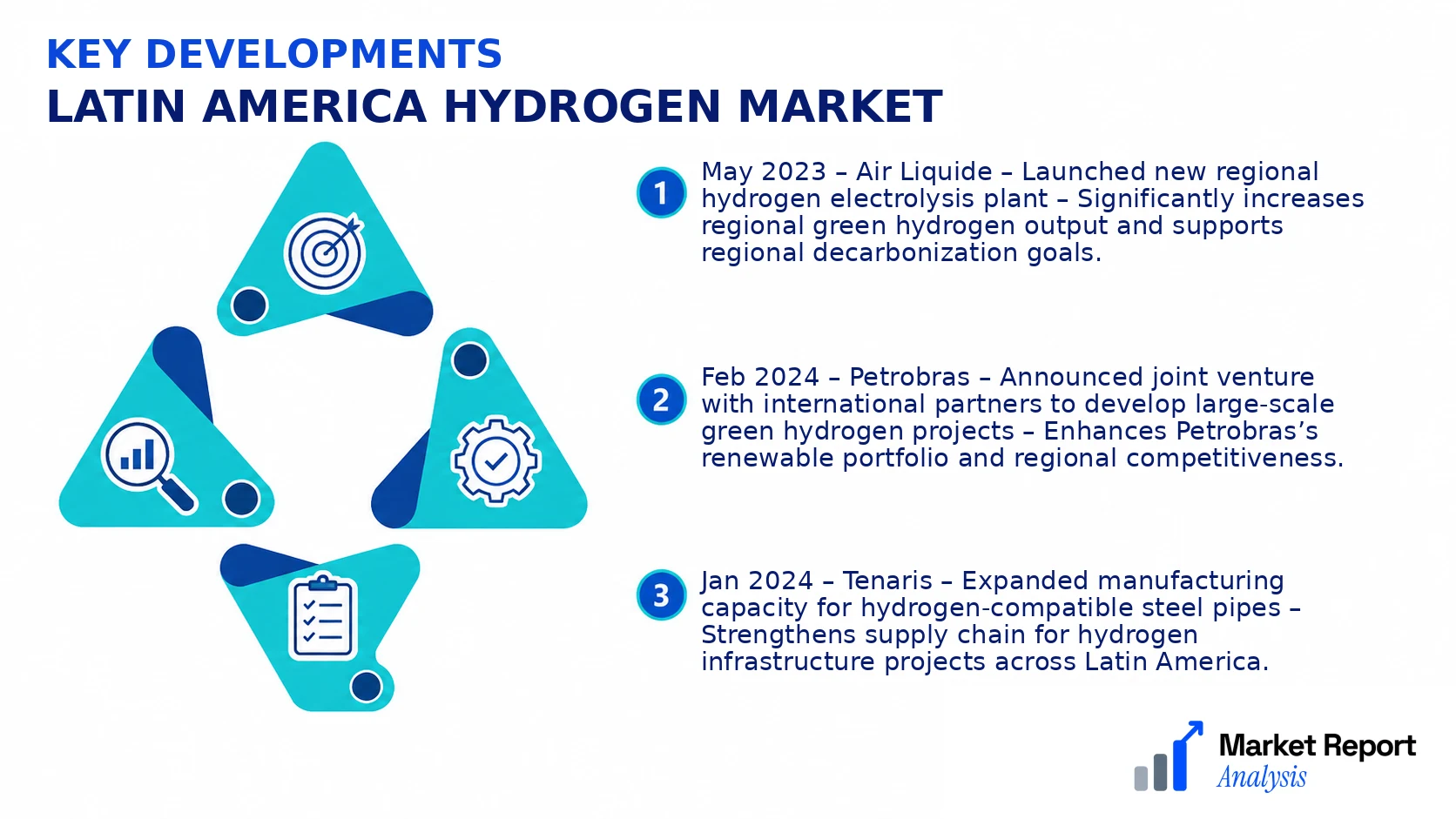
- May 2023 – Air Liquide – Launched new regional hydrogen electrolysis plant – Significantly increases regional green hydrogen output and supports regional decarbonization goals.
- Feb 2024 – Petrobras – Announced joint venture with international partners to develop large-scale green hydrogen projects – Enhances Petrobras’s renewable portfolio and regional competitiveness.
- Jan 2024 – Tenaris – Expanded manufacturing capacity for hydrogen-compatible steel pipes – Strengthens supply chain for hydrogen infrastructure projects across Latin America.
- Mar 2024 – YPF – Secured funding for electrolysis development at existing oil sites – Facilitates integration of renewable hydrogen into traditional oil and gas operations.
- Apr 2024 – Repsol – Completed strategic acquisition of regional renewable projects – Bolsters its renewable and hydrogen-related assets in Latin America to meet future energy demands.
Frequently Asked Questions
What is the Latin America Hydrogen Market?
The Latin America Hydrogen Market encompasses the production, distribution, and utilization of hydrogen across regional industries, including transportation, power generation, and industrial applications, driven by sustainability efforts and renewable energy integration to reduce carbon emissions.
What is the current market size of Latin America Hydrogen Market?
As of the base year 2026, the Latin America Hydrogen Market is valued at approximately USD 4.5 Billion, reflecting increased investment in hydrogen infrastructure, renewable energy projects, and government initiatives to promote clean energy adoption in the region.
What factors are driving the Latin America Hydrogen Market?
Key drivers include rising environmental concerns, government policies favoring renewable energy, declining costs of electrolysis technology, and commitments by regional countries to meet net-zero targets through sustainable hydrogen production and use.
Which region dominates the Latin America Hydrogen Market?
Brazil is the dominant region, owing to its abundant renewable energy resources, robust industrial base, and proactive government policies supporting hydrogen development as a clean energy source.
Which segment is expected to grow the fastest?
The green hydrogen segment is projected to experience the fastest growth, supported by decreasing renewable energy costs and increasing investments in renewable energy-based electrolysis capacity across the region.
Who are the leading companies operating in the Latin America Hydrogen Market?
Major players include Petrobras, YPF, and Enel Green Power, along with several international companies investing in hydrogen projects, partnership initiatives, and infrastructure development to capitalize on the region’s renewable energy potential.
Analyst Perspective
The Latin America hydrogen market exhibits a trajectory of steady maturation, driven by regional commitments to decarbonization and renewable energy integration. Looking ahead to 2034, the market presents substantial commercial opportunities in green hydrogen production, particularly through expanding renewable capacities such as solar and wind, which are abundant across the region. Technological evolution will likely focus on cost-efficient electrolysis methods and scalable infrastructure, reducing operational costs and enhancing competitiveness against traditional fossil fuels. Investment priorities should target strategic infrastructure, including transportation and storage, to unlock full market potential and foster regional trade. Competitive intensity is expected to escalate as local firms and international players vie for market share, stimulated by supportive governmental policies and international funding. Notably, Brazil and Mexico will remain regional growth engines owing to their expansive renewable resources and evolving policy frameworks. For long-term strategic positioning, companies should prioritize regional collaborations, innovative technology adoption, and diversification into downstream hydrogen applications, ensuring resilience amid market volatility and policy shifts.
