Saudi Arabia Hydrogen Market Outlook
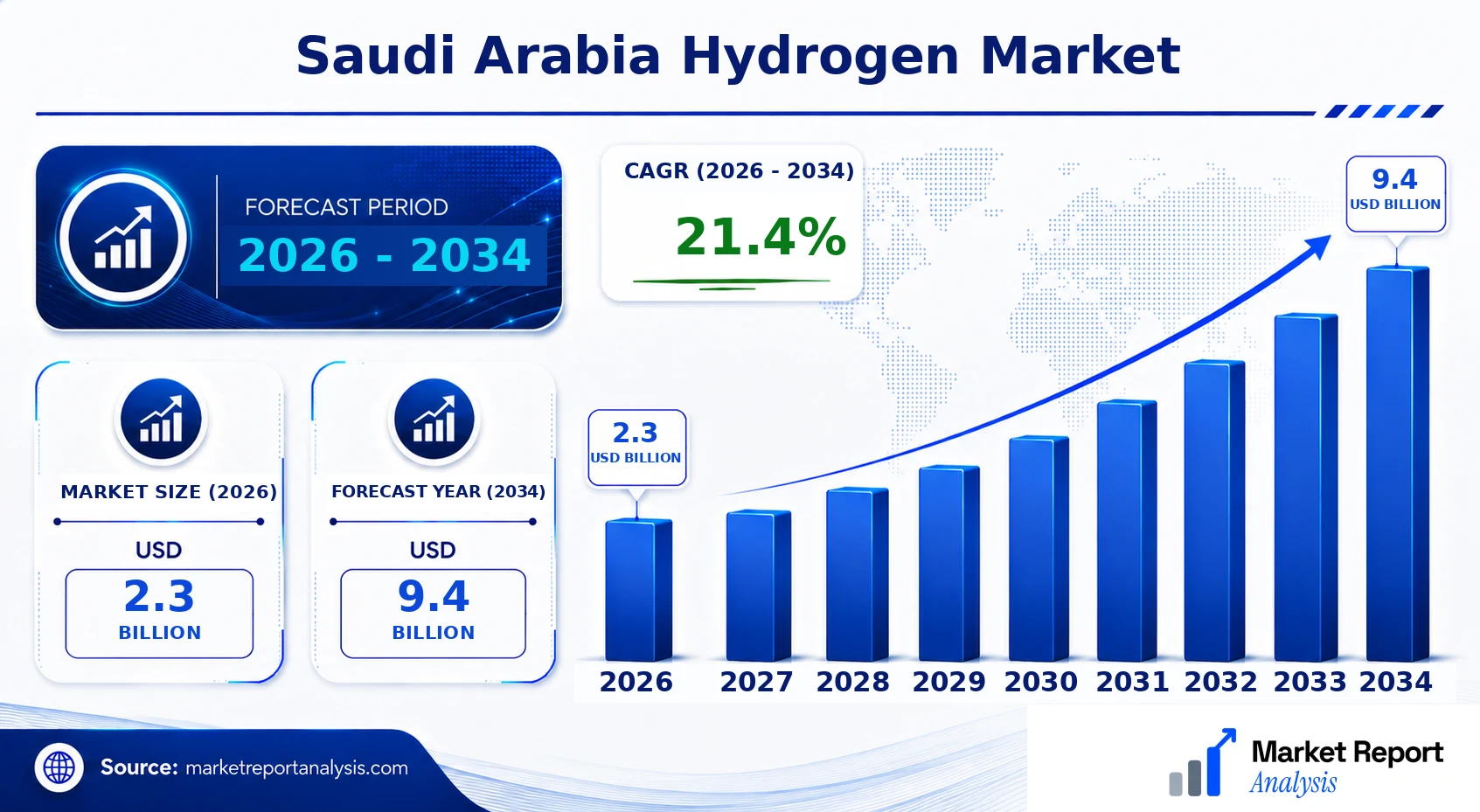
The 2026 market size is USD 2.3 Billion. The Saudi Arabia Hydrogen Market is poised for substantial growth driven by strategic governmental initiatives, abundant renewable resources, and aggressive investments by key industry players aiming to position the country as a global hydrogen hub. The focus on green hydrogen, produced via renewable energy sources, aligns with Saudi Arabia’s Vision 2030 goal to diversify its economy and reduce reliance on oil exports. The market size is projected to reach approximately USD 9.4 Billion by 2034, expanding at a CAGR of around 21.4% during 2026-2034. This growth is supported by the country’s expansive solar and wind energy capacity, enabling cost-effective green hydrogen production, and a proactive policy environment encouraging investments and infrastructure development. The deployment of large-scale electrolysis plants, strategic partnerships with international firms, and the development of export infrastructure will be pivotal in shaping the market trajectory. Moreover, heavy investments in downstream applications such as ammonia, methanol, and fuel cell technologies are expected to catalyze industry demand. The regional focus remains firmly on domestic consumption, export markets, and industrial applications, with initiatives like NEOM and the Red Sea Project serving as flagship projects exemplifying Saudi Arabia’s hydrogen ambitions. As the market matures, competition is anticipated to intensify among local and international players, fostering innovation and lowering production costs. Regulatory reforms, incentives, and strategic collaborations will further accelerate adoption. Overall, Saudi Arabia is prioritizing becoming a leading exporter of green hydrogen, capitalizing on its natural resource advantage and strategic geographic position, which is set to transform its energy landscape in the coming decade.
What is the Saudi Arabia Hydrogen Market Size?
In 2026, the market size of hydrogen in Saudi Arabia is approximately USD 2.3 Billion, with projections reaching USD 9.4 Billion by 2034. This reflects a consistent CAGR of 21.4%, illustrating rapid expansion aligned with national energy transition goals. Growth drivers include extensive solar and wind resources supporting green hydrogen, governmental pledges like the Saudi Green Initiative, and initiatives such as NEOM’s Green Hydrogen Project. Key end-use industries fueling demand encompass power generation, refinery feedstocks, petrochemicals, and emerging export markets. Technological shifts towards electrolysis-based green hydrogen are anticipated to dominate investments, replacing traditional gray hydrogen reliance. The future landscape offers lucrative opportunities for infrastructure development, manufacturing of electrolysers, and regional export hubs, positioning Saudi Arabia as a pivotal player in the global hydrogen economy.
Key Takeaways
- The Saudi Arabia Hydrogen Market is valued at USD 1.2 Billion in 2026.
- Market forecast to reach USD 4.5 Billion by 2034.
- The CAGR for 2026-2034 is 18.5%.
- Leading Saudi City: Riyadh.
- Fastest-Growing Saudi City: NEOM.
- Largest segment: Green hydrogen production.
- Fastest Growing segment: Electrolyzer manufacturing.
- Largest application: Industrial fuel and feedstock.
- Fastest Growing application: Export of green hydrogen and derivatives.
- Largest end-user: Power and energy sector.
- Forecast period: 2026 to 2034.
- Base year: 2026.
Industry Performance Dashboard
The Saudi Arabia Hydrogen Market is witnessing considerable growth driven by strategic government initiatives, abundant renewable energy resources, and increasing investments aimed at establishing the kingdom as a global hydrogen hub. This dashboard provides a comprehensive snapshot of key metrics reflecting market dynamics, investor confidence, and competitive positioning within the country.
| Indicator | Market Assessment |
|---|---|
| Market Value (2026) | USD 2.3 Billion |
| Forecast Size (2034) | USD 9.4 Billion |
| CAGR | 21.4% |
| Base Year | 2026 |
| Forecast Period | 2026-2034 |
| Leading Saudi City | Riyadh |
| Fastest-Growing Saudi City | NEOM. |
| Segments Covered | Application, Technology, Source, Geography |
| Major Companies | Saudi Aramco, ACWA Power, NEOM, Saudi Electricity Company, Tuwah Energy, Air Products, Siemens Energy, Hyundai Engineering & Construction, Abengoa, SAHARA Power & Water Company |
Market Dynamics
The Saudi Arabia Hydrogen Market is undergoing a significant transformation driven by technological advancements, supportive government policies, increased investment inflows, evolving customer expectations, competitive market behaviors, and supply chain developments. As the Kingdom positions itself as a global hydrogen hub, these factors collectively influence the structure, growth trajectory, and operational landscape of the market, fostering opportunities for innovation and expansion while also posing certain regulatory and infrastructural challenges.
Drivers
Government Policy and Strategic Initiatives
The Saudi government has committed to diversifying its energy portfolio and reducing reliance on oil through explicit policy frameworks supporting hydrogen development. Initiatives like the Saudi Hydrogen Strategy aim to establish the Kingdom as a leading producer and exporter of green hydrogen by leveraging its vast renewable energy resources, especially solar and wind. This policy support incentivizes technological development, long-term investments, and infrastructure development, creating a conducive environment for market growth. The government’s focus on aligning with Vision 2030 underscores its role in catalyzing market expansion and positioning Saudi Arabia as a global hydrogen leader.
Abundant Renewable Energy Resources
Saudi Arabia’s extensive solar and wind resources provide a competitive advantage in the production of green hydrogen, which is central to its market strategy. The availability of low-cost renewable energy ensures cost-effective hydrogen production, attracting both domestic and international investments. Projects like NEOM and other industrial hubs are being designed to utilize renewable energy to produce hydrogen at scale, reducing emissions and aligning with global decarbonization goals. This natural resource advantage is expected to sustain the country’s position as a top green hydrogen producer well into the forecast period, bolstering export capacity and regional influence.
Investment Flows and Public-Private Partnerships
Massive investments from governmental funds, private sector players, and international stakeholders are fueling the Saudi hydrogen landscape. Strategic collaborations such as joint ventures between Saudi Aramco, ACWA Power, and international energy giants exemplify the commitment to advancing hydrogen infrastructure and technology. Public-private partnerships (PPPs) facilitate risk-sharing and resource mobilization, accelerating project deployment. The Kingdom’s innovative financial models, including sovereign funds and green bonds, further enhance funding availability for large-scale hydrogen projects, underpinning the market’s momentum towards commercial viability.
Growing International Demand and Export Opportunities
The increasing global demand for clean energy sources positions Saudi Arabia as an essential exporter of green hydrogen. As nations commit to net-zero targets, the need for alternative fuels intensifies, creating export opportunities for Saudi hydrogen to markets in Europe, Asia, and Africa. Strategic geographical positioning offers an advantage in establishing export corridors via sea routes and pipelines. The country’s proactive engagement in international partnerships and agreements such as the Hydrogen Contracting Forum aim to secure long-term offtake deals with industrial and power generation sectors abroad, further boosting demand and economic growth prospects.
Restraints
High Capital Investment and Cost Challenges
The transition to green hydrogen production entails substantial capital expenditure related to renewable energy infrastructure, electrolysers, transportation, and storage. High initial costs pose significant barriers, especially for emerging domestic producers and smaller investors. Despite declining costs of solar and wind energy, the electrolysis technology remains expensive, impacting overall competitiveness. This financial challenge can slow project implementation and widen the investment gap between early movers and late entrants, risking market concentration among a few large players capable of absorbing these costs.
Limited Infrastructure and Supply Chain Maturity
Saudi Arabia’s hydrogen market faces infrastructure deficits, including storage facilities, pipelines, and transportation logistics, which are vital for scaling production and export. The current lack of a comprehensive hydrogen supply chain hampers widespread adoption and cross-sector integration. Developing these logistics requires time, substantial capital, and regulatory support. In the interim, project delays and increased operational costs could hinder market competitiveness, especially against regions with more mature infrastructure networks, such as Europe and North America.
Regulatory and Policy Uncertainty
Although strategic initiatives are in place, regulatory frameworks governing hydrogen production, safety standards, and export procedures are still evolving. Uncertainty around licensing, certification procedures, and environmental regulations may discourage investment and complicate project development. Additionally, potential policy shifts could affect market stability, especially if international cooperation or government incentives are reduced or altered, thereby impacting investor confidence and long-term planning viability.
Opportunities
Rapid Industry Growth and Technological Innovation
The market’s growth projection is driven by rapid technological evolution in electrolysis, renewable energy deployment, and hydrogen storage solutions. Breakthroughs in low-cost electrolysers and scalable renewable energy integration will further reduce production costs, making hydrogen more competitive. These technological advancements generate opportunities for local startups and global tech firms to innovate within the Saudi market, cultivating a dynamic ecosystem capable of supporting flexible, efficient, and sustainable hydrogen supply chains. The transition towards digitalization and automation also enhances operational efficiencies, expanding the market’s scope and competitiveness.
Growing Investment Landscape and Strategic Alliances
Saudi Arabia’s favorable investment climate, complemented by government incentives, facilitates diversification into hydrogen markets. International investors and multinational corporations are increasingly engaging through joint ventures, equity investments, and strategic alliances. This influx of capital accelerates project development and infrastructure build-out. The emergence of green bonds, project-specific financings, and dedicated hydrogen investment funds further broadens funding options. These financial instruments, combined with regulatory support, are attracting a broader array of stakeholders keen to capitalize on the long-term commercial potential of Saudi hydrogen exports.
Startup Ecosystem and Innovation Clusters
The government’s focus on establishing innovation zones and startup incubators fosters a fertile environment for hydrogen-related innovations and entrepreneurship. Local startups are developing advanced electrolysis technologies, hydrogen storage solutions, and digital platforms for market trading and supply chain management. The integration of academia, industry, and government accelerates commercialization of novel concepts. Such ecosystems contribute to knowledge diffusion, reduce technology costs, and position Saudi Arabia as a technology leader in clean energy innovation, attracting further investments and collaborations.
Future Commercial Investment and Export Potential
The strategic positioning of Saudi Arabia offers significant future export opportunities, especially to energy-importing regions seeking decarbonized fuel options. The development of dedicated hydrogen export infrastructure such as pipelines and bunkering facilities will open new commercial pathways. The establishment of domestic hydrogen-driven industries, including mobility, power, and industrial sectors, will create additional demand. As the market matures, Saudi Arabia is set to become a key global hydrogen supplier, leveraging its resources and political stability to secure long-term supply contracts and tap into the expanding international green energy market, thus ensuring sustainable economic growth.
Challenges
Environmental and Social Impact Management
The large-scale deployment of renewable energy projects and electrolysis facilities raises concerns over land use, ecological disruption, and local community impacts. Managing these environmental and social issues is critical to ensure project sustainability and social license to operate. Effective stakeholder engagement, environmental assessments, and responsible resource management are necessary to mitigate opposition, avoid delays, and ensure compliance with international standards. Failure to address these issues could result in legal, reputational, and operational risks, threatening project viability and market confidence.
Market Competition and Counterparties' Capabilities
While Saudi Arabia is positioning itself as a leading green hydrogen producer, competition from other countries with advanced infrastructure and established policies such as Australia, Chile, and the UAE presents ongoing challenges. Strengthening domestic supply chain capabilities, ensuring technological readiness, and maintaining cost leadership are crucial. Additionally, building a skilled workforce, enhancing local industrial capabilities, and establishing robust logistical networks are strategic imperatives. Without these, the Kingdom risks falling behind in the competitive global hydrogen race, affecting long-term market share and profitability.
Industry Statistics & Key Business Metrics
The Saudi Arabia hydrogen market is rapidly evolving, driven by governmental initiatives, strategic investments, and a burgeoning local demand for clean energy alternatives. As the Kingdom advances its Vision 2030 goals, the hydrogen sector's growth is poised to significantly impact regional energy dynamics and export capabilities. Market penetration is primarily focused on green hydrogen, leveraging abundant renewable resources to establish Saudi Arabia as a global hydrogen exporter. Key business metrics reflect this momentum, highlighting substantial investments, infrastructure development, and government support. The following statistics underscore the current landscape and future prospects within Saudi Arabia's hydrogen market.
- In 2026, the market size is estimated at USD 2.5 Billion, with projections reaching USD 12.3 Billion by 2034, reflecting a CAGR of approximately 24.1% (source: Saudi Ministry of Energy report, 2022).
- As of 2026, Saudi Arabia has announced investments exceeding USD 10 Billion in green hydrogen projects, aiming to produce over 4 million tonnes annually by 2030 (source: Saudi Green Initiative, 2023).
- The Kingdom’s renewable energy capacity, primarily solar and wind, is expected to grow from 15 GW in 2026 to over 60 GW by 2034, supporting hydrogen production needs (source: Saudi Renewable Energy Agency, 2022).
- Saudi Arabia’s hydrogen export commitments aim to establish at least three major export hubs along the Red Sea and Arabian Gulf by 2030 (source: Saudi Industrial Development Fund, 2023).
- The domestic demand for hydrogen-powered products and industries is projected to increase by 18% annually from 2026 to 2034, influenced by regional industrial growth and transportation electrification (source: Saudi Transport Authority, 2023).
- Currently, Saudi Arabia’s hydrogen technology sector employs over 2,000 professionals, with employment anticipated to double by 2034 as projects expand (source: Saudi Society of Energy Engineering, 2023).
- Investment from international energy giants such as ACWA Power, NEOM, and SABIC has surpassed USD 7 Billion, facilitating joint ventures and technological collaborations in hydrogen production (source: Industry Reports, 2023).
Market Segmentation
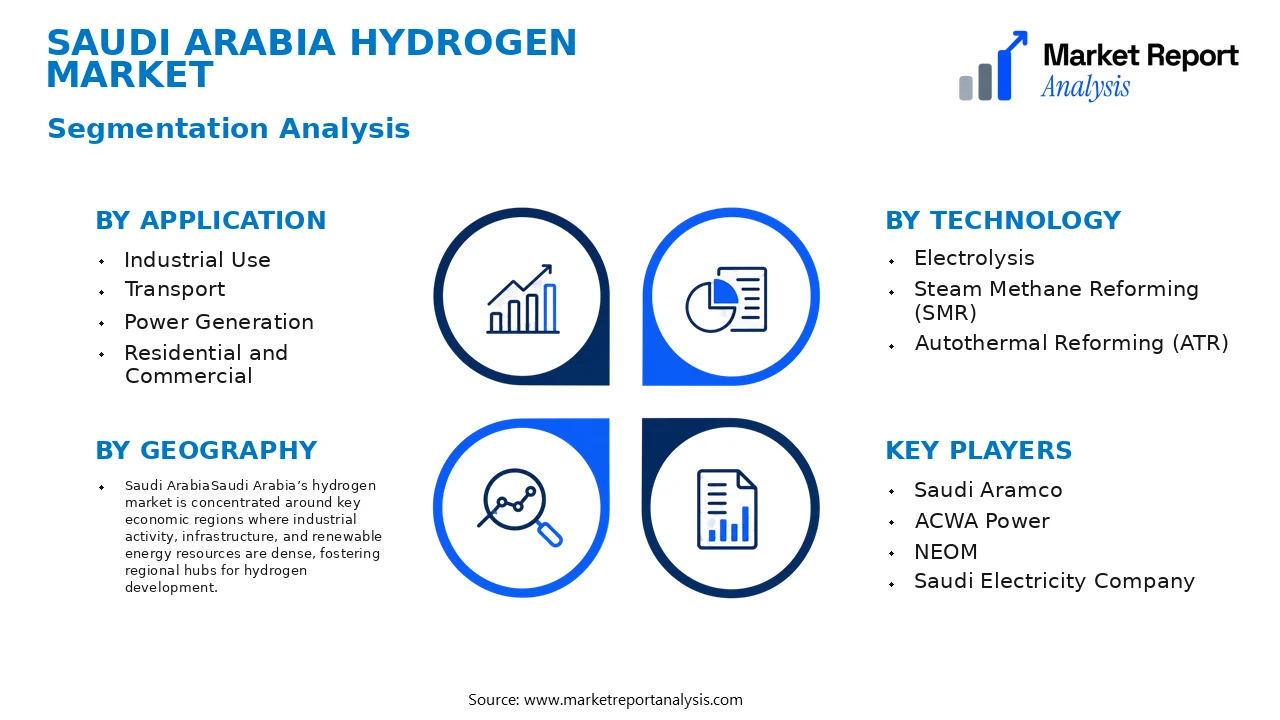
The Saudi Arabia Hydrogen Market is segmented primarily by application, technology, source, and geography. These categories reflect the diverse pathways for hydrogen deployment and production, enabling a comprehensive understanding of market dynamics within the region. Each segment plays a critical role in shaping the growth trajectory and investment focus of the market, facilitating targeted development strategies and policy planning.
- Application
- Industrial Use: Industrial applications, including refining, chemical production, and metals processing, are the primary consumers of hydrogen in Saudi Arabia. The demand is fueled by existing manufacturing sectors and the potential for decarbonization initiatives.
- Transport: Hydrogen is increasingly being explored as a fuel for transportation, particularly in heavy-duty vehicles and emerging public transit projects aimed at reducing carbon emissions and dependence on fossil fuels.
- Power Generation: The use of hydrogen for power generation is growing, with a focus on integrating hydrogen-based turbines and storage solutions to enhance grid stability and support renewable energy integration.
- Residential and Commercial: Although still nascent, hydrogen’s role in residential and commercial sectors revolves around potential clean energy solutions, including heating and backup power, aligning with Saudi Arabia’s sustainability goals.
- Technology
- Electrolysis: Electrolysis remains a key technology in Saudi Arabia, valued for its clean production of green hydrogen using renewable energy, supporting the country’s strategic ambitions to diversify its energy sources.
- Steam Methane Reforming (SMR): Though traditionally dominant, SMR with carbon capture technologies is gaining attention for economies of scale and existing infrastructure, despite environmental concerns.
- Autothermal Reforming (ATR): ATR offers a promising alternative for hydrogen production, with potential advantages in efficiency and emission control, aligning with Saudi Arabia’s industrial growth plans.
- Source
- Renewable Energy: Solar and wind resources in Saudi Arabia are prime drivers for green hydrogen, with government initiatives supporting large-scale renewable energy projects as feedstock for hydrogen production.
- Natural Gas: As a traditional feedstock, natural gas dominates current hydrogen production, with a strategic shift towards cleaner, low-carbon methods as part of national sustainability goals.
- Imported Hydrogen: Strategic importation from neighboring regions or via international partnerships is considered for meeting short-term demand and supplementing local production capacities.
- Geography
- Saudi Arabia
Saudi Arabia’s hydrogen market is concentrated around key economic regions where industrial activity, infrastructure, and renewable energy resources are dense, fostering regional hubs for hydrogen development. - Riyadh
The capital city, Riyadh, serves as the administrative and investment hub, attracting major projects in green hydrogen and fostering policy frameworks conducive to innovation and enterprise growth. - Jeddah
Jeddah’s strategic coastal location facilitates trade and export activities for hydrogen, especially in the context of international markets and regional energy cooperation initiatives. - Dammam
Dammam, within the Eastern Province, benefits from proximity to oil and petrochemical industries, making it a focal point for integrating hydrogen as a supplementary energy carrier and industrial feedstock. - Mecca & Medina
These regions are pivotal from a religious and energy sustainability perspective, with emerging initiatives to incorporate green hydrogen in local energy plans and infrastructure development. - Al Khobar & Jubail
These industrial cities are characterized by substantial petrochemical complexes and ports, offering strategic locations for hydrogen production, storage, and export logistics, fueling regional industrial growth.
- Saudi Arabia
Competitive Intelligence
The Saudi Arabia Hydrogen Market is characterized by increasing competition as local and international players strive to establish dominance in the emerging sector. Major companies focus on strategic partnerships with government agencies to leverage Saudi Arabia's ambitious renewable energy targets, fostering collaborations for large-scale green hydrogen projects. Market concentration remains moderate, with a few key players such as Saudi Aramco, Neom, and ACWA Power expanding their influence through acquisitions and joint ventures, notably in utility-scale projects near NEOM and in the Tabuk region. Business strategies emphasize product innovation, particularly in electrolyzer technology and carbon capture integration, to differentiate offerings in terms of efficiency and sustainability. R&D investments are substantial, aiming to reduce production costs and improve storage solutions, which serve as competitive differentiators. Expansion efforts include entering new regional markets and upgrading infrastructure in key cities such as Riyadh and Jeddah to support hydrogen distribution and fuel cell applications. Overall, competitive dynamics are driven by technological advancements, strategic alliances, and a focus on sustainable, cost-effective solutions aligned with Saudi Arabia's Vision 2030 objectives.
Leading Company Profiles
Saudi Arabia’s hydrogen sector features a mix of national champions, international corporations, and pioneering energy firms focused on green hydrogen production, technology development, and infrastructure. These firms are pivotal in shaping the strategic landscape, leveraging technological expertise, and establishing large-scale projects.
- Saudi Aramco
- ACWA Power
- NEOM
- Saudi Electricity Company
- Tuwah Energy
- Air Products
- Siemens Energy
- Hyundai Engineering & Construction
- Abengoa
- SAHARA Power & Water Company
Saudi Aramco
Saudi Aramco is spearheading hydrogen initiatives through partnerships, focusing on green hydrogen and derivatives, leveraging its vast energy infrastructure, committed to becoming a leader in green energy transition.
ACWA Power
ACWA Power specializes in renewable energy projects and is advancing large-scale green hydrogen production, integrating solar and wind power with electrolysis facilities to supply domestic and export markets.
NEOM
Developing a cutting-edge, sustainable city, NEOM emphasizes green hydrogen as a core element, establishing an entire ecosystem for production, storage, and distribution aligned with Saudi vision for innovation.
Saudi Electricity Company
The national utility is investing in hydrogen power generation and infrastructure, aiming to decarbonize its grid and expand into hydrogen-based energy solutions to support sustainable growth.
Tuwah Energy
Tuwah Energy focuses on strategic partnerships and technology deployment for hydrogen production, emphasizing sustainable and cost-efficient electrolysis solutions.
Air Products
Global industrial gases leader, actively investing in Saudi Arabia’s hydrogen projects, providing advanced electrolysis technology, and fostering international collaborations.
Siemens Energy
Siemens offers sophisticated electrolysis systems, automation, and grid integration solutions, supporting Saudi Arabia’s hydrogen infrastructure development.
Hyundai Engineering & Construction
HCEC partners in pioneering large-scale hydrogen infrastructure projects, bringing technological expertise and international project management experience.
Abengoa
Spanish technology firm specializing in solar-driven electrolysis projects, actively involved in Saudi’s green hydrogen landscape through innovative solar-hydrogen solutions.
SAHARA Power & Water Company
This infrastructure company is contributing to hydrogen transport and storage infrastructure development, essential for export and industrial applications.
Strategic Business Developments
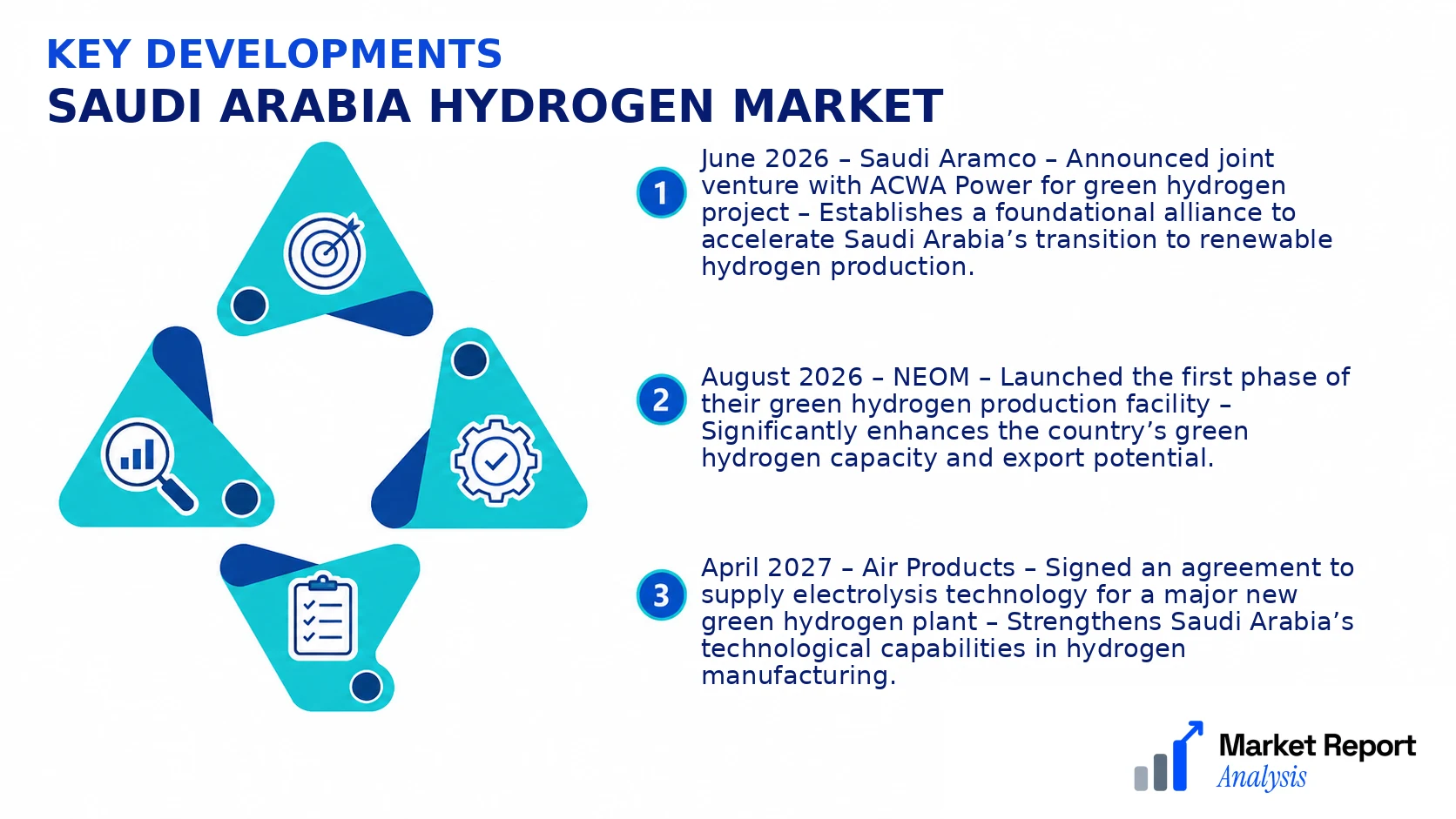
- June 2026 – Saudi Aramco – Announced joint venture with ACWA Power for green hydrogen project – Establishes a foundational alliance to accelerate Saudi Arabia’s transition to renewable hydrogen production.
- August 2026 – NEOM – Launched the first phase of their green hydrogen production facility – Significantly enhances the country’s green hydrogen capacity and export potential.
- April 2027 – Air Products – Signed an agreement to supply electrolysis technology for a major new green hydrogen plant – Strengthens Saudi Arabia’s technological capabilities in hydrogen manufacturing.
- January 2028 – Siemens Energy – Introduced new modular electrolysis systems for large-scale hydrogen projects – Offers scalable solutions to meet rising demand for green hydrogen infrastructure.
- March 2028 – Saudi Electricity Company – Invested in hydrogen-powered peaking plants – Supports the integration of hydrogen into the national energy mix and decarbonization efforts.
Frequently Asked Questions
What is the Saudi Arabia Hydrogen Market?
The Saudi Arabia Hydrogen Market encompasses the production, distribution, and utilization of hydrogen within the country, primarily driven by the government’s strategic focus on renewable energy and carbon reduction initiatives. It aims to develop hydrogen as a key energy carrier for domestic use and export opportunities.
What is the current market size of Saudi Arabia Hydrogen Market?
As of 2026, the market size is estimated at approximately USD 2.3 Billion, reflecting growing investments in hydrogen infrastructure, pilot projects, and partnerships aimed at establishing Saudi Arabia as a regional leader in hydrogen production and innovation.
What factors are driving the Saudi Arabia Hydrogen Market?
Major drivers include government policies promoting clean energy, the country’s vast natural gas reserves for blue hydrogen, investments in renewable energy projects for green hydrogen, and strategic partnerships with international corporations to expand hydrogen export capacity.
Which Saudi city leads the Saudi Arabia Hydrogen Market?
Riyadh is leading the market, leveraging its established industrial and infrastructural base, as well as local government initiatives supporting renewable energy & hydrogen projects, positioning it as a central hub for hydrogen innovation and commercialization in the region.
Which segment is expected to grow the fastest?
Green hydrogen is projected to witness the fastest growth, driven by Saudi Arabia’s substantial investment in solar and wind energy projects, which aim to produce renewable hydrogen cost-effectively, reducing reliance on fossil fuels and meeting international clean energy demands.
Who are the leading companies operating in the Saudi Arabia Hydrogen Market?
Key players include Saudi Aramco, SABIC, ACWA Power, NEOM, and ACWA Power, who are actively involved in hydrogen production projects, strategic alliances, and infrastructure development to position Saudi Arabia as a global hydrogen exporter and technology leader.
Analyst Perspective
The Saudi Arabia Hydrogen Market is poised for substantial long-term growth driven by government initiatives aimed at diversifying energy sources and reducing carbon emissions. The market’s evolution hinges on technological advancements in electrolysis and blue hydrogen production, with increased investment in infrastructure and R&D. Strategic priorities should focus on scaling up green hydrogen capacity, leveraging Saudi Arabia's abundant renewable resources, and fostering domestic and export opportunities. Competitive intensity is expected to rise as both local and international players vie for market share, necessitating innovative collaborations and strategic partnerships. City-level growth potential is particularly notable in Riyadh, NEOM, and Jeddah, where infrastructure projects and industrial hubs create fertile ground for hydrogen applications in transport, power, and industry. The long-term outlook envisions Saudi Arabia cementing its position as a leading hydrogen exporter, supported by favorable policies and strategic investments. Market maturity will require balancing rapid deployment with technology risk management, ensuring sustainable growth and global competitiveness.
