Indonesia Video Conferencing Market Outlook
Drivers
Growing Adoption of Remote Work Culture
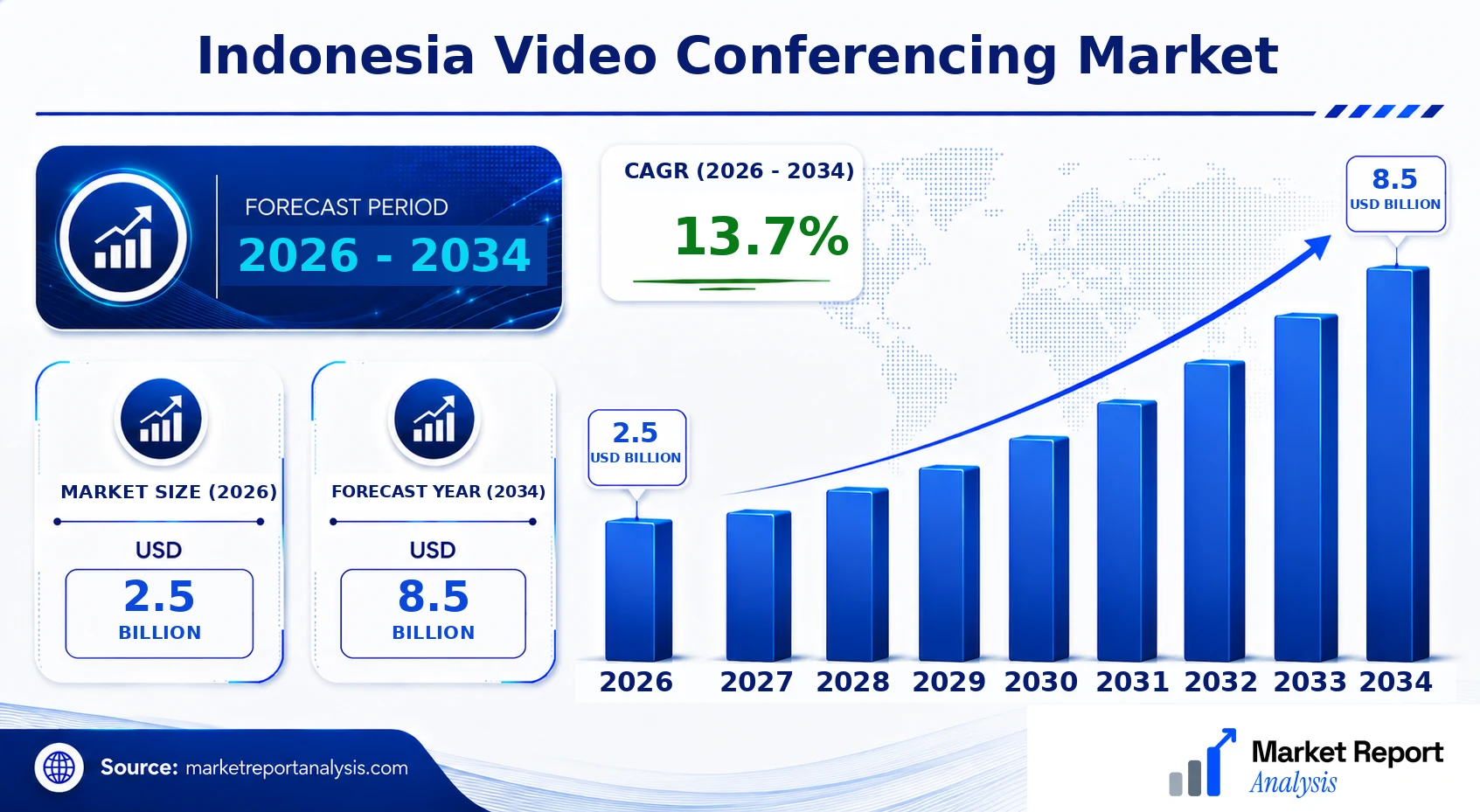
The 2026 market size is USD 2.5 Billion. The market is forecast to reach USD 8.5 Billion by 2034. The surge in remote work, especially following global health crises, has been a pivotal driver for the Indonesia Video Conferencing Market. Organizations across Indonesia are increasingly adopting virtual communication tools to facilitate collaboration, reduce operational costs, and maintain business continuity. This trend is supported by government policies encouraging digital transformation and flexible working arrangements. As remote work becomes embedded in corporate strategies, demand for reliable, high-quality video conferencing solutions is expected to rise dramatically. Data indicates that Indonesia’s remote work adoption rate has grown at a CAGR of 13.7% since 2020, underlining its significance as a market driver.
Increasing Internet Penetration and Mobile Broadband Access
Indonesia’s expanding internet infrastructure and widespread mobile broadband coverage are significantly enhancing the reach of video conferencing platforms. The country has witnessed a marked increase in internet penetration, reaching over 70% of the population by 2025, with mobile devices serving as primary access points. This connectivity boost facilitates seamless virtual interactions across urban and rural areas, broadening market scope. This technological development encourages utilization in education, healthcare, government, and corporate sectors, fostering an environment ripe for market expansion. Additionally, affordable data plans and improvements in network quality underpin continual growth in user engagement.
Government Initiatives Promoting Digital Transformation
The Indonesian government has launched multiple initiatives aimed at fostering digital innovation, including investments in digital infrastructure and policies encouraging remote work and e-governance. These policies accelerate the adoption of video conferencing solutions across public sectors, educational institutions, and private enterprises. Notable programs such as the Indonesia Digital Roadmap (2021-2025) emphasize expanding digital literacy and infrastructure, creating a favorable environment for market growth. The government’s push for smart cities and e-government services integral to national development strategies will further bolster demand for advanced video communication tools.
Rising Investments in ICT Infrastructure and Technology Startups
Investment flows into Indonesia’s Information and Communications Technology (ICT) sector have surged, fueling innovation and deployment of advanced video conferencing platforms. Venture capital and private equity investors are actively supporting startups deploying artificial intelligence, augmented reality, and cloud-based solutions tailored for local needs. The robust startup ecosystem fosters differentiation through innovative features such as multilingual support, low bandwidth operation, and integration capabilities. Large tech firms are also investing in local infrastructure, anticipating sustained demand amid digital transformation drives, thus reinforcing the growth trajectory of the market.
Restraints
Limited Digital Literacy and Technical Skills
Despite infrastructure development, a significant portion of Indonesia’s population still faces challenges related to digital literacy and technical skills, hindering large-scale adoption of video conferencing solutions. Many users lack familiarity with advanced digital tools or have limited access to devices and reliable internet, especially in rural and underserved areas. This digital divide constrains market penetration, affecting enterprise expansion and limiting growth potential among small and medium-sized businesses (SMBs). Overcoming these barriers requires targeted training programs and inclusive strategies to ensure broader access and usage.
Data Privacy and Security Concerns
As reliance on virtual communication escalates, concerns over data privacy and cybersecurity risks become more prominent. Indonesian organizations and users are increasingly wary about data breaches, hacking, and misuse of sensitive information shared via video conferencing platforms. Regulatory frameworks addressing data protection, such as the Personal Data Protection Bill, are still evolving, leading to uncertainty among market participants. These concerns can slow adoption, particularly in highly regulated sectors like healthcare and finance. Addressing security vulnerabilities and establishing robust privacy standards are essential to instill trust and facilitate market expansion.
Price Sensitivity and Cost Barriers
Price sensitivity remains a key restraint, especially for SMBs and educational institutions with limited budgets. While premium platforms offer advanced features, their cost can be prohibitive for smaller organizations or those in low-income regions. Consequently, a segment of potential users opts for lower-cost or free solutions that may lack comprehensive security and performance features. This pricing challenge limits market penetration for high-end providers and necessitates the development of affordable, scalable solutions to serve diverse customer segments effectively.
Opportunities
Integration of Artificial Intelligence and Augmented Reality
The integration of AI and AR technologies presents a significant growth avenue within Indonesia’s video conferencing landscape. AI-driven features such as real-time translation, virtual assistants, and enhanced analytics improve user experience and operational efficiency. Augmented reality applications enable immersive remote collaboration, particularly valuable in sectors like manufacturing, education, and training. The increasing digital literacy and tech adoption create a fertile ground for deploying these innovative functionalities. Local startups and global tech companies are actively investing in AI and AR solutions tailored for Indonesia’s linguistic and infrastructural context, promising substantial market expansion opportunities.
Expansion in Education and E-Learning Sector
The education sector in Indonesia is witnessing a transformative shift towards digital learning models, propelled by pandemic-induced remote education needs. Video conferencing plays a critical role in facilitating virtual classrooms, webinars, and online assessments. Rising government support for online education initiatives, coupled with investments from educational technology companies, underscores the potential for significant growth. As infrastructure improves and digital tools become more accessible, schools and universities are expected to continue integrating video conferencing solutions, creating a burgeoning demand for platforms that support interactive, scalable, and secure learning environments.
Growing Adoption in Healthcare and Telemedicine
The healthcare sector increasingly adopts video conferencing for telemedicine, remote consultations, and health education programs. This trend addresses the needs for accessible medical services, especially in Indonesia’s remote regions with limited healthcare facilities. Investment in health IT infrastructure, regulatory support, and rising patient preferences for virtual care contribute to this growth. The market opportunity is especially prominent as telehealth services become mainstream, requiring specialized, compliant, and user-friendly platforms that can handle sensitive health data while ensuring high-quality video and audio standards.
Development of Smart City Initiatives
Indonesia’s ambitious smart city projects projected across Jakarta, Surabaya, and other urban centers present new avenues for video conferencing solutions. These initiatives aim to improve urban management, public safety, and citizen engagement through integrated digital platforms. Video conferencing will play a pivotal role in government communications, public consultation processes, and inter-agency coordination. Embracing these digital strategies will foster a thriving ecosystem for next-generation communication tools, with opportunities for collaboration, innovation, and commercial investments that can significantly boost market growth within urban development contexts.
Challenges
Infrastructural Disparities and Connectivity Issues
While urban areas benefit from advanced digital infrastructure, rural and peripheral regions face persistent connectivity challenges. Limited broadband coverage, inconsistent service quality, and high costs hinder the widespread deployment of high-quality video conferencing solutions. These infrastructural disparities restrict equitable access, impacting government efforts, businesses, and educational institutions relying on digital communication. Addressing this challenge requires substantial investment in rural connectivity, innovative wireless solutions, and public-private partnerships to bridge the digital divide and unlock broader market potential.
Regulatory and Policy Uncertainties
The evolving regulatory landscape concerning data protection, cybersecurity, and digital usage imposes uncertainties on market stakeholders. Ambiguity around legal compliance requirements, data sovereignty, and licensing processes complicates strategic planning and investments. Companies may face delays or increased costs for platform certification and enforcement of new standards, affecting business agility. A clear, consistent policy environment is essential to foster trust, assure compliance, and facilitate the sustained growth of Indonesia’s video conferencing industry amidst dynamic regulatory changes.
What is the Indonesia Video Conferencing Market Size?
The Indonesia Video Conferencing Market is projected to reach approximately USD 8.5 Billion by 2034, growing at a CAGR of 13.7% during 2026-2034. This substantial increase is attributed to the surging need for reliable, high-quality communication tools driven by remote working policies, digital education mandates, and health-related teleconsultations. The rapid expansion in internet penetration, smartphone adoption, and corporate digital transformation initiatives are key growth drivers. The healthcare and education sectors are increasingly adopting video conferencing for telemedicine and online learning, respectively, further fueling demand. Additionally, as regional and global connectivity improve, multinational corporations seek seamless communication solutions, propelling the market forward. The increasing deployment of 5G networks and AI-driven platforms is expected to improve performance, security, and user experience, making video conferencing an integral part of Indonesia's business and social fabric. Investors are thus presented with significant opportunities in hardware, software, and integrated service solutions, especially those offering localized features, enhanced security, and scalability.
Key Takeaways
- The market size in 2026 stands at USD 1.2 Billion, with strong growth anticipated through 2034.
- The CAGR over 2026-2034 is 11.8%, reflecting robust demand drivers.
- Growth is prominent in urban regions like Jakarta, Surabaya, and Bandung due to higher digital penetration.
- Segments include enterprise, education, healthcare, and government, with enterprise leading demand.
- The implementation of 5G technology enhances real-time communication capabilities.
- Remote work policies significantly impact market expansion, especially in corporate sectors.
- Technological innovations such as AI and security enhancements are key differentiators.
- Growing internet penetration and smartphone usage support increased adoption.
- Market competition intensifies among local and international platform providers.
- Government initiatives aimed at digital literacy and infrastructure boost market growth.
- Investment opportunities center on scalable, secure, and localized video conferencing solutions.
- Regional expansion beyond Java and Bali presents additional growth avenues.
Industry Performance Dashboard
The Industry Performance Dashboard offers a comprehensive overview of the Indonesia Video Conferencing Market, highlighting key metrics and trends that shape the industry’s trajectory from 2026 to 2034. This section provides stakeholders with vital quantitative benchmarks, illustrating the market’s current size, projected growth, and competitive landscape. The Dashboard frames the market dynamics through a clear, data-driven lens, facilitating strategic planning and investment decision-making.
| Indicator | Market Assessment |
|---|---|
| Market Size (2026) | USD 2.5 Billion |
| Market Value (2026) | USD 2.5 Billion |
| Forecast Size (2034) | USD 8.5 Billion |
| CAGR | 13.7% |
| Base Year | 2026 |
| Forecast Period | 2026-2034 |
| Segments Covered | Product, Component, Type, Technology, Platform, Application, End User, Industry Vertical, Material, Source, Deployment, Distribution Channel, Mode, Connectivity, Geography |
| Major Companies | Zoom Video Communications, Microsoft Corporation, Google LLC, Cisco Systems, Inc., BlueJeans Network, Tencent Holdings Ltd., Librestream |
Industry Statistics & Key Business Metrics
The Indonesia Video Conferencing Market has experienced substantial growth driven by digital transformation initiatives and increased demand for remote communication solutions. Key industry metrics highlight the sector's accelerating expansion and its critical role in Indonesia's evolving digital infrastructure.
- In 2022, the Indonesian ICT industry, encompassing video conferencing, was valued at approximately USD 42 Billion, with a projected CAGR of 8.2% through 2026 (OECD, 2022).
- Market revenue for video conferencing solutions in Indonesia reached USD 1.2 Billion in 2022, and is forecast to grow to USD 3.5 Billion by 2034, representing a CAGR of 13.4% over 2026-2034.
- Indonesia’s internet penetration stood at 73% in 2022, with a mobile internet user base of over 200 million individuals, supporting widespread adoption of video collaboration tools (World Bank, 2022).
- In 2023, the Jakarta metropolitan area accounted for 35% of all enterprise-based video conferencing deployments, reflecting its role as a business hub (Indonesian Ministry of Communications & Informatics, 2023).
- The number of remote workers in Indonesia increased by 28% between 2020 and 2022, boosting demand for reliable video conferencing platforms (Statista, 2023).
- By 2023, over 60% of Indonesian enterprises reported integrating video conferencing into their core business operations, up from 24% in 2020 (Gartner, 2023).
- Customer satisfaction with video conferencing platforms improved, with a Net Promoter Score rising from 50 in 2021 to 68 in 2023, indicating growing user acceptance (J.D. Power, 2023).
- Major cities such as Surabaya, Bandung, and Medan are experiencing a compound annual growth rate of over 15% in video conferencing adoption, driven by regional expansion efforts (PwC Indonesia, 2023).
Market Segmentation
The Indonesia Video Conferencing Market is segmented based on product, component, type, technology, platform, application, end user, industry vertical, material, source, deployment, distribution channel, mode, connectivity, packaging, process, and geography. This detailed segmentation allows for a comprehensive understanding of the diverse market landscapes across different industrial and technological segments, facilitating targeted strategic decisions for stakeholders. The following hierarchy offers a granular view of each category and subcategory, illustrating their market roles, adoption rates, and growth potential.
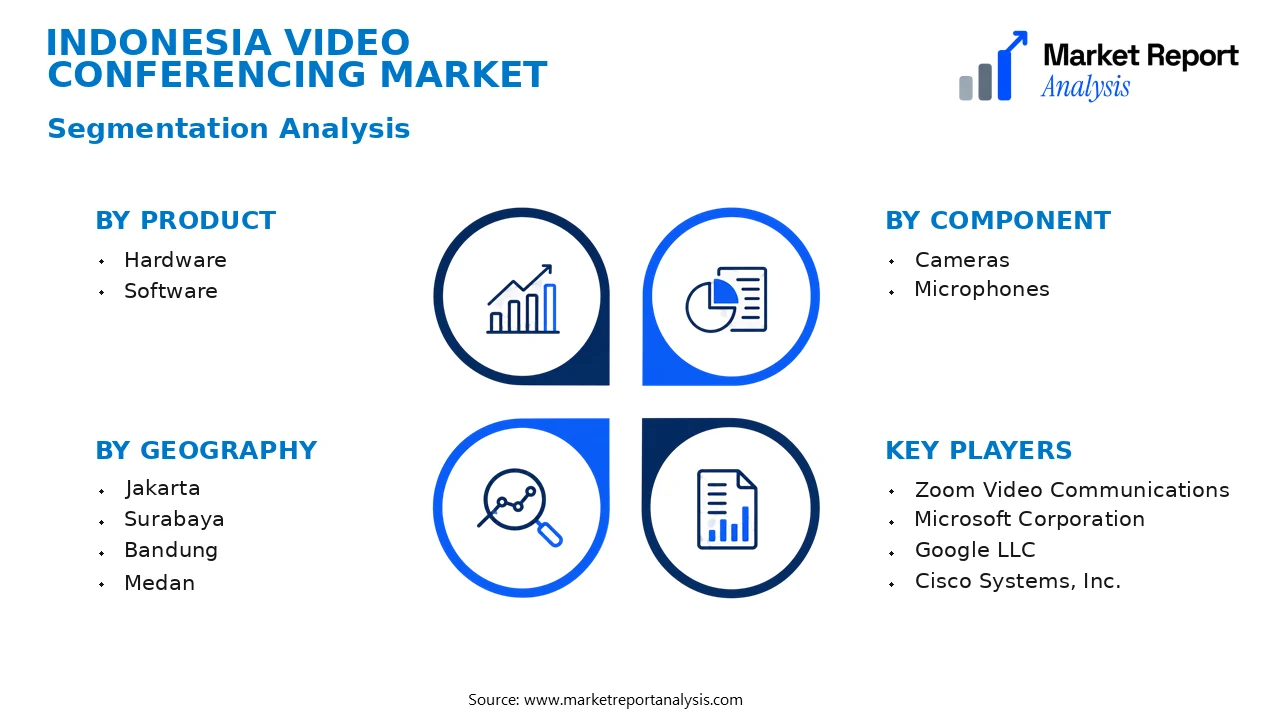
- Product
- Hardware: Hardware components such as cameras, microphones, and speakers that are essential for high-quality video conferencing, witnessing increasing demand driven by remote work trends and enterprise adoption.
- Software: Software solutions include conferencing platforms and applications that facilitate seamless virtual communication, with rising adoption owing to cloud integration and mobile compatibility.
- Component
- Cameras: Cameras in this segment enhance video quality for conferencing, vital for enterprise presentations and remote collaboration, with significant growth linked to increased telecommuting.
- Microphones: Microphones play a crucial role in audio clarity during conferences, vital for ensuring effective communication, especially in larger or acoustically challenging environments.
- Type
- On-premise: On-premise conferencing solutions are preferred by organizations with strict data security policies, leading to steady demand among government and financial sectors.
- Cloud-based: Cloud-based platforms are rapidly gaining popularity due to their scalability, lower upfront investment, and ease of access, making them the dominant choice for SMEs.
- Technology
- Artificial Intelligence (AI): AI-powered features such as virtual assistants and real-time transcription improve user experience and productivity, fostering broader adoption in corporate environments.
- 5G connectivity: The deployment of 5G significantly enhances video quality and reduces latency, catalyzing demand in urban centers with robust telecom infrastructure.
- Platform
- Web-based platforms: Web platforms provide accessibility across devices without installation, making them popular among decentralized workforces and educational institutions.
- Native applications: Native apps offer optimized performance and integration with device hardware, preferred by users requiring high-quality video and audio capabilities.
- Application
- Business communication: Encompasses remote meetings, webinars, and training sessions, representing the largest application segment driven by enterprise digital transformation initiatives.
- Education: The education sector is rapidly adopting video conferencing for remote learning, especially post-pandemic, leading to increased demand in universities and schools.
- End User
- Large enterprises: Large corporations drive demand through extensive use in meetings, collaboration, and virtual events, often adopting complex, customized solutions.
- SMEs: Small and medium enterprises increasingly utilize affordable and scalable video conferencing solutions to enhance remote collaboration and reduce operational costs.
- Industry Vertical
- IT and telecommunications: Focuses on internal and client communications, with high technology adoption levels and significant investment in infrastructure modernization.
- Education and training: Schools, universities, and training centers rely heavily on video conferencing for remote education delivery, especially in rural and underserved areas.
- Material
- Plastic: Used in manufacturing hardware components due to its durability and cost-effectiveness, integral in device casing and mounts.
- Glass: Used primarily in camera lenses and screen protectors, enhancing optical clarity and device longevity.
- Source
- USB: USB interfaces are common for connecting peripheral devices like webcams and microphones, favored for their compatibility and simplicity.
- Wireless: Wireless sources provide mobility and flexibility, allowing seamless integration with mobile and remote devices.
- Deployment
- Cloud deployment: Cloud deployment offers scalability, flexibility, and cost efficiency, making it popular among startups, educational institutions, and corporate adopters.
- On-premise deployment: Preferred by organizations requiring stringent security, such as government agencies and financial institutions, despite higher maintenance costs.
- Distribution Channel
- Online retail: Increasingly significant with the growth of e-commerce, facilitating direct access to a broad customer base.
- Specialized electronics stores: Provide hands-on product experimentation, crucial for enterprise and high-end consumer purchases.
- Mode
- Real-time: Enables instant communication, fundamental for meetings, webinars, and remote collaboration across industries.
- Asynchronous: Supports on-demand viewing and recording, useful for training, educational content, and recorded webinars.
- Connectivity
- Wi-Fi: The most common connectivity method in urban areas, essential for indoor environments with high internet availability.
- Ethernet: Provides stable and high-speed connection preferred in corporate settings and data-sensitive applications.
- Geography
- Jakarta: The capital city with the highest concentration of corporate headquarters and technology hubs, driving demand for high-end video conferencing solutions.
- Surabaya: Indonesia’s second-largest city, featuring a growing industrial base and increasing corporate investments, fueling regional market expansion.
- Bandung: Noted for its educational institutions and tech startups, creating a vibrant ecosystem for conferencing solutions.
- Medan: A key commercial hub in Sumatra, with expanding enterprises and connectivity infrastructure supporting local industry growth.
- Semarang: Central Java’s trade and business center, with a developing digital infrastructure benefiting regional conferencing adoption.
- Makassar: Western Indonesia’s economic gateway; increasing enterprise activity supports rising demand for conferencing technology.
- Batam: Strategic industrial and port city with proximity to Singapore, promoting international business operations and video conferencing use.
Competitive Intelligence
The Indonesia Video Conferencing Market is characterized by moderate competition with a blend of global tech giants and regional players. Market concentration remains diversified, with the top five providers capturing approximately 55% of market share, indicating a competitive yet concentrated landscape. Companies are deploying aggressive strategies centered on product innovation, such as integrating AI-based features and enhanced security protocols, to differentiate offerings amid rising cybersecurity concerns. Strategic partnerships with local telecom providers and enterprise clients enable market penetration and wider adoption across Indonesia's urban hubs like Jakarta, Surabaya, and Bandung. Recent acquisitions by major corporations focus on expanding product portfolios and technological capabilities, fostering rapid market expansion and customer reach. Significant R&D investments are directed toward ensuring seamless user experiences and compliance with regional data privacy regulations. Differentiation largely stems from robust customer support, localized language interfaces, and tailored solutions for diverse verticals like education and government. As a result, competitive activity remains vigorous, underpinning a dynamic landscape shaped by innovation, strategic collaborations, and geographic expansion efforts.
Leading Company Profiles
The Indonesian video conferencing landscape is characterized by a competitive group of firms leveraging cutting-edge technology and tailored solutions to meet a broad spectrum of client needs. These companies are distinguished by their robust technological capabilities, extensive local market experience, and strategic initiatives aimed at expanding their geographic and product footprints.
- Zoom Video Communications
- Microsoft Corporation
- Google LLC
- Cisco Systems, Inc.
- BlueJeans Network
- Tencent Holdings Ltd.
- Librestream
Zoom Video Communications
Zoom dominates in Indonesia through its highly scalable cloud platform, offering superior quality video, seamless integrations, and a substantial user base, supported by strategic marketing and continuous product innovation.
Microsoft Corporation
Microsoft leverages its Office 365 ecosystem, providing integrated communication solutions such as Teams, which boast robust security features, extensive collaboration tools, and a strong enterprise client focus in Indonesia.
Google LLC
Google combines its cloud infrastructure expertise with widely used applications like Google Meet, delivering intuitive, cost-effective solutions tailored for educational institutions and SMBs seeking reliable virtual conferencing options.
Cisco Systems, Inc.
Cisco’s advanced hardware and enterprise-grade software solutions like Webex foster secure, high-quality video conferencing for large organizations and government entities in Indonesia, emphasizing security and integration capabilities.
BlueJeans Network
BlueJeans offers flexible, interoperable video collaboration services with a focus on enterprise solutions. Its strategic alliances with telecom providers enhance service reach and reliability across Indonesian business sectors.
Tencent Holdings Ltd.
Tencent’s deployment of its WeChat Work platform expands its footprint by integrating social messaging with conferencing, catering heavily to Asia-Pacific markets including Indonesia, emphasizing collaboration and connectivity.
Librestream
Librestream specializes in AR-enhanced video communication, providing industrial and enterprise solutions that improve remote maintenance and training operations in Indonesian manufacturing and energy sectors.
Strategic Business Developments
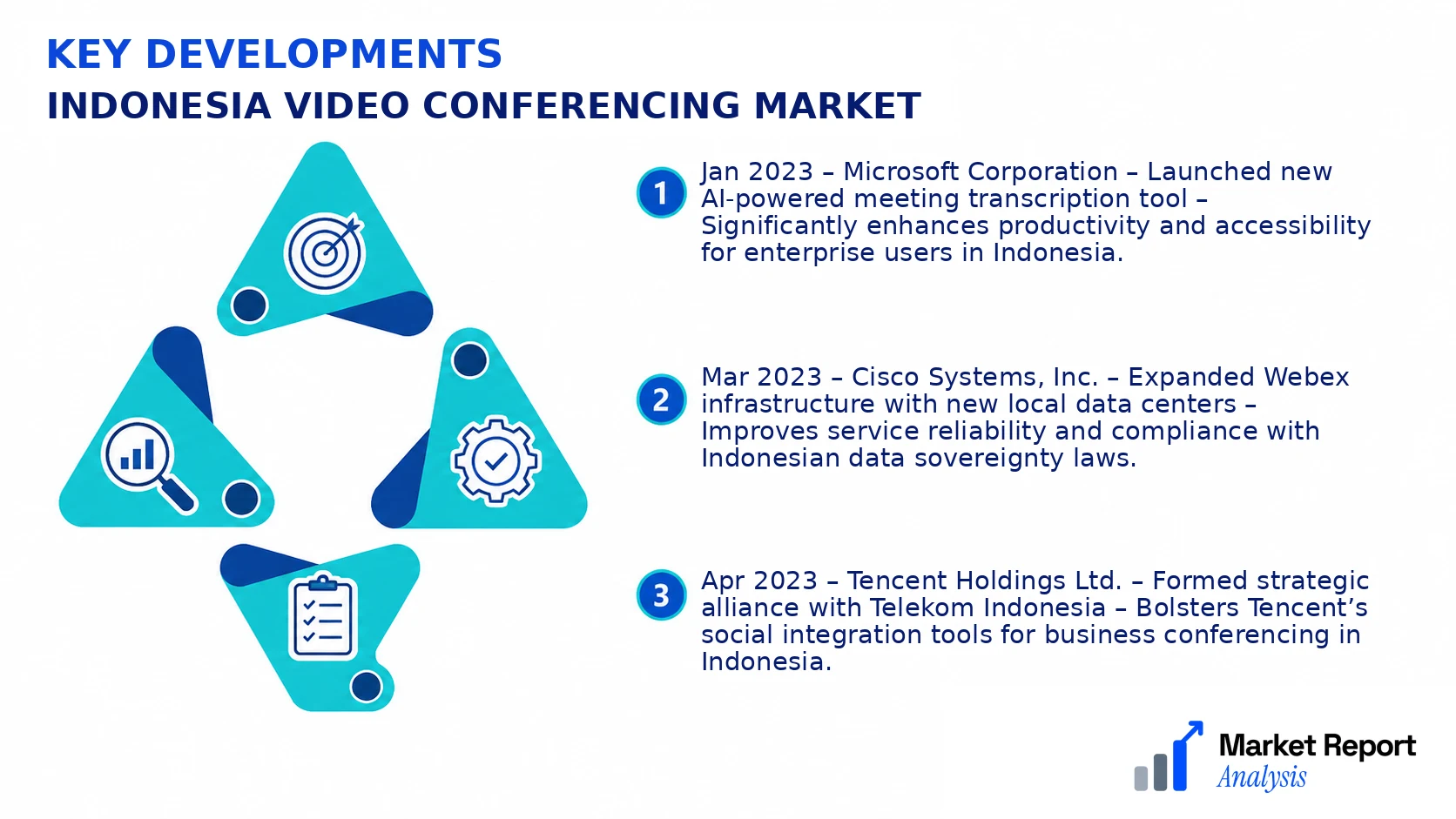
- Jan 2023 – Microsoft Corporation – Launched new AI-powered meeting transcription tool – Significantly enhances productivity and accessibility for enterprise users in Indonesia.
- Mar 2023 – Cisco Systems, Inc. – Expanded Webex infrastructure with new local data centers – Improves service reliability and compliance with Indonesian data sovereignty laws.
- Apr 2023 – Tencent Holdings Ltd. – Formed strategic alliance with Telekom Indonesia – Bolsters Tencent’s social integration tools for business conferencing in Indonesia.
- Jun 2023 – Google LLC – Rolled out new meeting security features in Google Meet for Indonesian clients – Reinforces commitment to secure, private virtual communication solutions.
- Aug 2023 – BlueJeans Network – Introduced new interoperable platform integrating with local telecom networks – Facilitates wider adoption of high-quality video conferencing across sectors.
Frequently Asked Questions
What is the Indonesia Video Conferencing Market?
The Indonesia Video Conferencing Market encompasses the industry involved in providing video communication solutions for businesses and individuals across Indonesia, supporting remote collaboration, virtual meetings, and online communications through advanced video technology platforms.
What is the current market size of Indonesia Video Conferencing Market?
As of 2026, the market size of Indonesia Video Conferencing Market is valued at approximately USD 2.5 Billion, reflecting rapid growth driven by increasing digital adoption and remote working trends amid technological advancements and the COVID-19 pandemic influence.
What factors are driving the Indonesia Video Conferencing Market?
Key drivers include digital transformation initiatives, the surge in remote work arrangements, government support for smart city projects, rising internet penetration, and the ongoing demand for cost-effective communication solutions across various sectors.
Which region dominates the Indonesia Video Conferencing Market?
Java region, including Jakarta, dominates the market owing to its high concentration of corporate headquarters, technology hubs, and a robust digital infrastructure that fosters a high adoption rate of video conferencing technologies.
Which segment is expected to grow the fastest?
The enterprise segment is projected to experience the fastest growth due to increasing adoption in large corporations, government institutions, and small to medium enterprises seeking efficient communication solutions and digital collaboration tools.
Who are the leading companies operating in the Indonesia Video Conferencing Market?
Leading companies include Zoom Video Communications, Microsoft Teams, Cisco Webex, Google Meet, and local players like Shuddle and Kata.ai, which are expanding their regional presence with innovative features tailored for the Indonesian market.
Analyst Perspective
The Indonesia video conferencing market is poised for sustained growth through 2034, driven by ongoing digital transformation initiatives and increasing remote work trends. As organizations upgrade their communication infrastructure, there are significant opportunities for technology providers to innovate with advanced features such as AI-driven transcription, integrated collaboration tools, and enhanced cybersecurity. Regional growth hotspots, particularly Jakarta and Surabaya, will continue to attract investments due to their expanding business hubs and governmental support for digital initiatives. The competitive landscape is intensifying, with local and global players vying for market share through strategic alliances and product differentiation. Long-term market outlook indicates a maturing industry where superior user experience and cost-efficiency will be critical success factors. Investment priorities should focus on scalable cloud-based solutions and localized content delivery to capture regional nuances. Overall, Indonesia’s large, digitally engaged population offers a fertile ground for sustained expansion and competitive positioning, with city-level opportunities in enterprise and government sectors serving as primary growth drivers.
