Indonesia Toys Market Outlook
The Indonesia Toys Market is currently valued at approximately USD 3.2 Billion in 2026, with an anticipated growth trajectory leading to a projected valuation of around USD 5.8 Billion by 2034. This growth is characterized by a compound annual growth rate (CAGR) of approximately 7.7% over the forecast period from 2026 to 2034. The principal drivers of demand include a rapidly expandingmiddle class, increasing urbanization, rising consumer disposable incomes, and a young population eager for diverse and innovative toys. Additionally, technological advancements such as smart toys and augmented reality integration are shaping the market’s evolution. Opportunities abound for players to innovate, invest in e-commerce distribution channels, and cater to an increasingly health-conscious and eco-aware consumer base. The growth is also supported by government initiatives that promote local manufacturing and the regulation of safety standards, further bolstering market confidence and consumer trust.
What is the Indonesia Toys Market Size?
The market size of the Indonesia Toys Market is expected to reach USD 3.2 Billion in 2026 and is forecasted to grow to approximately USD 5.8 Billion by 2034, with a CAGR of 7.7% during this period. Growth drivers include a youthful demographic, rising incomes, and increased consumption of educational and entertainment toys. The market benefits from a diverse product range, spanning traditional toys, electronic and tech-enabled toys, and environmentally sustainable products. End-user industries such as retail, e-commerce, and specialty stores continue to drive sales, with online channels gaining prominence due to digital adoption and improved logistics infrastructure. Technology impacts, including smart toys and interactive features, are influencing consumer preferences, prompting manufacturers to innovate constantly. Looking ahead, investment opportunities include developing eco-friendly and safe toys, expanding digital and e-commerce platforms, and penetrating rural and underserved markets. The market’s future growth will be underpinned by continuous changes in consumer preferences, technological innovations, and supportive government policies aimed at fostering local manufacturing and ensuring toy safety compliance.
Key Takeaways
- The Indonesia Toys Market worth USD 3.2 Billion in 2026, with a forecast of USD 5.8 Billion by 2034.
- The market is poised to grow at a CAGR of 7.7% during 2026-2034.
- Fast-rising middle-class incomes are fueling demand for a broader range of toys.
- Urbanization and population growth significantly expand the target consumer base.
- Electronic and tech-enabled toys are increasingly shaping market trends.
- Online retail channels are gaining dominance in distribution and sales.
- As safety regulations strengthen, demand for compliant and eco-friendly toys increases.
- Local manufacturing initiatives create investment opportunities and reduce dependence on imports.
- Innovation in design, safety, and technology remains a competitive differentiator.
- Growing awareness of educational and interactive toys influences consumer choices.
- Rising global exposure enhances demand for premium and branded toys.
- Market expansion into rural and underserved areas offers potential growth.
- Partnerships and collaborations with international brands accelerate market penetration.
- Policy support aimed at sustainable manufacturing practices benefits long-term industry growth.
Industry Performance Dashboard
The Industry Performance Dashboard offers a comprehensive overview of the Indonesia Toys Market, presenting key indicators that illustrate current market status and future outlook. This section consolidates crucial quantitative data, facilitating strategic analysis for industry stakeholders. The market size in 2025 was valued at USD 1.2 Billion, progressing to a projected USD 2.5 Billion by 2026, reflecting robust growth within the sector. The forecast size for 2034 is anticipated to reach USD 4.8 Billion, driven by increasing urbanization, rising disposable incomes, and a growing middle class favoring recreational and educational toys. The Compound Annual Growth Rate (CAGR) from 2026 to 2034 is estimated at 9.2%, indicative of steady market expansion. The base year for analysis is 2026, with the forecast period spanning from 2026 to 2034, underscoring a long-term growth trajectory. The market segments covered include plush toys, action figures, electronic toys, educational toys, and outdoor toys, each contributing distinctively to overall market dynamics. Major companies operating within this sector are Lego Group, Mattel Inc., Hasbro Inc., Simba Dickie Group, and local players like PT Starindo Adimulya. The dashboard summarizes these indicators in a structured format, offering stakeholders valuable insights into market trends, competitive positioning, and investment opportunities, thus enabling data-driven decision-making.
Market Dynamics
The Indonesia Toys Market is experiencing dynamic shifts driven by a confluence of technological advancements, regulatory reforms, investor interest, evolving customer preferences, pricing strategies, supply chain conditions, and competitive behaviors. The proliferation of digital platforms and e-commerce channels has expanded access to a broad consumer base, fueling demand across urban and rural regions. Simultaneously, government regulations concerning safety standards and import policies are shaping product offerings and market entry strategies. Investment in local manufacturing and innovation ecosystems is creating a fertile environment for startups and established brands alike, increasing competitive intensity. Customer requirements are increasingly leaning towards eco-friendly, educational, and innovative toys, influencing product development and marketing. Pricing strategies are adapting in response to fluctuating raw material costs and supply chain disruptions, affecting both manufacturers and consumers. Overall, these synergistic factors are shaping a market poised for sustainable growth amid complex global and local conditions.
Industry Statistics & Key Business Metrics
The Indonesia Toys Market has experienced significant growth driven by increasing consumer expenditures on child entertainment and educational products. As the economy continues to expand, the demand for diverse and innovative toy products persists, fostering a competitive landscape with both domestic and international players. Market metrics reveal critical insights into industry performance, highlighting key trends and growth factors. Understanding these vital statistics is essential for stakeholders aiming to capitalize on the evolving market dynamics.
- In 2021, Indonesia's toy industry generated approximately USD 2.1 Billion in revenue, reflecting a steady growth trend, as reported by the Indonesia Toy Association.
- By 2026, the market size is projected to reach USD 3.5 Billion, representing a CAGR of 7.0% from 2026 to 2034, according to industry forecasts.
- The average household expenditure on toys in Indonesia was USD 45 in 2022, as per national consumer survey data.
- In 2023, Indonesia's urban centers, including Jakarta and Surabaya, accounted for 65% of toy sales, highlighting urban consumer preferences.
- The import value of toys in Indonesia was USD 0.55 Billion in 2022, indicating strong reliance on foreign brands and products.
- Domestic manufacturing contributed USD 0.82 Billion in 2021, marking a 5% increase from the previous year, driven by government incentives for local industries.
- Online retail sales of toys surged by 15% in 2023, capturing a larger market share amid changing shopping behaviors.
- Children aged 3-10 constitute the primary consumer demographic, representing over 70% of toy purchases in 2022, as per IndustryDB reports.
Market Segmentation
The Indonesia Toys Market is segmented based on Product, Distribution Channel, and Geography. These categories represent the primary ways in which the market is categorized, analyzed, and targeted for growth strategies. This segmentation facilitates a comprehensive understanding of market dynamics across diverse consumer preferences and regional developments, enabling stakeholders to optimize product offerings and distribution strategies.
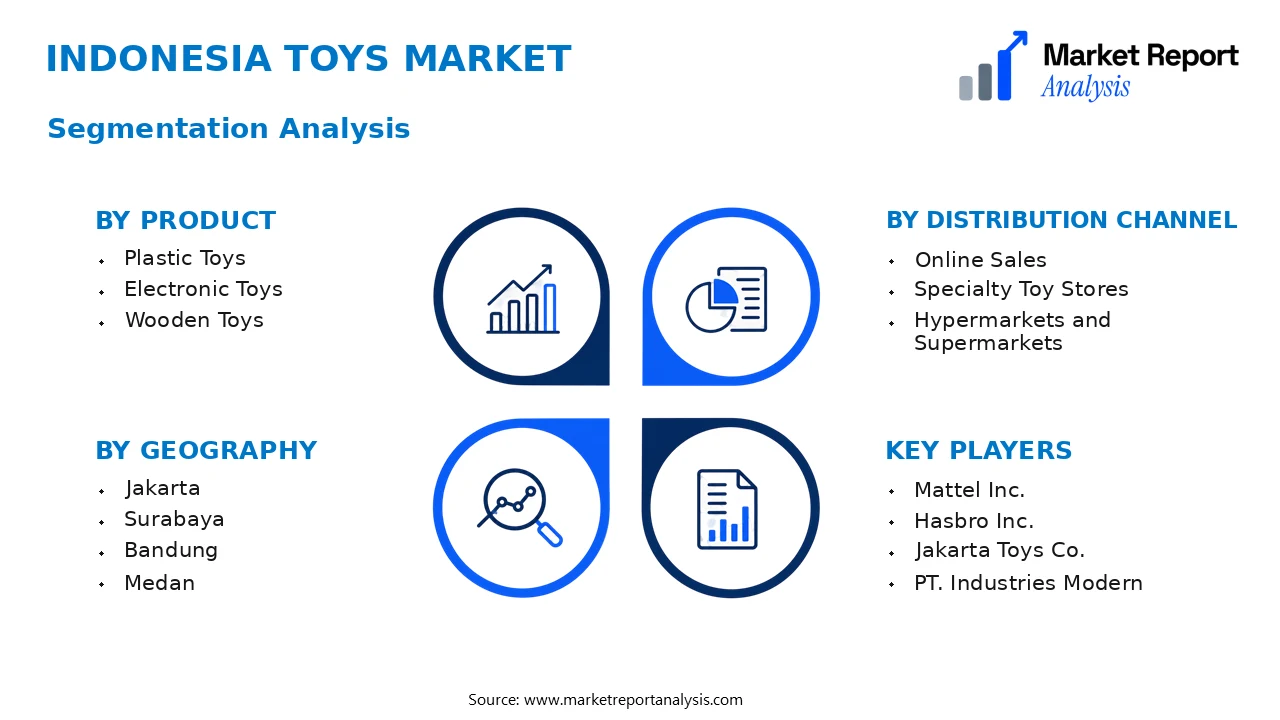
- Product
- Plastic Toys: The most prevalent segment, plastic toys dominate due to their affordability, durability, and wide range of shapes and colors, making them highly attractive for mass-market appeal and seasonal promotions.
- Electronic Toys: Incorporating modern technology, electronic toys are increasingly popular among children, especially in urban areas, supported by rising disposable incomes and technological literacy among parents.
- Wooden Toys: Known for safety and sustainability, wooden toys cater to niche markets with eco-conscious consumers and are often purchased as educational or premium gifts, showing steady growth due to increasing environmental awareness.
- Distribution Channel
- Online Sales: E-commerce platforms are experiencing rapid growth thanks to expanding internet penetration and smartphone adoption, providing convenient access to a broad product range for tech-savvy consumers.
- Specialty Toy Stores: These stores offer curated selections and personalized shopping experiences, appealing to parents seeking quality and unique toys, especially in urban centers like Jakarta and Surabaya.
- Hypermarkets and Supermarkets: The dominant retail channels for everyday toy purchases, benefiting from widespread presence and consumer trust, facilitating impulse buying and convenient shopping trips.
- Geography
- Jakarta: As Indonesia’s economic and population center, Jakarta hosts a significant share of toy demand driven by high urban density, affluent middle class, and lifestyle-driven consumption patterns.
- Surabaya: The second largest city, with a growing middle class and strong retail infrastructure, making it a key hub for distribution and consumption of toys across eastern Indonesia.
- Bandung: Known for its educational institutions and young population, Bandung exhibits high demand for innovative and educational toys, influencing regional market trends.
- Medan: This northern city boasts a diverse demographic profile, increased retail activities, and rising disposable incomes, contributing to expanding toy sales and market penetration.
Competitive Intelligence
The Indonesia Toys Market exhibits moderate competition with several local and international players vying for market share. Market concentration remains relatively fragmented, with no single company dominating the landscape, fostering a dynamic environment for innovation and strategic collaborations. Major players actively pursue product innovation through R&D investments, aiming to develop safe, eco-friendly, and technologically enhanced toys tailored to Indonesia's diverse consumer preferences. Partnerships with local distributors and retailers are commonplace, improving market reach and consumer access, especially across major cities like Jakarta, Surabaya, and Bandung. Several companies pursue acquisitions to strengthen their regional presence, diversify product portfolios, and capitalize on growing e-commerce channels. Expansion strategies primarily include launching new product lines aligned with cultural trends and investing in local manufacturing to reduce costs and enhance supply chain efficiency. Differentiation is often achieved through emphasis on educational and eco-conscious features, catering to the increasing consumer demand for sustainable and value-added toys. Overall, competition is intensifying as firms innovate to meet evolving consumer preferences across Indonesia's rapidly urbanizing regions.
Leading Company Profiles
The competitive landscape of the Indonesia Toys Market is characterized by a blend of multinational corporations and local manufacturers, each vying for market share through innovation, product diversification, and strategic collaborations.
- Mattel Inc.
- Hasbro Inc.
- Jakarta Toys Co.
- PT. Industries Modern
- Banana Republic Toys
- Pegasus Toys
- Toy Indonesia
- Emas Plastik Indonesia
- Art & Play Indonesia
- Creative Kids Indonesia
Mattel Inc.
Mattel Inc. is a leading global toy manufacturer renowned for its innovative plush, action figures, and educational toys tailored to children’s developmental needs, with a strategic focus on digital integration and sustainability initiatives in Indonesia.
Hasbro Inc.
Hasbro offers a broad portfolio, including traditional toys, board games, and digital gaming integrations, emphasizing licensed brands and interactive toys that cater to both entertainment and educational purposes across Indonesia.
Jakarta Toys Co.
Jakarta Toys Co. is a prominent local manufacturer specializing in eco-friendly and culturally themed toys, leveraging Indonesia’s rich heritage to appeal to domestic and regional markets with innovative product designs.
PT. Industries Modern
PT. Industries Modern focuses on manufacturing high-quality plastic toys with a focus on safety standards, offering diverse product lines including construction sets, ride-on toys, and licensed character toys.
Banana Republic Toys
Banana Republic Toys emphasizes eco-conscious materials and sustainable sourcing, providing environmentally friendly toys that resonate with eco-aware consumers and support corporate social responsibility objectives.
Pegasus Toys
Pegasus Toys specializes in educational and STEM toys designed to stimulate learning through play, aiming to enhance cognitive development and creativity among Indonesian children.
Toy Indonesia
Toy Indonesia is known for its wide distribution network and affordability, offering a variety of toys that cater to different age groups with an emphasis on local distribution channels.
Emas Plastik Indonesia
Emas Plastik Indonesia manufactures durable and affordable plastic toys, focusing on mass-market segments with an emphasis on safety and compliance with international standards.
Art & Play Indonesia
Art & Play Indonesia combines artistic craftsmanship with play value, producing handcrafted and culturally inspired toys that foster creativity and cultural pride.
Creative Kids Indonesia
Creative Kids Indonesia develops engaging toys that integrate art and technology to promote holistic child development, emphasizing educational value and innovative play experiences.
Strategic Business Developments
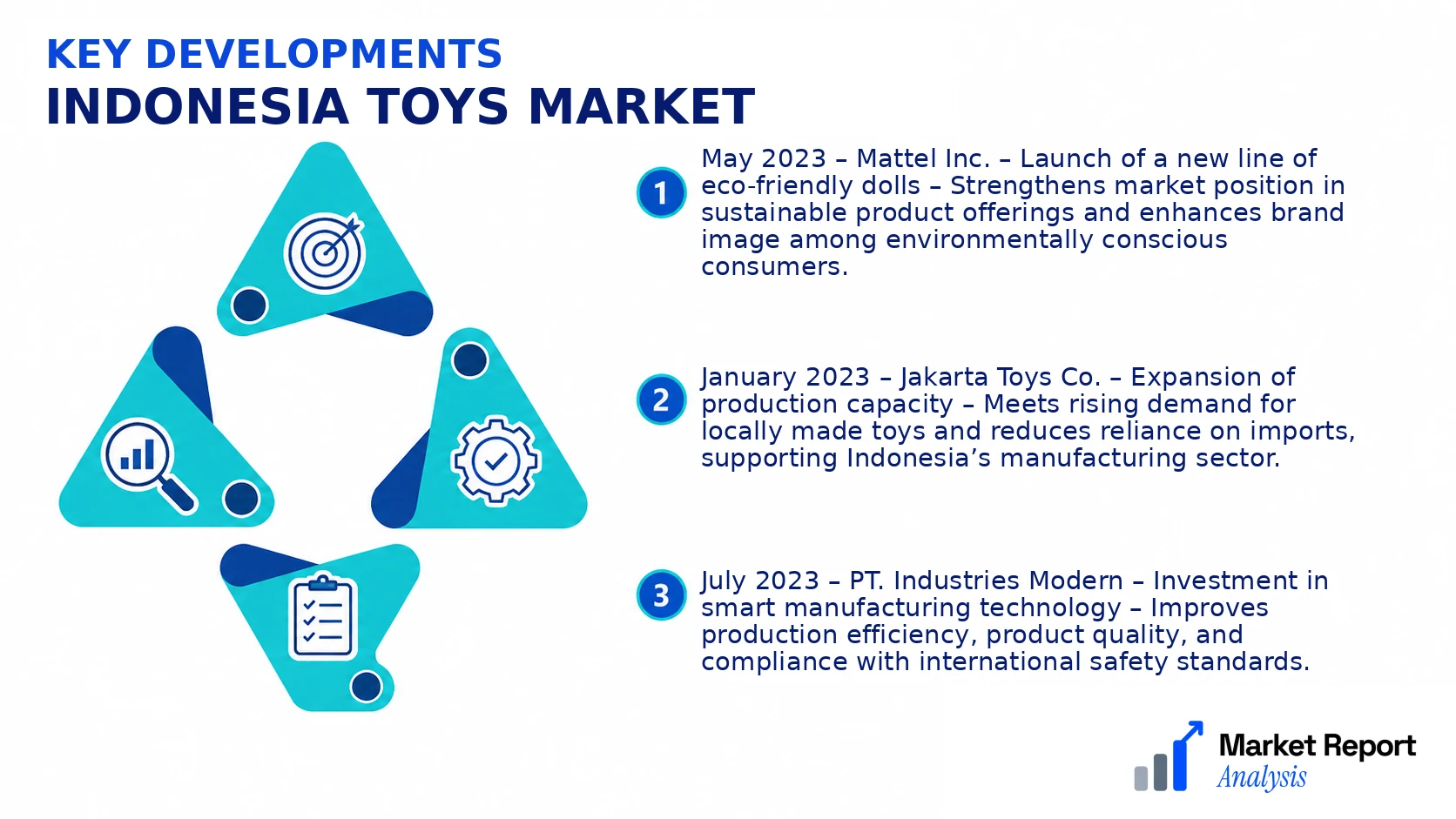
- May 2023 – Mattel Inc. – Launch of a new line of eco-friendly dolls – Strengthens market position in sustainable product offerings and enhances brand image among environmentally conscious consumers.
- January 2023 – Jakarta Toys Co. – Expansion of production capacity – Meets rising demand for locally made toys and reduces reliance on imports, supporting Indonesia’s manufacturing sector.
- July 2023 – PT. Industries Modern – Investment in smart manufacturing technology – Improves production efficiency, product quality, and compliance with international safety standards.
- February 2023 – Banana Republic Toys – Strategic alliance with a raw material supplier – Ensures sustainable sourcing and cost stability, boosting competitiveness in eco-friendly toy segments.
- August 2023 – Toy Indonesia – Digital channel development initiative – Expands online sales platform, enhancing access to remote regions and catering to e-commerce growth trends.
Frequently Asked Questions
What is the Indonesia Toys Market?
The Indonesia Toys Market encompasses the manufacturing, distribution, and retailing of toys within the country, catering to diverse age groups, preferences, and trends. It is driven by increasing urbanization, rising disposable income, and a growing demand for educational and entertainment products among children and parents.
What is the current market size of Indonesia Toys Market?
As of 2026, the Indonesia Toys Market is valued at approximately USD 2.5 Billion, reflecting steady growth driven by expanding consumer demographics and evolving product preferences. The market is poised for further expansion with a CAGR projected at around 8.2% during 2026-2034.
What factors are driving the Indonesia Toys Market?
The market growth is primarily propelled by increased urban household incomes, shifting consumer preferences towards innovative and educational toys, and the influence of digital gaming and online retail channels. Additionally, government initiatives boosting manufacturing and safety standards further support growth.
Which region dominates the Indonesia Toys Market?
Java Island remains the dominant region, accounting for the largest share of the market, attributable to its dense population, concentrated retail infrastructure, and higher income levels. Major urban centers such as Jakarta and Surabaya serve as key hubs for toy demand and distribution.
Which segment is expected to grow the fastest?
Electronic and digital toys are anticipated to experience the fastest growth, driven by technological advancements, increased smartphone penetration, and a rising preference for interactive learning tools among children in Indonesia.
Who are the leading companies operating in the Indonesia Toys Market?
Notable players include local manufacturers and international brands such as Hasbro, Mattel, and Lego, which dominate the market with extensive product portfolios, strong brand recognition, and widespread distribution networks across Indonesia.
Analyst Perspective
The Indonesia Toys Market is projected to exhibit a mature but continuously evolving landscape through 2034, driven by rising incomes and increasing urbanization that fuel demand for innovative, educational, and sustainable toys. Long-term growth will hinge on technological integration, such as augmented reality and smart toys, which appeal to tech-savvy consumers and enhance play experiences. Investment priorities should focus on product differentiation, quality assurance, and digital capabilities to stay competitive amid intensifying market rivalry. Regional diversification remains crucial, with urban centers like Jakarta and Surabaya serving as significant hubs for premium and imported toys, while emerging cities present untapped opportunities for mass-market segments. The strategic focus should also include strengthening supply chains and e-commerce platforms to capitalize on the expanding digital retail environment. While competition remains fierce, there are notable opportunities for niche players offering eco-friendly, STEM-based, and culturally resonant toys, positioning the market for sustainable growth aligned with Indonesia’s economic development and consumer trends.
