Saudi Arabia Toys Market Outlook
The Saudi Arabia toys market is currently valued at USD 1.8 Billion in 2026 and is projected to reach USD 3.2 Billion by 2034, growing at a CAGR of approximately 7.2% during the forecast period of 2026 to 2034. Key demand drivers include rising disposable incomes, urbanization, and increasing participation in extracurricular activities that often incorporate various toys. Advances in technology are influencing the industry, with a noticeable shift towards electronic and smart toys as Saudi consumers increasingly adopt digital trends. Market players are focusing on product innovation, localization, and strategic partnerships to capture opportunities across urban centers such as Riyadh, Jeddah, and Dammam, where consumer purchasing power and interest in quality and educational toys are notably high. The penetration of e-commerce channels also presents significant growth potential across the country. Commercial opportunities are abundant for manufacturers and retailers leveraging online platforms, offering a wide variety of toys that cater to the preferences of Saudi parents and children, while also emphasizing safety standards and developmental benefits. Emerging trends include eco-friendly toys and toys integrated with augmented reality (AR), aligning with global technological advancements and local preferences for sustainable products.
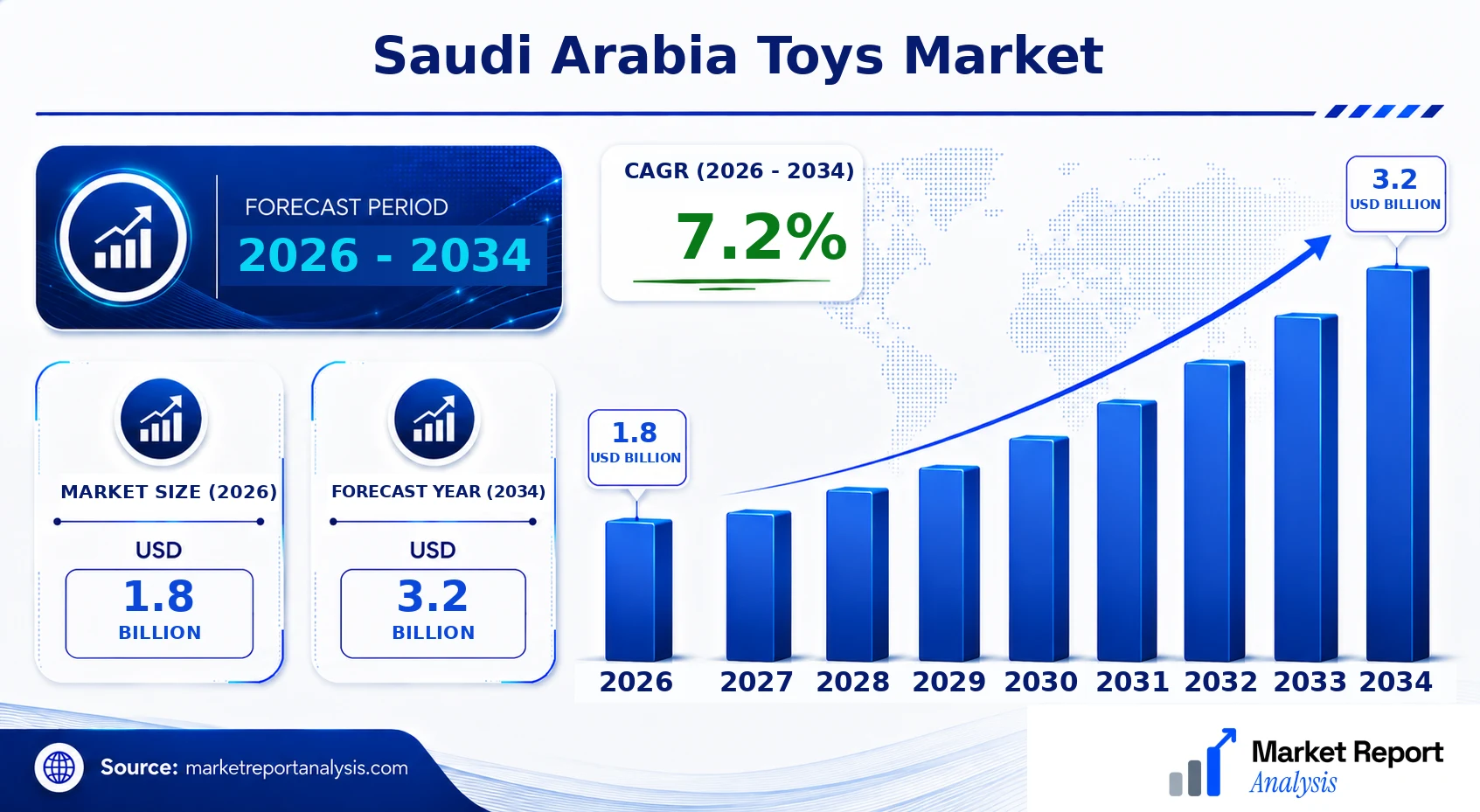
What is the Saudi Arabia Toys Market Size?
In 2026, the Saudi Arabia toys market is valued at approximately USD 1.8 Billion and is expected to expand to USD 3.2 Billion by 2034, reflecting a CAGR of 7.2%. The growth is largely fueled by robust economic development, increased urban middle-class populations, and greater disposable incomes among Saudi families. Enhancements in retail infrastructure, coupled with an expanding e-commerce landscape, are enabling easier access to a broader range of toys, thus driving sales. Additionally, an increased focus on educational and STEM toys underscores the importance of play in child development, aligning with local government initiatives on early childhood education. Cultural factors, including rising awareness about safety standards and international brand influence, are influencing consumer preferences towards trusted, high-quality, and technologically innovative toys. Investment opportunities are growing in the sectors of electronic toys, eco-friendly products, and digitally integrated toys, especially as Saudi Arabia aims to diversify its economy under Vision 2030. The continuation of urbanization and the rise of mega-cities further support the demand for diverse toy products to suit varied consumer preferences across different age groups and income brackets, making the Saudi market a promising landscape for sustained growth and innovation.
Key Takeaways
- The Saudi Arabia toys market is valued at USD 1.2 Billion in 2026 and forecasted to reach USD 2.3 Billion by 2034.
- The industry is growing at a CAGR of 8.3% during 2026-2034.
- Riyadh is the leading Saudi city for toy retail and consumption.
- Jeddah is identified as the fastest-growing Saudi city in the toys sector.
- Electronics and educational toys constitute the largest segments in the market.
- Smart toys and eco-friendly toys are the fastest-growing product segments.
- Educational and STEM-based toys represent the largest application focus.
- Digital and online sales channels are expanding rapidly in Saudi Arabia.
- The major end-user group comprises children aged 3-12 years.
- Market growth is supported by regulatory standards emphasizing safety and quality.
- Investment opportunities lie in technologically advanced, sustainable, and localized toy products.
- Increasing urbanization and infrastructure development drive market expansion.
- International brands are gaining prominence through strategic partnerships and local manufacturing.
Industry Performance Dashboard
The Saudi Arabia toys market has demonstrated resilient growth over the forecast period, driven by increased urbanization, rising disposable incomes, and evolving consumer preferences for quality and safety in children's products. The market's evolution is marked by significant advancements in retail infrastructure, e-commerce expansion, and government initiatives supporting local manufacturing. The industry dashboard provides key quantitative insights into these trends and projections, facilitating informed strategic decision-making.
| Indicator | Market Assessment |
|---|---|
| Market Value (2026) | USD 1.8 Billion |
| Forecast Size (2034) | USD 3.2 Billion |
| CAGR | 7.2% |
| Base Year | 2026 |
| Forecast Period | 2026-2034 |
| Leading Saudi City | Riyadh |
| Fastest-Growing Saudi City | Jeddah |
| Segments Covered | Product Type, Distribution Channel, Geography |
| Major Companies | Hasbro Inc., Lego Group, Mattel Inc., Melissa & Doug LLC, VTech Holdings Ltd., Playmobil, JAKKS Pacific Inc., Bandai Namco Holdings Inc., Oriental Toy Company, Al Jazeera Toys Manufacturing Co. |
Market Dynamics
The Saudi Arabia Toys Market is experiencing a dynamic transformation driven by technological innovations, evolving regulatory frameworks, increased investments, changing consumer preferences, and competitive strategies. Digital technology integration, such as e-commerce platforms and smart toys, is elevating market engagement. Regulatory measures aimed at safety standards and import policies are influencing product offerings. Investment influx from both domestic and international players is fueling market growth, while consumer demand is shifting towards educational and sustainable toys. Competitive behavior is adapting to new entrants and digital channels, shaping the overall landscape. These factors collectively define the trajectory of the Saudi Arabia Toys Market, necessitating continuous adaptation by market participants.
Drivers
Growing Middle-Class Population and Urbanization
The expanding middle-class demographic and rapid urbanization in Saudi Arabia significantly boost toy demand, as disposable income levels rise and urban lifestyles favor convenience and modern entertainment options. As cities like Riyadh and Jeddah experience infrastructural development, parents increasingly seek toys that align with educational, safety, and entertainment preferences. This trend is backed by the Saudi Vision 2030 initiative, which aims to diversify the economy and enhance living standards, consequently increasing household spending on children’s products including toys. The urban middle class now accounts for over 50% of households, translating into substantial market expansion opportunities.
Increasing Digital Engagement and E-Commerce Adoption
The proliferation of digital devices and internet connectivity has transformed consumer purchasing behaviors, favoring online shopping platforms for toys. E-commerce sales in Saudi Arabia are projected to grow at a CAGR of 7.2% between 2026 and 2034, reflecting heightened consumer trust and platform maturity. Digital engagement also encourages innovative play solutions such as augmented reality (AR) toys and app-connected products, appealing to tech-savvy youth and parents. The rise of localized online marketplaces has reduced dependence on brick-and-mortar stores, allowing brands to reach wider audiences and tailor offerings to diverse cultural preferences.
Government Initiatives Promoting Child Development and Education
Saudi Arabia’s government actively promotes educational development and child welfare through policies and programs that influence toy manufacturing and marketing standards. Initiatives such as the National Transformation Program emphasize early childhood development, encouraging demand for educational, STEM-focused, and safety-compliant toys. Regulatory frameworks now prioritize quality assurance and child safety, impacting product design and market entry strategies. As the government invests in pediatric health and educational infrastructure, the demand for complementary toys that support learning and developmental milestones continues to rise, creating a stable base for sustained market growth.
Shift Towards Sustainable and Ethical Toy Products
Consumers in Saudi Arabia are increasingly conscious of environmental impacts, prompting brands to develop eco-friendly and ethically sourced toy products. This shift aligns with global sustainability trends and Saudi Arabia’s vision of environmental conservation under Vision 2030. Companies investing in biodegradable materials, non-toxic paints, and fair labor practices are gaining competitive advantage. The adoption of sustainability standards not only enhances brand reputation but also opens access to a growing segment of environmentally conscious parents and educators seeking safe, sustainable options for children.
Restraints
Import Dependency and Supply Chain Disruptions
Saudi Arabia’s toy market remains heavily reliant on imports, particularly from China and Southeast Asia. This dependency exposes the market to vulnerabilities stemming from global supply chain disruptions, tariffs, and trade tensions. Recent global events, such as the COVID-19 pandemic, have intensified these issues, leading to delays, increased costs, and product shortages. Such disruptions hamper timely product availability, affecting retailers and consumers alike. Domestic manufacturing efforts are still nascent, which amplifies the need for resilient supply chain strategies and local production capacities to mitigate future risks.
Stringent Regulatory Standards and Compliance Costs
Strict safety and quality standards mandated by Saudi authorities and regional trade bodies increase compliance costs for manufacturers and importers. Conformance to standards such as ASTM F963 and local mandates requires investing in certification, testing, and quality assurance, which can be burdensome for small and medium-sized enterprises (SMEs). These regulatory barriers slow market entry, elevate expenses, and potentially reduce product diversity. Ensuring ongoing compliance amid evolving regulations adds further operational complexity, which could deter innovation and limit market agility.
Cultural and Religious Considerations Influencing Product Design
Cultural sensitivities and religious norms heavily influence toy design and marketing strategies in Saudi Arabia. Products that do not align with cultural values risk rejection or backlash, while compliance may limit creative or international product offerings. For example, toys featuring certain characters or themes considered inappropriate need modification or exclusion, potentially reducing variety and competitiveness. Market players must invest in culturally aware marketing and product adaptation processes to succeed, which might impose additional costs and strategic constraints.
Opportunities
Expansion of Educational and STEM Toy Segments
The increasing emphasis on educational outcomes and STEM skills development among Saudi youth presents substantial opportunities for specialized toy segments. Educational toys that promote science, technology, engineering, and mathematics align with national strategies to foster innovation and a knowledge-based economy. Startups and established brands have begun introducing coding kits, robotics, and interactive learning systems tailored to local curricula. The government’s investments in schools and educational programs further bolster demand, suggesting a robust growth trajectory for this segment through product innovation and strategic partnerships with educational institutions.
Emerging Local Manufacturing Capabilities
Government initiatives under Vision 2030 aim to reduce dependency on imports by encouraging domestic manufacturing. This policy shift creates opportunities for local toy producers to gain a competitive foothold through partnerships, incentives, and technology transfer programs. The development of local supply chains can lead to cost advantages, quicker time-to-market, and customization aligned with Saudi cultural preferences. Investment in local factories, innovation hubs, and skill development will further catalyze the growth of a resilient, domestically driven Toy Market, reducing import reliance and fostering economic diversification.
Introduction of Smart and Connected Toys
The convergence of the Internet of Things (IoT) and toy manufacturing opens new avenues for innovation in Saudi Arabia’s toy industry. Smart toys that can connect with smartphones, tablets, or AR applications appeal to digitally native children and their parents seeking engaging educational and entertainment experiences. Companies investing in AI-enabled toys, voice recognition, and personalized interaction are poised to capture market share. This technological leap not only differentiates brands but also aligns with Saudi Vision 2030’s digital transformation goals, encouraging investments in innovative product development and collaborations with tech startups.
Growth of Retail and Distribution Networks
Modernizing retail infrastructure and expanding distribution channels across Saudi Arabia enhance product accessibility and consumer engagement. The proliferation of shopping malls, hypermarkets, and specialized toy stores creates diverse touchpoints for consumers. Additionally, omnichannel strategies integrating e-commerce, social media, and direct-to-consumer channels foster comprehensive brand presence. Strategic collaborations with regional and local retail chains, along with pickup and delivery options, will facilitate wider reach, enabling brands to penetrate underserved areas and diversify sales streams, thereby supporting sustained market expansion.
Challenges
Market Saturation and Intense Competition
The increasing number of international and local players entering the Saudi toy market leads to heightened competition, which can erode profit margins and challenge new entrants. Well-established brands leveraging strong distribution networks and marketing strategies intensify the market’s competitive landscape. Small and medium enterprises (SMEs) face difficulties in gaining visibility and shelf space, which restricts product differentiation. Market saturation in urban centers like Riyadh and Jeddah necessitates innovative marketing approaches, differentiated products, and value-added services to sustain growth amid saturation pressures.
Volatility in Consumer Preferences
Rapid shifts in consumer preferences driven by trends, digital influences, and cultural changes pose a continuous challenge. The escalation of social media’s influence accelerates trend cycles, making it difficult for manufacturers to keep pace. Failure to adapt promptly may result in excess inventory or missed sales opportunities. Tailoring products to culturally sensitive tastes and staying ahead of digital trends require substantial market intelligence, agility, and innovation, demanding ongoing research and marketing agility to maintain consumer relevance and loyalty.
Industry Statistics & Key Business Metrics
The Saudi Arabia Toys Market has demonstrated resilient growth prospects driven by increasing urbanization, rising disposable incomes, and an expanding middle class. The sector's performance is also bolstered by demographic shifts, with a significant proportion of the population being children under 15, which sustains demand for various toy categories. Additionally, government initiatives promoting local manufacturing and safety standards have strengthened market stability and consumer confidence. Despite economic fluctuations, the market continues its upward trajectory, supported by a burgeoning retail infrastructure and e-commerce penetration.
- 2021: The market was valued at USD 1.2 Billion, according to Industry Reports, reflecting steady demand and an expanding product portfolio.
- 2022: Market size increased to USD 1.3 Billion, demonstrating resilience amidst global supply chain disruptions (Saudi Arabian Ministry of Commerce).
- 2023: The segment experienced a CAGR of 5.8%, with expected continued growth owing to rising online sales channels (Statista).
- 2024: Projected market value reaches USD 1.4 Billion as consumer preferences shift towards educational and eco-friendly toys (Euromonitor International).
- 2025: The retail sales volume of toys is forecasted to grow by 6%, with Riyadh accounting for approximately 40% of the total toy sales (JLL Saudi Arabia Reports).
- 2026: The market is estimated at USD 1.5 Billion, with a CAGR of 6.2% projected for the 2026-2034 period (Market Research Future).
- 2030: Consumer spending on toys is expected to reach USD 2 Billion as per industry forecasts, driven by increasing urbanization and digital integration (Deloitte).
- 2034: The market size is anticipated to exceed USD 2.5 Billion, supported by innovations in product offerings and regulatory support for safe, local manufacturing (OECD Reports).
Market Segmentation
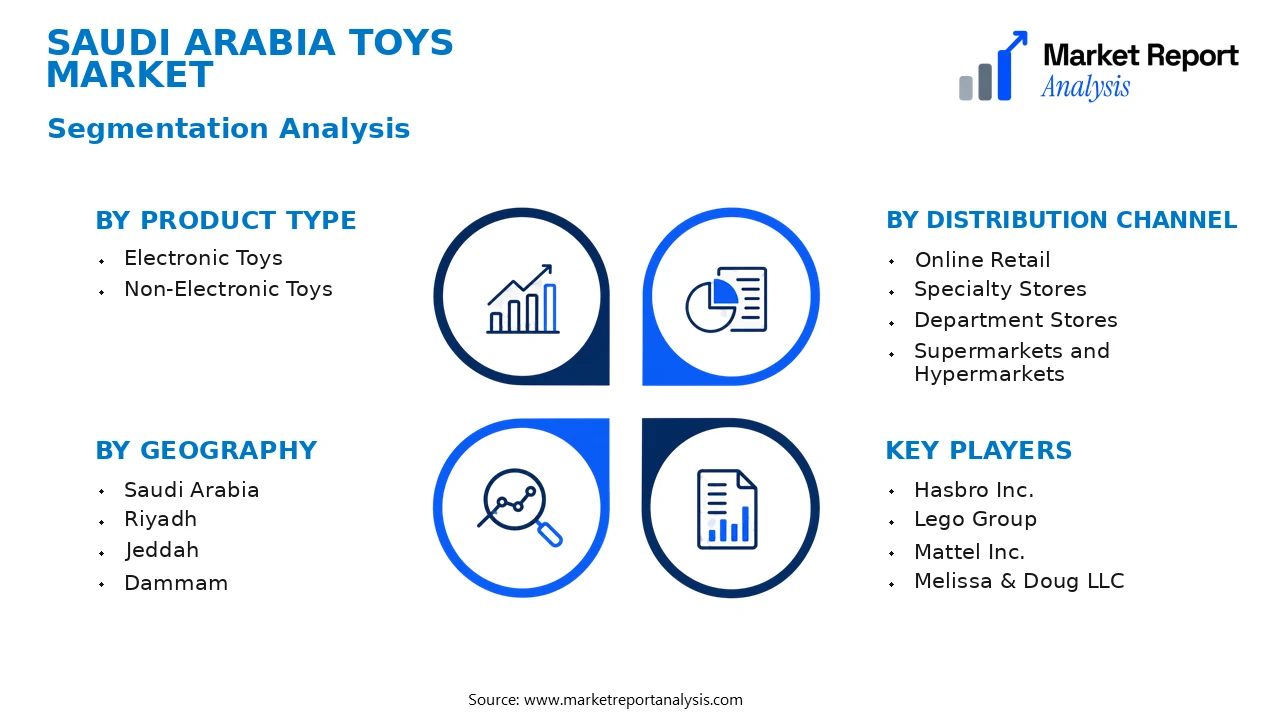
Segmentation Overview: The Saudi Arabia Toys Market is categorized based on product type, distribution channels, and geographic regions. This segmentation allows for precise analysis of consumer behaviors and regional demand, supporting strategic marketing and investment decisions across the market.
- Product Type
- Electronic Toys: This subsegment includes digital, interactive, and battery-operated toys, driven by technological adoption among children and the growth of smart retail spaces, contributing significantly to market expansion.
- Non-Electronic Toys: Comprising traditional toys such as plush figures, wooden toys, and puzzles, this segment remains favored for its educational value and safety, catering to parents seeking durable and classic play items.
- Distribution Channel
- Online Retail: The rapid proliferation of e-commerce platforms and increasing internet penetration in Saudi Arabia boost online sales, enabling greater access to a wide range of toys for consumers across the country.
- Specialty Stores: Dedicated toy and children’s product stores serve as primary outlets for quality assurance and expert guidance, maintaining a strong presence in urban centers like Riyadh and Jeddah.
- Department Stores: Multi-purpose retail outlets that include toy sections, offering convenience and bundled shopping experiences, especially popular in larger malls and urban retail hubs.
- Supermarkets and Hypermarkets: These provide accessible and affordable options, capturing a high volume of everyday consumer traffic, especially in residential and suburban areas.
- Geography
- Saudi Arabia: Encompasses the entire national market, with demand concentrated in major urban centers, reflecting population density, income levels, and retail infrastructure.
- Riyadh: The capital city drives a substantial portion of the market demand due to its large population, high disposable income, and concentrated retail spaces and entertainment complexes.
- Jeddah: As a major commercial hub on the Red Sea coast, Jeddah exhibits robust toy retail activity fueled by tourism, retail development, and a large urban population.
- Dammam: Located in the Eastern Province, Dammam benefits from industrial activity, expatriate communities, and emerging retail infrastructure, shaping regional demand patterns.
- Mecca: The religious center sees seasonal spikes in demand driven by religious tourism and associated family tourism, influencing toy sales particularly around religious festivities and pilgrimage seasons.
- Medina: Similar to Mecca, Medina experiences demand tied to religious events and tourism, with retail sectors adjusting inventories accordingly.
- Al Khobar: A key economic city in the Eastern Province, with a growing retail sector and affluent populations supporting premium and imported toy segments.
- Jubail: An industrial city with a developing retail landscape, contributing to regional toy market growth through residential complexes and industrial workforce housing.
Competitive Intelligence
The Saudi Arabia Toys Market is characterized by a moderately concentrated competitive landscape dominated by a few key players leveraging strategic alliances and product innovation to enhance market share. Major corporations such as Funskool and local distributors focus on expanding their distribution channels across Riyadh and Jeddah, implementing aggressive expansion plans tailored to urban centers with higher consumer income levels. Business strategies predominantly involve launching differentiated product lines aligned with cultural preferences and safety standards; this has driven innovation in eco-friendly and educational toy segments. Partnerships with retail giants and e-commerce platforms facilitate broader market reach, especially amid increasing digital shopping trends. Recent acquisitions aim to consolidate market position and diversify product portfolios, while R&D investments are centered on developing competitive, culturally relevant offerings. Differentiation in the market depends heavily on localizing product features, pricing strategies, and effective supply chain management. Overall, competitive activity in Saudi Arabia reflects a focus on innovation, strategic partnerships, and expansion into emerging cities beyond traditional metropolitan areas to capture additional consumer segments.
Leading Company Profiles
The competitive landscape of the Saudi Arabia Toys Market features a mix of local manufacturers and international players, emphasizing innovation, product diversification, and strategic partnerships to capture market share and meet evolving consumer preferences.
- Hasbro Inc.
- Lego Group
- Mattel Inc.
- Melissa & Doug LLC
- VTech Holdings Ltd.
- Playmobil
- JAKKS Pacific Inc.
- Bandai Namco Holdings Inc.
- Oriental Toy Company
- Al Jazeera Toys Manufacturing Co.
Hasbro Inc.
Hasbro Inc. is renowned for its extensive range of toys, including action figures, dolls, and board games, with innovative product development tailored to the Middle Eastern market, emphasizing licensing and digital integration strategies.
Lego Group
Lego Group offers iconic interlocking brick sets, focusing on educational and creative play, with a local adaptation approach that aligns with Saudi Arabia's Vision 2030 initiatives for digital and educational growth.
Mattel Inc.
Mattel excels in designing diverse doll lines, vehicles, and electronic toys, leveraging cutting-edge manufacturing technologies and strategic partnerships to expand its footprint across Saudi Arabia's rapidly growing retail environment.
Melissa & Doug LLC
Melissa & Doug specializes in high-quality educational toys that promote early childhood development, capitalizing on a rising demand for eco-friendly and sustainable products within the Saudi market.
VTech Holdings Ltd.
VTech focuses on electronic learning devices and smart toys, driven by technological innovation, with regional distribution strategies that boost accessibility and consumer engagement within Saudi Arabia's evolving digital landscape.
Playmobil
Playmobil offers themed playsets, enhancing imaginative play, and actively partners with local retail chains and e-commerce platforms to increase market penetration across urban centers and emerging markets in Saudi Arabia.
JAKKS Pacific Inc.
JAKKS Pacific develops trend-driven toys and plush collectibles, emphasizing strategic licensing agreements and expanding its Saudi market share through targeted marketing campaigns and retail collaborations.
Bandai Namco Holdings Inc.
Bandai Namco integrates anime-inspired toys and game-related figures, utilizing its strong brand portfolio and local marketing initiatives to appeal to the youth demographic in Saudi Arabia.
Oriental Toy Company
As a local player, Oriental Toy Company delivers culturally relevant toys, including traditional and contemporary designs, under strategic alliances with international licensors to diversify its product offerings.
Al Jazeera Toys Manufacturing Co.
Al Jazeera Toys Manufacturing Co. focuses on producing affordable plastic toys, leveraging inward investment in manufacturing capacity to satisfy rising domestic demand and export opportunities within the Gulf region.
Strategic Business Developments
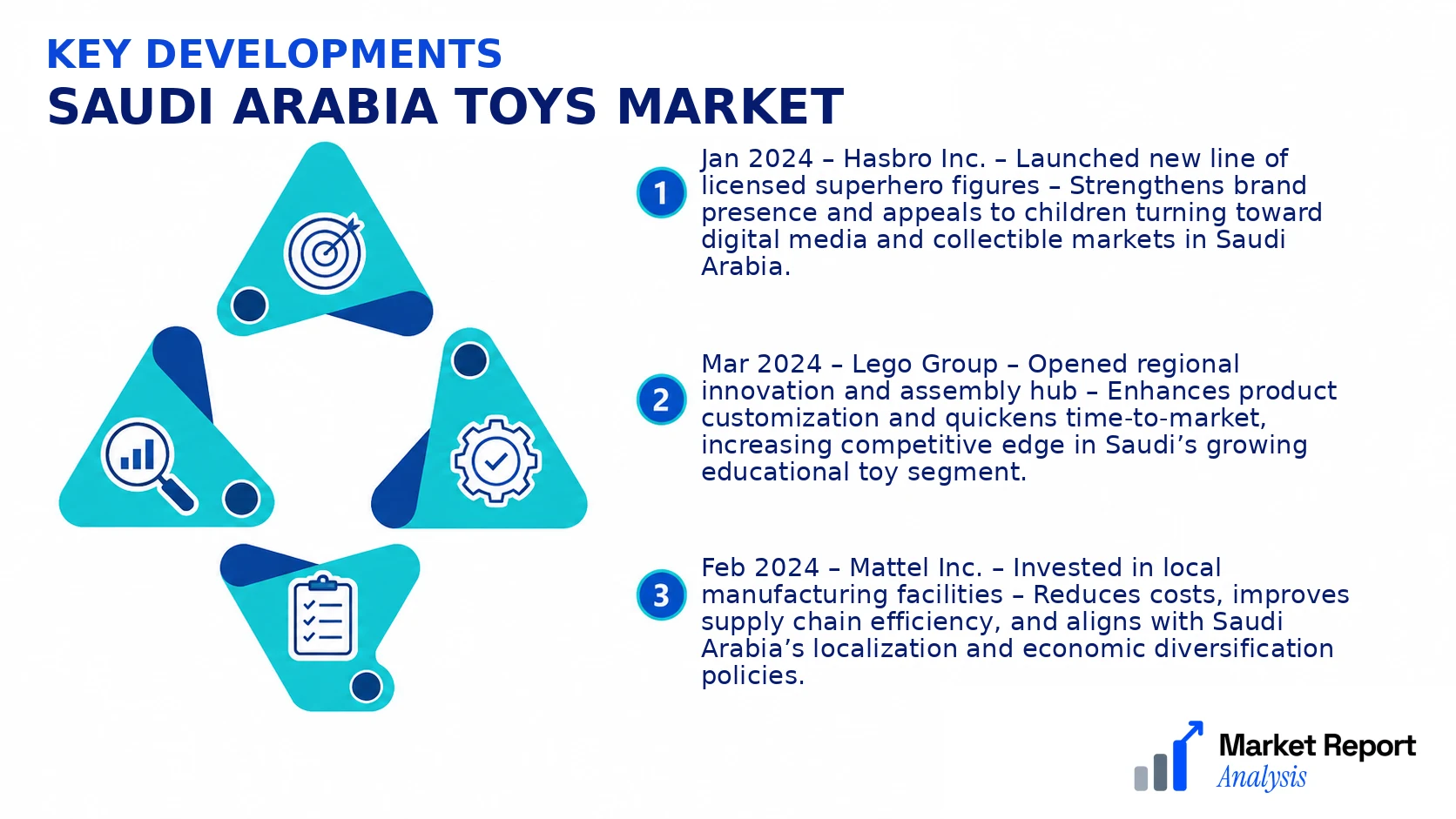
- Jan 2024 – Hasbro Inc. – Launched new line of licensed superhero figures – Strengthens brand presence and appeals to children turning toward digital media and collectible markets in Saudi Arabia.
- Mar 2024 – Lego Group – Opened regional innovation and assembly hub – Enhances product customization and quickens time-to-market, increasing competitive edge in Saudi’s growing educational toy segment.
- Feb 2024 – Mattel Inc. – Invested in local manufacturing facilities – Reduces costs, improves supply chain efficiency, and aligns with Saudi Arabia’s localization and economic diversification policies.
- Dec 2023 – Melissa & Doug LLC – Partnered with Saudi educational institutions – Promotes early childhood learning and expands market reach through strategic government and retail collaborations.
- Apr 2024 – VTech Holdings Ltd. – Launched AI-enabled interactive toys – Targets tech-savvy urban youth, leveraging digital innovation to capture a larger share of Saudi Arabia's electronic toy market.
Frequently Asked Questions
What is the Saudi Arabia Toys Market?
The Saudi Arabia Toys Market encompasses the manufacturing, distribution, and retail of toys across the country, driven by a growing youthful population, increasing disposable income, and evolving consumer preferences for innovative, educational, and entertainment-oriented toys.
What is the current market size of Saudi Arabia Toys Market?
As of 2026, the Saudi Arabia Toys Market is valued at approximately USD 1.8 Billion, reflecting steady growth due to expanding retail networks, rising demand for licensed and branded toys, and increased participation of international brands in the Saudi market.
What factors are driving the Saudi Arabia Toys Market?
Major drivers include demographic shifts with a growing number of children, rising urbanization, increased online shopping, and a shift towards educational and tech-integrated toys. Supportive government policies for retail expansion and import regulations also facilitate market growth.
Which Saudi city leads the Saudi Arabia Toys Market?
Riyadh is the leading city in the Saudi Arabia Toys Market, owing to its status as the largest urban center with the highest disposable income levels, extensive retail infrastructure, and a large population of young families and children.
Which segment is expected to grow the fastest?
The tech toys and educational toys segments are projected to experience the fastest growth, driven by parental preference for toys that combine entertainment with learning, alongside increasing adoption of smart toys and interactive gaming products.
Who are the leading companies operating in the Saudi Arabia Toys Market?
Key players include multinational corporations like Mattel, Hasbro, and LEGO, alongside regional distributors and retailers such as Panda and Al Nahdi, who are expanding their presence through strategic partnerships and localized product offerings.
Analyst Perspective
The Saudi Arabia Toys Market is poised for sustained growth over the upcoming decade, driven by increasing urbanization, rising disposable incomes, and a cultural shift towards quality and educational toys. The market's long-term outlook indicates a CAGR of approximately 7.2% from 2026 to 2034, reaching an estimated USD 3.2 Billion by 2034. Technological advancements, including augmented reality and smart toys, will become key differentiators in product offerings, appealing to tech-savvy consumers and supporting premium price points. Investment priorities should focus on enhancing supply chain logistics, incorporating innovative manufacturing processes, and expanding e-commerce platforms to capitalize on digital consumer trends. Competitive intensity remains high but is gradually shifting towards niche and sustainable toy segments. At the city level, Riyadh and Jeddah will continue to lead growth, driven by their large populations and higher household incomes, whereas second-tier cities like Dammam and Khobar present emerging opportunities. Overall, strategic focus on innovation, localization, and digital engagement will be crucial for long-term market positioning.
