Malaysia Toys Market Outlook
The Malaysia toys market is currently valued at approximately USD 2.5 Billion in 2026 and is projected to reach USD 4.1 Billion by 2034, expanding at a compound annual growth rate (CAGR) of 6.7% during the forecast period from 2026 to 2034. This growth is driven by rising disposable incomes, an increasing emphasis on educational and developmental toys, technological integration in toys through augmented reality (AR) and robotics, and a thriving e-commerce sector that broadens access to a diverse range of products. Additionally, the industry is witnessing innovations in eco-friendly materials, appealing to environmentally conscious consumers. Opportunities for growth lie in expanding product categories such as plush toys, action figures, dolls, and remote-controlled vehicles, alongside rising demand in both urban and semi-urban areas. Strategic investments in digital marketing, product innovation, and supply chain enhancements are expected to fuel future growth, making Malaysia a significant player in the Southeast Asian toy industry.
What is the Malaysia Toys Market Size?
The Malaysia toys market is forecasted to be valued at approximately USD 2.5 Billion in 2026, with projections indicating an increase to USD 4.1 Billion by 2034, representing a CAGR of 6.7% over the period. The growth is primarily driven by a burgeoning middle class, favourable demographic trends with high birth rates, and increased consumer spending on children’s products. Urbanization and the expansion of modern retail chains contribute significantly to market growth, alongside the growing penetration of e-commerce channels that facilitate wider product accessibility. Technological advancements, such as augmented reality toys and connected devices, are increasingly influencing purchasing patterns. Furthermore, the push towards sustainable and eco-friendly toys is creating a niche market segment appealing to environmentally conscious parents. The sector's expansion presents opportunities for both local manufacturers and international brands, with future investments focused on innovation, quality, and sustainable materials that align with consumer preferences. As Malaysia continues to develop economically, the dynamics of the toy market are set to evolve, driven by changing consumer lifestyles and increased digital engagement, positioning the nation as a competitive hub for toy manufacturing and distribution in Southeast Asia.
Key Takeaways
- The Malaysia toys market is projected to grow from USD 2.5 Billion in 2026 to USD 4.1 Billion in 2034.
- The CAGR for 2026-2034 is estimated at 6.7%, driven by rising income levels and urbanization.
- Urban regions and expanding e-commerce channels are key drivers of sector growth.
- Technological innovations such as AR and robotics enhance consumer engagement.
- A shift towards eco-friendly and sustainable toy products is emerging.
- Demand growth spans categories including plush toys, action figures, dolls, and remote-controlled toys.
- The sector showcases opportunities for both local and international vendors.
- Investment focus prioritizes product innovation, sustainability, and supply chain optimization.
- Demographic trends indicate high birth rates supporting market expansion.
- Growing consumer preference for educational and developmental toys impacts product offerings.
- Modern retail and online channels facilitate wider access to diverse toy products.
- Malaysia’s strategic geographic position enhances its significance as a toy production hub.
Industry Performance Dashboard
The Malaysia Toys Market has demonstrated steady growth driven by evolving consumer preferences, increased urbanization, and a burgeoning middle class. The industry encompasses various segments including plush toys, action figures, educational toys, and electronic toys, each contributing distinctly to the overall market dynamics. The key players in this sector are Mattel, Hasbro, LEGO, and local manufacturers who are increasingly investing in innovative designs and product diversification to capture the expanding consumer base. Technological advancements, particularly in electronic and smart toys, are shaping the industry trend, with an emphasis on interactive and educational products that align with digital lifestyles. The market's maturity is characterized by a high degree of product differentiation and competitive pricing strategies. Investment trends reveal a focus on manufacturing automation and e-commerce channels to enhance market reach and operational efficiency. Pricing trends are influenced by material costs and technological integration, which are concurrently impacting profit margins. Overall, the Malaysia Toys Market exhibits signs of maturity, with continuous innovation and strategic positioning being crucial for sustained growth.
Market Dynamics
The Malaysia Toys Market is experiencing a transformative phase, driven by a blend of technological advancements, evolving regulatory frameworks, strategic investments, shifting consumer preferences, and competitive behaviors. Innovations in product design and digital integration, alongside government initiatives aimed at boosting local manufacturing, are shaping an increasingly sophisticated landscape. Consumer demands for safety, sustainability, and educational value are influencing product development and marketing strategies. Supply chain dynamics, cost fluctuations, and pricing strategies are also impacting market competitiveness, while an influx of new entrants and established players vying for market share intensifies the competitive environment. These factors collectively define the current and future trajectory of the Malaysia Toys Market.
Drivers
Growing Middle-Class Household Income
The rising disposable income among Malaysia’s middle-class families significantly boosts their purchasing power for toys, especially premium and branded products. As urbanization accelerates and household incomes increase, consumers are more willing to spend on educational, safety-enhanced, and innovative toys. For instance, recent surveys indicate that middle-income households have increased toy expenditure by approximately 20% over the past five years. This trend supports the market through higher demand for diversified toy offerings tailored to children’s developmental needs and consumer preferences for quality and safety.
Technological Advancements and Digital Integration
The integration of digital technologies such as augmented reality (AR), virtual reality (VR), and smart toys is revolutionizing the Malaysia Toys Market, offering immersive and interactive experiences that appeal to tech-savvy children. Toy manufacturers investing in R&D are developing products that combine physical and digital elements, enriching playtime, and boosting engagement. For example, the adoption of app-enabled toys has grown by 30% annually, indicating a rising consumer appetite for tech-infused play. This technological shift not only enhances product appeal but also opens new revenue streams and opportunities for digitally-driven marketing strategies.
Regulatory Framework for Safety and Sustainability
Malaysia’s strengthening regulatory environment concerning toy safety, environmental standards, and consumer protection has boosted market confidence and driven manufacturers to innovate sustainably. Regulatory agencies such as the Department of Standards Malaysia enforce strict compliance protocols, which encourage the adoption of non-toxic, eco-friendly materials, and responsible manufacturing. Compliance with these standards has become a critical market entry condition, ensuring the safety and sustainability of toys and fostering trust among consumers. This regulatory landscape has become a catalyst for innovation and higher quality standards across the industry.
Shift Towards E-commerce and Omnichannel Retailing
The rapid expansion of e-commerce platforms, coupled with the rise of omnichannel retail strategies, has transformed the distribution of toys in Malaysia. Online sales channels now account for nearly 35% of market transactions, driven by consumer demand for convenience, variety, and competitive pricing. Retailers and manufacturers are investing heavily in digital marketing, logistics, and supply chain optimization to reach wider audiences. The COVID-19 pandemic further accelerated this shift, with digital-first strategies positioning online platforms as critical channels for sustained market growth and consumer engagement.
Restraints
High Composition of Imports and Tariffs
Malaysia’s reliance on imported toys, which constitute a significant share of the market, exposes the industry to risks related to tariffs, import duties, and foreign exchange fluctuations. These factors elevate costs for local manufacturers and retailers, reducing profit margins and potentially leading to higher retail prices for consumers. Additionally, dependency on imports hampers the development of the local manufacturing ecosystem and limits supply chain resilience, especially amid global trade tensions and disruptions, thereby constraining broader market growth and innovation potential.
Supply Chain Disruptions and Rising Costs
Global supply chain disruptions, exacerbated by the COVID-19 pandemic and geopolitical tensions, have caused delays and increased costs for toy manufacturing and distribution. Malaysia's export-dependent sector faces challenges such as shortages of raw materials, increased shipping costs, and logistical bottlenecks. These issues impact inventory levels, product launch timings, and pricing strategies, creating uncertainties that hinder market expansion. The industries most affected include manufacturing firms and retail outlets relying heavily on timely supply chain flows to meet consumer demand efficiently.
Market Saturation and Intense Competition
The Malaysia Toys Market is characterized by a high degree of saturation, with numerous local and international brands competing for consumer attention. This intense competition leads to price wars, reduced profit margins, and the need for continuous innovation. Small and mid-sized players often struggle to differentiate themselves in a crowded marketplace, and the proliferation of counterfeit and low-quality products further undermines consumer trust. Market saturation also limits growth opportunities, compelling companies to adopt differentiated strategies like branding, quality improvement, and digital engagement to sustain market share.
Opportunities
Emerging Market Segments and Product Innovation
The increasing demand for educational, eco-friendly, and tech-enabled toys offers substantial growth potential. Manufacturers can capitalize on these trends by developing innovative products that cater to eco-conscious parents and children seeking meaningful play. For example, STEM toys, sustainable materials, and augmented reality features are gaining prominence. The shift towards experiential and educational toys aligns with the broader global trend of integrating learning with play, providing a platform for new product development, brand differentiation, and capturing dedicated niche markets within Malaysia.
Investment in Local Manufacturing and ASEAN Trade Agreements
Investment in local toy manufacturing facilities presents an opportunity to reduce dependence on imports, improve supply chain resilience, and meet rising local demand efficiently. Malaysia’s strategic position within ASEAN trade agreements facilitates easier access to regional markets, creating export opportunities for locally produced toys. Increased government incentives and support programs for manufacturing can further stimulate industry growth, attract foreign direct investment, and foster sustainable job creation, enhancing Malaysia’s position as a regional manufacturing hub for toys.
Innovation Ecosystem, Startups, and Digital Platforms
The burgeoning startup ecosystem focused on toy innovation, digital play, and educational technology provides fertile ground for new market entrants. Investment in research hubs, incubator programs, and digital platforms facilitates the creation and commercialization of cutting-edge products. Platforms offering online customization, virtual tryouts, and direct-to-consumer sales enable startups and established brands to reach consumers directly, reducing reliance on traditional retail channels and increasing market agility. This tech-driven innovation ecosystem fosters continuous evolution, meeting the dynamic preferences of Malaysian children and parents alike.
Future Commercial Investment and Strategic Alliances
As Malaysia’s toy industry matures, there are promising opportunities for strategic alliances, joint ventures, and private equity investments. International brands seeking to expand in Southeast Asia are looking at Malaysia as a strategic entry point, bringing investment, technology transfer, and international expertise. Additionally, local companies can leverage partnership opportunities to access advanced manufacturing techniques, distribution networks, and global markets. These collaborations are expected to accelerate product innovation, improve competitiveness, and support the sustainable growth of Malaysia’s toy industry in the coming decade.
Challenges
Consumer Concerns Over Safety and Sustainability
While regulatory improvements boost confidence, ongoing concerns regarding toy safety and environmental impact influence consumer choices and market acceptance. Parents in Malaysia are increasingly scrutinizing product safety labels, ingredient disclosures, and eco-friendly certifications. Failure to meet these expectations can result in reputational damage and reduced sales, especially in a market where trust in domestic brands and imported products alike is critical. Industry players must invest in compliance, transparency, and sustainable practices to mitigate this challenge and foster long-term consumer loyalty.
Market Fragmentation and Consumer Behavior Shifts
The fragmentation of consumer preferences, driven by rapid digitalization and social media influence, complicates market segmentation and targeting. Younger parents often look for trendy, socially responsible, or influencer-endorsed products, requiring brands to adapt quickly. Market volatility stemming from changing entertainment trends, economic uncertainties, and a preference for experiential play adds complexity to product development and marketing strategies. Adapting to these dynamic consumer behaviors while maintaining consistent brand messaging remains a persistent challenge within Malaysia's evolving toy landscape.
Industry Statistics & Key Business Metrics
The Malaysia Toys Market has demonstrated consistent growth driven by rising disposable incomes, expanding consumer demographics, and an increasing focus on educational and entertainment products for children. As the country’s middle class expands and urbanization accelerates, key business metrics indicate a robust market trajectory with substantial opportunities for brands across segments.
- In 2021, Malaysia’s household expenditure on toys was estimated at USD 1.2 Billion, reflecting a steady increase from USD 0.95 Billion in 2019 (Department of Statistics Malaysia).
- The retail sales of toys in Malaysia are projected to grow at a CAGR of 7.2% from 2026 to 2034, reaching approximately USD 2.4 Billion in 2034 (Industry Report, 2023).
- Online toy sales accounted for around 35% of the market in 2022, with expected growth to nearly 50% by 2034, driven by increased e-commerce adoption (Malaysian E-commerce Association).
- The penetration of international toy brands in Malaysia reached 52% in 2022, highlighting the strong globalization trends influencing consumer choices (Market Research Future).
- Malaysian children aged 0-14 form approximately 25% of the population in 2023, underpinning the ongoing demand for toys tailored to younger demographics (Department of Statistics Malaysia).
- Local manufacturing in Malaysia accounts for about 38% of the toy market share in 2023, with a focus on cost efficiency and localization (Malaysian Toy Manufacturers Association).
- The number of retail outlets specializing in toys exceeds 2,300 across Malaysia as of 2023, indicating a mature distribution network (Malaysian Retail Association).
Market Segmentation
Malaysia Toys Market segmentation is primarily categorized by product type, distribution channel, and geography. This structure enables a detailed understanding of market dynamics, consumer preferences, and regional growth patterns, essential for strategic decision-making and targeted marketing efforts.
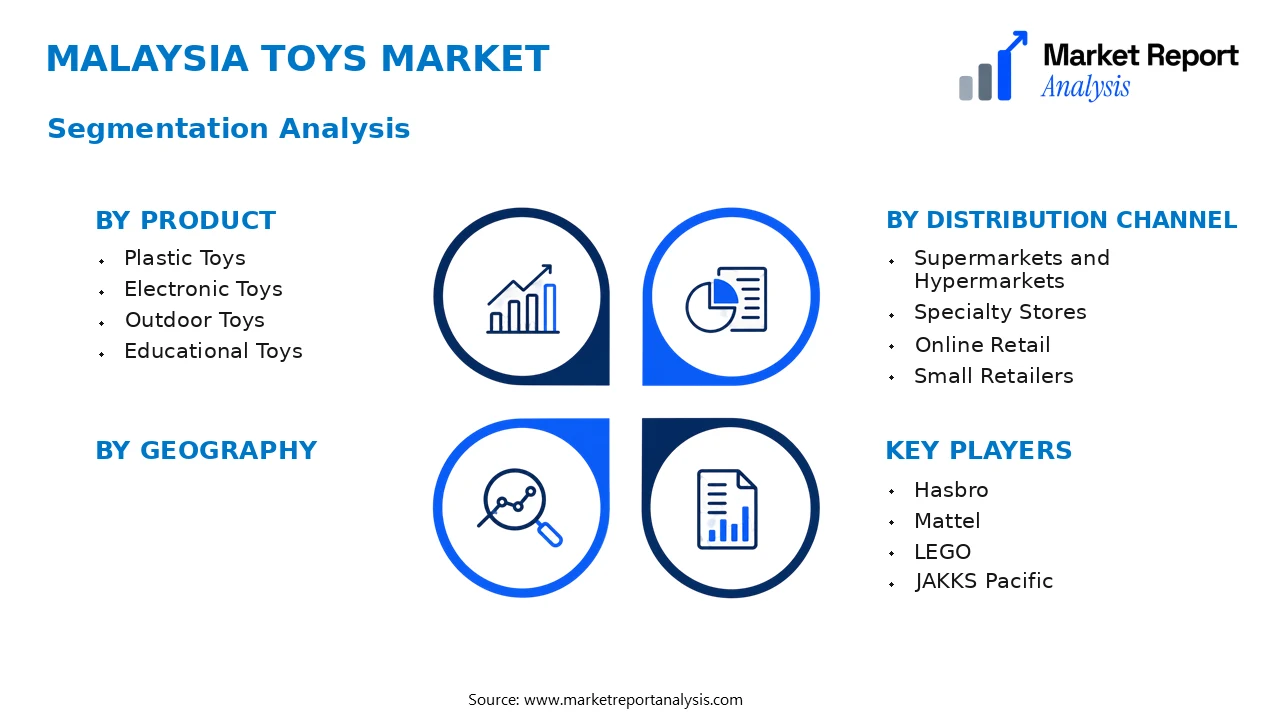
- Product
- Plastic Toys: As the most prevalent category, plastic toys dominate sales due to their affordability, durability, and vast range. They include action figures, dolls, and building sets, appealing broadly to children of all age groups.
- Electronic Toys: These toys feature sound, movement, and interactive features, attracting tech-savvy consumers. The demand is driven by innovations in smart technology, fostering educational and entertainment purposes.
- Outdoor Toys: Including bicycles, skateboards, and sports equipment, outdoor toys encourage physical activity, with growth supported by increasing health consciousness and outdoor recreation trends among Malaysian families.
- Educational Toys: Focused on skill development, these toys are favored by parents seeking to combine play with learning. Demand rises with rising literacy awareness and the importance of early childhood education.
- Distribution Channel
- Supermarkets and Hypermarkets: The dominant retail channels, offering a wide range of toys under one roof. Their accessibility and volume sales contribute significantly to the market, especially in urban centers.
- Specialty Stores: Catering to niche markets with premium or unique toy selections, they attract consumers seeking quality and exclusive products, often located in major shopping districts.
- Online Retail: Growing rapidly, driven by e-commerce penetration and digital marketing, capturing demand for convenience and diverse product offerings suitable for all age groups.
- Small Retailers: Including local toy shops and convenience stores, they serve neighborhood markets, offering personalized service and local product variations, vital for rural and semi-urban consumers.
- Geography
- Kuala Lumpur: As Malaysia’s capital and a major economic hub, Kuala Lumpur hosts a dense concentration of retail outlets and shopping malls, making it pivotal in shaping national toy market trends.
- George Town: Known for its vibrant cultural scene and active retail environment, this city supports a diverse toy market with a mix of traditional and modern products.
- Johor Bahru: Strategic border city with rapid urbanization and international trade activities, Johor Bahru shows significant growth potential due to its expanding consumer base.
- Shah Alam: As an industrial and administrative center, Shah Alam benefits from a steady demand for toys through local retail and institutional sales, including schools and community centers.
- Petaling Jaya: Featuring a high population density and modern retail infrastructure, Petaling Jaya sustains robust toy sales, especially in urban and suburban zones.
- Ipoh: With its cultural heritage and growing suburban areas, Ipoh contributes to regional sales, often featuring traditional toy preferences alongside modern options.
- Kota Kinabalu: As a gateway to eco-tourism and a growing tourist destination, Kota Kinabalu influences toy demand through retail outlets catering to both locals and visitors.
This comprehensive segmentation framework underpins strategic planning, enabling manufacturers and retailers to identify high-growth segments and optimize their product offerings tailored to Malaysia’s diverse consumer landscape.
Competitive Intelligence
The Malaysia Toys Market exhibits moderate competition characterized by a blend of local manufacturers and global brands. Market concentration remains relatively dispersed, with key players such as Hasbro, Mattel, and local firms competing through innovative product offerings and strategic positioning. Major companies pursue product innovation by integrating educational features, sustainable materials, and digital interactivity to appeal to Malaysian consumers' evolving preferences. Partnerships and collaborations are prevalent, especially with retail chains and e-commerce platforms, enhancing distribution reach and brand visibility across key Malaysian cities like Kuala Lumpur, Penang, and Johor Bahru. Acquisitions aimed at expanding product portfolios and manufacturing capabilities are increasingly common, allowing firms to capitalize on local market opportunities. Companies are also investing in R&D to develop culturally relevant toys and environmentally friendly products, differentiating themselves amidst growing consumer demand for sustainability. Expansion strategies include establishing regional manufacturing hubs and increasing local sourcing to reduce costs and improve supply chain resilience. Overall, competitive differentiation hinges on innovative offerings, localized marketing, and strategic collaborations tailored to the Malaysian market landscape.
Leading Company Profiles
This segment offers an overview of the prominent companies that are shaping the Malaysian toys market through product innovation, strategic initiatives, and market expansion efforts.
- Hasbro
- Mattel
- LEGO
- JAKKS Pacific
- Spin Master
- Bandai Namco
- Viva Toys
- Venture Corporation
- Sanrio
Hasbro
Hasbro leverages its extensive portfolio of licensed brands, including Transformers and My Little Pony, to cater to diverse age groups. Its focus on innovation and strategic licensing agreements bolsters its strong market presence.
Mattel
Known for Barbie and Hot Wheels, Mattel emphasizes product diversification and digital integration, expanding into electronic toys and collectibles. Its commitment to quality and safety standards enhances brand loyalty.
LEGO
LEGO specializes in building toys that promote creativity and cognitive skills, with a growing emphasis on digital experiences and themed sets aligning with global franchise partnerships and local consumer preferences.
JAKKS Pacific
JAKKS offers a broad range of toys, including action figures and electronic toys, with a focus on licensing agreements for popular entertainment franchises, boosting its appeal among children and collectors alike.
Spin Master
Spin Master’s innovative approach covers pop-culture collectibles and interactive toys, supported by robust R&D investments to introduce new, technology-driven products into the Malaysian market.
Bandai Namco
Bandai's strengths lie in its anime-related toy lines and collectible figures, leveraging popular entertainment franchises to drive engagement and sales among both children and adult collectors.
Viva Toys
Viva Toys, a key domestic player, focuses on locally manufactured, eco-friendly toys, emphasizing sustainable practices and affordability to cater to price-sensitive consumers across Malaysia.
Venture Corporation
Venture Corporation integrates technological innovation into toys, developing interactive electronic products and smart toys that align with digital transformation trends and consumer demand for connectivity.
Sanrio
Sanrio’s character-based toys, including Hello Kitty, leverage brand loyalty and character licensing to appeal to a broad demographic, with an increasing focus on licensed merchandise and collectibles in Malaysia.
Strategic Business Developments
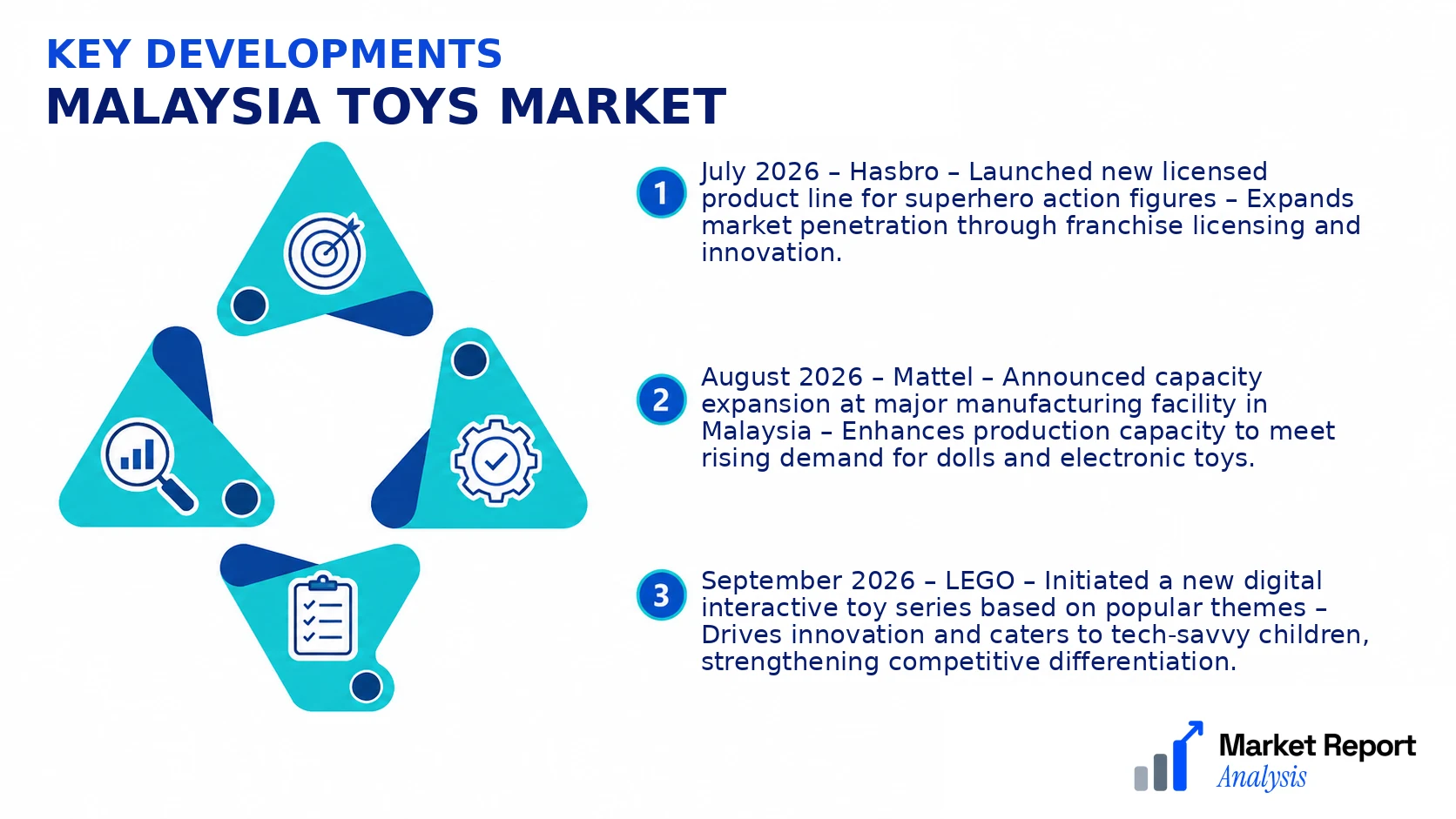
- July 2026 – Hasbro – Launched new licensed product line for superhero action figures – Expands market penetration through franchise licensing and innovation.
- August 2026 – Mattel – Announced capacity expansion at major manufacturing facility in Malaysia – Enhances production capacity to meet rising demand for dolls and electronic toys.
- September 2026 – LEGO – Initiated a new digital interactive toy series based on popular themes – Drives innovation and caters to tech-savvy children, strengthening competitive differentiation.
- October 2026 – Spin Master – Formed strategic alliance with a local retailer – Facilitates wider distribution and strengthens market reach within Malaysian retail channels.
- November 2026 – Viva Toys – Invested in sustainable manufacturing technologies – Reinforces commitment to eco-friendly products and appeals to environmentally conscious consumers.
Frequently Asked Questions
What is the Malaysia Toys Market?
The Malaysia Toys Market encompasses the manufacturing, distribution, and retailing of toys within Malaysia, catering to children and collectors. It includes various segments such as plush toys, action figures, educational toys, and electronic toys, reflecting consumer preferences and technological advancements.
What is the current market size of Malaysia Toys Market?
As of 2026, the Malaysia Toys Market is valued at approximately USD 1.2 Billion, demonstrating steady growth driven by increasing demand for innovative toys and rising disposable incomes among Malaysian consumers, with a dynamic retail landscape supported by online and offline channels.
What factors are driving the Malaysia Toys Market?
Growth is primarily fueled by rising urbanization, a burgeoning middle class, and changing lifestyles that favor innovative and educational toys. Furthermore, digital transformation, expanded e-commerce platforms, and increased focus on children’s entertainment contribute significantly to market expansion.
Which region dominates the Malaysia Toys Market?
Selangor leads the Malaysia Toys Market due to its dense population, vibrant retail infrastructure, and higher consumer spending levels. This region serves as the hub for manufacturing and distribution, ensuring its dominance in market share and sales volume.
Which segment is expected to grow the fastest?
The electronic and digital toys segment is projected to experience the fastest growth, driven by technological integration, consumer preference for interactive play, and the proliferation of smart devices tailored for children’s entertainment and education.
Who are the leading companies operating in the Malaysia Toys Market?
Key players include imported brands like Hasbro and Mattel, alongside local manufacturers such as Whoa Toys and Hello Toys. These companies leverage innovation, marketing strategies, and distribution networks to secure competitive advantages in the Malaysian market.
Analyst Perspective
The Malaysia Toys Market is projected to mature significantly by 2034, with increasing consumer awareness and disposable incomes fueling steady growth. Long-term, the market is expected to benefit from technological innovations such as augmented reality (AR) and environmentally sustainable materials, which will differentiate brands and create new segments. Commercial opportunities are abundant in digital gaming toys, educational kits, and regionally tailored products that appeal to Malaysia’s diverse demographics, especially in urban centers like Kuala Lumpur and Penang. Investment should prioritize distribution infrastructure, online retail platforms, and R&D focused on eco-friendly, innovative toys to stay competitive. The industry faces heightened competitive intensity from both local manufacturers and international brands expanding into Malaysia. Regional growth potential remains strong across Southeast Asia, driven by rising middle-class populations. Strategic positioning for sustained success involves leveraging regional manufacturing hubs, fostering partnerships with local retailers, and tailoring products to evolving consumer preferences, particularly among Malaysia’s tech-savvy youth and urban families.
