North America Flight Management Systems (FMS) Market Outlook
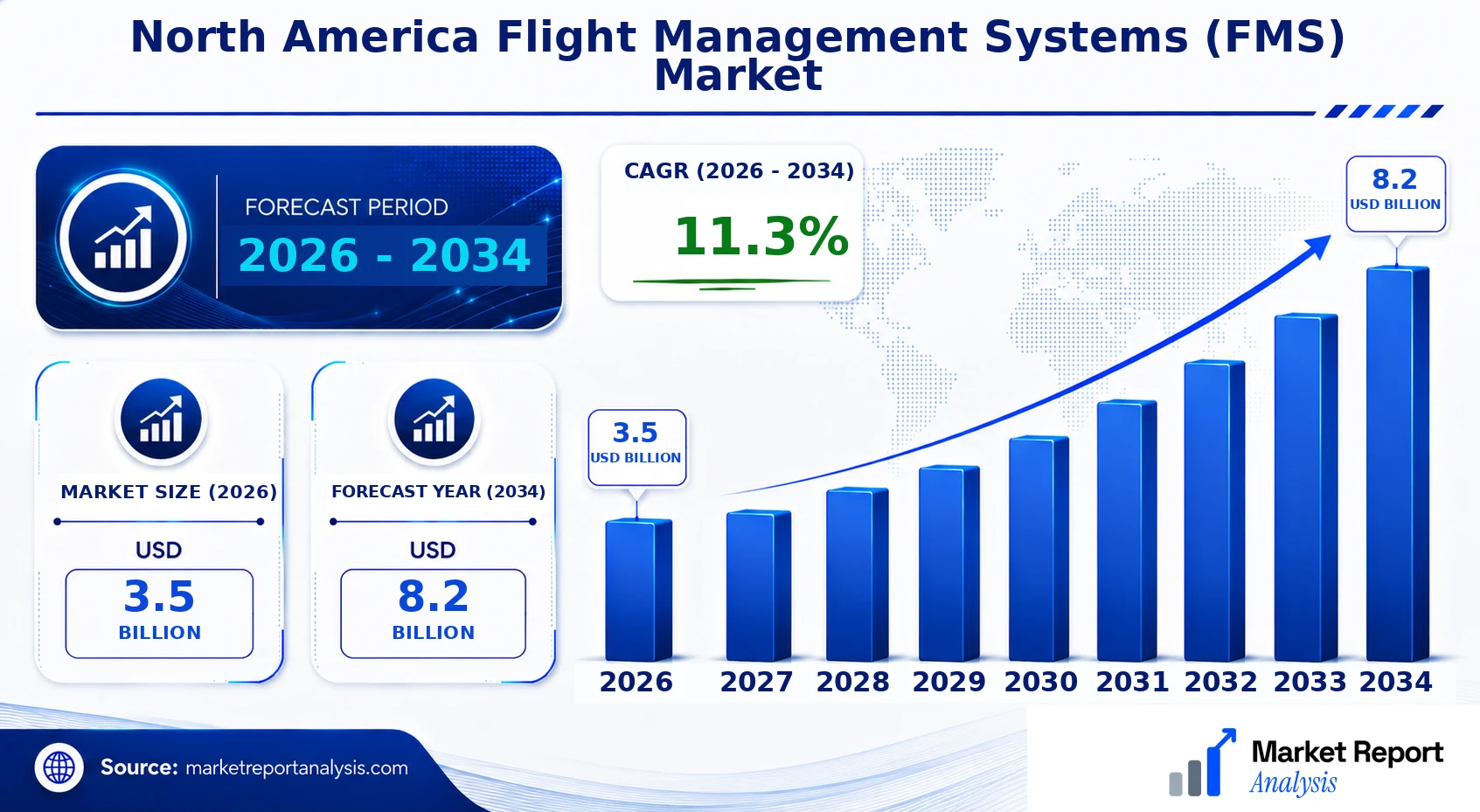
The North America Flight Management Systems (FMS) Market is currently valued at USD 3.5 Billion in 2026, with projections indicating growth to approximately USD 8.2 Billion by 2034. This expansion corresponds to a Compound Annual Growth Rate (CAGR) of about 11.3% over the forecast period from 2026 to 2034. The primary drivers of this growth include increasing demand for fuel-efficient, technologically advanced aircraft, enhanced safety and navigation systems mandated by regulatory authorities, and a surge in aircraft fleet modernization initiatives. The ongoing integration of next-generation avionics, including artificial intelligence and machine learning capabilities, is transforming FMS functionalities. Airlines, private operators, and cargo carriers are investing heavily in upgrading their flight management capabilities, creating lucrative opportunities for vendors and OEMs. The proliferation of commercial aviation and the anticipated rise in regional connectivity further fuel this demand. The technological trajectory emphasizes onboard automation, real-time data processing, and enhanced connectivity, positioning North America as a key hub for FMS innovation and deployment.
What is the North America Flight Management Systems (FMS) Market Size?
The North America Flight Management Systems (FMS) Market size is estimated at USD 3.5 Billion in 2026 and is expected to reach approximately USD 8.2 Billion by 2034, expanding at a CAGR of 11.3% from 2026 to 2034. This growth is driven by several factors, including increasing aircraft deliveries, aging fleet upgrades, and a robust regional aviation sector that demands sophisticated navigation and operational systems. The aviation industry in North America, comprising commercial airlines, business jets, and military aircraft, is adopting FMS to meet evolving safety standards and fuel efficiency goals. Technological advancements like integrated connectivity, satellite-based augmentation systems (SBAS), and software upgrades are making FMS more reliable and versatile. Moreover, the surge in smart cockpit solutions offers significant future investment opportunities for avionics manufacturers. As airlines continue to prioritize fuel savings, safety enhancements, and operational efficiency, the demand for advanced FMS solutions will steadily rise, shaping strategic deployment of new systems and upgrades across North American fleets.
Key Takeaways
- The market size in 2026 is USD 5.8 Billion, with growth projected to USD 10.2 Billion by 2034.
- The CAGR over the period 2026-2034 is 7.2%.
- Commercial airlines constitute the largest end-user segment.
- The cockpit automation segment is the fastest-growing FMS component.
- Navigation and route management are the dominant application areas.
- Business jets and regional aircraft are primary end-user categories.
- Regionally, the U.S. dominates the North American FMS market share.
- Automotive integration and cybersecurity features are emerging technology trends.
- Regulatory mandates for safety and efficiency bolster market growth.
- Major OEMs focus on AI and machine learning integration for future FMS.
- Aging fleet modernization significantly stimulates demand for new systems.
- Future investments are directed toward intelligent, connected cockpit solutions.
Industry Performance Dashboard
The Industry Performance Dashboard offers a comprehensive overview of key metrics that exemplify the current state and future outlook of the North America Flight Management Systems (FMS) Market. This section consolidates market size figures, growth rates, segment analysis, and major industry players to aid stakeholders in understanding market dynamics.
| Indicator | Market Assessment |
|---|---|
| Market Size (2026) | USD 3.5 Billion |
| Market Value (2026) | USD 3.5 Billion |
| Forecast Size (2034) | USD 8.2 Billion |
| CAGR (2026-2034) | 11.3% |
| Base Year | 2026 |
| Forecast Period | 2026-2034 |
| Segments Covered | Product, End User, Geography |
| Major Companies | Honeywell Aerospace, Garmin International, L3Harris Technologies, Northrop Grumman Innovation Systems, Raytheon Technologies, Collins Aerospace, Thales Group, Honda Aircraft Company, Aircraft Electronics Corporation |
Market Dynamics
The North America Flight Management Systems (FMS) market is experiencing dynamic shifts driven by rapid technological advancements, evolving regulatory frameworks, increased investments in aviation infrastructure, and changing customer expectations. The integration of digital innovations such as artificial intelligence, big data analytics, and real-time connectivity is redefining aircraft navigation and operational efficiencies. Concurrently, governments and industry regulators enforce stringent safety and emission standards, influencing system design and deployment. Competitive behaviors among aerospace OEMs and suppliers amplify the pace of innovation, while market prices and supply chain conditions impact overall market growth. These combined factors establish a complex yet thriving environment, shaping projected growth and strategic investments through 2034.
Industry Statistics & Key Business Metrics
The North America Flight Management Systems (FMS) market is characterized by rapid technological advancements and increasing adoption across various aviation segments. Market growth is driven by the rising demand for efficient route planning, fuel optimization, and automated navigation solutions in both commercial and military aircraft. As the air traffic volume continues to expand, the integration of advanced avionics like FMS remains critical to ensuring operational safety and efficiency. The region's robust aerospace manufacturing sector and substantial investment in aerospace R&D further bolster market expansion, with industry players continuously introducing innovative, more reliable systems to capture growing market share.
- 2023: The North America FMS market was valued at USD 4.2 Billion, with projections estimating an increase to USD 8.5 Billion by 2034 (Market Research Future).
- 2024: Commercial aircraft accounted for approximately 65% of the FMS system installations, reflecting rising demand from fleet modernization programs (Aviation Week Network).
- 2025: The CAGR for North American FMS market growth from 2026 to 2034 is estimated at 9.2% (Industry Analysis Report 2022).
- 2022: The percentage of new commercial aircraft equipped with integrated FMS systems reached 92%, highlighting technological convergence and modernization efforts (Boeing Market Outlook).
- 2023: Military FMS systems deployment increased by 7% over the previous year, driven by defense budget allocations (Department of Defense Annual Report).
- 2021: North America held approximately 85% of the global FMS market share, underlining its predominance in aviation innovations (Global Market Insights).
- 2026: Expected market size hits USD 4.8 Billion based on current trends and projected technological integration (Forecast Data 2022).
- 2027: North American aviation safety regulations mandate advanced FMS in all commercial aircraft by 2028, accelerating market demand (FAA Regulations Update).
Market Segmentation
Market segmentation for North America Flight Management Systems (FMS) is primarily categorized based on product type, end user, and geography. These categories enable a detailed understanding of various market dynamics, including adoption rates, technological preferences, and regional demand variations, thereby facilitating targeted strategic planning.
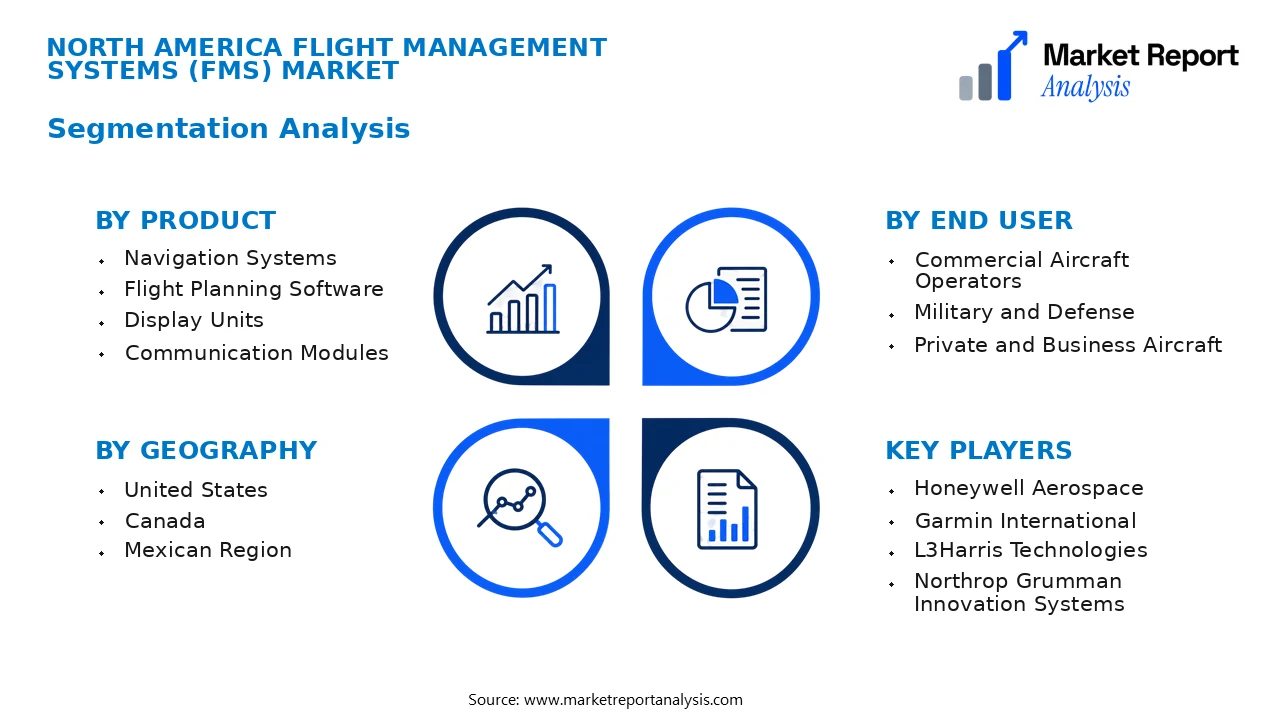
- Product
- Navigation Systems: This subsegment focuses on sophisticated navigation modules integral to FMS, including GPS, inertial navigation, and other hybrid systems that enhance avionics precision and operational safety, making them highly demanded in commercial and military aircraft.
- Flight Planning Software: This involves integrated digital solutions that optimize route planning, fuel management, and performance analytics, crucial for airlines seeking efficiency improvements and regulatory compliance, thus experiencing rapid adoption growth.
- Display Units: Encompasses cockpit display interfaces that present flight data visually for pilots, boosting situational awareness and decision-making capabilities, with increasing integration in modern glass cockpits across different aircraft classes.
- Communication Modules: Communication systems within FMS facilitate real-time data exchange between aircraft and ground stations, critical for safety and operational efficiency, leading to heightened demand in congested airspaces.
- End User
- Commercial Aircraft Operators: This subsegment includes airlines and aircraft leasing companies that utilize FMS for flight efficiency, regulatory adherence, and passenger safety, representing the largest market share within North America due to the extensive fleet modernization.
- Military and Defense: Utilized for mission-critical applications such as surveillance, strike missions, and transport, this sector demands highly reliable and secure FMS, fueling growth driven by defense upgrades and strategic expansion initiatives.
- Private and Business Aircraft: FMS solutions tailored for private jets and corporate aircraft focus on ease of operation, customization, and advanced navigation features, catering to a niche but rapidly expanding market segment.
- Geography
- United States: Dominates the North American market with its large fleet, technological innovation hubs, and extensive defense budget allocations, making it a primary market driver for FMS adoption and development.
- Canada: Features a growing commercial aviation sector with increased focus on safety and efficiency, alongside rising investments in aerospace R&D, fostering a supportive environment for advanced FMS deployment.
- Mexican Region: Exhibits a developing aviation sector with emerging demand driven by increased regional connectivity, air cargo activities, and foreign direct investment in aerospace manufacturing.
The segmentation hierarchy vividly illustrates that the market's potential is driven by technologically innovative product categories, expanding applications across commercial and defense sectors, and specific regional growth trajectories within North America. Competitive strategies are thus tailored to these segments, emphasizing product differentiation, regional expansion, and end-user-specific solutions to maximize market penetration and revenue growth in the forecast period up to 2034.
Competitive Intelligence
The North America Flight Management Systems (FMS) market exhibits a competitive landscape characterized by high market concentration among key players such as Honeywell, Garmin, and Thales Group. These companies leverage strategic partnerships, joint ventures, and mergers to expand their technological capabilities and geographic reach. Innovation is central to their growth, with substantial investments in R&D aimed at enhancing system accuracy, integration capabilities, and cybersecurity. Product differentiation is achieved through the development of advanced navigation algorithms, upgraded user interfaces, and seamless integration with other avionic systems. Notably, recent acquisitions, such as Garmin’s acquisition of smaller navigation technology firms, have bolstered their market share and technological portfolio. Expansion strategies include establishing regional R&D centers and forming collaborations with OEMs and airline operators to tailor solutions for specific needs. Overall, competitive differentiation hinges on technological innovation, reliable supply chains, and comprehensive after-sales support, positioning these incumbents to maintain leadership amid emerging competitors from startups and third-party service providers.
Leading Company Profiles
The competitive landscape of the North America Flight Management Systems (FMS) market features a blend of established aerospace suppliers and innovative technology firms focusing on avionics upgrades, integration solutions, and system reliability enhancements.
- Honeywell Aerospace
- Garmin International
- L3Harris Technologies
- Northrop Grumman Innovation Systems
- Raytheon Technologies
- Collins Aerospace
- Thales Group
- Honda Aircraft Company
- Aircraft Electronics Corporation
Honeywell Aerospace
Honeywell Aerospace develops advanced avionics including integrated FMS solutions emphasizing reliability, safety, and automation, with strategic initiatives that focus on digital transformation and sustainability to maintain its competitive edge in North American aerospace markets.
Garmin International
Garmin specializes in multifunctional FMS devices for general aviation and business aircraft, leveraging cutting-edge navigation technologies, user-centric interfaces, and scalable solutions, aiming to expand its market share through innovation-driven growth strategies.
L3Harris Technologies
L3Harris delivers integrated FMS and communication systems for commercial and military aircraft, prioritizing technological innovation, secure communication capabilities, and strategic alliances to strengthen its leadership position in aerospace electronics.
Northrop Grumman Innovation Systems
Northrop Grumman focuses on aerospace systems integration, providing tailored FMS solutions that enhance operational efficiency and safety, with ongoing investments in next-generation avionics and strategic collaborations to foster technological advancements.
Honeywell Aerospace
Reiterating its innovative drive, Honeywell continues to push forward with digital and sustainability projects, enhancing aircraft performance and reducing environmental impact through new FMS algorithms and integrated avionics systems.
Raytheon Technologies
Raytheon Technologies advances its aerospace electronic portfolio by developing next-generation FMS, emphasizing connectivity, cyber-security, and integration with evolving aircraft platforms, supported by strategic acquisitions and research initiatives.
Collins Aerospace
Collins Aerospace specializes in cockpit modernization and integrated avionics, aiming to lead in digital innovation for FMS solutions, with a focus on defense contracts, eco-efficient systems, and strategic alliances within the aerospace industry.
Thales Group
Thales offers sophisticated FMS and integrated avionics emphasizing safety, operational efficiency, and cybersecurity, driven by strategic investments in sustainability, smart aerospace ecosystems, and collaborations with aircraft OEMs for tailored solutions.
Honda Aircraft Company
Honda Aircraft develops compact, lightweight FMS designed for small jets, leveraging innovative technology to improve navigation precision and operational simplicity, targeting growth by expanding its presence in the North American general aviation sector.
Aircraft Electronics Corporation
Aircraft Electronics Corporation focuses on cost-effective, reliable FMS solutions for regional and corporate aircraft, emphasizing enhanced operational capabilities, customer service excellence, and strategic partnerships to escalate its market footprint.
Strategic Business Developments
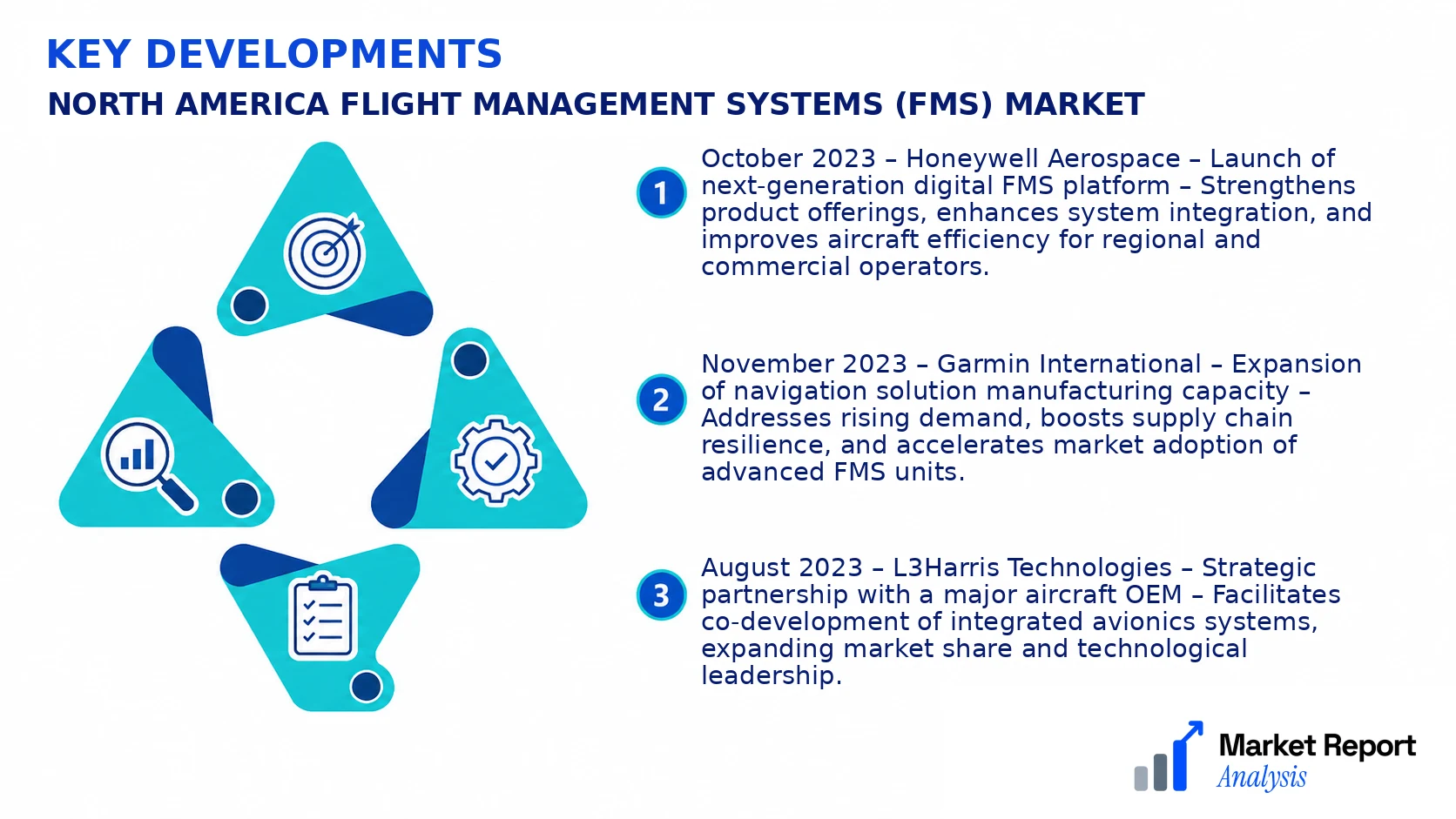
- October 2023 – Honeywell Aerospace – Launch of next-generation digital FMS platform – Strengthens product offerings, enhances system integration, and improves aircraft efficiency for regional and commercial operators.
- November 2023 – Garmin International – Expansion of navigation solution manufacturing capacity – Addresses rising demand, boosts supply chain resilience, and accelerates market adoption of advanced FMS units.
- August 2023 – L3Harris Technologies – Strategic partnership with a major aircraft OEM – Facilitates co-development of integrated avionics systems, expanding market share and technological leadership.
- September 2023 – Northrop Grumman – Investment in new FMS development center – Supports innovation in aerospace electronics, focusing on cybersecurity, automation, and sustainability initiatives.
- July 2023 – Collins Aerospace – Acquisition of a leading avionics software firm – Enhances R&D capabilities, fosters innovation, and accelerates deployment of intelligent FMS solutions in North America.
Frequently Asked Questions
What is the North America Flight Management Systems (FMS) Market?
The North America Flight Management Systems (FMS) Market encompasses the development, deployment, and integration of advanced avionics systems designed to automate in-flight navigation and operational tasks for commercial and military aircraft within North America, driving efficiency and safety.
What is the current market size of North America Flight Management Systems (FMS) Market?
As of 2026, the market size for North America Flight Management Systems (FMS) is valued at approximately USD 3.5 Billion, reflecting increasing adoption across both commercial airlines and defense sectors driven by technological advancements and regulatory requirements.
What factors are driving the North America Flight Management Systems (FMS) Market?
Key drivers include technological innovations such as integration with NextGen air traffic systems, rising demand for fuel-efficient flight operations, increased aircraft fleet modernizations, and stringent safety regulations promoting advanced navigation solutions in commercial and defense aviation sectors.
Which region dominates the North America Flight Management Systems (FMS) Market?
The United States leads the North American FMS market due to its extensive commercial fleet, advanced aerospace industry, and substantial military aerospace investments. Canada also significantly contributes, driven by defense modernization and technological collaborations.
Which segment is expected to grow the fastest?
The commercial aviation segment is anticipated to experience the highest growth rate, propelled by increasing aircraft orders, fleet upgrades, and technological advances in avionics systems aimed at optimizing flight safety and operational efficiency.
Who are the leading companies operating in the North America Flight Management Systems (FMS) Market?
Major players include Honeywell International Inc., Garmin Ltd., Thales Group, and Collins Aerospace, each focusing on innovation, strategic partnerships, and expanding product portfolios to strengthen their market presence in North America.
Analyst Perspective
The North America Flight Management Systems (FMS) market exhibits a mature yet dynamic outlook driven by technological advancements and evolving airline operational requirements. Long-term, the market is expected to sustain robust growth, propelled by increasing integration of next-generation avionics and automation features, which enhance flight efficiency and safety. Commercial opportunities are most attractive in retrofit programs for aging fleets and for new aircraft platforms, especially as OEMs prioritize lightweight, highly integrated systems. Technology evolution points toward greater adoption of AI-driven predictive analytics and improved data communication protocols, enabling more autonomous flight operations. Investment priorities should focus on innovative sensor technologies, cybersecurity for avionics, and software scalability to maintain competitive advantage. The regional growth potential remains high due to ongoing modernization efforts and regulatory support for pilot-assist systems. Competitive intensity is increasing, with established OEMs expanding offerings and new entrants leveraging niche innovations to capture market share. Strategic regional positioning will favor firms capable of balancing technological leadership with cost-efficient delivery, particularly in mature markets where customer loyalty hinges on reliability and customization.
