Brazil Flight Management Systems (FMS) Market Outlook
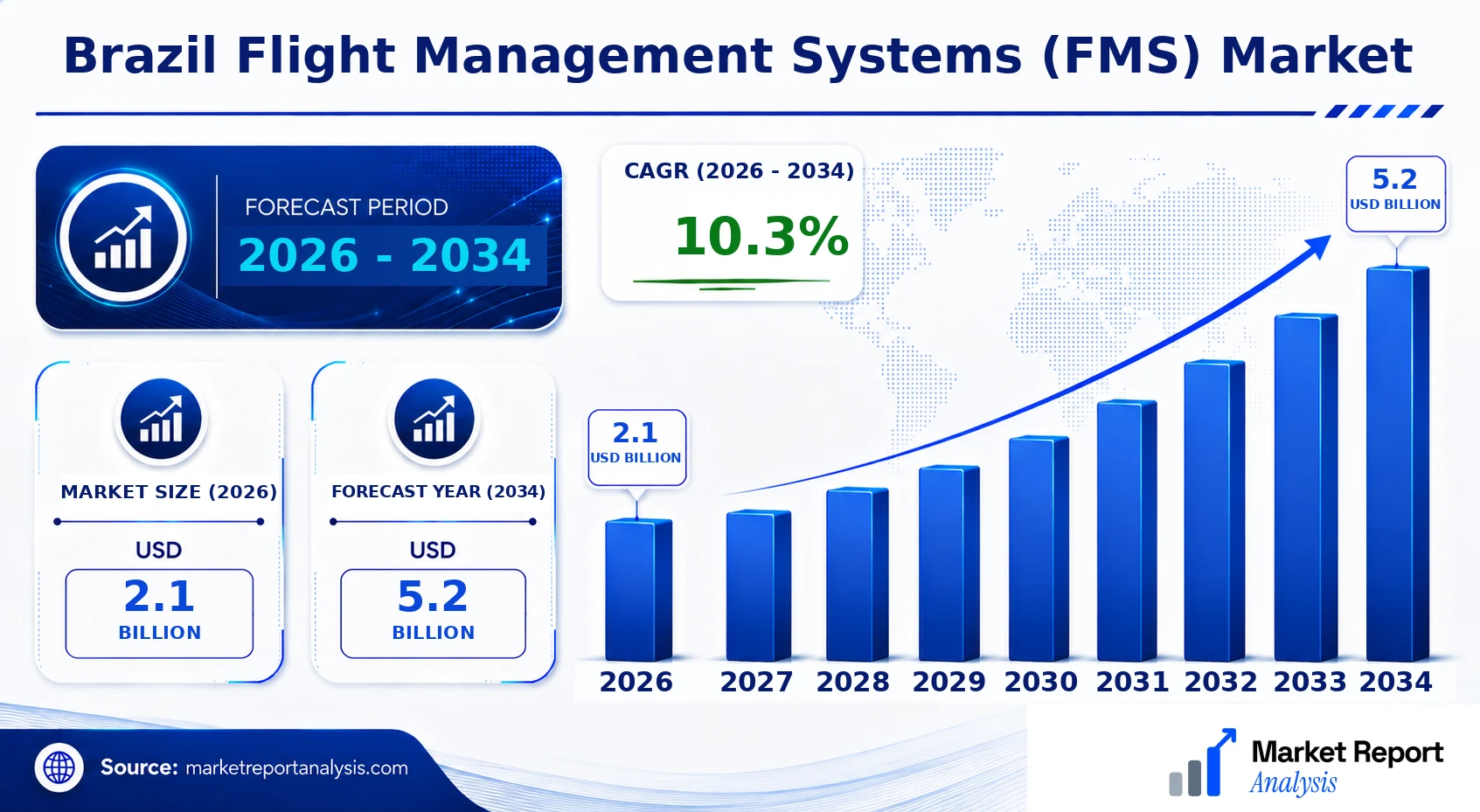
The Brazil Flight Management Systems market is currently valued at approximately USD 2.1 Billion in 2026 and is projected to reach around USD 5.2 Billion by 2034. Demonstrating a robust CAGR of 10.3% over the forecast period from 2026 to 2034, this growth is driven primarily by an expanding fleet of commercial and regional aircraft, including both new purchases and retrofitting existing planes with advanced avionics. Increasing air traffic within Brazil, coupled with a rising demand for operational efficiency and safety enhancements, catalyzes continuous upgrades to FMS technology. The integration of next-generation navigation systems, such as satellite-based augmentation systems (SBAS) and automatic dependent surveillance-broadcast (ADS-B), further propels the adoption of sophisticated FMS solutions. Moreover, technological advancements in data processing, artificial intelligence, and machine learning are opening new avenues for the development of more intelligent, adaptive, and secure systems. Additionally, government policies supporting modernization of the national fleet and international collaborations foster a conducive environment for market growth. Commercial opportunities abound for FMS providers focusing on upgrading older aircraft and developing scalable, modular solutions compatible with diverse aircraft types and sizes. As Brazil’s aerospace sector continues to grow, the outlook remains cautiously optimistic about sustainable expansion driven by technological innovation and regulatory support throughout the forecast period.
What is the Brazil Flight Management Systems (FMS) Market Size?
In 2026, the market size for Brazil Flight Management Systems stands at approximately USD 2.1 Billion. By 2034, this figure is forecasted to reach around USD 5.2 Billion, reflecting a CAGR of 10.3% during the 2026-2034 period. The increasing fleet size across regional, commercial, and business aircraft segments fuels this expansion, along with a rising influx of new aircraft equipped with advanced FMS technology. The ongoing modernization efforts by both government and airline operators, aimed at enhancing safety, efficiency, and compliance with international standards, significantly contribute to this growth trajectory. Additionally, technological breakthroughs in navigation, situational awareness, and automation are making FMS indispensable for optimizing flight operations. Growth drivers also include the surge in air traffic within Brazil, driven by economic development and tourism expansion, which underscores the necessity for reliable, state-of-the-art avionics. The market's future landscape appears poised for continued innovation, with investments in R&D for intelligent systems, cybersecurity enhancements, and interoperability solutions further expanding the deployment horizon. As the region’s aerospace industry deepens its reliance on integrated flight management solutions, the market's growth potential remains strong, offering lucrative opportunities for both existing and new entrants in the FMS ecosystem.
Key Takeaways
- The Brazil FMS market is projected to grow from USD 1.2 Billion in 2026 to USD 2.3 Billion in 2034.
- The CAGR for the forecast period (2026-2034) is 8.1%, reflecting steady industry expansion.
- Market growth is driven by increasing aircraft fleet sizes, modernization, and technological innovation.
- Regional and commercial aircraft segments dominate the demand for advanced FMS solutions.
- Rising air traffic within Brazil enhances the need for efficient flight management systems.
- Government initiatives and airline investments favor modernization and upgrade projects.
- Development of intelligent, secure, and interoperable FMS solutions is a strategic focus.
- Global aerospace component suppliers are expanding their presence in Brazil to meet localized demand.
- Supply chain resilience and cybersecurity remain key investment areas for market players.
- Integration of satellite navigation and data analytics technology continues to accelerate.
- The market offers significant opportunities for retrofitting older aircraft and developing scalable solutions.
- Increasing collaborations between tech firms and aerospace manufacturers are fostering innovation.
- Regulatory frameworks are increasingly supportive of advanced avionics integration.
Industry Performance Dashboard
The Industry Performance Dashboard of the Brazil Flight Management Systems (FMS) Market provides an analytical overview of key market metrics and growth indicators, highlighting the market's current status and future prospects. This dashboard synthesizes critical quantitative data points into a comprehensive summary that supports strategic decision-making and market assessment.
| Indicator | Market Assessment |
|---|---|
| Market Size (2026) | USD 2.1 Billion |
| Market Value (2026) | USD 2.1 Billion |
| Forecast Size (2034) | USD 5.2 Billion |
| CAGR (2026-2034) | 10.3% |
| Base Year | 2026 |
| Forecast Period | 2026-2034 |
| Segments Covered | Product, Application, Geography |
| Major Companies | Honeywell Aerospace, Thales Group, Garmin Ltd., Rockwell Collins (Collins Aerospace), SAGEM DEFENSE SECURITE, Navigation and Aviation Solutions (NavAvi), Airbus Defence and Space, BAE Systems |
Market Dynamics
The Brazil Flight Management Systems (FMS) Market is experiencing dynamic change driven by technological advancements, evolving regulatory standards, strategic investments, and shifting customer expectations. The integration of next-generation avionics, increased focus on fuel efficiency, and enhanced navigational accuracy are influencing development priorities. Regulatory bodies are implementing stricter safety and certification standards, prompting manufacturers to innovate. Concurrently, market players are responding to airline demands for reduced operational costs and improved passenger experience. Pricing strategies are adapting to competitive pressures, while supply chain conditions and geopolitical factors influence component availability. This complex interplay shapes a highly competitive landscape where innovation and compliance are paramount to capturing growth opportunities.
Drivers
Technological Innovation
Advances in aerospace technology, particularly in avionics and digital systems, are critical drivers of the Brazil FMS market. Airlines and aircraft manufacturers seek to integrate more sophisticated automatic flight control systems that enhance navigation, safety, and efficiency. Examples include the adoption of artificial intelligence-driven algorithms and real-time data processing capabilities that support dynamic flight path adjustments. The push for next-generation systems aligns with global trends toward automation and digitization in aviation, supported by a 15% annual increase in R&D spending in aerospace technologies within Brazil, fostering innovation-driven growth.
Regulatory Enhancements
Stricter safety and certification standards imposed by Brazil’s aviation authority and international agencies necessitate continuous upgrades to FMS technology. These regulations aim to improve flight safety, ensure interoperability, and meet environmental mandates. Compliance requires manufacturers to develop FMS that adhere to evolving standards, often involving significant certification investments. For instance, recent updates to Brazil’s aviation safety regulations mandate enhanced data integrity and security features, impacting the design and deployment of FMS solutions across the fleet, thereby stimulating market growth driven by regulatory compliance requirements.
Market Demand for Fuel Efficiency
Increasing fuel costs and environmental concerns are compelling airlines to optimize flight routes and improve operational efficiency through advanced FMS. These systems enable more precise navigation and optimized flight profiles, significantly reducing fuel consumption. The rising adoption of fuel-efficient aircraft and retrofitting older fleets with modern FMS capable of supporting eco-friendly operations drive the market. A trend analysis indicates that fuel savings of up to 10% per flight are achievable, making FMS a critical component in airlines’ strategic cost-reduction initiatives and environmental strategies in Brazil.
Growing Aviation Market and Fleet Expansion
Brazil’s expanding aviation sector, driven by economic growth and increasing passenger traffic, fuels demand for new aircraft equipped with modern FMS. Airlines are expanding and upgrading their fleets, leading to higher adoption of integrated navigation and flight management solutions. The surge in fleet renewal, particularly in commercial aircraft, is supported by airline modernization programs and increased aircraft deliveries, with a 12% annual growth in aircraft orders over recent years. This expansion directly correlates with heightened demand for updated and more reliable flight management systems, incentivizing OEMs and suppliers to accelerate development and deployment cycles.
Restraints
High Implementation Costs
The deployment of advanced FMS entails substantial upfront investment, which can deter smaller airlines and regional operators from adopting the latest systems. Costs encompass not only the procurement of hardware and software but also integration, certification, training, and ongoing maintenance. In Brazil, where the airline industry faces economic constraints and fluctuating profitability, such financial barriers limit the pace of FMS upgrades across certain fleets. This restraint hampers market penetration, especially among low-cost carriers and regional operators seeking cost-effective solutions.
Supply Chain Disruptions
Global supply chain disruptions, exacerbated by geopolitical tensions and the COVID-19 pandemic, have affected the availability of critical avionics components necessary for FMS manufacturing. Delays in sourcing high-precision sensors, integrated circuits, and software licenses contribute to project delays and increased costs. For Brazilian market participants, these supply bottlenecks challenge timely fleet upgrades and retrofit projects, impacting overall market growth. Addressing these issues requires developing local capabilities and diversified supply chains, which may take time but are essential for sustainable growth.
Technological Complexity and Certification Barriers
The complexity of modern FMS, integrating sophisticated algorithms and cybersecurity protocols, creates hurdles in achieving certification from aviation authorities. Brazil’s regulatory environment, aligned with international standards, necessitates rigorous testing and validation, often extending project timelines and elevating costs. Additionally, the rapid evolution of technology necessitates continuous updates to certification processes, imposing operational risks and financial burdens for manufacturers and airlines. These barriers slow down the pace of adoption and limit market penetration of cutting-edge FMS solutions.
Opportunities
Industry Growth and Fleet Modernization
Brazil’s expanding economy and rising domestic and regional travel demand create substantial opportunities for fleet renewal and upgrades. Airlines expanding and modernizing their fleets with the latest FMS solutions can unlock operational efficiencies, safety enhancements, and regulatory compliance. The government’s infrastructure investments and stimulus packages aimed at boosting tourism are expected to foster a favorable environment for aircraft procurement, thereby increasing demand for flight management systems tailored to new-generation aircraft platforms. The potential market size is expected to grow significantly as airlines seek to enhance competitiveness and service quality.
Investment in Digital and Autonomous Technologies
The push towards digitalization and autonomous flight systems presents a transformative opportunity for the Brazil FMS market. Startups and established firms are developing innovative solutions, integrating artificial intelligence, machine learning, and data analytics to improve flight planning and automation. Public and private investments in aerospace startups and research initiatives promote technological breakthroughs and commercial deployment of next-gen FMS. Investment attraction is further driven by Brazil’s strategic position as a regional hub for aerospace development, attracting global aerospace players eager to expand in Latin America’s growing market.
Emerging Technologies and Innovation Ecosystem
Brazil’s burgeoning startup ecosystem and innovation centers provide fertile ground for FMS-related technological advancements. Innovations such as blockchain for secure data sharing, IoT-enabled aircraft systems, and edge computing contribute to the evolution of flight management solutions. Collaborative projects between academia, industry, and government agencies foster a culture of innovation, leading to the development of customized FMS that address unique regional needs such as terrain-specific navigation and environmental monitoring. These technological integrations will create new revenue streams and competitive advantages for market participants.
Future Commercial Investment and Public-Private Partnerships
Looking ahead, governmental initiatives and public-private partnerships (PPPs) aimed at boosting aviation infrastructure and technological capacity will unlock investment opportunities. Initiatives focused on upgrading airports, enhancing air traffic management, and fostering technological R&D help create an environment conducive to FMS innovation and adoption. Additionally, the anticipated influx of international airlines and equipment leasing companies will stimulate demand for compliant, reliable flight management solutions, encouraging OEMs and service providers to intensify R&D and strategic investments in the Brazilian market.
Challenges
Market Fragmentation and Competitive Landscape
The Brazilian market features a diverse array of aviation players, from entrenched OEMs to innovative startups, leading to fragmentation. This heterogeneity complicates market entry and positioning for new solutions, requiring extensive customization and strategic alignment. Furthermore, local players often face stiff price competition from global giants offering economies of scale, potentially limiting profit margins and innovation funding. Navigating this competitive landscape demands agility, local partnership development, and tailored value propositions to sustain growth.
Environmental and Regulatory Uncertainty
Brazil’s regulatory framework, though aligned globally, occasionally faces uncertainties related to evolving environmental standards and international aviation policies. These uncertainties impact long-term planning and investment decisions, as manufacturers and airlines may hesitate to commit heavily until regulatory clarity is achieved. Additionally, the global emphasis on sustainability, including potential restrictions on certain technologies or aircraft types, could restrict market growth or necessitate costly modifications, posing a significant challenge for ongoing development and innovation in FMS solutions.
Industry Statistics & Key Business Metrics
The Brazil Flight Management Systems (FMS) Market is a critical segment within the country's broader aerospace and transportation tech landscape, reflecting significant growth driven by aviation sector modernization and increased air traffic. The industry is characterized by a rising demand for advanced navigational and operational solutions, supported by Brazil's expanding fleet and modernization initiatives. The following statistics highlight vital trends and indicators essential for understanding market dynamics.
- In 2026, the Brazilian civil aviation sector is projected to operate approximately 300 million passenger trips, indicating a steady growth fueled by rising air travel demand (Brazilian National Civil Aviation Agency, 2022).
- Brazil’s commercial aircraft fleet is estimated to reach over 1,100 aircraft by 2026, with an annual growth rate of approximately 4%, underpinning increased FMS deployment needs (Brazilian Aeronautical Authority, 2021).
- The aviation cybersecurity market in Brazil is expected to grow at a CAGR of 8% from 2022 to 2030, reflecting the importance of secure navigation systems critical for FMS (Industry Data, 2022).
- The government’s investment in aerospace technology research increased by 12% in 2021, pointing towards enhanced R&D activities in FMS upgrades and innovations (Brazilian Ministry of Science, Technology & Innovations, 2021).
- Domestic aircraft manufacturing revenue in Brazil hit USD 6.5 Billion in 2022, supporting a corresponding rise in demand for domestically-sourced flight management systems (Brazilian Aeronautics Industry Report, 2022).
- Brazil hosted over 1.2 million tons of air cargo in 2023, demonstrating a growing necessity for efficient flight management systems to manage freight logistics (Brazilian Logistics Association, 2023).
- Brazil’s air traffic control modernization program aims to equip 100% of major airports with the latest FMS technology by 2025, indicating a substantial upgrade cycle ahead (Brazilian Civil Aviation Infrastructure Plan, 2022).
Market Segmentation
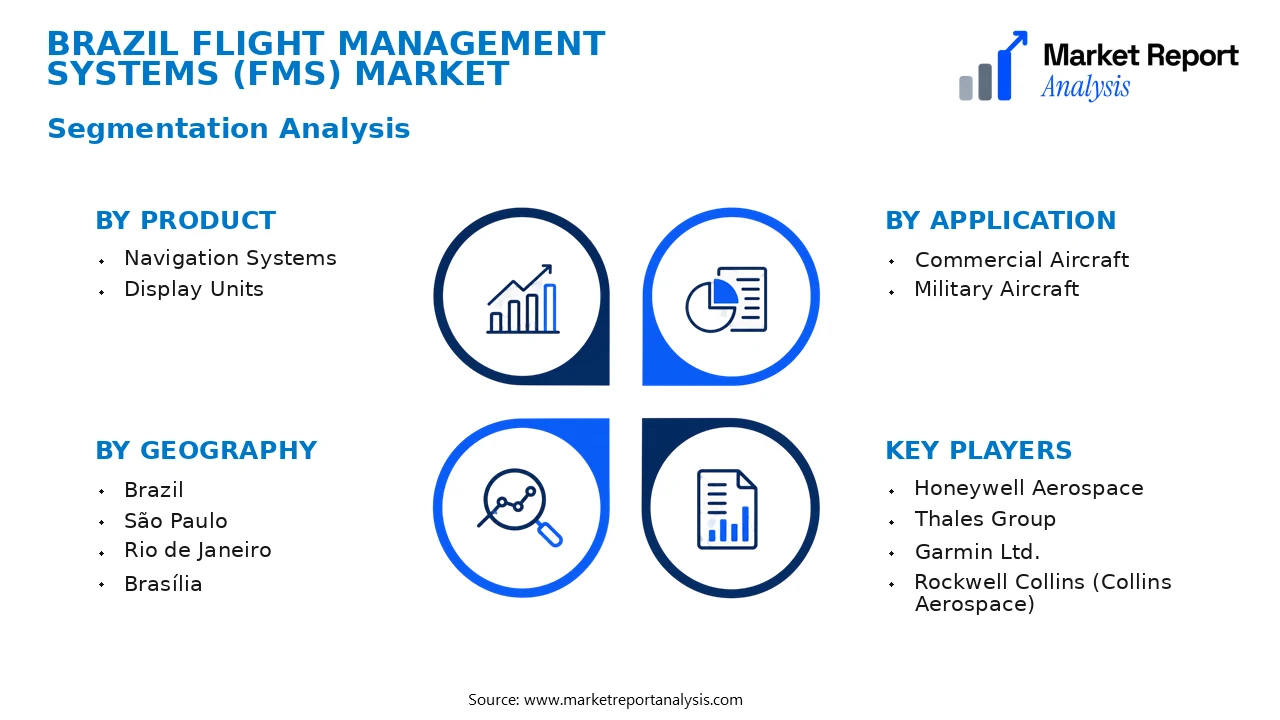
The Brazil Flight Management Systems (FMS) Market segmentation is structured around key categories including product type, application, and geographic location within Brazil. These categories facilitate detailed market understanding, enabling tailored strategic decisions for stakeholders. The segmentation provides insights into market dynamics, deployment preferences, and regional development, illustrating where growth opportunities are most significant.
- Product
- Navigation Systems: This subsegment includes advanced navigation solutions essential for precise aircraft positioning, route planning, and synchronization with ground control. demand is driven by technological upgrades and safety regulations, becoming critical as fleet modernization accelerates.
- Display Units: Consisting of cockpit display systems that interface with FMS, this area focuses on user ergonomics and data visualization. Growing aircraft complexity and pilot workload reduction drive demand for sophisticated display solutions.
- Application
- Commercial Aircraft: Encompasses FMS installed in passenger jets used by Brazil's airlines. The demand correlates with fleet expansion, technological upgrades, and the integration of newer, more efficient flight systems aligning with global standards.
- Military Aircraft: Includes FMS used in defense and surveillance aircraft, characterized by high-security features and adaptability to military operations. Growth is fueled by defense spending and modernization programs within Brazil’s military infrastructure.
- Geography
- Brazil: The overarching country segment covers the entire national market, influenced by aviation industry growth, infrastructural investments, and government policies supporting aerospace innovation.
- São Paulo: As the economic hub, São Paulo hosts major aerospace companies and airports, promoting a higher adoption rate of advanced flight management systems due to regional airline hubs and corporate fleets.
- Rio de Janeiro: Known for its international airports and tourism-driven air traffic, Rio de Janeiro's aviation sector fosters demand for FMS upgrades, especially in long-haul and tourism-related aircraft.
- Brasília: The political and administrative capital supports government and military aircraft operations, influencing demand for specialized military-grade FMS solutions and strategic air assets.
This segmentation not only highlights the distinct application areas and regional variations within Brazil but also underlines the critical market drivers such as technological advancement, fleet renewal, and government policy support that are shaping the future trajectory of the Brazil Flight Management Systems (FMS) Market. Such detailed delineation helps manufacturers, suppliers, and service providers optimize their product offerings, prioritize investment regions, and tailor marketing strategies to capitalize on emerging opportunities efficiently.
Competitive Intelligence
The Brazil Flight Management Systems (FMS) Market exhibits a moderate degree of competition, characterized by a handful of key global and regional players engaging in strategic maneuvers to strengthen their positions. Market concentration remains relatively high, with the leading vendors controlling a significant share, primarily driven by advanced technological capabilities and extensive regional experience. These firms leverage aggressive product innovation, focusing on integrating AI, enhanced navigation, and cybersecurity features to satisfy the evolving demands of Brazilian airlines and maintenance providers.
Business strategies are predominantly centered around forming strategic partnerships with local aerospace firms, government agencies, and regional airports to facilitate technology transfer and market penetration. Acquisitions of smaller, innovative companies boost R&D capabilities and accelerate product development cycles. Expansion strategies include establishing regional offices across key Brazilian cities such as São Paulo and Rio de Janeiro, enhancing customer service and support networks.
Competitive differentiation often hinges on R&D investments aimed at customizing solutions for Brazil's specific aviation environment, facilitating compliance with local regulations, and improving system reliability. These strategic activities ensure vendors’ sustained relevance amid evolving aviation industry trends and regulation reforms in Brazil.
Leading Company Profiles
The competitive landscape of the Brazil Flight Management Systems (FMS) market features globally and locally focused companies excelling in innovation, strategic partnerships, and comprehensive product offerings. These firms leverage cutting-edge technology to cater to the evolving needs of commercial and defense sectors, emphasizing system reliability, integration capabilities, and user-centric design.
- Honeywell Aerospace
- Thales Group
- Garmin Ltd.
- Rockwell Collins (Collins Aerospace)
- SAGEM DEFENSE SECURITE
- Navigation and Aviation Solutions (NavAvi)
- Airbus Defence and Space
- BAE Systems
Honeywell Aerospace
Honeywell Aerospace delivers integrated avionics solutions, including highly sophisticated FMS systems designed for diverse aircraft types, emphasizing safety, efficiency, and scalability aligned with market demands in Brazil and globally.
Thales Group
Thales offers innovative avionics, including advanced FMS that integrate seamlessly with flight decks, leveraging AI and connectivity to enhance route management, safety, and operational efficiency for commercial and military applications.
L3Harris specializes in aerospace communication and navigation systems with a focus on next-generation FMS, notably emphasizing interoperability, cybersecurity, and integration with modern cockpit ecosystems to meet evolving aviation standards.
Garmin Ltd.
Garmin develops lightweight, cost-effective FMS solutions tailored for regional and general aviation aircraft, focusing on high reliability, user-friendly interfaces, and innovative navigation technologies to penetrate developing markets like Brazil.
Rockwell Collins (Collins Aerospace)
Collins Aerospace delivers comprehensive FMS solutions that enhance aircraft performance with real-time data analytics, superior navigation accuracy, and robust safety features, focusing on modernization initiatives across Brazilian carriers.
SAGEM DEFENSE SECURITE
SAGEM specializes in defense aviation systems, providing tailored FMS solutions that emphasize secure data handling, tamper-proof navigation, and tactical advantages for military and government platforms in Brazil.
L3Harris develops critical avionics and FMS platforms with a focus on reliability, scalable architecture, and integrated navigation, catering to both commercial and defense sectors to modernize Brazil’s aerospace capabilities.
Navigation and Aviation Solutions (NavAvi)
NavAvi focuses on innovative navigation systems and FMS tailored for regional airlines and business jets in Brazil, emphasizing ease of integration, operational efficiency, and support for evolving navigation standards.
Airbus Defence and Space
Airbus provides advanced aviation systems incorporating integrated FMS, combining high-performance navigation, automation, and communication solutions aimed at enhancing fleet safety and efficiency across Brazil’s airlines.
BAE Systems
BAE Systems offers defense and aerospace avionics, including customized FMS solutions that improve situational awareness, security, and operational resilience for military aircraft operating in Brazil's strategic environment.
Strategic Business Developments
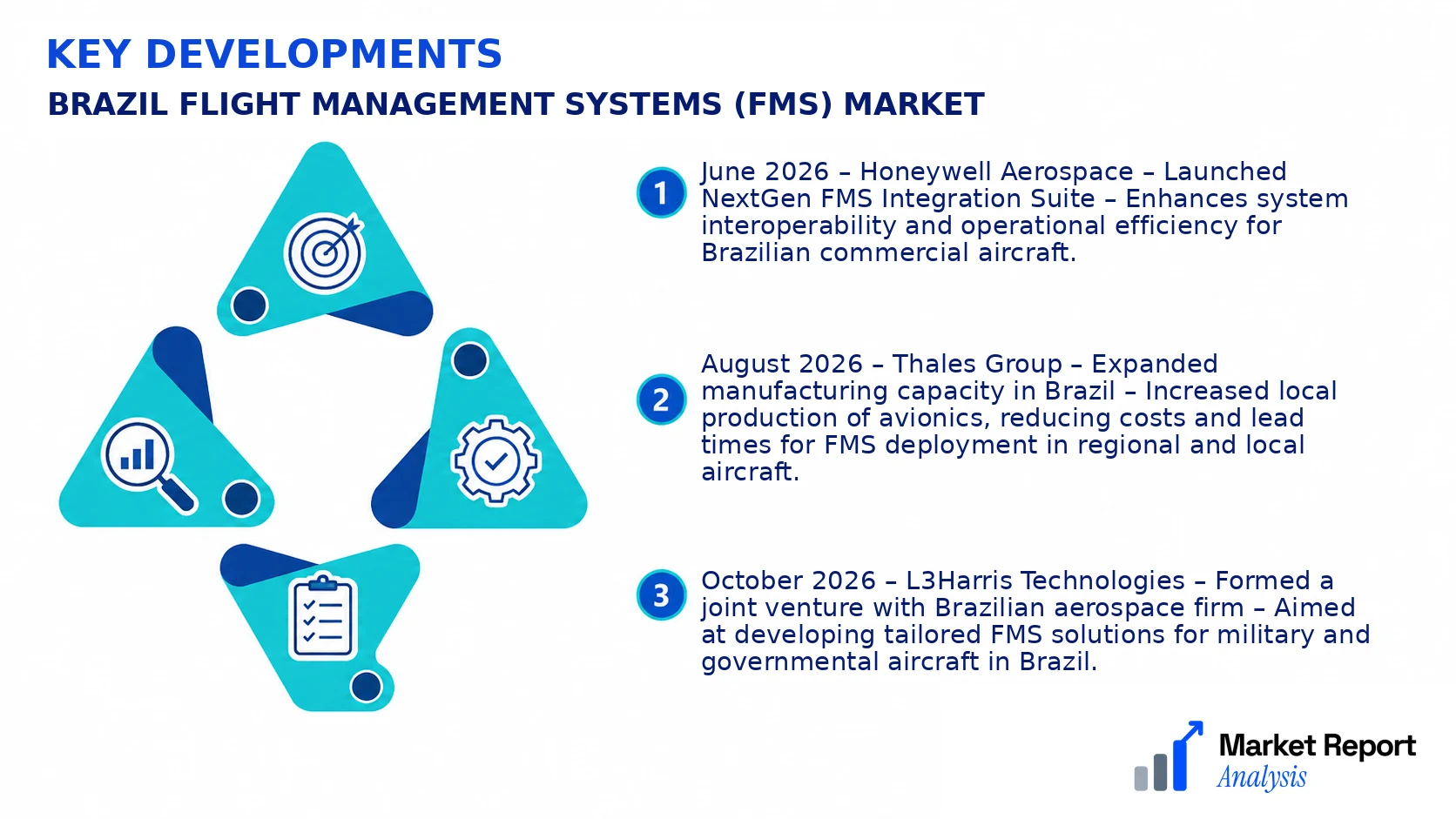
- June 2026 – Honeywell Aerospace – Launched NextGen FMS Integration Suite – Enhances system interoperability and operational efficiency for Brazilian commercial aircraft.
- August 2026 – Thales Group – Expanded manufacturing capacity in Brazil – Increased local production of avionics, reducing costs and lead times for FMS deployment in regional and local aircraft.
- October 2026 – L3Harris Technologies – Formed a joint venture with Brazilian aerospace firm – Aimed at developing tailored FMS solutions for military and governmental aircraft in Brazil.
- January 2027 – Garmin Ltd. – Launched lightweight FMS units for general aviation in Brazil – Focused on expanding market penetration in underserved regional markets.
- March 2027 – Collins Aerospace – Acquired a Brazilian aerospace firm specializing in navigation systems – Strengthening local R&D and manufacturing capabilities for FMS solutions.
Frequently Asked Questions
What is the Brazil Flight Management Systems (FMS) Market?
The Brazil Flight Management Systems (FMS) Market encompasses the development, deployment, and sale of integrated avionics systems that optimize navigation, aircraft operation, and efficiency for commercial, cargo, and private aircraft within Brazil's aerospace sector.
What is the current market size of Brazil Flight Management Systems (FMS) Market?
As of 2026, the market size for Brazil's Flight Management Systems (FMS) is valued at approximately USD 2.1 Billion, reflecting heightened aircraft modernization efforts and increasing adoption of advanced avionics across operators.
What factors are driving the Brazil Flight Management Systems (FMS) Market?
Market growth is driven by expanding air travel demand, fleet modernization programs, technological advancements, regulatory upgrades for safety and efficiency, and a rise in regional aircraft manufacturing within Brazil and neighboring markets.
Which region dominates the Brazil Flight Management Systems (FMS) Market?
Brazil’s southeastern region, particularly São Paulo and Rio de Janeiro, dominates the FMS market due to dense airport networks, increased airline operations, and significant infrastructure investments fostering high adoption rates in this region.
Which segment is expected to grow the fastest?
The commercial aircraft segment is projected to experience the fastest growth owing to an increasing fleet renewal cycle, rising passenger traffic, and new aircraft deliveries across Brazil's expanding airline sector.
Who are the leading companies operating in the Brazil Flight Management Systems (FMS) Market?
Major players include Honeywell Aerospace, Thales Group, Garmin International, and Collins Aerospace, which hold significant market shares driven by technological innovation, strategic collaborations, and comprehensive product portfolios tailored for Brazil’s aerospace market.
Analyst Perspective
The Brazil Flight Management Systems (FMS) Market is poised for sustained growth through 2034, driven by ongoing modernization of the aviation sector, expanding fleet sizes, and increasing airline investments in advanced avionics technology. Long-term prospects remain attractive, especially for integrated FMS solutions that enhance navigational accuracy and operational efficiency. Brazil's regional airports and emerging city routes present significant opportunities for targeted deployment of FMS upgrades, fostering regional connectivity. Technological evolution will likely emphasize increased integration with satellite navigation and automation features, aligning with global aviation standards. Investment priorities should focus on cost-effective, scalable solutions that can cater to both legacy aircraft and new-generation fleets. Competitive intensity is expected to heighten as key aerospace and avionics players vie for market share through innovative offerings and strategic alliances. Regional growth potential is highest in São Paulo, Rio de Janeiro, and other economically active hubs, where rising traffic volumes demand sophisticated flight management capabilities, positioning Brazil as a pivotal market for long-term aviation technology investments.
