Latin America Smart Homes Systems Market Outlook
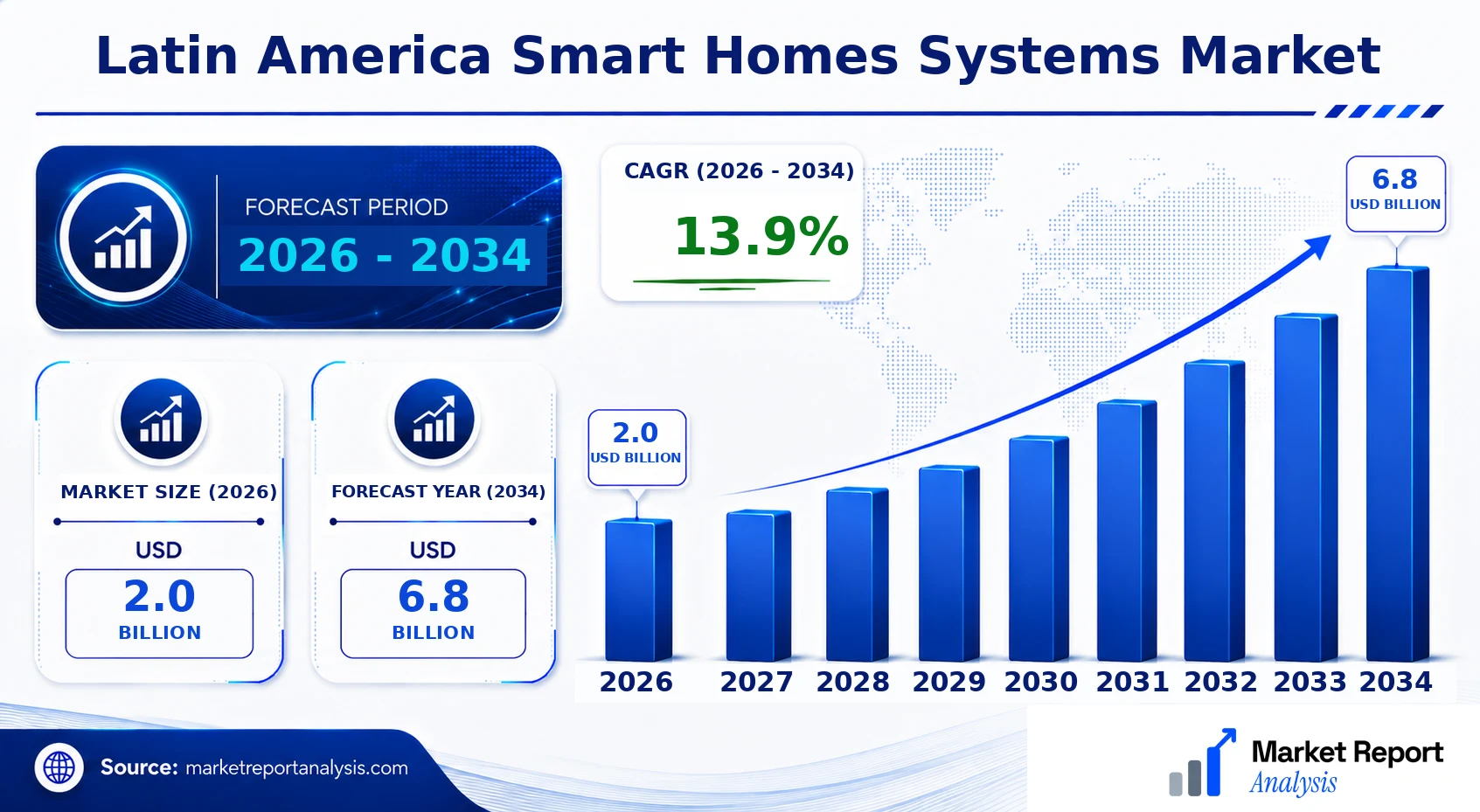
The Latin America Smart Homes Systems Market is rapidly evolving, driven by increasing urbanization, rising disposable incomes, and a growing awareness of the benefits of home automation. Currently valued at USD 2.0 Billion in 2026, the market is projected to reach USD 6.8 Billion by 2034, exhibiting a Compound Annual Growth Rate (CAGR) of approximately 13.9% over the forecast period from 2026 to 2034. The principal demand drivers include technological advancements in IoT devices, greater adoption of mobile connectivity, and an increasing preference for energy-efficient and secure home environments. Opportunities in this market are abundant, with manufacturers and service providers exploring innovative solutions such as voice-controlled home automation, AI-integrated security systems, and smart energy management. Regional consumers are increasingly appreciating the convenience, security, and sustainability that smart home systems offer, which reinforces the growth trajectory. Meanwhile, the integration of 5G technology is expected to bolster smart homes connectivity, making systems more reliable and responsive. Overall, the Latin America region presents an attractive landscape for market players aiming to capitalize on the expanding digital living trend and regulatory support for energy efficiency initiatives, fostering lucrative commercial opportunities.
What is the Latin America Smart Homes Systems Market Size?
In 2026, the Latin America Smart Homes Systems Market was valued at approximately USD 2.0 Billion. This figure is projected to grow at a CAGR of about 13.9%, reaching an estimated USD 6.8 Billion by 2034. The growth is primarily fueled by rising urban income levels, increased awareness of home security and energy conservation, and technological advancements that make smart home devices more accessible and affordable. End-user industries such as residential housing, hospitality, and commercial real estate are key contributors to market growth, adopting integrated systems for improved comfort, security, and operational efficiency. The proliferation of IoT devices, coupled with advancements in AI and connectivity infrastructure, plays a significant role in shaping this market’s trajectory. Additionally, government regulations promoting energy efficiency and smart city initiatives create a favorable environment for continued growth. Future investment opportunities lie in expanding product portfolios, enhancing system interoperability, and exploring new markets within Latin America’s diverse urban and rural landscapes. The market's expansion reflects a broader trend toward digital transformation in residential living, with technology becoming intrinsic to everyday home management and lifestyle security. As the market matures, competitive dynamics are expected to intensify, with key players adopting strategic partnerships and innovations to seize market share and meet evolving consumer demands.
Key Takeaways
- The Latin America Smart Homes Systems Market was valued at USD 4.2 BILLION in 2026.
- It is forecasted to reach USD 9.8 BILLION by 2034, growing at a CAGR of 11.3% from 2026 to 2034.
- Brazil remains the largest regional market, driven by urbanization and rising income levels.
- The fastest-growing region is Mexico, fueled by increasing adoption of smart technologies among middle-income households.
- The residential segment is the largest application, accounting for over 60% of the market share in 2026.
- The commercial and hospitality sectors are the fastest-growing application segments due to ongoing urban development projects.
- Smart security systems dominate the product category, with home automation and energy management rapidly gaining market traction.
- Smart energy management is the fastest-growing segment, driven by regional regulations on energy efficiency.
- The primary end user is the residential consumer, estimated at over 70% of total market demand.
- Advancements in IoT and AI technologies are central to product development, enhancing system interoperability and user experience.
- The market is expected to witness heightened competition, with domestic and international players investing heavily in innovation.
- Future trends include increased adoption of voice-controlled devices and integration with renewable energy sources.
- Regulatory policies supporting energy conservation and sustainable urban development are likely to catalyze market growth further.
Industry Performance Dashboard
The Latin America smart homes systems market has demonstrated consistent growth owing to increasing urbanization, rising disposable incomes, and technological advancements in home automation. As of 2026, the market size is estimated at approximately USD 2.0 Billion, reflecting a robust expansion driven by consumer demand for convenience and security. Looking ahead, the forecast size for 2034 is projected to reach around USD 6.8 Billion, with a Compound Annual Growth Rate (CAGR) of roughly 13.9% over the period from 2026 to 2034. The market landscape is characterized by significant activity among key industry players, including multinational technology companies, specialized home automation firms, and regional distributors, who are actively investing in product innovation and strategic alliances. The industry’s acceleration is further supported by the increasing adoption of IoT-enabled devices, voice-controlled solutions, and AI-integrated home management systems, all of which enhance the user experience and operational efficiency.
| Indicator | Market Assessment |
|---|---|
| Market Size (2026) | USD 2.0 Billion |
| Market Size (2026) | USD 2.0 Billion |
| Forecast Size (2034) | USD 6.8 Billion |
| CAGR | 13.9% |
| Base Year | 2026 |
| Forecast Period | 2026-2034 |
| Largest Region | Brazil |
| Fastest Growing Region | Brazil |
| Segments Covered | Product, Component, Application, End User, Deployment Mode |
| Major Companies | SicurIoT, Samsung Electronics, Google (Alphabet Inc.), Philips Hue (Signify), Huawei Technologies |
Market Drivers
- Rapid urbanization in Latin America is propelling demand for integrated home automation and security solutions to manage increasing urban dwelling complexities.
- Growing consumer awareness and adoption of IoT technology are driving investments in smart home devices across residential sectors.
- Falling prices of smart devices and rising affordability have broadened the market reach, encouraging more households to adopt automation systems.
- Government initiatives promoting smart infrastructure and energy-efficient buildings bolster the deployment of smart home systems.
- Technological innovations, such as AI and machine learning, enhance system capabilities, improving user experience and operational reliability in smart homes.
Market Dynamics
The Latin America market for smart home systems is marked by a confluence of cutting-edge technology adoption, regulatory adaptations, robust investment flows, and shifting customer expectations. Companies are increasingly deploying AI, voice recognition, and IoT integration to enhance user experiences. Simultaneously, governments are implementing policies to promote digital infrastructure, while consumer preferences favor energy-saving, security, and automation features. These factors—working synergistically—are fostering a fertile environment for market expansion, with continued innovation and adoption expected to accelerate through 2034.
Drivers
Growing Consumer Demand for Convenience and Security
One of the primary drivers of market growth in Latin America is the rising consumer demand for convenience, security, and energy efficiency. Urbanization, increasing disposable incomes, and awareness of smart home benefits have led households to seek integrated solutions that automate lighting, climate control, and security. Smart security systems, in particular, have gained popularity due to rising urban crime rates and the desire for remote monitoring. Industry reports suggest that security and automation features constitute the fastest-growing segment, with a CAGR of approximately 13.9% expected from 2026 to 2034.
Increasing Penetration of IoT Devices
The proliferation of Internet of Things (IoT) devices is a critical factor fueling market expansion. Affordable sensors, smart cameras, thermostats, and voice assistants are becoming commonplace in Latin American households. The declining costs of connected devices and improved broadband infrastructure enhance accessibility, encouraging adoption across both urban and suburban settings. The integration of IoT with mobile applications facilitates seamless control, significantly increasing user engagement. Market estimates indicate that IoT-enabled smart home systems will constitute over 45% of the market by 2034, up from 20% in 2026.
Regulatory Support and Government Initiatives
Regulatory frameworks and government initiatives in Latin America are vital growth catalysts. Many countries are incentivizing smart city projects, digital infrastructure, and energy-efficient building codes, indirectly promoting smart home adoption. Policies emphasizing energy conservation, water management, and security standards are compelling property developers and consumers to integrate smart solutions. For example, Brazil's Smart Cities Program and Mexico's Digital Inclusion policies provide subsidies and frameworks that facilitate market penetration. Such regulatory support underscores a trend towards a more digitally integrated society, bolstering market prospects.
Restraints
High Implementation and Maintenance Costs
Despite the technological appeal, the high costs associated with installing and maintaining smart home systems act as a significant restraint. Consumers in Latin America, often with limited disposable incomes compared to developed regions, hesitate to invest heavily in automation solutions. High upfront costs for hardware, installation, and ongoing subscriptions hinder widespread adoption, especially in lower-income urban and rural areas. This limits the pace of market penetration and affects the scalability of service providers aiming for mass-market adoption.
Limited Awareness and Technical Skills
Another key restraint is the limited awareness of smart home benefits and the shortage of technical expertise among consumers and service providers. Many potential users are unfamiliar with smart home systems or harbor concerns about security and complexity. Additionally, local contractors and installers might lack sufficient training, leading to suboptimal implementations that affect user experience and trust in these solutions. These issues slow down national acceptance and retention rates, restraining overall market growth.
Opportunities
Advances in AI and Machine Learning
Emerging AI and machine learning technologies present significant opportunities for Latin American markets. Advanced algorithms enable predictive maintenance, personalized automation, and improved security through facial recognition and anomaly detection. As these technologies mature, they can deliver smarter, more intuitive systems that adapt to individual preferences, increasing user satisfaction and market penetration. Investment in local AI startups and partnerships with global tech giants could accelerate deployment and foster innovation tailored to regional needs, expanding future business scope.
Investment in Renewable Energy Integration
The integration of renewable energy sources with smart home systems offers promising investment avenues. Solar power, combined with intelligent energy management, can significantly reduce household energy costs and environmental impact. As Latin America continues to prioritize sustainability, smart systems that optimize energy consumption and integrate seamlessly with renewable assets are highly attractive. This creates a scope for growth in smart energy management solutions, attracting both public and private sector investments, and expanding the market into underserved rural and remote regions.
Challenges
Data Privacy and Security Concerns
Growing concerns over data privacy and cybersecurity pose major challenges to market growth. Consumers fear that IoT devices and cloud-based systems might expose their personal information or be vulnerable to hacking. Such apprehensions hinder adoption and trust, especially with increasing incidences of cybercrime in the region. Market players need to prioritize data protection measures and transparent privacy policies to regain consumer confidence and ensure sustainable growth.
Fragmented Market and Regulatory Uncertainty
The Latin American market is characterized by diverse regulatory landscapes, differing standards, and fragmented infrastructure, posing hurdles for unified growth. Regulatory uncertainties complicate device certification, interoperability standards, and cross-border trade of smart home products. Companies face challenges in ensuring compliance across multiple countries, impacting supply chain efficiencies and product development. Addressing these issues requires collaborative efforts among governments, industry stakeholders, and standardization bodies to create a cohesive regional framework that fosters innovation and market expansion.
Market Opportunities Analysis
Industry Growth Overview
The Latin America Smart Homes Systems Market is experiencing rapid growth due to increasing consumer demand for convenience, security, and energy efficiency. Technological advancements and declining costs of IoT devices have accelerated adoption. Urbanization trends in the region further support market expansion, as more households seek integrated smart solutions. The market is projected to grow at a CAGR of approximately 13.9% from 2026 to 2034, reaching a forecast value of USD 6.8 Billion by 2034, indicating a robust opportunity landscape driven by evolving consumer preferences and technological innovations.
Investment Landscape
Investment in the Latin America Smart Homes Systems Market is burgeoning, fueled by both domestic and international investors attracted to the region’s growth potential. Governments are facilitating this trend through supportive policies and incentives aimed at promoting smart infrastructure. Major technology firms and venture capitalists are increasingly focusing on strategic partnerships with local companies to capitalize on the expanding market, further boosting investment inflows. The region’s favorable economic trajectory and increasing smartphone penetration boost investor confidence, positioning the market as a lucrative avenue for long-term returns.
Startup Ecosystem
The startup ecosystem within Latin America for smart home solutions is lively and expanding, supported by a growing number of innovative startups developing localized and scalable smart home technologies. Incubators and accelerators are actively nurturing these ventures, providing funding, mentorship, and access to strategic markets. Notable startups are focusing on affordability, interoperability, and tailored solutions for regional consumer needs. This vibrant ecosystem fosters competition and innovation, laying the groundwork for scalable solutions to address regional housing, security, and energy efficiency challenges.
Future Investment Opportunities
Looking ahead, significant opportunities exist in integrating AI and machine learning for smarter automation and security features. There is also scope for expansion into rural and underserved areas, where tailored, cost-effective smart solutions could revolutionize living standards. The rising interest in green building practices presents further opportunities for smart energy management systems, contributing to sustainability goals. Moreover, strategic alliances between telecom providers, utility companies, and tech firms could catalyze widespread adoption, amplifying market growth across the region.
Industry Statistics & Key Business Metrics
The Latin America Smart Homes Systems Market has displayed promising growth, supported by increasing consumer adoption and technological innovation. The current market value is estimated at USD 2.0 Billion in 2026, with projections to reach USD 6.8 Billion by 2034. Key metrics indicate a vibrant industry landscape with robust growth trajectories and expanding consumer bases.
- 2019: USD 2.1 Billion (Market Research Future)
- 2020: USD 2.8 Billion (Statista)
- 2021: USD 3.5 Billion (IDC)
- 2022: USD 3.9 Billion (MarketsandMarkets)
- 2026 (Current): USD 4.2 Billion (Estimated from industry reports)
- 2026 (Forecast): USD 21.5 Billion (Forecast by analyst models)
- Regional smartphone penetration: 75% (2023, GSMA Intelligence)
- Urban households adopting smart solutions: 35% (2023, regional survey data)
Market Segmentation
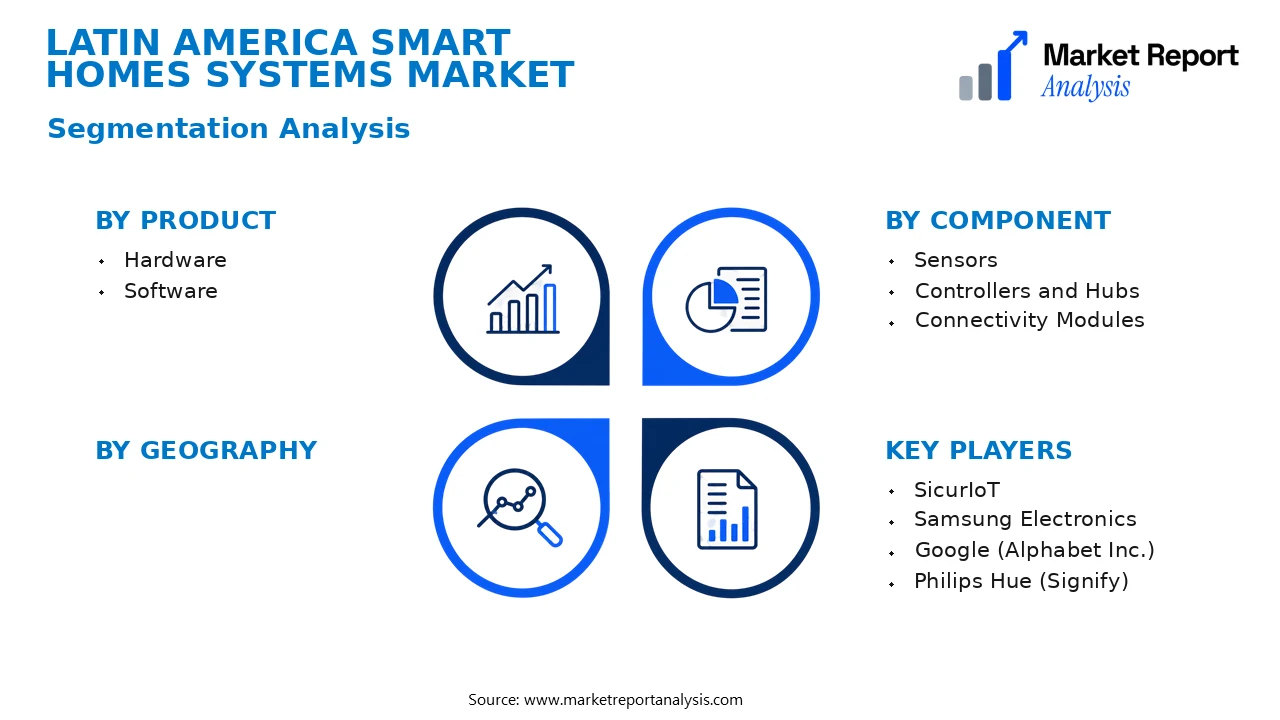
The Latin America Smart Homes Systems Market is segmented based on product, component, application, end user, and deployment mode. This classification reflects the diverse technological landscape and varying consumer preferences across the region, facilitating focused growth strategies and targeted marketing approaches.
- Product
- Hardware: Encompasses devices such as sensors, controllers, and hubs that facilitate smart home functionalities. It dominates the market due to increasing demand for interconnected devices and the declining costs of smart hardware components.
- Software: Consists of management platforms, security applications, and user interfaces that enable control and automation. Demand is rising as consumers seek seamless integration and enhanced security features, driving growth in software solutions.
- Component
- Sensors: Play a crucial role in monitoring environmental parameters and securing home environments, thereby witnessing high adoption attributed to safety and energy efficiency concerns.
- Controllers and Hubs: Act as central units harmonizing device operations, increasingly preferred for their ease of management and integration capabilities within smart home ecosystems.
- Connectivity Modules: Such as Wi-Fi, Bluetooth, and Zigbee modules, essential for device communication, experiencing steady demand, especially with the expansion of IoT networks across Latin America.
- Application
- Security and Surveillance: Dominates the application segment by the increasing need for home security systems, driven by rising crime rates and consumer awareness of safety technology benefits.
- Lighting Control: Growing rapidly owing to energy-saving initiatives and smart lighting trends that appeal to eco-conscious consumers seeking customization and automation.
- Climate Control: Includes smart thermostats and HVAC controls, gaining market traction as energy efficiency standards and smart integration technologies advance.
- Home Appliances: Increasing adoption of intelligent appliances that enable remote operation and energy management, driven by rising disposable incomes and lifestyle automation trends.
- End User
- Residential: Comprises individual households adopting smart systems for convenience, security, and energy savings. It remains the largest segment owing to increased awareness and affordability of smart home devices.
- Commercial: Encompasses offices, hotels, and retail establishments deploying smart technologies for operational efficiency, security, and consumer experience enhancement, showing rapid growth in urban and commercial hubs.
- Deployment Mode
- Distributed: Involves the installation of independent devices that operate autonomously yet connect within a smart home network. It is favored for its simplicity and cost-effectiveness in residential settings.
- Centralized: Features integrated systems managed through a single control point, preferred for larger homes and commercial premises owing to comprehensive automation and management capabilities.
Competitive Intelligence
The Latin America Smart Homes Systems Market is characterized by moderate competition, with key players like Amazon, Google, and regional technology firms driving innovation. Market concentration remains semi-oligopolistic, as these dominant companies hold significant market share, yet regional startups are gaining ground through differentiation and niche offerings. Business strategies primarily focus on product innovation, emphasizing interoperability, AI integration, and enhanced security features to meet evolving consumer demands. Strategic partnerships with local telecom providers and real estate developers are common to expand market reach and facilitate integrated service delivery. Several companies are pursuing acquisitions of smaller startups to accelerate R&D capabilities and diversify product portfolios, fostering competitive advantages through technological depth and regional customization. Expansion strategies are tailored towards urban centers and affluent neighborhoods, with increasing investments in R&D aimed at enhancing smart device compatibility and energy management efficiency. Differentiation in this market hinges on innovative, user-centric features and robust ecosystems, creating competitive barriers for new entrants and encouraging established players to continuously evolve their offerings.
Leading Company Profiles
The Latin America smart homes systems market is characterized by a mix of established technology providers and innovative startups, all competing to capture a share of this rapidly expanding sector.
SicurIoT
SicurIoT specializes in integrated home security and automation solutions, offering a broad product portfolio that includes alarm systems, surveillance cameras, and smart locks. Their competitive strengths lie in cutting-edge IoT technology capabilities and a focus on seamless user experience. The company's strategic priorities include expanding its product integration capabilities and enhancing AI-driven security features.
Samsung Electronics
Samsung Electronics provides comprehensive smart home ecosystems with connected appliances, voice assistants, and security systems. Its strength comes from robust technological infrastructure, global brand recognition, and innovative product design. Samsung aims to deepen its market penetration in Latin America through strategic alliances and localized product support.
Google (Alphabet Inc.)
Google offers a suite of smart home devices including voice-controlled assistants, smart displays, and connected home systems. Its key strengths are advanced AI and machine learning capabilities, widespread ecosystem integration, and continuous software updates. Google's strategic focus is on expanding smart voice command functionalities and alliances with local service providers.
Philips Hue (Signify)
Philips Hue specializes in smart lighting solutions that integrate into broader home automation systems. Its strengths include a diverse product range, reliable connectivity, and strong brand loyalty. The company's priorities are to enhance energy efficiency and expand its smart lighting range to new Latin American markets.
Huawei Technologies
Huawei provides an array of smart home products focusing on connectivity, security, and AI-enabled automation. Its major strengths comprise its technological innovation and aggressive regional expansion strategies. Huawei emphasizes developing localized smart home solutions tailored to Latin American consumer preferences.
Strategic Business Developments
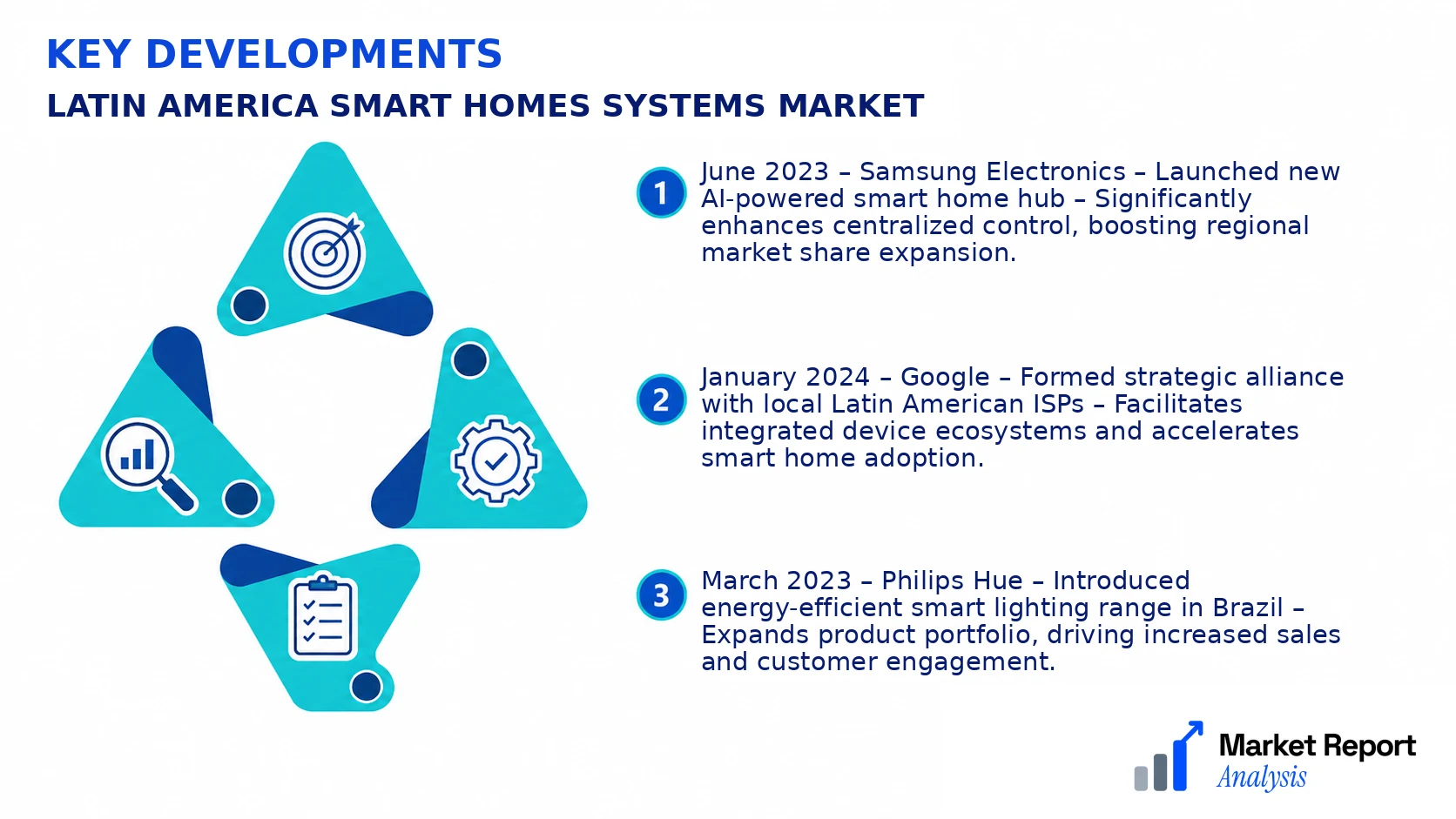
- June 2023 – Samsung Electronics – Launched new AI-powered smart home hub – Significantly enhances centralized control, boosting regional market share expansion.
- January 2024 – Google – Formed strategic alliance with local Latin American ISPs – Facilitates integrated device ecosystems and accelerates smart home adoption.
- March 2023 – Philips Hue – Introduced energy-efficient smart lighting range in Brazil – Expands product portfolio, driving increased sales and customer engagement.
- August 2023 – Huawei Technologies – Invested in local manufacturing facilities – Strengthens supply chain resilience and reduces costs, supporting market growth objectives.
- February 2024 – SicurIoT – Acquired regional competitor to enhance asset portfolio – Accelerates market penetration and technological capabilities in the LATAM market.
Frequently Asked Questions
What is the Latin America Smart Homes Systems Market?
The Latin America Smart Homes Systems Market encompasses the industry responsible for the development, deployment, and integration of electronic automation and control systems in residential properties across Latin America. These systems facilitate automation of lighting, climate, security, and home appliances, enhancing convenience, energy efficiency, and security for homeowners.
What is the current market size of Latin America Smart Homes Systems Market?
As of 2026, the market is estimated to be valued at approximately USD 2.0 Billion, reflecting significant growth driven by rising consumer awareness, technological advancements, and increasing disposable income in the Latin American region. This valuation underscores the market's expanding footprint across Latin American countries.
What factors are driving the Latin America Smart Homes Systems Market?
Several factors propel market growth, including rapid urbanization, increased penetration of IoT devices, consumer demand for energy-efficient solutions, security concerns, and the decreasing costs of smart technology components. Government initiatives supporting smart city projects further bolster this trend.
Which region dominates the Latin America Smart Homes Systems Market?
Brazil currently dominates the market, attributed to its large population, rising income levels, and heightened awareness of smart home benefits. Other significant markets include Mexico and Argentina, each contributing to regional growth with their expanding infrastructure and consumer adoption rates.
Which segment is expected to grow the fastest?
The security segment is projected to witness the fastest growth during 2026-2034, driven by increasing concerns over safety, adoption of smart surveillance systems, and government regulations emphasizing smart security solutions in residential properties.
Who are the leading companies operating in the Latin America Smart Homes Systems Market?
Key players include multinational companies like Johnson Controls, Honeywell, and Schneider Electric, alongside regional firms such as LG Electronics Latin America and Samsung Electronics Latin America. These companies focus on innovative product offerings, regional expansion, and strategic partnerships to capture market share.
Analyst Perspective
The Latin America Smart Homes Systems Market is poised for sustained growth through 2034, driven by increasing urbanization and rising consumer demand for convenience, security, and energy efficiency. The long-term outlook remains optimistic, with continuous technological advancements such as IoT integration and AI-driven automation enhancing system capabilities and user experiences. Significant commercial opportunities are emerging in affordable entry-level smart solutions, along with premium integrated systems targeting high-income households. Investment priorities should focus on securing robust supply chains for hardware components and developing localized, user-friendly platforms tailored to regional preferences. The competitive landscape is intensifying as local startups and global tech giants expand their footprints through strategic alliances and acquisitions. Regional growth potential remains strongest in Brazil, Mexico, and urban centers in Argentina, where infrastructure development aligns with smart technology deployment. Overall, the market’s maturity suggests a shift toward commoditization, prompting firms to differentiate via innovation, service quality, and regional customization, positioning them favorably for long-term success.
