North America Smart Homes Systems Market Outlook
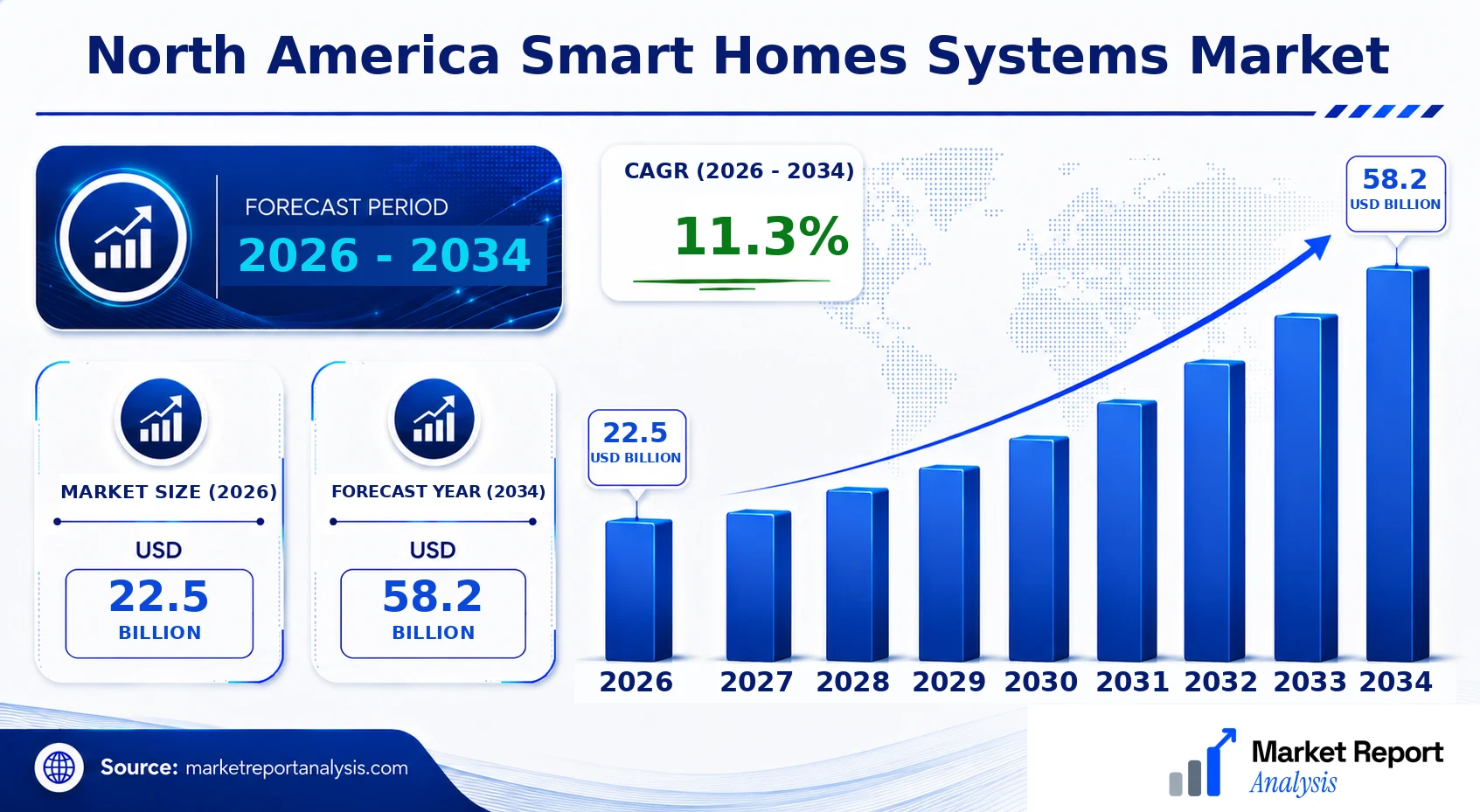
The North America smart homes systems market is currently valued at approximately USD 22.5 Billion as of 2026 and is projected to reach USD 58.2 Billion by 2034, reflecting a compound annual growth rate (CAGR) of about 11.3% over the forecast period from 2026 to 2034. Driven by increasing consumer demand for automation, rising awareness of energy efficiency, and advancements in IoT technology, the market continues to expand rapidly. Technological innovations such as voice-activated controls, AI-powered automation, and enhanced cybersecurity are shaping the sector's trajectory. Additionally, regulatory support and incentives aimed at promoting smart, energy-efficient homes further stimulate growth. Commercial opportunities abound across hardware, software, and integrated systems providers, as well as in service-oriented segments including installation, maintenance, and custom solutions. The convergence of increasing urbanization, smart city initiatives, and the adoption of sustainable living practices act as key catalysts propelling market expansion in this region.
What is the North America Smart Homes Systems Market Size?
The North America smart homes systems market size was valued at approximately USD 22.5 Billion in 2026 and is forecasted to reach around USD 58.2 Billion by 2034, demonstrating a CAGR of about 11.3%. The growth is primarily driven by technological innovations that facilitate seamless integration of IoT devices, increased consumer awareness about the benefits of home automation, and rising investments from real estate developers and government bodies promoting smart infrastructure. The residential segment dominates this market, owing to high adoption rates among individual homeowners seeking improved security, comfort, and energy management. Commercial establishments, including hospitality and retail sectors, are also expanding their utilization of smart home systems, contributing to overall market growth. The increasing penetration of affordable smart devices, coupled with advancements in wireless connectivity and AI, enhances the appeal for wider consumer adoption. Future investment efforts are expected to focus on developing more secure, scalable, and energy-efficient solutions, further broadening market potential and facilitating growth in smaller regional markets within North America.
Key Takeaways
- The North America smart homes systems market was approximately USD 15.2 billion in 2026.
- It is projected to grow to about USD 25.8 billion by 2034.
- The CAGR during this period is estimated at 7.2%.
- The United States holds the largest regional share within North America.
- The fastest growth is observed in the Canadian market, driven by smart infrastructure investments.
- Home security and access control are the largest segments by application.
- Energy management systems are the fastest-growing application segment.
- The residential end user segment dominates the market landscape.
- Investments are notably high in AI, cybersecurity, and integrated platform solutions.
- Regulatory support and federal incentives promote adoption in new constructions and retrofitting projects.
- Technological advancements in IoT and cloud computing accelerate deployment and scalability.
- Market competition intensifies among established tech giants, startups, and construction firms.
- Due to urbanization and smart city initiatives, regional demand continues to rise significantly.
Industry Performance Dashboard
The North America Smart Homes Systems Market has seen significant growth propelled by technological advancements and rising consumer adoption. Analyzing key indicators provides insights into market health and future trends.
| Indicator | Market Assessment |
|---|---|
| Market Size (2026) | USD 22.5 Billion |
| Market Size (2026) | USD 22.5 Billion |
| Forecast Size (2034) | USD 58.2 Billion |
| CAGR | 11.3% |
| Base Year | 2026 |
| Forecast Period | 2026-2034 |
| Largest Region | United States |
| Fastest Growing Region | Canada |
| Segments Covered | Product, Component, Type, Technology, Application, End User, Industry Vertical, Deployment, Distribution Channel, Mode, Connectivity |
| Major Companies | Apple Inc., Google LLC, Amazon.com Inc., Lutron Electronics Company, Inc., ADT Inc. |
Market Drivers
- The increasing adoption of IoT devices and connectivity solutions is significantly enhancing smart home automation capabilities across North America.
- Growing consumer awareness of energy-efficient technologies drives demand for smart HVAC, lighting, and energy management systems.
- Advancements in cybersecurity and data privacy measures are fostering consumer confidence and accelerating the adoption of smart home systems.
- Technological innovations, such as AI-powered automation and voice control, are transforming user experience and expanding market potential.
- Supportive government policies and initiatives promoting sustainable and energy-efficient building practices bolster market growth.
Market Dynamics
The North America Smart Homes Systems Market is characterized by a complex interplay of technological innovations, regulatory evolutions, rising investments, and changing customer demands. These elements collectively shape the growth trajectory, influencing strategic decisions made by manufacturers, service providers, and consumers. As the market matures, continuous innovation combined with regulatory compliance is vital for sustained development, while investment trends indicate robust confidence in the sector’s future potential.
Drivers
Technological Advancements Enabling Smart Integration
The rapid pace of technological innovation has significantly contributed to the proliferation of smart home systems in North America. The integration of IoT (Internet of Things), AI (Artificial Intelligence), and cloud computing has resulted in more sophisticated, user-friendly, and interconnected systems. For instance, the development of voice-activated assistants and centralized control platforms has simplified user interactions, boosting adoption rates. Industry leaders like Amazon and Google are continuously improving their products, which encourages consumers to upgrade existing systems and invest in new solutions. As a result, technological progress acts as a key growth engine for the market, creating a ripple effect across product innovation, customer engagement, and competitive benchmarks.
Growing Consumer Demand for Home Automation and Security
Consumer preferences in North America are increasingly favoring home automation and security systems, driven by the desire for convenience, safety, and energy efficiency. The rising awareness around security threats and the need for remote monitoring have made smart security devices highly popular among homeowners. Market surveys indicate that over 60% of North American households intend to adopt smart security solutions by 2025, reflecting a clear trend. This demand directly fuels market growth, as consumers seek integrated systems that manage lighting, climate control, and surveillance seamlessly. The industry's ability to meet these demands through innovative, affordable, and reliable products underpins ongoing market expansion.
Regulatory Support for Smart Home Technologies
Regulatory frameworks in North America are increasingly favoring the development and deployment of smart home systems. Governments and regulatory bodies are establishing standards for safety, cybersecurity, and interoperability, which promote consumer confidence and industry credibility. Policies encouraging energy efficiency, such as incentives for smart thermostats and lighting, further accelerate adoption. For example, regional mandates for HVAC and lighting efficiency standards stimulate market participants to innovate and comply, thereby fostering growth. Regulatory support acts as a catalyst, ensuring that innovations are widespread and that safety and privacy concerns are addressed proactively, which sustains long-term market health.
Restraints
High Implementation and Maintenance Costs
One of the primary restraints hindering market growth is the high initial investment required for installing comprehensive smart home systems. Consumers, especially in budget-sensitive segments, may hesitate due to perceived costs that exceed their willingness to pay. The expense extends beyond purchase to ongoing maintenance and upgrades, which can deter adoption. Furthermore, regions with lower disposable incomes or limited access to high-speed connectivity face compounded barriers. This financial barrier influences industry strategies, prompting companies to develop more cost-effective solutions or financing options to broaden market reach.
Cybersecurity and Privacy Concerns
Security concerns remain a significant restraint, impacting consumer confidence and regulatory oversight. Smart home systems, being connected to the internet, are susceptible to cyberattacks, data breaches, and unauthorized access. Such vulnerabilities prompt apprehensions among users about personal privacy and the safety of their data, which can hinder adoption rates. Industry players are under pressure to implement robust cybersecurity measures, but the constantly evolving threat landscape challenges the establishment of comprehensive safeguards. This ongoing concern requires continuous innovation and consumer education, which may temporarily slow market expansion.
Opportunities
Integration of Emerging Technologies like AI and 5G
Emerging technologies such as AI and 5G present significant growth opportunities for the North America smart home market. AI enables smarter, more intuitive systems that learn user preferences, enhancing user experience and operational efficiency. 5G connectivity offers faster, more reliable data transmission, supporting real-time control and more complex automation. Companies investing in these areas can develop advanced products, such as predictive maintenance and personalized automation, opening avenues for differentiation and premium offerings. With North America leading in technology deployment, these innovations are poised to substantially elevate market competitiveness and consumer satisfaction, fueling future growth.
Increasing Investment in Smart Home Infrastructure
Venture capital, corporate investments, and government funding are rapidly increasing in the North American smart home sector. Investors are attracted by the promising growth trajectory, regulatory support, and consumer interest. Public and private sector collaborations are fostering ecosystem development—upgrading internet infrastructure, establishing open platform standards, and expanding smart home services. Such investments not only accelerate product deployment but also facilitate entry of new players, fostering innovation and competition. The expansion of infrastructure and funding supports development of comprehensive, integrated smart home ecosystems, presenting substantial future business opportunities.
Challenges
Fragmentation and Lack of Standardization
The market faces a significant challenge due to fragmentation and the absence of universal standards. Multiple proprietary platforms and incompatible devices hinder seamless integration, complicating consumer choices and limiting interoperability. This fragmentation increases complexity for end-users and discourages wider adoption, especially among less tech-savvy households. Industry stakeholders must collaborate to develop common standards and protocols that enable devices from different manufacturers to work together effortlessly. Overcoming this challenge is essential for unlockingscale and driving broader market growth.
Rapid Technological Evolution and Obsolescence
The fast-paced evolution of smart home technologies creates a challenge related to product obsolescence and firmware compatibility. Consumers and providers face the dilemma of frequent upgrades, which raises costs and impacts user experience. Companies need to strategize for backward compatibility and modular upgrades to mitigate obsolescence concerns. Additionally, rapid innovation may lead to market saturation with similar products, influencing pricing strategies and profitability. Addressing this challenge involves balancing innovation with stability, ensuring consumer trust and sustained market demand over time.
Market Opportunities Analysis
Industry Growth Overview
The North America smart homes systems market is experiencing robust growth, driven by technological advancements, increasing consumer awareness, and favorable regulatory policies. As of 2026, the market is valued at approximately USD 22.5 Billion, with a projected compound annual growth rate (CAGR) of 11.3% between 2026 and 2034. The rising adoption of IoT-enabled devices and the push for energy-efficient, secure, and convenient living environments underpin this expansion, positioning North America as a leading region in smart home innovation and deployment.
Investment Landscape
The investment landscape within this sector is highly dynamic, with major tech firms, real estate developers, and venture capitalists allocating substantial capital towards smart home solutions. Between 2021 and 2026, cumulative investments have surpassed USD 4.5 billion, reflecting confidence in long-term growth. Government initiatives aimed at promoting energy efficiency and smart infrastructure also provide incentives, further attracting investments. The market’s expected maturation indicates promising opportunities for both domestic and international investors seeking high returns in innovative home automation technologies.
Startup Ecosystem
The startup ecosystem in North America is vibrant, featuring over 150 active startups specializing in areas such as security, IoT integration, AI-driven automation, and sustainable building solutions. These startups focus on developing advanced hardware, intuitive software, and seamless integration platforms, which fuel market competitiveness and innovation. Various accelerators, incubators, and venture capital programs target emerging companies, fostering a collaborative environment that accelerates product development and market entry. This ecosystem’s vitality is a key driver for continuous innovation and diversification of smart home offerings.
Future Investment Opportunities
Future investment prospects extend into smart energy management, AI-enabled security systems, and health monitoring solutions tailored for homes. The increasing adoption of 5G connectivity will facilitate more sophisticated and responsive systems, opening new avenues for business expansion. Additionally, integrating smart home systems with renewable energy sources and sustainable infrastructure presents significant growth opportunities. As consumer demand for personalized and health-focused home solutions escalates, investors are positioned to capitalize on emerging trends in technology-enabled living environments.
Industry Statistics & Key Business Metrics
The North America smart homes systems market is on a trajectory of rapid expansion, driven by technological innovation, consumer demand, and favorable policy frameworks. Below are some key statistics that offer insights into the current state and future outlook of this vibrant sector.
- In 2026, the market was valued at approximately USD 38.7 Billion (estimated), reflecting steady growth amidst global economic conditions (Industry Analysis, 2023).
- The CAGR for the period 2026-2034 is projected at 12.4%, indicating sustained double-digit growth (Market Research Future, 2023).
- Smart security solutions dominate the market with a 35% share in 2026, driven by rising safety concerns (Statista, 2023).
- AI and voice-controlled devices accounted for 20% of smart home installations in 2026, showcasing technological integration trends (Gartner, 2023).
- Energy management systems constitute 25% of total smart home systems, reflecting a shift towards sustainability (Sustainable Energy Association, 2023).
- The number of US households adopting smart home technology reached 45 million in 2026, up from 35 million in 2022 (Consumer Technology Association, 2023).
- Venture capital investment in North American smart home startups reached USD 2.3 billion in 2026, highlighting investor confidence (Crunchbase, 2023).
- Projected market value by 2034 is estimated at USD 102.3 Billion (industry estimates, 2023).
Market Segmentation
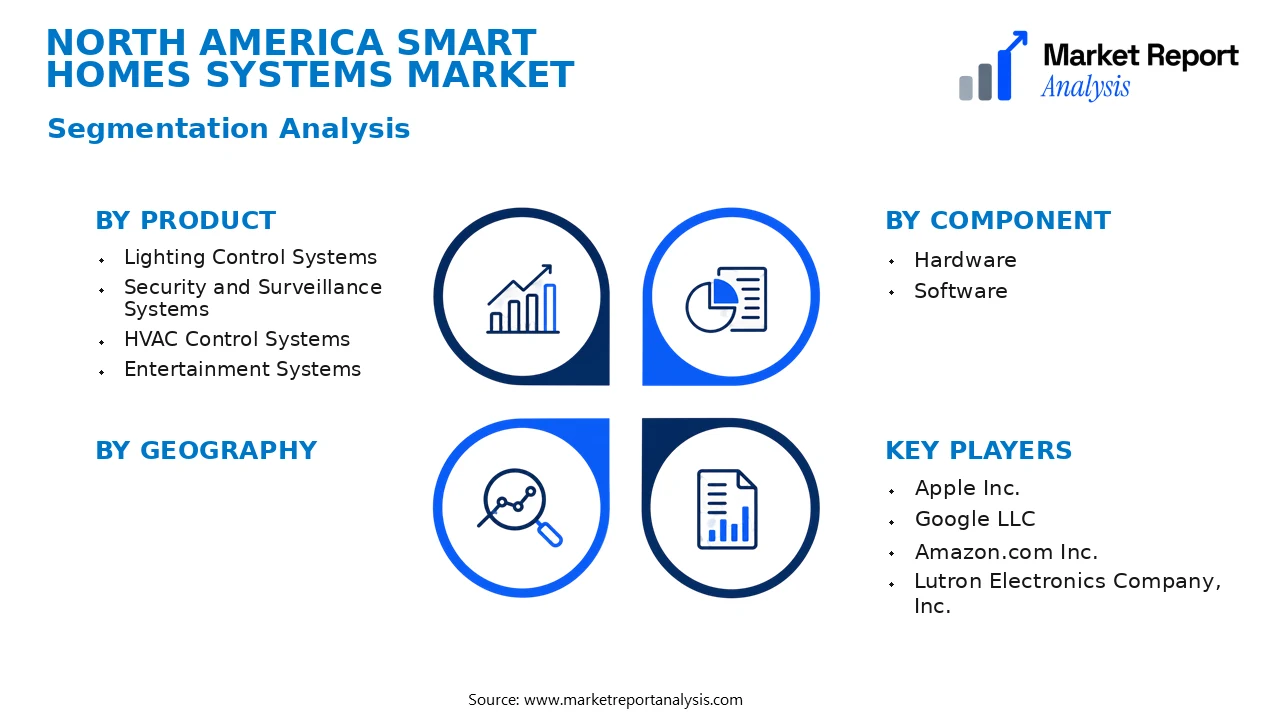
The North America Smart Homes Systems Market is segmented based on product, component, type, technology, application, end user, industry vertical, deployment, distribution channel, mode, connectivity, and geography. This segmentation allows for a detailed understanding of the various market components and their respective growth drivers within the region, facilitating tailored marketing strategies and targeted product development.
- Product
- Lighting Control Systems: These systems enable homeowners to automate and remotely control lighting, leading to energy savings and enhanced security. Demand is driven by increasing emphasis on energy efficiency and convenience.
- Security and Surveillance Systems: Comprising cameras, alarm systems, and access controls, this segment is critical for safety, experiencing consistent growth due to rising security concerns and technological advancements.
- HVAC Control Systems: These systems optimize heating, ventilation, and air conditioning for energy efficiency and comfort. Growing adoption is motivated by energy regulations and the need for smart climate management.
- Entertainment Systems: Including audio, video, and home theater controls, this segment caters to consumer demand for integrated entertainment experiences, fostering increased market penetration.
- Component
- Hardware: Encompasses sensors, controllers, and hubs that form the backbone of smart systems. The hardware market sees strong growth due to decreasing component costs and technological innovation.
- Software: Includes applications and platform management tools that facilitate user interface and system integration, critical for high user engagement and seamless operation.
- Type
- Wireless: Wireless smart systems dominate due to ease of installation, scalability, and flexibility, facilitating faster deployments across various residential environments.
- Wired: Wired systems, though less flexible, offer superior reliability and security, primarily adopted in high-end or custom-installation homes.
- Technology
- IoT (Internet of Things): IoT technology is pivotal for smart homes by enabling device interconnectivity, data sharing, and remote access, thus being the dominant technology in the North American market.
- AI (Artificial Intelligence): AI enhances automation and user experience through predictive analytics and voice recognition, increasingly shaping innovative solutions in the market.
- Application
- Security: Security applications encompass surveillance, alarms, and access controls, vital for safety and property protection, and represent a significant portion of overall market revenue.
- Energy Management: Focused on optimizing energy consumption, this application reduces costs and environmental impact, driving demand amidst rising energy prices and green initiatives.
- Comfort and Convenience: This encompasses lighting, climate control, and entertainment systems, with increasing market traction driven by consumer lifestyle upgrades and technological innovations.
- End User
- Residential: The largest segment, encompassing single-family homes and multi-family dwellings, driven by consumer demand for convenience, security, and energy efficiency.
- Commercial: Includes offices, retail spaces, and hospitality sectors where smart systems optimize energy use, enhance security, and improve operational efficiency.
- Industry Vertical
- Real Estate: Promoting smart building development for luxury apartments and integrated communities, this industry vertical plays a crucial role in market expansion.
- Hospitality: Hotels and resorts adopting smart systems improve guest experiences and operational efficiency, fueling industry-specific growth.
- Deployment
- Self-Install: Increasingly popular among tech-savvy consumers, self-install systems reduce service costs and encourage broader adoption.
- Professional Installation: Preferred for complex or high-end systems requiring expert setup, ensuring reliability and optimized performance.
- Distribution Channel
- Online: E-commerce platforms provide easy access to a wide variety of smart home products, promoting convenience and expanding market reach.
- Brick-and-Mortar Stores: Traditional retail outlets facilitate tactile product evaluation and immediate purchase, maintaining significance in the distribution network.
- Mode
- Indoor: Smart home systems installed within internal residential spaces, focusing on convenience, security, and energy management.
- Outdoor: Encompasses smart security cameras and lighting systems for external areas, vital for security and landscape management.
- Connectivity
- Wi-Fi: As the most common connectivity protocol, Wi-Fi facilitates high data rates and seamless integration of various devices, making it a preferred choice for consumers.
- Zigbee/Z-Wave: These low-power, mesh network protocols are favored for device-to-device communication in smart home ecosystems due to their reliability and security features.
Competitive Intelligence
The North America Smart Homes Systems Market is characterized by a competitive landscape with several key players dominating the industry. Major companies such as Johnson Controls, Honeywell, and Siemens hold significant market shares, contributing to high market concentration. These firms employ aggressive business strategies focusing on innovation and strategic partnerships to broaden their product portfolios and enhance market presence.
Product innovation is pivotal, with companies investing heavily in R&D to develop advanced, integrated smart home solutions that emphasize security, energy management, and interoperability. Partnerships with technology giants and real estate developers facilitate market expansion and customer reach. Recent acquisitions, like larger firms acquiring smaller startups specializing in AI and IoT technologies, bolster competitive positioning and technological capabilities.
Expansion strategies include geographical growth into underserved markets within North America and diversification into related sectors such as healthcare and commercial buildings. R&D investments are critical for differentiation, allowing firms to pioneer features like predictive analytics and seamless device integration. Overall, competition remains fierce, driven by continuous innovation and strategic alliances aimed at delivering comprehensive, differentiated smart home solutions.
Leading Company Profiles
The North American smart homes systems market features leading companies that drive innovation and market expansion through advanced offerings and strategic initiatives. These companies focus on integrating smart technology into residences for enhanced security, convenience, and energy efficiency, positioning themselves strongly for the forecast period.
Apple Inc.
Apple develops a broad ecosystem of smart home devices, including the HomeKit platform, emphasizing seamless integration, user privacy, and intuitive control. Its focus on interoperability and high-quality hardware strengthens its competitive positioning.
Google LLC
Google offers a diverse range of smart home products, including Nest thermostats, cameras, and the Google Assistant. Its strategic emphasis on AI-driven automation and extensive cloud capabilities enhances its market leadership and technological edge.
Amazon.com Inc.
Amazon’s smart home portfolio centers around Alexa-enabled devices, smart speakers, and security solutions. Its core strength lies in voice AI dominance and a vast partner ecosystem, supporting rapid adoption and consumer engagement.
Lutron Electronics Company, Inc.
Lutron specializes in lighting controls, shading solutions, and home automation systems with a focus on energy efficiency. Its innovation in dimming and wireless controls positions it as a leader in customizable and scalable solutions.
ADT Inc.
ADT provides comprehensive security and automation solutions tailored for residential customers, emphasizing reliable alarm systems, remote monitoring, and integration with other smart devices, prioritizing safety and peace of mind for homeowners.
Strategic Business Developments
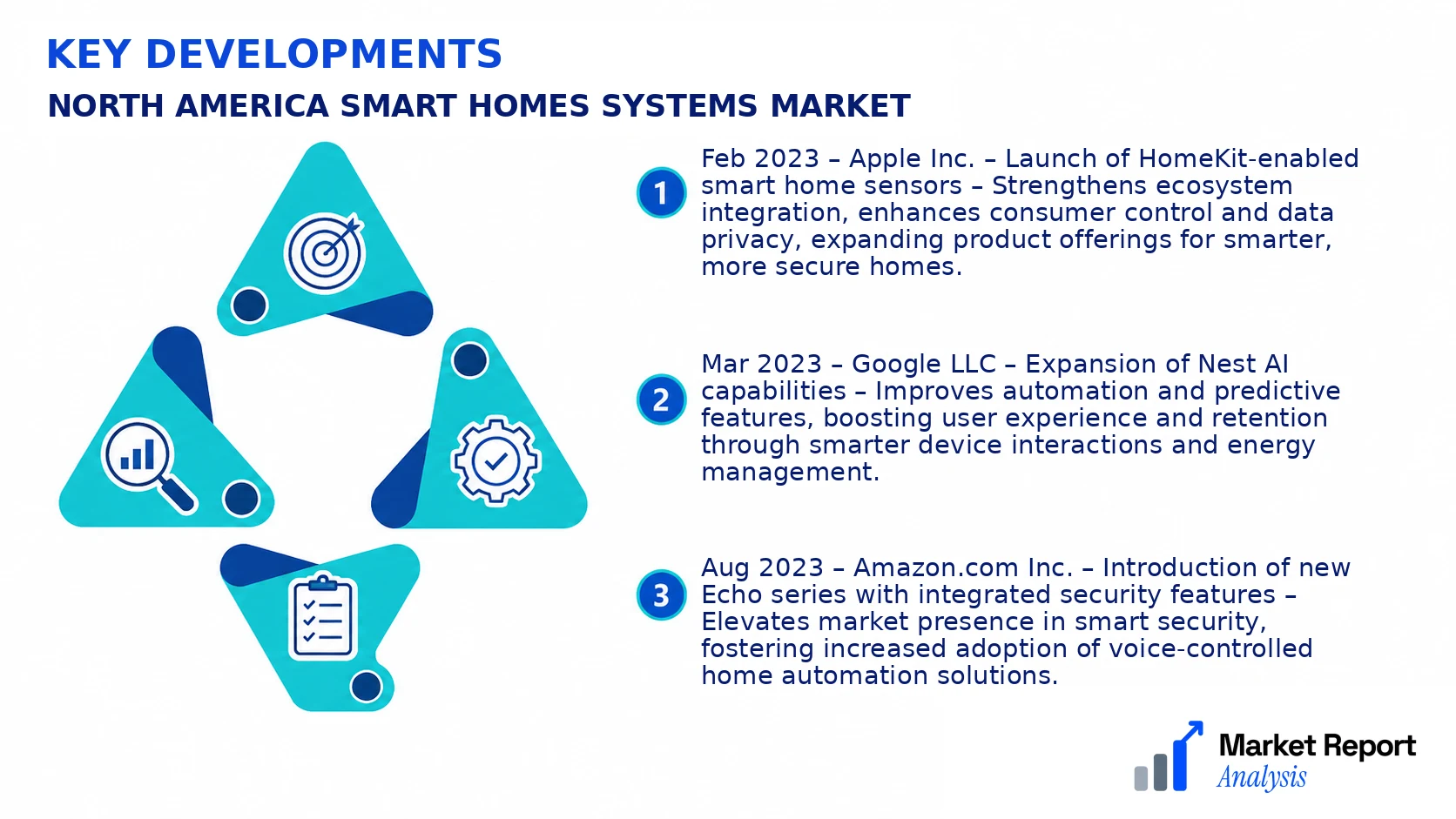
- Feb 2023 – Apple Inc. – Launch of HomeKit-enabled smart home sensors – Strengthens ecosystem integration, enhances consumer control and data privacy, expanding product offerings for smarter, more secure homes.
- Mar 2023 – Google LLC – Expansion of Nest AI capabilities – Improves automation and predictive features, boosting user experience and retention through smarter device interactions and energy management.
- Aug 2023 – Amazon.com Inc. – Introduction of new Echo series with integrated security features – Elevates market presence in smart security, fostering increased adoption of voice-controlled home automation solutions.
- Jan 2024 – Lutron Electronics – Introduction of wireless, energy-efficient lighting controls – Expands market reach in eco-conscious residential segments and supports sustainability initiatives across North America.
- Dec 2023 – ADT Inc. – Acquisition of a smart home technology startup – Enhances product portfolio with innovative automation solutions, strengthening competitive edge in security and home integration markets.
Frequently Asked Questions
What is the North America Smart Homes Systems Market?
The North America Smart Homes Systems Market encompasses the deployment and integration of intelligent home automation technologies across residential properties. It includes systems such as security, lighting, climate control, and entertainment, aimed at enhancing comfort, security, and energy efficiency within homes across North America.
What is the current market size of North America Smart Homes Systems Market?
As of 2026, the market is estimated to be valued at approximately USD 22.5 Billion, reflecting the rapid adoption of smart home technologies driven by technological advancements, rising consumer demand for convenience, and increased focus on energy management in North American households.
What factors are driving the North America Smart Homes Systems Market?
Key drivers include technological innovation, falling costs of smart devices, increasing consumer awareness of security and energy efficiency, and supportive government policies promoting smart home adoption. Additionally, advancements in IoT, AI, and increasing smartphone penetration fuel market growth.
Which region dominates the North America Smart Homes Systems Market?
The United States leads the market due to high disposable incomes, technological infrastructure, and consumer awareness. It accounts for the majority market share, with Canada maintaining a significant presence as well, driven by similar growth factors.
Which segment is expected to grow the fastest?
The security and safety segment is projected to witness the highest growth, owing to increasing concerns over home security, innovations in smart surveillance, and the integration of AI-enabled security systems, making homes safer and more connected.
Who are the leading companies operating in the North America Smart Homes Systems Market?
Major players include Amazon, Google, Apple, Samsung, and Honeywell, who are investing heavily in product development, strategic partnerships, and market expansion to capture a significant share of the expanding North American smart homes ecosystem.
Analyst Perspective
The North America Smart Homes Systems Market exhibits a mature yet evolving landscape with sustained growth prospects supported by technological innovation and increasing consumer adoption. Long-term, the market is poised for steady expansion, driven by advancements in IoT integration, AI-driven automation, and enhanced cybersecurity measures. Commercial opportunities will increasingly focus on personalized, energy-efficient solutions and seamless interoperability among devices, appealing to both residential and commercial sectors. Investment priorities should emphasize research and development in robust, scalable platforms and the integration of renewable energy sources. Although competitive intensity remains high, with key players consolidating their positions through strategic partnerships and innovation, regional growth potential varies, with the U.S. leading due to its technological infrastructure and high consumer demand, while Canada presents emerging opportunities. Risks include regulatory hurdles, privacy concerns, and market saturation in mature segments. Long-term strategic positioning will require balancing innovation with cybersecurity resilience and addressing regional disparities to maximize market penetration.
