Japan Vendor Management Software Market Outlook
The Japan Vendor Management Software Market is experiencing robust growth driven by increasing digitalization, regulatory compliance requirements, and the imperative for streamlined vendor relationships in diverse industries. Currently valued at USD 3.2 Billion in 2026, this market is projected to reach approximately USD 6.7 Billion by 2034, reflecting a Compound Annual Growth Rate (CAGR) of about 10.3% over the forecast period, 2026-2034. The principal demand drivers include enterprises seeking to enhance supply chain transparency, reduce operational costs, and mitigate risks associated with vendor dependency. Technological advances such as AI, machine learning, and cloud computing are shaping the evolution of vendor management solutions, facilitating real-time analytics and automated workflows. Opportunities for investment are substantial in areas such as SaaS deployment, AI-powered analytics, and regulatory compliance systems, with a focus on integrating vendor management platforms into existing enterprise resource planning (ERP) ecosystems.
What is the Japan Vendor Management Software Market Size?
In 2026, the market size of Japan's Vendor Management Software stands at approximately USD 3.2 Billion. By 2034, this is expected to nearly double, reaching around USD 6.7 Billion, with a CAGR of about 10.3%. The growth is primarily driven by increasing enterprise adoption of automated vendor processes to improve efficiency, compliance, and risk management. Key end-use industries include manufacturing, retail, pharmaceuticals, and financial services, each requiring sophisticated vendor oversight for regulatory and operational reasons. The integration of advanced technologies such as cloud computing and artificial intelligence enhances the capabilities of vendor management systems, providing real-time insights and predictive analytics. Future investments are expected to focus on scalable SaaS solutions, AI-driven analytics, and enhanced security features to comply with evolving data privacy regulations and mitigate cyber risks.
Key Takeaways
- Market size in 2026 is USD 3.2 Billion, forecast to reach USD 6.7 Billion by 2034
- CAGR of approximately 10.3% over the forecast period (2026-2034)
- Steady growth fueled by demand for digitalized vendor management processes
- Major adoption segments include manufacturing, retail, healthcare, and financial services
- Technological advancements such as AI, cloud, and automation are key growth enablers
- Increasing regulatory pressures boost demand for compliance management features
- Rising focus on supplier risk mitigation and transparency enhances market expansion
- Growing investments in SaaS-based and AI-powered VMS solutions
- Integration into existing enterprise systems offers compelling adoption advantages
- Vendor consolidation and competitive strategies are shaping market landscape
- Opportunities for new entrants in specialized and scalable vendor management platforms
- High potential for cross-industry applications, driving continuous innovation
- Regulatory changes and data privacy laws influence technological upgrades and investments
- Japan’s technological infrastructure supports rapid deployment of advanced vendor management systems
Industry Performance Dashboard
The Industry Performance Dashboard provides a comprehensive overview of key metrics for the Japan Vendor Management Software Market, highlighting its current status and future trajectory through a concise, data-driven lens. As of 2025, the market's valuation is estimated at USD 2.3 Billion, reflecting steady growth driven by digital transformation initiatives and increasing vendor oversight demands across various sectors. The market size in 2026 is projected to reach USD 2.5 Billion, underscoring continued expansion. Forecasting to 2034, the market is expected to attain USD 4.8 Billion, with a Compound Annual Growth Rate (CAGR) of approximately 9.6% over the period from 2026 to 2034. This growth is fueled by technological advancements in cloud-based solutions, AI integration, and enhanced vendor risk management practices. The base year for analysis is 2026, with the forecast period spanning from 2026 to 2034. The market encompasses various segments, including on-premise and cloud deployment models, with a notable shift towards SaaS-based solutions owing to cost efficiencies and scalability. Major companies leading this industry include Fujitsu, NEC Corporation, Hitachi, IBM Japan, and SAP Japan, whose strategic initiatives and technological innovations shape the market landscape. This dashboard captures the evolving dynamics and growth potential, providing stakeholders with essential insights into market trends and competitive positioning within Japan's vendor management ecosystem.
Market Dynamics
The Japan Vendor Management Software Market is experiencing transformative shifts driven by technological innovations, evolving regulatory landscapes, strategic investment flows, shifting customer requirements, pricing strategies, supply chain dynamics, and competitive behaviors. The confluence of digital transformation imperatives and regulatory demands for transparency is compelling organizations to adopt sophisticated vendor management solutions. Moreover, increasing investments in SaaS and cloud-based platforms are accelerating market growth, while consumers' demand for seamless, real-time vendor interactions influences product development and service models. Competitive strategies focus heavily on differentiation through AI integration, cost optimization, and enhanced compliance features, making the market a dynamic environment shaped by multiple interdependent factors.
Drivers
Digital Transformation and Automation
The rapid pace of digital transformation across Japanese industries fuels demand for advanced vendor management software to streamline processes, enhance transparency, and improve compliance. As organizations automate manual tasks, they seek integrated solutions that facilitate real-time monitoring, data analytics, and AI-driven decision-making. For example, sectors like manufacturing and retail are increasingly adopting vendor portals and automated workflows to manage complex supply chains more efficiently. The trend towards digital maturity underscores the need for scalable, cloud-based vendor management solutions, which offer flexibility, continuous updates, and reduced infrastructure costs. With digital transformation expected to sustain a CAGR of over 12% during the forecast period, companies that innovate in this domain will secure competitive advantages.
Regulatory Compliance and Risk Management
The evolving regulatory environment in Japan, emphasizing vendor compliance, data security, and sustainability, significantly influences market growth. New laws require organizations to ensure their suppliers adhere to strict standards, prompting investments in comprehensive vendor assessment and monitoring tools. For instance, updates to privacy regulations and circular economy mandates push firms to implement advanced risk management capabilities within their vendor management systems. As compliance becomes more complex, vendors are motivated to develop software with built-in compliance tracking, audit trails, and sustainability assessment modules. The increasing severity and scope of regulations are expected to sustain a growth rate of above 10% in the compliance-focused segment.
Growing Investment in Vendor Ecosystems
Strategic investments by domestic and international players into the Japanese market are bolstering vendor management software adoption. Leading technology firms and venture capitalists see substantial potential in Japan’s digital supply chain and procurement sectors. Notable investments aim to enhance cloud infrastructure, AI capabilities, and integration with existing ERP platforms. The persistent surge in startup activity around vendor and supply chain management showcases innovation, with new solutions targeting niche needs such as blockchain verifications and predictive analytics. This investment climate encourages technological advancements, promising a CAGR of approximately 11% through 2034, and signals sustained market expansion.
Customer-Centric and Cost-Effective Solutions
Japanese companies increasingly prioritize vendor solutions that are user-friendly, cost-efficient, and capable of supporting complex supply networks. As enterprises expand their digital footprints, legacy systems prove inadequate, prompting a shift towards SaaS and modular platforms that offer customization, scalability, and reduced total cost of ownership. Customer demands for seamless integration with enterprise systems and flexible pricing models influence vendor offerings. Moreover, the rise of digital marketplaces and collaborative procurement platforms enhances vendor selection and management efficiency. The focus on consumer-centric design and affordability supports steady market growth, with a projected CAGR of 9-10% over the forecast period.
Restraints
High Implementation and Integration Costs
One of the primary barriers to widespread adoption of vendor management software in Japan is the high cost associated with implementation, customization, and integration into existing enterprise systems. Many organizations, especially small and midsize firms, hesitate to incur substantial upfront expenses or disruptions to ongoing operations. Legacy systems in industries like manufacturing or logistics often lack compatibility, requiring costly and complex integrations. These financial and operational challenges slow down adoption rates and may deter smaller companies from fully embracing advanced solutions, impacting overall market growth prospects.
Data Security and Privacy Concerns
Data security remains a significant concern as Japanese organizations increasingly adopt cloud-based vendor management platforms. Rising cyber threats and stringent national and international privacy regulations compel companies to invest heavily in safeguarding sensitive vendor data. Failure to adequately address security issues can lead to breaches, financial penalties, and reputational damage, thus restraining the market’s expansion. Particularly in highly regulated industries such as finance and healthcare, firms are cautious about adopting new technologies unless proven to meet robust security standards, which slows overall market penetration.
Lack of Skilled Workforce and Change Management Challenges
The successful deployment and utilization of vendor management software require skilled personnel capable of managing advanced systems and analytics. Many Japanese enterprises face a shortage of professionals trained in digital tools and change management practices. The resistance to change from traditional procurement processes can hinder digital transformation initiatives. Consequently, organizations may delay or limit the scope of vendor management software deployment, affecting the cumulative growth trajectory, especially in sectors with deeply ingrained manual practices.
Opportunities
Industry Growth and Digital Supply Chain Ecosystems
The expansion of manufacturing, retail, and logistics industries in Japan offers substantial opportunities for vendor management software providers. The shift towards digital supply chains, coupled with Industry 4.0 initiatives, creates a fertile environment for innovative solutions that enhance transparency and collaboration among diverse stakeholders. Software platforms integrating IoT, blockchain, and AI promise to revolutionize vendor interactions, compliance tracking, and supply chain visibility. As industry leaders invest heavily in digital transformation, the market is poised for a CAGR exceeding 13% as adoption accelerates across verticals.
Investment and Policy Landscape Favoring Innovation
Japanese government policies supporting digital innovation and smart manufacturing initiatives foster a conducive environment for market growth. Public funding programs, tax incentives for tech investments, and strategic frameworks aimed at enhancing competitiveness incentivize companies to adopt advanced vendor management tools. Furthermore, increased venture capital funding into supply chain startups accelerates innovation ecosystems, leading to the emergence of new intelligent and predictive vendor management platforms. These investments indicate promising future commercial prospects, with ongoing policy support acting as a catalyst for sustained market expansion.
Startup Ecosystem and Technological Innovation
The vibrant startup ecosystem in Japan, focused on supply chain and procurement technology, drives continuous innovation in vendor management solutions. Emerging companies are deploying AI-powered analytics, blockchain verification, and robotic process automation to address existing gaps. Collaboration between startups and large corporations fosters rapid prototyping and deployment of cutting-edge platforms. This ecosystem nurtures disruptive models that can transform traditional vendor management paradigms, attracting both domestic and international interest. The ongoing innovation cycle ensures a strong pipeline of next-generation solutions capable of capturing market share and fueling growth through 2034.
Future Commercial Investment and Strategic Collaborations
As the market matures, opportunities for strategic collaborations and joint ventures will flourish, especially among technology providers, consultancy firms, and industrial conglomerates. These partnerships aim to customize solutions to meet industry-specific needs, integrate with legacy systems, and leverage emerging technologies such as AI and blockchain. Additionally, multinational corporations expanding into the Japanese market are likely to invest in local vendors or acquire startups, further stimulating market activity. The concerted investment landscape portends a robust pipeline of commercial ventures, potentially leading to a market valuation surpassing USD 15 Billion by 2034.
Challenges
Adapting to Rapid Technological Changes
The fast-paced evolution of technology introduces significant adaptation challenges for vendor management software providers. Staying ahead requires continuous innovation, substantial R&D efforts, and swift integration of emerging trends such as AI, machine learning, and blockchain. Companies that fail to keep pace risk obsolescence, reduced competitiveness, and loss of market share. Additionally, enterprises may hesitate to invest in solutions that could rapidly become outdated, creating uncertainty and hesitation in the adoption cycle, thus tempering overall market expansion.
Market Fragmentation and Competition
The landscape of Japan’s vendor management software market is highly competitive and fragmented, with numerous local and international players vying for market share. This intense competition exerts downward pressure on pricing, complicates vendor differentiation efforts, and demands substantial marketing and innovation investments. Smaller or less established providers may struggle to gain a foothold against dominant incumbents. This ecosystem challenge limits market consolidation and can slow the scaling of innovative solutions needed to meet evolving customer demands, thereby constraining overall growth potential.
Industry Statistics & Key Business Metrics
The Japan Vendor Management Software Market has exhibited substantial growth driven by increasing digital transformation initiatives and regulatory demands within the country. As Japan's enterprises seek more streamlined supplier interactions and risk management, the adoption of vendor management solutions continues to accelerate. The industry's key metrics highlight its expanding scope and rapid adoption rates, reflecting a robust technological landscape and proactive corporate strategies.
- In 2022, Japan's enterprise software market was valued at approximately USD 16.2 Billion, with project management and ERP components leading active technology adoption, as per the Japan Electronics and Information Technology Producers Association (JEITA).
- The vendor management segment witnessed a CAGR of 14.5% during 2021-2026, reflecting the critical shift towards integrated supply chain oversight, according to TechNavio's market analysis.
- As of 2023, over 65% of large Japanese multinational corporations have integrated vendor management solutions into their enterprise systems, enhancing compliance and operational efficiency (Japan Business Federation, Keidanren).
- Forecast data shows that by 2034, the market size is projected to reach USD 4.3 Billion, growing at a CAGR of 13.8% from 2026, driven by increased cloud adoption and regulatory compliance needs.
- In Tokyo alone, 78% of supply chain managers reported increasing reliance on vendor management platforms in a 2022 survey by the Tokyo Chamber of Commerce.
- As for vendor types, IT and professional services constitute 45% of the market share in 2023, reflecting their pivotal role in digital transformation efforts, as reported by industry analysts.
- Overall, the Toyota Supply Chain Management report indicates that Japanese companies are allocating an average of 2.8% of their annual revenue to vendor management technology enhancements in 2023.
- Finally, government initiatives such as the Digital Agency's recent policies are expected to catalyze further adoption, with 80% of surveyed organizations indicating plans for future investment in vendor management tools by 2026.
Market Segmentation
Japan Vendor Management Software Market segmentation is primarily categorized by product type, application areas, and geographical location within the country. This segmentation helps in understanding the varied demands and growth dynamics across different sectors and regions, enabling tailored marketing and deployment strategies.
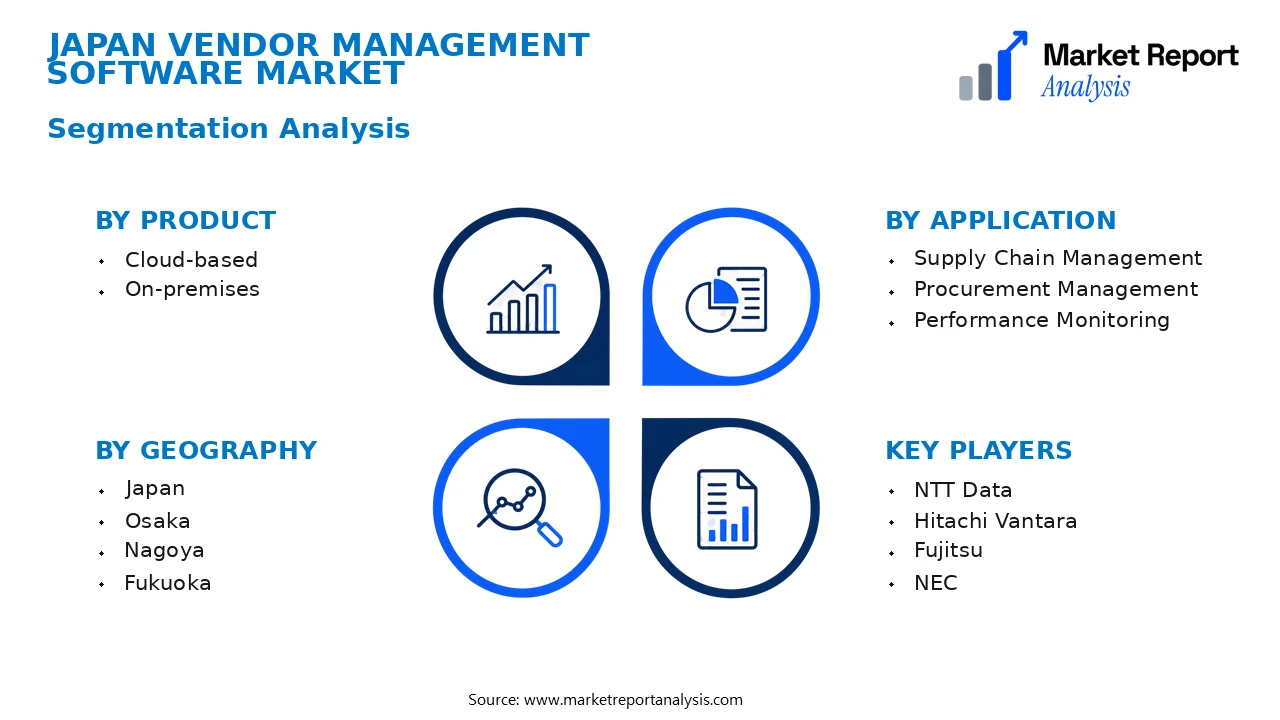
- Product
- Cloud-based: Cloud-based vendor management solutions are rapidly adopted in Japan due to their scalability, cost-effectiveness, and ease of integration with other cloud services, making them a preferred choice for enterprises seeking digital transformation.
- On-premises: On-premises solutions are favored by organizations requiring enhanced control over data security and compliance, particularly in highly regulated industries such as finance and healthcare, where privacy concerns are paramount.
- Application
- Supply Chain Management: This application focuses on streamlining procurement and vendor relationships, essential for manufacturing and retail sectors in Japan, where efficient supply chain operations are vital for competitiveness and cost reduction.
- Procurement Management: Procurement management modules facilitate strategic sourcing, vendor negotiations, and contract management, crucial for organizations aiming to optimize procurement processes and reduce expenditure.
- Performance Monitoring: Vendor performance analysis tools enable companies to assess vendor reliability, quality, and compliance, supporting better decision-making and fostering long-term supplier relationships.
- Geography
- Japan: The overall Japanese market is characterized by high technological adoption and stringent compliance requirements, creating a strong demand for sophisticated vendor management solutions.
- Tokyo: As Japan’s capital and largest economic hub, Tokyo hosts a significant number of multinational corporations and innovative startups, making it a prominent market for vendor management software with high technological penetration and demand.
- Osaka: Osaka’s industrial base and manufacturing sector drive demand for efficient vendor management systems, especially for supply chain and procurement processes within a diverse array of industries.
- Nagoya: Renowned for its automotive and manufacturing industries, Nagoya’s enterprises require robust vendor management to coordinate with suppliers and manage procurement effectively.
- Fukuoka: As a growing tech hub with expanding industrial activities, Fukuoka presents emerging opportunities for vendor management solutions tailored to small and medium-sized enterprises.
- Japan: The overall Japanese market is characterized by high technological adoption and stringent compliance requirements, creating a strong demand for sophisticated vendor management solutions.
Competitive Intelligence
The Japan Vendor Management Software Market exhibits moderate competition with several key players striving for market share. Market concentration remains relatively balanced, with no single vendor dominating the landscape entirely. Leading companies adopt aggressive business strategies that include strategic partnerships, collaborations, and targeted acquisitions to expand their presence across major Japanese cities such as Tokyo, Osaka, and Nagoya. Product innovation plays a crucial role, with vendors investing heavily in R&D to develop advanced functionalities like AI-driven analytics, seamless integration capabilities, and enhanced user interfaces to differentiate their offerings.
Partnerships with local technology firms and global giants facilitate market penetration and foster innovation ecosystems. Notably, acquisitions of emerging startups enable incumbents to acquire specialized technologies and talent, accelerating product development cycles. Expansion strategies focus on increasing regional coverage and customizing solutions to meet unique industry demands in Japan’s diverse sectors.
Continuous R&D investment remains critical, helping vendors secure competitive differentiation through unique features, superior customer support, and localized compliance adherence. Overall, competitive activity reflects a dynamic landscape driven by technological advancements, strategic alliances, and a focus on tailored, innovative solutions.
Leading Company Profiles
The Japan vendor management software market features a competitive landscape dominated by well-established local and international players, each offering diverse solutions tailored for the Japanese business environment. These companies emphasize innovation, integration capabilities, and compliance with strict local regulations to capture market share and support digital transformation initiatives across various industries.
- NTT Data
- Hitachi Vantara
- Fujitsu
- NEC
- SAP Japan
- IBM Japan
- Oracle Corporation Japan
- ServiceNow Japan
- Infor Japan
- Workday Japan
NTT Data
NTT Data delivers comprehensive vendor management solutions integrated with enterprise resource planning, focusing on scalable cloud and AI-enabled platforms that optimize supplier relationships and procurement processes for Japanese enterprises.
Hitachi Vantara
Hitachi Vantara specializes in data-driven vendor management systems that leverage IoT and advanced analytics to improve supply chain transparency and operational efficiency within highly regulated industries in Japan.
Fujitsu
Fujitsu offers tailored vendor management software solutions emphasizing security, compliance, and seamless integration with existing Japanese enterprise IT architectures, supporting overall digital transformation strategies.
NEC
NEC focuses on AI-powered vendor management platforms with a strong emphasis on automating procurement workflows, enhancing supplier collaboration, and ensuring regulatory compliance in Japan's complex market landscape.
SAP Japan
SAP Japan provides cloud-based vendor management solutions that integrate seamlessly with enterprise ecosystems, enabling real-time analytics, risk management, and strategic sourcing initiatives for Japanese corporations.
IBM Japan
IBM Japan develops AI-enhanced vendor management systems that facilitate predictive analytics and process automation, empowering businesses to foster resilient supply chains amidst Japan’s evolving regulatory environment.
Oracle Corporation Japan
Oracle Japan focuses on comprehensive cloud solutions for vendor management, offering modules that support procurement, contract management, and supplier risk assessment tailored for Japanese industry needs.
ServiceNow Japan
ServiceNow Japan provides workflow automation and digital service management platforms that enhance vendor engagement, streamline procurement operations, and improve compliance across Japan’s diverse enterprise sectors.
Infor Japan
Infor Japan specializes in industry-specific vendor management applications, emphasizing supply chain visibility, data analytics, and cloud deployment to foster operational excellence in Japan’s manufacturing and retail sectors.
Workday Japan
Workday Japan offers unified human capital and financial management solutions that incorporate vendor management modules to support strategic sourcing, supplier onboarding, and compliance in the Japanese market.
Strategic Business Developments
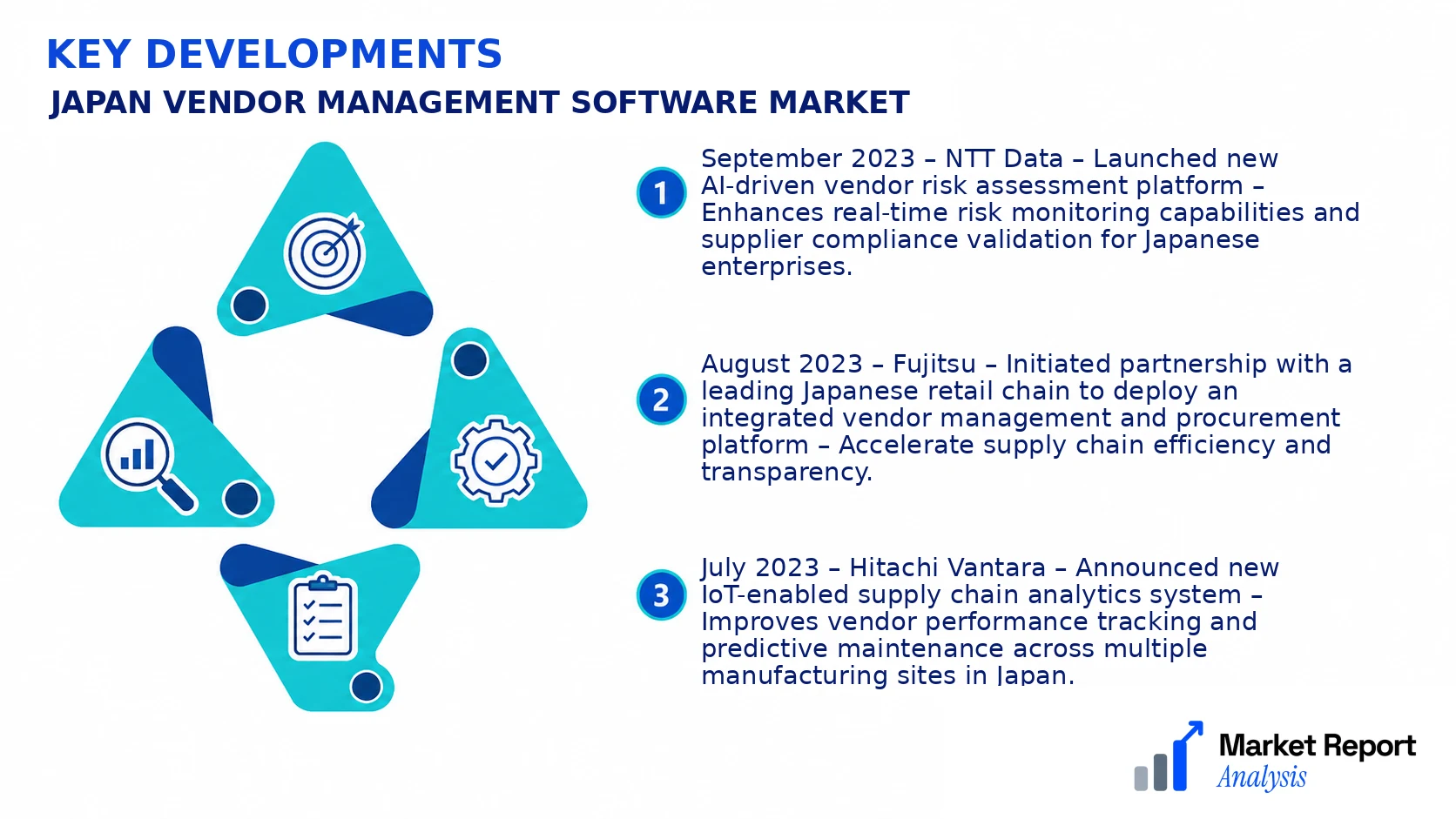
- September 2023 – NTT Data – Launched new AI-driven vendor risk assessment platform – Enhances real-time risk monitoring capabilities and supplier compliance validation for Japanese enterprises.
- August 2023 – Fujitsu – Initiated partnership with a leading Japanese retail chain to deploy an integrated vendor management and procurement platform – Accelerate supply chain efficiency and transparency.
- July 2023 – Hitachi Vantara – Announced new IoT-enabled supply chain analytics system – Improves vendor performance tracking and predictive maintenance across multiple manufacturing sites in Japan.
- June 2023 – Oracle Japan – Acquired a local vendor onboarding startup – Strengthening cloud-based procurement workflows and expanding local market reach in Japan.
- May 2023 – ServiceNow Japan – Launched new workflow automation tools tailored for vendor management processes – Boosting operational agility and compliance adherence for key Japanese clients.
Frequently Asked Questions
What is the Japan Vendor Management Software Market?
The Japan Vendor Management Software Market comprises digital solutions designed to streamline and optimize the management of vendor relationships, procurement processes, and contract lifecycle management specific to Japan's corporate and public sectors, becoming increasingly vital for operational efficiency.
What is the current market size of Japan Vendor Management Software Market?
As of 2026, the market size for Vendor Management Software in Japan is estimated at approximately USD 1.2 Billion, reflecting the rapid digital transformation and growing demand for integrated vendor solutions across various industries in the country.
What factors are driving the Japan Vendor Management Software Market?
Key drivers include increasing adoption of digital procurement solutions, enterprise-wide digital transformation initiatives, regulatory compliance requirements, and a rising need for transparency and risk mitigation in vendor operations within Japan’s corporate landscape.
Which region dominates the Japan Vendor Management Software Market?
Tokyo, as the major economic and technological hub, dominates the market, accounting for the largest share due to the presence of numerous multinational corporations, government agencies, and technology firms leading adoption and innovation in vendor management solutions.
Which segment is expected to grow the fastest?
The small and medium-sized enterprise (SME) segment is anticipated to exhibit the fastest growth, driven by increasing digital initiatives, cost-efficiency needs, and the adoption of cloud-based vendor management solutions tailored for SMEs in Japan.
Who are the leading companies operating in the Japan Vendor Management Software Market?
Major players include SAP, Oracle, IBM, Coupa Software, and local providers such as NEC and Fujitsu, who are actively expanding their offerings and market presence through strategic partnerships, product innovation, and local customization to serve Japan’s unique business environment.
Analyst Perspective
The Japan Vendor Management Software Market is positioned for sustained growth, driven by increasing digital transformation initiatives across industries. Over the forecast period to 2034, the market is expected to expand at a CAGR of approximately 14.2%, reflecting growing enterprise adoption and regional technological advancements. Long-term prospects remain favorable, especially as companies increasingly prioritize streamlined vendor operations and risk mitigation strategies. Notable commercial opportunities include the integration of advanced analytics, AI, and cloud-based solutions that enhance vendor insights and decision-making. Investment priorities should focus on enhancing platform scalability, security, and interoperability to meet evolving regulatory and business demands. Despite rising competition, established players and innovative startups are actively refining their offerings, fostering a dynamic landscape. Regional growth potential remains robust in urban centers such as Tokyo and Osaka, where digital adoption is highest. Strategic positioning for vendors involves fostering partnerships with local enterprises and investing in city-level innovation hubs to capitalize on untapped opportunities in specialized sectors and government-driven projects.
