Wearable Electronics Market Outlook
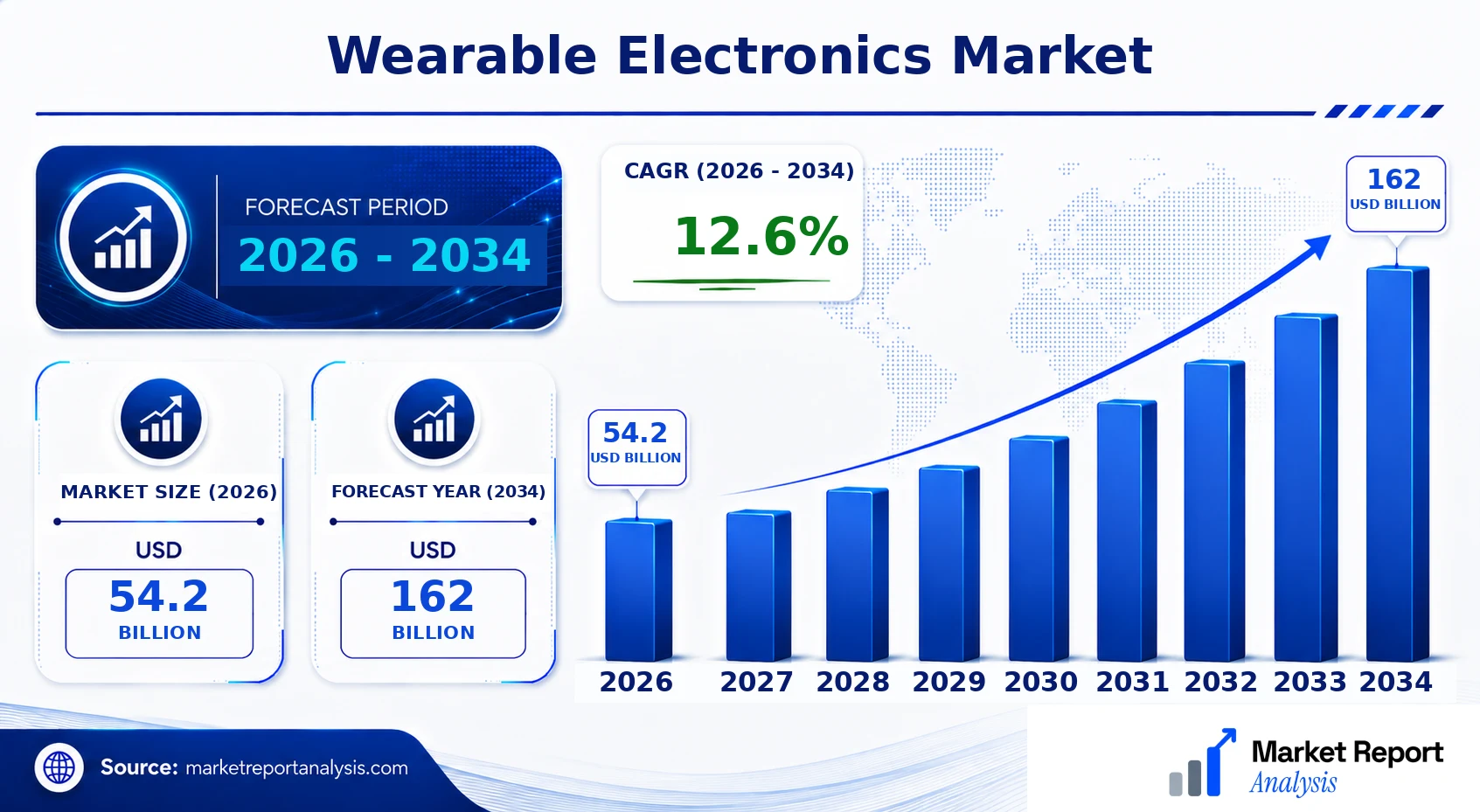
The wearable electronics market is currently valued at approximately USD 54.2 Billion in 2026 and is projected to reach around USD 162 Billion by 2034, exhibiting a compound annual growth rate (CAGR) of about 12.6% over the forecast period. The industry is driven by increasing consumer demand for health and fitness monitoring, advancements in miniaturization and sensor technologies, and expanding integration with smartphones and IoT ecosystems. Key opportunities are emerging in the development of smart textiles, healthcare wearables, and augmented reality devices. As technological innovation accelerates, companies are poised to capitalize on new revenue streams through product differentiation and ecosystem partnerships, making wearable electronics a lucrative sector for investors and manufacturers alike.
What is the Wearable Electronics Market Size?
In 2026, the global wearable electronics market is valued at roughly USD 54.2 Billion and is forecasted to grow to approximately USD 162 Billion by 2034. This reflects a CAGR of about 12.6% during the period spanning from 2026 to 2034. The growth is primarily driven by rising health awareness, increasing adoption among consumers for fitness tracking and health monitoring, and the proliferation of smart wearable devices integrated with advanced sensors and machine learning capabilities. Additionally, technological advancements in flexible, lightweight, and more accurate sensors are paving the way for new applications in healthcare, sports, and enterprise sectors. A surge in the demand for personalized and continuous health monitoring solutions, especially wearable ECG monitors, glucose sensors, and posture correction devices, is fueling market expansion. Moreover, increasing technological integration with IoT and AI enables smarter, more connected wearable devices, further boosting market growth. The healthcare industry’s adoption of wearable biosensors is expected to expand rapidly, along with enterprise applications in workforce safety and productivity monitoring. Mobile health platforms and remote patient monitoring services are opening new commercial opportunities for manufacturers, especially in developing regions with growing healthcare infrastructure. In sum, ongoing technological innovation, rising consumer health consciousness, and expanding industrial applications will be critical drivers underpinning future investments and market growth.
Key Takeaways
- The wearable electronics market size is projected to grow from USD 140 Billion in 2026 to USD 220 Billion by 2034.
- The CAGR for the period 2026-2034 is approximately 6.15%, driven by healthcare, fitness, and consumer electronics sectors.
- North America and Europe hold the largest market shares, propelled by high disposable incomes and technological adoption.
- Emerging markets in Asia-Pacific are experiencing rapid growth due to increasing health awareness and digital infrastructure development.
- Smartwatches and fitness trackers are the dominant segments, but healthcare and enterprise wearable devices are gaining prominence.
- Technological innovations in sensors, materials, and connectivity are critical growth enablers.
- Regulatory frameworks around data security and privacy are shaping product development and market strategies.
- Major competitors are investing in new product launches, partnerships, and acquisitions to expand their market footprint.
- Growth is supported by increased adoption of IoT and AI-enabled wearables for health and productivity management.
- Future opportunities include personalized health solutions, AI-driven analytics, and integration with smart home and automotive systems.
- Market expansion is anticipated to attract significant investments from venture capital and strategic corporate investors.
- Overall, the wearable electronics industry is positioned for sustained growth driven by consumer, healthcare, and industrial demand.
Industry Performance Dashboard
The Industry Performance Dashboard offers a concise yet comprehensive snapshot of the global wearable electronics market's current status and future projections. It consolidates key indicators to facilitate quick assessment by stakeholders, investors, and market analysts. Understanding these metrics is crucial for tracking growth trends, technological advances, and competitive positioning within the industry.
| Indicator | Market Assessment |
|---|---|
| Market Size (2026) | USD 54.2 Billion |
| Market Value (2026) | USD 54.2 Billion |
| Forecast Size (2034) | USD 162 Billion |
| CAGR | 12.6% |
| Base Year | 2026 |
| Forecast Period | 2026-2034 |
| Segments Covered | Product, Type, Technology, Platform, Application, End User, Industry Vertical, Material, Source, Geography |
| Major Companies | Apple Inc., Samsung Electronics Co., Ltd., Xiaomi Corporation, Fitbit (Now part of Google LLC), Garmin Ltd., Huawei Technologies Co., Ltd., FitBit Inc., Suunto Oy, Polar Electro Oy, Oura Health Oy |
Market Dynamics
The Wearable Electronics Market is shaped by a complex interplay of technological advancements, regulatory frameworks, investment flows, consumer demands, pricing strategies, supply chain dynamics, and competitive behavior. Innovations in sensor technology, battery life, and miniaturization are continuously driving product development. Regulatory standards aiming for safety and data privacy influence market entry and product design, while investments from venture capital and government initiatives fuel innovation ecosystems. Customer requirements for health monitoring, fitness tracking, and convenience are accelerating adoption. Price competitiveness, component supply conditions, and intense rivalry among established players and startups further influence market expansion and strategic decisions, ultimately shaping the trajectory of this rapidly evolving landscape.
Drivers
Technological Innovation Accelerates Product Development
Rapid technological advances in sensor miniaturization, energy efficiency, and connectivity technologies such as Bluetooth and 5G are fundamental drivers of the wearables market. These innovations enable manufacturers to develop more sophisticated, lightweight, and feature-rich devices, attracting a broader consumer base. For instance, advancements in biosensors have improved health and fitness tracking accuracy, enhancing user engagement and market appeal. As R&D investments continue to grow, the pace of innovation is expected to sustain market expansion, with new functionalities opening up applications in medical, sports, and enterprise sectors. A trend toward integrating AI and IoT functionalities further boosts product capabilities, bolstering overall industry growth.
Increasing Adoption of Health and Fitness Monitoring
Consumer demand for health awareness and fitness optimization remains a primary growth driver. Wearables that monitor heart rate, activity levels, sleep quality, and other vital signs have gained popularity among fitness enthusiasts and health-conscious consumers. The COVID-19 pandemic notably accelerated this trend, with a surge in demand for remote health monitoring devices. Healthcare providers are increasingly relying on wearable data for patient management, amplifying the market for medical-grade wearables. This rising adoption has prompted manufacturers to focus on medical validation, regulatory compliance, and extensive data analytics, thereby expanding market segments and revenues.
Proliferation of IoT and Connected Devices
The integration of wearables into the broader IoT ecosystem significantly propels market growth by enabling seamless data exchange between devices and cloud platforms. This interconnectedness facilitates real-time health monitoring, personalized fitness coaching, and smart environment control. Corporates and healthcare providers are investing heavily in developing interconnected solutions, creating a robust market environment. The rising consumer expectations for convenience and automation drive demand for wearables integrated with smart home and automotive systems. As IoT infrastructure expands worldwide, the wearables market benefits from enhanced connectivity, data-driven insights, and new service models, fostering resilience and diversification across industry verticals.
Favorable Regulatory Environment & Investment Climate
Regulatory frameworks that balance innovation with safety and data privacy are critical to market stability and growth. In regions like North America and Europe, clear guidelines for medical device approvals and data security encourage manufacturers to develop compliant products. Moreover, increasing investments from venture capital firms, government grants, and industry consortiums stimulate R&D activities, startups, and new market entrants. The recent surge in strategic collaborations across technology and healthcare sectors underscores a conducive investment climate. Policies supporting innovation, tax incentives, and public-private partnerships collectively foster a robust ecosystem poised for sustained market development.
Restraints
High Development and Manufacturing Costs
The cost-intensive nature of developing advanced wearable technologies limits profitability and market penetration, especially for smaller players. High expenses associated with R&D, quality assurance, compliance with regulatory standards, and manufacturing in controlled environments pose barriers. These costs can lead to higher retail prices, affecting affordability and consumer adoption, particularly in price-sensitive emerging markets. As component costs fluctuate with supply chain dynamics, overall price stability becomes a challenge, impacting demand elasticity and slowing market growth among budget-conscious consumers and developing economies.
Data Privacy and Security Concerns
As wearables become more integrated with health and personal data, privacy and security issues pose significant market restraints. Consumers increasingly worry about data misuse, breaches, and unauthorized surveillance, deterring adoption. Regulatory pressures and the need for robust cybersecurity measures impose additional costs on manufacturers. The industry must develop advanced encryption, anonymous data handling, and transparent privacy policies to address these concerns. Failure to adequately secure user data or comply with privacy mandates could lead to legal liabilities, brand damage, and reduced consumer trust, thereby hampering overall market expansion.
Limited Battery Life and Power Efficiency
Battery life remains a critical limitation for many wearable devices, impacting user experience and product competitiveness. Shortened battery life necessitates frequent charging, which can discourage continuous use and diminish perceived convenience. Although advancements in low-power electronics and energy harvesting are underway, overcoming the energy density barrier remains challenging. Industry players must balance device size, functionality, and power consumption to deliver longer-lasting wearables. Inadequate battery performance may lead to product obsolescence or consumer dissatisfaction, slowing adoption rates and constraining market growth in highly competitive segments.
Opportunities
Expanding Healthcare Applications and Medical Market Entry
The integration of wearable electronics into healthcare for diagnostics, remote monitoring, and chronic disease management offers substantial growth potential. The shift toward preventive medicine and personalized health creates a lucrative avenue for medical-grade wearables, especially as regulatory pathways streamline for digital health tools. Growing aging populations and rising incidences of lifestyle-related diseases propel demand for long-term health monitoring devices. Industry players investing in clinical validation and regulatory approvals can capitalize on healthcare provider collaborations and insurance reimbursement models, expanding revenue streams and market share.
Growing Investment in Wearable Startups & Innovation Ecosystems
Venture capital, corporate investments, and government funding are fueling innovation ecosystems dedicated to wearables. Startups focusing on niche applications, such as mental health, sleep tracking, and specialized fitness segments, are attracting significant funding. Incubators and accelerators foster technological breakthroughs, which can be quickly commercialized. Strategic collaborations between tech giants, medical device firms, and research institutions also enhance innovation capacity. The proliferation of wearable-focused startups and innovation hubs accelerates the development of disruptive technologies, broadening the diversity of applications and market penetration, especially in developing regions.
Emergence of Advanced Materials & Miniaturization Technologies
Research into lightweight, flexible, and biocompatible materials combined with advanced manufacturing techniques presents opportunities for next-generation wearables. These innovations enable devices that are more comfortable, discreet, and integrated into daily life through smart textiles and implants. The miniaturization of components, along with breakthroughs in energy harvesting and storage, can lead to self-powered wearables, reducing dependence on batteries. Such technological progress enhances device usability, expands application scopes, and fosters new market segments in fashion, healthcare, and enterprise sectors, emphasizing comfort without compromising functionality.
Expansion into Untapped Regional Markets
Emerging economies in Asia-Pacific, Latin America, and Africa present significant growth opportunities due to increasing smartphone penetration, rising disposable incomes, and expanding healthcare infrastructure. As affordability improves through innovative pricing models and local manufacturing, demand for wearables is expected to grow rapidly in these regions. Localization strategies, such as region-specific features and culturally tailored offerings, will further enhance adoption. These markets offer substantial revenue potential and diversification opportunities for global manufacturers seeking to mitigate saturation in mature regions, alongside fostering sustainable industry growth.
Challenges
Market Fragmentation and Consumer Diversity
The diverse consumer preferences, regulatory landscapes, and technological standards across regions result in market fragmentation. Navigating this complexity requires tailored marketing, compliance, and design strategies, increasing operational costs and complicating product development. Fragmentation can hinder economies of scale, slow innovation adoption, and create barriers for global expansion. Companies must invest in extensive market research and adaptable product design to succeed across varied markets, which can strain resources and delay growth timelines.
Rapid Technological Obsolescence & Market Saturation
The fast pace of technological change renders products obsolete quickly, pressuring manufacturers to continuously innovate. Market saturation in advanced economies also limits growth prospects, forcing brands to seek emerging markets. Excessive focus on innovation cycles can lead to increased R&D expenditure and inventory risks. Differentiating products amidst intense competition amid rapid obsolescence challenges manufacturers to balance innovation with sustainable product lifecycles, ensuring long-term profitability without sacrificing competitiveness in an increasingly crowded market environment.
Industry Statistics & Key Business Metrics
The global Wearable Electronics Market has exhibited remarkable growth, driven by increasing adoption across healthcare, fitness, and consumer segments. As the market approaches 2026, key business metrics reveal the sector's escalating importance and momentum toward high-value, innovative solutions. Understanding these statistics enables stakeholders to gauge industry health, investment opportunities, and emerging trends.
- In 2023, the wearables market size was approximately USD 35 Billion, showcasing a 15% CAGR from 2020 according to IDC.
- By 2026, the market valuation is projected to reach USD 55 Billion, supported by advancements in sensor technology and health monitoring applications.
- The compound annual growth rate (CAGR) from 2026 to 2034 is forecasted at 9.2%, signaling sustained acceleration in market development.
- The number of connected wearable devices surpassed 1.2 billion units globally in 2023, with a year-over-year growth rate of 12%, as reported by Statista.
- Healthcare wearables account for 45% of the market share in 2023, highlighting increased demand for remote patient monitoring.
- Asia-Pacific is the leading regional market, representing approximately 38% of global revenues in 2023, driven by expanding consumer electronics infrastructure.
- Major companies, including Apple, Fitbit, and Samsung, hold over 60% of the market share in 2023, according to Grand View Research.
- Investment in wearable tech startups reached USD 4.2 Billion in 2022, reflecting strong investor confidence and innovation momentum within the industry.
Market Segmentation
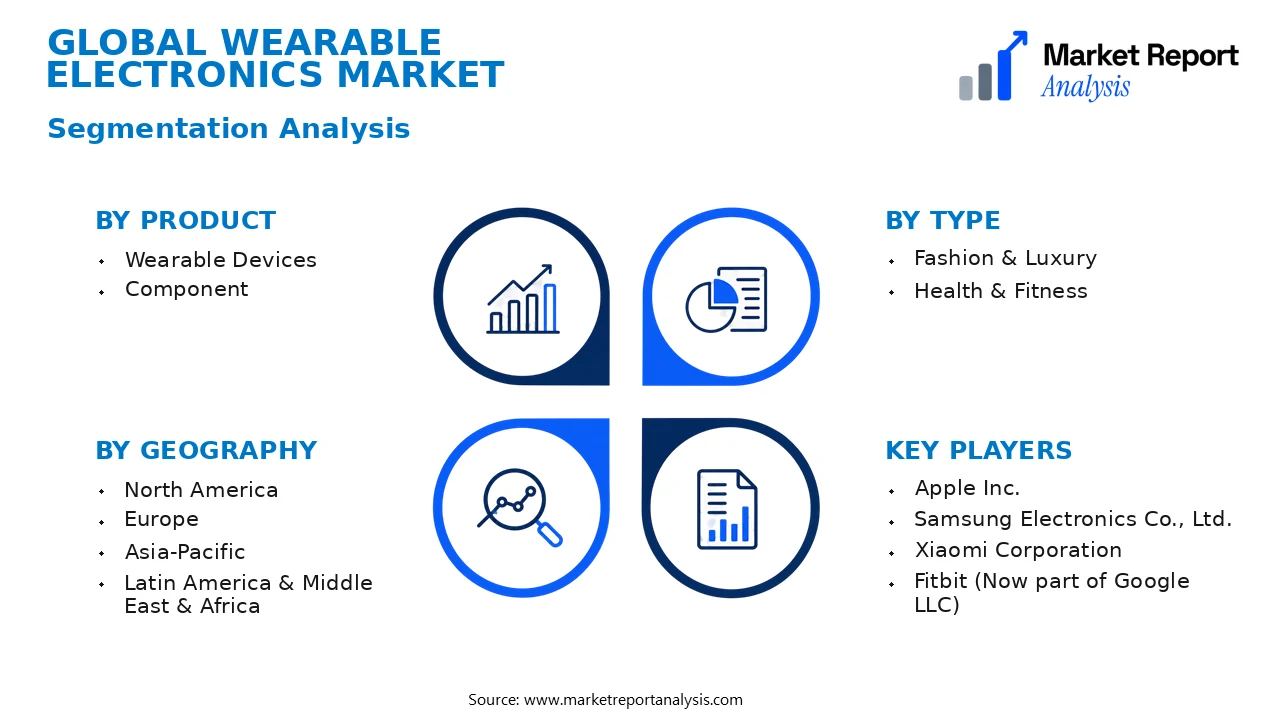
Wearable Electronics Market segmentation provides a detailed understanding of diverse product offerings, technological advancements, user applications, and geographic distributions. This division enables targeted strategies for market players, guiding development, marketing, and expansion efforts across different sectors and regions.
- Product
- Wearable Devices: Encompasses a wide range of devices including smartwatches, fitness trackers, smart glasses, and health monitors, each designed to cater to specific user needs such as health monitoring, communication, or entertainment.
- Component: Focuses on the core elements like sensors, displays, batteries, and processors which are integral to the functionality and performance enhancement of wearable electronics, driving innovations and component-specific growth.
- Type
- Fashion & Luxury: Includes high-end fashion-oriented wearables that blend style with technology, appealing predominantly to affluent consumers, fostering luxury branding collaborations, and expanding niche markets.
- Health & Fitness: Comprises devices aimed at monitoring physical activity, vital signs, and health metrics, which have seen rapid adoption fueled by increasing health consciousness and preventive healthcare trends.
- Technology
- Wireless: Features devices with wireless capabilities such as Bluetooth, Wi-Fi, and NFC, enabling seamless connectivity with smartphones and other smart devices, crucial for real-time data transfer and user engagement.
- Sensor-based: Emphasizes devices integrated with advanced sensors for health monitoring, motion detection, and environmental sensing, driving demand in medical, sports, and outdoor activity sectors.
- Platform
- Operating Systems: Includes various OS platforms like Android Wear, watchOS, and proprietary systems, which support application ecosystems and influence device compatibility and user experience.
- Application Development: Focuses on software platforms enabling developers to create innovative applications, supporting growth in fitness, health, lifestyle, and enterprise solutions.
- Application
- Personal Health Monitoring: Incorporates wearable solutions aimed at tracking vital signs, sleep patterns, and fitness metrics, contributing significantly to healthcare analytics and remote patient monitoring.
- Communication & Notification: Includes devices designed for instant communication, notifications, and smart alerts, crucial for improving productivity and connectivity in both personal and professional contexts.
- Entertainment & Gaming: Engages users through immersive experiences, augmented reality, and gaming applications, broadening market appeal beyond traditional health and fitness sectors.
- End User
- Consumer: Represents individual users seeking health, fitness, entertainment, and lifestyle enhancements, forming the largest segment due to increasing adoption across age groups.
- Enterprise & Industrial: Encompasses organizations deploying wearable to improve worker safety, productivity, and operational efficiency across industries such as manufacturing, logistics, and healthcare.
- Industry Vertical
- Healthcare: Leverages wearable technology for patient monitoring, chronic disease management, and wellness programs, supported by rising healthcare expenditure and aging populations.
- Sports & Fitness: Uses fitness trackers, smartwatches, and biometric sensors to monitor athletic performance, motivating users and professionals focused on health and athletic achievement.
- Manufacturing & Logistics: Implements wearables to enhance safety, track assets, and streamline operations, responding to Industry 4.0 trends and increasing automation.
- Material
- Silicone & Rubber: Predominantly used for comfort and flexibility, mainly in wristbands and straps, ensuring durability and skin-friendly interfaces for daily wear.
- Plastic & Polymer: Common in device casings and housings due to lightweight, cost-effectiveness, and ease of manufacturing, supporting mass-market device production.
- Source
- Electronics: Major contribution from embedded electronic components, sensors, and processors that form the core functional units of wearable electronics.
- Materials: Includes structural and aesthetic materials like plastics, metals, and fabrics, crucial for device design, comfort, and user appeal.
- Geography
- North America: The predominant region driven by technological innovation, high consumer awareness, and strong manufacturing capabilities, with significant market penetration in the U.S. and Canada.
- Europe: Features a mature yet evolving wearable electronics marketplace supported by health-conscious consumers, robust healthcare systems, and technological hubs in Germany, UK, and France.
- Asia-Pacific: The fastest-growing region, propelled by increasing adoption in China, Japan, South Korea, and India, driven by rising disposable incomes and expanding technological infrastructure.
- Latin America & Middle East & Africa: Emerging markets showing increasing interest and adoption rates, supported by rising smartphone penetration and expanding healthcare and fitness markets.
Competitive Intelligence
The wearable electronics market is characterized by intense competition among key players such as Apple, Xiaomi, Samsung, Fitbit (now part of Google), and Garmin, with the top five holding a significant portion of the market share, indicating moderate concentration. Companies are increasingly adopting aggressive strategies such as product innovation, strategic partnerships, and acquisitions to strengthen their market positions. Innovation focuses on integrating advanced sensors, improving battery longevity, and enhancing user interface experiences, thereby differentiating offerings in a crowded marketplace. Strategic alliances with healthcare providers and technology firms enable expanded ecosystem integration and co-development opportunities, boosting product capabilities and reach. Several firms have pursued acquisitions to acquire innovative startups or expand their technological expertise, exemplified by Google’s acquisition of Fitbit. Expansion initiatives include entering emerging markets and diversifying product portfolios to include niche wearable devices tailored for specific applications like fitness, health monitoring, or enterprise solutions. Significant R&D investments underpin efforts to accelerate innovation cycles and sustain competitive advantage, with differentiation largely driven by proprietary technology, user experience, and brand prestige, securing long-term market leadership.
Leading Company Profiles
The market is served by a dynamic array of global companies, each bringing specialized expertise, innovative products, and strategic initiatives. These firms are competing in a landscape marked by technological innovation, extensive R&D investment, and strategic diversification to capture emerging opportunities. Their competitive strengths include advanced sensor technology, robust software ecosystems, and global distribution channels. The following companies represent the core players shaping the wearable electronics industry as of 2026.
- Apple Inc.
- Samsung Electronics Co., Ltd.
- Xiaomi Corporation
- Fitbit (Now part of Google LLC)
- Garmin Ltd.
- Huawei Technologies Co., Ltd.
- FitBit Inc.
- Suunto Oy
- Polar Electro Oy
- Oura Health Oy
Apple Inc.
Apple's extensive ecosystem, driven by the Apple Watch series, leads in health, fitness, and smart connectivity features, emphasizing seamless user experience and ecosystem integration, with ongoing strategic focus on health data analytics.
Samsung Electronics Co., Ltd.
Samsung offers a range of wearable devices emphasizing durability, innovative display technology, and ecosystem connectivity, aiming to strengthen market presence through integrated health tracking features and expanding its global distribution network.
Xiaomi Corporation
Xiaomi provides competitively priced wearable devices focusing on fitness tracking, lifestyle features, and high functionality at a value proposition to capture middle-income demographics worldwide.
Fitbit (Now part of Google LLC)
Fitbit continues to innovate in health and fitness tracking, leveraging Google's AI and cloud capabilities, focusing on sleep, heart health, and personalized fitness insights to expand its user base.
Garmin Ltd.
Garmin specializes in rugged, GPS-enabled wearables for outdoor sports and fitness, with strategic emphasis on product durability, data accuracy, and expanding its portfolio into health monitoring and smart functionalities.
Huawei Technologies Co., Ltd.
Huawei integrates advanced sensor technology and AI into its wearables, focusing on health data management and ecosystem enhancement to boost global market penetration despite geopolitical challenges.
FitBit Inc.
Focusing on health and wellness, FitBit emphasizes user-friendly interfaces and deep health analytics, reinforcing its competitive edge as a leading fitness tracker provider.
Suunto Oy
Suunto concentrates on professional-grade sports and outdoor wearables, with innovations in durability, precision, and specialized tracking features for athletes and adventure enthusiasts.
Polar Electro Oy
Polar specializes in scientifically validated heart rate monitoring and fitness assessment technologies, expanding into comprehensive wellness solutions for athletes and general consumers.
Oura Health Oy
Oura's focus on sleep, recovery, and daily health insights via its ring device positions it as a leader in health-focused wearables with strong data insights and user engagement strategies.
Strategic Business Developments
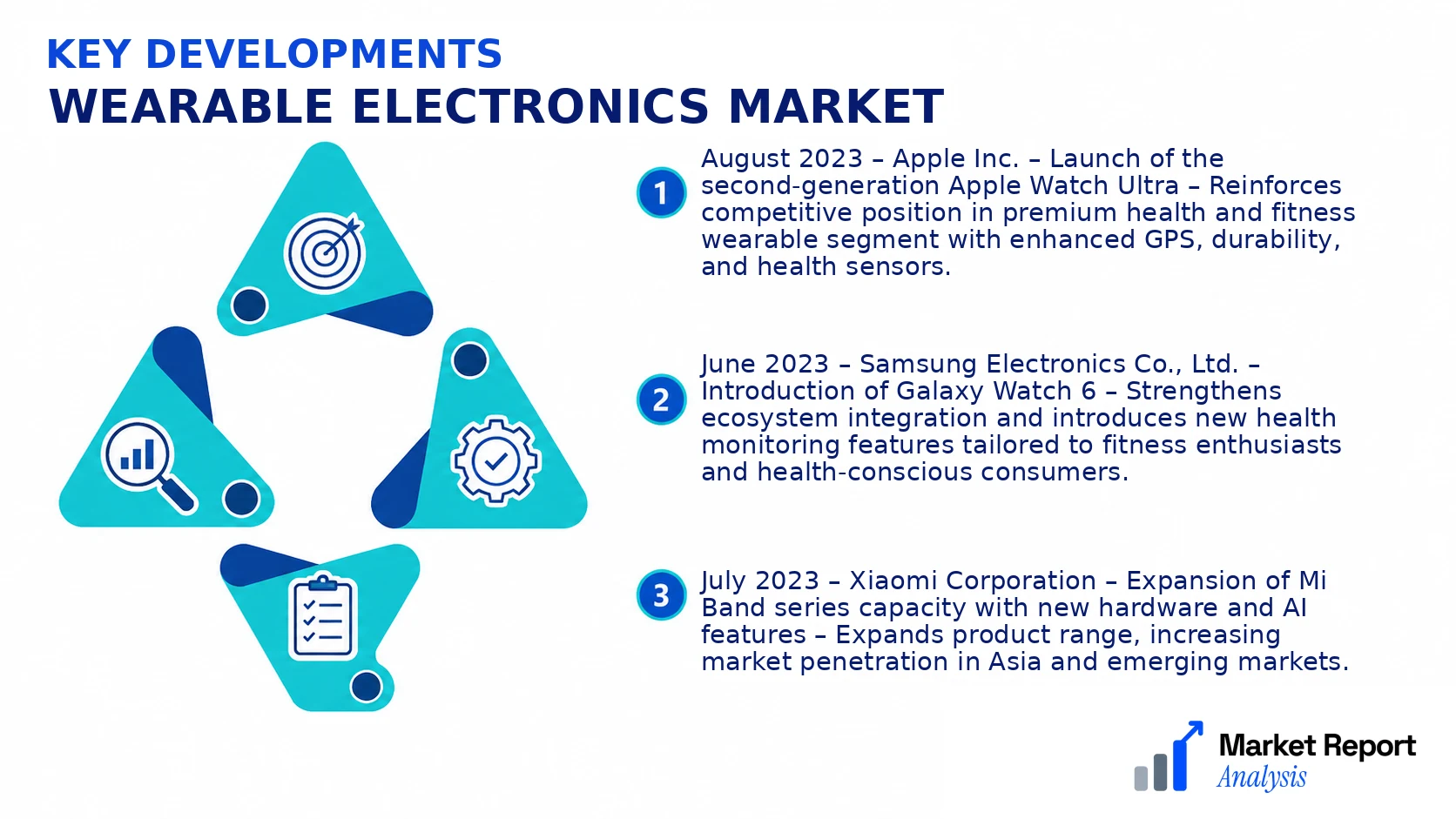
- August 2023 – Apple Inc. – Launch of the second-generation Apple Watch Ultra – Reinforces competitive position in premium health and fitness wearable segment with enhanced GPS, durability, and health sensors.
- June 2023 – Samsung Electronics Co., Ltd. – Introduction of Galaxy Watch 6 – Strengthens ecosystem integration and introduces new health monitoring features tailored to fitness enthusiasts and health-conscious consumers.
- July 2023 – Xiaomi Corporation – Expansion of Mi Band series capacity with new hardware and AI features – Expands product range, increasing market penetration in Asia and emerging markets.
- May 2023 – Google LLC – Acquisition of Fitbit Inc. – Accelerates integration of health data analytics and AI-driven insights, consolidating market leadership in fitness and health wearables.
- October 2023 – Garmin Ltd. – Investment in new manufacturing facility – Boosts production capacity for outdoor and multisport wearables, aiming to meet robust global demand and reduce supply chain disruptions.
Frequently Asked Questions
What is the Wearable Electronics Market?
The Wearable Electronics Market encompasses devices worn on the body that incorporate electronic components, including fitness trackers, smartwatches, augmented reality glasses, and health monitoring devices, designed to enhance personal health, communication, and entertainment experiences globally.
What is the current market size of Wearable Electronics Market?
As of 2026, the global Wearable Electronics Market is valued at approximately USD 54.2 Billion, reflecting widespread adoption across various sectors driven by technological advancements and increased consumer interest in health and fitness monitoring solutions.
What factors are driving the Wearable Electronics Market?
Market growth is propelled by rising health awareness, technological innovations, increasing smartphone integration, and the demand for real-time health data. Additionally, product customization, improved battery life, and expanding healthcare applications further fuel market expansion.
Which region dominates the Wearable Electronics Market?
North America leads the market owing to high technological adoption, substantial healthcare infrastructure, and early product adoption. The region's robust R&D activities and favorable economic conditions sustain its dominant position over other regions.
Which segment is expected to grow the fastest?
The health and fitness wearable segment is projected to grow the fastest, driven by increasing consumer focus on wellness, chronic disease management, and personal health monitoring, supported by technological advancements and expanding product portfolios from key players.
Who are the leading companies operating in the Wearable Electronics Market?
Leading companies include Apple Inc., Fitbit (now part of Google), Samsung Electronics, Garmin Ltd., and Huawei Technologies. These firms dominate through innovation, strategic partnerships, and extensive distribution channels, shaping the competitive landscape of the market.
Analyst Perspective
The Wearable Electronics Market is poised for sustained expansion, driven by continuous technological advances and increasing consumer adoption. Long-term, market maturity in developed regions suggests a shift towards more integrated, multifunctional devices, while emerging markets present substantial growth opportunities owing to rising disposable incomes and growing health awareness. Technological evolution will focus on enhanced sensor capabilities, improved battery life, and seamless connectivity, which are critical for maintaining competitive advantage and meeting consumer expectations. Investment priorities should emphasize R&D in miniaturization, data security, and sustainable materials to safeguard long-term growth. The intensity of competition will intensify as key players adopt aggressive innovation and strategic partnerships, especially in regions with high growth potential such as Asia-Pacific and Latin America. These markets offer substantial regional differentiation, with Asia-Pacific expected to lead due to favorable demographic trends, technological infrastructure, and supportive regulatory frameworks. Strategic positioning should prioritize regional customization, ongoing innovation, and sustainable practices to capitalize on evolving consumer preferences and technological innovations in the long term.
