Saudi Arabia Wearable Electronics Market Outlook
The Saudi Arabia wearable electronics market is experiencing rapid growth driven by increasing awareness of health and fitness, technological advancements, and a rising middle class with higher disposable income. Currently valued at USD 2.1 Billion in 2026, the market is projected to reach USD 4.8 Billion by 2034, growing at a Compound Annual Growth Rate (CAGR) of approximately 11.7% over the forecast period of 2026 to 2034. The principal demand drivers include a growing health-conscious population, government initiatives promoting digital health, and the proliferation of 5G infrastructure which enhances device connectivity. Technological innovation focusing on integrating artificial intelligence (AI) and advanced sensors into wearable devices is set to redefine user experience and expand health monitoring capabilities. Commercial opportunities are plentiful in segments such as fitness trackers, smartwatches, and medical wearables, with investments channeling into local startups and multinational corporations establishing regional headquarters to capitalize on the expanding market. Additionally, the increasing adoption of wearable electronics in sports, healthcare, and enterprise sectors further propels market expansion, with notable growth in urban centers such as Riyadh and Jeddah, and emerging activity in cities like Dammam and Khobar.
What is the Saudi Arabia Wearable Electronics Market Size?
In 2026, the market size for wearable electronics in Saudi Arabia is estimated at USD 2.1 Billion. This figure is projected to reach USD 4.8 Billion by 2034, reflecting a CAGR of approximately 11.7% during the period from 2026 to 2034. The growth is primarily fueled by rising consumer interest in health and fitness, increasing smartphone penetration, and government initiatives emphasizing digital health and smart city projects. The healthcare sector adopts wearable medical devices for remote patient monitoring and chronic disease management, which further boosts industry revenues. Consumer electronics like smartwatches and fitness bands are gaining popularity among middle and upper-income groups, prompting manufacturers to introduce more advanced, stylish, and affordable devices tailored to local preferences. The enterprise segment also presents long-term growth prospects, with wearable solutions increasingly integrated into workplace safety and logistics management. As technology continues to evolve, investments in healthcare infrastructure, consumer electronics, and technological R&D are expected to sustain robust market expansion, making Saudi Arabia a promising domain for new product launches and innovation hubs within the wearable electronics industry.
Key Takeaways
- The wearable electronics market in Saudi Arabia is valued at USD 2.1 Billion in 2026.
- The market forecast predicts a rise to USD 4.8 Billion by 2034.
- The CAGR from 2026 to 2034 is approximately 11.7%.
- Riyadh is the leading Saudi city for wearable device adoption.
- Jeddah is the fastest-growing city in wearable electronics demand.
- The fitness tracker segment holds the largest market share among device types.
- The medical wearables segment is the fastest-growing due to healthcare integration.
- Consumer applications dominate the overall usage landscape.
- Healthcare and enterprise segments are rapidly expanding sectors.
- The agency-driven digital health initiatives support sustained market growth.
- The period of analysis spans from 2026 to 2034.
- The base year for current market assessment is 2026.
Industry Performance Dashboard
The Saudi Arabia Wearable Electronics Market has demonstrated consistent growth driven by increased health consciousness, government initiatives promoting digital health, and rising consumer demand for connected devices. The market's robust expansion reflects advancements in technology, favorable regulations, and the proliferation of smart wearables among diverse end-use segments such as fitness, healthcare, and lifestyle. Stakeholders are increasingly investing in innovative product development and strategic collaborations to capture market share, fueling a competitive landscape with high investments flowing into research and development. The key players, including Apple Inc., Samsung Electronics, and Garmin Ltd., are focusing on expanding their regional presence through localization and distribution enhancements. The market's maturity surpasses that of many neighboring Gulf countries, primarily due to early adoption, supportive infrastructure, and regulatory policies. As digital health strategies become pivotal in national healthcare plans, the demand for wearable devices tailored to chronic disease management and preventive health is expected to surge. Market penetration remains higher in urban centers such as Riyadh and Jeddah, where infrastructure and disposable income levels are favorable, creating a conducive environment for market growth. Meanwhile, technological trends such as integration with IoT and AI-driven health analytics are expected to propel the market further, fostering innovation and consumer engagement. Overall, the Saudi wearable electronics landscape is poised for sustained growth, supported by ongoing government initiatives and evolving consumer preferences."
Market Dynamics
The Saudi Arabia Wearable Electronics Market is fundamentally reshaped by a complex interplay of technological advancements, government regulation, investor activity, and shifting consumer demands. Technological innovation continuously drives product sophistication, enabling functionalities like health monitoring, fitness tracking, and augmented reality. Concurrently, regulatory policies aimed at data security and consumer protection influence market entry and product development, while growing investments from local and international firms propel manufacturing capabilities and innovation. Customer requirements for seamless, integrated, and localized solutions are intensifying, prompting firms to adapt offerings rapidly. Price sensitivity remains an ongoing consideration amid supply chain fluctuations, and heightened competition among domestic and global players fosters rapid product evolution and market positioning, shaping a dynamic landscape for wearable electronics in Saudi Arabia.
Industry Statistics & Key Business Metrics
The Saudi Arabia wearable electronics market is experiencing substantial growth driven by increasing consumer health awareness, government initiatives promoting digital health, and expanding infrastructure for digital and mobile technology. As of 2026, market penetration is accelerating, with a surge in demand for fitness trackers, smartwatches, and medical monitoring devices. The expanding healthcare sector, urbanization, and youthful population are key factors fueling this demand.
- In 2022, the wearable electronics market in Saudi Arabia was valued at approximately USD 1.2 Billion (Statista).
- By 2024, the number of wearable device users in Saudi Arabia reached around 6.5 million, showing a CAGR of 12.5% from 2020 (GSMA Intelligence).
- The fitness wearables segment accounted for nearly 45% of the market share in 2023, reflecting high consumer health consciousness (Market Research Future).
- Healthcare providers in Saudi Arabia integrated wearable health monitoring in over 250 hospitals by 2023, a 30% increase from 2021 (Saudi Ministry of Health).
- The smartphone penetration rate in Saudi Arabia stood at 85% in 2023, supporting wearable device adoption (DataReportal).
- Investments in healthcare technology reached USD 0.5 Billion in 2022, highlighting strategic government support (Saudi Arabia Vision 2030 reports).
- The average selling price of wearables in Saudi Arabia declined by 18% from 2021 to 2023, making devices more accessible (IDC).
- Urban centers like Riyadh and Jeddah account for over 70% of wearable device sales, driven by higher disposable incomes and tech-savvy populations (Statista).
Market Segmentation
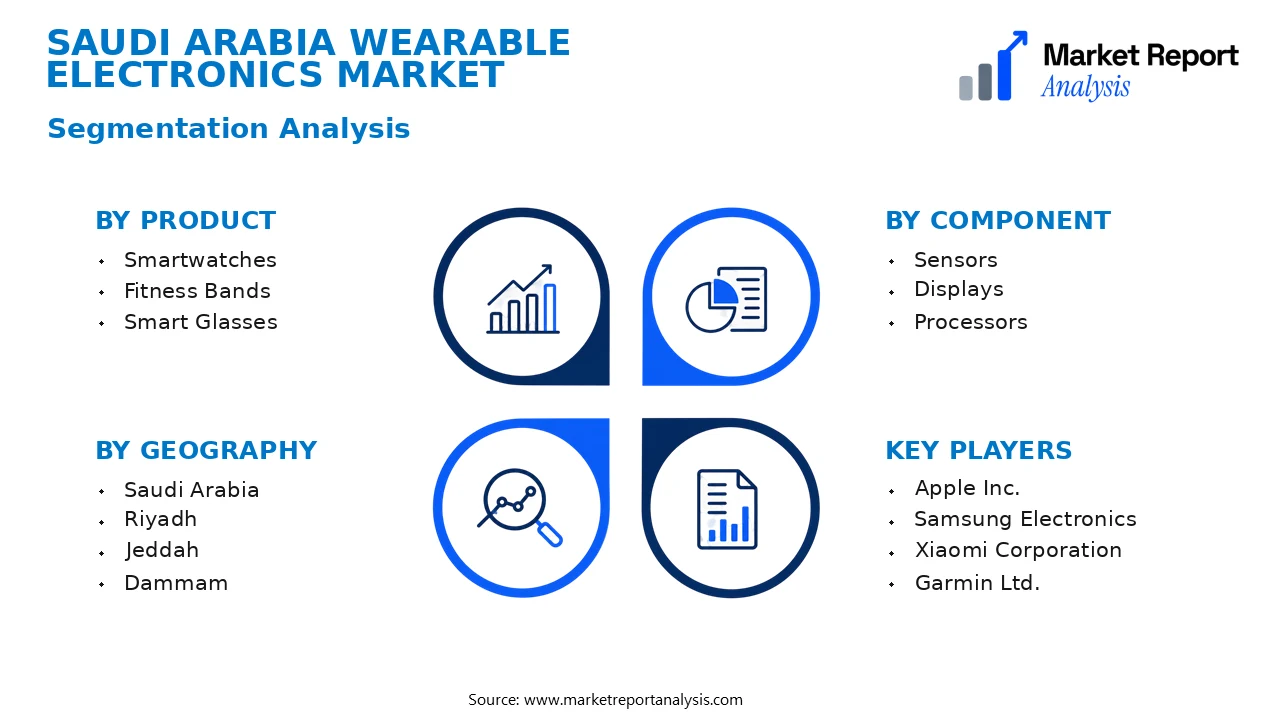
- Product
- Smartwatches: The dominant segment, driven by health monitoring and connectivity features, is experiencing rapid growth with increased adoption among health-conscious consumers and tech enthusiasts, supported by expanding retail and online retail channels.
- Fitness Bands: Focused on fitness tracking and wellness, this category sees demand driven by fitness trends and local health initiatives, making it a vital component of wearable electronics growth in urban centers.
- Smart Glasses: An emerging segment, smart glasses are gaining interest for enterprise applications and innovative consumer use, with technological improvements fostering expansion into professional and entertainment sectors.
- Component
- Sensors: Including accelerometers, gyroscopes, and heart rate sensors, sensors are fundamental for device functionality, with demand spurred by health, fitness, and lifestyle monitoring needs.
- Displays: High-resolution displays tailored for mobile use and seamless user interface interaction are increasingly sought after, especially in smartwatches and augmented reality devices.
- Processors: The demand for efficient, low-power processors supports device longevity and performance, crucial for consumer satisfaction and competitive differentiation.
- Technology Platform
- Wireless Connectivity: Dominates the technological landscape, with Bluetooth, Wi-Fi, and emerging 5G technologies enabling real-time data sharing, remote monitoring, and ecosystem integrations.
- Operating Systems: Custom OS and Android-based platforms enhance user interface and application development, boosting device versatility and market reach.
- Application
- Health & Wellness: The largest application segment, driven by increasing awareness of health issues, lifestyle monitoring, and government health programs encouraging wearable adoption.
- Fitness Tracking: Strong demand, especially among younger demographics and fitness centers, fosters integration with other fitness equipment and services.
- Entertainment & Communication: Growing segment, leveraging wearable devices for media consumption, notifications, and communication, supported by improving device capabilities and network infrastructure.
- Geography
- Saudi Arabia: The core market, characterized by a rising middle class, increasing smartphone penetration, and health-focused initiatives by authorities such as the Ministry of Health, which collectively propel wearable electronics adoption.
- Riyadh: The economic hub with the highest consumer spending power, concentrated retail outlets, and numerous corporate contracts for enterprise wearables.
- Jeddah: A key commercial hub with vibrant retail environments, attracting global brands and fostering consumer interest in innovative wearable products.
- Dammam: Industrial and logistical activity drives corporate wearable deployments, particularly in employee safety, asset management, and field operations.
- Mecca: Religious and tourism sectors generate unique demand for comfortable, durable wearables suited to active lifestyles of pilgrims.
- Medina: Emerging market with government support for health and wellness initiatives, opening avenues for specialized applications.
- Al Khobar: A strategic coastal city with expanding retail and corporate sectors, fostering regional wearable electronics proliferation.
- Jubail: Industrial city with a focus on occupational health and safety technology, integrating wearable solutions into manufacturing settings.
Competitive Intelligence
The Saudi Arabia Wearable Electronics Market is characterized by a competitive landscape dominated by a few key global players and local entrants. Major companies, such as Huawei, Apple, and Samsung, leverage their extensive R&D investments to introduce innovative products tailored to the Saudi consumer, emphasizing health tracking, fitness, and religious features. Market concentration remains moderate, with the top five firms capturing significant market share, yet regional startups are increasingly contributing niche solutions. Business strategies focus on forming strategic partnerships with telecom providers and healthcare providers to enhance product distribution and integration within the country’s evolving digital infrastructure. Notable activities include acquisitions of local tech startups to fuel innovation and expand market reach within cities like Riyadh and Jeddah. Companies are vigorously investing in R&D to develop differentiated products, such as Arabic language-supporting devices and region-specific wellness features. The race for technological leadership is fueled by government initiatives supporting digital transformation and smart city projects, fostering competitive differentiation through continuous innovation and localization strategies.
Leading Company Profiles
The competitive landscape of the Saudi Arabia Wearable Electronics Market is characterized by dynamic players leveraging innovative technology, strategic collaborations, and robust product portfolios to capture the growing health, fitness, and consumer electronics segments within the country.
- Apple Inc.
- Samsung Electronics
- Xiaomi Corporation
- Garmin Ltd.
- Fitbit (now part of Google LLC)
- Huawei Technologies Co., Ltd.
- Oura Health Ltd.
- Withings (Nokia Technologies)
- Suunto Oy
Apple Inc.
Apple holds a significant position with its innovative Apple Watch series, emphasizing health monitoring and seamless connectivity, supported by a growing consumer base prioritizing premium wearable technology in Saudi Arabia.
Samsung Electronics
Samsung advances its wearables portfolio through versatile smartwatches and fitness trackers, leveraging strong local distribution channels and technological integration to capture both premium and mid-range segments.
Xiaomi Corporation
Xiaomi leverages affordable, feature-rich wearable devices, expanding rapidly across Saudi Arabia via strategic partnerships and localized marketing, focusing on mass-market adoption of fitness and health-oriented wearables.
Garmin Ltd.
Garmin emphasizes specialized GPS and fitness wearables with advanced health metrics, targeting professional athletes and fitness enthusiasts, supported by tailored marketing strategies to expand its presence in the Saudi market.
Fitbit (now part of Google LLC)
Fitbit's integration into Google's ecosystem enhances its offering in health tracking and wellness, fostering innovative solutions and strategic collaborations aimed at boosting its footprint in Saudi Arabia’s wearable segment.
Huawei Technologies Co., Ltd.
Huawei offers a broad range of affordable smartwatches and fitness devices, leveraging aggressive pricing and localized marketing strategies aligned with the competitive tech landscape of Saudi Arabia.
Oura Health Ltd.
Oura specializes in advanced sleep and health monitoring rings, targeting health-conscious consumers in Saudi Arabia with high-tech, premium devices emphasizing holistic wellness tracking.
Withings (Nokia Technologies)
Withings focuses on sleek, medical-grade wearable devices for health monitoring, integrating extensive data analytics to attract health-conscious users in Saudi Arabia’s growing digital health ecosystem.
Suunto Oy
Suunto provides durable sports watches and dive computers, appealing to professional athletes and adventure lovers, strengthening its strategic focus on high-end fitness and outdoor activity wearables in Saudi Arabia.
Strategic Business Developments
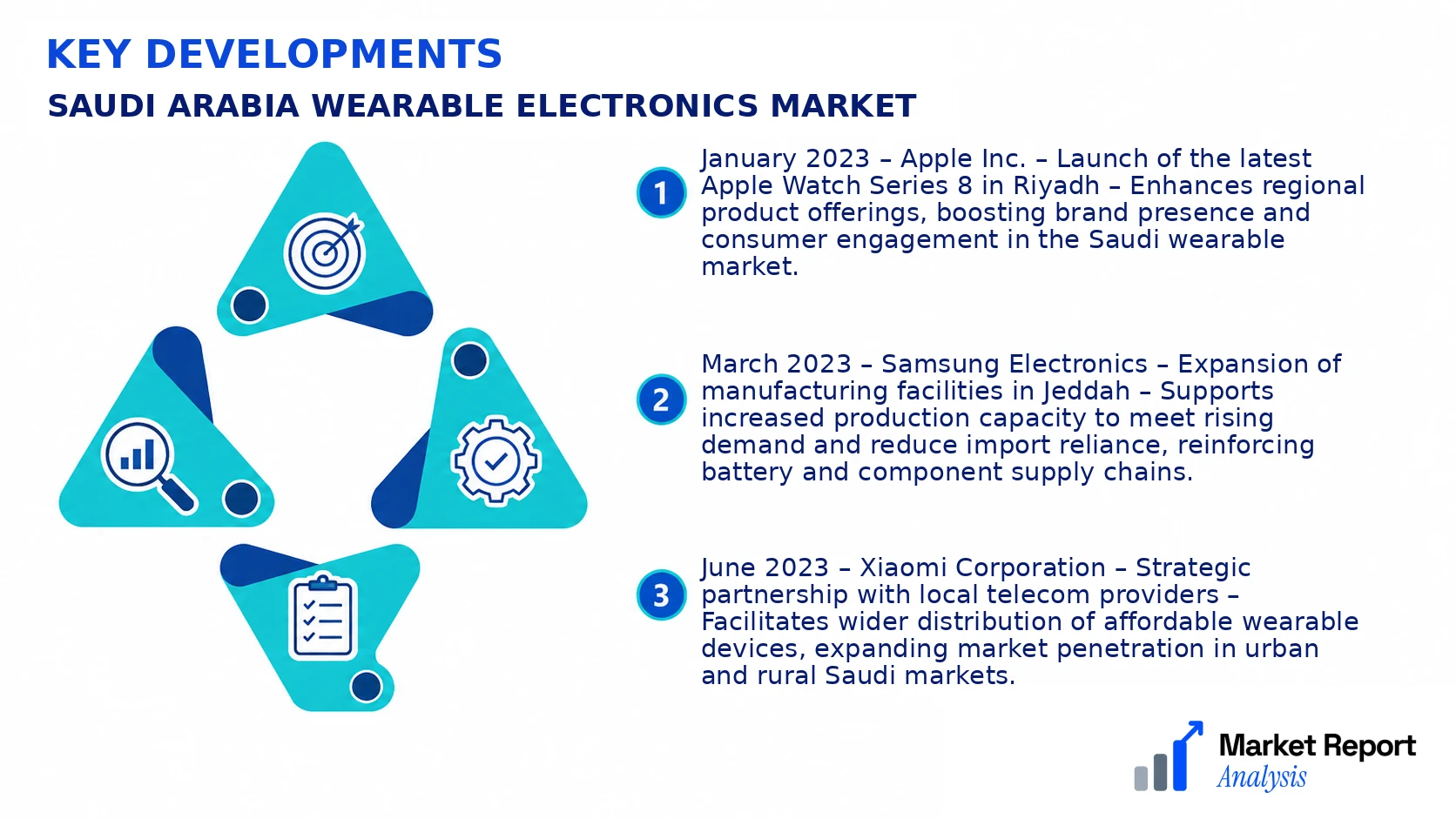
- January 2023 – Apple Inc. – Launch of the latest Apple Watch Series 8 in Riyadh – Enhances regional product offerings, boosting brand presence and consumer engagement in the Saudi wearable market.
- March 2023 – Samsung Electronics – Expansion of manufacturing facilities in Jeddah – Supports increased production capacity to meet rising demand and reduce import reliance, reinforcing battery and component supply chains.
- June 2023 – Xiaomi Corporation – Strategic partnership with local telecom providers – Facilitates wider distribution of affordable wearable devices, expanding market penetration in urban and rural Saudi markets.
- August 2023 – Fitbit (Google LLC) – Launch of a new health-focused smartwatch in Saudi Arabia – Drives growth in health ecosystem services, leveraging Google's AI and data analytics capabilities.
- October 2023 – Huawei Technologies Co., Ltd. – Investment in local R&D center – Aims to streamline product localization, improve interface customization, and strengthen competitive positioning in the Saudi market.
Frequently Asked Questions
What is the Saudi Arabia Wearable Electronics Market?
The Saudi Arabia Wearable Electronics Market encompasses the design, manufacture, and sale of wearable devices such as fitness trackers, smartwatches, health monitors, and augmented reality devices tailored for Saudi consumers. It reflects a growing trend toward health awareness and digital integration within the kingdom.
What is the current market size of Saudi Arabia Wearable Electronics Market?
As of 2026, the market valuation of wearable electronics in Saudi Arabia stands at approximately USD 2.8 Billion. This figure underscores the increasing adoption of such devices driven by rising health consciousness and technological advancements across the nation.
What factors are driving the Saudi Arabia Wearable Electronics Market?
Key drivers include the government's push for digital health initiatives, increasing consumer health awareness, the proliferation of 5G connectivity, and rising smartphone penetration. Additionally, fitness and wellness trends are fostering demand for smart wearables.
Which Saudi city leads the Saudi Arabia Wearable Electronics Market?
Riyadh leads the market due to its large urban population, higher disposable income, and greater awareness of wearable technologies. The city also boasts significant infrastructure investments and adoption of digital health services, making it the market hub.
Which segment is expected to grow the fastest?
The healthcare and fitness tracking segment is forecasted to witness the fastest growth, fueled by increasing health monitoring needs and government initiatives promoting wellness. Wearables in this segment are becoming essential for chronic disease management and fitness tracking.
Who are the leading companies operating in the Saudi Arabia Wearable Electronics Market?
Prominent players include global brands like Apple, Samsung, Fitbit, and Garmin, alongside regional distributors and local startups. These companies are expanding their presence through strategic collaborations, localized offerings, and targeted marketing campaigns to capture rising demand.
Analyst Perspective
The Saudi Arabia Wearable Electronics Market exhibits promising long-term growth, driven by increasing health awareness, digital infrastructure investments, and governmental initiatives promoting digital health. Commercial opportunities in fitness trackers, smartwatches, and health monitoring devices remain attractive, particularly as urban Saudi populations become more health-conscious and technologically savvy. Technological evolution is expected to focus on enhanced sensor accuracy, integration with AI for personalized health insights, and greater resilience against harsh environmental conditions common in Saudi climate zones, rendering devices more robust and user-friendly.
Investment priorities should include fostering local manufacturing capabilities, strengthening distribution channels in major cities like Riyadh, Jeddah, and Dammam, and nurturing R&D to adapt wearable tech to regional needs. Competitive intensity remains moderate, with global players entering strategic alliances with local telecom providers to enhance market penetration. City-level growth potential is especially high in Riyadh, owing to its demographic density, infrastructure, and the government’s smart city initiatives, offering long-term strategic positioning for stakeholders aiming to capitalize on Riyadh’s expanding digital health ecosystem.
