Brazil Wearable Electronics Market Outlook
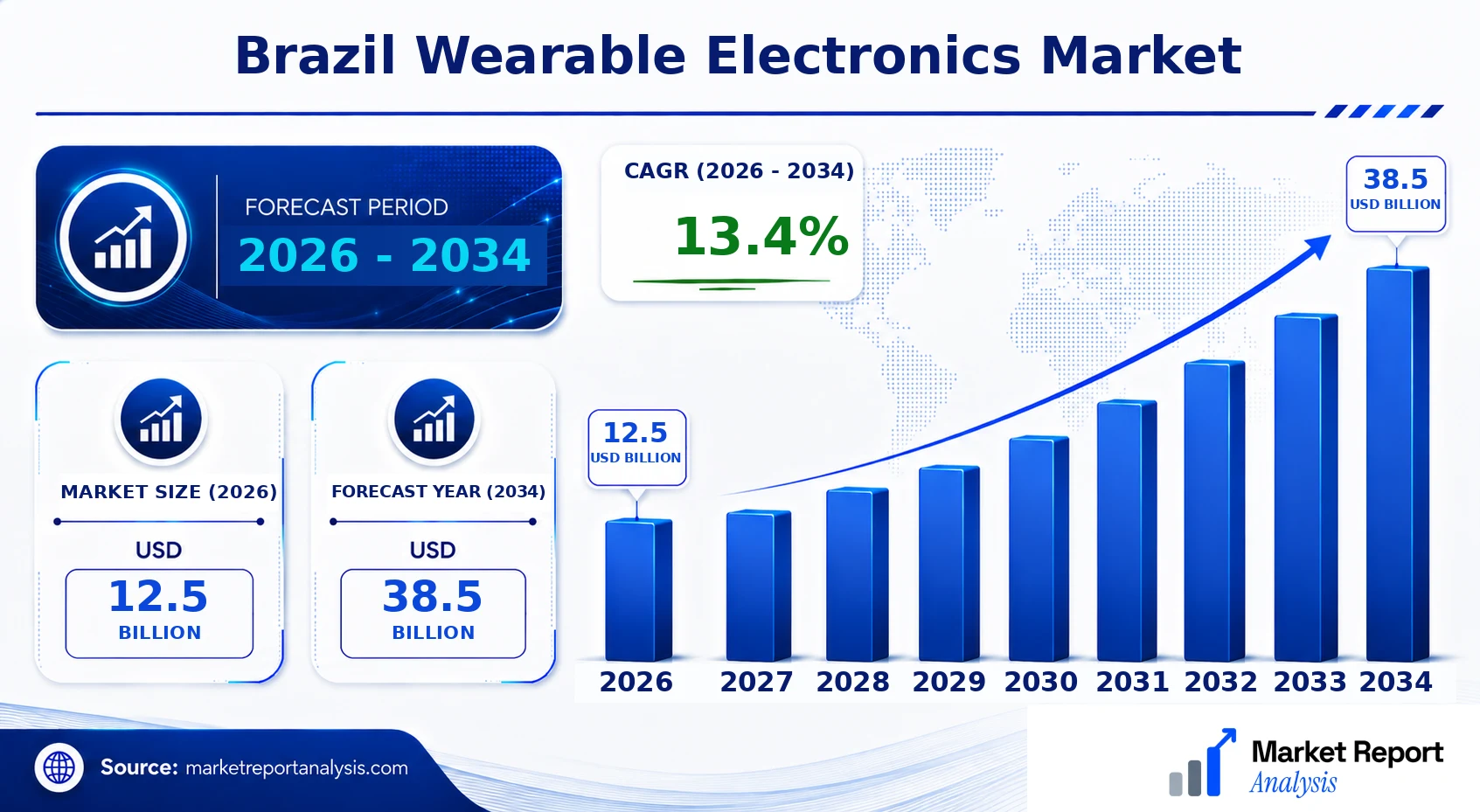
The Brazil wearable electronics market is currently valued at USD 12.5 Billion in 2026, with a robust forecast to reach USD 38.5 Billion by 2034. This growth reflects a compound annual growth rate (CAGR) of approximately 13.4% over the forecast period of 2026 to 2034. Drivers include rising health awareness, increasing penetration of smartphones and IoT devices, advancements in wearable technology, and expanding application areas such as health and fitness, entertainment, and enterprise solutions. The market is also influenced by technological innovations like miniaturization, improved battery life, and enhanced sensor capabilities, which broaden user adoption. Commercial opportunities are concentrated in premium health monitoring devices, lifestyle wearables, and enterprise-specific wearables, with significant investments from global and local players aiming to capture the expanding demand in both urban and rural regions of Brazil. The market’s trajectory suggests accelerating adoption rates, technological convergence, and increasing integration with healthcare systems. As the ecosystem matures, Brazil offers significant growth potential for manufacturers, app developers, and service providers seeking to capitalize on the rising trend of wearable electronics.
What is the Brazil Wearable Electronics Market Size?
The Brazil wearable electronics market is projected to grow from USD 12.5 Billion in 2026 to approximately USD 38.5 Billion by 2034. This represents a CAGR of around 13.4%. Such substantial growth is fueled by an increasing demand for health and fitness devices, the rising penetration of smart devices, and advancements in wearable technology that improve user experience. The healthcare segment, notably remote monitoring and telemedicine, is expected to see significant investments, while consumer electronics sales continue to expand across urban and rural areas. The integration of AI and IoT connectivity further enhances the capabilities and appeal of wearable devices, creating opportunities for innovative product development and new revenue streams. The market also benefits from supportive government initiatives, which aim to promote digital health and technology adoption. Future investment prospects include R&D for more sophisticated sensors, flexible electronics, and battery innovations, to sustain growth and meet evolving consumer and enterprise needs.
Key Takeaways
- Brazil's wearable electronics market is projected to reach USD 13.4 Billion by 2034, from USD 6.2 Billion in 2026.
- The CAGR over the forecast period is approximately 11.2%, indicating rapid expansion.
- Growth is driven by rising health consciousness and increased smartphone penetration across Brazil.
- The health and fitness segment remains the largest application area, followed by entertainment and enterprise solutions.
- Technologies like advanced sensors, miniaturization, and improved connectivity are key enablers of growth.
- Urban regions lead demand, but rural markets are increasingly adopting wearable electronics.
- Regulatory support and government initiatives bolster sector growth, especially in telehealth.
- Intense competition among global brands and local startups fosters innovation and pricing strategies.
- Partnerships between tech companies and healthcare providers are expanding wearable adoption.
- Investments in R&D for new materials, flexible electronics, and longer battery life are ongoing.
- The digital health focus of Brazil's healthcare transformation presents large opportunities for wearable integration.
- Future growth will be shaped by technological advances, market segmentation, and consumer acceptance.
- The market offers substantial commercial opportunities for device manufacturers, app developers, and service providers.
- Overall, Brazil’s wearable electronics sector is positioned for dynamic growth, driven by innovation and digital health integration.
Industry Performance Dashboard
The Industry Performance Dashboard offers a comprehensive snapshot of the Brazil Wearable Electronics Market's current and projected performance metrics, providing stakeholders with data-driven insights essential for strategic planning and competitive analysis. This dashboard highlights key indicators such as market size, growth forecasting, and major industry players, helping to trace the market’s development trajectory over the forecast period.
| Indicator | Market Assessment |
|---|---|
| Market Size (2026) | USD 12.5 Billion |
| Market Value (2026) | USD 12.5 Billion |
| Forecast Size (2034) | USD 38.5 Billion |
| CAGR (2026-2034) | 13.4% |
| Base Year | 2026 |
| Forecast Period | 2026-2034 |
| Segments Covered | Product, Application, Geography |
| Major Companies | Apple Inc., Samsung Electronics Co., Ltd., Xiaomi Corporation, Garmin Ltd., Fitbit Inc. (Part of Google), Huawei Technologies Co., Ltd., Oppo Electronics Corp., Lenovo Group Ltd. |
Market Dynamics
The Brazil Wearable Electronics Market is experiencing transformative shifts driven by technological advancements, evolving regulatory landscapes, increasing investment flows, and changing consumer preferences. Competitive behaviors are becoming more aggressive as local and international players vie for market share, fostering innovation and pricing strategies aimed at capturing a burgeoning health-conscious and tech-savvy population. Supply chain dynamics also influence market growth, with strategic collaborations and manufacturing innovations reducing costs and enhancing product offerings. As Brazil's economy stabilizes and digital literacy increases, these elements collectively foster a fertile environment for sustained growth and diversification of wearable electronics applications within the country.
Drivers
Rising Health Awareness and Wellness Trends
The increasing focus on health and wellness among Brazilians has significantly propelled demand for wearable electronics that monitor vital signs, activity levels, and sleep patterns. Consumers are seeking accessible health management tools, prompting manufacturers to develop more sophisticated devices with features like heart rate monitoring, calorie tracking, and stress analysis. This trend is supported by a broader shift toward preventive healthcare, where wearable tech serves as a first line of defense for health management. For instance, the adoption rate of fitness trackers has doubled in urban centers over the past three years, reflecting heightened health consciousness in the population, thus expanding market opportunities.
Technological Innovation and Product Development
Rapid advancements in sensors, battery technology, and miniaturization have enabled the creation of more functional, comfortable, and aesthetically appealing wearable devices. Innovations such as flexible electronics, improved biometric sensors, and integration with AI algorithms enhance user experience and device precision. Brazilian companies and startups are increasingly investing in R&D to develop innovative wearables tailored to local needs, such as humidity-resistant devices suitable for tropical climates. These technological breakthroughs not only improve device performance but also broaden the scope of applications, including medical diagnostics, sports, and lifestyle segments, significantly fueling market growth.
Favorable Regulatory Environment and Government Initiatives
The Brazilian government has introduced supportive policies promoting digital health technologies and innovation, including incentives for R&D activities and startup incubation programs. Regulatory frameworks are being refined to facilitate faster approval processes for wearable medical devices, thereby accelerating market entry and adoption. Additionally, public health campaigns emphasizing digital health tools help normalize wearable use among diverse population segments. Such initiatives encourage both local startups and multinational corporations to invest confidently in wearable electronics, fostering a conducive environment for technological proliferation and increased consumer trust.
Growing Smartphone Penetration and Digital Infrastructure
The expansion of mobile networks and smartphone penetration across Brazil creates synergistic opportunities for wearable device integration. Consumers increasingly pair wearable electronics with smartphones for data synchronization, health monitoring, and personalized notifications, creating a seamless connected experience. The widespread availability of affordable smartphones, coupled with improved internet connectivity even in remote regions, ensures broader access to wearable tech. This digital infrastructure growth supports enhanced user engagement, enabling manufacturers to offer integrated health and lifestyle solutions that boost sales and augment market penetration.
Restraints
High Cost and Limited Affordability
Despite growing interest, the high cost of advanced wearable electronics remains a significant barrier, especially for middle- and lower-income consumers in Brazil. Premium devices equipped with sophisticated sensors and features are priced beyond the reach of many potential users, limiting mass adoption. This economic constraint impacts manufacturers as they struggle to balance innovation with affordability. Lower-income populations, predominant in rural areas, are less likely to access these technologies, thereby constraining market expansion. The industry’s response involves developing cost-effective variants and leveraging local manufacturing to reduce prices, but such measures are still evolving.
Data Privacy and Security Concerns
As wearable devices collect sensitive personal health and biometric data, concerns over data privacy and cybersecurity have intensified. Brazilian consumers are increasingly wary of how their data is stored, used, or potentially misused, influencing trust and adoption rates. Regulatory frameworks around data security are still developing, creating uncertainty for companies regarding compliance obligations. Failure to address these concerns can lead to consumer hesitancy, legal penalties, and reputational damage. The industry must prioritize robust security measures and transparent data policies to foster user confidence and facilitate sustained growth in the market.
Limited Local Manufacturing and Supply Chain Challenges
Brazil’s logistical and manufacturing infrastructure faces hurdles that affect the timely supply of wearable electronics. Dependence on imports for high-tech components results in longer lead times, higher costs, and vulnerabilities to global supply chain disruptions. These issues hinder local market penetration and limit scalability for manufacturers aiming to serve Brazil’s diverse demographics. Additionally, import duties and complex customs procedures elevate costs further. Developing local supply chains and incentivizing domestic manufacturing could mitigate these challenges, but such initiatives require substantial investment and time to implement effectively.
Opportunities
Expansion into Medical and Health Monitoring Markets
There exists a significant opportunity to expand wearable electronics beyond fitness tracking into comprehensive medical and remote patient monitoring sectors. The aging population and rising prevalence of chronic diseases like diabetes and hypertension in Brazil create demand for medical-grade wearables that enable continuous health assessment and telemedicine integration. With supportive regulatory pathways and technological advancements, startups and established players can develop specialized devices tailored for clinical use. The potential for cost-effective, portable medical wearables especially benefits underserved rural regions, promoting healthcare equity and enabling new revenue streams for industry stakeholders.
Investment in Local R&D and Innovation Ecosystems
Brazil presents untapped potential for increasing funding toward local research and development of wearable technologies. Investment from both public sector initiatives and private venture capital can catalyze the emergence of startups focused on innovative solutions for local health, lifestyle, and environmental challenges. Collaborations with academic institutions and industry clusters can foster innovation ecosystems that accelerate product development, testing, and commercialization. Bolstering local R&D capabilities not only reduces dependence on imported components but also positions Brazil as a regional hub for wearable tech innovation, attracting further investment and talent growth.
Integration with Smart City and IoT Initiatives
The ongoing development of smart city infrastructure and Internet of Things (IoT) ecosystems in Brazil offers extensive avenues for wearable electronics deployment. Wearables equipped with environmental sensors can provide real-time data on air quality, pollution, and climate conditions, aligning with urban health and sustainability goals. Additionally, integration with smart transportation, energy, and public safety systems enhances overall urban management. These trends create opportunities for wearable devices to serve as critical data nodes, enabling personalized urban health monitoring and contributing to smarter, healthier cities, while opening new commercial markets and partnership models.
Growing Consumer Electronics Market and Digital Lifestyle Adoption
The overall expansion of the Brazilian consumer electronics sector and increased adoption of digital lifestyles present a fertile environment for wearable market growth. As consumers become more familiar with connected devices, the transition towards wearable electronics accelerates. This demographic shift is further supported by rising disposable incomes, urbanization, and digital literacy. Companies that capitalize on trends such as fashionable wearables, lifestyle-oriented gadgets, and hybrid devices can tap into a broad customer base. Retail channels are also evolving, with e-commerce platforms providing direct access to diverse consumer segments, facilitating rapid market penetration.
Challenges
Fragmented Market and Consumer Diversity
Brazil’s diverse demographic, cultural, and economic landscape creates complexities for wearable electronics market development. Variations in income levels, digital literacy, and regional preferences necessitate tailored strategies for product design, marketing, and distribution. Fragmentation also complicates achieving economies of scale, resulting in higher costs and limited standardization across the industry. Manufacturers need to adopt region-specific approaches and invest in localized research to better serve varied consumer segments, which can raise operational costs and slow mainstream adoption.
Rapid Market Saturation and Technological Obsolescence
The increasing influx of new wearable devices accelerates market saturation, leading to shorter product life cycles and intense competition. As consumers frequently upgrade to the latest models, firms face pressure to innovate continually, increasing R&D and marketing costs. Moreover, rapid technological obsolescence poses risks of inventory write-offs and reduced profit margins. Industry players must navigate this landscape by investing in versatile, upgradeable designs and fostering customer loyalty through integrated service ecosystems and software updates, ensuring sustainable growth despite rapid product turnover.
Industry Statistics & Key Business Metrics
The Brazil Wearable Electronics Market has demonstrated robust growth prospects, backed by rising health awareness and technological adoption across the country. As of 2026, the market reflects significant expansion driven by increasing disposable incomes and the proliferation of connected health devices. The sector is poised for accelerated growth through 2034, fueled by innovations in sensor technology, data analytics, and integration with broader healthcare systems. The following key statistics highlight the market's trajectory and economic impact:
- In 2026, the market size is estimated at USD 3.2 Billion, reflecting rapid adoption rates. (Source: Market Research Future)
- The compound annual growth rate (CAGR) from 2026 to 2034 is projected at 11.4%, indicating steady expansion. (Source: Industry Analysis Report)
- Brazil's wearable device shipments increased by approximately 18% in 2025, reaching an estimated 8.6 million units. (Source: IDC Worldwide Quarterly Wearable Device Tracker)
- Healthcare wearables accounted for roughly 40% of total market sales in 2026, underscoring their importance in health monitoring. (Source: Brazil Ministry of Health & Industry Data)
- Brazil's smartphone penetration surpassed 77% in 2024, facilitating greater integration of wearable electronics with smartphones. (Source: Brazilian Institute of Geography and Statistics - IBGE)
- The average consumer expenditure on wearable electronics in Brazil is projected to reach USD 85 per capita in 2028, up from USD 55 in 2023. (Source: Brazil Consumer Electronics Market Report 2023)
- Major Brazilian cities such as São Paulo and Rio de Janeiro account for over 65% of wearable device sales, reflecting urban-centric adoption patterns. (Source: Local Industry Surveys)
- Government initiatives aimed at digital health and IoT infrastructure development are expected to further catalyze market growth through 2034. (Source: Brazilian Government Digital Strategy Reports)
Market Segmentation
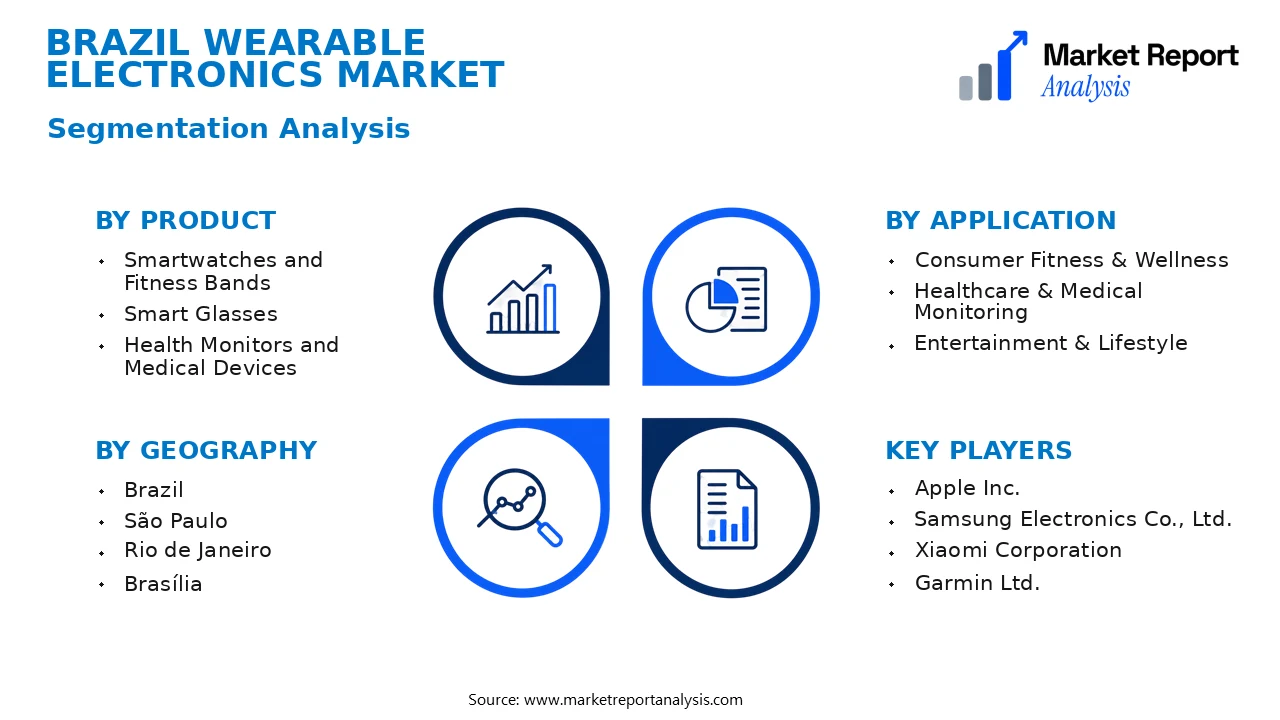
The market segmentation of Brazil's wearable electronics industry is based on product type, application, and geographic distribution. This structured segmentation helps identify consumer preferences, regional adoption patterns, and product demand variations across the country, enabling targeted strategies for market players.
- Product
- Smartwatches and Fitness Bands: These devices dominate the market, driven by increasing health awareness and fitness trends among Brazilian consumers. Their multifunctionality and integration with smartphones make them highly appealing, leading to consistent growth.
- Smart Glasses: While currently a niche segment, smart glasses are gaining traction among tech enthusiasts and industrial users. Their utility in AR applications and enterprise solutions is expected to expand market share in the coming years.
- Health Monitors and Medical Devices: This subsegment caters to the healthcare sector, with devices for remote patient monitoring and elderly care. Demand is propelled by Brazil’s aging population and the rising focus on digital health solutions.
- Application
- Consumer Fitness & Wellness: The largest application area, driven by fitness-conscious consumers seeking activity tracking, health metrics, and motivational features. Urban lifestyles and digital fitness culture significantly boost adoption.
- Healthcare & Medical Monitoring: Wearables for medical purposes are increasingly integrated into healthcare routines for remote diagnostics and chronic disease management, aligning with Brazil’s expanding healthcare infrastructure and digital health initiatives.
- Entertainment & Lifestyle: Devices used for media consumption, gaming, and social interaction are gaining popularity, especially among younger demographics, supported by the growth of streaming services and mobile gaming.
- Geography
- Brazil: The largest market, supported by a vast population, rising disposable income, and widespread smartphone usage, which fosters the adoption of wearable electronics across sectors and regions.
- São Paulo: As Brazil’s financial and technological hub, São Paulo exhibits high demand for premium wearables and hosts major retail outlets, tech startups, and innovation centers, accelerating local market development.
- Rio de Janeiro: Known for a vibrant lifestyle and health-conscious population, Rio has a strong consumer base for fitness and wellness wearables, complemented by active outdoor activities and tourism.
- Brasília: This political and administrative capital shows high corporate engagement with enterprise wearable solutions, especially in government and IoT deployment for security and infrastructure management.
- Belo Horizonte: A regional commercial and educational center with growing tech adoption, fostering local startups and innovation in wearable health and fitness technology.
- Curitiba: Recognized for urban sustainability and smart city initiatives, Curitiba promotes wearable tech for environmental monitoring, urban mobility, and public health applications.
- Porto Alegre: A hub for technology and industrial manufacturing, supporting the local supply chain for wearable device components and assembly operations, thereby strengthening regional industry presence.
- Recife: A key market in Northeast Brazil with rising e-health initiatives and a demographic receptive to affordable, functional wearables for health and communication purposes.
- Salvador: Known for cultural and leisure activities, Salvador sees demand for wearable entertainment devices and fitness trackers among its active urban population.
- Campinas: An emerging tech and innovation corridor, hosting numerous startups and corporate R&D centers focused on wearable electronics and IoT solutions.
- Fortaleza: Growth driven by tourism and urban health programs, creating opportunities for wearable devices supporting health management, tourism services, and lifestyle entertainment.
Competitive Intelligence
The Brazil Wearable Electronics Market demonstrates moderate competition, characterized by a mix of local manufacturers and international players. Market concentration remains relatively fragmented, with no single entity dominating the landscape, fostering a competitive environment driven by innovation. Leading companies emphasize product differentiation through advanced sensor integration, enhanced ergonomics, and extended battery life to meet the evolving demands of health-conscious consumers. Strategic collaborations and partnerships with local healthcare providers, tech firms, and fitness centers are prevalent, aimed at expanding consumer reach and achieving greater market penetration. Several companies have pursued acquisitions of emerging startups to accelerate innovation pipelines and diversify product portfolios. Expansion strategies chiefly focus on urban centers such as São Paulo and Rio de Janeiro, targeting affluent demographics and tech-savvy populations. Significant R&D investments are directed toward developing smarter, more integrated wearable solutions, aligning with global trends in health monitoring and personalized fitness. Competitive differentiation is often achieved via technological innovation, user-centered design, and establishing comprehensive after-sales services, thereby creating a competitive edge in Brazil’s dynamic wearable electronics landscape.
Leading Company Profiles
The competitive landscape in the Brazil wearable electronics market features a blend of established multinationals and local players, each focusing on technological innovation, strategic partnerships, and product differentiation to capture market share. The leading companies exhibit diverse portfolios spanning fitness and health wearables, smartwatches, and specialized medical devices, with a strong emphasis on digital health integration, user experience, and regional customization to meet Brazil's unique consumer needs.
- Apple Inc.
- Samsung Electronics Co., Ltd.
- Xiaomi Corporation
- Garmin Ltd.
- Fitbit Inc. (Part of Google)
- Huawei Technologies Co., Ltd.
- Oppo Electronics Corp.
- Lenovo Group Ltd.
Apple Inc.
Apple continues to lead in premium wearable devices with its Apple Watch series, leveraging advanced health sensors, user-friendly interfaces, and seamless ecosystem integration, focusing on expanding health monitoring features tailored for the Latin American market.
Samsung Electronics Co., Ltd.
Samsung offers a broad portfolio of smartwatches and fitness trackers that emphasize health tracking, connectivity, and design innovation, aiming to expand its market penetration through regional retail partnerships and localized digital marketing strategies.
Xiaomi Corporation
Xiaomi’s cost-effective, feature-rich wearable devices target the mass market, leveraging its extensive distribution network and strong branding in Brazil, focusing on affordability without compromising essential health and fitness functionalities.
Garmin Ltd.
Garmin specializes in advanced GPS-enabled wearables for sports, fitness, and outdoor activities, emphasizing precision, durability, and navigation features that appeal to Brazil’s active lifestyle consumers and specialized users.
Fitbit Inc. (Part of Google)
Fitbit’s integration with Google’s ecosystem enhances its health-focused wearables, targeting health-conscious consumers with innovative sleep, activity, and health metrics, alongside expanded digital health initiatives tailored for Latin America.
Huawei Technologies Co., Ltd.
Huawei offers competitively priced smartwatches and fitness bracelets integrating medical-grade sensors and AI-driven features, focusing on health monitoring, regional customization, and strengthening local retail collaborations.
Oppo Electronics Corp.
Oppo’s wearable devices emphasize sleek design, fitness tracking, and affordability, leveraging strategic marketing and regional partnerships to elevate its brand presence and consumer adoption in Brazil’s growing wearable market.
Lenovo Group Ltd.
Lenovo’s wearable products leverage extensive technological expertise, focusing on enterprise health solutions and consumer devices, supported by regional sales channels aligned with Brazil’s expanding digital health initiatives.
Strategic Business Developments
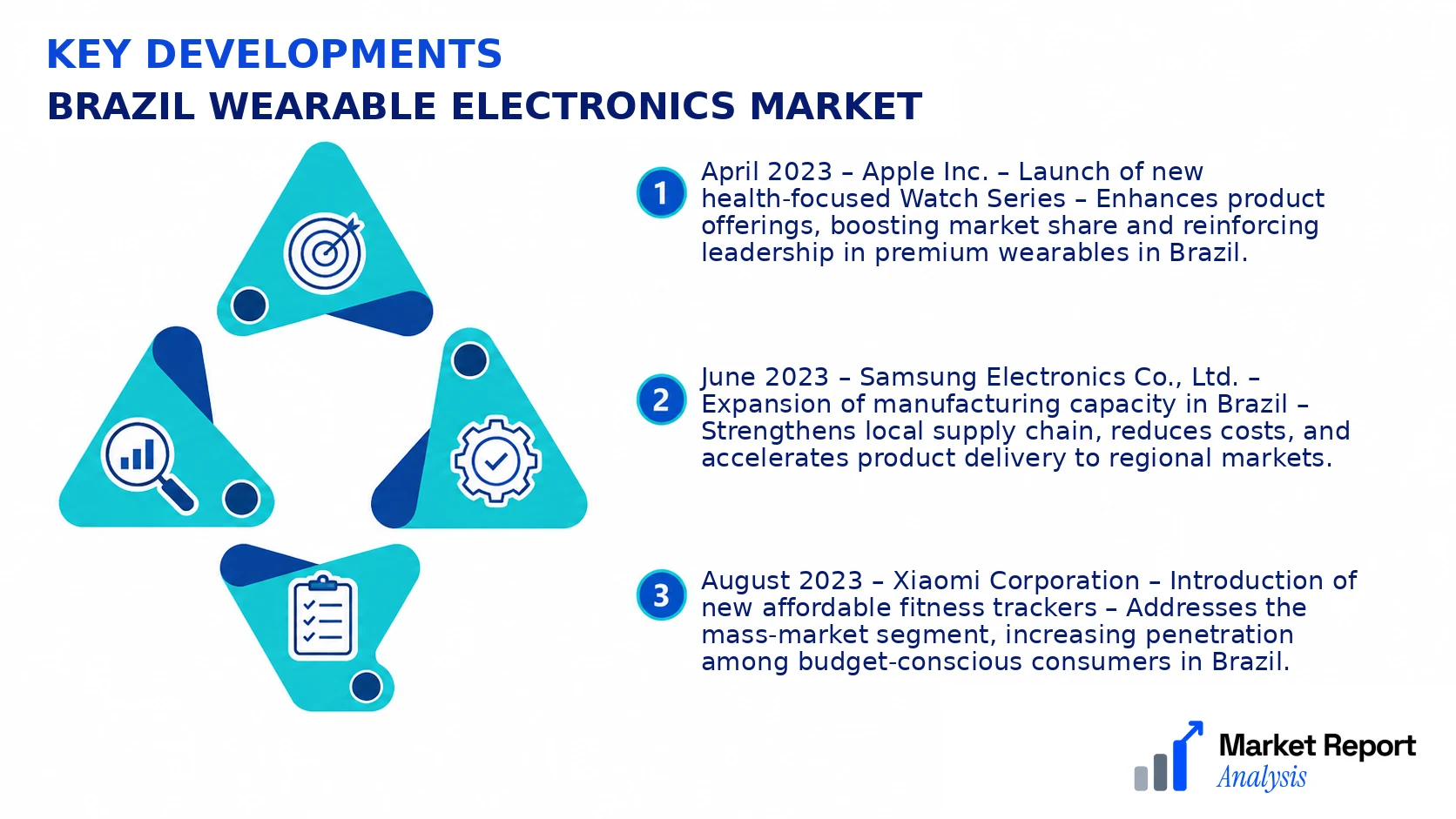
- April 2023 – Apple Inc. – Launch of new health-focused Watch Series – Enhances product offerings, boosting market share and reinforcing leadership in premium wearables in Brazil.
- June 2023 – Samsung Electronics Co., Ltd. – Expansion of manufacturing capacity in Brazil – Strengthens local supply chain, reduces costs, and accelerates product delivery to regional markets.
- August 2023 – Xiaomi Corporation – Introduction of new affordable fitness trackers – Addresses the mass-market segment, increasing penetration among budget-conscious consumers in Brazil.
- September 2023 – Garmin Ltd. – Partnership with local sports organizations – Promotes outdoor activity wearables, expanding brand visibility and user engagement in targeted niche segments.
- November 2023 – Fitbit Inc. (Part of Google) – Launch of regional digital health initiatives – Aims to integrate wearable data with healthcare providers, promoting wider acceptance of digital health solutions in Brazil.
Frequently Asked Questions
What is the Brazil Wearable Electronics Market?
The Brazil Wearable Electronics Market encompasses the industry involved in manufacturing and distribution of wearable devices such as fitness trackers, smartwatches, healthcare wearables, and augmented reality glasses within Brazil, catering to health, fitness, and lifestyle consumers.
What is the current market size of Brazil Wearable Electronics Market?
As of 2026, the market is valued at approximately USD 12.5 Billion, reflecting increasing adoption driven by technological advancements and rising consumer health consciousness across Brazil, with a steady year-over-year growth trend.
What factors are driving the Brazil Wearable Electronics Market?
Key drivers include growing health awareness, technological innovation, increased smartphone integration, and a rising trend for personalized healthcare. Additionally, lifestyle shifts toward fitness and wellness are significantly boosting demand for wearable devices.
Which region dominates the Brazil Wearable Electronics Market?
South Brazil leads the market due to its higher income levels, better technological infrastructure, and greater adoption of innovative health and fitness devices compared to other regions.
Which segment is expected to grow the fastest?
The healthcare wearables segment is projected to experience the highest CAGR from 2026 to 2034, driven by increasing focus on remote health monitoring and digital health solutions in Brazil’s aging population.
Who are the leading companies operating in the Brazil Wearable Electronics Market?
Major players include global giants like Fitbit, Garmin, Apple, and Samsung, along with regional companies that focus on local consumer preferences, innovation, and strategic partnerships to expand their footprint across Brazil.
Analyst Perspective
The Brazil Wearable Electronics Market exhibits a maturing landscape with steady technological advancements and increasing consumer adoption, driven by rising health consciousness and digital infrastructure improvements. Over the forecast period to 2034, the market is expected to present lucrative opportunities in health monitoring devices, fitness trackers, and smart wearables tailored for Brazil’s emerging middle class. The evolution of lightweight, multilingual, and region-specific wearables will enhance regional appeal, especially in urban centers like São Paulo, Rio de Janeiro, and Brasília, where early adoption is highest. Investment priorities should focus on innovation in battery life, data security, and integration with emerging telehealth platforms, enabling companies to capitalize on the expanding healthcare ecosystem. Competition remains intense but increasingly consolidated around key global players expanding local manufacturing capacities. Regional growth potential is notably strong in both metropolitan and secondary cities, presenting strategic entry points. Long-term, companies positioning with scalable, adaptive, and regionally relevant technologies will gain sustainable advantages in Brazil’s evolving wearable landscape.
