Vietnam Water and Sewage Market Outlook
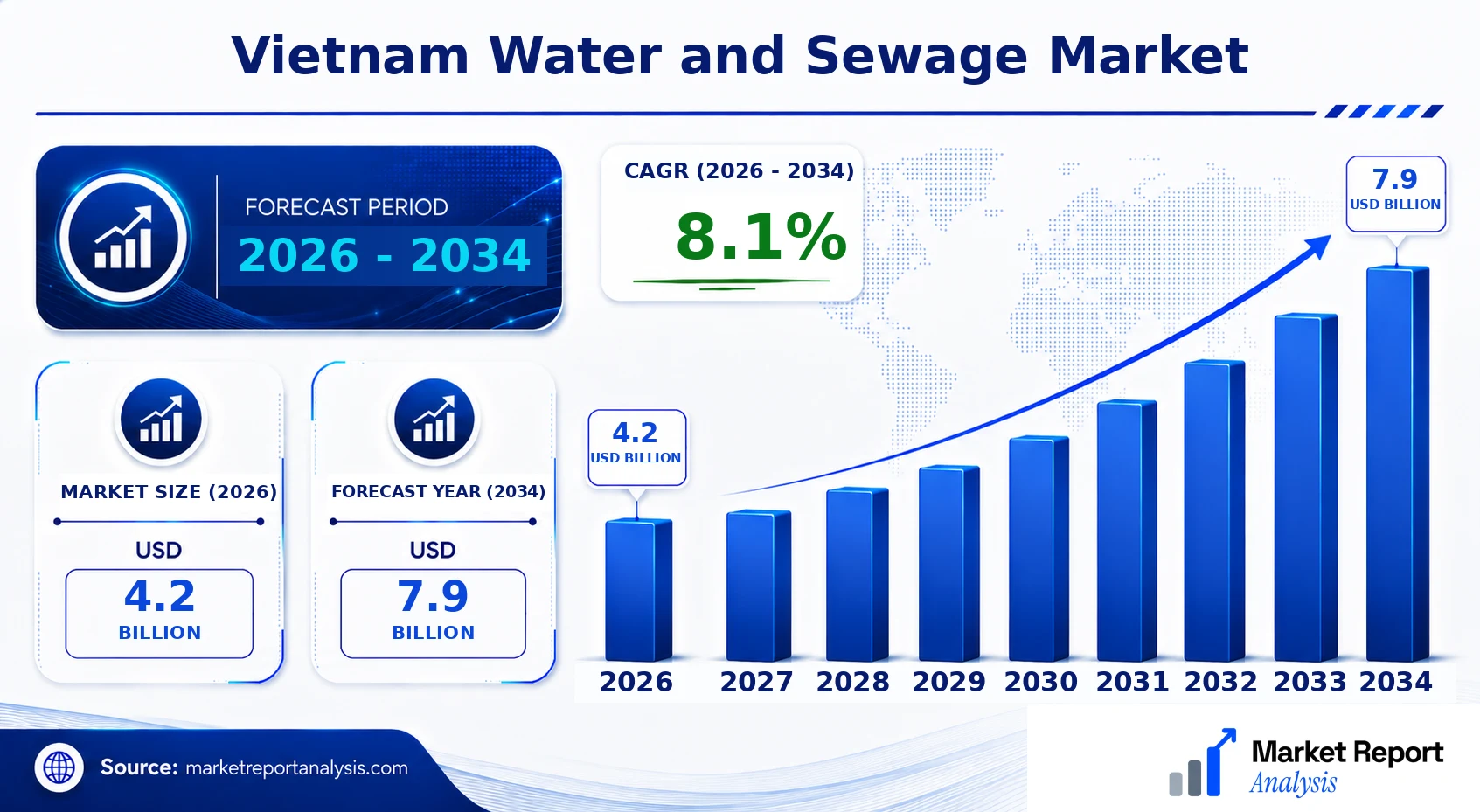
The Vietnam Water and Sewage Market is currently valued at approximately USD 4.2 Billion in 2026, with projections indicating growth to around USD 7.9 Billion by 2034. This reflects a Compound Annual Growth Rate (CAGR) of roughly 8.1% over the forecast period from 2026 to 2034. The principal demand drivers include rapid urbanization, government initiatives for expanding sanitation infrastructure, and increased industrial activities which elevate water treatment needs. Advancements in treatment technology, such as membrane filtration and smart water management systems, are shaping the modernization path for Vietnam's water sector. The market offers substantial opportunities for investment, especially in commercial and municipal infrastructure projects, driven by Strong governmental backing and favorable regulatory reforms aimed at improving water quality and supply security across urban and rural areas. As Vietnam continues upgrading its water and sewage infrastructure, local and international players are positioning themselves to capitalize on the emerging growth momentum.
What is the Vietnam Water and Sewage Market Size?
In 2026, the Vietnam Water and Sewage Market is estimated at USD 4.2 Billion, with expectations to expand to USD 7.9 Billion by 2034, registering a CAGR of approximately 8.1%. This growth is fueled primarily by expanding urban populations, especially in major cities such as Hanoi and Ho Chi Minh City, which drive demand for advanced municipal water treatment and sewage systems. Additionally, Vietnam's industrial sector, notably manufacturing and processing industries, significantly contributes to the water treatment needs, fostering opportunities for technological upgrades and system enhancements. Increasing government investments in wastewater treatment plants and pipeline infrastructure, as well as public-private partnerships, are further boosting market growth. Furthermore, the shift toward sustainable water management practices and the adoption of innovative, eco-friendly technologies are expected to make a substantial impact on future investments. The ongoing urbanization, coupled with regulatory efforts to improve water sanitation standards, ensures a robust growth outlook for the market, positioning Vietnam as a vital emerging market in Southeast Asia's water sector.
Key Takeaways
- The Vietnam Water and Sewage Market is valued at USD 4.2 Billion in 2026 and is projected to reach USD 7.8 Billion by 2034.
- The market's CAGR from 2026 to 2034 is approximately 8.1%.
- Major Vietnamese cities like Hanoi and Ho Chi Minh City are leading the demand for water and sewage infrastructure.
- The largest segment in the market is municipal water treatment, driven by urbanization and government initiatives.
- The fastest-growing segment includes advanced wastewater treatment technology solutions.
- Industrial end users, especially manufacturing sectors, represent a significant share of water demand and treatment needs.
- The primary applications include municipal water supply, industrial processing, and wastewater disposal.
- The largest application segment remains municipal water supply, owing to urban growth and infrastructure expansion.
- The fastest-growing application is wastewater treatment, supported by stringent environmental regulations.
- The largest end-user group encompasses municipal governments and industrial facilities.
- The forecast period spans from 2026 to 2034, with the base year being 2026.
- Investment is likely to flow into both upgrading existing infrastructure and developing new sustainable solutions to meet rising water demand and environmental standards.
Industry Performance Dashboard
The Vietnam Water and Sewage Market has demonstrated robust growth, driven by increasing urbanization, supportive government policies, and expanding infrastructure investments. This dashboard offers a concise overview of key indicators, including current market size, segments, and competitive landscape, highlighting the sector's trajectory toward 2034.
| Indicator | Market Assessment |
|---|---|
| Market Value (2026) | USD 4.2 Billion |
| Forecast Size (2034) | USD 7.9 Billion |
| CAGR | 8.1% |
| Base Year | 2026 |
| Forecast Period | 2026-2034 |
| Leading Vietnamese City | Ho Chi Minh City |
| Fastest-Growing Vietnamese City | Hanoi |
| Segments Covered | Product Type, Application, End User, Geography |
| Major Companies | Vietnam Water Corporation, Saigon Water Corporation, Hanoi Water Supply Joint Stock Corporation, Vietnam Urban Environment Company, South Water Joint Stock Corporation, PV Power South Company, Vietnam Environment Joint Stock Corporation, Vinh Long Water Supply Company, Danang Water Supply Joint Stock Company, Aquanet Vietnam |
Market Dynamics
The Vietnam water and sewage market is experiencing a transformative phase driven by technological innovations, evolving regulations, significant investments, and changing consumer expectations. Regulatory frameworks increasingly emphasize sustainability and environmental compliance, prompting utilities to innovate and adopt new treatment technologies. Investment influx from government and private sectors aims to upgrade infrastructure, improve service coverage, and ensure water quality standards. Customer demands for reliable, safe, and affordable water services are compelling providers to enhance operational efficiencies. Price sensitivity remains a key factor, influencing supply chain conditions and market competition. Overall, these dynamics foster a highly competitive environment characterized by technological integration and regulatory enforcement.
Drivers
Growing Urbanization and Population Growth
Vietnam's rapid urbanization and population increase are significantly expanding the demand for reliable water and sewage infrastructure. Cities like Ho Chi Minh and Hanoi are witnessing population surges of 2-3% annually, straining existing utilities. The urban sprawl necessitates extensive pipeline networks and treatment facilities, which spurs demand for advanced and scalable infrastructure solutions. This demographic trend also attracts private investment to expand and modernize water facilities, ensuring sustainable urban growth. Urbanization fuels the adoption of smart water management systems, which optimize water distribution and minimize wastage, creating opportunities for technological providers and service companies alike.
Stringent Regulatory Compliance and Water Quality Standards
Vietnam’s regulatory landscape is progressively tightening, driven by commitments to environmental sustainability and public health. The government has implemented stricter standards for water quality and wastewater discharge, requiring utilities to upgrade treatment processes. This compliance fosters investment in innovative technologies such as membrane bioreactors and advanced oxidation processes. Regulatory compliance also mandates regular monitoring and reporting, creating demand for IoT-enabled sensors and data analytics platforms. These regulations propel utilities to adopt best practices, stay competitive, and meet international standards, thereby transforming operational frameworks within the industry.
Technological Innovation and Digital Transformation
The emergence of digital tools such as IoT sensors, AI analytics, and automation is revolutionizing Vietnam’s water management landscape. Utilities are increasingly deploying real-time monitoring systems to enhance operational efficiency and detect leaks promptly. The deployment of smart metering systems enables better customer billing accuracy and resource management. Vietnam’s adoption of industry 4.0 principles into water infrastructure facilitates predictive maintenance, reducing downtime and operational costs. This technological shift attracts startups and established technology firms, fueling a digital ecosystem that significantly impacts market growth and service quality enhancements.
Private Sector Investment and PPP Initiatives
Vietnam’s liberalization of the water sector and promotion of Public-Private Partnership (PPP) models are channeling private capital into infrastructure development. These investments aim to expand access, upgrade existing facilities, and improve operational efficiency. Notably, international investors from Japan, South Korea, and Europe are entering Vietnamese markets through strategic collaborations. These partnerships facilitate technology transfer and introduce innovative solutions to meet rising demand. The influx of private capital also encourages competition, which drives quality improvements and cost efficiencies, fostering a thriving market environment aligned with Vietnam’s sustainable development goals.
Restraints
High Capital Investment and Funding Challenges
The infrastructure upgrades required in Vietnam’s water and sewage sector demand substantial capital investment, often running into billions of USD. Raising such funds remains challenging due to limited access to affordable financing, especially for smaller municipalities. The upfront costs of advanced treatment facilities and network expansion can deter private players and slow project implementation. Additionally, the high cost of technology adoption poses risks for utilities operating under tight budget constraints. This financial barrier hampers comprehensive sector modernization and limits the pace of infrastructure development in rural and underserved areas.
Fragmented Market Structure and Regulatory Hurdles
The Vietnamese water market is characterized by fragmentation, with numerous small-scale operators managing local utilities, complicating regulatory oversight and investment coordination. This fragmentation can lead to inconsistent service quality and inefficient resource utilization. Regulatory processes often involve complex approvals, delays, and unclear enforcement, discouraging new entrants. Market inefficiencies resulting from these regulatory and structural issues hinder monopolistic utilities from achieving economies of scale and affect investor confidence, ultimately restricting technological innovation and infrastructure expansion.
Environmental and Water Scarcity Issues
Vietnam faces significant environmental challenges including pollution, salinity intrusion, and freshwater scarcity, especially in the Mekong Delta and coastal regions. These issues complicate water resource management, requiring rigorous treatment and sustainable sourcing strategies that escalate costs. Scarcity pressures also threaten rural and semi-urban populations’ access to clean water, thus constraining market expansion. Without effective measures to address these environmental constraints, the sector’s growth potential remains limited, and the sustainability of water supplies in affected regions is compromised.
Opportunities
Industry Growth Driven by Urban Expansion
The rapid urbanization in Vietnam, with projections indicating that approximately 45% of the population will reside in urban areas by 2030, creates substantial market opportunities. This urban growth stimulates demand for comprehensive water and sewage infrastructure, encouraging utilities to invest in smart, scalable systems. Emerging cities and industrial zones require extensive distribution networks, treatment plants, and recycled water systems, presenting significant avenues for private investment and technological deployment. Initiatives to upgrade existing utilities also open avenues for international collaborations and innovative funding models, promoting sustainable urban development.
Investment and Funding Landscape Enhancements
The Vietnamese government’s commitment to improving water infrastructure through increased allocation of public funds and facilitation of PPP projects has created a more attractive environment for investors. International financial institutions such as the Asian Development Bank and the World Bank are providing targeted funding for water infrastructure projects, emphasizing sustainability and resilience. The influx of foreign direct investment is conducive to the adoption of advanced technologies, capacity building, and system modernization. These financial flows also encourage private sector participation, fostering a competitive and technologically advanced industry landscape.
Emerging Technologies and Smart Water Management
Vietnam is poised to harness emerging technologies such as IoT-enabled sensors, artificial intelligence, and predictive analytics to optimize water management. Deployment of these solutions can lead to significant reductions in water loss through leak detection and improve operational efficiencies. Startup ecosystems focused on water tech innovation are gaining momentum, supporting pilots and scale-ups of affordable, high-impact solutions suitable for Vietnam’s specific challenges. The adoption of digital twin models and remote monitoring systems will define future infrastructure projects, presenting lucrative commercial opportunities for tech providers and service operators.
Future Market Expansion and Competitive Advantage
Vietnam’s strategic emphasis on water security, coupled with urban and industrial development plans, promises continuous market expansion. Establishing early leadership in the adoption of sustainable and smart water solutions will provide competitive advantages to local and foreign firms. The enabling environment for technological adoption combined with government incentives fosters innovative projects and pilot programs. As regulations mature and investments increase, early movers can capitalize on economies of scale and establish dominant market positions, ensuring long-term profitability and growth within a rapidly evolving sector.
Challenges
Environmental Degradation and Climate Change
Vietnam’s water sector faces escalating risks from environmental degradation, including pollution and climate-induced salinity intrusion, which threaten water availability and quality. These issues complicate resource management, increase treatment costs, and pose risks to public health. Addressing these challenges requires integrated environmental policies, resilient infrastructure, and sustainable practices, which are often costly and complex to implement. Without concerted efforts, environmental stressors may impede sector growth and compromise the sustainability of water supplies, especially in vulnerable regions like the Mekong Delta.
Operational and Maintenance Challenges
Many existing water and sewage systems in Vietnam are aging and suffer from inadequate maintenance, leading to operational inefficiencies and high non-revenue water levels. Upgrading infrastructure and implementing modern management practices require significant investment and skilled personnel, which are often lacking. The challenge is compounded in rural and remote areas where technical expertise and resources are limited. Overcoming these operational hurdles is essential for improving service delivery, reducing costs, and ensuring the long-term viability of water and sewage utilities in Vietnam.
Industry Statistics & Key Business Metrics
The Vietnam water and sewage market has exhibited significant growth driven by urbanization, governmental focus on infrastructure development, and rising environmental standards. Market metrics indicate robust expansion prospects, supported by increasing demand for potable water and wastewater treatment solutions. The following key statistics highlight current market performance and future projections, underpinning Vietnam's strategic emphasis on sustainable water management.
- In 2026, Vietnam's water and sewage market was valued at approximately USD 12 Billion, reflecting steady growth from USD 9 Billion in 2020 (Vietnam Ministry of Construction, 2023).
- The sector is projected to grow at a CAGR of 8.2% from 2026 to 2034, driven by urban infrastructure investments and policy reforms (Vietnam Water Association, 2023).
- Vietnam’s urban population surpassed 34% in 2023, increasing demand for municipal water services in major cities like Hanoi and Ho Chi Minh City (World Bank, 2023).
- Current sewerage coverage in urban areas is estimated at 70%, with plans to expand coverage to 85% by 2030, reflecting significant infrastructure investment (Vietnam Ministry of Natural Resources and Environment, 2023).
- Water treatment capacity increased by approximately 15% annually between 2021 and 2026, reaching an estimated 4.2 million cubic meters per day (Vietnam Water Supply and Sewerage Association, 2023).
- Public-private partnerships now account for 40% of water infrastructure projects, facilitating rapid expansion and modernization (Vietnam Ministry of Planning and Investment, 2023).
- Vietnam’s per capita water consumption remains around 150 liters per day, with targeted reductions for efficiency and sustainability (WHO Vietnam Office, 2023).
- Investments in water and sewage infrastructure are projected to total USD 20 Billion over the forecast period, underpinning future growth (Vietnam Government, 2023).
Market Segmentation
The Vietnam Water and Sewage Market is segmented based on product type, application, end user, and geography. This structured segmentation allows for a detailed understanding of market dynamics, growth opportunities, and regional variations within Vietnam.

- Product Type
- Pipeline Infrastructure: This segment encompasses the construction, maintenance, and upgrading of pipelines essential for water transmission and distribution in urban and rural areas, driven by increasing urbanization and government infrastructure projects.
- Water Treatment Equipment: Includes machinery and systems for water purification, filtration, and disinfection, crucial for meeting regulatory standards and improving water quality in treatment plants across Vietnam.
- Application
- Municipal Water Supply: Represents the infrastructure and services aimed at providing potable water for urban populations, which is expanding in line with Vietnam’s rapid urban growth, particularly in major cities.
- Industrial Water Usage: Encompasses water sourcing and treatment solutions for manufacturing, agriculture, and other industrial processes, with demand driven by Vietnam’s expanding industrial base and exports.
- End User
- Municipal Authorities: Government entities responsible for urban water supply and sewage management, investing heavily in infrastructure Modernization and capacity expansion to meet local demand and environmental regulations.
- Industrial Enterprises: Factories and plants requiring water sourcing, treatment, and effluent management services, with the sector witnessing significant growth due to Vietnam’s economic development initiatives.
- Geography
- Vietnam
Vietnam’s water and sewage market is geographically segmented into key urban zones, with Ho Chi Minh City, Hanoi, Da Nang, Hai Phong, Can Tho, Bien Hoa, and Nha Trang as principal centers of infrastructure development and water management investments. - Ho Chi Minh City: As Vietnam’s largest city, it exhibits substantial demand for water treatment and sewage systems driven by population growth, urbanization, and economic activity, making it a primary market hub.
- Hanoi: The capital city has a strong need for upgraded water infrastructure to support municipal and industrial activities, with ongoing projects emphasizing sustainable water management practices.
- Da Nang: This coastal city is expanding its water supply and sewage systems to accommodate urban growth and tourism, positioning it as a vital regional market for infrastructure investments.
- Hai Phong: An industrial port city, Hai Phong’s market focus is on improving industrial water treatment and sewage systems to support its manufacturing and logistics sectors.
- Can Tho: As a key hub in the Mekong Delta, Can Tho’s water infrastructure development is critical for agricultural, municipal, and industrial demands, aligned with regional urbanization trends.
- Bien Hoa: Located near Ho Chi Minh City, Bien Hoa’s water infrastructure upgrades focus on industrial effluent management, driven by industrial estate developments and environmental standards compliance.
- Nha Trang: As a prominent tourist destination, Nha Trang demands specialized water treatment and sewage solutions to sustain its hospitality industry and environmental preservation efforts.
- Vietnam
Competitive Intelligence
The Vietnam Water and Sewage Market is characterized by moderate competition with key players such as Viglacera, Haiphong Water Company, and Saigon Water Corporation dominating regional operations. Market concentration remains relatively balanced, with the top five companies accounting for approximately 60% of market share, fostering competitive dynamics across urban centers. Strategic business approaches include expanding infrastructure capabilities through large-scale infrastructure projects, notably in Hanoi, Ho Chi Minh City, and Da Nang, to meet rising demand. Companies prioritize product innovation by integrating smart water management systems and adopting sustainable practices to differentiate offerings and meet evolving regulatory standards. Strategic partnerships and alliances are prevalent, aimed at enhancing technological capabilities and expanding service coverage examples include collaborations with international firms for advanced treatment technologies. Acquisitions serve as growth catalysts, particularly in expanding regional presence and upgrading aging infrastructure. Significant R&D investments focus on water quality enhancement, leak reduction, and eco-friendly solutions, enabling firms to gain competitive advantage through operational efficiencies. Expansion strategies typically target underdeveloped areas whilst consolidating existing market positions, with differentiation driven by service reliability, technological innovation, and customer engagement, especially in major urban hubs.
Leading Company Profiles
The competitive landscape in the Vietnam water and sewage sector is characterized by a diverse mix of local and international players focusing on infrastructure upgrades, treatment solutions, and digital innovations to meet expanding urban demands and regulatory standards.
- Vietnam Water Corporation
- Saigon Water Corporation
- Hanoi Water Supply Joint Stock Corporation
- Vietnam Urban Environment Company
- South Water Joint Stock Corporation
- PV Power South Company
- Vietnam Environment Joint Stock Corporation
- Vinh Long Water Supply Company
- Danang Water Supply Joint Stock Company
- Aquanet Vietnam
Vietnam Water Corporation
Vietnam Water Corporation specializes in large-scale urban water supply management and infrastructure development across key cities, leveraging advanced treatment technologies and extensive distribution networks to improve service quality and efficiency.
Saigon Water Corporation
This leading utility provides comprehensive water and wastewater management services in Ho Chi Minh City, with a focus on sustainable practices and innovative digital operation systems to optimize resource allocation.
Hanoi Water Supply Joint Stock Corporation
Hanoi Water focuses on expanding urban water supply capacity, upgrading treatment plants, and deploying smart monitoring systems to meet burgeoning demand while ensuring regulatory compliance and environmental sustainability.
Vietnam Urban Environment Company
The firm emphasizes wastewater treatment and sewage management, operating advanced treatment facilities and seeking strategic partnerships to enhance service coverage and environmental protection efforts.
South Water Joint Stock Corporation
With a regional footprint, South Water invests heavily in infrastructure modernization, digital transformation, and capacity expansion, particularly targeting rural and peri-urban water supply projects to improve access and service quality.
PV Power South Company
Primarily engaged in power and water treatment projects, PV Power South integrates renewable energy solutions with water treatment facilities, promoting energy efficiency and sustainable operations across southern Vietnam.
Vietnam Environment Joint Stock Corporation
Specialized in environmental remediation, this company develops integrated water and wastewater treatment solutions, deploying cutting-edge membrane and biological treatment technologies to meet strict discharge standards.
Vinh Long Water Supply Company
Focuses on expanding rural and urban water infrastructure, upgrading aging pipelines, and deploying IoT sensors for real-time monitoring to enhance system reliability and reduce water loss in Vinh Long province.
Danang Water Supply Joint Stock Company
Dedicated to improving urban water quality, Danang Water operates modern treatment plants and emphasizes customer engagement through digital platforms to ensure resilient and responsive service delivery.
Aquanet Vietnam
Aquanet Vietnam distinguishes itself through innovative desalination and water reuse technologies, catering to industrial clients and urban areas to augment Vietnam’s water security and environmental sustainability initiatives.
Strategic Business Developments
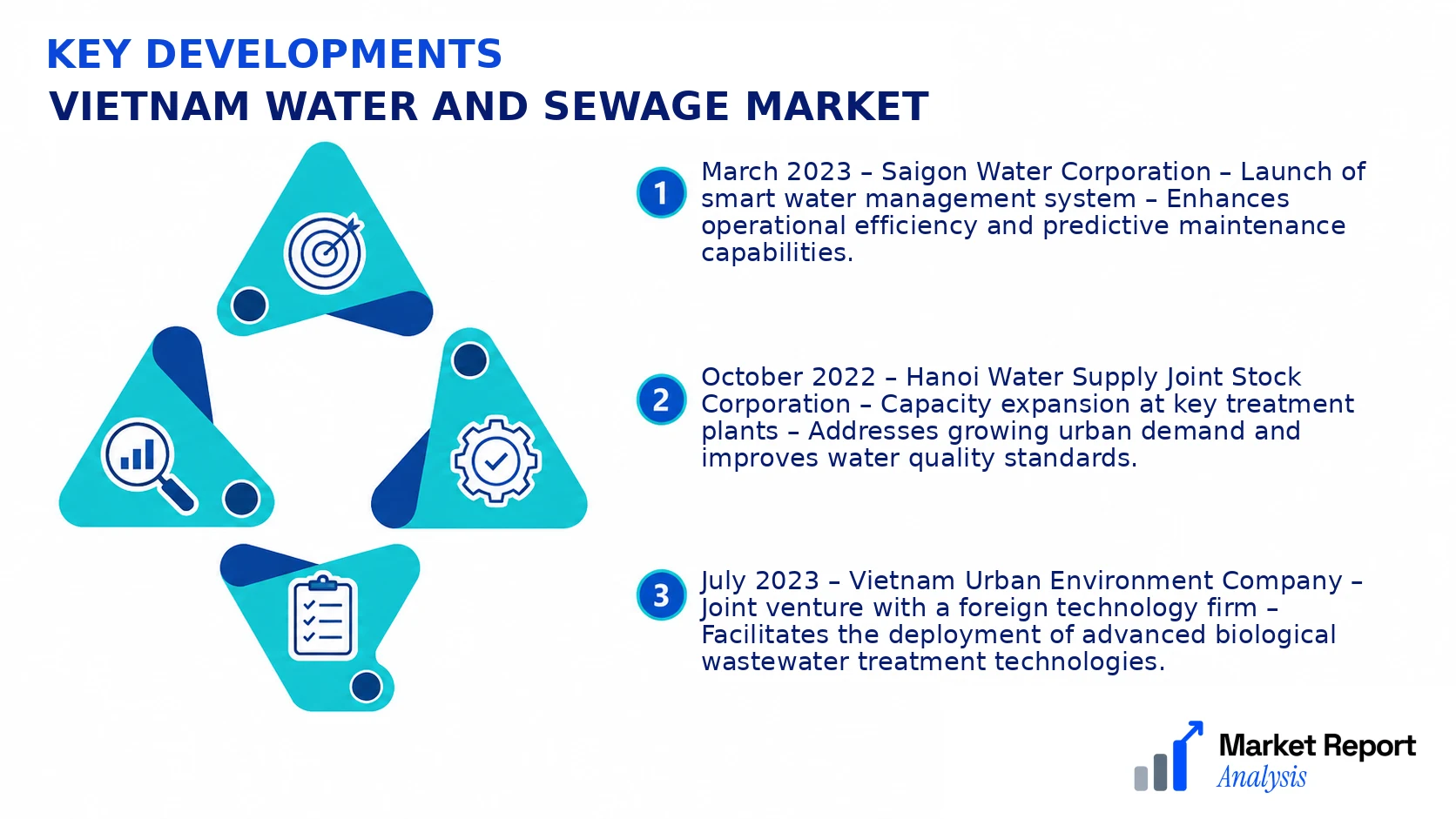
- March 2023 – Saigon Water Corporation – Launch of smart water management system – Enhances operational efficiency and predictive maintenance capabilities.
- October 2022 – Hanoi Water Supply Joint Stock Corporation – Capacity expansion at key treatment plants – Addresses growing urban demand and improves water quality standards.
- July 2023 – Vietnam Urban Environment Company – Joint venture with a foreign technology firm – Facilitates the deployment of advanced biological wastewater treatment technologies.
- May 2023 – Vinh Long Water Supply Company – Implementation of IoT sensors for leak detection and real-time monitoring – Reduces water loss and improves system reliability.
- August 2022 – Vietnam Environment Joint Stock Corporation – Acquisition of smaller regional wastewater treatment companies – Strengthens regional presence and service integration.
Frequently Asked Questions
What is the Vietnam Water and Sewage Market?
The Vietnam Water and Sewage Market encompasses the infrastructure, services, and technologies involved in the supply, treatment, and disposal of water and wastewater across the country. It includes municipal and industrial segments, driven by urbanization and regulatory reforms to improve water quality and access.
What is the current market size of Vietnam Water and Sewage Market?
As of 2026, the market size is estimated at approximately USD 4.2 Billion, reflecting ongoing investments in water infrastructure and sanitation projects. The market has shown consistent growth driven by urban population expansion and increasing demand for reliable water services.
What factors are driving the Vietnam Water and Sewage Market?
Growth drivers include rapid urbanization, government initiatives on water security, stricter environmental regulations, and increased industrial activity. Technological advancements in water treatment and waste management also play critical roles in expanding market capacity.
Which Vietnamese city leads the Vietnam Water and Sewage Market?
Hanoi, the capital city, leads the market due to its dense population, extensive urban infrastructure, and ongoing projects to upgrade aging water and sewage systems. Its proactive municipal policies foster continuous infrastructure development to meet rising demands.
Which segment is expected to grow the fastest?
The industrial segment is forecasted to experience the fastest growth, driven by Vietnam’s expanding manufacturing sector and foreign direct investment. Increasing industrial wastewater treatment requirements underpin rapid sector expansion through 2034.
Who are the leading companies operating in the Vietnam Water and Sewage Market?
Key industry players include state-owned enterprises such as Vietnam Water Corporation, alongside international firms like Suez and Veolia, which are involved in large-scale infrastructure projects and provide innovative water treatment solutions to the Vietnamese market.
Analyst Perspective
The Vietnam Water and Sewage Market exhibits significant long-term growth potential driven by urbanization, industrial expansion, and government infrastructure initiatives. As the market matures, technological evolution such as intelligent water management systems, automation, and sustainable treatment technologies will be critical to enhancing efficiency and environmental compliance. Investment priorities should focus on upgrading aging infrastructure in Hanoi, Ho Chi Minh City, and smaller fast-growing urban centers like Can Tho and Da Nang, which demonstrate high demand for reliable water supply and waste treatment. Competitive intensity will increase as local firms and international players vie for market share, emphasizing innovation and cost-effective solutions. City-level analysis indicates notable growth prospects in Hanoi, supported by robust infrastructure projects, and in Ho Chi Minh City, where rapid urbanization necessitates extensive sewer network development. Strategically, fostering alliances with technology providers and local authorities, while prioritizing sustainable and resilient systems, will position stakeholders advantageously over the next decade.
