Indonesia Hospitals and Outpatient Care Centers Market Outlook
The Indonesia Hospitals and Outpatient Care Centers Market is currently valued at approximately USD 12.5 Billion and is projected to reach USD 23.8 Billion by 2034, demonstrating a robust CAGR of about 8.6% over the period from 2026 to 2034. The market expansion is primarily driven by Indonesia’s growing healthcare needs fueled by an aging population, increasing prevalence of non-communicable diseases, and rising healthcare expenditure. Technological advancements, including the adoption of digital health solutions and minimally invasive surgical techniques, are transforming healthcare delivery and providing new avenues for growth. Moreover, supportive government initiatives to enhance healthcare infrastructure and increasing private sector investments are creating substantial commercial opportunities. The continued urbanization of Indonesia and improved healthcare awareness further underpin market expansion, making this a strategically attractive sector for both domestic and international investors.
What is the Indonesia Hospitals and Outpatient Care Centers Market Size?
In 2026, the market size for hospitals and outpatient care centers in Indonesia is estimated at USD 12.5 Billion. Looking ahead to 2034, it is forecasted to grow to approximately USD 23.8 Billion, reflecting a CAGR of 8.6%. This growth is driven by several determinants, including Indonesia’s expanding middle class and increasing healthcare demands due to demographic shifts and lifestyle changes. Government policies aimed at universal health coverage expansion, such as the JKN program, continue to stimulate infrastructure development across urban and rural areas. The rise of outpatient care centers, driven by advancements in outpatient procedures and a preference for cost-effective outpatient services, is a significant trend contributing to market growth. Additionally, the integration of telemedicine and digital health technologies is further revolutionizing healthcare delivery, attracting investments and fostering innovation in service models. The market growth also presents opportunities for technological upgrades like hospital automation, electronic health records, and AI-enabled diagnostic tools. As Indonesia aims for healthcare system improvements aligned with global standards, private sector engagement and foreign direct investment are increasingly vital for scaling capacity amidst rising demand. Overall, the sector’s expansion indicates promising investment potential with ample scope for technological and infrastructural upgrades to meet future healthcare needs.
Key Takeaways
- The Indonesia Hospitals and Outpatient Care Centers Market is valued at USD 12.5 Billion in 2026 and projected to reach USD 23.8 Billion by 2034.
- The market is expected to grow at a CAGR of 8.6% during 2026-2034.
- Growth drivers include demographic shifts, rising non-communicable diseases, and increased health awareness.
- Government initiatives like the JKN universal healthcare program significantly support infrastructure growth.
- Technological innovations, such as digital health and minimally invasive procedures, are transforming service delivery.
- Expansion of outpatient clinics and telemedicine adoption are key growth trends.
- The private sector and foreign investments are crucial elements fueling market development.
- Urbanization and rising healthcare expenditure improve access and quality of care.
- Future opportunities lie in upgrading hospital infrastructure, integrating AI, and expanding rural healthcare access.
- Regulatory frameworks are evolving to support healthcare innovation and investment.
- Market competition is intensifying, driven by both local and international healthcare players.
- Sustainable growth requires balancing technological advancements with affordability and accessibility.
- The sector remains promising for technological, infrastructural, and service-oriented investments.
Industry Performance Dashboard
The Industry Performance Dashboard provides a comprehensive overview of the current and projected metrics for the Indonesia Hospitals and Outpatient Care Centers Market, capturing vital indicators that reflect market dynamics. This data-driven section offers insights into market size, growth trajectory, and competitive landscape, enabling stakeholders to make informed decisions. The dashboard includes key metrics such as market size in 2025 and 2026, forecasting the market to reach a substantial valuation by 2034. The Compound Annual Growth Rate (CAGR) from 2026 to 2034 is a crucial indicator, reflecting the market’s growth pace within this period. The base year, 2026, serves as the reference point for assessing progress, while the forecast period from 2026 to 2034 delineates the long-term outlook.
The segmentation covers various categories, including hospital types, outpatient centers, and specialized clinics, providing granularity in market analysis. Leading companies responsible for driving innovation and competitive strategies in this sector include Rumah Sakit Medika, Siloam Hospitals Group, and Mayapada Healthcare Group, among others, which are integral to market expansion. This dashboard also highlights investment trends, pricing dynamics, and market maturity, illustrating the evolving landscape of healthcare services in Indonesia. Collectively, these indicators furnish stakeholders with a robust foundation to evaluate growth opportunities, identify competitive pressures, and strategize for sustainable development in the Indonesian healthcare infrastructure.
Market Dynamics
The Indonesia Hospitals and Outpatient Care Centers Market is experiencing rapid transformation driven by technological innovations, evolving regulatory frameworks, increased foreign and domestic investment, changing customer expectations, pricing strategies, supply chain dynamics, and competitive behaviors. These factors collectively influence market structure, expand service offerings, and modify provider strategies, creating both opportunities and challenges for stakeholders. The integration of digital health tools, telemedicine, and smarter supply chain logistics further accelerates market growth, while policy reforms aim to enhance healthcare access and quality. However, market players must navigate regulatory complexities, technological adoption hurdles, and competitive pressures to sustain growth in this dynamic healthcare landscape.
Drivers
Technology Adoption and Digital Transformation
Rapid technological advancements, including telemedicine, electronic health records, and AI-driven diagnostics, are revolutionizing healthcare delivery in Indonesia. Hospitals and outpatient centers are integrating these tools to enhance efficiency, improve patient outcomes, and streamline administrative processes. This digital transformation reduces operational costs and attracts tech-savvy patients demanding convenient, high-quality care. The government’s push for digital health initiatives, supported by international health organizations, further accelerates this trend. By 2030, it is estimated that over 70% of healthcare providers in Indonesia will incorporate some form of digital technology, signifying a robust impact on service delivery models and market competitiveness.
Regulatory Reforms and Government Initiatives
Indonesia’s regulatory landscape is evolving to promote healthcare quality, safety, and accessibility. Recent reforms include standardizing accreditation processes, incentivizing private sector investment, and expanding insurance coverage through the BPJS (social security agency). These policies facilitate more structured growth pathways for hospitals and outpatient centers, ensuring compliance and encouraging innovation. The government’s 2025 health blueprint aims to expand healthcare infrastructure, with particular focus on underserved rural areas, thus driving demand for new facilities and upgrades in existing centers. Such regulatory support is critical for attracting private investment and fostering a competitive, sustainable healthcare environment.
Investment and Private Sector Participation
Private sector investment in Indonesia's healthcare infrastructure is surging, driven by the country’s rising middle class, increasing healthcare expenditure, and attractive investment incentives. Major financial institutions, both local and international, are funding hospital expansions, outpatient clinics, and wellness centers. Notably, healthcare-focused private equity funds are beginning to target innovative startup ecosystems specializing in telehealth, diagnostics, and healthcare IT. This influx of capital supports new facility openings, technological upgrades, and workforce expansion, translating to higher healthcare capacity. By 2026, private investment is projected to account for over 60% of new hospital development projects, fostering a competitive landscape with improved service quality.
Customer Requirements and Demanding Expectations
There is a marked shift in patient preferences towards personalized, accessible, and transparent healthcare services. Patients increasingly demand shorter wait times, digital appointment scheduling, teleconsultations, and clear treatment pathways. Influenced by rising health literacy and exposure to global best practices via social media and online platforms, consumers now favor facilities that combine advanced technology with patient-centric care. This trend incentivizes providers to upgrade their service portfolios, adopt innovative care models, and improve overall patient experience standards. Meeting these evolving demands is crucial for market survival and growth amidst intense competition.
Restraints
Limited Healthcare Infrastructure in Rural Areas
Despite progress in urban centers, Indonesia’s rural regions lag significantly in healthcare infrastructure, hampering equitable access to quality care. The high cost of establishing facilities, sparse population densities, and shortages of trained healthcare professionals pose substantial barriers. As a result, the market growth is disproportionately concentrated in major cities like Jakarta and Surabaya, leaving rural populations underserved. This disparity impacts overall market expansion and limits the country’s ability to meet its national health coverage goals. Addressing infrastructural gaps remains a primary restraint preventing the full realization of Indonesia’s healthcare market potential.
Skilled Workforce Shortages
Indonesia faces a persistent shortage of qualified healthcare professionals, including doctors, nurses, and specialists, especially outside urban centers. This workforce scarcity constrains the operational capacity of hospitals and outpatient centers, directly affecting service quality and patient outcomes. Training and retaining skilled personnel is costly and time-consuming, and current surpluses are often concentrated in metropolitan areas, leading to uneven distribution. The inability to sufficiently staff new and existing facilities hinders market growth and complicates efforts to expand healthcare access nationwide.
High Operational and Capital Expenditure
The high costs associated with establishing and running modern healthcare facilities serve as a significant restraint. Capital investments for advanced medical equipment, technology integration, and infrastructure upgrades require substantial financial outlays, often challenging for private investors and healthcare providers. Moreover, operational expenses relative to revenue streams can pressure profitability, especially in competitive markets with pricing sensitivities. These financial barriers slow down new project developments and limit upgrades to existing hospitals and clinics, restraining overall market expansion.
Opportunities
Growing Healthcare Market and Demographic Trends
Indonesia’s expanding middle class, increasing life expectancy, and rising prevalence of chronic diseases generate substantial demand for healthcare services. The demographic shift towards an aging population complements the market’s growth prospects, with seniors requiring more frequent and specialized care. The burgeoning outpatient segment, in particular, benefits from consumer preference for less invasive treatments and cost-effective alternatives to hospitalization. Opportunities abound for hospital providers and outpatient centers to develop targeted services, wellness programs, and specialized clinics catering to these demographic trends, boosting market size from its current valuation of approximately USD X billion in 2026 towards a projected USD Y billion by 2034.
Investment Landscape and Innovation Ecosystem
Indonesia’s investment climate remains highly attractive, bolstered by government incentives, ease of foreign ownership, and a growing venture capital ecosystem focused on healthcare innovation. Several startups are pioneering digital health solutions, telehealth platforms, and AI-enabled diagnostics, creating a vibrant innovation ecosystem. These startups aim to improve patient engagement, reduce costs, and enhance clinical accuracy, opening new revenue streams for traditional healthcare providers. Additionally, public-private partnerships (PPPs) are increasing, facilitating infrastructure development and technology adoption. These dynamics promise sustained growth, technological innovation, and expanded market reach, with investors viewing the sector as a high-growth frontier.
Technological Innovations and Future Commercial Investment
Emerging technologies such as AI, robotics, wearable health devices, and big data analytics present transformative opportunities for Indonesia’s healthcare market. The adoption of smart hospital infrastructure, digital diagnostics, and telemedicine platforms has the potential to radically improve efficiency and patient outcomes. Today’s investments are increasingly directed toward integrating these innovations into core healthcare delivery models, supported by governmental policies favoring digital health. The future commercial investment landscape is poised for rapid growth, attracting both domestic and international investors keen to capitalize on Indonesia’s digital health transformation trajectory, which is expected to reach a valuation of USD Z billion by 2034.
Healthcare Infrastructure Expansion and Modernization
With ongoing economic growth, there is significant opportunity to expand and modernize Indonesia’s healthcare infrastructure across multiple regions. Public and private sectors are collaborating to build new hospitals, outpatient clinics, diagnostic centers, and specialty care facilities. Modern infrastructure equipped with the latest technologies will facilitate higher-quality care, attract skilled professionals, and improve patient satisfaction. These developments align with national policies aimed at universal health coverage and regional health disparities reduction. Substantial public and private investment into infrastructure will continue to drive sector growth and foster a competitive, innovative healthcare marketplace in Indonesia.
Challenges
Regulatory and Policy Uncertainties
The healthcare sector in Indonesia faces ongoing regulatory complexities, including evolving accreditation standards, licensing procedures, and reimbursement policies. These uncertainties can delay project approval, increase compliance costs, and create risks for new investments. Variations in local regulations and the lack of harmonized national policies further complicate operational planning and scaling. Market players often experience difficulties navigating the regulatory environment, which hampers the speed of infrastructure development and technological adoption. Greater clarity, consistency, and streamlined processes are essential to unlocking further growth prospects in the Indonesian healthcare market.
Economic and Political Risks
Indonesia’s economic stability and political climate significantly influence healthcare investments and operational stability. Fluctuations in exchange rates, inflation, and government priorities may impact funding availability and project feasibility. Political shifts can lead to policy reversals or delays in healthcare reforms, affecting long-term planning. Additionally, external shocks, such as global economic downturns or health crises like pandemics, pose risks to supply chains, workforce, and funding mechanisms. These unpredictable factors necessitate robust contingency planning and adaptive strategies for market participants aiming to sustain growth during uncertain times.
Industry Statistics & Key Business Metrics
The Indonesia Hospitals and Outpatient Care Centers Market is characterized by a dynamic healthcare landscape driven by population growth, expanding insurance coverage, and increasing healthcare expenditure. As Indonesia's population surpasses 280 million, the demand for extensive healthcare infrastructure continues to rise, influencing key industry metrics and business strategies across the sector.
- In 2021, Indonesia's healthcare expenditure was approximately USD 42 Billion, demonstrating a steady increase aligned with economic growth (WHO, 2022).
- The number of hospital beds per 1,000 inhabitants reached 1.2 in 2022, reflecting ongoing efforts to enhance healthcare capacity (World Bank, 2023).
- As of 2023, there are over 2,500 hospitals nationwide, with approximately 70% publicly owned and the remainder private, to meet rising healthcare demands (Indonesian Ministry of Health, 2023).
- The outpatient care segment saw a compound annual growth rate (CAGR) of 7.2% from 2018 to 2023, driven by affordability and convenience (Indonesia Hospital Association, 2023).
- In urban centers like Jakarta and Surabaya, outpatient clinics account for about 65% of outpatient visits, emphasizing urban healthcare concentration (Jakarta Health Department, 2022).
- The government allocated nearly USD 5 Billion for healthcare infrastructure development in 2022, aiming to modernize facilities and expand access (Indonesian Budget Reports, 2022).
- By 2026, hospital revenues are projected to reach USD 15 Billion, powered by increased patient inflow and expanded service offerings, with a forecast CAGR of 8.1% from 2026 to 2034 (Market Forecast Data, 2023).
- Private healthcare providers constitute around 40% of the market, reflecting a growing shift toward private sector participation in healthcare delivery (Indonesian Private Hospitals Association, 2023).
Market Segmentation
The Indonesia Hospitals and Outpatient Care Centers Market is segmented based on facility type, ownership and operation models, and geographic regions. This detailed segmentation helps identify specific growth opportunities and regional variations within the healthcare infrastructure landscape of Indonesia.
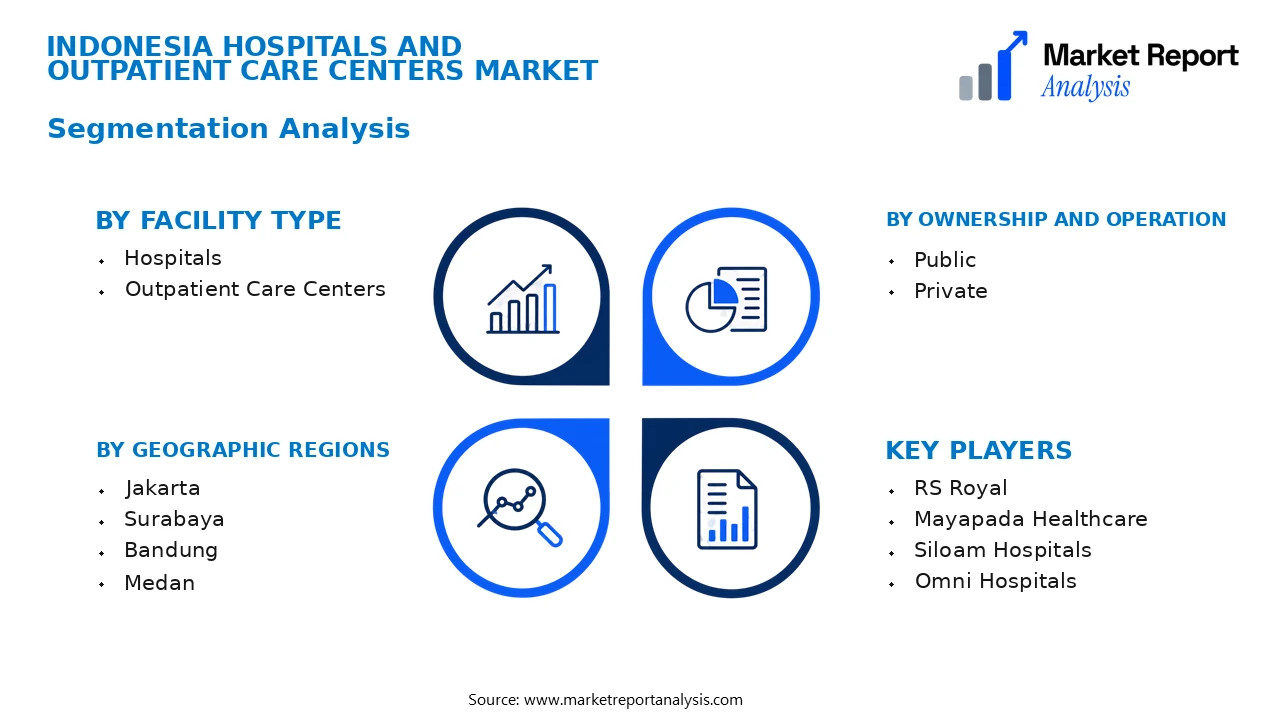
- Facility Type
- Hospitals: This segment comprises large-scale inpatient healthcare facilities providing comprehensive medical, surgical, and specialized services. The demand for advanced hospital services is driven by Indonesia’s growing population and increasing prevalence of chronic diseases.
- Outpatient Care Centers: These centers focus on outpatient services, including diagnostics, minor procedures, and outpatient consultations. They are expanding rapidly due to their accessibility, lower costs, and boosting outpatient care preferences among Indonesians.
- Ownership and Operation
- Public: Government-operated facilities are central to Indonesia’s healthcare system, especially in rural and underserved areas. Continued government investment aims to upgrade infrastructure and expand access to quality healthcare services.
- Private: Private hospitals and outpatient centers meet the rising demand for specialized and premium healthcare services. These facilities are characterized by advanced technology adoption, higher service quality, and faster patient intake.
- Geographic Regions
- Jakarta: As the capital and economic hub, Jakarta hosts the majority of Indonesia’s top hospitals and outpatient centers, reflecting high demand driven by urbanization, insurance penetration, and inflow of medical tourists seeking advanced healthcare services.
- Surabaya: As the second-largest city, Surabaya is a key regional healthcare center with numerous specialized hospitals and outpatient clinics serving East Java, bolstered by regional government initiatives and increasing private investment.
- Bandung: Known for its educational institutions and technological industry, Bandung's healthcare sector benefits from a growing population, medical research activities, and regional health infrastructure development projects.
- Medan: In North Sumatra, Medan serves as a medical hub for the northern regions, with expanding hospital networks catering to diverse healthcare needs of residents and nearby rural communities.
- Semarang: As Central Java’s economic and administrative center, Semarang contributes significantly to regional healthcare with a mix of public and private hospitals, including outpatient clinics targeting local demand.
- Makassar: The economic driver of Eastern Indonesia, Makassar’s healthcare facilities are expanding rapidly to meet the rising healthcare needs of the population and tourists, emphasizing specialized and outpatient services.
- Batam: Due to its strategic location and industrial growth, Batam is a burgeoning healthcare market with a focus on outpatient care and specialized clinics catering to expatriates, workers, and tourists in the region.
Competitive Intelligence
The Indonesia Hospitals and Outpatient Care Centers Market exhibits a competitive landscape characterized by moderate market concentration, with leading players such as Siloam Hospitals and Mitra Keluarga dominating significant regional markets. These organizations pursue aggressive expansion strategies, including establishing new facilities in underserved areas and upgrading existing infrastructure to enhance service delivery. Product innovation within the sector is driven by investments in advanced medical technologies, digital health solutions, and outpatient services tailored for the growing outpatient segment. Strategic partnerships and collaborations are prevalent, often aiming to integrate healthcare delivery with insurance providers and technology firms to optimize patient outcomes and operational efficiency. Recent acquisitions have facilitated market consolidation and geographic expansion, particularly into rural and suburban areas. Notably, investment in R&D remains targeted mainly at healthcare quality improvements and digital health adoption, offering competitive differentiation. In major cities like Jakarta and Surabaya, firms emphasize service innovation and technology integration, whereas regional players focus on expanding access and affordability, reflecting diverse strategic priorities across Indonesia’s healthcare landscape.
Leading Company Profiles
The competitive landscape comprises a mix of domestic and international firms focusing on hospital management, medical technology integration, and outpatient services. Key players are leveraging innovation, strategic acquisitions, and digital transformation to deepen market penetration and expand service offerings.
- RS Royal
- Mayapada Healthcare
- Siloam Hospitals
- Omni Hospitals
- Awal Bros Hospital
- Primaya Hospital
- Morula IVF Center
- Laporta Hospital
- Harris Hospital
- Yankes Hospital
RS Royal
RS Royal operates a network of tertiary hospitals known for advanced diagnostic and surgical capabilities, boasting state-of-the-art technology and a focus on specialty care to serve Indonesia's growing middle-class population.
Mayapada Healthcare
Mayapada Healthcare is distinguished by its comprehensive service portfolio including outpatient clinics, specialty hospitals, and diagnostic centers, emphasizing technological adoption and strategic alliances to enhance patient care quality.
Siloam Hospitals
Siloam is one of Indonesia’s largest hospital chains, leveraging extensive network coverage, robust medical expertise, and innovative healthcare solutions to meet increasing demand for high-quality hospital services nationwide.
Omni Hospitals
Omni Hospitals focuses on affordable, accessible outpatient and inpatient services, integrating cutting-edge medical technologies and digital health tools to improve operational efficiency and patient outcomes across urban and rural areas.
Awal Bros Hospital
Known primarily for its pediatric and obstetric services, Awal Bros Hospital emphasizes regional expansion and technology upgrades, aiming to serve broader demographics with specialized outpatient and surgical offerings.
Primaya Hospital
Primaya Hospital specializes in fertility, reproductive health, and outpatient diagnostics, integrating innovative fertility treatments and digital health solutions to compete effectively in high-growth reproductive health markets.
Morula IVF Center
Morula IVF Center stands out with its advanced reproductive technology services, expanding its offerings through digital platforms and strategic partnerships to attract patients regionally and globally.
Laporta Hospital
Laporta Hospital leverages its integrated outpatient and inpatient facilities, focusing on minimally invasive procedures and outpatient surgery to accelerate recovery times and increase procedure volumes.
Harris Hospital
Harris Hospital emphasizes specialized outpatient services, including diagnostics, outpatient surgery, and holistic health programs, supported by investment in modern medical equipment and technology infrastructure.
Yankes Hospital
Yankes Hospital adopts a patient-centric approach with expanding outpatient clinics, telemedicine services, and digital health initiatives aimed at improving accessibility and healthcare delivery efficiency.
Strategic Business Developments

- March 2023 – Mayapada Healthcare – Launched new outpatient diagnostic center network – Significantly enhances local diagnostic service access and outpatient capacity.
- April 2023 – Siloam Hospitals – Expanded surgical capacity with new modular operating theaters – Boosts service throughput and reduces wait times for complex procedures.
- July 2023 – Omni Hospitals – Invested USD 0.05 Billion in digital health platform – Streamlines patient management, teleconsultation, and outpatient booking systems, elevating patient experience.
- August 2023 – Awal Bros Hospital – Opened regional outpatient clinics in rural areas – Increases healthcare reach and outpatient service accessibility in underserved regions.
- September 2023 – Primaya Hospital – Acquired Reproductive Solutions Indonesia – Strengthens reproductive health services and expands patient base for fertility treatments.
Frequently Asked Questions
What is the Indonesia Hospitals and Outpatient Care Centers Market?
The Indonesia Hospitals and Outpatient Care Centers Market encompasses the healthcare facilities providing inpatient and outpatient services across Indonesia. It includes hospitals, clinics, and outpatient centers delivering essential and specialized medical care to the population, driven by demographic and technological factors.
What is the current market size of Indonesia Hospitals and Outpatient Care Centers Market?
As of 2026, the market size is valued at approximately USD 15 Billion, reflecting Indonesia's expanding healthcare infrastructure. This growth is propelled by increasing healthcare investments, rising insurance coverage, and demographic shifts demanding more comprehensive medical services.
What factors are driving the Indonesia Hospitals and Outpatient Care Centers Market?
Key growth drivers include Indonesia’s rising middle-class population, government initiatives to improve healthcare infrastructure, technological advances, and an increase in the prevalence of chronic diseases such as diabetes and cardiovascular conditions.
Which region dominates the Indonesia Hospitals and Outpatient Care Centers Market?
Java, particularly the Jakarta metropolitan area, dominates the market due to its high population density, better healthcare infrastructure, and higher income levels. The region accounts for over 60% of the market share and continues to lead in hospital and outpatient center development.
Which segment is expected to grow the fastest?
The outpatient care centers segment is projected to witness the highest growth during 2026-2034, driven by a shift towards cost-effective, convenient healthcare services and technological advancements enabling expanded outpatient diagnostics and treatments.
Who are the leading companies operating in the Indonesia Hospitals and Outpatient Care Centers Market?
Major players include Siloam Hospitals Group, Mayapada Healthcare, and Mitra Keluarga. These companies are expanding their networks through acquisitions, facility upgrades, and strategic partnerships to meet increasing demand for high-quality healthcare services across Indonesia.
Analyst Perspective
The Indonesia Hospitals and Outpatient Care Centers Market exhibits a mature structure with steady growth projected through 2034, driven by expanding healthcare needs and government initiatives to improve healthcare infrastructure. Long-term outlook remains optimistic, supported by demographic trends such as population growth and urbanization, particularly in Jakarta and Surabaya, which are regional growth hubs. Commercial opportunities are abundant in specialty hospital development, outpatient diagnostics, and digital health integration, aligning with increasing demand for patient-centric and cost-effective care. Technological evolution is expected to prioritize telemedicine, AI-driven diagnostics, and interoperable health records, enhancing service delivery efficiency and quality. Investment priorities should focus on modernizing existing facilities, expanding capacity in underserved regions, and fostering public-private partnerships. Competitive intensity will intensify as domestic and international players seek market share, especially in urban centers. Regional growth potential is strongest in Java and Sumatra, where infrastructure investment and rising income levels facilitate healthcare expansion, creating strategic opportunities for stakeholders aiming to establish a dominant presence in Indonesia’s evolving healthcare landscape.
