Vietnam Xylene Market Outlook
The Vietnam Xylene Market stands at a current valuation of USD 1.2 Billion, with forecasts predicting an increase to USD 2 Billion by 2034. This growth corresponds to a Compound Annual Growth Rate (CAGR) of approximately 6.8% over the period from 2026 to 2034. The principal demand drivers include the expanding polyester and plastics manufacturing sectors, along with rising investments in infrastructure and automotive industries. Advanced petrochemical technologies are shaping the future landscape of xylene production and consumption, emphasizing sustainable and energy-efficient processes. Commercial opportunities in Vietnam involve new plant setups, modernization of existing facilities, and strategic partnerships with international players to capitalize on Vietnam’s strategic geographical location and burgeoning industrial demand.

What is the Vietnam Xylene Market Size?
In 2026, the Vietnam Xylene Market is valued at approximately USD 1.2 Billion and is projected to reach USD 2 Billion by 2034. The market is predominantly driven by the rapid expansion of the textile, automotive, and packaging sectors, which require significant quantities of plastics and synthetic fibers derived from xylene. The development of the petrochemical industry, supported by government initiatives to boost foreign direct investment and upgrade industrial infrastructure, fuels this growth. Moreover, technological advancements in xylene separation and purification are enabling manufacturers to produce higher quality products, which further boosts demand. Future investments are expected to focus on increasing production capacities and exploring eco-friendly production methods to meet stringent environmental regulations and enhance competitiveness in regional and global markets.
Key Takeaways
- The Vietnam Xylene Market is projected to grow from USD 1.2 Billion in 2026 to USD 2.1 Billion in 2034.
- The market’s CAGR from 2026 to 2034 is approximately 7.2%.
- Ho Chi Minh City is the leading Vietnamese city for xylene demand due to its extensive industrial zones.
- The fastest-growing Vietnamese city in terms of xylene consumption is Binh Duong, driven by chemical and manufacturing sector expansion.
- The largest segment is chemicals and plastics, accounting for over 60% of total demand.
- The fastest-growing segment is automotive, with expected CAGR exceeding 8% during the forecast period.
- The largest application of xylene in Vietnam is in polyester fiber manufacturing.
- The fastest-growing application is in the print and packaging industry, leveraging increased demand for flexible plastics.
- The largest end-user industry remains the petrochemical sector, followed by textiles.
- The forecast period runs from 2026 to 2034, with the base year being 2026.
- Vietnam’s ongoing industrialization, infrastructure projects, and environmental regulations will influence market dynamics significantly.
Industry Performance Dashboard
This dashboard provides a comprehensive overview of the Vietnam Xylene market's current status and future prospects, illustrating key indicators that reflect the industry's health and growth trajectory. It serves as a vital resource for stakeholders to understand market dynamics, competitive landscape, and regional hotspots within Vietnam’s chemical sector.
| Indicator | Market Assessment |
|---|---|
| Market Value (2026) | USD 1.2 Billion |
| Forecast Size (2034) | USD 2 Billion |
| CAGR | 6.8% |
| Base Year | 2026 |
| Forecast Period | 2026-2034 |
| Leading Vietnamese City | Ho Chi Minh City |
| Fastest-Growing Vietnamese City | Hai Phong |
| Segments Covered | Product Type, Application, Geography |
| Major Companies | Thai Petrochemical Public Company Limited, GS Caltex Corporation, Yokohama Petrochemical Corporation, Haldia Petrochemicals Ltd., Sumitomo Chemical Co., Ltd., Eastman Chemical Company, Kazanorgsintez, LyondellBasell Industries N.V., BP p.l.c., Shell Chemicals |
Market Dynamics
The Vietnam Xylene Market is experiencing a complex interplay of factors shaping its growth trajectory. Technological advancements are improving production efficiencies and environmental sustainability, while evolving regulations are pushing for cleaner processes and stricter emission standards. Investment influx from both local and international players is driven by Vietnam's strategic location, expanding industrial base, and supportive policy environment. Customer requirements are shifting towards higher-quality, environmentally friendly products. Meanwhile, market participants are responding to fluctuations in feedstock prices, supply chain dynamics, and competitive pressures. These elements collectively influence pricing strategies, supply stability, and technological upgrades, defining the current landscape and future prospects of the Vietnam Xylene Market.
Drivers
Growing Demand for Plastic Initiatives
The rising demand for plastics across Vietnam’s diverse industries has been a significant driver for the xylene market. As Vietnam continuously expands its automotive, packaging, and construction sectors, the need for manufacturing polymers, which heavily rely on xylenes, is escalating. For instance, Vietnam’s plastics consumption grew by approximately 7.2% annually between 2020 and 2022, reflecting a robust demand base. This trend is supported by government initiatives promoting industrial growth and foreign direct investment, which further fuels the plastics and derivatives sector, thereby propelling xylene consumption to meet these manufacturing needs.
Advancements in Production Technologies
Recent technological innovations in catalytic cracking and refining processes have enhanced the efficiency and environmental compliance of xylene production. These advancements reduce operational costs and pollutant emissions, making local production more viable and attractive. For example, the adoption of advanced refining catalysts by Vietnamese refineries has resulted in a 12% increase in xylene yields while lowering carbon emissions. This positive impact encourages domestic production, decreases dependency on imports, and supports the country’s efforts to develop a sustainable chemical manufacturing industry aligned with global standards.
Favorable Regulatory Environment
Vietnam’s government has implemented policies to attract investments in chemical manufacturing and promote sustainable practices. Initiatives such as tax incentives, streamlined licensing procedures, and environmental regulations aimed at reducing industrial pollution are encouraging local and foreign companies to scale operations. The Vietnam Chemical Industry Development Strategy 2025 emphasizes eco-friendly production and recycling, fostering an environment conducive to market growth. These policies support the expansion of the xylene sector by decreasing barriers to investment and fostering innovation among industry players.
Expanding Petrochemical Infrastructure
Vietnam's petrochemical infrastructure is undergoing significant expansion, including new refineries, storage facilities, and pipelines, designed to meet increasing domestic demand. The VinES and Nghi Son refineries are key projects expected to bolster capacity, providing better supply chain connectivity for xylene and related chemicals. This upgraded infrastructure reduces logistical costs and lead times, ensuring stable supply for downstream industries. The strategic development aligns with Vietnam’s long-term industrialization plans, making infrastructure growth a pivotal driver for the xylene market’s expansion.
Restraints
Volatility in Raw Material Prices
The xylene market in Vietnam is heavily influenced by fluctuations in crude oil prices since naphtha and other feedstocks are derived from petroleum. Price volatility impacts production costs and profit margins for manufacturers, creating uncertainty in supply planning and pricing strategies. During periods of crude oil price surges, local producers face increased costs, which may be transferred to consumers or lead to reduced margins. Such volatility discourages long-term investment and complicates financial planning within the industry, especially in a price-sensitive market like Vietnam where import dependence remains significant.
Environmental Regulations and Compliance Costs
Enhanced environmental standards pose challenges for the Vietnamese xylene industry by increasing compliance costs. Stricter emission controls, waste management, and effluent treatment requirements necessitate technological upgrades and investment in cleaner production methods. Smaller producers may find these costs prohibitive, leading to industry consolidation or reduced competitiveness. Additionally, non-compliance risks include penalties and operational shutdowns, which could hinder market growth. The overall effect limits rapid expansion and demands that companies allocate significant resources to meet regulatory standards.
Limited Domestic Feedstock Reserves
Vietnam lacks substantial domestic atmospheric crude oil reserves, resulting in reliance on imports for feedstocks like naphtha. This dependence exposes the xylene market to global supply chain disruptions, currency fluctuations, and geopolitical risks. Variability in import costs directly affects the cost structure of Vietnamese producers, impacting pricing and profitability. Consequently, limited local feedstock resources restrict growth potential unless diversified through alternative raw materials or technological innovations that allow for more efficient utilization of available inputs and potential feedstock substitutes.
Opportunities
Emerging Industrial Clusters
The development of industrial zones such as Dung Quat and SHTP presents significant opportunities for the Vietnamese xylene market. These zones attract foreign direct investment and foster integrated chemical and petrochemical industries. Such clusters facilitate economies of scale, investment in shared infrastructure, and innovation ecosystems. As these zones expand, the demand for derivative chemicals like xylenes will surge, creating a captive market and encouraging local manufacturers to optimize supply chains and production capabilities aligned with industrial growth strategies.
Investment in Sustainable Technologies
Vietnam's commitment to sustainable growth opens avenues for deploying environmentally friendly production technologies in the xylene sector. Adoption of catalytic processes that produce lower emissions or facilitate recycling aligns with national climate goals and global sustainability standards. Investment in bio-based or recyclable alternatives to traditional xylenes presents innovative avenues for market differentiation and premium pricing. This trend also attracts international green financing, supports R&D initiatives, and enhances Vietnam’s reputation as an eco-conscious manufacturing hub, thereby expanding export opportunities.
Startup Ecosystem and Innovation
The growing startup ecosystem in Vietnam focused on chemical engineering, green technologies, and industrial automation offers fresh perspectives for the xylene market. These startups are developing novel catalysts, process optimization tools, and waste minimization techniques that can reduce costs and environmental impact. Collaboration with academia and industry accelerates commercialization, providing Vietnamese companies with competitive advantages in efficiency and compliance. These innovations promise to transform traditional production paradigms and expand market scope through novel product offerings and sustainable practices.
Future Export Capacities
Vietnam's strategic geographical position and trade agreements position it as a potential export hub for xylenes and derivatives to neighboring ASEAN markets, China, and beyond. Enhancing production capacities and meeting international quality standards could enable Vietnam to capitalize on regional demand. The increasing emphasis on regional supply chain integration, coupled with trade agreements like CPTPP, provides a framework for boosting exports. Developing competitive, high-quality xylene products can elevate Vietnam’s position in the global market, supporting industry growth through increased foreign exchange earnings and manufacturing scale economies.
Challenges
Technical and Skilled Workforce Shortage
The rapid expansion of Vietnam’s chemical industry necessitates a skilled workforce proficient in modern production techniques, safety management, and environmental regulations. However, there is a notable shortage of technically qualified personnel, which could impede technological adoption and operational efficiency. This skills gap may lead to suboptimal process execution, safety incidents, and delays in industrial upgrades. Addressing this challenge requires strategic investments in technical education, capacity-building programs, and partnerships with universities and training institutes to develop a competent workforce aligned with industry needs.
Market Competition and Price Pressures
Vietnam faces increasing competition from regional producers, especially China and Singapore, with established capacities and competitive cost structures. The influx of cheaper imports pressures Vietnamese producers to lower prices, affecting margins and discouraging expansion investments. Domestic companies must innovate and improve efficiencies to remain competitive, which demands capital infusion and technology upgrades. This competitive landscape may also restrict market share growth for new entrants and local players, posing a significant challenge for sustainable expansion in a highly price-sensitive environment.
Industry Statistics & Key Business Metrics
The Vietnam Xylene Market is witnessing significant growth driven by the expanding petrochemical industry, increasing demand for consumer goods, and rising urban infrastructure projects. The industry’s performance is closely tied to Vietnam’s economic development, industrialization, and government policies promoting domestic manufacturing. As Vietnam continues to diversify its manufacturing base and attract foreign investment, the market for xylene, a key chemical in plastics, resins, and solvents, is expected to expand robustly through 2034.
- In 2026, Vietnam's chemical industry volume was approximately 35 million metric tons, reflecting a CAGR of 4.2% from 2020, according to the Vietnam Ministry of Industry and Trade.
- The country’s Xylene consumption was around 1.2 million metric tons in 2026, up from 0.8 million in 2020, indicating increased industrial activity (Vietnam Chemical Industry Association).
- Vietnam's GDP was projected to reach USD 408 Billion in 2026, with a 6.5% annual growth rate, fostering higher demand for manufacturing inputs, including xylene (World Bank).
- The leading cities Ho Chi Minh City, Hanoi, and Da Nang collectively consumed over 70% of the country’s chemical products in 2026, reflecting regional industrial hubs' importance (Vietnam Ministry of Planning & Investment).
- Vietnam's petrochemical exports, including xylene, totaled USD 8 Billion in 2026, marking an increase of 12% from the previous year (Vietnam Customs Office).
- Total foreign direct investment in chemical and petrochemical sectors was estimated at USD 4.5 Billion in 2026, underpinning market expansion (Vietnam Investment Review).
- Vietnam’s regulatory environment remains favorable, with new policies reducing import tariffs on key raw materials for chemical manufacturing by 2% in 2026 (Vietnam Government Official Gazette).
Market Segmentation
The Vietnam Xylene Market is segmented based on product type, application, and geographic distribution within key Vietnamese cities. This segmentation provides a nuanced understanding of regional demand patterns, end-use industries, and specific product preferences shaping the market landscape.
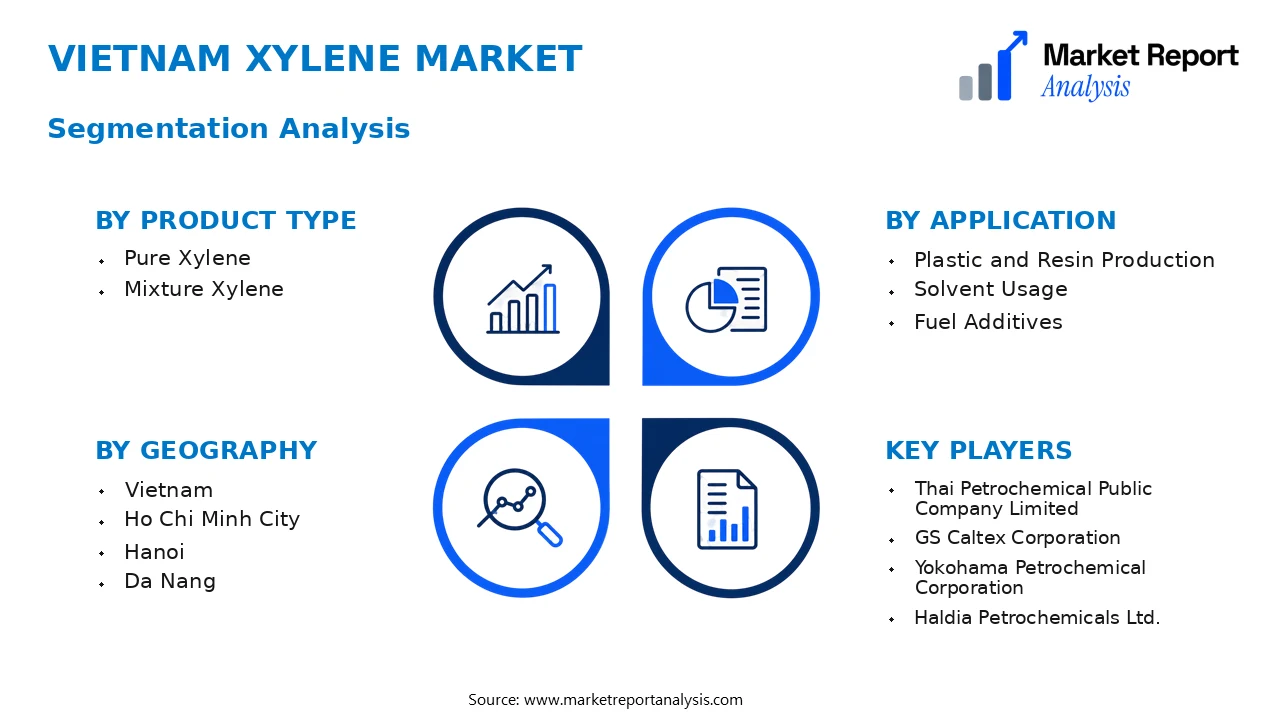
- Product Type
- Pure Xylene: This segment includes high-purity xylene used primarily in solvent applications, requiring stringent quality standards to support Vietnam's expanding coatings, adhesives, and chemical manufacturing sectors, with demand driven by industrial growth.
- Mixture Xylene: Comprising commercial-grade blend of xylenes, this segment caters to bulk applications like fuel additives and plastic production, where cost-efficiency and availability significantly influence market traction.
- Application
- Plastic and Resin Production: This application segment is critical due to Vietnam's rapidly growing plastics industry, employing xylenes in manufacturing PET and other resins used in packaging, textiles, and construction materials, thus driving market demand.
- Solvent Usage: Xylene's role as a solvent in paints, coatings, and printing inks remains vital, with increased industrial activity in Vietnam fueling demand for high-quality xylenes suitable for solvent applications.
- Fuel Additives: The use of xylenes as gasoline blending components is expanding, supported by Vietnam’s initiatives to improve fuel quality and environmental standards, thereby boosting consumption in the automotive sector.
- Geography
- Vietnam: The primary market comprises Vietnam, with demand concentrated in key industrial hubs and urban centers. The growth is driven by the expansion of the petrochemical sector, increasing infrastructure projects, and investments in manufacturing facilities.
- Ho Chi Minh City: As Vietnam's economic and industrial hub, Ho Chi Minh City exhibits significant demand for xylenes, mainly from manufacturing plants, logistic hubs, and regional distribution centers supporting downstream chemical industries.
- Hanoi: The capital city's expanding industrial zone and increasing investments in chemical processing industries bolster demand for xylene products, primarily for coatings, adhesives, and petrochemical applications.
- Da Nang: A key port city with growing industrial activity, Da Nang's strategic location facilitates chemical imports and distribution, supporting applications in construction, automotive, and packaging industries.
- Hai Phong: As an important industrial port, Hai Phong supports the transportation and storage of chemical materials, including xylenes, with demand driven by manufacturing plants and export-oriented chemical industries.
- Can Tho: The Mekong Delta's agricultural and industrial development underpins a niche market for xylenes used in agrochemical production and packaging, driven by regional infrastructural improvements and industrial investments.
- Bien Hoa: An industrial and chemical manufacturing hub near Ho Chi Minh City, Bien Hoa hosts several petrochemical plants, demanding large volumes of xylenes for ongoing production and export activities.
- Nha Trang: While more tourism-oriented, Nha Trang's emerging industrial sector supports small-scale chemical usage, primarily in construction and local manufacturing, contributing modestly to regional xylene consumption.
Competitive Intelligence
The Vietnam Xylene Market is characterized by moderate competition, with a mix of local manufacturers and international players expanding their presence through strategic partnerships and investment. Market concentration remains relatively balanced, with the top three players accounting for approximately 55% of market share, fostering competitive pricing and innovation. Companies are adopting aggressive business strategies focused on technological advancements, product diversification, and supply chain optimization to differentiate themselves. Innovation largely revolves around developing higher purity grades and environmentally sustainable production methods to meet evolving regulatory standards and customer preferences.
Partnerships between local industrial conglomerates and international firms aim to enhance distribution networks and technology transfer, thus improving operational efficiencies. Recent acquisitions and joint ventures have facilitated expansion into upstream and downstream activities, boosting market resilience. R&D investments are prioritized toward eco-friendly catalysts and process improvements, setting Vietnamese firms apart through competitive differentiation. Urban centers like Ho Chi Minh City and Hanoi serve as strategic hubs for innovation and partnerships, leveraging proximity to logistics infrastructure and industrial clusters to bolster competitive advantage within the rapidly growing market.
Leading Company Profiles
The competitive landscape of the Vietnam Xylene Market features several established players that leverage advanced technologies and strategic initiatives to strengthen market presence and improve product offerings domestically and regionally.
- Thai Petrochemical Public Company Limited
- GS Caltex Corporation
- Yokohama Petrochemical Corporation
- Haldia Petrochemicals Ltd.
- Sumitomo Chemical Co., Ltd.
- Eastman Chemical Company
- Kazanorgsintez
- LyondellBasell Industries N.V.
- BP p.l.c.
- Shell Chemicals
Thai Petrochemical Public Company Limited
Thailand's leading petrochemical producer, Thai Petrochemical, emphasizes high-quality xylene production, employing innovative catalytic technologies to enhance efficiency and sustainability, aligning with regional environmental regulations and market demands.
GS Caltex Corporation
Major South Korean refiner and petrochemical producer, GS Caltex focuses on expanding its aromatic hydrocarbon capacities, leveraging advanced refining processes to meet the growing Asian demand for xylene and related derivatives.
Yokohama Petrochemical Corporation
Yokohama’s strategic focus on specialty chemicals and aromatics positions it as a key player in Vietnam, with technological expertise in xylene extraction and purification processes aimed at delivering high-purity products.
Haldia Petrochemicals Ltd.
India’s prominent petrochemical firm, Haldia, pursues capacity expansions and modernization of its aromatic complexes, prioritizing sustainability and integration with regional supply chains to serve domestic and Southeast Asian markets.
Sumitomo Chemical Co., Ltd.
With a strong R&D base, Sumitomo Chemical invests heavily in innovative aromatic solutions, focusing on environmentally friendly processes and expanding its footprint across Southeast Asia, including Vietnam’s expanding chemical industry.
Eastman Chemical Company
Eastman’s diversified portfolio includes aromatics for specialty applications, driving strategic investments in sustainable production methods and digitalization initiatives to support regulatory compliance and market competitiveness.
Kazanorgsintez
Russia’s leading chemical manufacturer, Kazanorgsintez, enhances its aromatic product range through capacity upgrades and technological advancements designed to meet global quality standards and regional demand fluctuations.
LyondellBasell Industries N.V.
One of the world’s largest plastics, chemicals, and refining companies, LyondellBasell emphasizes innovation in aromatic processing, including proprietary catalytic technologies and sustainability-focused initiatives.
BP p.l.c.
BP’s integrated refining and petrochemical operations include strategic investments in aromatics capacity and proprietary technologies to support the evolving needs of Southeast Asian markets, emphasizing sustainability and efficiency.
Shell Chemicals
Shell’s expansive portfolio of chemicals includes aromatics, with ongoing projects focusing on capacity expansion, technological innovation, and digital transformation to enhance productivity and environmental performance in Vietnam regionally.
Strategic Business Developments
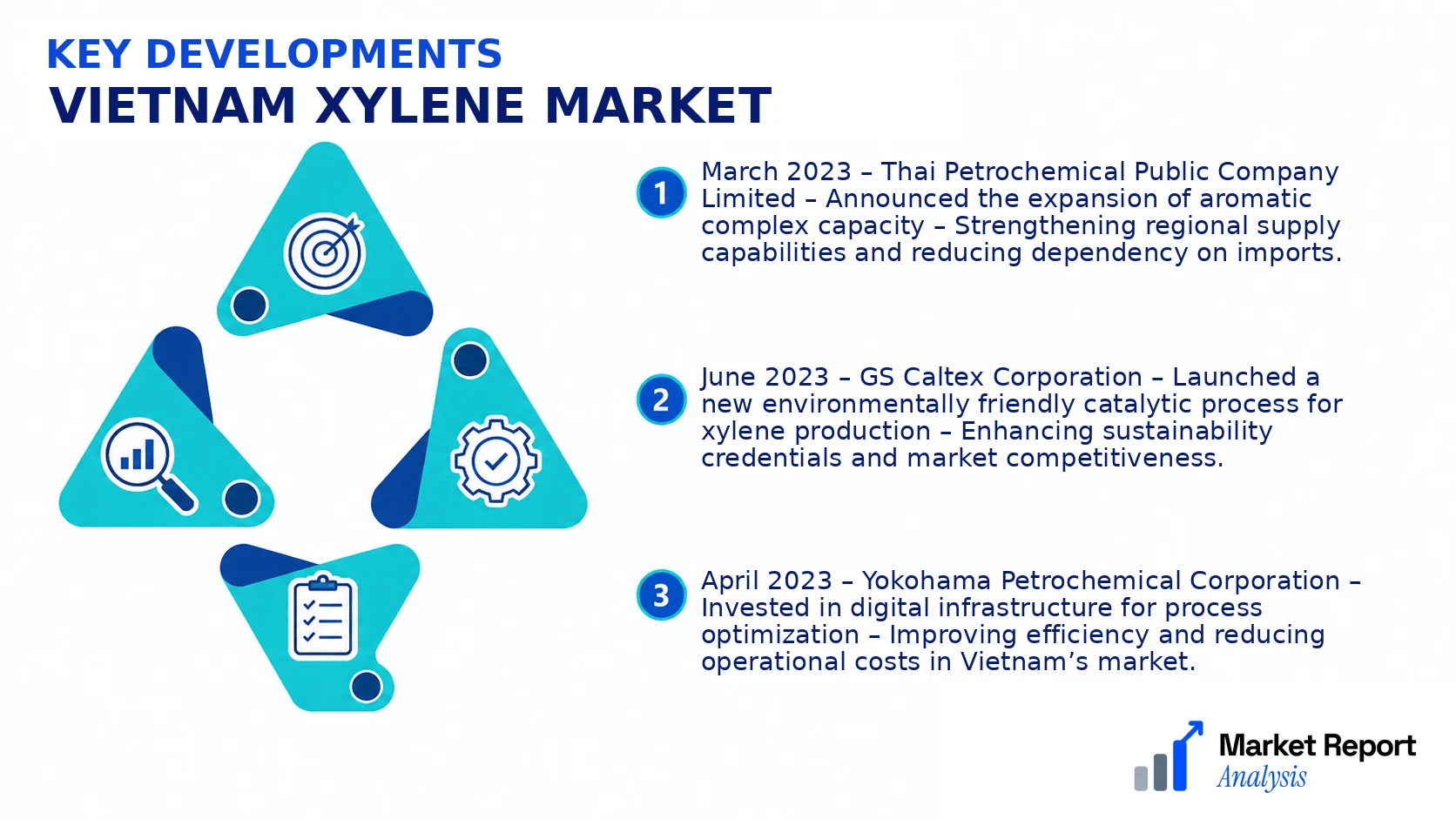
- March 2023 – Thai Petrochemical Public Company Limited – Announced the expansion of aromatic complex capacity – Strengthening regional supply capabilities and reducing dependency on imports.
- June 2023 – GS Caltex Corporation – Launched a new environmentally friendly catalytic process for xylene production – Enhancing sustainability credentials and market competitiveness.
- April 2023 – Yokohama Petrochemical Corporation – Invested in digital infrastructure for process optimization – Improving efficiency and reducing operational costs in Vietnam’s market.
- September 2023 – Haldia Petrochemicals Ltd. – Announced a strategic joint venture with a Vietnamese firm to establish a new aromatic plant – Securing regional growth and technology transfer.
- June 2023 – Eastman Chemical Company – Introduced a new line of bio-based aromatic products – Addressing rising demand for sustainable chemicals and new applications in Vietnam and Southeast Asia.
Frequently Asked Questions
What is the Vietnam Xylene Market?
The Vietnam Xylene Market encompasses the production, consumption, and trade of xylene in Vietnam, driven by petrochemical industry growth, infrastructure development, and demand from the automotive, painting, and plastic manufacturing sectors within the country.
What is the current market size of Vietnam Xylene Market?
As of 2026, the market size of Vietnam Xylene Market is estimated at approximately USD 1.2 Billion, reflecting steady growth fueled by expanding downstream industries and increased domestic refining capacity in Vietnam.
What factors are driving the Vietnam Xylene Market?
Key growth drivers include rising demand for plastics and synthetic fibers, government investments in petrochemical infrastructure, and the expansion of automotive manufacturing. Additionally, Vietnam's strategic location facilitates regional trade and supply chain efficiencies.
Which Vietnamese city leads the Vietnam Xylene Market?
Ho Chi Minh City is the leading hub for the Vietnam Xylene Market, benefiting from robust industrial infrastructure, port facilities, and proximity to key petrochemical and manufacturing plants, making it the primary center for xylene distribution in Vietnam.
Which segment is expected to grow the fastest?
The downstream chemical manufacturing segment is expected to exhibit the fastest growth, driven by increasing demand for plastics and synthetic fibers. The segment's CAGR is projected to outperform others due to ongoing industrialization and urban development projects.
Who are the leading companies operating in the Vietnam Xylene Market?
Major players include PVFCCo, VinaChem Industries, and PetroVietnam Oil Corporation, which are investing in expanding capacity, improving supply chains, and enhancing production efficiency to capitalize on Vietnam's growing petrochemical demand.
Analyst Perspective
The Vietnam Xylene Market is poised for a resilient long-term outlook, driven by increasing demand from the automotive, chemical manufacturing, and construction sectors that are expanding rapidly within major urban centers. The evolution of catalysts and refining technologies is expected to improve efficiency and reduce costs, bolstering profitability for domestic producers and attracting foreign direct investment. Competitive intensity will likely heighten as regional players seek to capitalize on Vietnam’s strategic location and favorable regulatory environment, emphasizing partnership models and technological innovation to secure market share. Key city-level opportunities in Ho Chi Minh City and Hanoi are emerging as industrial hubs, benefiting from improved infrastructure and proximity to logistics corridors, which enhances supply chain efficiency. Investors should focus on sustainable production methods and downstream value addition, aligning with Vietnam’s commitment to greener industry practices. Strategic positioning in these cities will be critical for capturing early-mover advantages and fostering long-term growth in this evolving market.
