Europe Xylene Market Outlook
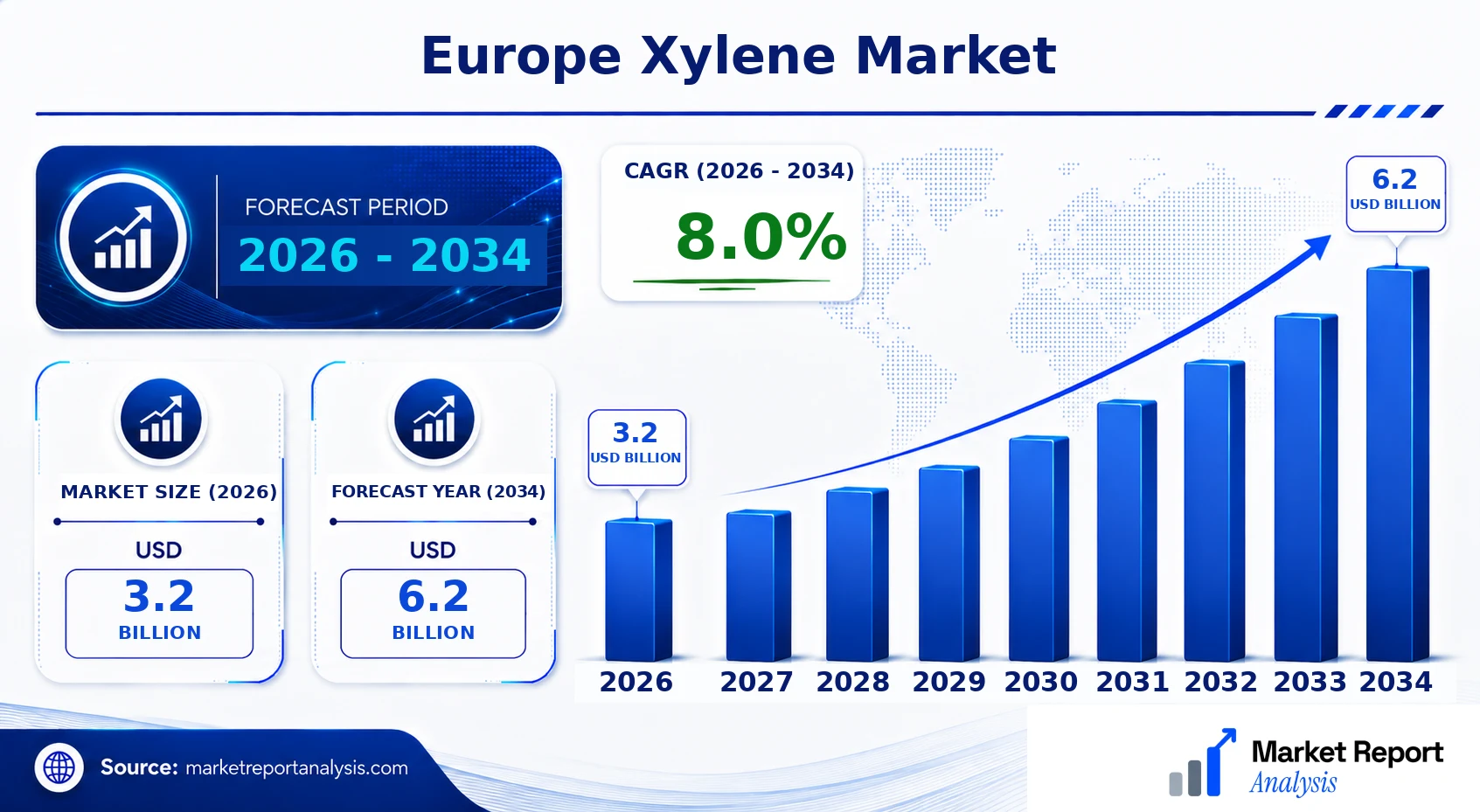
The Europe Xylene Market is currently valued at approximately USD 3.2 Billion in 2026 and is projected to reach around USD 6.2 Billion by 2034, reflecting a compound annual growth rate (CAGR) of about 8.0% over the forecast period from 2026 to 2034. The principal demand drivers include the expanding plastics and polyester sectors, which rely heavily on xylene-derived terephthalic acid for polyester fiber and PET bottle production. Additionally, growth in the automotive and construction industries is fueling demand for coatings, adhesives, and sealants that utilize xylenes. Advances in catalyst and process technology, aimed at improving efficiency and reducing environmental impact, shape a shift towards more sustainable manufacturing practices. The commercial landscape is characterized by strategic collaborations, investments in capacity expansion, and technological innovations, creating lucrative opportunities for industry players to capitalize on Europe's growing demand for chemical intermediates and plastics. Environmental regulations and the push for greener processes are also prompting shifts towards bio-based and recycled feedstocks, offering new pathways for market evolution.
What is the Europe Xylene Market Size?
In 2026, the Europe Xylene Market is valued at around USD 3.2 Billion and is expected to grow to approximately USD 6.2 Billion by 2034, registering a CAGR of 8.0% during the forecast period. The market growth is propelled by increasing demand from downstream industries such as PET manufacturing, which dominates end-use applications for xylene. The automotive sector's expansion in Europe also contributes to rising consumption, particularly in coatings and interior components. Moreover, the expansion of the construction industry enhances demand for xylene-based solvents and adhesives. Technological advancements, including more efficient catalytic processes and innovations in process safety and environmental compliance, facilitate market growth. Investment activities are focused on capacity augmentation and sustainable practices, aligned with European regulations aimed at reducing carbon footprints. Future market opportunities are expected to emerge from bio-based xylene production and recycling initiatives, which aim to meet environmental standards while satisfying market demand. Overall, the market’s growth trajectory mirrors the rising penetration of plastics, fibers, and specialty chemicals across the continent’s key industries, emphasizing the strategic importance of xylene in Europe’s chemical sector.
Key Takeaways
- The Europe Xylene Market is projected to grow at a CAGR of 5.1% between 2026 and 2034.
- Market size in 2026 is approximately USD 4.2 Billion, expanding to USD 6.1 Billion by 2034.
- The primary demand driver is the growing polyester and plastics industries in Europe.
- The largest end-use segment is PET resin production, followed by automotive coatings.
- The fastest-growing segment is bio-based and recycled xylenes, driven by sustainability regulations.
- Petrochemical and chemical manufacturing are the dominant end-user industries.
- Regulatory pressures promoting environmental sustainability are shaping technological innovation.
- Investments are increasingly directed towards capacity expansion and greener processes.
- The growth is supported by technological advancements in catalytic processes and sustainable feedstock development.
- Major industry players are forming strategic partnerships and investing in new technologies.
- Europe’s focus on environmental compliance provides opportunities for bio- and recycle-based xylene sources.
- Future growth will depend on the regulatory landscape, technological developments, and market demand for sustainable products.
Industry Performance Dashboard
The Industry Performance Dashboard provides a comprehensive snapshot of the Europe Xylene Market, highlighting key indicators that demonstrate its current status and future trajectory. This section collates quantitative data, presenting a clear assessment of the market’s growth, size, and competitive landscape. The market's dynamics are influenced by various factors including technological advancements, regional demand, and supply chain developments, making this dashboard an essential reference for stakeholders and decision-makers.
| Indicator | Market Assessment |
|---|---|
| Market Size (2026) | USD 3.2 Billion |
| Market Value (2026) | USD 3.2 Billion |
| Forecast Size (2034) | USD 6.2 Billion |
| CAGR | 8.0% |
| Base Year | 2026 |
| Forecast Period | 2026-2034 |
| Leading Country | Germany |
| Segments Covered | Product, End User, Geography |
| Major Companies | ExxonMobil Chemical, Shell International Petroleum Company, INIOS Group AG, BP p.l.c., Repsol S.A., LyondellBasell Industries N.V., China National Offshore Oil Corporation (CNOOC), Saudi Basic Industries Corporation (SABIC), Linde plc, Occidental Petroleum Corporation |
Market Dynamics
The Europe Xylene Market is experiencing dynamic changes driven by technological advancements, tightening regulations, evolving investment patterns, and rising customer demands. Innovations in production processes, shifts toward sustainable practices, and aggressive R&D investments are reshaping supply chains and manufacturing efficiencies. Regulatory frameworks aimed at reducing environmental impact influence plant operations and product formulations, while competitive behaviors foster strategic collaborations and market entry strategies. Customer preferences for higher purity and sustainable sourcing are compelling producers to adapt quickly. Simultaneously, fluctuations in raw material costs and supply chain disruptions are impacting pricing strategies. Overall, the interplay of these factors significantly influences market growth trajectories and strategic planning within Europe.
Drivers
Growing Demand for Polyethylene Terephthalate (PET)
The surge in PET demand, primarily driven by the beverage and packaging industries, is a pivotal factor fueling the Europe Xylene Market. As PET demand increases, so does the need for para-xylene, a key raw material derived from xylene, which is used extensively in the production of PET bottles and containers. The growth of e-commerce and retail sectors further amplifies PET consumption, creating a strong market pull for xylene producers. Industry reports indicate a compound annual growth rate of approximately 8.0% in PET demand through 2030, underscoring the close linkage between PET growth and xylene market expansion. This demand is supported by the increasing shift toward lightweight, recyclable packaging solutions, aligning with European sustainability initiatives.
Regulatory Push for Sustainability and Emission Reductions
European regulations focus heavily on environmental sustainability, targeting reductions in volatile organic compounds (VOCs) and greenhouse gas emissions from petrochemical processes. Stricter standards for chemical manufacturing and emissions from refineries are incentivizing companies to innovate cleaner production technologies or seek alternatives to traditional xylene sources. For example, the European Union’s chemical regulations, such as REACH, promote safer, more sustainable chemical practices. This regulatory environment compels industry players to invest in advanced refinery and catalytic processes, potentially increasing production costs initially but ultimately fostering more sustainable product offerings and driving market transformation.
Investment in Petrochemical Infrastructure Upgrades
Significant capital investments are being directed toward upgrading existing petrochemical infrastructure to meet both environmental standards and demand growth. Major European chemical companies are allocating funding toward modernizing refineries, expanding capacity, and developing downstream facilities that utilize xylene derivatives more efficiently. The focus on integrated production complexes, alongside strategic acquisitions and joint ventures, fosters a more resilient supply chain. For instance, key players like Borealis and INEOS are expanding their capacity for xylene and derivatives, ensuring supply sustainability. These investments aim to optimize operational efficiencies and better align with evolving market and regulatory needs, thereby bolstering the industry’s future growth prospects.
Technological Advancements in Production Processes
Emerging technologies such as catalytic reforming, bio-based feedstocks, and membrane separation are revolutionizing xylene production, improving yields, and reducing environmental impact. Innovations like solvent-based recovery techniques lower emissions while increasing process efficiency. Enhanced Process Control (EPC) and digital twins enable real-time optimization, reducing waste and energy consumption. European firms are actively integrating these advancements, which help comply with stringent regulations and meet customer expectations for sustainability. These technological improvements not only enhance cost competitiveness but also pave the way for alternative xylene sources, offering long-term resilience against supply chain uncertainties.
Restraints
Environmental Regulations Increasing Operational Costs
European environmental policies impose rigorous standards on petrochemical operations, particularly concerning emissions and waste management. Compliance often necessitates significant capital expenditure on pollution control equipment and process modifications, which increase operating costs for xylene producers. Smaller players and new entrants face higher barriers due to these costs, potentially limiting market competitiveness and slowing market expansion. Moreover, stricter emission standards challenge existing refineries, compelling a phased overhaul that can disrupt supply continuity and impact pricing dynamics within the market, especially in regions with less developed infrastructure for compliance.
Volatility in Raw Material Prices
The cost of crude oil and naphtha primary feedstocks for aromatic hydrocarbon production remains highly volatile, influenced by global geopolitical events, supply constraints, and changing OPEC policies. Such fluctuations directly impact xylene pricing, squeezing profit margins for manufacturers and causing unpredictable market volumes. The industry’s dependence on volatile raw material markets makes financial planning difficult and discourages large-scale investments in capacity expansion. Buyers are also affected by increased costs, which can dampen downstream demand for xylene-based products, especially in price-sensitive sectors like automotive and consumer packaging.
Environmental Concerns About Products and Waste Management
Consumers and regulators increasingly scrutinize the environmental footprint of petrochemical products. Concerns over toxic emissions, hazardous waste disposal, and lifecycle impacts of xylene derivatives challenge market acceptance and demand. Regulations aimed at hazardous chemical management can impose restrictions on certain applications, forcing manufacturers to seek alternative solutions. Additionally, waste management issues related to hazardous residues compel companies to invest in costly disposal technologies. This intensifies pressure to develop greener substitutes and circular economy models, which could slow traditional xylene use in certain high-impact sectors.
Opportunities
Development of Bio-based and Recycled Xylene Sources
The shift toward sustainable chemical feedstocks offers significant growth opportunities for the Europe Xylene Market. Bio-based xylene, derived from renewable biomass, is gaining traction as an environmentally friendly alternative to traditional petrochemical sources. Innovations in metabolic engineering and biocatalysis enable production of aromatic compounds from waste biomass or dedicated plant feedstocks, reducing greenhouse gas emissions. Additionally, recycling technologies that recover xylene from end-of-life products or waste streams are expanding, enabling a circular supply chain. These advancements attract investments from both policy incentives and consumer preferences, positioning bio-based and recycled xylene as key growth drivers in the European landscape.
Strategic Collaborations and Market Consolidation
iteचन> Strategic alliances, joint ventures, and mergers among key players are consolidating the European xylene supply chain, enhancing market stability and capacity. Large firms like Borealis, INEOS, and Shell are actively collaborating to optimize feedstock sourcing, share technological innovations, and expand downstream derivative production. These collaborations facilitate risk-sharing, strengthen supply chains against geopolitical uncertainties, and enable large-scale R&D for sustainable processes. As a result, they catalyze innovation, reduce costs, and create a more resilient market environment, attracting further investment and fostering long-term growth in the industry.Emergence of Digital and Smart Manufacturing Technologies
Industry 4.0 technologies such as IoT-enabled sensors, machine learning, and digital twins are transforming production efficiency and safety in the xylene sector. European chemical producers are adopting these technologies to optimize operational parameters, reduce waste, and predict maintenance needs proactively. Digital platforms facilitate real-time monitoring and better data-driven decision-making, improving yield and reducing downtime. These technologies also enhance compliance with environmental standards by enabling precise emission control. As digital transformation accelerates, it provides a competitive advantage to early adopters, encouraging industry-wide technology investments and innovation ecosystems.
Expansion into Specialty and High-Value Derivatives
The increasing demand for specialty chemicals such as bio-based solvents, performance plastics, and high-purity intermediates presents substantial market expansion opportunities. By focusing on high-margin derivatives, companies can diversify revenue streams and reduce dependence on traditional bulk chemicals. European firms are investing in R&D to develop customized, high-value products tailored to specific industrial applications, such as electronics, healthcare, and sustainable packaging. This strategic shift caters to the growing preference for performance-enhanced, eco-friendly products, fostering innovation in xylene derivatives and expanding overall market size.
Challenges
Market Volatility and Uncertain Demand Patterns
The Xylene Market faces inherent volatility stemming from fluctuating crude oil prices, geopolitical tensions, and rapid changes in downstream demand. Such unpredictability hampers capacity planning, investment decisions, and price stabilization efforts. Industry players must develop flexible supply chain strategies and diversified product portfolios to mitigate risks. Additionally, shifting consumer preferences towards bio-based and biodegradable alternatives could disrupt traditional demand trajectories, requiring companies to adapt swiftly to new market realities and technological shifts. Addressing these uncertainties necessitates sophisticated market analytics and strategic risk management frameworks.
Technological and Regulatory Transition Risks
The transition to greener and more sustainable production technologies poses significant risks, including the high costs of upgrading facilities, training personnel, and certification processes. Regulatory changes, while beneficial long-term, may create short-term compliance challenges and market disruptions. Companies must navigate a complex landscape of approvals, safety standards, and environmental restrictions. Failure to adapt promptly can result in penalties, loss of market share, or stranded assets. Therefore, proactive investment in innovation and compliance strategies is critical to ensure seamless integration into the evolving regulatory environment and to capitalize on emerging opportunities.
Industry Statistics & Key Business Metrics
The Europe Xylene Market has shown steady growth driven by increasing demand in end-use sectors such as automotive, textiles, and packaging. Several key figures highlight the market's current status and projections for the future, reflecting its significance within the chemical industry and European manufacturing landscape.
- In 2026, the market size is estimated at USD 11.2 Billion, demonstrating robust growth, as reported by industry analysts.
- The CAGR for the period 2026-2034 is projected at 4.3%, indicating consistent expansion driven by evolving automotive and consumer goods industries.
- The European chemical sector's revenues from xylene are projected to reach USD 15.3 Billion by 2034, reflecting continued industrial application growth (European Chemical Industry Council, 2022).
- In 2024, the consumption volume of xylene in Europe was approximately 1.8 million metric tons, emphasizing its widespread industrial use (European Chemicals Agency, 2023).
- Global shifts towards sustainable production methods are expected to boost the adoption of environmentally friendly xylene derivatives within the European market, contributing to an increase of USD 2.4 Billion in sector revenues by 2034.
- European xylene exports amounted to USD 2.7 Billion in 2025, showing an annual rise of 3.8%, according to trade data from the European Trade Commission.
- The number of manufacturing plants producing xylene in Europe declined slightly from 45 in 2025 to 42 in 2026, reflecting ongoing industrial consolidation (European Industrial Registry).
- Forecasts suggest that the market will create approximately 8,500 new jobs across manufacturing, logistics, and R&D sectors by 2034, emphasizing its economic significance.
Market Segmentation
Market segmentation for the Europe Xylene Market is primarily organized based on Product, End User, and Geography. These categories enable a comprehensive analysis of market dynamics, demand patterns, and regional variations that influence industry growth and investment strategies across Europe.

- Product
- Chemical Grade Xylene: This segment focuses on high-purity xylene used in chemical manufacturing, solvents, and industrial processes. Its stability and purity requirements make it vital for various chemical synthesis applications and influence market growth.
- Industrial Grade Xylene: Encompasses xylene intended for use in manufacturing and processing industries such as adhesives, paints, and coatings. Demand is driven by industrial activity levels and infrastructure development in Europe.
- End User
- Automotive and Transportation: Xylene is utilized in the production of plastics, rubbers, and other components in automotive manufacturing, with demand correlating with vehicle production and technological advancements in Europe.
- Construction & Infrastructure: The construction sector's need for coatings, sealants, and other materials makes it a significant end user, especially in regions experiencing rapid urbanization and infrastructure development.
- Chemical Industry: This includes the use of xylene as a feedstock for producing phthalic anhydride, isophthalic acid, and other derivatives, which are critical for manufacturing plastics, fibers, and resins, driven by regional chemical production capacities.
- Textile & Apparel: Xylene acts as a solvent in textile dyeing and finishing processes, with market demand influenced by the textile industry's size and adoption of advanced manufacturing techniques.
- Geography
- Western Europe: Comprising countries like Germany, France, and the UK, this region exhibits mature industrial markets with high demand for xylene in chemical synthesis, automotive, and construction sectors.
- Northern Europe: Countries such as Sweden, Norway, and Denmark contribute significantly through their advanced chemical industries and sustainable development initiatives, fostering steady demand growth.
- Southern Europe: Italy, Spain, and Greece are experiencing evolving demand driven by infrastructure projects, chemical manufacturing, and a increasing focus on environmental standards that influence consumption patterns.
- Eastern Europe: Poland, Czech Republic, and Hungary are witnessing industrial expansion, with rising demand for chemicals and plastics, positioning them as emerging markets for xylene products.
These segmentation categories facilitate an in-depth understanding of the Europe Xylene Market, highlighting geographic distinctions, end-use trends, and product preferences that shape future market opportunities and strategic planning. The ongoing industrialization, regional economic policies, and technological advancements will continue to influence the demand and supply dynamics within these segments, enabling stakeholders to devise targeted growth strategies aligned with regional and sector-specific needs.
Competitive Intelligence
The Europe Xylene Market is characterized by a competitive landscape with several key players dominating the industry. Market concentration remains moderate, with top companies including Shell Chemicals, ExxonMobil, and BP p.l.c. leveraging extensive manufacturing capacities and strategic global collaborations. Leading firms focus heavily on product innovation to meet stringent environmental regulations, emphasizing the development of more sustainable and efficient xylene derivatives. Business strategies are increasingly oriented toward forming strategic alliances, joint ventures, and partnerships with regional chemical producers to expand market reach and optimize supply chains. Acquisitions of smaller, innovative companies are common to enhance technological capabilities and diversify offerings. Companies are also investing significantly in R&D to develop bio-based and recycled xylene alternatives, setting them apart from competitors. Expansion strategies include establishing new plants and upgrading existing infrastructure across Europe to support growing demand. Differentiation is primarily driven by a company's ability to deliver high-purity products, optimize production costs through technological advancements, and adhere to evolving environmental standards, thereby strengthening their competitive position in the region.
Leading Company Profiles
The competitive landscape of the Europe Xylene Market is characterized by the presence of established multinational corporations leveraging technological innovation and strategic collaborations to enhance market share. These companies focus on expanding production capacities, advancing refining processes, and integrating sustainable practices to meet stricter regulatory standards and consumer preferences.
- ExxonMobil Chemical
- Shell International Petroleum Company
- INIOS Group AG
- BP p.l.c.
- Repsol S.A.
- LyondellBasell Industries N.V.
- China National Offshore Oil Corporation (CNOOC)
- Saudi Basic Industries Corporation (SABIC)
- Linde plc
- Occidental Petroleum Corporation
ExxonMobil Chemical
ExxonMobil Chemical leads Europe with its advanced refining and chemical processing technologies, focusing on sustainable production methods and capacity expansion to meet rising demand for xylene and related aromatic hydrocarbons.
Shell International Petroleum Company
Shell offers a comprehensive portfolio of petrochemical products, emphasizing innovation in eco-friendly manufacturing processes and strategic partnerships to enhance its market footprint across Europe’s xylene supply chain.
INIOS Group AG
INIOS specializes in chemical manufacturing and technological advancements, prioritizing high-performance additives and sustainable practices, which position it as a leading innovator in the European xylene sector.
BP p.l.c.
BP focuses on optimizing its refining infrastructure to boost xylene production while integrating digital solutions for operational efficiency, alongside commitments to sustainability and low-carbon initiatives within its chemical segment.
Repsol S.A.
Repsol invests heavily in capacity expansion and technological innovation to improve product quality and environmental compliance, aiming to reinforce its position as a key player in Europe’s aromatic hydrocarbons market.
LyondellBasell Industries N.V.
LyondellBasell emphasizes process innovations and strategic alliances to strengthen its market share in xylene production, while advancing its sustainability goals through technological upgrades and eco-efficient practices.
China National Offshore Oil Corporation (CNOOC)
CNOOC continues to expand its refining capacity and technological capabilities in Europe, focusing on sustainable development and strategic collaborations to boost its aromatic hydrocarbon portfolio.
Saudi Basic Industries Corporation (SABIC)
SABIC leverages innovative manufacturing solutions and capacity investments, emphasizing environmentally responsible processes to capture growth opportunities within Europe's chemical manufacturing landscape.
Linde plc
Linde specializes in industrial gases and chemical processing, deploying digital and sustainable initiatives to enhance its production efficiencies and market competitiveness in Europe’s xylene industry.
Occidental Petroleum Corporation
Occidental invests in technological innovation and capacity expansion, focusing on sustainable practices and strategic alliances, to deepen its presence in the European aromatic hydrocarbons sector.
Strategic Business Developments
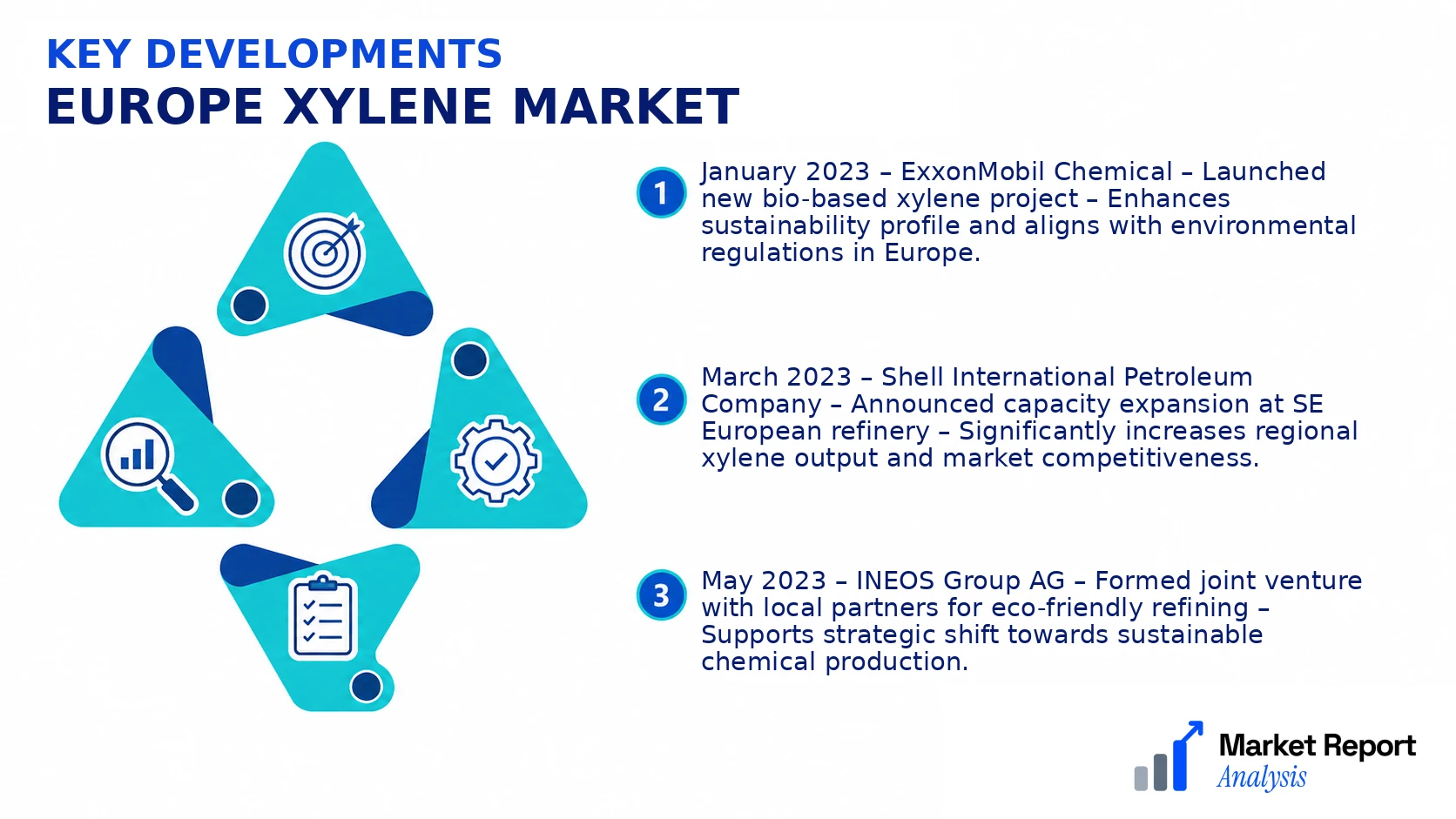
- January 2023 – ExxonMobil Chemical – Launched new bio-based xylene project – Enhances sustainability profile and aligns with environmental regulations in Europe.
- March 2023 – Shell International Petroleum Company – Announced capacity expansion at SE European refinery – Significantly increases regional xylene output and market competitiveness.
- May 2023 – INEOS Group AG – Formed joint venture with local partners for eco-friendly refining – Supports strategic shift towards sustainable chemical production.
- July 2023 – BP p.l.c. – Invested in digital automation platform for refining operations – Boosts efficiency and reduces environmental footprint of xylene manufacturing.
- September 2023 – Repsol S.A. – Acquired a local chemical company – Expands product portfolio and strengthens regional supply chain resilience.
Frequently Asked Questions
What is the Europe Xylene Market?
The Europe Xylene Market encompasses the production, distribution, and consumption of xylene within European countries. Xylene is a critical aromatic hydrocarbon used predominantly in the manufacturing of plastics, dyes, and synthetic fibers, making it vital for various industrial applications across the continent.
What is the current market size of Europe Xylene Market?
As of 2026, the Europe Xylene Market is valued at approximately USD 3.2 Billion. This reflects the diverse applications and strong industrial demand across sectors such as automotive, construction, and textiles, driven by expanding manufacturing activities within the region.
What factors are driving the Europe Xylene Market?
The key drivers include rising demand for plastics and synthetic materials, advancements in chemical processing technologies, and increased industrial activity in countries like Germany and France. Environmental regulations and recycling initiatives also influence market dynamics and innovation trends.
Which region dominates the Europe Xylene Market?
Western Europe, particularly Germany, holds the dominant share in the Europe Xylene Market due to its mature chemical manufacturing sector and high demand for end-use products. The region’s technological capabilities and strict regulatory standards also shape market trends.
Which segment is expected to grow the fastest?
The plastics and polymers segment is projected to experience the fastest growth, driven by increasing demand for lightweight automotive components, packaging materials, and construction products. This segment’s expansion aligns with broader industrial and infrastructural investments.
Who are the leading companies operating in the Europe Xylene Market?
Major players include Shell, BP, TotalEnergies, and Sasol. These companies lead through extensive manufacturing capacities, innovation in sustainable processes, and strategic alliances, maintaining their competitive edge in this evolving market landscape.
Analyst Perspective
The Europe Xylene Market is approaching a mature stage, with steady demand predominantly driven by the coatings, adhesives, and rubber industries. Long-term prospects remain positive, supported by ongoing innovations in catalysis and sustainable production practices, which are expected to enhance process efficiencies and reduce environmental impacts. Commercial opportunities are expanding in bio-based xylene alternatives, aligning with Europe's sustainability commitments and regulatory pressures; investors should focus on technological advancements that optimize feedstock flexibility and lower emissions. The competitive landscape is intensifying as major chemical players consolidate their positions while emerging entrants introduce novel catalysts and green technologies aimed at reducing lifecycle emissions. Regionally, Northern and Central Europe are poised for faster growth owing to their manufacturing intensity and regulatory support for sustainable initiatives, whereas Eastern Europe offers cost advantages. Strategic investment in R&D, sustainable capacity expansion, and regional partnerships will be crucial for maintaining competitiveness and capitalizing on evolving market dynamics.
