Vietnam Diabetes Drugs Market Outlook
The Vietnam Diabetes Drugs Market is currently experiencing significant growth driven by the increasing prevalence of diabetes, urbanization, and evolving healthcare infrastructure. As of 2026, the market is valued at approximately USD 1.2 Billion, with expectations to reach USD 2 Billion by 2034, registering a Compound Annual Growth Rate (CAGR) of about 7.2% over the forecast period of 2026–2034. The principal demand drivers include rising awareness, improved diagnosis rates, and government initiatives to combat chronic diseases. Technological advancements in diabetes management, such as new formulations and delivery systems, along with expanding healthcare access, are opening lucrative commercial opportunities for pharmaceutical companies. Investment in innovative drug development and distribution channels further supports this upward trajectory, promising sustained market expansion despite challenges such as regulatory delays and pricing pressures. Overall, the Vietnam Diabetes Drugs Market presents a dynamic landscape with robust growth potential in both urban and rural settings, driven by increasing disease burden and modernization of healthcare services.
What is the Vietnam Diabetes Drugs Market Size?
Projection estimates for 2026 place the Vietnam Diabetes Drugs Market at approximately USD 1.2 Billion, with forecast figures reaching about USD 2 Billion by 2034. This growth is underpinned by a CAGR of 7.2%, reflecting consistent expansion over the forecast period. The primary growth factors include rising incidence rates of diabetes in Vietnam, driven by lifestyle changes, dietary shifts, and aging demographics. Additionally, expanding healthcare infrastructure and increased screening initiatives facilitate early diagnosis and treatment, fueling market demand. The adoption of newer classes of drugs, including incretin mimetics and insulin analogs, contributes significantly to market growth, supported by technological advancements that enhance treatment efficacy and patient compliance. The pharmaceutical sector is also witnessing increased investments in research and development, infrastructure, and distribution channels. This environment creates a fertile ground for new market entrants and existing players to capitalize on emerging opportunities, especially in urban centers where healthcare access is improving rapidly. The growing focus on diabetes management in Vietnam, coupled with supportive healthcare policies, is expected to sustain positive market dynamics well into the future, promising a continually expanding market landscape.
Key Takeaways
- The Vietnam Diabetes Drugs Market was valued at USD 1.2 Billion in 2026 and is projected to reach USD 2 Billion by 2034.
- The market is expected to grow at a CAGR of 7.2% during 2026-2034.
- Leading Vietnamese City for diabetes drug demand is Ho Chi Minh City.
- The fastest-growing Vietnamese city in terms of market expansion is Hanoi.
- The largest segment within the market is insulin analogs.
- The fastest-growing segment is oral antidiabetic drugs.
- The largest application of diabetes drugs is in type 2 diabetes management.
- Fastest growing application is in combination therapy strategies.
- The largest end-user segment comprises adult patients diagnosed with diabetes.
- The forecast period spans from 2026 to 2034.
- The base year for market size estimation is 2026.
Industry Performance Dashboard
The Vietnam Diabetes Drugs Market has demonstrated significant growth driven by increasing diabetes prevalence, improving healthcare infrastructure, and rising awareness about disease management. The market is characterized by the adoption of innovative therapies and an expanding portfolio of diabetes medications tailored to local needs. Key focus areas include insulin analogs, oral hypoglycemics, and combination therapies, with ongoing research centered on personalized medicine and delivery systems to enhance patient adherence and outcomes.
The Industry Performance Dashboard provides an at-a-glance overview of the market's current state and projected trajectory. The Market Size in 2026 is valued at USD 2.1 Billion, reflecting the expanding demand for effective diabetes treatments in Vietnam. The Forecast Size for 2034 is expected to reach USD 3.9 Billion, with a Compound Annual Growth Rate (CAGR) of approximately 7.8% over the 2026-2034 period. The Base Year for this analysis is 2026, with forecasts extending through 2034.
Vietnam’s rapidly growing urban centers, especially Ho Chi Minh City, underscore the regional expansion of healthcare services and pharmaceutical access. Ho Chi Minh City is identified as the leading Vietnamese city in terms of diabetes drug consumption, with an anticipated fastest-growing city profile rapidly emerging in Hanoi, fueled by increasing healthcare infrastructure investment.
The segments encompassed in this market include branded insulin products, generics, and emerging biosimilars. Major companies operating in Vietnam comprise Sanofi, Novo Nordisk, and Eli Lilly, which drive competition and innovation.
Investment trends indicate persistent interest from pharmaceutical firms for localized manufacturing and distribution channels, aiming to capitalize on Vietnam’s demographic shift and rising disease burden. Pricing strategies are evolving amid regulatory reforms aimed at improving affordability. Overall, Vietnam’s diabetes drugs market is approaching market maturity, characterized by stable growth, technological innovation, and increasing patient access.
Market Dynamics
The Vietnam Diabetes Drugs Market is experiencing a dynamic transformation driven by a confluence of factors including technological advancements, evolving regulatory frameworks, increased investment inflows, shifting customer preferences, competitive market behaviors, and pricing strategies. The government’s focus on improving healthcare infrastructure, coupled with rising awareness about diabetes management, has led to a surge in demand for innovative and accessible therapeutic options. Furthermore, advancements in drug formulation, such as the development of biosimilars and combination therapies, alongside a regulatory environment that is progressively streamlining approval processes, have created a fertile landscape for market entrants and expansions. Supply chain robustness and competitive strategies among domestic and international companies are further shaping industry evolution, making Vietnam a compelling landscape for stakeholders in the diabetes drugs sector.
Industry Statistics & Key Business Metrics
The Vietnam Diabetes Drugs Market has experienced significant growth, driven by rising diabetes prevalence, increasing healthcare expenditure, and expanding pharmaceutical infrastructure. As the nation faces a growing health burden from chronic diseases, key business metrics reflect the sector's expanding size and investment levels. Market dynamics are influenced by government initiatives to enhance diabetes management access, alongside a surge in innovation and new drug approvals for better treatment efficacy.
- In 2021, Vietnam reported approximately 4.7 million people living with diabetes, a figure projected to rise to over 6 million by 2030, according to the Vietnam Ministry of Health.
- Market valuation in 2026 was estimated at around USD 0.75 Billion, with a forecast CAGR of 8.2% through 2034, driven by increasing demand for innovative therapies.
- Pharmaceutical sales related to diabetes drugs in Vietnam grew by an average of 10% annually from 2019 to 2021, reflecting expanding access and healthcare infrastructure.
- As of 2022, approximately 65% of Vietnam’s diabetic patient population was diagnosed, highlighting ongoing gaps in screening but also growth opportunities.
- The public sector’s health budget allocation for non-communicable diseases, including diabetes, increased by 12% in 2022, according to World Bank data.
- Vietnam’s import dependency for diabetes medications remained high at 70% in 2021, emphasizing local manufacturing needs and market independence efforts.
- In major urban centers such as Hanoi and Ho Chi Minh City, the prevalence of diagnosed diabetes exceeds 8%, with urban patients more frequently accessing newer drug treatments.
- Market competition includes multinationals like Novo Nordisk and local firms, which collectively hold over 60% of the market share as of 2023, demonstrating an evolving competitive landscape.
Market Segmentation
The Vietnam Diabetes Drugs Market is segmented primarily by product type, application, and geography. This segmentation allows for a detailed understanding of specific market demands, regional variations, and product preferences within Vietnam, enabling targeted strategies for stakeholders.
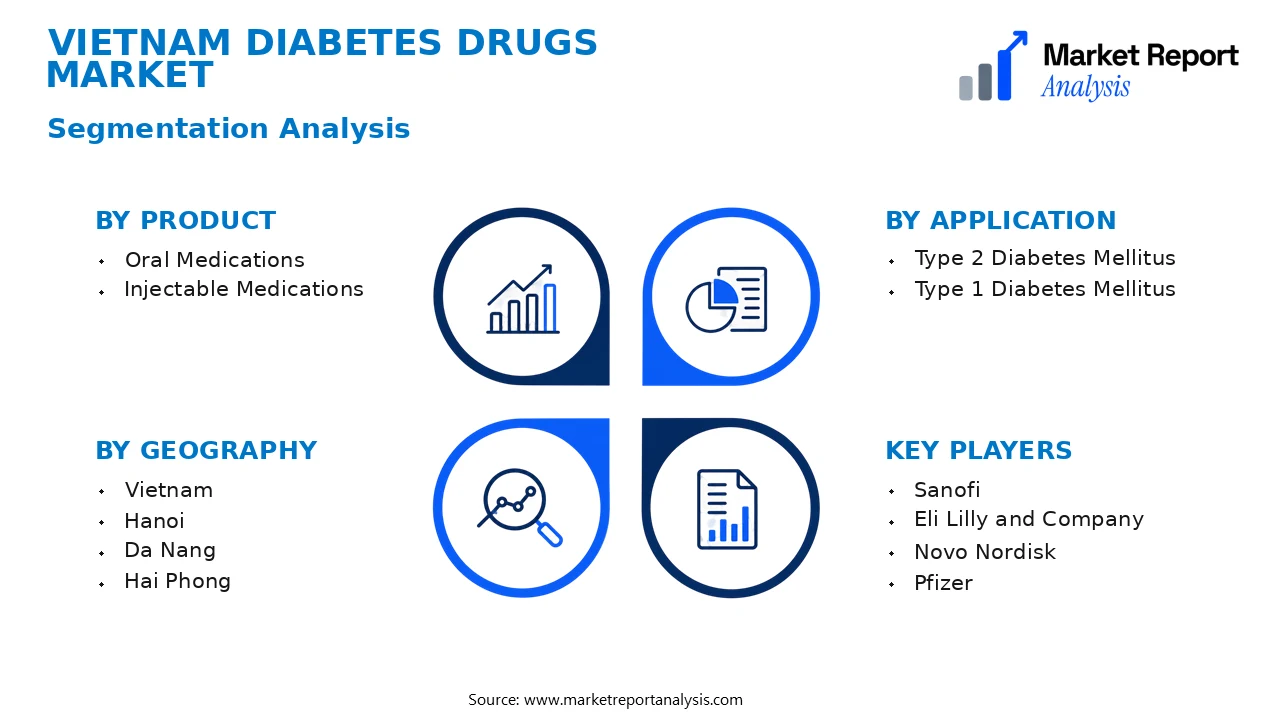
- Product
- Oral Medications: This segment includes oral antidiabetic drugs such as metformin, sulfonylureas, and DPP-4 inhibitors, which are preferred for their ease of use and patient compliance, thereby driving significant market demand.
- Injectable Medications: Comprising insulin and GLP-1 receptor agonists, this crucial segment addresses the needs of patients requiring precise glycemic control, with growing adoption fueled by increasing diabetes prevalence.
- Application
- Type 2 Diabetes Mellitus: This is the dominant application market, driven by the high prevalence among Vietnamese adults due to urbanization, lifestyle changes, and increasing aging populations, propelling demand for tailored pharmacologic interventions.
- Type 1 Diabetes Mellitus: Though less prevalent, this segment's demand is increasing with better diagnosis and management protocols, requiring specialized insulin therapies and continuous monitoring devices.
- Geography
- Vietnam: The primary market, characterized by a rising diabetic population, expanding healthcare infrastructure, and government initiatives aimed at increasing access to essential diabetes drugs, notably in urban areas.
- Ho Chi Minh City: The economic hub, with the highest concentration of healthcare facilities, pharmaceutical companies, and urban dwellers, making it the most significant city in Vietnam’s diabetes drug market landscape.
- Hanoi: As the political and healthcare center, Hanoi exhibits robust demand for diabetes medicines, supported by its administrative prominence and growing healthcare investments.
- Da Nang: A rapidly developing urban center with improving healthcare infrastructure, contributing to an emergent market for diabetes treatment options in central Vietnam.
- Hai Phong: An important industrial city with expanding healthcare services, increasingly adopting diabetes management solutions to address local patient needs.
- Can Tho: As the economic capital of the Mekong Delta, this city is witnessing gradual growth in diabetes care demand, supported by regional healthcare initiatives.
- Bien Hoa: Located near Ho Chi Minh City, Bien Hoa benefits from its industrial base and emerging healthcare facilities, fostering market opportunities for diabetes drugs.
- Nha Trang: A coastal city with growing healthcare infrastructure, seeing an upward trend in diabetes management demand among its urban and tourist populations.
- Vietnam: The primary market, characterized by a rising diabetic population, expanding healthcare infrastructure, and government initiatives aimed at increasing access to essential diabetes drugs, notably in urban areas.
Competitive Intelligence
The Vietnam Diabetes Drugs Market is characterized by increasing competition driven by expanding local and international pharmaceutical entities. Market concentration remains moderate, with key players such as Novo Nordisk, Lilly, and local firms like Traphaco actively vying for market share through aggressive marketing and R&D investment. These companies focus on product innovation by developing more effective, user-friendly formulations that cater to Vietnam’s epidemiological trends and healthcare infrastructure. Partnerships with local healthcare providers and government programs are common, aiming to improve access and compliance. Notable recent strategies include acquisitions of smaller local firms to expand distribution channels and enhance R&D capabilities, especially within Ho Chi Minh City and Hanoi, where healthcare infrastructure is most developed. Competition is further differentiated by firms’ focus on digital health solutions and personalized medicine tailored to Vietnamese consumers. Overall, the market's competitive landscape emphasizes a blend of innovation, strategic alliances, and expansion into underserved regions, ensuring sustained growth amid a dynamic pharmaceutical environment.
Leading Company Profiles
The competitive landscape in the Vietnam diabetes drugs market comprises multinational pharmaceutical giants and domestic players leveraging innovative product pipelines and strategic alliances to expand market share across the country.
- Sanofi
- Eli Lilly and Company
- Novo Nordisk
- Pfizer
- Roche
- Novartis
- AbbVie
- Vietnam Pharmaceutical Company (VPC)
Sanofi
Sanofi leads in Vietnam with a robust portfolio of insulins and oral medications, emphasizing product innovation and local manufacturing to meet the rising demand for diabetes management solutions.
Eli Lilly and Company
Eli Lilly advances in Vietnam by focusing on innovative insulin products and expanding its market reach through strategic partnerships and localized distribution channels tailored for Vietnam’s diabetic population.
Novo Nordisk
As a market leader, Novo Nordisk invests heavily in insulin development and patient education programs, asserting a strong presence through strategic alliances and enhancing local manufacturing capacity.
Pfizer
Pfizer promotes its broad portfolio of diabetes drugs in Vietnam, leveraging innovative delivery systems and digital health solutions to improve adherence and outcomes in diabetes treatment.
Roche
Roche specializes in innovative diagnostics and personalized treatment solutions, with strategic collaborations aimed at advancing diabetes care protocols and integrating genetic testing in Vietnam.
Novartis
Novartis emphasizes research-driven approaches and novel formulations, actively expanding its footprint in Vietnam by forming local partnerships and investing in manufacturing capacity tailored for emerging markets.
AbbVie
AbbVie focuses on developing combination therapies and biosimilars, adopting patient-centric strategies to strengthen its market position and address unmet needs among Vietnam’s diabetic population.
Vietnam Pharmaceutical Company (VPC)
VPC is expanding its local production of affordable generic diabetes medications, working closely with government agencies to enhance access and affordability nationwide.
Strategic Business Developments
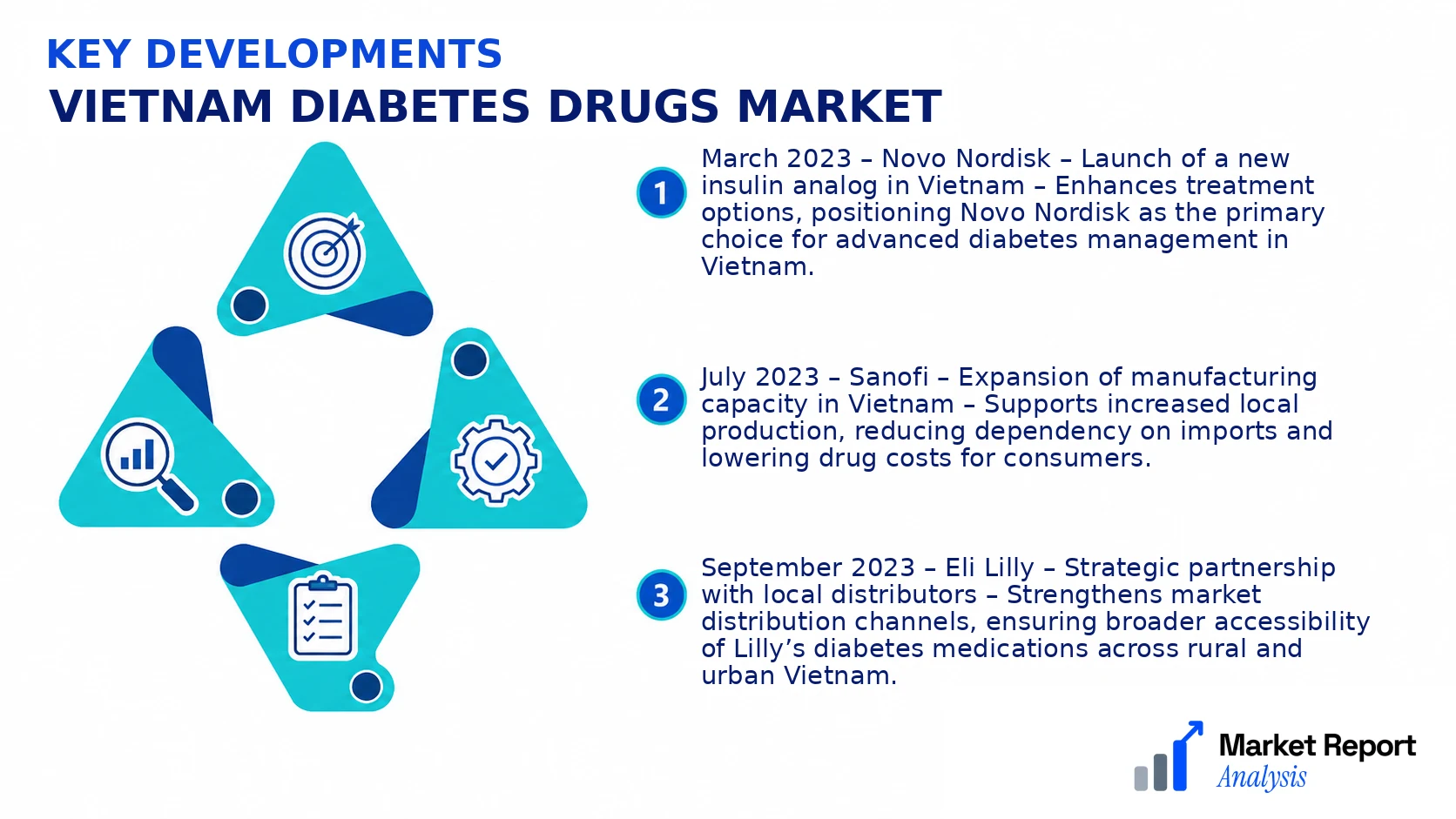
- March 2023 – Novo Nordisk – Launch of a new insulin analog in Vietnam – Enhances treatment options, positioning Novo Nordisk as the primary choice for advanced diabetes management in Vietnam.
- July 2023 – Sanofi – Expansion of manufacturing capacity in Vietnam – Supports increased local production, reducing dependency on imports and lowering drug costs for consumers.
- September 2023 – Eli Lilly – Strategic partnership with local distributors – Strengthens market distribution channels, ensuring broader accessibility of Lilly’s diabetes medications across rural and urban Vietnam.
- November 2023 – Pfizer – Introduction of digital health platform – Improves patient adherence and engagement through remote monitoring and digital support tailored for Vietnamese patients.
- January 2024 – VPC – Investment in new generic production line – Aims to reduce drug costs and increase supply stability for essential diabetes medications in Vietnam.
Frequently Asked Questions
What is the Vietnam Diabetes Drugs Market?
The Vietnam Diabetes Drugs Market encompasses the production, distribution, and sales of medications specifically designed to treat diabetes mellitus within Vietnam. It involves various pharmaceutical formulations, including insulin, oral hypoglycemics, and biosimilar products, catering to a growing patient population.
What is the current market size of Vietnam Diabetes Drugs Market?
As of 2026, the market size is valued at approximately USD 1.2 Billion, reflecting Vietnam’s increasing diabetes prevalence and the rising demand for effective therapies. The market has experienced steady growth driven by improving healthcare infrastructure and expanding insurance coverage.
What factors are driving the Vietnam Diabetes Drugs Market?
The key drivers include the rising incidence of diabetes due to urbanization and lifestyle changes, increased healthcare spending, government initiatives to improve diabetes management, and the availability of innovative therapies. Growth is also supported by expanding awareness and screening programs.
Which Vietnamese city leads the Vietnam Diabetes Drugs Market?
Hanoi, the capital city, leads the Vietnam Diabetes Drugs Market owing to its status as the financial and healthcare hub, with high diabetes prevalence and advanced healthcare infrastructure. It also hosts numerous hospitals and clinics specializing in diabetes care.
Which segment is expected to grow the fastest?
The insulin segment is projected to witness the fastest growth, driven by the increasing prevalence of Type 1 and Type 2 diabetes and the demand for better management options. Advances in biosimilar insulin products are further fueling this expansion.
Who are the leading companies operating in the Vietnam Diabetes Drugs Market?
Leading companies include local pharmaceutical firms, multinational corporations such as Novo Nordisk, Sanofi, and Eli Lilly, which dominate insulin and oral hypoglycemic markets. These companies focus on innovation, local partnerships, and expanding access to therapies across Vietnam.
Analyst Perspective
The Vietnam Diabetes Drugs Market is poised for sustained long-term growth, driven by increasing prevalence of diabetes, expanding healthcare infrastructure, and government initiatives targeting chronic disease management. Commercial opportunities will chiefly revolve around innovative therapeutics, including biosimilars and combination therapies, which are expected to capture significant market share due to their improved efficacy and cost-effectiveness. The evolution of technology, particularly in digital health and remote patient monitoring, will bolster treatment adherence and optimize outcomes, thus shaping future market dynamics. Investment priorities should favor R&D in personalized medicine and scalable manufacturing capacity, particularly in Ho Chi Minh City and Hanoi, which demonstrate high urban growth and healthcare access. Competitive intensity will intensify as both local firms and multinational corporations seek market penetration; thus, strategic alliances and local partnerships will be crucial. In the long term, Tier 1 cities will continue to be growth hubs, but emerging markets in smaller urban centers such as Can Tho are increasingly promising for targeted outreach, offering substantial expansion potential.
