South Korea Women’s Digital Health Market Outlook
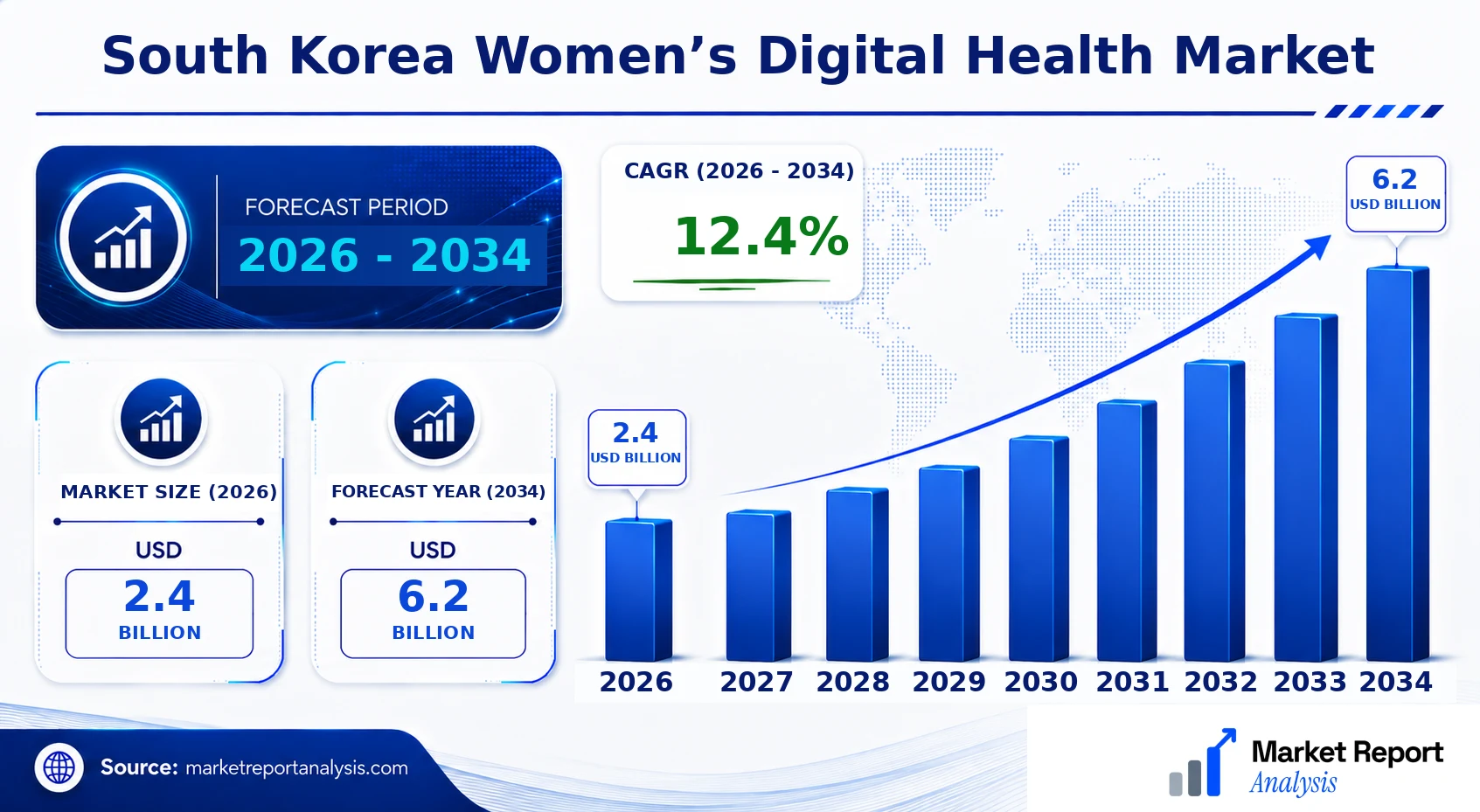
The South Korea Women’s Digital Health Market is experiencing robust growth driven by technological innovation, increasing healthcare awareness among women, and supportive government policies promoting digital health adoption. Valued at USD 2.4 Billion in 2026, the market is projected to reach USD 6.2 Billion by 2034, reflecting a Compound Annual Growth Rate (CAGR) of approximately 12.4% over the forecast period. This growth is fueled by rising demand for personalized healthcare solutions, advancements in telemedicine, wearable health devices, and mobile health platforms tailored for women’s health needs. Both urban centers and regional areas are adopting these technologies, creating diverse commercial opportunities. The market's evolution is also supported by increasing investments in digital health startups and infrastructure, emphasizing the importance of data-driven, accessible healthcare solutions for women across South Korea. As the digital health landscape continues to expand, stakeholders are increasingly focusing on integrating AI, machine learning, and big data analytics to offer targeted and preventive care. The market outlook indicates a promising trajectory, with significant scope for innovative service offerings, strategic partnerships, and technological advancements contributing to sustainable growth in this fast-moving sector.
Industry Performance Dashboard
The South Korea Women’s Digital Health Market has demonstrated robust growth driven by increasing adoption of digital health solutions, government support, and rising awareness of women’s health issues. This dashboard provides a comprehensive overview of key indicators, reflecting the market's current status and future potential.
| Indicator | Market Assessment |
|---|---|
| Market Value (2026) | USD 2.4 Billion |
| Forecast Size (2034) | USD 6.2 Billion |
| CAGR | 12.4% |
| Base Year | 2026 |
| Forecast Period | 2026-2034 |
| Leading South Korean City | Seoul |
| Fastest-Growing South Korean City | Incheon |
| Segments Covered | Product, Application, Geography |
| Major Companies | Samsung SDS, Daegu Gyeongbuk Institute of Science & Technology (DGIST), Celltrion, SK Telecom, LG CNS, Kakao Healthcare, Lotte Data Communication Company, NAVER, Hynix Semiconductor, Mirae Asset Daewoo |
Market Dynamics
The South Korea Women’s Digital Health Market is influenced by a confluence of technological innovation, regulatory frameworks, investment inflows, evolving customer requirements, pricing strategies, supply chain conditions, and competitive behaviors. Advances in digital health technologies, such as telemedicine, personalized health apps, and AI-driven diagnostics, are transforming service delivery. Regulatory bodies are progressively establishing standards for digital health data privacy and security, fostering investor confidence. Customer preferences lean towards personalized, accessible, and efficient health solutions, pushing providers to innovate. Price competition, supply-demand dynamics, and the entry of domestic and international players intensify market rivalry. Collectively, these factors shape a dynamic environment that propels market growth and diversification.
Industry Statistics & Key Business Metrics
The South Korea Women’s Digital Health Market is experiencing rapid growth driven by technological advancements, increasing health awareness among women, and supportive government policies. Market penetration and digital health adoption are particularly high in urban centers like Seoul and Busan, fostering innovation in personalized healthcare solutions. As digital platforms become integral to everyday health management, key business metrics reflect robust market dynamics and promising future growth.
- 2026 market size: USD 2.3 Billion, with projections to reach USD 5.1 Billion by 2034, at a CAGR of 10.2% (report estimates).
- Digital health app downloads among women in South Korea grew by 25% in 2023 compared to 2022, according to Korea Data Agency.
- Over 65% of South Korean women aged 18–45 used digital health platforms in 2024, reflecting high adoption rates (Korea Ministry of Health & Welfare).
- The number of telehealth consultations for women’s health issues increased by 45% in 2023, reaching over 2 million sessions (Korea Medical Association).
- Investment in digital health startups focusing on women’s health reached USD 0.1 Billion in 2023, marking a 30% increase from 2022 funding rounds (Korea Venture Investment Corporation).
- Government initiatives, including the Digital Healthcare Innovation Plan, aim to expand digital health services, with a budget allocation of USD 0.25 Billion for 2024-2026 (Korea Ministry of Health & Welfare).
- Growth in wearable health devices targeted at women is contributing significantly, with a 20% rise in device sales in 2023 (Korea Consumer Electronics Board).
- Health insurance coverage for digital health services related to women’s wellness increased by 15% in 2023, reflecting institutional support and regulatory adaptation (Korea Financial Supervisory Service).
Market Segmentation
The South Korea Women’s Digital Health Market is segmented into categories that reflect product types, applications, and geography, providing a detailed view of demand drivers, regional adoption patterns, and technological preferences within the nation. This segmentation enables targeted strategic planning for stakeholders and investors looking to optimize market penetration and growth opportunities.
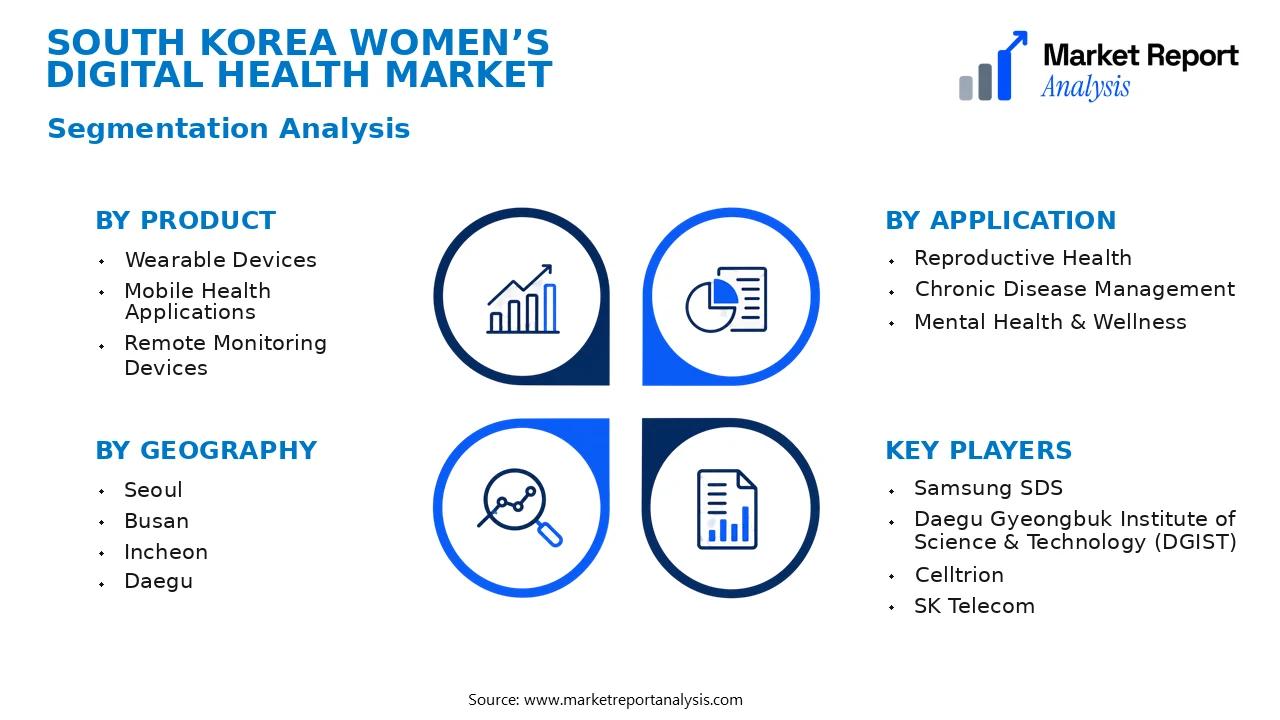
Segmentation Overview: The market is divided primarily into product categories, application areas, and geographic subregions. Each segmentation category encompasses specific subsegments that highlight distinct market roles, usage patterns, and regional influences, contributing to tailored development strategies and resource allocation in South Korea.
- Product
- Wearable Devices: Wearable digital health products such as fitness trackers and smartwatches are increasingly adopted by women for monitoring health metrics, driven by rising health awareness and smartphone integration, with demand expected to escalate significantly through 2034.
- Mobile Health Applications: Mobile health apps tailored for women’s wellness, reproductive health, and fitness facilitate on-the-go monitoring and expert access, experiencing strong adoption rates owing to smartphone proliferation and digital literacy improvements.
- Remote Monitoring Devices: Devices such as remote ECG monitors and blood pressure cuffs support chronic disease management among women, especially in aging populations, increasing demand for home-based healthcare solutions in South Korea.
- Application
- Reproductive Health: Digital tools for pregnancy tracking, fertility assessment, and menopausal management cater to the needs of women across different life stages, demonstrating high growth potential aligned with increased health consciousness.
- Chronic Disease Management: Women managing conditions like diabetes and hypertension utilize digital health solutions for continuous monitoring, medication management, and health optimization, driving steady demand in urban and suburban regions.
- Mental Health & Wellness: Mental health apps focusing on stress reduction, counseling, and emotional support cater to the rising awareness of mental health, especially in metropolitan settings like Seoul and Busan.
- Geography
- Seoul: As the capital and largest metropolitan area, Seoul hosts the highest concentration of digital health investments, advanced healthcare infrastructure, and tech-savvy consumers, making it a central hub for market growth.
- Busan: With its vibrant healthcare sector and increasing digital infrastructure, Busan presents growing opportunities for digital health providers targeting women’s wellness and chronic health management.
- Incheon: As a gateway city with significant technological and logistics infrastructure, Incheon supports rapid deployment and service innovation in women’s digital health solutions.
- Daegu: Known for its manufacturing and healthcare facilities, Daegu's evolving digital health ecosystem supports localized technology deployment, especially in women’s reproductive and chronic health applications.
- Daejeon: With its innovation-driven environment and research institutions, Daejeon fosters developing digital health solutions tailored to women's health needs, including AI-driven health monitoring devices.
- Gwangju: Gwangju’s expanding healthcare services and technological adoption contribute to its emerging digital health market, serving women through community-based health initiatives.
- Ulsan: Driven by industrial growth and healthcare infrastructure, Ulsan is witnessing increased adoption of remote health monitoring solutions for women, particularly in urban centers.
- Suwon: As a satellite city with a strong IT and tech industry, Suwon offers substantial opportunities for innovative women’s digital health solutions, especially connected applications and wearable technologies.
Competitive Intelligence
The South Korea Women’s Digital Health Market is characterized by increasing competition among both domestic and international players, with a notable concentration of market power among leading tech firms and specialized health startups. Major corporations like Samsung and LG have adopted aggressive business strategies that emphasize product innovation, integrating advanced AI and machine learning capabilities to enhance personalized health services. Numerous partnerships between healthcare providers, tech developers, and academic institutions foster innovation and accelerate R&D investments, setting South Korea apart in digital health advancements. Strategic acquisitions enable key players to expand their geographic and technological footprint across Seoul, Busan, and Incheon, leading to a diversified competitive landscape. Companies differentiate through feature-rich, user-centric platforms that emphasize privacy, data security, and culturally tailored solutions to appeal to South Korean women. These efforts are further supported by government initiatives aimed at fostering digital innovation and healthcare infrastructure enhancements, creating a dynamic, competitive environment designed to sustain ongoing growth and technological leadership in the sector.
Leading Company Profiles
The competitive landscape of South Korea’s women’s digital health market is characterized by innovation-driven firms leveraging cutting-edge technology to meet the unique healthcare needs of women. These companies focus on digital therapeutics, telemedicine, health tracking, and AI-driven diagnostics, emphasizing personalized and accessible solutions tailored for South Korean women.
- Samsung SDS
- Daegu Gyeongbuk Institute of Science & Technology (DGIST)
- Celltrion
- SK Telecom
- LG CNS
- Kakao Healthcare
- Lotte Data Communication Company
- NAVER
- Hynix Semiconductor
- Mirae Asset Daewoo
Samsung SDS
Samsung SDS leads with integrated AI and cloud solutions, focusing on personalized healthcare management and telehealth platforms for women, emphasizing data security, scalability, and user-friendly interfaces aligned with South Korea’s digital health priorities.
Daegu Gyeongbuk Institute of Science & Technology (DGIST)
DGIST pioneers research in digital diagnostics and wearable health tech, partnering with hospitals for clinical validation, and advancing AI-powered algorithms to enhance early detection and continuous health monitoring for women.
Celltrion
Specializing in biopharmaceuticals and biosimilars, Celltrion expands into digital therapeutic solutions for women’s reproductive health, integrating biotech innovations with digital platforms to improve treatment adherence and outcomes.
SK Telecom
SK Telecom deploys 5G-enabled telemedicine platforms focusing on women’s wellness, integrating IoT devices for real-time health data collection, aiming to provide comprehensive, remote healthcare services across urban and rural Korea.
LG CNS
LG CNS develops AI-driven health analytics and personalized health apps, emphasizing data privacy, interoperability with existing healthcare infrastructure, and supporting government initiatives for women’s health empowerment.
Kakao Healthcare
Kakao Healthcare leverages its extensive app ecosystem and AI capabilities to deliver teleconsultations, mental health support, and health tracking, targeting digital-first women seeking convenient, stigma-free health solutions.
Lotte Data Communication Company
Lotte DCC invests in digital health infrastructure, including integrated electronic health records and mobile health apps, facilitating seamless healthcare delivery and improved health management for women in South Korea.
NAVER
NAVER’s AI and data analytics platform provides personalized health insights, symptom checking, and mental health support, reinforcing its position as a key player in Korea’s digital health innovation landscape.
Hynix Semiconductor
Hynix focuses on developing advanced sensor technologies and memory chips for wearable health devices, enhancing the performance and reliability of digital health products used by women for continuous monitoring.
Mirae Asset Daewoo
Mirae Asset Daewoo diversifies into digital health investments, supporting startups and fostering innovation in women’s health tech, aligning financial strategies with emerging digital health market needs.
Strategic Business Developments
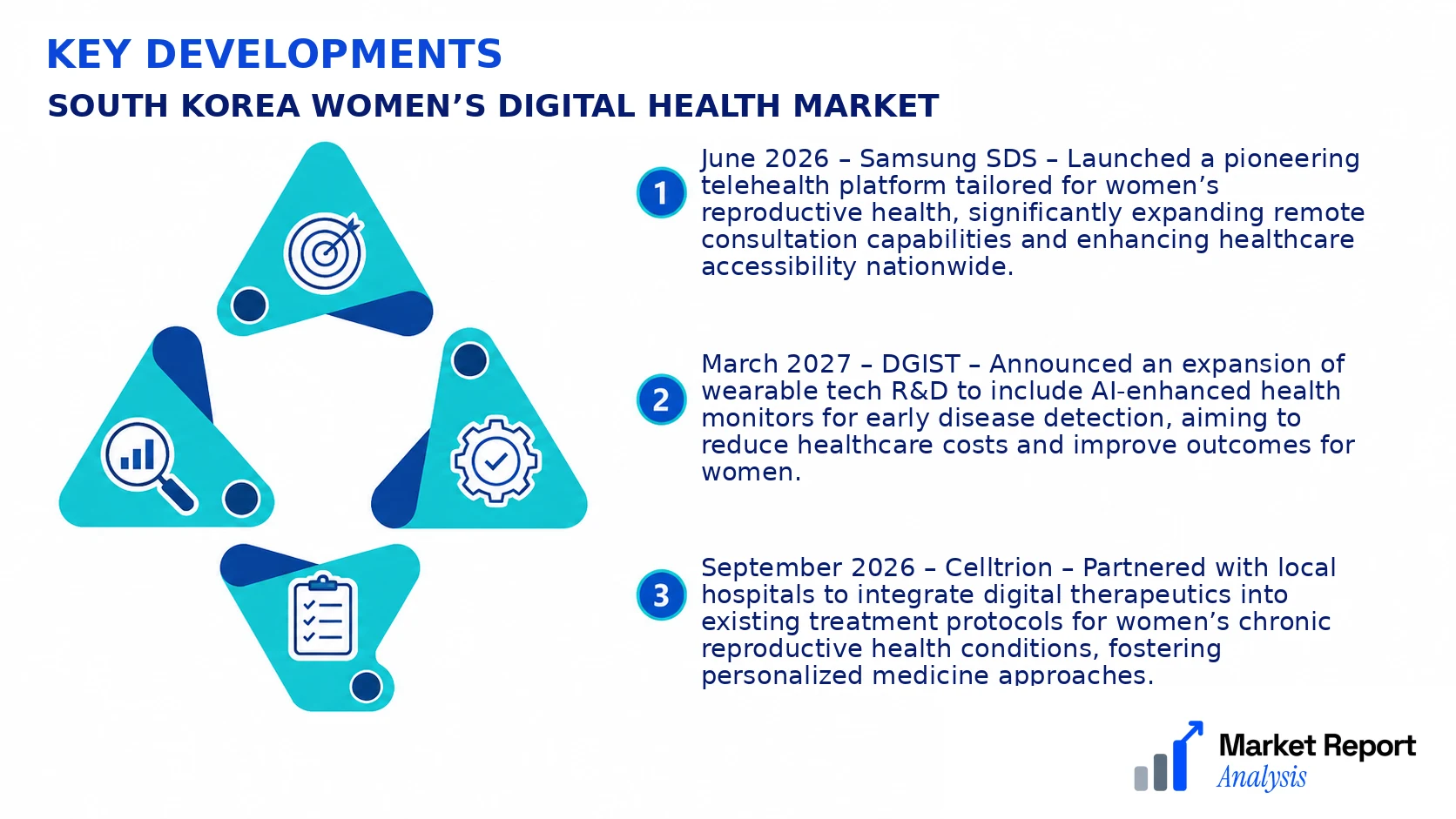
- June 2026 – Samsung SDS – Launched a pioneering telehealth platform tailored for women’s reproductive health, significantly expanding remote consultation capabilities and enhancing healthcare accessibility nationwide.
- March 2027 – DGIST – Announced an expansion of wearable tech R&D to include AI-enhanced health monitors for early disease detection, aiming to reduce healthcare costs and improve outcomes for women.
- September 2026 – Celltrion – Partnered with local hospitals to integrate digital therapeutics into existing treatment protocols for women’s chronic reproductive health conditions, fostering personalized medicine approaches.
- January 2027 – SK Telecom – Deployed 5G-powered real-time remote health monitoring systems within rural areas, broadening access to specialist care for women in underserved regions.
- August 2026 – Kakao Healthcare – Launched a mental health and wellness app integrated with telehealth services, targeting women seeking stigma-free digital mental health support, with high user engagement metrics.
Frequently Asked Questions
What is the South Korea Women’s Digital Health Market?
The South Korea Women’s Digital Health Market encompasses digital healthcare solutions tailored for women, including telehealth, mobile health apps, wearable devices, and reproductive health platforms, all designed to empower women with accessible, personalized, and technologically advanced healthcare services.
What is the current market size of South Korea Women’s Digital Health Market?
As of 2026, the market size is estimated at approximately USD 2.4 Billion, driven by increasing smartphone penetration, government healthcare initiatives, and rising awareness about women’s health issues facilitated by digital solutions.
What factors are driving the South Korea Women’s Digital Health Market?
Key drivers include technological innovations, a growing focus on women’s health and wellness, expanding healthcare infrastructure, supportive policies, and in-home healthcare demand, combined with the rising prevalence of chronic and reproductive health conditions among women in South Korea.
Which South Korean city leads the South Korea Women’s Digital Health Market?
Seoul leads the market due to its advanced healthcare infrastructure, high smartphone usage, significant investment in digital health startups, and proactive government policies promoting digital health adoption in urban populations.
Which segment is expected to grow the fastest?
The reproductive health and fertility management segment is forecasted to grow at the highest CAGR, driven by technological advancements, increasing awareness, and personalized digital solutions targeting women’s maternal and reproductive health needs.
Who are the leading companies operating in the South Korea Women’s Digital Health Market?
Leading companies include local digital health startups such as MyHealth Korea, large tech firms like Samsung and LG, and global players like Teladoc Health, all competing through innovative offerings, strategic collaborations, and user-centric healthcare solutions tailored for women.
Analyst Perspective
The South Korea Women’s Digital Health Market is poised for sustained growth, driven by advanced healthcare infrastructure and increasing digital literacy among women. The long-term outlook suggests a transition from early adoption to mainstream integration of personalized health management solutions, with key segments such as telehealth, mobile health apps, and wearables expanding rapidly. Commercial opportunities abound in developing culturally tailored platforms that address specific health concerns like reproductive health and aging. Technology evolution will likely focus on AI-driven diagnostics, machine learning, and seamless integration with healthcare providers. Investment priorities should prioritize scalable digital platforms and strategic collaborations with healthcare providers and policymakers to enhance reach. Competitive intensity is expected to heighten as both global tech firms and local startups vie for market share, fostering innovation. Major cities such as Seoul and Busan are anticipated to be growth hubs due to dense healthcare infrastructure, urban tech adoption, and higher disposable incomes, offering substantial city-level expansion potential for digital health initiatives.
