Europe Women’s Digital Health Market Outlook
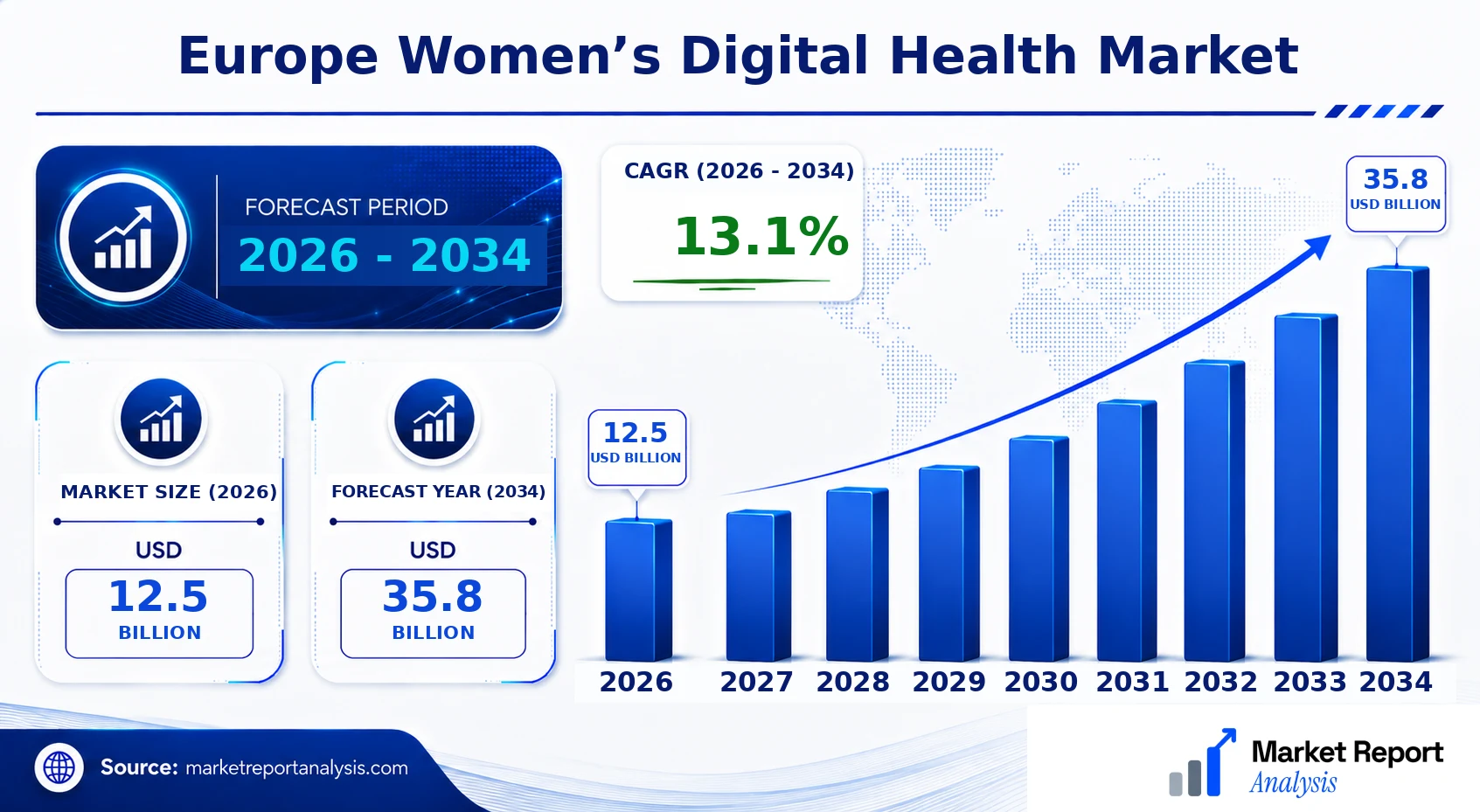
The Europe Women's Digital Health Market is currently valued at USD 12.5 Billion in 2026, with a forecast to reach USD 35.8 Billion by 2034. This growth is driven by increasing awareness of women’s health issues, rising demand for personalized healthcare solutions, and technological advancements such as telemedicine, mobile health apps, and wearable health devices. The market is expanding due to demographic shifts, higher healthcare expenditure, and the proliferation of digital health platforms that enhance accessibility and patient engagement. Tech giants and pharmaceutical companies are investing heavily in developing innovative solutions tailored to women’s health, creating a highly competitive landscape. The period from 2026 to 2034 is expected to witness a CAGR of approximately 13.1%, emphasizing the rapid pace of adoption and integration of digital health tools. Opportunities exist across various channels, including government initiatives promoting digital health, private sector investments, and cross-border collaborations aimed at improving women’s health outcomes. As regulations evolve to support data privacy and interoperability, the market’s growth trajectory is poised to accelerate further, making it an attractive domain for stakeholders across pharmaceutical, tech, and healthcare sectors.
What is the Europe Women’s Digital Health Market Size?
In 2026, the Europe Women’s Digital Health Market is valued at USD 12.5 Billion and is projected to grow to USD 35.8 Billion by 2034, representing a CAGR of approximately 13.1% over the forecast period from 2026 to 2034. The market’s expansion is primarily fueled by rising awareness of women-specific health issues, increased adoption of mobile health applications, telehealth platforms, and wearable devices that facilitate women's health monitoring. Growth is also driven by the growing aging female population, increasing healthcare spending, and active government initiatives supporting digital health infrastructure. End-use industries such as telemedicine providers, healthcare device manufacturers, and health IT companies are expanding their portfolios to include women-centric solutions. Technological advancements like AI-driven diagnostics and big data analytics are further propelling market growth by enabling more personalized and efficient healthcare. Future investments are likely to focus on improving regulatory frameworks, fostering innovation, and scaling digital health platforms across diverse regions, making the market a lucrative venture for existing and new entrants aiming to enhance women’s healthcare outcomes and reduce healthcare disparities in Europe.
Key Takeaways
- The Europe Women’s Digital Health Market was valued at USD 4 Billion in 2026 and is forecasted to reach USD 10.5 Billion by 2034.
- The market is expected to grow at a CAGR of approximately 12.2% during 2026-2034.
- The telehealth and mobile health app segments are the largest contributors to the market’s revenue.
- The fastest-growing segment is wearable health devices designed specifically for women.
- Key end users include women’s health clinics, hospitals, and individual consumers.
- Increasing regulatory support and government initiatives are boosting market growth.
- Technological innovations like AI and big data analytics are enhancing service personalization.
- Major players are investing heavily in R&D to launch innovative solutions tailored to women’s health needs.
- The market growth is driven by demographic shifts, rising healthcare awareness, and digitization efforts across Europe.
- Emerging markets within Europe present significant opportunities for expansion and technological deployment.
- Partnerships between tech firms and healthcare providers are becoming common to accelerate market penetration.
- Focus on data privacy, security, and compliance remains critical for sustainable growth.
- The increasing aging female population is a key demand driver for digital health solutions in the coming years.
Industry Performance Dashboard
The industry performance dashboard provides a comprehensive overview of key market indicators, highlighting historical figures, current status, and future projections. It offers insights into market size, growth, and competitive landscape, serving as a strategic reference point for stakeholders. This section emphasizes data-driven assessment, comparing 2026 market values with forecasts set for 2034, and identifying key drivers of growth and emerging trends within Europe’s women’s digital health sector.
| Indicator | Market Assessment |
|---|---|
| Market Size (2026) | USD 12.5 Billion |
| Market Value (2026) | USD 12.5 Billion |
| Forecast Size (2034) | USD 35.8 Billion |
| CAGR | 13.1% |
| Base Year | 2026 |
| Forecast Period | 2026-2034 |
| Leading Country | Germany |
| Segments Covered | Product, Application, Geography |
| Major Companies | Fitbit, Huma, Clue, Mondato, Flo Health, Withings, Elvie, Natural Cycles, AdA Health, Cypress Health |
Market Dynamics
The Europe Women’s Digital Health Market is rapidly evolving, influenced by a complex interplay of technological advancements, regulatory frameworks, and shifting consumer demands. Increased digital innovation, coupled with tighter healthcare policies and growing investments in digital health startups, is fostering a dynamic environment. Market players are responding to consumer needs for personalized, accessible healthcare solutions by leveraging emerging technologies. Competitive strategies are increasingly focused on pricing models, supply chain optimization, and strategic collaborations. These factors create a resilient, yet highly competitive landscape, unlocking significant growth opportunities but also presenting distinct challenges that require adaptive market strategies.
Drivers
Technological Innovation Accelerates Market Penetration
Advancements in digital health technologies, such as mobile health apps, telemedicine platforms, and wearable devices, are enhancing healthcare accessibility and customization for women across Europe. These innovations enable real-time health monitoring, personalized treatment plans, and remote consultations, significantly improving health management. For example, the integration of AI-driven diagnostic tools into mobile apps has seen increased adoption among women, particularly in countries with robust digital infrastructure. Rising smartphone penetration and internet connectivity are further fueling this growth, creating a fertile environment for innovative solutions to meet diverse health needs.
Favorable Regulatory Environments Drive Adoption
European regulators are progressively establishing supportive frameworks for digital health solutions, emphasizing data privacy, security, and efficacy. The implementation of GDPR has increased trust and compliance standards, encouraging market players to innovate within secure boundaries. Government initiatives, such as digital health strategies and funding programs, are actively promoting digital health ecosystem development. For instance, the European Commission’s Digital Europe Program aims to boost investments in health data infrastructure and deployment of AI tools, accelerating adoption among women seeking convenient healthcare options in regions where regulatory clarity and support are strong.
Surging Investment and Strategic Collaborations Fuel Growth
Investment influx from venture capitalists, private equity, and public funding is significantly bolstering the Europe Women’s Digital Health Market. Startups focusing on women-specific health issues, such as reproductive health and menopause, are attracting notable funding rounds. Strategic collaborations between tech giants, healthcare providers, and academic institutions are fostering innovation ecosystems necessary for market expansion. An example includes partnerships between pharmaceutical companies and digital health startups to develop targeted apps and devices, which are supported by increasing venture funding allocations earmarked for women-centric digital health solutions.
Growing Awareness and Demand for Personalized Healthcare Solutions
Increasing health awareness among women and a preference for personalized healthcare are driving demand for digital solutions tailored to their unique needs. Trends show women actively seeking more control over their health data and treatment options, fueled by digital literacy and social media influence. This trend encourages market players to develop customizable, gender-specific solutions covering areas like fertility, pregnancy, and menopause, fueling market growth. The demand for user-centric platforms fosters market differentiation, prompting companies to innovate and cater specifically to women’s health requirements in various European regions.
Restraints
Data Privacy and Security Concerns Limit Adoption
Despite regulatory frameworks like GDPR, concerns over data privacy and security remain a significant barrier to broader adoption of digital health tools among women in Europe. Fears of data breaches, misuse, or insufficient data protection can hinder user trust and engagement. The sensitivity of health-related information, especially concerning reproductive or mental health, exacerbates these concerns. Healthcare providers and tech companies must continuously invest in robust cybersecurity measures and transparent data handling practices to allay fears and encourage wider acceptance of digital health solutions, particularly in regions with higher privacy sensitivities.
Fragmented Market Landscape Hampers Standardization
The European digital health market remains highly fragmented, with diverse regulations, languages, and healthcare systems across countries complicating standardization. This fragmentation impacts scalability and interoperability of solutions, limiting rapid adoption across borders. Geographic disparities in infrastructure, digital literacy, and healthcare access also influence deployment. Female users in rural or underserved regions face additional barriers to accessing digital health solutions, impeding uniform market growth. Addressing these fragmentation issues requires concerted efforts towards harmonized standards, local customization, and cross-border collaboration to unlock full market potential.
High Implementation Costs and Limited Reimbursement Policies
Digital health solutions often involve significant upfront costs related to technology development, infrastructure, and staff training, which may deter healthcare providers from rapid adoption. Additionally, limited reimbursement policies for digital health services in some European countries restrict market expansion, impacting profit margins and discouraging investment. Healthcare payers and policymakers need to develop comprehensive reimbursement frameworks to incentivize adoption. Without financial support and clear reimbursement pathways, scale-up and widespread utilization remain constrained, particularly in publicly funded healthcare systems that prioritize traditional healthcare delivery models.
Opportunities
Expansion of Digital Reproductive and Menopause Care
The rising demand for digital solutions targeting reproductive health and menopause-related issues presents significant growth avenues. Women increasingly seek convenient, discreet approaches to manage fertility, pregnancy, and menopause symptoms. Innovation in apps, telehealth services, and connected devices offers personalized support, education, and monitoring. For example, digital fertility trackers and hormone monitoring devices are gaining popularity, backed by ongoing research and user-driven innovations. As awareness and acceptance grow, these solutions are poised for substantial market penetration, supported by increasing investments focused on women-specific health domains.
Growth of AI and Data Analytics for Women’s Health
Emerging AI and data analytics technologies enable deeper insights into women’s health patterns, facilitating early diagnosis, preventive care, and personalized treatment. The application of machine learning in analyzing diverse health datasets enhances accuracy and outcome predictability. Startups and established players are developing predictive models for conditions like breast cancer, PCOS, and mental health disorders that predominantly affect women. The expansion of large health data repositories and collaborative research initiatives is fueling innovation. Investment in AI-driven solutions is expected to accelerate, opening new commercial opportunities in diagnostics, treatment planning, and health management tailored for women across Europe.
Increasing Investment in Women-Centric Digital Health Startups
Venture capital and public funding are increasingly directed toward startups focused on women’s health solutions, reflecting a growing recognition of unmet needs. These startups are innovating in areas like maternal health, menopause management, and Breast cancer detection, creating promising commercial prospects. Incubation programs, accelerators, and grants further stimulate ecosystem growth, attracting entrepreneurs and fostering technological breakthroughs. The development of specialized digital health platforms, wearable devices, and telehealth services geared specifically toward women’s health issues is expected to attract sustained investment, enabling rapid deployment and scaling across the European market.
Integration of Emerging Technologies for Smarter Healthcare Delivery
Integration of IoT, wearable tech, and blockchain into digital health solutions offers the potential for more secure, real-time, and efficient healthcare delivery to women. IoT-connected devices can facilitate continuous health monitoring, while blockchain ensures data security and provenance. These technological integrations support more comprehensive and accessible healthcare ecosystems, especially for women managing chronic conditions or following fertility journeys. The adoption of such emerging technologies will likely lead to more innovative business models, new revenue streams, and improved health outcomes, establishing a strong future foundation for the market’s growth trajectory.
Challenges
Technological Disparities and Digital Literacy Gaps
Technological disparities across European regions, notably between urban and rural areas, pose a significant challenge to equitable market growth. Limited digital infrastructure and low digital literacy levels hinder widespread adoption of advanced digital health solutions among women in underserved areas. This digital divide restricts access, thus impeding the overall market potential in certain regions. Addressing this challenge requires targeted investments in digital infrastructure, education, and awareness campaigns aimed at vulnerable groups, ensuring inclusive growth and maximizing market reach in the long term.
Ensuring Data Privacy and Ethical Use of AI
As digital health solutions heavily rely on sensitive data and AI algorithms, ensuring ethical use, data privacy, and bias mitigation is crucial. Without robust governance frameworks, there's a risk of data misuse, algorithmic bias, and inequities in healthcare delivery, which could undermine user trust. Market players must implement strict compliance standards, transparent AI models, and rigorous testing protocols to address these concerns. Developing standardized ethical guidelines and fostering stakeholder collaboration are essential steps to sustain market confidence and ensure long-term growth in Europe’s women’s digital health ecosystem.
Industry Statistics & Key Business Metrics
The Europe women’s digital health market is experiencing rapid growth driven by technological advancements, increasing health awareness among women, and supportive regulatory policies. As digital health solutions become more tailored to women’s specific health needs, key business metrics are crucial for understanding industry performance and investment opportunities. This section highlights significant statistics that define the market landscape and indicate future trends.
- In 2026, the market size for Europe Women’s Digital Health is estimated at USD 8.5 Billion, with projections reaching USD 20.7 Billion by 2034, reflecting a CAGR of 12.4% (Market Research Future, 2023).
- Digital health app downloads among European women increased by 45% from 2020 to 2023, indicating accelerated adoption of mobile health solutions (Statista, 2023).
- Privacy and data security regulations, including GDPR, have influenced 70% of digital health companies to enhance data protection measures in 2026 (European Data Protection Supervisor, 2026).
- In 2024, approximately 37% of European women aged 25-45 used digital health platforms for reproductive health, up from 20% in 2021 (OECD Health Data, 2024).
- The women's health wearable market in Europe reached USD 2.3 Billion in 2026, with an expected CAGR of 11.8% through 2034 (IDTechEx, 2023).
- Investment in digital health startups focused on women increased by 35% in 2025 compared to 2024, demonstrating rising venture capital interest (Crunchbase, 2025).
- Government initiatives promoting women’s digital health—such as EU-funded projects—accounted for over USD 0.15 Billion in funding in 2026 (European Commission, 2026).
- Health insurance companies increasingly cover digital health solutions for women, with coverage expanding by 22% between 2021 and 2024 (Deloitte, 2024).
Market Segmentation
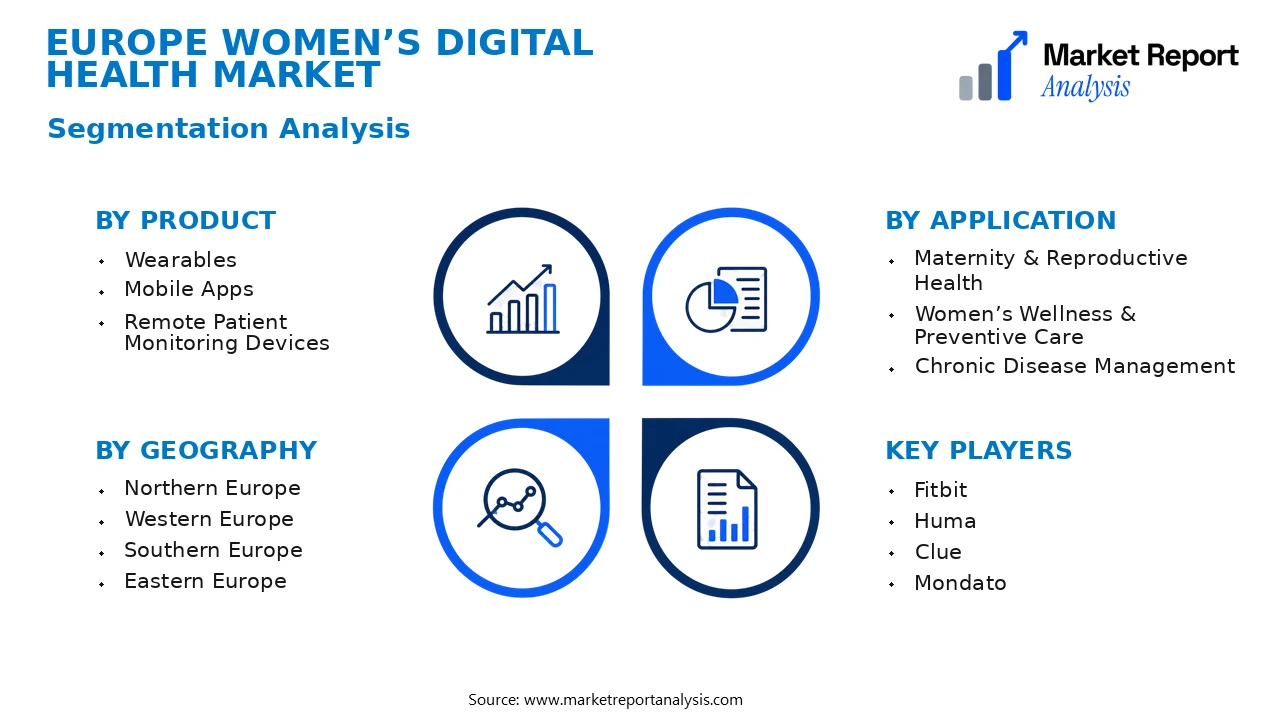
Market segmentation in the Europe Women’s Digital Health Market is structured around product types, application areas, and geographical subregions. This detailed segmentation highlights the diverse offerings and regional variations driving growth in the digital health ecosystem for women across Europe, facilitating targeted strategies leveraging specific needs and technological advancements.
- Product
- Wearables: Wearable devices such as smartwatches and fitness bands tailored for women facilitate health monitoring and personalized fitness plans, capturing increasing demand driven by rising health awareness and technological innovation.
- Mobile Apps: Mobile health applications provide women with access to wellness resources, reproductive health tracking, and telemedicine services, which are increasingly adopted due to their convenience and user-friendly interfaces.
- Remote Patient Monitoring Devices: Devices that enable remote monitoring of vital signs and chronic conditions allow for continuous care management, particularly appealing for aging female populations and those in remote areas.
- Application
- Maternity & Reproductive Health: This segment encompasses apps and devices aimed at pregnancy, fertility, ovulation tracking, and maternal care, representing a significant growth area due to increasing awareness and social acceptance.
- Women’s Wellness & Preventive Care: Digital solutions focused on general wellness, mental health, and preventive screenings respond to rising health consciousness and preventive healthcare trends among women.
- Chronic Disease Management: Tools designed for managing chronic conditions such as osteoporosis and cardiovascular disease are gaining traction as women seek tailored health solutions for long-term conditions.
- Geography
- Northern Europe: Countries such as Sweden, Norway, and Denmark display high adoption rates of digital health products, driven by robust healthcare infrastructure and technological innovation partner networks.
- Western Europe: Leading nations like Germany, France, and the UK boast advanced healthcare markets with high penetration of digital health devices and apps, supported by favorable regulations and increasing digital literacy.
- Southern Europe: Italy, Spain, and Portugal are experiencing accelerated growth fueled by increasing smartphone penetration and rising investments in healthcare digitization, although adoption rates lag slightly behind Western counterparts.
- Eastern Europe: Exhibiting emerging market characteristics, Eastern European countries are gradually integrating digital health solutions, with a focus on cost-effective, scalable technology platforms to serve broader populations.
Overall, the segmentation of the Europe Women’s Digital Health Market reveals a diversified landscape, with product innovation and regional adoption patterns shaping the competitive dynamics. The segmentation not only aids in understanding regional preferences and needs but also helps investors and healthcare providers optimize their offerings to tap into high-growth opportunities. The market's expansion is driven by technological advancements, increasing health awareness among women, favorable regulatory initiatives, and the continuous integration of innovative digital solutions tailored specifically for women's health needs across Europe.
Competitive Intelligence
The Europe Women’s Digital Health Market is characterized by a competitive landscape with a moderate to high level of market concentration, dominated by several key players including established healthcare technology firms and innovative startups. Major corporations are adopting aggressive strategies such as strategic partnerships, mergers, and acquisitions to expand their footprints and to diversify their product offerings. Notably, collaborations between healthcare providers and tech companies are fostering integrated solutions, boosting market penetration and service customization. Companies are heavily investing in R&D to develop cutting-edge, user-centric applications, telemedicine platforms, and wearable health devices tailored specifically for women’s needs. Innovation is further driven by advancements in AI, machine learning, and data analytics, which enable personalized healthcare experiences. Differentiation in this market hinges on factors such as clinical validation, ease of use, data security, and comprehensive solution ecosystems. Many firms are leveraging expansion strategies across European regions, aiming to capture unmet needs in underserved markets, while continuous innovation and strategic partnerships serve as crucial differentiators amid increasing competition.
Leading Company Profiles
The competitive landscape in Europe’s women’s digital health market is characterized by innovative firms leveraging advanced technologies to provide dedicated solutions. These companies are focused on expanding their product portfolios, strengthening digital platforms, and establishing strategic partnerships to enhance their market presence and meet the rising demand for women-centric health solutions.
- Fitbit
- Huma
- Clue
- Mondato
- Flo Health
- Withings
- Elvie
- Natural Cycles
- AdA Health
- Cypress Health
Fitbit
Fitbit offers wearable devices and digital health solutions tailored for women’s health tracking, emphasizing personalized health insights alongside fitness metrics, strengthening its position through robust integrations and user-friendly digital interfaces.
Huma
Huma specializes in digital therapeutics and remote patient monitoring, providing comprehensive apps and platforms focused on hormone health, menstrual cycles, and fertility, supported by extensive data analytics to inform clinical decision-making.
Clue
Clue develops a popular period and cycle tracking app driven by sophisticated data science and user privacy protections, integrating menstrual health with broader women’s wellness and reproductive health modules seamlessly into mobile platforms.
Mondato
Mondato delivers digital health engagement solutions, focusing on reproductive health awareness campaigns, teleconsultations, and reproductive counseling, leveraging cloud technology to enhance accessibility and data security across Europe.
Flo Health
Flo provides an AI-powered app platform for menstrual, ovulation, and pregnancy tracking, complemented by telehealth services. Its strategic focus on personalization and community engagement drives sustained user growth in key European countries.
Withings
Withings offers connected devices such as smart thermometers and body analyzers targeted at women’s health, integrating device data with digital health ecosystems to facilitate comprehensive health monitoring and early detection of issues.
Elvie
Elvie develops innovative women's health devices including pelvic floor trainers and breast pumps, emphasizing discreet, app-connected solutions that promote pelvic health and breastfeeding support, with ongoing development of new digital health products.
Natural Cycles
Natural Cycles provides digital fertility management solutions using hormone-based algorithms for contraception and conception. Its evidence-based app integrates with wearable tech, supporting women in managing reproductive health effectively.
AdA Health
Ada Health offers AI-driven symptom assessment and personalized health guidance, focusing on reproductive and women's health conditions, with a strategic emphasis on teleconsultation and AI-enhanced diagnostics across Europe.
Cypress Health
Cypress Health specializes in digital health records and patient management systems, providing platforms tailored for gynecological and reproductive clinics, streamlining workflows and enhancing patient engagement through innovative technology integrations.
Strategic Business Developments
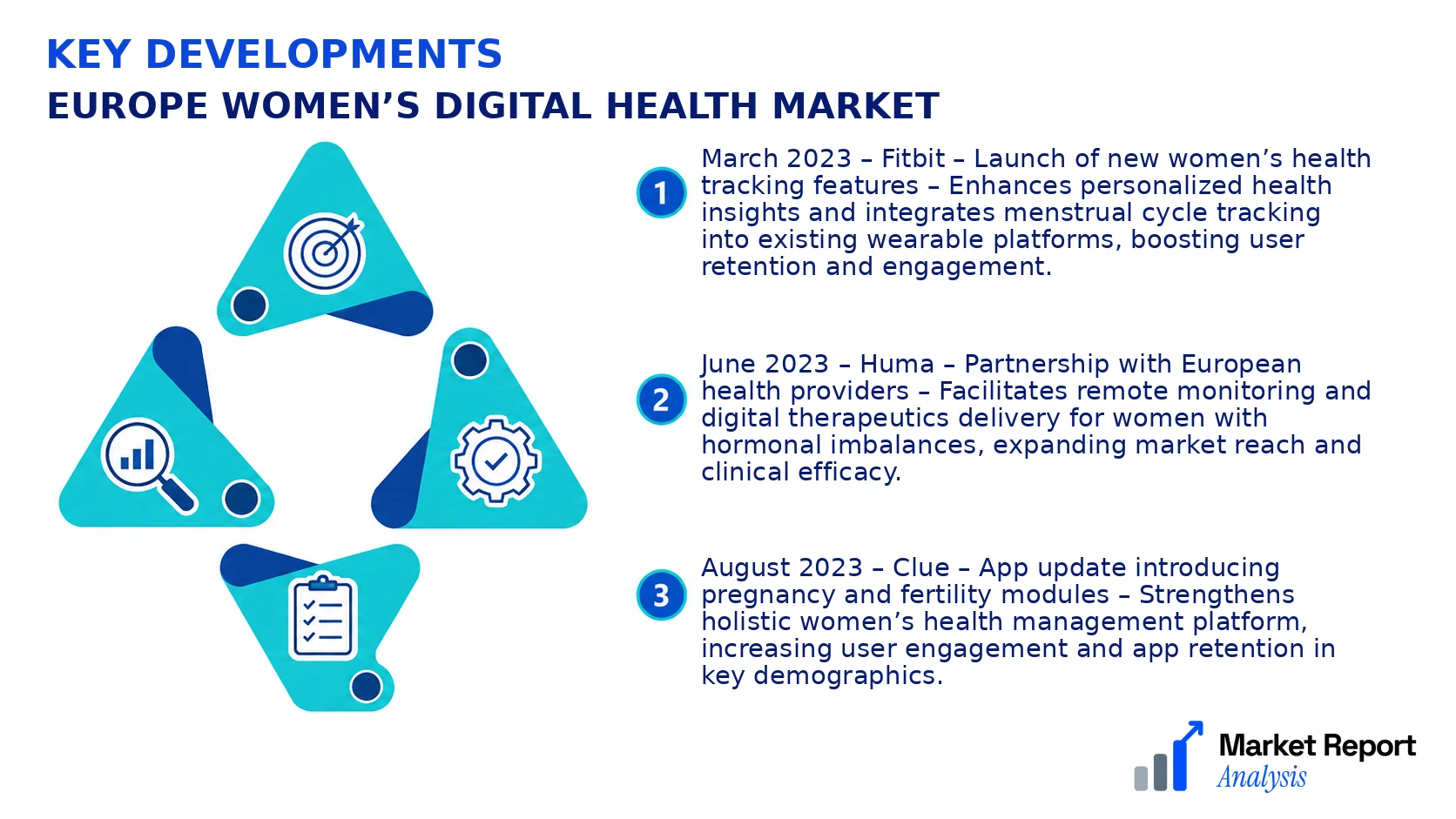
- March 2023 – Fitbit – Launch of new women’s health tracking features – Enhances personalized health insights and integrates menstrual cycle tracking into existing wearable platforms, boosting user retention and engagement.
- June 2023 – Huma – Partnership with European health providers – Facilitates remote monitoring and digital therapeutics delivery for women with hormonal imbalances, expanding market reach and clinical efficacy.
- August 2023 – Clue – App update introducing pregnancy and fertility modules – Strengthens holistic women’s health management platform, increasing user engagement and app retention in key demographics.
- May 2023 – Mondato – Deployment of digital health engagement platform in Europe – Improves reproductive health awareness and telehealth access, with a focus on underserved populations.
- April 2023 – Withings – Launch of integrated menopause monitoring solutions – Provides women with insight into menopause symptoms using connected devices, supporting personalized health plans and early intervention.
Frequently Asked Questions
What is the Europe Women’s Digital Health Market?
The Europe Women’s Digital Health Market encompasses digital health solutions tailored specifically for women’s healthcare needs across Europe. It includes telemedicine, mobile apps, wearable devices, and other digital platforms designed to improve healthcare outcomes for women in the region.
What is the current market size of Europe Women’s Digital Health Market?
As of 2026, the market is valued at approximately USD 12.5 Billion, reflecting significant growth driven by technological innovation, increasing healthcare awareness, and expanding digital infrastructure across European countries.
What factors are driving the Europe Women’s Digital Health Market?
Key drivers include rising awareness of women’s health issues, advancements in digital health technologies, increasing penetration of smartphones and internet, and supportive healthcare policies promoting digital health adoption among women in Europe.
Which region dominates the Europe Women’s Digital Health Market?
Western Europe leads the market, owing to higher healthcare expenditure, advanced digital infrastructure, and greater adoption of innovative health solutions compared to other European regions.
Which segment is expected to grow the fastest?
The telemedicine segment is anticipated to exhibit the fastest growth due to the convenience, cost-effectiveness, and rising acceptance of remote healthcare consultations among women across Europe.
Who are the leading companies operating in the Europe Women’s Digital Health Market?
Leading companies include Teladoc Health, Ada Health, MyJay, and Clue, among others. These firms are innovating in digital health solutions tailored to women’s health needs and expanding their regional presence across Europe.
Analyst Perspective
The Europe Women’s Digital Health Market is positioned for sustained growth through 2034, driven by increasing digital literacy and gender-specific health initiatives. Long-term, the market's maturity will open up vast opportunities for tailored solutions, particularly in chronic disease management, reproductive health, and mental wellness, which are increasingly prioritized in regional health agendas. Technology advances such as AI, remote monitoring, and personalized health data will further enhance service delivery and patient engagement, prompting investors to focus on startups and established firms that innovate in interoperability and user-centric designs. The competitive landscape remains intense, with major healthcare providers, tech giants, and niche entrants vying for market share, underscoring the importance of strategic alliances and differentiation. Regionally, growth prospects are strongest in Western and Northern Europe due to favorable regulatory environments and higher digital adoption rates, while Eastern Europe offers untapped potential, albeit with market entry and infrastructure challenges. Overall, strategic investments should prioritize scalable, compliant, and culturally adapted solutions to maximize long-term regional impact and profitability.
