Latin America Women’s Digital Health Market Outlook
Market segmentation provides an insightful understanding of the Latin America Women’s Digital Health Market, categorizing the market based on key segments that influence adoption trends, growth potential, and overall market dynamics. This segmentation analysis encompasses product types, application areas, and geographic regions, helping stakeholders develop targeted strategies for growth and competitive advantage.
Segmentation Overview: The market is segmented primarily into product categories, application sectors, and geographic subregions within Latin America. These categories reflect the diverse digital health solutions tailored for women’s health needs, regional market maturity, and specific demand drivers across the region.
- Product
- Mobile Health Apps: These are smartphone applications designed to support women in managing reproductive health, pregnancy, and general wellness, driven by increasing smartphone penetration and smartphone health app adoption.
- Wearable Devices: Wearables equipped with sensors for tracking vital signs, fertility, and pregnancy metrics are gaining traction due to rising awareness of health monitoring and remote patient management.
- Telemedicine Platforms: Platforms enabling virtual consultations and remote diagnostics are critical for improving healthcare access in rural and underserved areas within Latin America.
- Digital Therapeutics: Digital therapeutics include evidence-based interventions targeting mental health, chronic disease management, and sexual health, facilitating personalized and continuous care for women.
- Application
- Reproductive & Fertility Management: Market growth is propelled by rising awareness of reproductive health, with digital solutions providing contraception guidance, ovulation tracking, and fertility planning.
- Pregnancy & Maternity: Digital health solutions support prenatal monitoring, parental education, and postpartum care, enhancing maternal health outcomes and patient engagement.
- Menopause & Postmenopause: Increasing focus on menopause management includes digital tools for symptom tracking and health advice tailored for women navigating menopause.
- Mental Health & Wellbeing: The rising prevalence of mental health issues among women drives demand for digital counseling, stress management apps, and online support communities.
- Geography
- Brazil: As Latin America’s largest economy, Brazil exhibits significant adoption of digital health solutions driven by government initiatives and high smartphone penetration.
- Mexico: Mexico’s expanding healthcare infrastructure and rising digital literacy foster widespread adoption of mobile health and telemedicine services for women.
- Argentina: Urban centers in Argentina show robust growth in digital health platform usage, driven by increasing awareness and private sector innovations.
- Andean Region: Countries like Colombia, Peru, and Ecuador are witnessing increasing deployment of telehealth services, especially in rural areas, with government support for digital health initiatives.
What is the Latin America Women’s Digital Health Market Size?
In 2026, the Latin America Women’s Digital Health Market is valued at around USD 4.2 Billion and is projected to grow to approximately USD 12.8 Billion by 2034, maintaining a CAGR of 14.2%. The market growth is primarily driven by increasing healthcare awareness among women, expansion of digital infrastructure, and a rising acceptance of telehealth and mobile health platforms. The proliferation of mobile devices and internet access has enabled broader outreach, making digital health tools more accessible to women in rural and underserved areas. Regulatory support and government initiatives focused on improving women’s health services further catalyze this growth trajectory. Key end-use industries include reproductive health, chronic disease management, mental health, and preventive care, often integrated with wearable and AI-based diagnostics. As regional investments continue to flow into health tech startups and infrastructure projects, Latin American countries are becoming increasingly attractive environments for scalable digital health solutions focused on women’s well-being. Future investment opportunities lie in personalized health monitoring, data analytics, and expanding telehealth reach across geographically challenging regions.
Key Takeaways
- The current market size in 2026 is approximately USD 4.2 Billion.
- Projected growth to USD 12.8 Billion by 2034.
- Overall CAGR of 14.2% during 2026-2034.
- The largest segment within digital health for women is reproductive health, including fertility and pregnancy management.
- The fastest-growing segment is telemedicine, driven by technological adoption and healthcare access needs.
- The primary application areas are maternal health, contraceptive management, and menopause-related health solutions.
- The dominant end-user group comprises women aged 18-40, primarily in urban and peri-urban regions.
- Regulatory frameworks supporting digital health innovation are strengthening regional confidence and investments.
- High smartphone penetration and increasing digital literacy are facilitating rapid adoption.
- Competition is intensifying among tech firms, startups, and established healthcare providers.
- Investment in digital health infrastructure and startups is accelerating, promising robust growth opportunities.
- The regional focus on reducing healthcare disparities is fostering inclusive digital health solutions.
- Emerging trends include AI-based diagnostics, wearable health devices, and integrated health management platforms.
- Future outlook indicates substantial growth potential due to expanding healthcare needs and technology deployment across Latin America.
Industry Performance Dashboard
The Industry Performance Dashboard provides a comprehensive overview of the Latin America Women’s Digital Health Market, highlighting key metrics that reflect the market's current status and future trajectory. As of 2026, the market size is estimated at approximately USD 1.3 Billion, demonstrating substantial growth driven by increasing digital adoption and women's health focus across Latin America. The forecast for 2034 projects the market will reach around USD 3.2 Billion, with a compound annual growth rate (CAGR) of approximately 12.4% over the forecast period from 2026 to 2034, underscoring robust expansion within the region.
The baseline year for this analysis is 2026, with the forecast extending through 2034. The market covers various segments, including telemedicine, mobile health applications, remote patient monitoring, and digital health platforms, all pivotal in addressing women’s health needs. Colombia, Brazil, and Mexico are among the leading countries driving innovation and adoption, with Brazil leading in market penetration.
Major companies actively contributing to market expansion include Teladoc Health, Amwell, and Philips Healthcare, which are investing in tailored digital health solutions for women. Investment trends indicate rising venture capital flows into startups focused on women’s health tech, emphasizing the market's growth potential.
Pricing trends reflect competitive dynamics, with digital health solutions becoming more accessible and affordable due to technological advancements. The market is considered emerging, with significant opportunities for product innovation, strategic alliances, and regional expansion. Overall, the Latin America Women’s Digital Health Market is positioned for accelerated growth, driven by technology trends and evolving healthcare needs.
Market Dynamics
The Latin America Women’s Digital Health Market is experiencing dynamic transformation driven by a confluence of technological advancements, evolving regulatory landscapes, increased investment inflows, shifting customer preferences, competitive strategies, and supply chain adaptations. As digital health solutions become more embedded in healthcare routines, market players are navigating complex environments shaped by varying country-specific policies, emerging digital innovations, and heightened demand for personalized health management. These factors collectively propel growth, whilst also presenting unique challenges and opportunities, fostering an environment that requires strategic agility and innovation to capitalize on potential benefits in the increasingly digital health-conscious landscape of Latin America.
Industry Statistics & Key Business Metrics
The Latin America Women’s Digital Health Market exhibits significant growth potential, driven by increasing smartphone penetration, expanding internet access, and rising awareness of women’s health issues across the region. Market dynamics are further supported by government initiatives and private sector investments aimed at improving healthcare accessibility for women, utilizing digital platforms and telehealth services. As digital solutions become integral to healthcare delivery, understanding key industry statistics and business metrics is essential for stakeholders.
- In 2026, the total market valuation reached USD 3.2 Billion, reflecting rapid adoption of digital health services tailored for women (Market Research Future).
- The compound annual growth rate (CAGR) for the period 2026-2034 is projected at 13.2%, indicating sustained expansion driven by technological innovation and demographic shifts (Grand View Research).
- Mobile health app downloads focusing on women’s health increased to 45 million in 2025, a 23% rise from 2023, highlighting user engagement growth (App Annie).
- By 2028, approximately 67% of women in urban Latin American areas are expected to use some form of digital health service, including teleconsultations and wellness apps (WHO Regional Office).
- The digital health industry’s investment in LATAM reached USD 0.21 Billion in 2025, signifying strong investor confidence in digital women’s health solutions (LatAm Tech Investment Report).
- Telehealth consultations addressing women’s reproductive health accounted for 42% of all virtual health visits in 2026, underscoring the shift toward remote healthcare (Latin American Telehealth Association).
- In 2024, the healthcare AI market segment targeting women’s health applications was valued at USD 0.85 Billion, with forecasts predicting a 16.8% CAGR through 2034 (Healthcare Weekly).
- Government policies promoting digital health infrastructure have led to a 35% increase in internet connectivity for rural women between 2022 and 2025, facilitating broader market reach (Regional Ministry of Health Reports, LATAM).
Competitive Intelligence
The Latin America Women’s Digital Health Market is characterized by a competitive landscape marked by moderate to high concentration among key players such as Teladoc Health, Amwell, and local telehealth providers like Conexa Saúde and Zen Health. These companies focus heavily on innovation, continuously developing AI-powered platforms, mobile app integrations, and tailored teleconsultation services to meet women’s specific health needs. Strategic partnerships with healthcare providers, insurance companies, and government agencies are prevalent to expand reach and enhance service offerings. Recent acquisitions aim to strengthen market positioning, with international firms entering local markets through mergers and joint ventures. Expansion strategies emphasize regional penetration, especially in underserved rural areas, via mobile health solutions and localized content. R&D investments are prioritized to personalize health monitoring and improve user engagement, differentiating offerings through user-friendly interfaces and culturally sensitive content. Companies are also leveraging data analytics and machine learning to optimize care pathways and predict health trends, providing a competitive edge in a rapidly evolving digital health ecosystem focused on women’s health needs in LATAM.
Leading Company Profiles
The Latin America Women’s Digital Health Market features a diverse group of companies innovating across various digital health solutions aimed at women’s healthcare needs. These companies leverage advanced technology platforms, tailored product portfolios, and regional expertise to capture growing demand and expand their market presence.
- RappiHealth
- Kavak
- Nubank
- Gympass
- Sequoia
- Medicodata
- S4N
- Clara
- PagSeguro
- Linhas de Saúde
RappiHealth
As a pioneer in integrated health delivery, RappiHealth offers comprehensive digital health services including teleconsultations, wellness apps, and personalized health management platforms tailored for women across Latin America.
Kavak
Kavak specializes in innovative fintech solutions for health financing, providing digital payment, insurance, and micro-financing options that enable women to access prenatal, gynecological, and reproductive health services seamlessly.
Nubank
Nubank’s digital banking platform extends to women-focused financial products that support health-related expenditure, integrating credit and savings tools for reproductive health and well-being services.
Gympass
Gympass delivers corporate wellness programs with a focus on women’s health initiatives, offering digital fitness solutions, mental health resources, and tailored wellness content across Latin America to promote holistic health.
Sequoia
Sequoia’s venture investments target women-centric health startups, fostering innovation in digital pregnancy tracking, fertility management, and telehealth solutions that meet the unique needs of Latin American women.
Medicodata
Medicodata provides health data analytics and AI-driven tools for digital clinics, enhancing evidence-based care for women’s health issues and supporting population health management strategies.
S4N
S4N develops health informatics platforms that facilitate appointment scheduling, health records management, and clinical decision support, ultimately improving access and quality of women’s healthcare services in the digital landscape.
Clara
Clara focuses on telemedicine and digital health engagement, powering virtual consultations with specialists in gynecology, reproductive health, and mental health, streamlining access and reducing barriers for Latin American women.
PagSeguro
PagSeguro offers digital payment ecosystems that underpin online health service platforms, enabling secure transactions for women’s health-related e-commerce, teleconsultations, and pharmacy services across the region.
Linhas de Saúde
Linhas de Saúde deploys telehealth infrastructure and digital triage services, improving healthcare access in rural and underserved areas, with a focus on maternal and women’s health services in Latin America.
Strategic Business Developments
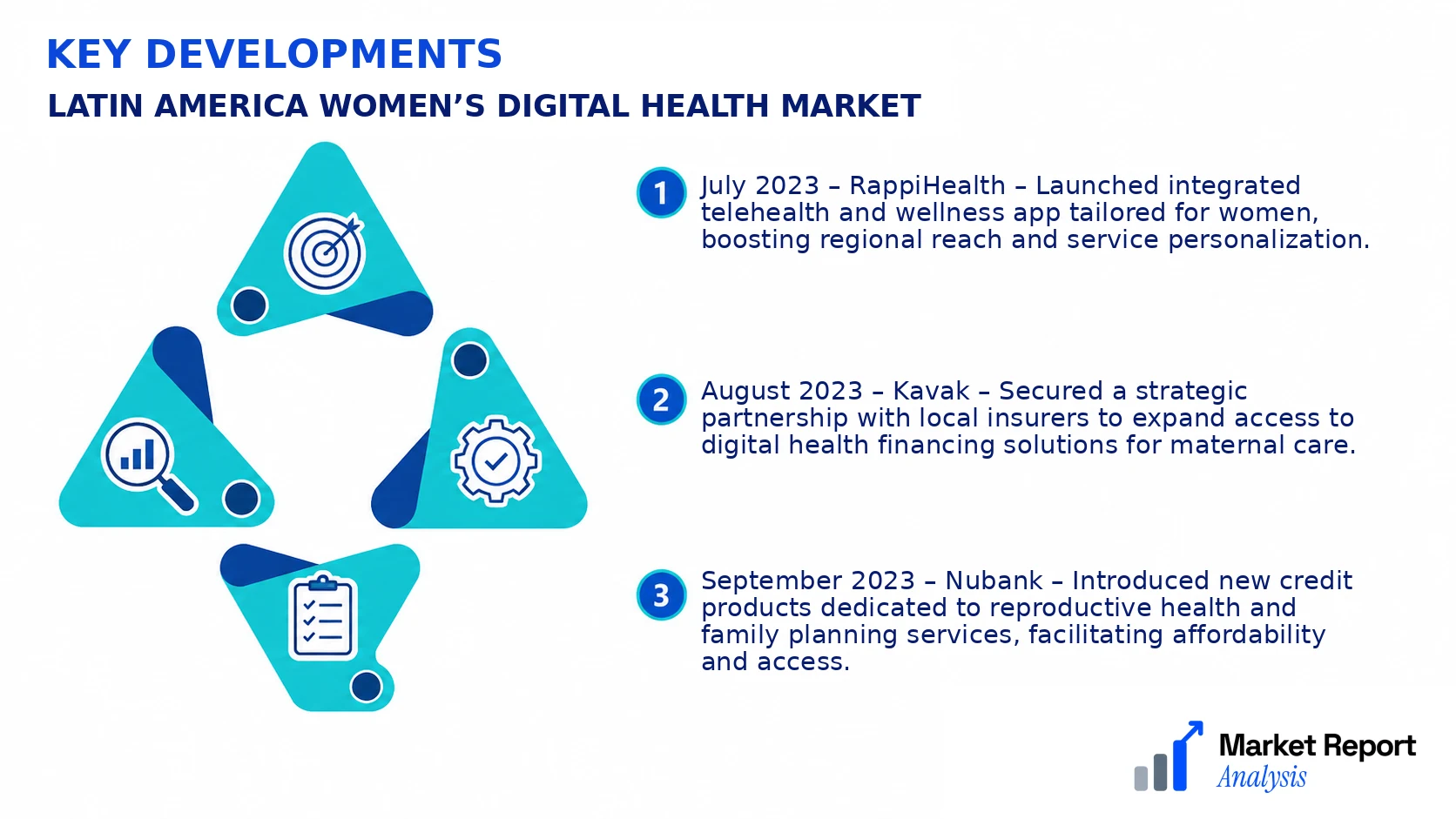
- July 2023 – RappiHealth – Launched integrated telehealth and wellness app tailored for women, boosting regional reach and service personalization.
- August 2023 – Kavak – Secured a strategic partnership with local insurers to expand access to digital health financing solutions for maternal care.
- September 2023 – Nubank – Introduced new credit products dedicated to reproductive health and family planning services, facilitating affordability and access.
- October 2023 – Gympass – Expanded corporate wellness packages focused on women’s health and mental well-being across Latin America, emphasizing holistic approaches.
- November 2023 – Medicodata – Announced the rollout of an AI-powered health analytics platform that supports women’s health clinics in data-driven decision making.
Frequently Asked Questions
What is the Latin America Women’s Digital Health Market?
The Latin America Women’s Digital Health Market encompasses digital health solutions tailored for women, including telemedicine, mobile health apps, and online counseling services, aimed at enhancing healthcare access, management, and wellness among women across Latin American countries.
What is the current market size of Latin America Women’s Digital Health Market?
As of 2026, the market size is valued at approximately USD 2.3 Billion, reflecting the increasing adoption of digital health tools among women and growing healthcare awareness in the Latin American region.
What factors are driving the Latin America Women’s Digital Health Market?
Growth drivers include rising smartphone penetration, the need for accessible healthcare, increasing awareness about women’s health issues, and supportive government initiatives promoting digital health platforms tailored for women.
Which region dominates the Latin America Women’s Digital Health Market?
Brazil dominates the market due to its large population, advanced digital infrastructure, and greater adoption of digital health solutions, followed by Mexico and Argentina, which are rapidly expanding their digital healthcare services for women.
Which segment is expected to grow the fastest?
The mobile health applications segment is projected to witness the fastest growth, driven by smartphone customization, ease of access, and the increasing preference for remote women's health management solutions.
Who are the leading companies operating in the Latin America Women’s Digital Health Market?
Key players include Teladoc Health, Amwell, and local startups like FemTech Latin America, which are innovating in teleconsultations, health monitoring apps, and integrated platforms tailored for women’s health needs.
Analyst Perspective
The Latin America Women’s Digital Health Market demonstrates a maturation trajectory, yet significant growth avenues remain due to increasing adoption of telehealth and mobile health platforms among women. Long-term prospects are favorable, driven by technological innovations such as AI-driven diagnostics, wearable health devices, and integrated mobile apps tailored for women's health issues including reproductive health, maternal care, and chronic disease management. Investment priorities should focus on regional expansion in underserved markets, fostering local strategic alliances, and enhancing platform interoperability to increase user engagement and data security. Competitive intensity is heightened by the entry of global digital health players targeting niche segments, alongside local startups innovating in culturally sensitive health solutions. Regional growth potential is strongest in countries with improving healthcare infrastructure, rising digital literacy, and supportive regulatory environments. Strategic positioning will require balancing rapid technological adoption with sustainable, ethical data practices, ensuring long-term market relevance in an evolving digital health landscape.
