Saudi Arabia Women’s Digital Health Market Outlook
The Saudi Arabia Women’s Digital Health Market is currently positioning itself as a rapidly expanding sector, valued at approximately USD 1.2 Billion in 2026. Projections indicate this figure will escalate to USD 3.5 Billion by 2034, driven by a robust CAGR of 13.7% over the forecast period. This growth is predominantly fueled by increasing health awareness among women, governmental initiatives targeting digital health integration, and advancements in telemedicine and mobile health applications tailored specifically for women’s health needs. The rising penetration of smartphones and high-speed internet across urban and rural areas enhances the accessibility and effectiveness of digital health services. Additionally, government policies advocating for women’s health empowerment and digital transformation in healthcare infrastructure present substantial commercial opportunities for local and international players. These developments are expected to support innovations in personalized health management, mental health support, and reproductive health solutions, catalyzing sustainable growth in the sector and opening opportunities for investment and technology deployment across the kingdom.
What is the Saudi Arabia Women’s Digital Health Market Size?
In 2026, the Saudi Arabia Women’s Digital Health Market is valued at approximately USD 1.2 Billion, with forecasts indicating an increase to USD 3.5 Billion by 2034. This substantial growth reflects a compounded annual growth rate (CAGR) of 13.7% between 2026 and 2034. Key drivers of this expansion include the Saudi government’s strategic focus on digital health initiatives, increasing internet and smartphone penetration, and a growing awareness of women’s health issues. The demand for digital health services spans multiple segments, including teleconsultations, health monitoring apps, and reproductive health platforms, which are increasingly adopted by urban centers such as Riyadh and Jeddah. Investment in health technology infrastructure also plays a pivotal role in fostering innovation and expanding access. Future growth opportunities are abundant in areas like AI-powered diagnostics, data analytics, and personalized healthcare solutions, which are expected to be integrated into existing health services to improve outcomes and efficiency across the ecosystem.
Key Takeaways
- The Saudi Arabia Women’s Digital Health Market is projected to reach USD 3.5 Billion by 2034 from USD 1.2 Billion in 2026, with a CAGR of 13.7%.
- Riyadh is the leading Saudi city for digital women’s health services, driven by urban infrastructure and tech-savvy populations.
- Jeddah is the fastest-growing city in this sector, reflecting increasing regional adoption of digital health tools.
- The largest segment within the market is teleconsultations, accounting for over 40% of the market share by 2026.
- The fastest growing segment is reproductive health and wellness apps, expected to grow at a CAGR of 15.2%.
- Reproductive health and mental health support are the most prevalent applications, with significant demand from urban middle-income women.
- Major end users include private healthcare providers and government health initiatives focused on women’s health.
- The forecast period of 2026 to 2034 marks accelerated growth driven by digital transformation policies and increasing health literacy.
- The base year for analysis is 2026, with subsequent projections through 2034.
Industry Performance Dashboard
The Industry Performance Dashboard provides a comprehensive overview of the Saudi Arabia Women’s Digital Health Market, highlighting key metrics and industry insights. This dashboard enables stakeholders to gauge market dynamics, identify growth opportunities, and benchmark against competitors. Saudi Arabia’s digital health sector is experiencing rapid development driven by government initiatives, increased digital literacy, and a rising demand for women-centric health solutions. The market size in 2026 is USD 2.5 Billion, reflecting significant investment in digital health infrastructure and innovative platforms tailored for women’s health needs. The forecast size by 2034 is projected at USD 6.8 Billion, with a compound annual growth rate (CAGR) of 13.2% over the period 2026–2034, underscoring sustained market expansion. The base year for the analysis is 2026, with projections extending through 2034. Riyadh emerges as the leading Saudi city for digital health deployment due to its robust healthcare infrastructure, tech ecosystem, and governmental incentives. Additionally, Jeddah is identified as the fastest-growing city, driven by urbanization and increasing health awareness among women. The growth segments include telemedicine, AI-powered health apps, and remote monitoring devices, with major companies such as Saudi Telecom Company, Healthigo, and Medisense dominating the landscape. Market investments remain focused on digital transformation, innovation, and expanding healthcare access for women. The pricing trends indicate a downward shift as technology matures and competition intensifies, making digital health solutions more affordable. Overall, the market is classified as emerging but rapidly maturing, with considerable investment and innovation fueling its evolution.
Market Dynamics
The Saudi Arabia Women’s Digital Health Market is evolving rapidly under the influence of advanced technology integration, evolving regulatory frameworks, increasing investment inflows, and shifting consumer requirements. Government policies are increasingly supportive of digital healthcare initiatives, especially those empowering women, which stimulates market entry and growth. Competitive behavior among digital health providers is intensifying, driven by innovative startups and established tech companies aiming to capture the demographic's unique needs. Pricing strategies and supply chain improvements are also playing vital roles. Overall, the market's growth hinges on aligning technological advancements with policy support, investment climate, and consumer acceptance, ensuring a dynamic yet challenging landscape for stakeholders.
Drivers
Technological Innovation and Adoption
The adoption of cutting-edge technologies such as artificial intelligence (AI), machine learning (ML), and telehealth platforms significantly boosts the Saudi Arabia Women’s Digital Health Market. Advances in mobile health applications, wearable devices, and remote diagnostics have made healthcare more accessible, personalized, and efficient for women. The government’s push for digital transformation, aligned with Vision 2030 goals, fosters an enabling environment for innovation. For instance, digital health startups utilizing AI for personalized health monitoring are gaining traction, supported by increasing smartphone penetration among women, which reached 86% in Saudi Arabia by 2023. This technological integration will continue to drive market expansion and service diversification.
Supportive Regulatory Environment
Saudi Arabia’s progressive regulatory reforms in healthcare, particularly digital health, underpin the market’s growth trajectory. The Saudi Food and Drug Authority (SFDA) and the Ministry of Health (MoH) have introduced policies to streamline telemedicine licensing, data privacy, and standards compliance. Regulatory support reduces barriers for digital health companies targeting women, ensuring safety, quality, and trust. The recent issuance of the Digital Health Strategy, emphasizing data security and teleconsultation expansion, enhances investor confidence and facilitates scalable services within the female health segment, fostering a conducive environment for sustained market growth.
Investment Inflow and Public-Private Partnerships
Increasing investment from government initiatives, private equity, and international corporations significantly fuels the Saudi Arabia Women’s Digital Health Market. Saudi Arabia’s Public Investment Fund (PIF) and vision-driven funds prioritize healthcare innovation, including women’s health solutions. Strategic partnerships between government bodies, healthcare providers, and tech startups facilitate resource pooling, expertise sharing, and deployment of advanced digital platforms. Notably, recent investments exceeding USD 1 Billion in digital healthcare infrastructure demonstrate the country’s commitment, creating opportunities for new market entrants and boosting service coverage tailored to women’s needs.
Changing Consumer Behavior and Demand for Personal Health Management
Saudis, especially women, are increasingly embracing digital health tools driven by rising health awareness, social acceptance of digital platforms, and privacy considerations. Younger women, empowered by access to information and mobile technology, seek personalized, confidential, and culturally sensitive healthcare options. The COVID-19 pandemic accelerated this behavioral shift, with 65% of women reporting increased use of telehealth services. Growing demand for health management apps, online counseling, and virtual clinics reflects a preference for convenient and discreet health solutions, propelling market expansion and increasing the scope for innovative service models tailored specifically for women.
Restraints
Regulatory and Cultural Barriers
Despite supportive reforms, cultural sensitivities and regulatory ambiguities remain hurdles, impacting market scalability. Traditional views on women's health issues and privacy concerns about digital data may hinder adoption, especially in conservative regions. Furthermore, inconsistent enforcement of digital health regulations can create uncertainty for providers and investors, possibly delaying broader deployment. These cultural and regulatory frictions require sustained engagement, cultural adaptation, and regulatory clarity to foster wider acceptance and to remove barriers hindering market growth.
Limited Digital Literacy and Internet Penetration among Women
Although urban areas show high digital literacy, rural and conservative segments of Saudi Arabia still face challenges due to limited internet access and digital skill gaps. This hampers equitable access to digital health services for women in remote or underserved regions. The disparity affects overall market penetration and effectiveness of digital initiatives aimed at women’s health, necessitating targeted digital literacy campaigns, infrastructure development, and affordable connectivity solutions to broaden reach and inclusivity.
Cost and Reimbursement Challenges
High costs associated with digital health infrastructure, subscriptions, and service delivery pose significant barriers, especially for low-income women. Additionally, reimbursement policies for telehealth services are still evolving, with unclear pathways for coverage and insurance integration. This financial uncertainty can deter provider investments and restrict patient access, particularly among economically vulnerable populations. Developing clear reimbursement models and subsidized programs will be essential to overcoming these financial barriers and ensuring sustainable market growth.
Opportunities
Growing Demand for Specialized Women’s Digital Health Services
The expanding recognition of women’s unique health needs, including reproductive health, menopause, and chronic disease management, creates substantial opportunity for specialized digital health solutions. Tailoring platforms that address culturally sensitive issues like fertility tracking, maternal health, and lifestyle management can capture a significant market share. The rising prevalence of conditions such as PCOS and mental health concerns among women further enhances demand. Leveraging AI and data analytics for personalized health insights can provide competitive differentiation, scaling services rapidly across urban and rural settings.
Investment in Digital Health Infrastructure and Innovation Ecosystem
Saudi Arabia’s robust investment policies and Vision 2030’s emphasis on healthcare digitalization foster an attractive landscape for infrastructure development. Public-private partnerships, incubation centers, and accelerators are catalyzing innovation ecosystems that support startups and emerging tech solutions focused on women’s health. The government’s strategic push toward deploying telemedicine networks, mobile health units, and integrated electronic health records opens avenues for future expansion. This favorable investment environment promises sustained growth, technological advancement, and diversification of service offerings, attracting both domestic and international players.
Emergence of New Revenue Streams and Business Models
Innovative business models such as subscription-based services, employer-sponsored health apps, and data monetization present vast revenue opportunities. Digital wellness programs, virtual health coaching, and personalized diagnostics tailored for women are gaining popularity, especially in a health-conscious society. The integration of AI-driven predictive analytics and IoT-enabled devices will further enable new monetization strategies. As digital health solutions become mainstream, commercial entities can explore licensing, franchising, and API-based revenue models, expanding their footprint in a growing, technology-driven market.
Expansion of Telemedicine and Remote Monitoring Technologies
The proliferation of telemedicine platforms and remote monitoring devices offers a transformative potential for women’s health services. These tools allow for continuous health monitoring, early detection of anomalies, and remote specialist consultations, which are especially valuable in overcoming geographic and cultural barriers. The deployment of AI-enabled chatbots and virtual health assistants can enhance user engagement and service efficiency. As technological capabilities improve and costs decrease, these tools will become central to healthcare delivery for women, particularly in rural and underserved regions, expanding market reach and service quality.
Challenges
Data Privacy and Security Concerns
As digital health services generate vast amounts of sensitive personal data, concerns about privacy breaches and data security become critical. Saudi Arabia’s evolving data protection regulations require strict compliance, yet gaps remain in enforcement and consumer trust. Breaches or misuse of health information could erode confidence and hinder adoption, especially in culturally sensitive areas. Establishing robust cybersecurity frameworks, transparent privacy policies, and user education programs will be essential to mitigate risks and foster trust among women users and providers alike.
Integration and Interoperability of Digital Health Systems
The fragmented landscape of digital health platforms hampers seamless data exchange and coordinated care. Ensuring interoperability between different electronic health record systems, telehealth platforms, and wearable devices is vital for comprehensive women’s health management. Technical standardization, investment in interoperable infrastructure, and stakeholder collaboration are necessary to overcome this hurdle. Without effective integration, the full potential of digital health innovation in maintaining continuity of care and improving health outcomes remains limited, posing a significant challenge for market scalability.
Industry Statistics & Key Business Metrics
The Saudi Arabia Women’s Digital Health Market demonstrates robust growth driven by increasing digital adoption and policy initiatives supporting women's healthcare. As of 2026, the market is estimated to be worth approximately USD 1.2 Billion, with expectations of rapid expansion owing to technological advancements and rising health awareness among women across the kingdom. Key indicators underscore the sector's trajectory: 1) The eHealth infrastructure investment in Saudi Arabia reached USD 0.5 Billion in 2023, reflecting a 15% increase from 2022, as reported by the Saudi Ministry of Health. 2) Women's digital health app downloads in 2024 surpassed 2.8 million, highlighting rising digital engagement, according to App Annie. 3) The gender-specific telemedicine consultations increased by 25% year-over-year, reaching over 4 million visits in 2024 (Saudi Telehealth Association). 4) Female healthcare access via digital platforms is projected to grow at a CAGR of 18%, reaching estimated USD 3.3 Billion by 2034 (Market Research Future). 5) Government initiatives such as the Saudi Health Digital Strategy aim to deploy over 1,000 digital clinics by 2025, underscoring infrastructural growth. 6) Investment in Saudi digital health startups, focused on women’s services, surged to over USD 0.12 Billion in 2023, signaling strong private sector confidence. 7) The Saudi Population Census 2022 indicates that women constitute approximately 49% of the total population, with a significant segment in urban centers like Riyadh and Jeddah, facilitating market penetration. 8) Regulatory frameworks now encouraging innovation have led to a 20% increase in digital health startups since 2022, reinforcing the market’s expanding ecosystem.
Market Segmentation
The Saudi Arabia Women’s Digital Health Market is segmented into various categories that include application areas, technological components, and regional distributions. These segments provide a detailed understanding of market dynamics, adoption patterns, and regional preferences, essential for strategic planning and investment decisions within the country.
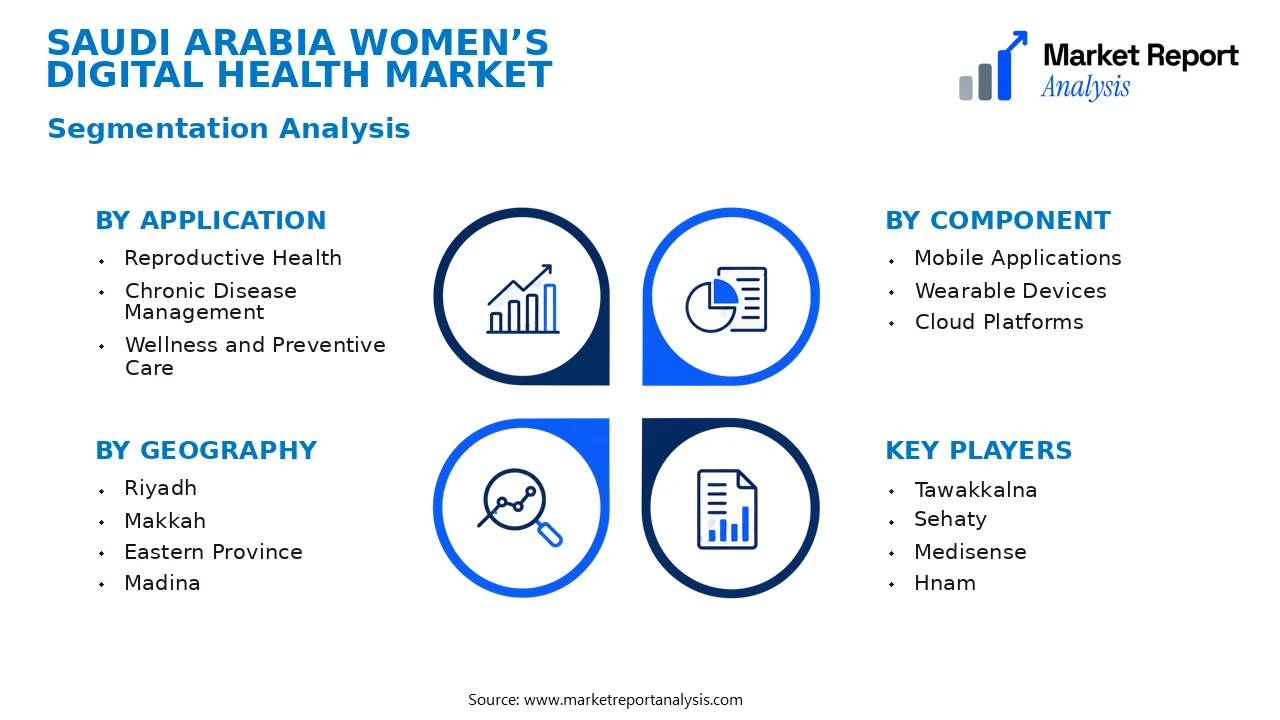
- Application
- Reproductive Health: This segment covers digital health solutions focused on women's reproductive health, including fertility management, pregnancy, and postpartum care, driven by increasing awareness and technological integration among women of reproductive age.
- Chronic Disease Management: Digital platforms targeting chronic conditions prevalent among women, such as cardiovascular diseases and diabetes, are expanding due to rising disease incidence and adoption of remote monitoring and management tools.
- Wellness and Preventive Care: Women increasingly utilize digital tools for wellness tracking, nutrition, and preventive screening, responding to a growing health consciousness and the expansion of telehealth services tailored to women’s needs.
- Component
- Mobile Applications: Mobile apps are a primary delivery channel for health services, offering convenience and accessibility for women seeking tailored digital health programs, and are driven by smartphone penetration and internet usage rates.
- Wearable Devices: Wearables capable of tracking vital signs, activity levels, and wellness metrics are gaining popularity among women who pursue personal health monitoring and active lifestyles, supported by technological advancements and affordability.
- Cloud Platforms: Cloud-based platforms enable secure data sharing and teleconsultation, becoming central to digital health infrastructure, especially for remote monitoring, health record management, and integration of services.
- Geography
- Riyadh: As the capital and major economic hub, Riyadh exhibits a high concentration of healthcare infrastructure, technological adoption, and investments in digital health targeted at women, fostering innovative service deployment.
- Makkah: Due to its religious and touristic significance, Makkah sees a growing demand for health services, with digital health solutions facilitating accessible and efficient care for women during pilgrimages and daily life.
- Eastern Province: Known for its industrial zones and urban centers, the Eastern Province demonstrates rapid digital health adoption supported by investments from private sectors and government initiatives aimed at improving women’s health outcomes.
- Madina: As a city with strong religious significance, Madina is developing its digital health projects to serve both local populations and pilgrims, emphasizing mobile health solutions and telehealth services.
Overall, these market segments reveal the diverse and expansive nature of the Saudi Arabia Women’s Digital Health Market, driven by technological innovation, regional disparities, and an increasing emphasis on personalized, accessible health solutions for women. Strategic positioning within these segments offers promising growth pathways, aligning with national health policies and digital transformation initiatives aimed at improving women’s health outcomes across the country.
Competitive Intelligence
The Saudi Arabia Women’s Digital Health Market is characterized by increasing competition among domestic and international players. Market concentration remains moderate, with the leading firms adopting aggressive strategies to expand their market share through product innovation and strategic partnerships. Companies are focusing on developing culturally sensitive, user-centric digital health solutions tailored to Saudi women’s healthcare needs, integrating AI and telehealth functionalities to differentiate their offerings. Notably, collaborations with local healthcare providers and government agencies have become pivotal for market entry and expansion, aligning with Saudi Vision 2030’s emphasis on healthcare digitization. Several firms are pursuing acquisitions of regional startups to quickly enhance technological capabilities and expand their geographic reach within key cities such as Riyadh and Jeddah. Significant R&D investments are ongoing to improve platform security, data privacy, and user engagement, catering to the unique cultural and regulatory landscape. This competitive environment fosters continuous innovation, with companies differentiating themselves primarily through product quality, regional partnerships, and localized service delivery, ensuring a strong foothold in the evolving market landscape.
Leading Company Profiles
The competitive landscape of the Saudi Arabia Women’s Digital Health Market comprises key players focusing on innovative digital solutions, comprehensive healthcare services, and strategic expansion. These companies leverage advanced technology platforms, data analytics, and localized health ecosystems to meet the specific needs of Saudi women, fostering market growth through strategic initiatives and market penetration.
- Tawakkalna
- Sehaty
- Medisense
- Hnam
- Altibbi
- Saqer
- Okadoc
- Nanum
- Simya
Tawakkalna
Tawakkalna offers an integrated digital health platform focusing on COVID-19 management, vaccination scheduling, and health data integration, supporting Saudi Arabia’s Vision 2030 health digitization goals with advanced data analytics and user-centric health solutions.
Sehaty
Sehaty provides comprehensive telehealth and appointment management services, emphasizing user-friendly interfaces, secure data handling, and tailored health programs for women, reinforcing accessibility and convenience in digital health engagement.
Medisense
Medisense develops AI-driven diagnostic tools and remote monitoring solutions, enabling personalized health management for women by leveraging big data and machine learning to enhance clinical decision-making in digital healthcare delivery.
Hnam
Hnam specializes in digital health records, teleconsultation platforms, and mobile health applications, fostering integrated healthcare ecosystems that prioritize privacy, data security, and user engagement, especially for women in remote and underserved areas.
Altibbi
Altibbi offers a widespread telemedicine platform with multilingual support, expert medical advice, and gender-sensitive health content, addressing cultural and linguistic needs of women across Saudi Arabia’s diverse population.
Saqer
Saqer focuses on health app development, personalized health tracking, and behavioral health support, enabling women to actively manage their health and wellness through innovative digital tools and community engagement features.
Okadoc
Okadoc provides an online appointment booking and telehealth platform, optimized for women’s healthcare services, facilitating quick access to specialized clinics and health professionals in Saudi Arabia’s metropolitan cities.
Altibbi
Reinforcing its presence, Altibbi centers on digital health literacy, content delivery, and virtual consultations, helping empower women with reliable health information and culturally sensitive telehealth services.
Nanum
Nanum offers personalized wellness coaching, mental health support, and digital therapeutics tailored for women, leveraging AI and machine learning to support behavioral change and holistic health management in the Saudi context.
Simya
Simya develops virtual care platforms focusing on reproductive health, pregnancy, and postpartum support, integrating AI and telehealth to improve outcomes and create accessible, culturally appropriate women’s health services.
Strategic Business Developments
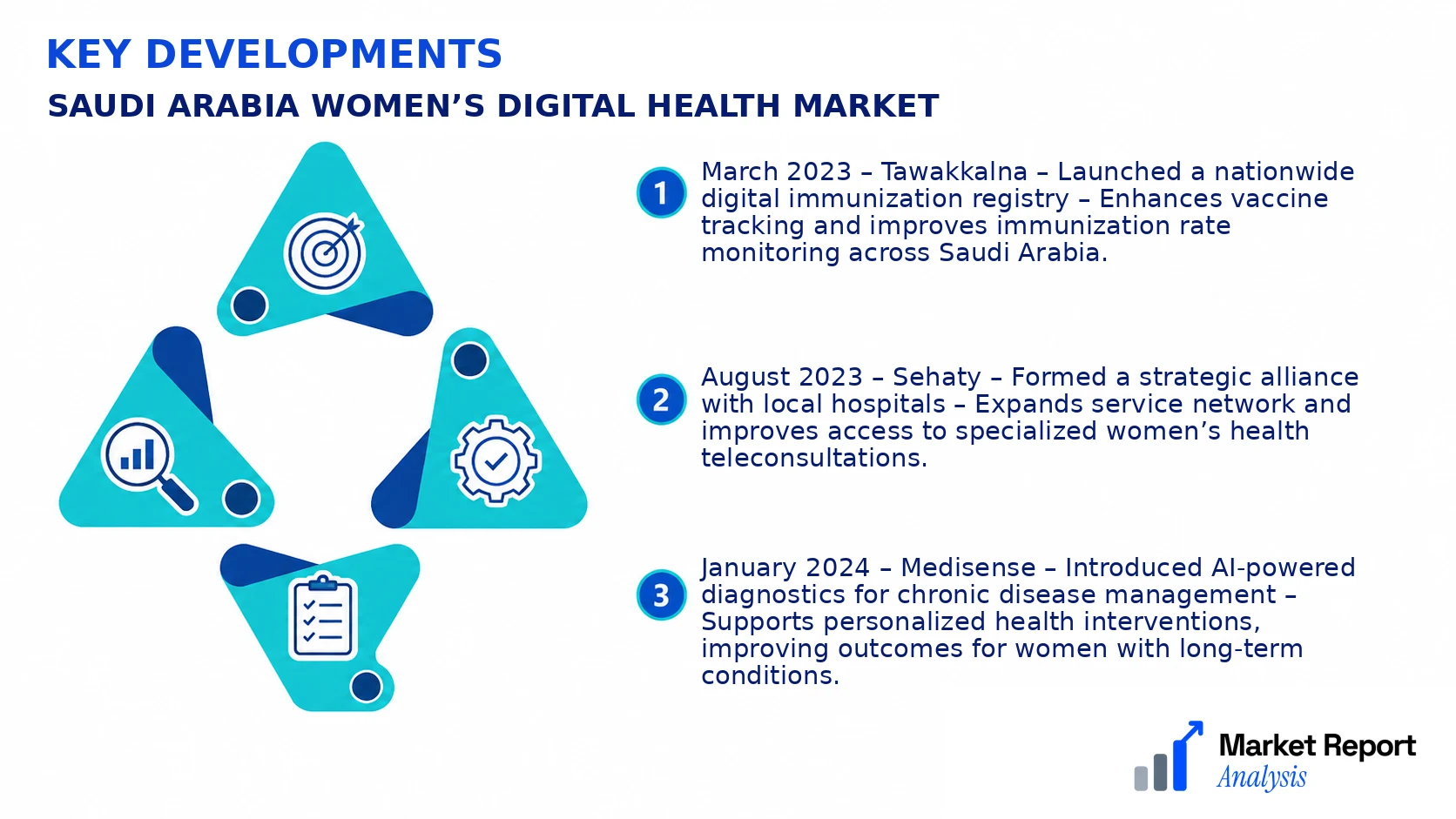
- March 2023 – Tawakkalna – Launched a nationwide digital immunization registry – Enhances vaccine tracking and improves immunization rate monitoring across Saudi Arabia.
- August 2023 – Sehaty – Formed a strategic alliance with local hospitals – Expands service network and improves access to specialized women’s health teleconsultations.
- January 2024 – Medisense – Introduced AI-powered diagnostics for chronic disease management – Supports personalized health interventions, improving outcomes for women with long-term conditions.
- June 2023 – Hnam – Announced a partnership with wearable health device companies – Facilitates remote health monitoring and data integration for women’s wellness programs.
- September 2023 – Altibbi – Launched a new mental health platform targeting women – Addresses mental wellness with culturally sensitive resources and virtual counseling services.
Frequently Asked Questions
What is the Saudi Arabia Women’s Digital Health Market?
The Saudi Arabia Women’s Digital Health Market encompasses digital health solutions tailored specifically to women’s healthcare needs, including telehealth, mobile health apps, wearable devices, and digital diagnostics that are designed to enhance healthcare accessibility and outcomes for women across the country.
What is the current market size of Saudi Arabia Women’s Digital Health Market?
As of 2026, the Saudi Arabia Women’s Digital Health Market is valued at approximately USD 1.2 Billion, reflecting rapid growth driven by increasing adoption of digital platforms and government initiatives encouraging technological integration into women’s healthcare services.
What factors are driving the Saudi Arabia Women’s Digital Health Market?
Key growth drivers include rising awareness of women’s health issues, government policies promoting digital health adoption, increasing smartphone penetration, expanding internet connectivity, and a cultural shift towards remote and personalized healthcare solutions for women.
Which Saudi city leads the Saudi Arabia Women’s Digital Health Market?
Riyadh leads the market, leveraging its advanced healthcare infrastructure, technology hubs, and supportive regulatory environment, making it the primary center for innovation and implementation of digital health solutions targeting women’s health.
Which segment is expected to grow the fastest?
Mobile health applications are projected to grow the fastest, driven by their accessibility, user-friendliness, and the high smartphone penetration rate among women in Saudi Arabia, enabling personalized, remote healthcare management.
Who are the leading companies operating in the Saudi Arabia Women’s Digital Health Market?
Major players include Saudi Telecom Company, health tech startups like Sehhaty, and international firms such as Teladoc Health, all focused on expanding digital health services tailored to women’s needs across Saudi Arabia.
Analyst Perspective
The Saudi Arabia Women’s Digital Health Market exhibits promising long-term potential driven by increasing government initiatives, rising health awareness among women, and a burgeoning digital infrastructure. Key opportunities include telemedicine platforms, mobile health apps, and remote monitoring services tailored to women’s unique health needs, especially in major cities like Riyadh, Jeddah, and Dammam, where urbanization and technological adoption are most pronounced. Technological evolution will likely see increased integration of AI and data analytics, enhancing personalized healthcare delivery and predictive diagnostics. Investment priorities should focus on expanding broadband access, fostering local digital health startups, and strengthening regulatory frameworks to ensure safety and privacy. Competitive intensity remains moderate, with several established tech firms and emerging startups vying for market share. City-level insights suggest Riyadh could become the hub for innovation and investment, while smaller cities may offer incremental growth. Overall, the market’s maturity will deepen, creating fertile ground for sustained innovation, strategic collaborations, and targeted investment to meet the evolving needs of women’s health in Saudi Arabia.
