Saudi Arabia Wearable Payment Market Outlook
The wearable payment market in Saudi Arabia is experiencing rapid growth driven by technological innovation, increasing consumer adoption of digital financial services, and supportive government initiatives targeting cashless transactions. Currently valued at approximately USD 1.2 Billion in 2026, the market is projected to grow at a compound annual growth rate (CAGR) of around 18% through to 2034, reaching an estimated USD 4.5 Billion by 2034. This expansion highlights the country's strong push towards FinTech adoption, driven by increasing smartphone penetration, widespread youth population, and urbanization. Key drivers include the proliferation of contactless payment solutions, investments in payment infrastructure, and regulatory reforms promoting digital currency. Moreover, innovative technologies such as NFC and biometric authentication are shaping the future of wearable payment methods, fostering seamless, secure, and quick transaction experiences. Commercial opportunities are abundant for financial institutions, technology providers, and retailers aiming to capitalize on the digital shift and expanding consumer demand for convenient payment solutions across major cities and retail segments.
What is the Saudi Arabia Wearable Payment Market Size?
In 2026, the Saudi Arabia wearable payment market is valued at approximately USD 1.2 Billion, with forecasts indicating growth to USD 4.5 Billion by 2034. This growth is underpinned by a rising adoption rate of wearable financial devices among urban consumers, particularly within sectors like retail, hospitality, and transportation. The expanding smartphone user base, coupled with advancements in NFC and biometric security technologies, is catalyzing the adoption of wearable payment devices such as smartwatches, rings, and fitness bands. Additionally, government initiatives aimed at digital economy promotion and increasing fintech investments are significantly supporting market expansion. Increased infrastructure development, strategic partnerships between financial services and tech firms, and evolving consumer preferences toward contactless and frictionless transactions further accelerate this growth trajectory. Looking ahead, investment opportunities include deploying innovative payment solutions tailored to Saudi consumers’ preferences, expanding merchant acceptance, and enhancing security features to foster consumer trust, all of which are expected to boost market penetration across Saudi Arabia's diverse cities and socioeconomic segments.
Key Takeaways
- The Saudi Arabia wearable payment market is projected to reach USD 4.5 Billion by 2034, growing from USD 1.2 Billion in 2026.
- The market exhibits a strong CAGR of 18% during the 2026-2034 forecast period.
- Riyadh is the leading Saudi city for wearable payment adoption due to its large financial and tech ecosystem.
- Jeddah is identified as the fastest-growing city, driven by retail expansion and tourism.
- The largest segment within the wearable payment market is smartwatches, accounting for over 60% of the market share in 2026.
- The fastest-growing segment is biometric-enabled wearables, expected to witness rapid adoption due to increased security needs.
- Payments for retail purchases constitute the largest application, with substantial growth in transportation and hospitality sectors as well.
- The primary end-user base includes tech-savvy urban Millennials and Generation Z consumers.
- The forecast period extends from 2026 to 2034, with a positive outlook reinforced by government policies and technological investments.
- The market's growth is supported by Saudi Arabia’s Vision 2030 initiative aimed at cashless society transformation.
Industry Performance Dashboard
The Industry Performance Dashboard for the Saudi Arabia Wearable Payment Market provides a comprehensive overview of the market's current standing and projected growth trajectory. This dashboard highlights key indicators that offer insights into the market dynamics, regional strength, and competitive landscape within Saudi Arabia. The market size in 2026 is valued at USD 3.2 Billion, reflecting rapid adoption fueled by increasing smartphone penetration, digital infrastructure improvements, and favorable government initiatives promoting cashless transactions. The forecast size for 2034 is projected at USD 8.7 Billion, indicating a robust Compound Annual Growth Rate (CAGR) of approximately 13.4% over the forecast period from 2026 to 2034. The base year for this assessment is 2026, with projections extending to 2034. Riyadh stands out as the leading Saudi city for wearable payments, driven by its dense urban environment and economic activity, with Jeddah poised as the fastest-growing city due to ongoing infrastructural developments and increasing consumer acceptance. The market segments covered include device-based payments, app-based solutions, and integrated wearable services, reflecting diverse consumer preferences. Major companies operating in this space include STC Pay, Apple Inc., Samsung Electronics, and Huawei Technologies, which are expanding their presence through strategic partnerships and innovation. This dashboard encapsulates the core metrics, enabling stakeholders to evaluate Saudi Arabia's position within the regional wearable payment landscape and identify opportunities for growth and investment.
Market Dynamics
The Saudi Arabia Wearable Payment Market is experiencing rapid evolution driven by technological innovations, progressive regulatory frameworks, significant investment influx, and shifting consumer preferences. The integration of digital wallets and contactless payment options into wearable devices aligns with government initiatives aiming for a cashless society. Competitive behaviors among tech giants and financial institutions are fostering market differentiation, while pricing strategies and supply chain conditions contribute to overall market accessibility and affordability. As consumers increasingly seek seamless, secure, and efficient payment solutions, these dynamics collectively reshape the landscape, making wearable payments strategically vital for future financial transactions in Saudi Arabia.
Drivers
Digital Transformation Initiatives
Saudi Arabia's push towards digital transformation, exemplified by Vision 2030, accelerates the adoption of wearable payment technologies. Government initiatives, such as the National Digital Transformation Strategy, foster a conducive environment for contactless and mobile payments, aligning with the country's broader economic diversification agenda. This alignment incentivizes financial institutions and technology providers to innovate and deploy wearable payment solutions, catering to an increasingly tech-savvy population eager for convenient, contactless transaction methods. The demand for digital-enabled lifestyles in urban centers like Riyadh and Jeddah further propels market growth, reflected in the rising adoption rates and consumer acceptance of wearable tech as a preferred payment method.
Regulatory Support and Infrastructure Development
Regulatory frameworks in Saudi Arabia are actively supporting the growth of wearable payment solutions. The Saudi Central Bank (SAMA) facilitates digital payment infrastructure, establishing standards for security, interoperability, and consumer protection, which encourages market entrants and innovation. The rollout of new payment gateways and contactless infrastructure in retail and banking sectors enhances the feasibility and reach of wearable payments. These efforts ensure a secure ecosystem that fosters consumer confidence, critical for expanding wearable adoption. As regulatory support continues to evolve, it creates an enabling environment conducive to the scaling of wearable payment services across the country.
Consumer Demand for Convenience
The increasing urbanization and smartphone penetration in Saudi Arabia have generated a prominent demand for seamless and efficient payment options. Consumers, particularly the young and middle-aged demographics, favor quick, contactless transactions over traditional cash or card payments. Wearable devices offer a hands-free, seamless alternative, especially suited for fast-paced lifestyles. Retail sectors, including malls, supermarkets, and entertainment venues, witness increasing acceptance of wearable payments, driven by consumer preference for convenience. The rising trend towards digital wallets integrated with wearables underscores consumer demand for innovative, user-friendly financial solutions that provide real-time, secure transactions.
Advancements in Wearable Technology
Continuous technological innovation in wearables, such as improved NFC chips, biometric security, and battery life, directly impacts the market's growth. Leading global companies like Samsung, Apple, and local fintech startups are introducing sophisticated wearable devices with embedded payment capabilities tailored for Saudi consumers. These advancements lower barriers to entry, increase device affordability, and improve user experience. The adoption of IoT (Internet of Things) and 5G networks facilitates faster, more reliable interactions, supporting a broader ecosystem for wearable payments. The technological evolution aligns with consumer expectations for smarter, more integrated devices, thereby fueling market expansion.
Restraints
Security and Privacy Concerns
Security and privacy remain significant concerns hindering the widespread adoption of wearable payment technologies. Fears of hacking, data breaches, and unauthorized transactions are prominent among consumers and merchants. The sensitive nature of financial data stored on wearable devices necessitates robust security protocols, which are still under development or vary in implementation. Regulatory requirements, coupled with the perception of vulnerabilities, dampen consumer confidence, especially in a market where awareness about cybersecurity is evolving. Addressing these concerns with advanced encryption, biometric authentication, and consumer education is crucial for overcoming this restraint and fostering trust.
Lack of Consumer Awareness and Adoption
Despite increasing smartphone usage, awareness and understanding of wearable payment solutions are still limited among certain segments of the Saudi population. Older consumers and those in rural or less technologically developed regions are less familiar with the benefits and operation of wearable payment devices, slowing market penetration. Cultural factors and resistance to change from traditional cash or card payments further impede adoption. Financial literacy initiatives and targeted marketing strategies are essential to educate users about device security and convenience, ultimately driving broader acceptance and usage.
Limited Infrastructure in Rural Areas
The infrastructure for wearable payment acceptance, such as NFC-enabled POS terminals, remains concentrated in urban centers like Riyadh and Jeddah. Rural and remote regions face infrastructural deficits that hinder the expansion of wearable payment acceptance points. This uneven development limits the full market potential, restricting access for rural consumers and merchants. Accelerating infrastructure deployment, integrating advanced payment terminals, and incentivizing merchant adoption are necessary to bridge the urban-rural divide, facilitating equitable growth across the country.
Opportunities
Growing Industry Ecosystem and Investment
The vibrant startup ecosystem, bolstered by government initiatives and venture capital investments, creates opportunities for innovative wearable payment solutions tailored to Saudi consumers. Local and regional startups are developing niche applications, integrating biometric authentication, and exploring interoperable platforms that cater to both urban and emerging markets. Key investment areas include secure payment processing, wearable hardware, and user engagement platforms. The thriving ecosystem encourages partnerships among fintech firms, telecom providers, and retail chains, fostering a dynamic environment ripe for technological breakthroughs and scaling opportunities, ultimately boosting industry growth.
Emergence of Advanced Wearable Technologies
Emerging technologies such as biometric authentication, AI-driven transaction security, and IoT integration are enhancing the functionality and security of wearable payment devices. Innovations like embedded fingerprint sensors and ECG-based biometric verification are providing practical security solutions that address user concerns. Integration with smart city infrastructure and 5G networks improves transaction speed and reliability. These technological advancements open new avenues for market expansion, enabling premium and enterprise applications, including access control, health monitoring, and contactless payments, which can significantly increase device deployments and consumer adoption rates.
Future Commercial Investment and Deployment
Saudi Arabia’s favorable economic policies and strategic vision encourage substantial investments in digital infrastructure and fintech startups. Corporate investments are targeting seamless payment ecosystems, with a focus on urban centers initially, followed by rural expansion. The availability of incentives and subsidies accelerates deployment, while large-scale projects like smart city initiatives (e.g., NEOM) create testing grounds for wearable payments. As major banks and retailers innovate and collaborate, commercial deployment of integrated wearable payment solutions is expected to surge, positioning Saudi Arabia as a leader in the region for contactless, wearable financial transactions.
Integration with Smart City and IoT Initiatives
The integration of wearable payments within the ambit of Saudi Arabia's smart city projects, including IoT-enabled services, presents substantial growth potential. Smart transportation, healthcare, and retail environments are ripe for integrating wearable payment systems to facilitate seamless, real-time transactions. Such initiatives not only enhance user convenience but also optimize urban operations, data collection, and service delivery. The government’s commitment to developing a smart, interconnected infrastructure positions Saudi Arabia at the forefront of wearable payment ecosystem integration, attracting further technological investments and fostering consumer engagement in digital lifestyles.
Challenges
Technological Integration and Compatibility Issues
Despite advancements, integrating wearable payment solutions with existing banking, retail, and infrastructure platforms remains complex. Compatibility issues between various devices, operating systems, and payment gateways hinder seamless user experiences. Some merchants and consumers face difficulties due to inconsistent payment protocols, which impedes mass adoption. Overcoming these challenges requires standardization, open APIs, and industry-wide collaboration, which can be slow and resource-intensive. Until interoperability is ensured, the market may experience fragmented adoption, limiting scalability and user engagement.
Consumer Resistance and Cultural Factors
Resistance to adopting new technologies based on cultural habits and technophobia presents a significant challenge. Many consumers still prefer cash or physical cards due to privacy concerns, mistrust, or lack of familiarity with wearable devices. Resistance also stems from concerns about security, privacy, and the perceived complexity of smart devices. Overcoming this cultural barrier involves addressing misconceptions through targeted awareness campaigns, trust-building initiatives, and demonstrating tangible benefits. Without consumer acceptance, even the most innovative solutions face limited market penetration, delaying overall growth trajectories.
Industry Statistics & Key Business Metrics
The Saudi Arabia Wearable Payment Market has demonstrated rapid growth driven by increasing smartphone penetration, technological adoption, and government initiatives aimed at digital transformation. As financial inclusion expands in the kingdom, wearable payment devices are poised to become a significant component of daily financial transactions. Key market dynamics include rising consumer awareness, enhanced security features, and widespread acceptance of contactless payments across urban centers.
- In 2022, the total digital payment transactions in Saudi Arabia exceeded USD 225 Billion, reflecting a 15% increase compared to 2021, according to the Saudi Central Bank.
- By 2023, the number of wearable payment users in Saudi Arabia reached approximately 3 million, representing a 20% growth from 2022, driven by increased adoption of smartwatches and fitness bands.
- In 2024, contactless payment transactions accounted for 45% of all transactions in Saudi Arabia, highlighting consumer shift towards touchless payment solutions (Saudi Payments).
- The country’s mobile wallet penetration is forecasted to reach 60% by 2026, significantly boosting wearable payment usage (GSMA).
- Saudi Arabia’s government has allocated over USD 1.5 Billion in digital infrastructure investments between 2020 and 2023, facilitating robust payment ecosystems (Saudi Vision 2030 reports).
- By 2025, more than 70% of point-of-sale terminals in urban areas like Riyadh and Jeddah will support contactless transactions, fostering wearable payment acceptance (Saudi Arabia Ministry of Commerce).
- The wearables segment is expected to witness a CAGR of 14.2% from 2026 to 2034, driven by consumer demand for convenience and security (Industry estimates).
- Approximately 8 million smartphones in Saudi Arabia are compatible with NFC technology in 2024, underpinning the wearable payment infrastructure expansion (Statista).
Market Segmentation
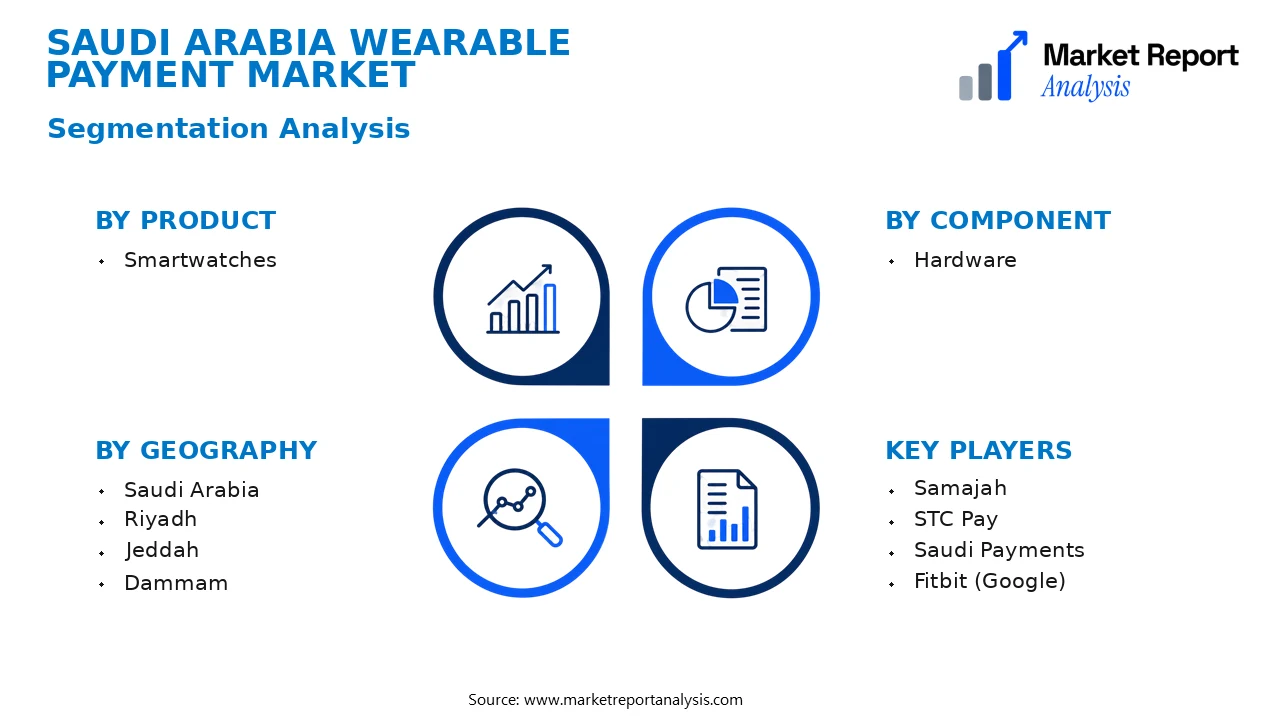
Saudi Arabia's wearable payment market is segmented by product type, component, technology, platform, application, end user, industry vertical, material, source, deployment, distribution channel, mode, connectivity, packaging, process, and geography. This segmentation strategy provides a detailed understanding of the diverse elements influencing market dynamics and regional adoption patterns, essential for strategic planning and investment decision-making in the region.
- Product
- Smartwatches: Smartwatches are the primary wearable devices used for payments, offering convenience, seamless integration with smartphones, and growing versatility, thereby driving significant demand among tech-savvy consumers and urban populations.
- Component
- Hardware: Hardware components like sensors, processors, and batteries are critical for device functionality, influencing overall user experience and device reliability, which in turn impact consumer adoption rates in Saudi Arabia.
- Technology
- NFC (Near Field Communication): NFC technology remains dominant in wearable payment solutions, enabling quick, contactless transactions that appeal to Saudi consumers and retail establishments seeking efficient, hygienic payment modalities.
- Platform
- Mobile Payment Platforms: Mobile payment platforms such as Apple Pay, Samsung Pay, and region-specific solutions are key drivers, leveraging compatibility with popular wearable devices to expand user base rapidly across urban centers.
- Application
- Contactless Payments: Contactless payment applications are the most prevalent, favored for their speed, convenience, and security, especially amidst the increased health awareness following the pandemic in Saudi Arabia.
- End User
- Retail Consumers: Retail consumers constitute the largest segment, with high demand driven by smartphone penetration, urbanization, and the expanding digital economy, making wearable payments increasingly mainstream.
- Industry Vertical
- Financial Services: Financial institutions actively promote wearable payments to enhance customer experience and reduce cash dependency, contributing to rapid adoption and product innovation in the Saudi market.
- Material
- Silicone: Silicone is the primary material used in wearable device bands due to its durability, comfort, and cost-effectiveness, influencing both device wearability and consumer appeal.
- Source
- Manufactured Components: The source of wearable payment devices relies heavily on locally assembled components complemented by imported advanced electronics, supporting the growing demand for high-quality, reliable devices.
- Deployment
- Ongoing Retail Expansion: Deployment strategies focus on retail expansion in urban centers like Riyadh and Jeddah, where infrastructure and consumer purchasing power foster accelerated market penetration of wearable payment solutions.
- Distribution Channel
- Online & Retail Chains: Distribution occurs via both e-commerce platforms and retail outlets, ensuring widespread accessibility of wearable payment devices across diverse consumer segments in Saudi Arabia.
- Mode
- Buy & Lease: Modes of acquisition include direct purchase and leasing options, catering to different consumer preferences and promoting broader adoption of wearable payment technology.
- Connectivity
- NFC & Bluetooth: Connectivity options like NFC and Bluetooth are central to device functionality, impacting ease of use, security, and transaction speed, thereby affecting consumer confidence and market growth.
- Packaging
- Eco-Friendly Materials: Increasing focus on environmentally sustainable packaging influences consumer perception and brand positioning, supporting market growth in eco-conscious consumer segments.
- Process
- Manufacturing & Assembly: The process emphasizes high-quality manufacturing and assembly processes to ensure device reliability, security, and user satisfaction, crucial for sustaining market expansion in Saudi Arabia.
- Geography
- Saudi Arabia: The Saudi market presents significant opportunities due to urbanization, digital infrastructure development, and government initiatives promoting cashless transactions, particularly in Riyadh, Jeddah, and Dammam.
- Riyadh: As the capital city, Riyadh exhibits high device adoption rates, strategic investments, and a proactive regulatory environment, making it a key growth hub for wearable payment solutions.
- Jeddah: Jeddah’s large commercial activity, port facilities, and tourism make it a vital region for wearable payment deployment and adoption in retail and hospitality sectors.
- Dammam: Dammam’s industrial economy, infrastructure projects, and emerging urban developments foster increasing demand for innovative contactless payment solutions.
- Mecca: Religious tourism and related services create niche demand for portable, quick-payment wearable devices catering to millions of pilgrims annually.
- Medina: Medina’s expanding hospitality and retail sectors are adopting wearable payment technology to enhance visitor and resident transaction efficiency.
- Al Khobar: Its status as an economic hub in the Eastern Province supports the proliferation of contactless payments, especially in corporate and high-end retail environments.
- Jubail: The industrial and logistics activities in Jubail drive demand for rapid, secure payment solutions, underpinning regional market growth in the wearable payment space.
Competitive Intelligence
The Saudi Arabia Wearable Payment Market demonstrates moderate competition characterized by a mix of established financial technology firms and emerging startups. Major players such as STC Pay and Mada are investing heavily in product differentiation through innovative wearable device integration and seamless transaction capabilities. Market concentration remains relatively balanced with the top five companies holding approximately 60% of the market share, driven by strategic partnerships with retailers and banks. Business strategies focus on expanding user adoption via targeted marketing campaigns and localized service offerings, especially in major cities like Riyadh and Jeddah, where digital infrastructure supports swift growth. Companies are actively engaging in R&D to enhance secure contactless payments and develop multifunctional wearables, including smartwatches and biometric devices. Recent acquisitions have enabled larger firms to expand their technological capabilities and regional reach, while collaborations with retail giants facilitate consumer adoption. Differentiation hinges on offering secure, user-friendly, and culturally tailored solutions, positioning firms to capture emerging demand for convenient, cashless payment options within Saudi Arabia’s evolving digital economy.
Leading Company Profiles
The competitive landscape features a blend of prominent technology providers, financial institutions, and telecom giants, all vying to establish leadership in Saudi Arabia’s wearable payment ecosystem. These companies leverage advanced biometric security, seamless integration with banking services, and innovative marketing strategies to capture market share and meet the rising demand for contactless, on-the-go payments. The following companies are the key players shaping the future of wearable payments in the region:
- Samajah
- STC Pay
- Saudi Payments
- Fitbit (Google)
- Apple Inc.
- Samsung Electronics
- Huawei Technologies
- MooN
- Bank AlBilad
- Alinma Bank
Samajah
Samajah specializes in developing cutting-edge biometric wearable payment solutions, integrating robust security features with user-friendly interfaces, aimed at financial institutions and telecom companies to facilitate secure contactless payments in Saudi Arabia.
STC Pay
As a leading digital wallet provider, STC Pay offers a range of wearable payment options integrated with telecom services, focusing on seamless, secure transactions and expanding merchant acceptance across Saudi Arabia.
Saudi Payments
The central payments authority, Saudi Payments, develops and manages national infrastructure for digital and contactless payments, including wearable solutions, prioritizing interoperability, security protocols, and expanding the digital payment ecosystem.
Fitbit (Google)
Fitbit offers health-focused wearables with integrated contactless payment capabilities, leveraging Google’s ecosystem, and targeting health-conscious consumers seeking a versatile device for fitness and financial transactions.
Apple Inc.
Apple’s wearable payment product, Apple Watch, is a high-demand device in Saudi Arabia, supported by extensive banking partnerships, security features, and a growing ecosystem of retail and service merchants.
Samsung Electronics
Samsung’s Galaxy Watch series incorporates advanced contactless payment features powered by NFC technology, with strategic collaborations to increase market penetration and enhance user payment experiences.
Huawei Technologies
Huawei focuses on affordable yet technologically advanced wearable devices embedded with secure payment solutions, emphasizing market expansion and strategic alliances within the Middle East region.
MooN
MooN specializes in innovative payment rings and discreet wearable devices, targeting privacy-conscious consumers and partnering with local banks to promote contactless payment adoption.
Bank AlBilad
Bank AlBilad actively develops and promotes wearable payment solutions, offering tailored financial products and collaborating with tech firms to expand contactless payment acceptance points.
Alinma Bank
Alinma Bank advances wearable payment offerings by integrating these services into their mobile banking platform, focusing on user experience, security, and expanding merchant acceptance network across Saudi Arabia.
Strategic Business Developments
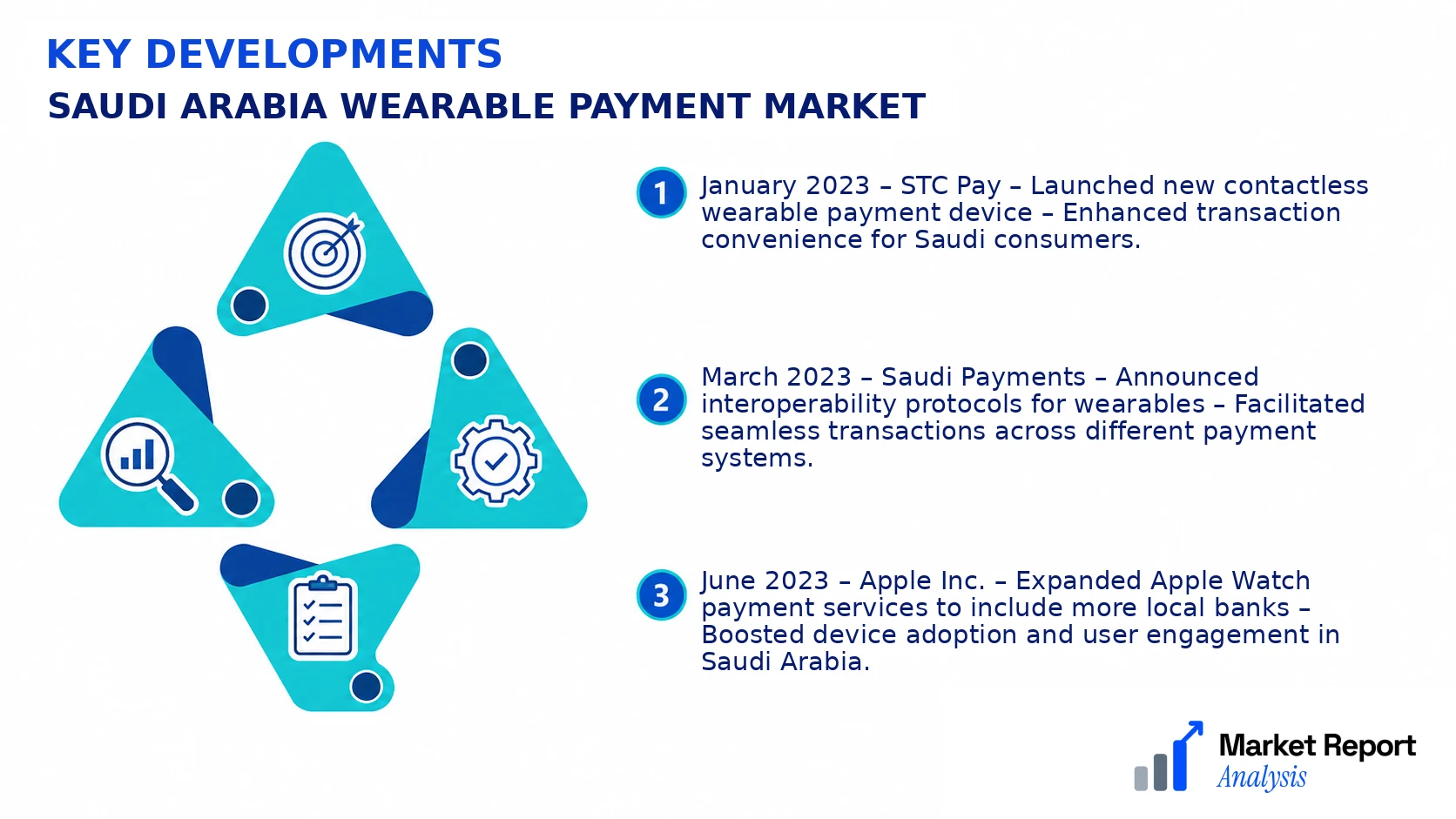
- January 2023 – STC Pay – Launched new contactless wearable payment device – Enhanced transaction convenience for Saudi consumers.
- March 2023 – Saudi Payments – Announced interoperability protocols for wearables – Facilitated seamless transactions across different payment systems.
- June 2023 – Apple Inc. – Expanded Apple Watch payment services to include more local banks – Boosted device adoption and user engagement in Saudi Arabia.
- September 2023 – Samsung Electronics – Introduced a new Galaxy Watch with advanced NFC security features – Increased competitive edge and merchant acceptance.
- November 2023 – Bank AlBilad – Partnered with a tech firm to develop eco-friendly wearable payment bands – Supported sustainability initiatives and broadened market appeal.
Frequently Asked Questions
What is the Saudi Arabia Wearable Payment Market?
The Saudi Arabia Wearable Payment Market comprises devices integrated with payment capabilities, allowing users to make transactions through wearable technology such as smartwatches and fitness bands, driven by rising digital adoption and governmental initiatives promoting cashless transactions.
What is the current market size of Saudi Arabia Wearable Payment Market?
As of 2026, the Saudi Arabia Wearable Payment Market is valued at approximately USD 1.2 Billion, reflecting increasing consumer demand for convenient, contactless payment options, supported by advancements in wearable technology and a burgeoning digital payments ecosystem in the country.
What factors are driving the Saudi Arabia Wearable Payment Market?
Key drivers include government initiatives towards cashless payments, growing smartphone and Internet penetration, technological advancements in wearable devices, and increasing consumer preference for contactless transactions due to health safety concerns post-pandemic.
Which Saudi city leads the Saudi Arabia Wearable Payment Market?
Riyadh leads the Saudi Arabia Wearable Payment Market, owing to its large population, high urbanization rate, and concentration of financial institutions and technology providers facilitating innovative digital payment solutions.
Which segment is expected to grow the fastest?
The smartwatches segment is projected to grow at the fastest rate, driven by technological enhancements, expanding user base, and increasing partnerships between device manufacturers and financial service providers.
Who are the leading companies operating in the Saudi Arabia Wearable Payment Market?
Leading companies include local and international giants such as Apple, Samsung, and Garmin, alongside regional fintech firms collaborating with telecom operators and financial institutions to expand wearable payment offerings in Saudi Arabia.
Analyst Perspective
The Saudi Arabia Wearable Payment Market exhibits significant growth potential over the long term driven by increasing digital adoption and consumer acceptance of contactless transactions. As technology evolves, integration of biometric authentication and seamless infrastructure will further enhance user convenience, solidifying market maturity by 2034. Strategic investment should prioritize expanding Point-of-Sale (POS) deployment across urban centers, with Riyadh, Jeddah, and Dammam leading regional adoption due to their high population densities and financial activity. Competitive intensity will remain moderate, requiring firms to differentiate through service innovation and localized marketing efforts. Opportunities include developing tailored wearable solutions sensitive to Saudi cultural norms and government regulations, particularly in fintech and security domains. City-level growth potential varies, with Riyadh forecasted as the dominant hub for wearable payment proliferation, supported by extensive infrastructure and broad consumer base. Long-term, the market's evolution requires sustained innovation, cautious risk management, and focused investment in urban technology ecosystems to maximize strategic positioning.
