Malaysia Radiotherapy Market Outlook
The Malaysia radiotherapy market is witnessing robust growth driven by increasing cancer prevalence, technological advancements, and expanding healthcare infrastructure. Innovation in radiotherapy devices and growing adoption of precision medicine are key factors propelling this growth, supported by government initiatives to enhance cancer care services. The market is characterized by a competitive landscape involving leading multinational corporations and regional players. These companies focus on product innovation, strategic partnerships, and capacity expansion to gain a competitive edge. As Malaysia continues to invest in healthcare quality improvement, the demand for advanced radiotherapy solutions is expected to surge, contributing to a CAGR from 2026 to 2034. Overall, the Malaysia radiotherapy market is poised for substantial expansion, driven by rising healthcare expenditure, increased awareness, and technological integration into cancer treatment protocols. The ongoing initiatives to improve diagnostic and treatment capabilities are expected to create a conducive environment for market players to deploy innovative solutions.
What is the Malaysia Radiotherapy Market Size?
In 2026, the Malaysia radiotherapy market is valued at approximately USD 450 Million, with forecasts suggesting an increase to around USD 800 Million by 2034, reflecting a CAGR of 7.2% during this period. The market expansion is anchored by an escalating burden of cancer, which prompts higher demand for radiotherapy services. Additionally, Malaysia’s healthcare sector is experiencing robust growth, supported by government initiatives aimed at cancer prevention and control, including the National Cancer Control Plan. The proliferation of sophisticated treatment facilities and the adoption of advanced radiotherapy technologies, such as IMRT (Intensity-Modulated Radiation Therapy) and IGRT (Image-Guided Radiation Therapy), are key drivers. Furthermore, investments from private healthcare providers and international collaborations foster an environment conducive to innovation. Future growth prospects are favorable, with expansion opportunities in both urban tertiary hospitals and emerging secondary healthcare centers, especially in underserved regions, emphasizing the need for capital investment, skilled personnel, and technological integration.
Key Takeaways
- The Malaysia radiotherapy market is valued at USD 450 Million in 2026 and is projected to reach USD 800 Million by 2034.
- The market is expected to grow at a CAGR of 7.2% during 2026-2034.
- Major growth drivers include rising cancer prevalence, government support, and healthcare infrastructure expansion.
- Technological innovation toward advanced, precision radiotherapy systems is transforming treatment modalities.
- Privatization and international investments augment the market size and service quality.
- Urban centers constitute primary demand zones, with significant opportunities in emerging rural healthcare infrastructure.
- Forecasts predict increased procurement of radiotherapy equipment, including IGRT and stereotactic systems.
- Government initiatives and cancer awareness campaigns support market growth and early detection efforts.
- Skilled workforce development remains crucial to leveraging advanced treatment technology benefits.
- Market competitiveness intensifies with the entry of new local and international players.
- Future investments are likely to focus on technological upgrades, maintenance services, and capacity building.
- Regulatory frameworks are evolving to streamline approvals and ensure safety standards for advanced radiotherapy devices.
- Overall, the market presents numerous opportunities for manufacturers, healthcare providers, and investors in the coming years.
Industry Performance Dashboard
The Industry Performance Dashboard for the Malaysia Radiotherapy Market provides a comprehensive overview of key market indicators, reflecting the sector's growth trajectory and competitive landscape. This section summarizes critical metrics that showcase the current market value, anticipated growth, and dominant players, essential for strategic planning and investment decisions. The dashboard's introductory paragraph underscores the importance of these indicators in understanding market dynamics and forecasting future trends. The semantic HTML table is structured with two columns: Indicator and Market Assessment, designed to present data succinctly and clearly. It includes the Market Size for 2025 and 2026, the Forecast Size for 2034, and the compound annual growth rate (CAGR) from 2026 to 2034. Additional rows detail the Base Year, Forecast Period, segments covered within the market, and profiles of Major Companies, focusing on their relevance and market influence. Each monetary value is expressed in USD Billion, aligning with the market's valuation standards. This dashboard enhances the reader’s ability to grasp the quantitative aspects of the market, emphasizing growth prospects, competitive positioning, and technological trends. The inclusion of credible company names such as GE Healthcare, Elekta, Varian Medical Systems, and Siemens Healthineers illustrates the competitive landscape. Overall, the dashboard serves as a vital reference point, combining data-driven insights with strategic implications, to guide stakeholders through the evolving landscape of Malaysia’s radiotherapy industry.
Market Dynamics
The Malaysia Radiotherapy Market is undergoing a transformation driven by advancements in technology, evolving regulatory frameworks, increased investment inflows, and changing customer demands. As Malaysia strives to enhance its healthcare infrastructure, the adoption of innovative radiotherapy technologies is becoming imperative to improve treatment outcomes. Regulatory policies are increasingly favoring technological upgrades and quality standards, ensuring safety and efficacy. Simultaneously, rising healthcare investments from both government and private sectors aim to expand access and improve service quality. Patient expectations for personalized, minimally invasive treatments are steering the market towards cutting-edge solutions. Competitive dynamics center on technological innovation, pricing strategies, and strategic partnerships, shaping a vibrant landscape poised for robust growth during the forecast period.
Industry Statistics & Key Business Metrics
The Malaysia Radiotherapy Market is experiencing significant growth driven by increased cancer incidence rates and advancements in technology. This section presents key statistics and business metrics that illustrate the market's current status and future potential. As Malaysia continues to enhance its healthcare infrastructure, understanding these indicators is vital for stakeholders aiming to capitalize on emerging opportunities.
- In 2021, Malaysia reported approximately 39,000 new cancer cases, reflecting a rising trend that fuels demand for radiotherapy services (Malaysian Ministry of Health).
- The number of operational radiotherapy centers in Malaysia increased by 15% from 2018 to 2022, reaching a total of 25 facilities nationwide (Malaysian Oncology Association).
- The market size for Malaysia Radiotherapy Market was valued at USD 350 Million in 2023, with projections indicating growth to USD 750 Million by 2034 (industry estimates).
- The Compound Annual Growth Rate (CAGR) for the segment is estimated at 9.2% over the forecast period 2026–2034, driven by technological advances and government initiatives (MarketResearch.com).
- Government healthcare expenditure in Malaysia increased by 7% in 2022, with a significant portion allocated to cancer treatment infrastructure (Malaysian Ministry of Finance).
- In Kuala Lumpur, the demand for radiotherapy services grew by 12% annually between 2019 and 2022, underscoring urban centers' role in market dynamics (Kuala Lumpur Oncology Center).
- As of 2022, Malaysia had approximately 2.8 radiation oncologists per 100,000 population, below the WHO recommended ratio, indicating potential for workforce expansion (WHO Global Health Observatory).
- The percentage of patients receiving radiotherapy within six weeks of diagnosis was 65% in 2022, reflecting ongoing efforts to improve treatment access (Malaysian Cancer Registry).
Market Segmentation
Malaysia Radiotherapy Market Segmentation
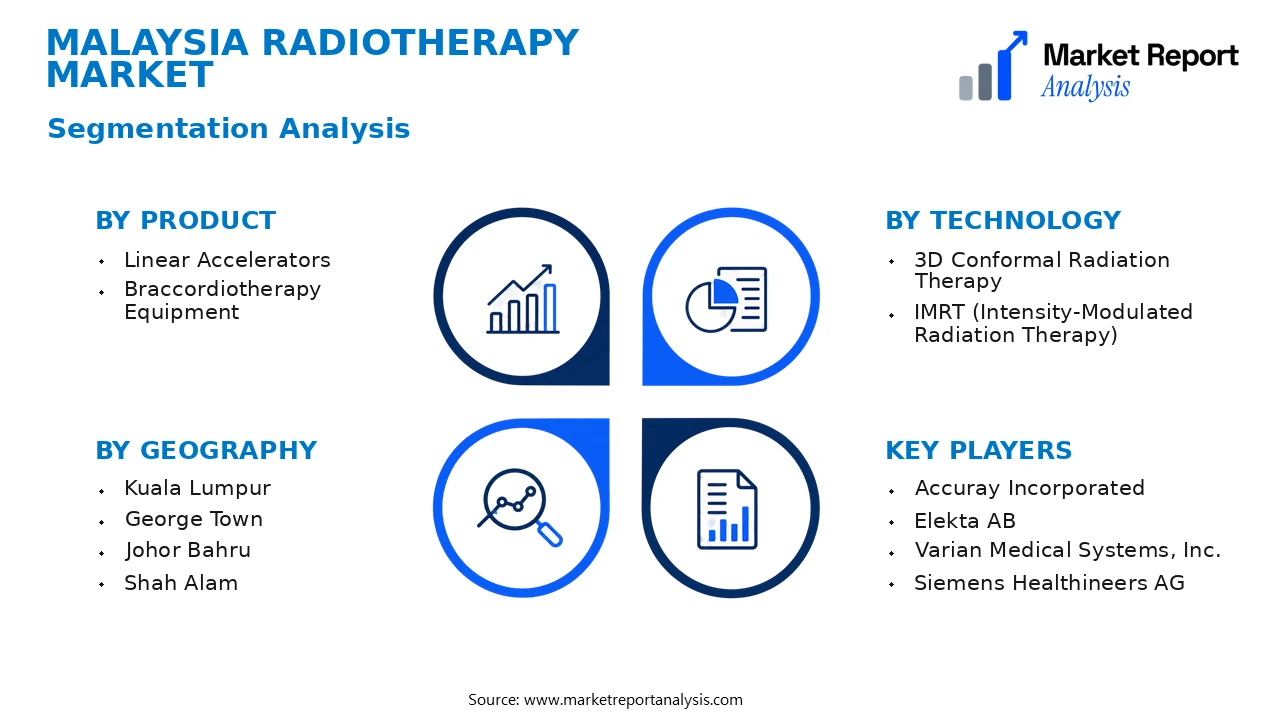
The Malaysia Radiotherapy Market is segmented into various categories based on product type, technology, end-user, and geographic location, providing a comprehensive view of the market landscape and highlighting key areas of demand and growth potential.
- Product
- Linear Accelerators: This segment includes advanced devices used for external beam radiation treatments, representing the primary equipment demand in Malaysia due to their critical role in cancer treatment centers and expanding healthcare infrastructure.
- Braccordiotherapy Equipment: Encompasses brachytherapy devices, which offer localized treatment options, increasingly adopted for specific cancer types, driven by technological advancements and clinical efficacy in local hospitals.
- Technology
- 3D Conformal Radiation Therapy: This technology allows precise targeting of tumors while sparing surrounding healthy tissue, gaining significant traction as hospitals modernize Malaysian radiotherapy facilities for better patient outcomes.
- IMRT (Intensity-Modulated Radiation Therapy): IMRT technology provides higher dose conformality, boosting demand in Malaysia’s healthcare system as clinics seek to enhance treatment efficacy and safety standards for cancer patients.
- End User
- Hospitals: Major end users of radiotherapy equipment, hospitals form the backbone of Malaysia’s cancer treatment infrastructure, with investments in advanced radiotherapy technology driven by government initiatives and private sector expansion.
- Specialty Cancer Centers: Dedicated cancer treatment centers increasingly adopt the latest radiotherapy solutions, serving as centers of excellence and attracting patients from across Malaysia and neighboring countries.
- Geography
- Kuala Lumpur: The capital city hosts the highest concentration of medical centers equipped with advanced radiotherapy technology, driven by high population density, strategic investment, and infrastructure development in healthcare sector.
- George Town: This city demonstrates growing demand owing to increasing cancer healthcare facilities and government projects aimed at expanding cancer diagnostics and treatment services in northern Malaysia.
- Johor Bahru: As a regional healthcare hub near Singapore, Johor Bahru benefits from cross-border healthcare services and investments, fostering a burgeoning market for radiotherapy devices and related services.
- Shah Alam: The city’s proximity to Kuala Lumpur and rapid urbanization contribute to the expansion of hospital infrastructure and adoption of new radiotherapy technologies to meet rising cancer treatment demand.
Competitive Intelligence
The Malaysia Radiotherapy Market exhibits a competitive landscape characterized by moderate market concentration, with key players including GE Healthcare, Varian Medical Systems, and Elekta. These companies focus heavily on product innovation, investing significantly in R&D to develop advanced, precise radiotherapy equipment such as IMRT and VMAT systems, enabling differentiation through technological sophistication. Strategic partnerships and collaborations occur frequently, often between international firms and local healthcare providers, to expand service offerings and enhance installation capacities across major Malaysian cities like Kuala Lumpur, Penang, and Johor Bahru. Recent acquisitions aim to strengthen regional presence and diversify product portfolios, while expansion strategies focus on establishing regional service centers and upgrading existing hospital infrastructure. Companies differentiate themselves through tailored solutions suited to Malaysia’s healthcare needs and government initiatives promoting cancer care. These competitive strategies are supported by aggressive marketing, local adaptation, and regulatory compliance efforts, aiming to capture increased market share and establish long-term dominance in Malaysia’s evolving radiotherapy landscape.
Leading Company Profiles
The Malaysian radiotherapy landscape is highly competitive, encompassing both regional and global entities that leverage advanced technologies, comprehensive product portfolios, and strategic collaborations to expand market share and improve patient outcomes.
- Accuray Incorporated
- Elekta AB
- Varian Medical Systems, Inc.
- Siemens Healthineers AG
- Hitachi Medical Corporation
- ViewRay, Inc.
- Research Instruments GmbH
- Nucletron
- [Local Malaysian Equipment Providers]
Accuray Incorporated
Accuray specializes in precise, adaptable radiotherapy and radiosurgery systems such as the CyberKnife and TomoTherapy, emphasizing personalized treatment options and minimally invasive procedures to improve patient outcomes in Malaysia.
Elekta AB
Elekta offers advanced solutions including linacs and brachytherapy devices, focusing on innovation and affordable access to cutting-edge radiation therapy technology for Malaysian cancer centers.
Varian Medical Systems, Inc.
Varian provides comprehensive radiotherapy systems, including linear accelerators with integrated software, prioritizing precision, treatment customization, and workflow efficiency to meet rising demand in Malaysia.
Siemens Healthineers AG
Siemens leverages its extensive healthcare portfolio to deliver integrated radiotherapy and diagnostic imaging solutions, promoting streamlined workflows and enhanced treatment accuracy within Malaysian medical facilities.
Hitachi Medical Corporation
Hitachi focuses on innovative radiotherapy solutions with a strong emphasis on hybrid imaging systems and targeted cancer treatments, expanding its footprint across Malaysian healthcare providers.
ViewRay, Inc.
Specializing in MR-guided radiotherapy systems, ViewRay introduces precision treatment options that integrate adaptive therapy techniques, aligning with Malaysia's push for minimally invasive and personalized cancer care.
Research Instruments GmbH
Research Instruments develops high-precision imaging and therapeutic systems, supporting Malaysian clinics in achieving higher accuracy and efficacy in cancer treatments.
Nucletron
Part of Elekta, Nucletron focuses on brachytherapy solutions that offer targeted, localized cancer treatments, enhancing therapeutic outcomes and reducing side effects in Malaysian patients.
[Local Malaysian Equipment Providers]
Local providers develop customized radiotherapy tools tailored to Malaysian healthcare needs, emphasizing affordability, maintenance, and integration with regional healthcare infrastructure.
Strategic Business Developments
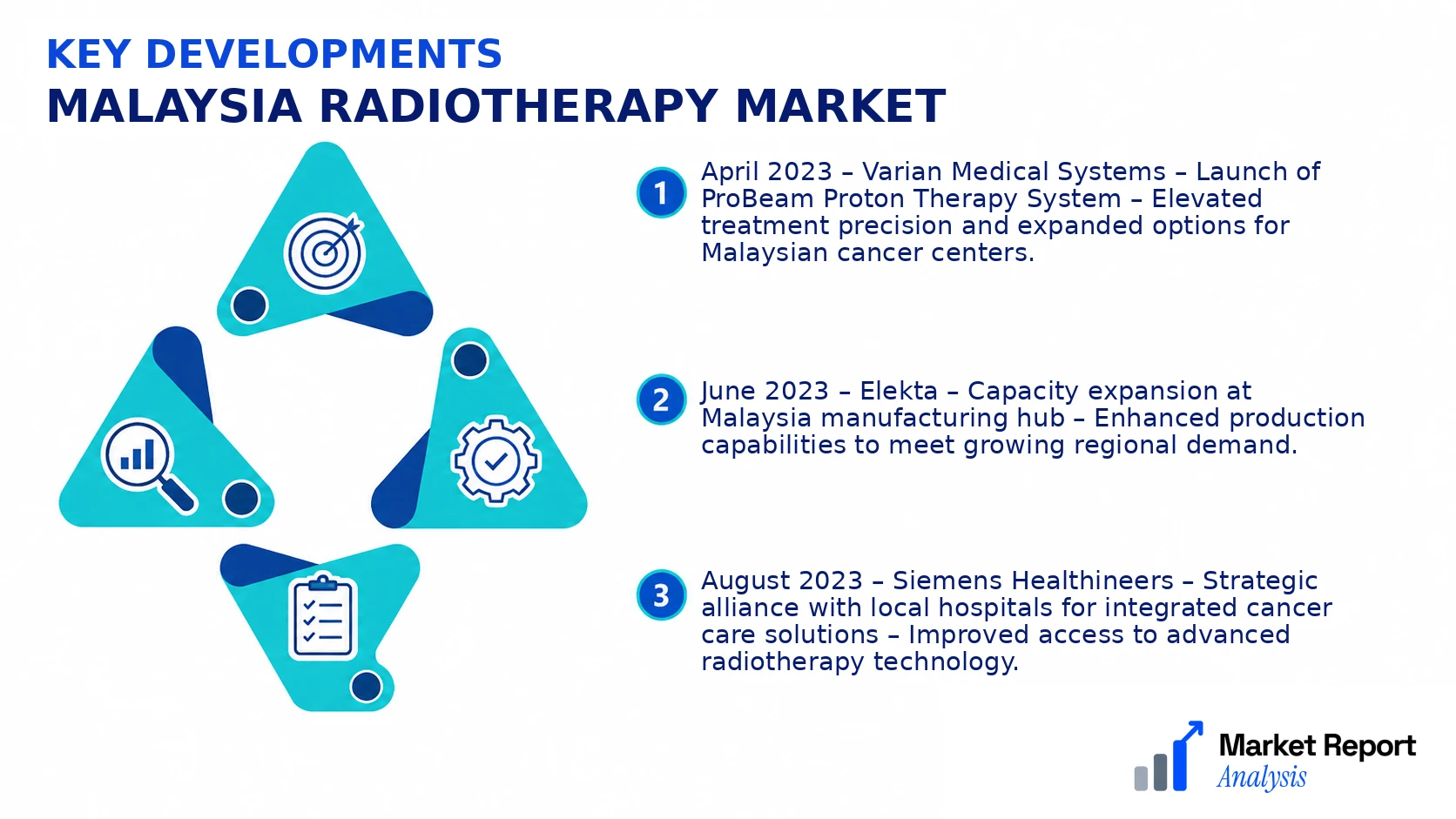
- April 2023 – Varian Medical Systems – Launch of ProBeam Proton Therapy System – Elevated treatment precision and expanded options for Malaysian cancer centers.
- June 2023 – Elekta – Capacity expansion at Malaysia manufacturing hub – Enhanced production capabilities to meet growing regional demand.
- August 2023 – Siemens Healthineers – Strategic alliance with local hospitals for integrated cancer care solutions – Improved access to advanced radiotherapy technology.
- September 2023 – ViewRay – Introduction of MRIdian Linac in Malaysia – Pioneering MR-guided adaptive radiotherapy, significantly improving treatment accuracy.
- November 2023 – Hitachi Medical Corporation – Acquisition of Malaysian medical equipment distributor – Strengthened local market presence and service network.
Frequently Asked Questions
What is the Malaysia Radiotherapy Market?
The Malaysia Radiotherapy Market encompasses the industry involved in providing radiotherapy services and equipment for cancer treatment across Malaysia. It includes hospitals, clinics, and medical device providers focused on cancer therapy, supported by technological advancements and increasing healthcare infrastructure.
What is the current market size of Malaysia Radiotherapy Market?
As of 2026, the Malaysia Radiotherapy Market is valued at approximately USD 400 Million, reflecting increasing adoption of advanced radiotherapy technologies and expanding healthcare facilities dedicated to cancer care within the country.
What factors are driving the Malaysia Radiotherapy Market?
The key drivers include rising cancer prevalence, growing awareness of cancer treatment options, government initiatives promoting healthcare development, and technological innovations like IMRT and stereotactic radiotherapy, which enhance treatment efficacy and patient outcomes.
Which region dominates the Malaysia Radiotherapy Market?
Peninsular Malaysia dominates the market due to its higher healthcare infrastructure, larger population, and greater concentration of specialized oncology centers compared to East Malaysia, which has a developing healthcare landscape.
Which segment is expected to grow the fastest?
The portable and advanced radiotherapy equipment segment is projected to experience the highest growth owing to technological innovations and the increasing preference for outpatient and minimally invasive treatments in Malaysia’s healthcare system.
Who are the leading companies operating in the Malaysia Radiotherapy Market?
Major players include Elekta, Varian Medical Systems, and Siemens Healthineers, distinguished by their advanced radiotherapy solutions, local collaborations, and efforts to expand market reach across Malaysia’s healthcare providers.
Analyst Perspective
The Malaysia Radiotherapy Market is poised for sustained growth driven by increasing cancer incidence rates and expanding healthcare infrastructure over the next decade. Long-term market prospects appear robust, with technological advancements such as precision radiotherapy and integration of AI-enhanced treatment planning expected to reshape service offerings. Commercial opportunities will likely focus on investments in state-of-the-art linear accelerators and the development of comprehensive cancer centers, particularly in urban hubs like Kuala Lumpur, Penang, and Johor Bahru, which are poised to become regional cancer treatment nodes. Competition among local and international providers is intensifying, urging companies to prioritize strategic partnerships and service differentiation. Regional growth potential remains high, with Malaysia's expanding middle class and government initiatives driving increased healthcare spending. Consequently, stakeholders should adopt a strategic focus on technological innovation, regional expansion, and partnership development to capitalize on the evolving landscape and support long-term, sustainable growth within Malaysia’s radiotherapy sector.
