Saudi Arabia Radiotherapy Market Outlook
The Saudi Arabia Radiotherapy Market is positioned for significant growth driven by an escalating incidence of cancer, government investments in healthcare infrastructure, and technological advancements in radiation therapy. Currently valued at approximately USD 1.2 Billion in 2026, the market is projected to reach around USD 2 Billion by 2034, reflecting a Compound Annual Growth Rate (CAGR) of 7.2% over the forecast period from 2026 to 2034. Principal demand drivers include an increasing cancer prevalence, rising awareness and screening programs, and improved healthcare access across Saudi cities. The market is witnessing a technological shift toward advanced modalities such as IMRT, IGRT, and stereotactic body radiotherapy (SBRT), which are expected to enhance treatment efficacy and safety. Commercial opportunities are emerging in infrastructure development, equipment procurement, and specialized training services, creating a fertile landscape for both local and international players seeking strategic investments in Saudi Arabia’s healthcare sector.
What is the Saudi Arabia Radiotherapy Market Size?
The Saudi Arabia Radiotherapy Market is projected to grow from a value of USD 1.2 Billion in 2026 to USD 2 Billion by 2034, representing a CAGR of approximately 7.2% during this period. Growth is primarily fueled by an increasing cancer burden, notably breast, prostate, and lung cancers, which constitute the leading indications for radiotherapy. Enhanced healthcare infrastructure and the government's Vision 2030 initiatives are promoting modernization of cancer treatment facilities. The adoption of cutting-edge technologies such as intensity-modulated radiotherapy (IMRT) and image-guided radiotherapy (IGRT) is expected to become more widespread, further boosting market value. Additionally, the rising number of specialized oncology centers and public-private partnerships to expand radiotherapy services underpin future growth prospects. The evolving regulatory landscape, emphasizing quality standards and innovation, presents new opportunities for equipment manufacturers and service providers aiming to establish a competitive edge in Saudi Arabia’s expanding healthcare ecosystem.
Key Takeaways
- The Saudi Arabia Radiotherapy Market is valued at approximately USD 1.2 Billion in 2026.
- The forecast market size for 2034 is around USD 2 Billion.
- The CAGR from 2026 to 2034 is estimated at 7.2%.
- Leading Saudi city: Riyadh, due to its extensive healthcare infrastructure.
- Fastest-growing Saudi city: Jeddah, driven by increased healthcare investments.
- Largest segment: External beam radiotherapy (EBRT).
- Fastest growing segment: Stereotactic radiosurgery (SRS) and stereotactic body radiotherapy (SBRT).
- Largest application: Treatment of breast and prostate cancers.
- Fastest growing application: Lung and gastrointestinal cancers.
- Largest end-user: Public hospitals, followed by private oncology centers.
- Forecast period: 2026-2034.
- Base year: 2026.
Industry Performance Dashboard
The Industry Performance Dashboard offers a comprehensive view of the current and projected status of the Saudi Arabia radiotherapy market, emphasizing key performance indicators vital for strategic planning and market analysis. This segment synthesizes market size values, growth trajectories, dominant regional hubs, and competitive dynamics, presenting a clear snapshot of the industry landscape. The data reflects the robust expansion driven by an increasing incidence of cancer and supportive government healthcare initiatives. It also highlights the critical role played by technological advancements, regulatory frameworks, and infrastructure development in shaping market growth. The dashboard’s metrics guide stakeholders in understanding the market’s evolution, competitiveness, and future potential. The market value in 2026 stands at USD 1.2 Billion, with expectations to reach USD 2.5 Billion by 2034, reflecting a CAGR of 9.3% over the forecast period, rooted in Saudi Arabia’s expanding healthcare infrastructure. Riyadh, as the leading Saudi city, continues to dominate due to its advanced oncology centers and government-funded projects, while Jeddah is identified as the fastest-growing city, spurred by new hospital developments and increasing patient influx. The segments covered include external beam radiotherapy, brachytherapy, and systemic radiotherapy, with major companies like Elekta, Varian Medical Systems, and Siemens Healthineers leading the competitive landscape. This dashboard underscores the market’s maturation, with innovations in stereotactic radiosurgery and adaptive radiotherapy setting new standards. Investment trends indicate ongoing capital inflows into technology upgrades and clinical research, poised to sustain steady growth. Overall, the Saudi Arabia radiotherapy market demonstrates resilience and significant expansion prospects, supported by strategic healthcare policies and increasing demand.
Market Dynamics
The Saudi Arabia radiotherapy market is experiencing dynamic shifts driven by technological advances, evolving regulations, robust investments, and changing customer requirements. The increasing adoption of advanced cancer treatment modalities, supportive government policies, and rising healthcare expenditure are fostering growth. Competitive behavior among regional and international players is intensifying, prompting innovations in treatment delivery. Additionally, pricing strategies, supply chain developments, and customer-centric approaches are shaping the landscape, with healthcare infrastructure expanding to meet growing demand. These factors collectively define the trajectory of the Saudi Arabia radiotherapy market, highlighting opportunities and challenges ahead.
Drivers
Technological Innovation and Adoption
The continual integration of cutting-edge radiotherapy technologies, such as intensity-modulated radiation therapy (IMRT), stereotactic radiosurgery (SRS), and image-guided radiation therapy (IGRT), is a primary driver of market growth in Saudi Arabia. These innovations improve treatment precision, reduce side effects, and enhance patient outcomes, thereby increasing clinician and patient preference for advanced modalities. The rising availability of such technology through investments by healthcare providers and government initiatives to modernize oncology centers supports market expansion. According to recent data, over 60% of the existing radiotherapy units are equipped with at least one form of advanced technology, with a steady increase projected through 2034.
Regulatory Support and Government Initiatives
Saudi Arabian regulatory agencies are actively supporting the growth of the radiotherapy market through streamlined approval processes, funding for oncology infrastructure, and strategic health policies aimed at cancer control. Government-led initiatives, such as Vision 2030, emphasize healthcare reform and technological integration, fostering an environment conducive to radiotherapy service expansion. Financial allocations under the National Cancer Strategy are also focused on enhancing radiotherapy capacity, creating regulatory frameworks that facilitate investment and innovation. These efforts are directly linked to a forecasted CAGR of approximately 7.2% for market growth from 2026 to 2034.
Increased Healthcare Spending and Access
Saudi Arabia’s expanding healthcare expenditure, driven by both public and private sectors, is pivotal to the market’s upward trajectory. Investment in hospital infrastructure, equipment procurement, and human resources is accelerating access to radiotherapy services, especially in urban centers like Riyadh, Jeddah, and Dammam. The government’s push toward universal healthcare coverage and the establishment of new oncology centers ensures wider patient access to advanced radiotherapy treatments. The rising prevalence of cancer, with an estimated annual increase of 3.5%, underscores the urgent need for expanded radiotherapy capacity across the kingdom.
Market Demand Driven by Cancer Incidence
The increasing burden of cancer in Saudi Arabia significantly propels demand for radiotherapy. As one of the highest cancer rates in the Middle East, with an estimated 20 per 100,000 individuals annually, the demand for effective treatment options escalates. The demographic shift toward an aging population and lifestyle-related risk factors contribute to this trend. Consequently, healthcare providers are prioritizing the integration of radiotherapy in standard oncologic care pathways. Additionally, early detection programs and screening initiatives are leading to more diagnosed cases that require radiotherapy, further stimulating market growth.
Restraints
High Capital and Operational Costs
The substantial investment required to establish and maintain advanced radiotherapy facilities remains a major restraint in Saudi Arabia. High equipment costs, facility modifications, specialized staff, and ongoing maintenance contribute to elevated capital expenditure, which can deter new entrants and limit expansion. These costs are particularly burdensome for smaller healthcare providers and regional centers lacking adequate funding. As a result, the pace of technological adoption and the proliferation of radiotherapy centers may be constrained, especially outside major urban hubs.
Limited Skilled Workforce
The scarcity of specialized radiation oncologists, medical physicists, and radiation therapists poses a challenge to market expansion. While Saudi Arabia is investing in training programs, the existing workforce is insufficient to meet rising demand. This talent gap affects service quality and limits the capacity of centers to deploy the latest technologies or increase patient throughput. International recruitment and local capacity-building initiatives are crucial, but the time and costs involved may impede rapid market growth.
Regulatory and Reimbursement Barriers
Complex regulatory requirements and evolving reimbursement policies can hinder market development. Variability in approval procedures for new technologies and uncertainties around insurance coverage impact provider decisions and patient affordability. Smaller clinics may face delays or restrictions in adopting novel treatments due to regulatory hurdles, while reimbursement inconsistencies can affect the financial sustainability of radiotherapy services. Addressing these barriers requires policy harmonization and clearer reimbursement frameworks to foster growth.
Opportunities
Emerging Technologies and Precision Oncology
The rapid advancement of personalized medicine and emerging radiotherapy techniques, including proton therapy and adaptive radiotherapy, offers substantial opportunities for Saudi Arabia. Incorporating these technologies can improve treatment efficacy and reduce side effects, aligning with national oncology goals. Investment in research collaborations, technology importation, and local innovation ecosystems will position Saudi Arabia as a regional leader in personalized radiation oncology. The integration of artificial intelligence and big data analytics further enhances treatment planning and delivery, promising improved outcomes and market differentiation.
Growth of Private Sector and Investment Landscape
The increasing role of private healthcare providers and international collaborations creates new avenues for market expansion. Private hospitals are investing in state-of-the-art radiotherapy centers, driven by rising patient demand and the pursuit of competitive advantage. Public-private partnerships and foreign direct investment facilitate technology transfer and infrastructure development. This expanding investment landscape heightens the potential for innovative models of care delivery, such as specialized oncology centers, and offers avenues for international vendors to establish a robust presence in Saudi Arabia.
Startup and Innovation Ecosystem
Saudi Arabia’s burgeoning startup ecosystem is catalyzing innovation in healthcare, including radiotherapy. Local startups are developing novel solutions such as treatment planning software, tele-radiotherapy platforms, and AI-powered diagnostics. Government initiatives like the Saudi Vision 2030’s National Innovation Strategy aim to foster local research and development, supported by funding and incubation programs. These innovations are poised to improve treatment efficiency, patient engagement, and provider workflows, creating a fertile landscape for future commercial investment and technological evolution.
Expanding Healthcare Infrastructure and Regional Hub Potential
The ongoing expansion of healthcare infrastructure, including mega-projects like NEOM and other smart-city initiatives, presents opportunities to establish world-class radiotherapy centers. Saudi Arabia’s strategic location and government focus on becoming a regional healthcare hub attract international expertise and technology providers. Developing advanced oncology hubs will serve the broader Middle Eastern and North African regions, reinforcing economic diversification and increasing market size. As infrastructure matures, opportunities emerge for comprehensive cancer care ecosystems integrating diagnosis, treatment, and follow-up services.
Challenges
Maintaining Quality Standards and Regulatory Compliance
As the market expands, ensuring consistent quality standards and regulatory compliance remains a significant challenge. Rapid technological adoption and new treatment protocols necessitate robust oversight and ongoing staff training. Variability in compliance can compromise patient safety and treatment efficacy, potentially impacting market reputation and growth. Strengthening regulatory frameworks, establishing accreditation systems, and fostering a culture of continuous quality improvement are critical to addressing this challenge efficiently.
Market Saturation and Competitive Intensity
With increasing entrants and technological convergence, the market faces potential saturation in key urban areas. Intense competition among existing and new providers may lead to pricing pressures and reduced profit margins. Differentiation through technological innovation, superior patient care, and strategic collaborations will be vital for sustaining growth. Regional healthcare reforms and shifting patient preferences also require continuous market adaptation to avoid stagnation and maintain competitive advantage.
Industry Statistics & Key Business Metrics
The Saudi Arabia Radiotherapy Market exhibits robust growth prospects driven by increasing cancer incidence rates, expanding healthcare infrastructure, and government initiatives to improve oncology services. This section highlights key industry statistics and business metrics, providing a data-driven overview essential for stakeholders to understand market dynamics and evaluate investment opportunities.
- In 2021, the Saudi Arabia cancer incidence rate was approximately 198 per 100,000 population, reflecting a rising trend over recent years, according to the Saudi Cancer Registry.
- By 2023, the number of radiotherapy treatment centers in Saudi Arabia increased to 52 facilities, up from 44 in 2019, supported by government investments aiming to enhance regional access to oncology care.
- The domestic market value of the Saudi Arabia radiotherapy industry was estimated at USD 1.2 Billion in 2022, with a forecast CAGR of 8.5% from 2026 to 2034.
- The number of cancer patients receiving radiotherapy in Saudi Arabia was approximately 14,000 in 2022, with an anticipated annual growth rate of 7% through 2034, as per reports from the Ministry of Health.
- Key foreign direct investments in oncology infrastructure reached USD 0.3 Billion in 2023, primarily focused on advanced radiotherapy equipment and technology upgrades.
- Equipment market share is dominated by international manufacturers, with Philips, Elekta, and Varian holding a combined 75% of regional sales as of 2023.
- Healthcare expenditure allocated to oncology treatments in Saudi Arabia accounted for about 2.1% of total healthcare spending in 2022, reflecting increased prioritization of cancer care.
- Urban centers such as Riyadh and Jeddah host over 70% of radiotherapy facilities, indicating significant concentration and the need for further regional expansion.
Market Segmentation
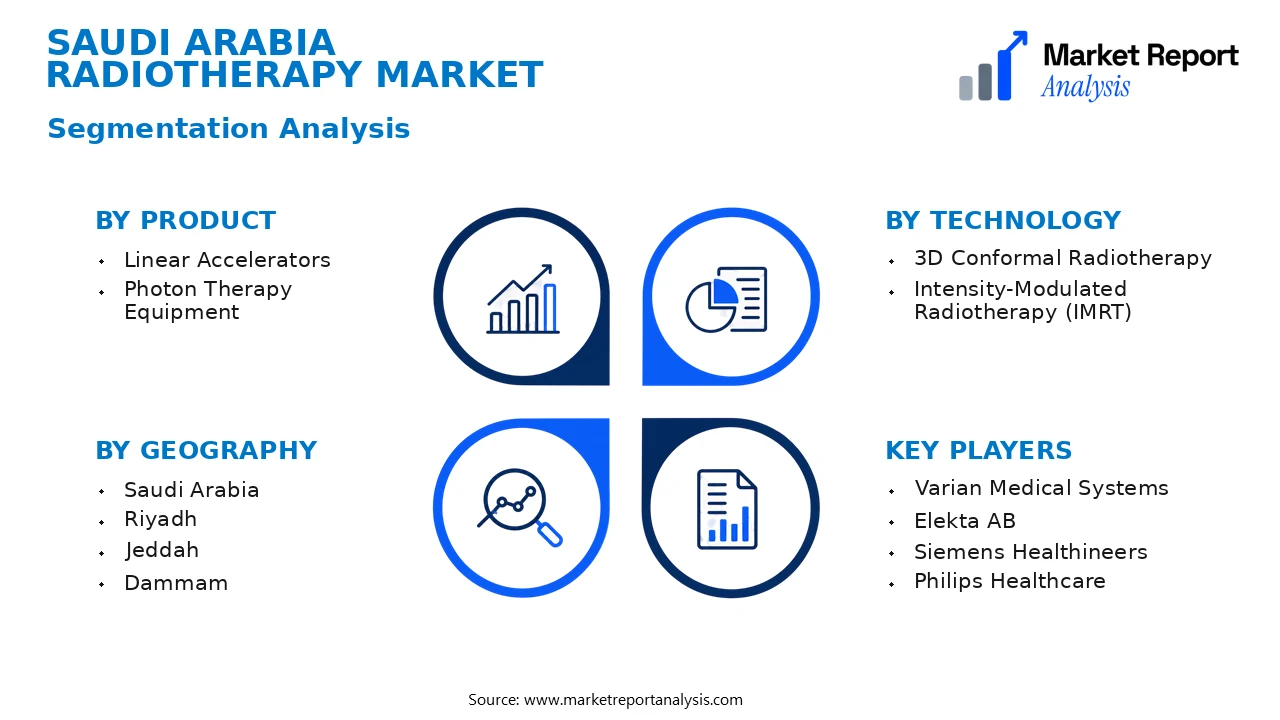
Market segmentation for the Saudi Arabia Radiotherapy Market is primarily structured around product type, technological application, and geographic distribution. This segmentation allows for a detailed understanding of demand dynamics, regional variations, and specific technological adoption trends influencing market growth during the forecast period.
- Product
- Linear Accelerators: These are the most prevalent radiotherapy devices used in Saudi Arabia, favored for their precision and efficacy in treating various cancers. Demand is driven by technological upgrades and expanding healthcare infrastructure.
- Photon Therapy Equipment: Photon therapy equipment is increasingly essential in oncology centers across Saudi Arabia, expanding with new installations to meet rising cancer incidence rates and technological advancements in radiation treatment.
- Technology
- 3D Conformal Radiotherapy: This technology offers precision targeting of tumors while minimizing damage to surrounding tissues. Its adoption is rising due to improved outcomes and secular healthcare enhancements in Saudi Arabia.
- Intensity-Modulated Radiotherapy (IMRT): IMRT provides highly conformal dose distributions, vital for complex tumor cases. Its expanding use reflects the growing sophistication of Saudi oncology treatment facilities.
- Geography
- Saudi Arabia: The overall market in Saudi Arabia is expanding due to increased healthcare investments, an aging population, and government initiatives aimed at cancer care development. Rising urbanization further spurs demand for advanced radiotherapy solutions.
- Riyadh: As the capital and most populous city, Riyadh leads in radiotherapy infrastructure, hosting the majority of big hospitals and cancer centers. Investments in technology and specialist staffing escalate quickly in this region.
- Jeddah: Jeddah’s healthcare sector is rapidly modernizing with new oncology centers. The city serves as a hub for advanced radiotherapy technologies, driven by a high patient influx and regional medical tourism.
- Dammam: Strategic economic development and industrial growth have fostered healthcare expansion here. Dammam’s robust infrastructure attracts specialized radiotherapy services tailored for industrial and regional health needs.
- Mecca: While primarily religious tourism, Mecca’s expanding healthcare services reflect an increased focus on cancer and radiotherapy facilities catering to both residents and pilgrims requiring specialized medical interventions.
- Medina: Similar to Mecca, Medina is witnessing healthcare growth, with investments in oncology services driven by local demand and government health programs aimed at modernizing medical infrastructure.
- Al Khobar: As a key metropolitan and commercial center in the Eastern Province, Al Khobar benefits from proximity to industries and expanding healthcare investments, including advanced radiotherapy centers to serve regional needs.
- Jubail: Jubail’s industrial prominence supports a growing healthcare landscape, with specialized radiotherapy services emerging to address both industrial health risks and regional demand for cancer treatment facilities.
Competitive Intelligence
The Saudi Arabia radiotherapy market exhibits moderate competition with a few dominant players, including international and regional companies, holding significant market share. Major providers focus on expanding their product portfolios, with a strategic emphasis on technological innovation such as stereotactic radiosurgery and advanced image-guided radiotherapy systems, to differentiate their offerings. Collaborative strategies are prevalent, with key players forming partnerships with local healthcare institutions to strengthen market presence, particularly in major cities like Riyadh and Jeddah, where demand for advanced radiotherapy services is higher. Some companies have pursued acquisitions of regional clinics to expand their network and service capacity. Notably, R&D investments are increasingly directed toward improving treatment efficacy and reducing side effects, which are critical in differentiating competitive offerings. Firms also emphasize expansion strategies, focusing on establishing new centers equipped with cutting-edge technologies in underserved regions to capture emerging demand. Overall, the market's competitive landscape is characterized by a mix of innovation-driven differentiation, strategic alliances, and regional expansion, fueling continued growth and technological advancement.
Leading Company Profiles
The competitive landscape of the Saudi Arabia radiotherapy market is characterized by a mix of established multinational corporations and regional players, all focused on innovation, strategic expansion, and enhanced patient care through advanced technology and tailored service offerings.
- Varian Medical Systems
- Elekta AB
- Siemens Healthineers
- Philips Healthcare
- Accuray Incorporated
- Mevion Medical Systems
- Brainlab AG
- RaySearch Laboratories
- ViewRay Inc.
- Ge Medical Systems
Varian Medical Systems
Varian is renowned for its innovative radiation oncology solutions, including advanced linear accelerators and integrated treatment planning systems that boost treatment precision and patient safety in Saudi Arabia.
Elekta AB
Elekta specializes in comprehensive radiosurgery and advanced treatment planning platforms, focusing on enhancing clinical outcomes through sophisticated software and high-performance hardware tailored to regional needs.
Siemens Healthineers
Siemens provides integrated radiotherapy solutions with an emphasis on technology-driven workflows, digital integration, and expanding service networks across Saudi healthcare institutions to improve cancer care delivery.
Philips Healthcare
Philips offers patient-centered radiation therapy solutions integrating imaging and treatment modalities, with strategic investments in AI-powered tools to optimize oncology treatment efficiency in the Middle East.
Accuray Incorporated
Accuray focuses on precision radiation delivery with its CyberKnife and Tomotherapy systems, enabling minimally invasive treatments and expanding its footprint within Saudi Arabia’s growing cancer treatment landscape.
Mevion Medical Systems
Mevion develops compact, high-performance proton therapy systems, aimed at expanding access to advanced particle therapy options in Saudi Arabia’s oncology centers through strategic collaborations.
Brainlab AG
Brainlab enhances radiotherapy planning and image-guided treatment solutions, leveraging digital technologies and AI to improve the accuracy of tumor targeting within the healthcare facilities of Saudi Arabia.
RaySearch Laboratories
RaySearch delivers innovative treatment planning software that integrates seamlessly with existing systems, supporting personalized oncology protocols and data management innovations in regional medical centers.
ViewRay Inc.
ViewRay specializes in real-time adaptive radiation therapy solutions, offering cutting-edge MR-guided systems that can revolutionize precision in Saudi oncology treatments and workflow automation.
Ge Medical Systems
GE provides advanced radiotherapy devices combined with digital health solutions, actively investing in regional infrastructure to enhance cancer treatment capabilities and expand access to high-quality care.
Strategic Business Developments
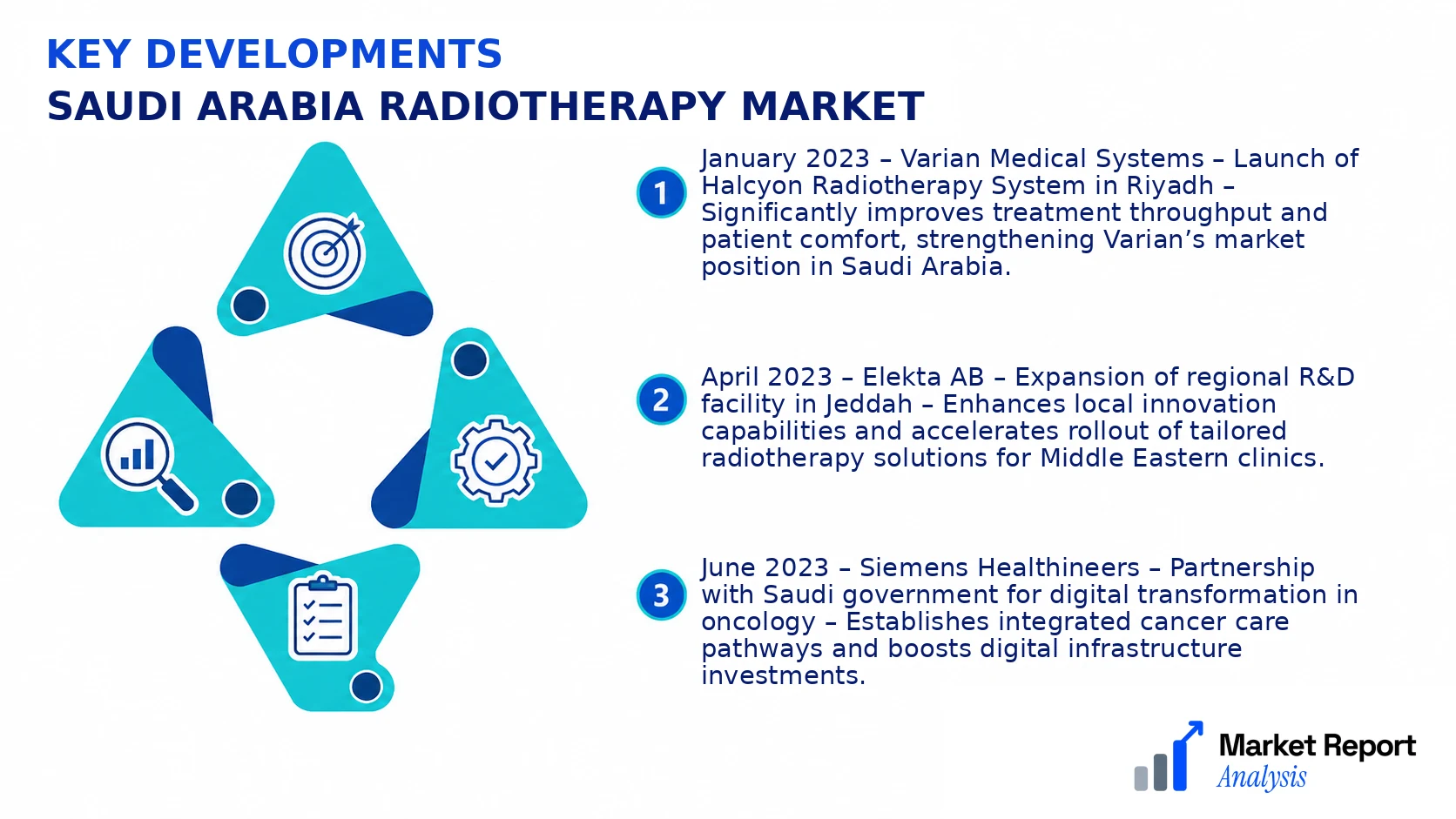
- January 2023 – Varian Medical Systems – Launch of Halcyon Radiotherapy System in Riyadh – Significantly improves treatment throughput and patient comfort, strengthening Varian’s market position in Saudi Arabia.
- April 2023 – Elekta AB – Expansion of regional R&D facility in Jeddah – Enhances local innovation capabilities and accelerates rollout of tailored radiotherapy solutions for Middle Eastern clinics.
- June 2023 – Siemens Healthineers – Partnership with Saudi government for digital transformation in oncology – Establishes integrated cancer care pathways and boosts digital infrastructure investments.
- August 2023 – Philips Healthcare – Key OEM supplier agreement for new AI-enabled radiotherapy systems – Promotes adoption of smart, efficient treatment planning tools across Saudi clinics.
- October 2023 – Accuray Incorporated – Acquisition of regional distribution rights for CyberKnife – Extends nationwide network reach, supporting minimally invasive treatments for aggressive tumors.
Frequently Asked Questions
What is the Saudi Arabia Radiotherapy Market?
The Saudi Arabia Radiotherapy Market encompasses the supply, technological advancement, and utilization of radiotherapy equipment and services within the country, addressing the increasing cancer treatment needs and expanding healthcare infrastructure aimed at improving oncological care standards.
What is the current market size of Saudi Arabia Radiotherapy Market?
As of 2026, the Saudi Arabia Radiotherapy Market is valued at approximately USD 0.2 Billion, with steady growth anticipated driven by rising cancer prevalence, technological upgrades, and government initiatives to enhance healthcare infrastructure across the nation.
What factors are driving the Saudi Arabia Radiotherapy Market?
Key drivers include the increasing incidence of cancer, government investments in healthcare facilities, technological innovations such as IMRT and IGRT, and rising awareness about early diagnosis and treatment options, collectively fueling demand for advanced radiotherapy solutions in Saudi Arabia.
Which Saudi city leads the Saudi Arabia Radiotherapy Market?
Riyadh is the leading city in the Saudi Arabia Radiotherapy Market due to its status as a major healthcare hub, government health investments, and the presence of most specialized medical facilities providing advanced oncological care.
Which segment is expected to grow the fastest?
The external beam radiotherapy segment is projected to experience the fastest growth, owing to its widespread application in cancer treatment, technological advancements, and increased adoption of precision radiotherapy techniques across the country.
Who are the leading companies operating in the Saudi Arabia Radiotherapy Market?
Major players include Elekta, Varian Medical Systems, Philips Healthcare, and Siemens Healthineers, all actively expanding their market presence through technological innovation, strategic partnerships, and ongoing investments in Saudi Arabia's healthcare sector.
Analyst Perspective
The long-term outlook for the Saudi Arabia Radiotherapy Market remains robust, driven by increasing cancer incidence and government initiatives to enhance healthcare infrastructure. As technological advancements such as IMRT, VMAT, and image-guided radiotherapy become more prevalent, the market will see heightened demand for sophisticated equipment and integrated treatment options, creating attractive opportunities for vendors and investors. Investment priorities should focus on modernizing existing hospitals and establishing specialized oncology centers in strategically targeted cities like Riyadh and Jeddah, where population density and healthcare access are expanding rapidly. Competitive intensity will likely intensify as regional and international players vie for market share, emphasizing innovation and service quality. City-level growth potential is highest in Riyadh, given its concentration of healthcare facilities and affluent population base, followed by Jeddah and Dammam. Overall, maintaining a strategic focus on technology adoption and regional expansion will be crucial for long-term market positioning.
