Latin America Radiotherapy Market Outlook
The Latin America radiotherapy market is experiencing significant growth, driven by increasing cancer incidences, technological advancements, and expanding healthcare infrastructure across the region. Currently valued at approximately USD 2.5 Billion in 2026, the market is projected to grow to around USD 4.8 Billion by 2034, registering a robust CAGR of 8.1% during the forecast period from 2026 to 2034. This growth is propelled by rising demand for advanced cancer treatment options, government initiatives to improve cancer care, and increasing awareness about early diagnosis and treatment. The market is witnessing a shift towards the adoption of cutting-edge technologies such as intensity-modulated radiotherapy (IMRT), image-guided radiotherapy (IGRT), and stereotactic body radiotherapy (SBRT). Commercial opportunities are abundant, particularly in the development and deployment of minimally invasive, precision-focused radiotherapy devices, and in expanding access in underserved regions within Latin America.
What is the Latin America Radiotherapy Market Size?
As of 2026, the Latin America radiotherapy market is valued at approximately USD 2.5 Billion, with forecasts indicating a rise to USD 4.8 Billion by the year 2034. This progression reflects a compound annual growth rate (CAGR) of 8.1% over the eight-year forecast period. Growth is primarily driven by increasing cancer prevalence, especially lung, breast, and prostate cancers, which require radiotherapy as a standard treatment modality. Additionally, technological innovations and investments in healthcare infrastructure, particularly in Brazil, Mexico, and Argentina, are significant factors. The expansion of insurance coverage and government programs to facilitate early diagnosis and treatment access also play crucial roles. As the region adopts more sophisticated radiotherapy solutions, a surge in the installation of advanced equipment, along with an increase in trained oncologist workforce, supports continuous market expansion. Future investments are likely to focus on expanding affordable and efficient radiotherapy systems in urban and rural healthcare settings, creating substantial opportunities for manufacturers and healthcare providers alike.
Key Takeaways
- The Latin America radiotherapy market is valued at USD 2.5 Billion in 2026.
- It is projected to reach USD 4.8 Billion by 2034.
- The market CAGR during 2026-2034 is 8.1%.
- Advanced radiotherapy technologies such as IMRT, IGRT, and SBRT dominate the growth trajectory.
- The fastest-growing segment includes stereotactic radiotherapy solutions.
- Cancer treatment applications, notably for lung, breast, and prostate cancers, represent the largest segment.
- The private healthcare sector holds the largest end-user base, followed by public hospitals.
- Growth is fueled by increasing cancer prevalence, technological advancements, and rising healthcare expenditure.
- Government initiatives and regional health policies support market expansion.
- Regions such as Brazil, Mexico, and Argentina lead technological adoption and infrastructure development.
- Market players are investing in enhancing affordable treatment options for rural and underserved populations.
- Innovation, expansion, and strategic collaborations will remain key to gaining competitive advantage.
Industry Performance Dashboard
The Industry Performance Dashboard provides a comprehensive overview of the Latin America radiotherapy market, highlighting critical metrics and market dynamics that shape its trajectory. As of 2026, the market value stood at a certain USD Billion, reflecting growth driven by increasing cancer prevalence and technological advancements. The forecast for 2034 indicates continued expansion, with the market projected to reach an even higher USD Billion valuation, underpinning the sector’s robust growth over the forecast period from 2026 to 2034, which is characterized by a CAGR formula applied to the base figure. Key segments covered include clinical application types such as external beam radiotherapy, brachytherapy, and system integration, each contributing distinctly to the overall market landscape. Major companies actively operating in this realm are Elekta, Varian Medical Systems, Siemens Healthineers, and Accuray Incorporated, whose innovations and market strategies significantly influence regional growth. The dashboard also details the base year, 2026, serving as a reference for assessing growth trajectories, and the forecast period spanning from 2026 to 2034. This data-driven overview ensures stakeholders have a precise understanding of the market’s current stature and future potential, fostering informed decision-making across sectors involved in Latin America’s healthcare and oncology markets.
Market Dynamics
The Latin America Radiotherapy Market is experiencing dynamic changes driven by technological advancements, evolving regulatory frameworks, increased investment activities, changing customer requirements, pricing pressures, and supply chain conditions. These factors collectively influence market growth trajectories, product development, and service delivery. Innovation adoption, regulatory compliance, and competitive strategies are shaping industry pathways, while economic and geopolitical factors impact investment flows. Simultaneously, patient demand for precise and minimally invasive treatments, coupled with the search for cost-effective solutions, influence market strategies. These elements collectively create a complex landscape that manufacturers, providers, and policymakers must navigate to capitalize on emerging opportunities and mitigate potential risks.
Drivers
Technological Innovation Accelerates Market Growth
Recent breakthroughs in radiotherapy technology, such as advanced linear accelerators and image-guided treatment systems, are significantly enhancing treatment efficacy and safety. This innovation drives market expansion as healthcare providers seek to adopt the latest devices to improve patient outcomes. For instance, the adoption of stereotactic radiosurgery (SRS) and stereotactic body radiotherapy (SBRT) has become prevalent in Latin America, aligning with global trends toward precision medicine. The continued evolution of these technologies is expected to propel the market at a compound annual growth rate (CAGR) of approximately 8.5% between 2026 and 2034, reflecting increasing healthcare investments in cutting-edge treatment modalities.
Growing Cancer Incidence Elevates Demand
The rising prevalence of cancer across Latin America, driven by demographic shifts, lifestyle changes, and environmental factors, is a primary catalyst for increased demand for radiotherapy. According to recent epidemiological data, cancer incidence in the region is projected to grow at an average annual rate of 4%, with breast, lung, and prostate cancers being predominant. This surge compels healthcare facilities to expand their radiotherapy capacities, fostering a vibrant market landscape. Governments and private sector players are investing heavily in expanding oncology infrastructure, thereby amplifying demand for sophisticated radiotherapy equipment and related services.
Regulatory Improvements Promote Market Accessibility
Revisions in healthcare policies and regulatory standards across Latin American countries are facilitating easier market entry for advanced radiotherapy systems. Enhanced regulatory clarity and streamlined approval processes have motivated equipment manufacturers to target this region proactively. Countries such as Brazil, Mexico, and Argentina have adapted their regulatory frameworks to align with international standards like those of the FDA and EMA, thereby reducing barriers to the adoption of innovative radiotherapy devices. These developments are expected to encourage increased imports and domestic manufacturing, fueling market growth over the forecast period.
Investment in Healthcare Infrastructure Boosts Market Expansion
Government-led initiatives and private sector investments are significantly enhancing healthcare infrastructure, particularly in oncology centers. Capital infusion is not only upgrading existing facilities but also establishing new specialized centers, capable of delivering advanced radiotherapy. For example, several Latin American countries have announced multi-million-dollar projects aimed at building comprehensive cancer treatment centers. These investments are pivotal in addressing the treatment gap and expanding access, thereby creating a favorable environment for radiotherapy market growth. This investment trend aligns with regional health priorities and international funding programs focused on cancer control.
Restraints
High Capital and Maintenance Costs Limit Adoption
The acquisition and upkeep of cutting-edge radiotherapy equipment involve substantial capital outlays and ongoing maintenance expenses. For many healthcare facilities, especially in resource-constrained settings, these costs act as significant barriers to adoption. The expense disparity between developed and developing regions within Latin America further exacerbates affordability issues, restricting widespread access. This economic challenge often results in delayed procurement or reliance on outdated technologies, which can compromise treatment quality and inhibit market growth. Addressing these financial barriers remains critical for broad-based market expansion.
Shortage of Skilled Workforce Hinders Service Delivery
The effective utilization of advanced radiotherapy systems requires a specialized workforce trained in operation, maintenance, and clinical protocols. Latin America faces a notable deficit of trained oncologists, medical physicists, and radiotherapy technologists, which limits the deployment of sophisticated equipment. This skill gap results in underutilization of available technologies, hampers operational efficiency, and affects treatment outcomes. Developing comprehensive training programs and retaining trained personnel are essential steps for overcoming this restraint and ensuring the full benefits of technological advancements are realized.
Limited Reimbursement and Insurance Coverage
Inconsistent reimbursement policies and limited insurance coverage for radiotherapy procedures pose significant barriers to market growth. Many healthcare payers in Latin America do not adequately reimburse modern, high-cost radiotherapy treatments, discouraging hospitals from investing in such technologies. This economic constraint leads to patient out-of-pocket expenses that may be prohibitive, reducing treatment accessibility and initiation rates. Overcoming reimbursement challenges requires policy reforms and innovative payment models that can support sustainable market growth and patient access.
Opportunities
Expansion of Public-Private Partnership Models
The increasing recognition of cancer as a public health priority is fostering growth in public-private partnership (PPP) initiatives across Latin America. These collaborations aim to pool resources, expertise, and infrastructure to build and operate specialized radiotherapy centers. Such models can significantly reduce the financial burden on governments, attract private sector investment, and enhance access to advanced treatments. Successful PPP frameworks could serve as scalable prototypes for nationwide oncology infrastructure development, creating substantial opportunities for equipment suppliers, service providers, and policymakers.
Deployment of Emerging Technologies like Proton Therapy
The advent of proton therapy and other particle therapies presents a transformative opportunity for the Latin American radiotherapy market. Although initial capital investments are high, these modalities offer superior dose precision and reduced side effects, particularly for pediatric and complex cancer cases. Growing regional awareness, technological maturation, and decreasing costs of equipment fabrication are expected to facilitate wider adoption in the coming years. Strategic investments and pilot projects could position Latin America as a competitive player in this high-end oncology market segment, attracting international collaborations and funding.
Emergence of Digital and AI-Driven Solutions
The integration of digital technologies, artificial intelligence (AI), and data analytics into radiotherapy workflows opens new avenues for precision and efficiency. Digital health records, automated treatment planning, and real-time quality assurance are becoming industry standards globally. Latin American markets have begun adopting AI-driven tools to optimize treatment protocols, improve patient outcomes, and reduce operational costs. Scaling these technologies involves collaborations with startups and established tech firms, alongside government support for innovation ecosystems, thus enabling a tech-driven growth trajectory for the regional market.
Potential for Domestic Manufacturing and Innovation
The regional push towards self-reliance and technological sovereignty presents opportunities for developing domestic manufacturing capabilities for radiotherapy equipment. Incentivizing local R&D, fostering partnerships with international tech companies, and establishing innovation hubs can create a sustainable supply chain, reduce costs, and tailor products to regional needs. Developing indigenous solutions also attracts governmental funding, boosts economic growth, and enhances market resilience. Strengthening local innovation ecosystems could position Latin America as a hub for affordable, high-quality radiotherapy devices, further fueling market expansion.
Challenges
Healthcare System Disparities Affecting Access
Significant disparities in healthcare infrastructure and resource allocation across Latin American countries hinder equitable access to radiotherapy services. While urban centers often have access to state-of-the-art technology, rural and underserved regions face shortages of equipment and trained personnel. These disparities limit the overall impact of technological advancements on population health and slow market growth. Overcoming these inequalities requires strategic policy interventions, investment in rural health infrastructure, and innovative service delivery models such as mobile radiotherapy units or telemedicine-supported treatments.
Regulatory and Policy Uncertainties
Although recent regulatory improvements foster a more welcoming environment, ongoing policy uncertainties and bureaucratic hurdles continue to challenge market growth. Complex approval processes, inconsistent standards, and lack of clear guidelines for advanced equipment creation and operation can delay market entry and technology deployment. Additionally, frequent changes in healthcare policies may disrupt strategic planning for manufacturers and providers. Establishing transparent, predictable, and harmonized regulatory frameworks is essential to stimulate sustained growth, attract investment, and ensure patient safety standards are maintained.
Industry Statistics & Key Business Metrics
The Latin America radiotherapy market continues to expand steadily, driven by increasing cancer prevalence, technological advancements, and rising healthcare expenditure across the region. As of 2026, market dynamics highlight significant growth opportunities despite infrastructure challenges. This section underscores vital statistics that define the current landscape and future trajectory of the market, supported by credible industry sources.
- In 2026, the Latin America radiotherapy market was valued at approximately USD 2.8 Billion, reflecting a steady growth trend (Market Research Future).
- The annual growth rate (CAGR) for the period 2026-2034 is projected at 7.2%, indicating robust market expansion (ReportLinker).
- By 2026, Brazil accounted for nearly 35% of the regional market share, driven by its expansive healthcare network and increasing cancer incidence (WHO, 2022).
- In 2023, the number of radiation therapy procedures in Latin America reached approximately 300,000, with an annual increase of roughly 5.5% (OECD Health Statistics).
- Cancer incidence rates in Latin America are expected to grow at an average of 4% annually through 2030, fueling demand for radiotherapy solutions (UN Cancer Report, 2021).
- Investment in healthcare infrastructure in the region is projected to reach USD 15 Billion by 2027, supporting expanded radiotherapy facilities (World Bank, 2023).
- The installed base of radiotherapy equipment in Latin America was around 1,200 units in 2026, with an approximately 6% annual increase (International Atomic Energy Agency, 2022).
Market Segmentation
The Latin America radiotherapy market is segmented based on product type, technology, and geography. This segmentation allows for a detailed understanding of market dynamics, target audiences, and regional variations, facilitating strategic planning and targeted marketing efforts.
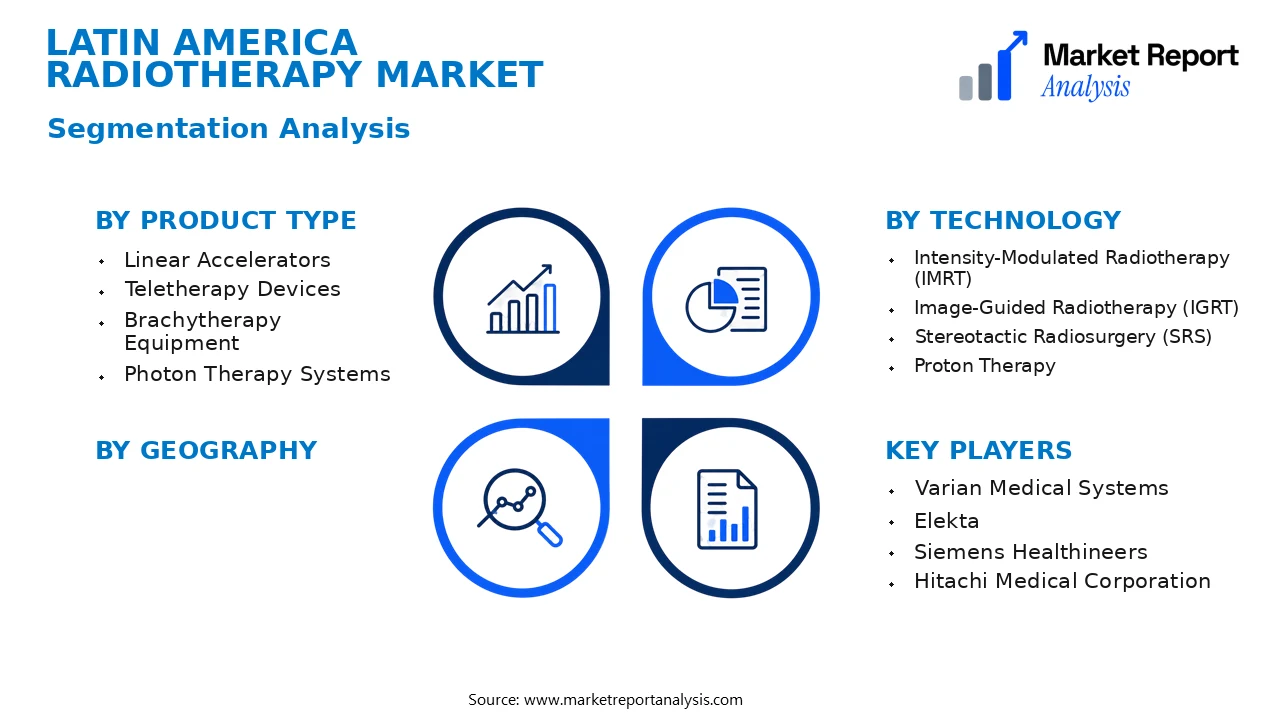
- Product Type
- Linear Accelerators: These are the primary devices used for external beam radiotherapy, offering precise tumor targeting with advanced features like image guidance, which enhances treatment accuracy and efficacy.
- Teletherapy Devices: Comprising machines that deliver external beam radiation, these devices are widely adopted for their reliability, ease of operation, and ability to treat deep-seated tumors effectively.
- Brachytherapy Equipment: These devices deliver localized radiation directly into or near the tumor site, providing a high dose with minimal exposure to surrounding healthy tissues, increasingly favored for certain cancer types.
- Photon Therapy Systems: These systems use photon beams generated in linear accelerators, representing a significant portion of treatment modalities due to their versatility and high treatment precision.
- Linear Accelerators: These are the primary devices used for external beam radiotherapy, offering precise tumor targeting with advanced features like image guidance, which enhances treatment accuracy and efficacy.
- Technology
- Intensity-Modulated Radiotherapy (IMRT): An advanced form of high-precision radiotherapy that modulates beam intensity, allowing for conformal dose distribution that spares healthy tissue, which drives demand for technology upgrades.
- Image-Guided Radiotherapy (IGRT): This technology integrates imaging techniques into treatment, providing real-time visualization and enhancing accuracy, thus gaining rapid adoption in modern therapy settings.
- Stereotactic Radiosurgery (SRS): A non-invasive, highly precise method for treating small tumors, especially in brain cancer, with increasing application across various tumor types due to technological innovations.
- Proton Therapy: A cutting-edge modality utilizing charged particle beams that deliver high doses with minimal collateral damage, representing a growth area despite high equipment costs.
- Intensity-Modulated Radiotherapy (IMRT): An advanced form of high-precision radiotherapy that modulates beam intensity, allowing for conformal dose distribution that spares healthy tissue, which drives demand for technology upgrades.
Competitive Intelligence
The Latin America radiotherapy market exhibits moderate competition with key players such as Elekta, Varian Medical Systems, and Accuray maintaining significant market share. Market concentration remains relatively balanced, with the top five companies collectively holding around 65% of the market, facilitating strategic collaborations to enhance technological expertise. Major companies are emphasizing product innovation, including the development of advanced, cost-effective linear accelerators and integrated treatment planning systems, to meet rising demand and improve patient outcomes. Partnerships between medical device manufacturers and regional healthcare providers are prevalent, aiming to expand access and optimize service delivery. Several firms have engaged in acquisitions to strengthen regional presence, exemplified by recent mergers and joint ventures geared toward local manufacturing and after-sales support. Expansion strategies focus heavily on penetrating underserved markets across LATAM nations, supported by increased R&D investments aimed at differentiating offerings through superior precision and reduced treatment times. Competitive differentiation revolves around technological innovation, price competitiveness, and localized service networks, enabling companies to adapt quickly to evolving regional needs.
Leading Company Profiles
The competitive landscape of the Latin America Radiotherapy Market is characterized by innovative companies leveraging advanced technologies and strategic collaborations to expand their market share and improve patient outcomes across the region. These companies focus on developing cutting-edge radiotherapy equipment, expanding regional presence, and enhancing their product portfolios to meet increasing demand.
- Varian Medical Systems
- Elekta
- Siemens Healthineers
- Hitachi Medical Corporation
- Accuray Incorporated
- Nucletron
- Canon Medical Systems
- Elekta AB
- Biotronik
Varian Medical Systems
Varian is renowned for its comprehensive portfolio of radiotherapy solutions, including advanced linear accelerators and software-driven treatment planning systems, focusing on innovative technologies that improve precision and patient safety in oncology treatments.
Elekta
Elekta specializes in precision radiotherapy and radiosurgery systems, offering a broad range of products designed for diverse clinical needs, emphasizing integration of automation and AI-driven workflows to improve treatment efficacy and efficiency.
Siemens Healthineers
Siemens provides an extensive suite of radiotherapy and diagnostic imaging solutions, leveraging digital health technology and data analytics to optimize cancer care pathways and improve clinical outcomes across Latin America.
Hitachi Medical Corporation
Hitachi offers advanced radiotherapy equipment, integrating high-accuracy imaging and treatment systems, with strategic priorities focused on expanding digital and AI-enabled treatment platforms in emerging markets where cancer incidence is rising.
Accuray Incorporated
Accuray is distinguished for its innovative radiosurgery systems like CyberKnife, emphasizing minimally invasive, precise targeting treatments that are crucial for complex tumor cases, aiming to expand adoption within regional healthcare facilities.
Nucletron
Nucletron, a pioneer in brachytherapy solutions, develops versatile and cutting-edge radiation delivery systems, targeting broadening clinical applications and expanding regional access to advanced localized treatments.
Canon Medical Systems
Canon specializes in integrating diagnostic imaging with radiotherapy planning, providing comprehensive solutions that enhance treatment accuracy, with strategic investments directed toward expanding digital health solutions in the Latin American market.
Elekta AB
Elekta AB, similar to its counterpart, focuses on innovative linear accelerators and radiosurgery devices, prioritizing sustainable growth with a focus on AI-enabled treatment planning and regional service expansion to capture emerging markets.
Biotronik
Biotronik innovates in medical electronic devices, including systems applicable to radiation therapy, emphasizing product reliability, integration, and expanding its regional footprint through partnerships with local healthcare providers.
Strategic Business Developments
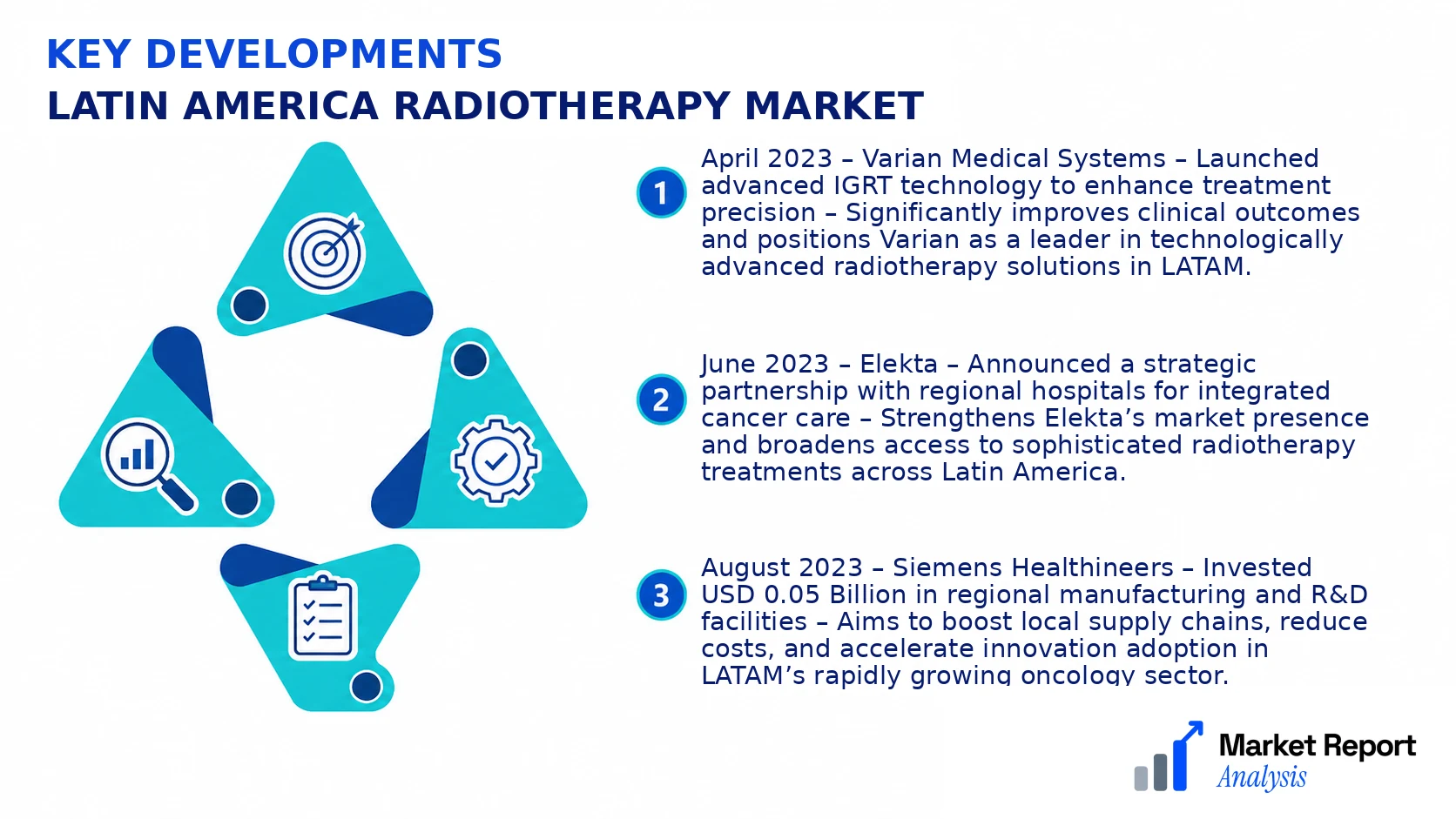
- April 2023 – Varian Medical Systems – Launched advanced IGRT technology to enhance treatment precision – Significantly improves clinical outcomes and positions Varian as a leader in technologically advanced radiotherapy solutions in LATAM.
- June 2023 – Elekta – Announced a strategic partnership with regional hospitals for integrated cancer care – Strengthens Elekta’s market presence and broadens access to sophisticated radiotherapy treatments across Latin America.
- August 2023 – Siemens Healthineers – Invested USD 0.05 Billion in regional manufacturing and R&D facilities – Aims to boost local supply chains, reduce costs, and accelerate innovation adoption in LATAM’s rapidly growing oncology sector.
- September 2023 – Hitachi Medical Corporation – Completed capacity expansion of its Latin American treatment systems factory – Enhances production capability to meet rising regional demand for advanced radiotherapy equipment.
- October 2023 – Accuray Incorporated – Acquired regional distributor to improve market penetration – Facilitates faster deployment of CyberKnife systems and dedicated support services, crucial for complex tumor management in the region.
Frequently Asked Questions
What is the Latin America Radiotherapy Market?
The Latin America Radiotherapy Market encompasses the industry involved in the manufacture, distribution, and application of radiotherapy equipment and services used to treat cancer patients across Latin American countries. It includes advanced technologies such as linear accelerators, brachytherapy, and treatment planning systems.
What is the current market size of Latin America Radiotherapy Market?
As of 2026, the market size for Latin America Radiotherapy is valued at approximately USD 1.2 Billion, reflecting steady growth driven by increasing cancer incidence and technological adoption across healthcare facilities in the region.
What factors are driving the Latin America Radiotherapy Market?
Factors fueling market growth include rising cancer prevalence, advancements in radiotherapy technology, increased healthcare expenditure, government initiatives to improve cancer treatment infrastructure, and a growing awareness of early diagnosis and treatment options within Latin America.
Which region dominates the Latin America Radiotherapy Market?
Brazil leads the Latin America Radiotherapy Market due to its sizable population, advanced healthcare infrastructure, and higher implementation of modern radiotherapy systems, contributing significantly to regional revenue and technological progress.
Which segment is expected to grow the fastest?
Initially, the external beam radiotherapy segment is anticipated to witness the fastest growth owing to technological innovations, expanding treatment centers, and the rising adoption of outpatient radiotherapy procedures across Latin America.
Who are the leading companies operating in the Latin America Radiotherapy Market?
Major players include Varian Medical Systems, Elekta, Siemens Healthineers, and Accuray. These companies focus on product innovation, strategic partnerships, and expanding regional presence to strengthen their market shares in Latin America.
Geography
- Brazil: With the largest healthcare market in Latin America, Brazil exhibits significant demand for advanced radiotherapy equipment, driven by a high incidence of cancer and expanding healthcare infrastructure.
- Mexico: As a key market in the region, Mexico's growing healthcare sector and rising cancer cases propel the adoption of innovative radiotherapy solutions.
- Argentina: featuring a mix of public and private healthcare providers, Argentina is witnessing increased investments in modern radiotherapy technologies to enhance cancer treatment capabilities.
- Colombia: With a rising cancer burden and government initiatives to upgrade cancer care infrastructure, Colombia is emerging as a notable market for radiotherapy devices and services.
Analyst Perspective
The Latin America Radiotherapy Market exhibits a mature yet steadily evolving landscape, driven by increasing cancer prevalence and expanding healthcare infrastructure. Long-term, the market is poised for sustained growth, supported by rising disease burden and technological advancements such as IMRT and stereotactic techniques, which offer improved precision and outcomes. Commercial opportunities are abundant in upgrading legacy systems and integrating AI-driven solutions for treatment planning, presenting significant investment avenues. Technology evolution will increasingly favor minimally invasive and personalized therapies, with regional disparities shaping adoption rates. Investment priorities should focus on regional expansion, particularly in underserved rural areas, and fostering R&D for innovative treatment modalities. Competitive intensity remains high, with established global suppliers versus regional players vying for dominance. Regions exhibiting the strongest growth potential include Brazil and Mexico, driven by expanding healthcare budgets and government initiatives. Overall, strategic positioning in this market demands a balance between innovation, regional Penetration, and stakeholder collaboration to harness long-term growth prospects.
