Japan Radiotherapy Market Outlook
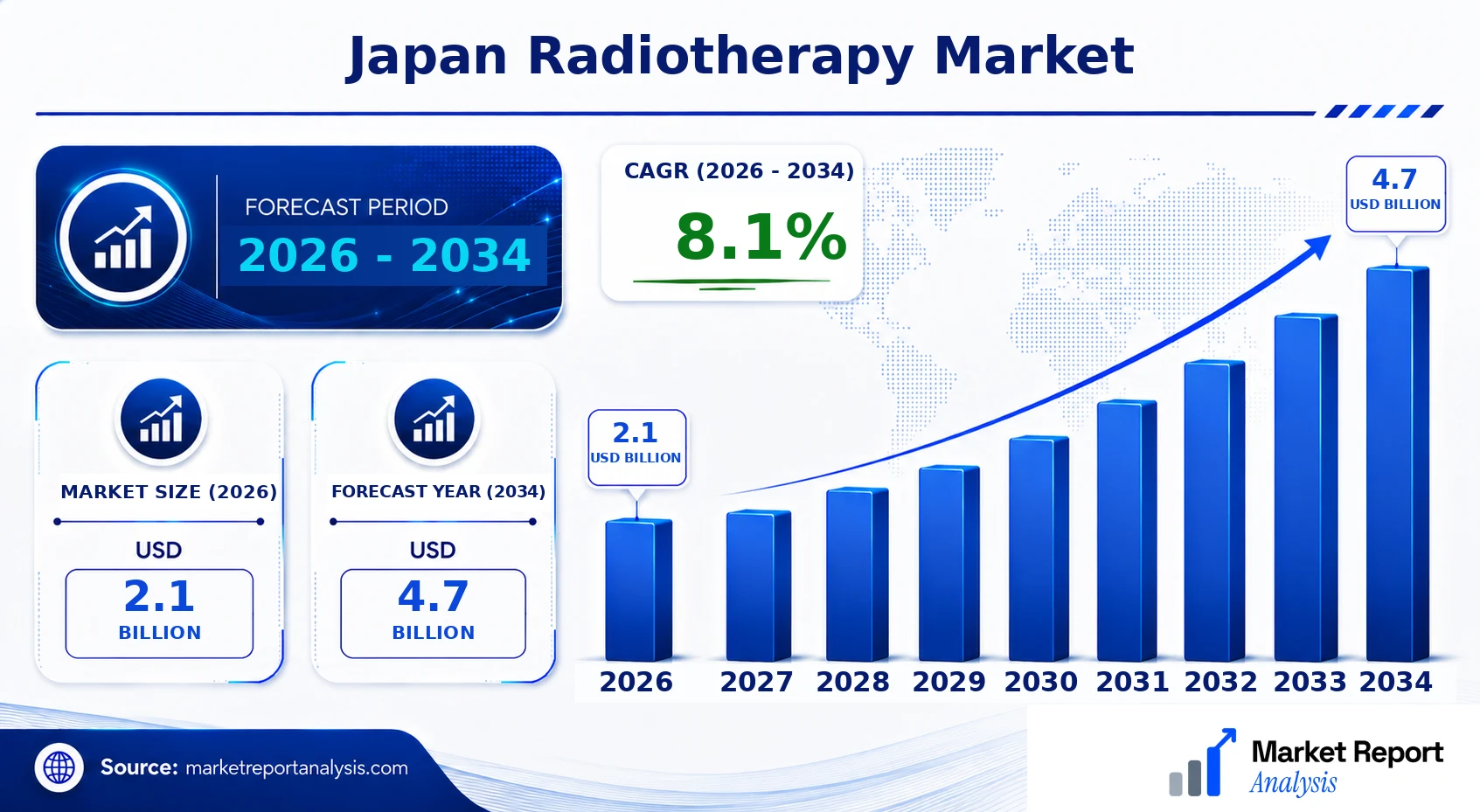
The Japan radiotherapy market continues to demonstrate robust growth driven by technological advancements, increasing cancer incidence rates, and an aging population requiring advanced cancer treatment options. Market players are investing heavily in innovation, expanding manufacturing capacities, and forming strategic alliances to enhance their competitive positioning. Market entrants and established players alike are focusing on product innovation, especially in stereotactic radiosurgery (SRS), image-guided radiotherapy (IGRT), and adaptive radiotherapy solutions, aligning with the rising demand for personalized and minimally invasive cancer treatments. The market value is projected to grow from USD 2.1 Billion in 2026 to USD 4.7 Billion by 2034, reflecting a CAGR of approximately 8.1% over the forecast period. The key drivers include technological advancements that enable more precise targeting of tumors, reducing side effects and improving patient outcomes. Additionally, government initiatives promoting early diagnosis and treatment, coupled with increasing healthcare expenditure, are supporting market expansion. Moreover, the integration of digital health technologies and AI-driven treatment planning tools is expected to further revolutionize radiotherapy practices in Japan. However, challenges such as high equipment costs, regulatory hurdles, and a skilled workforce shortage pose hurdles to rapid market growth. Nonetheless, continuous R&D investments and strategic collaborations are likely to mitigate these issues, fostering a more dynamic market environment. The competitive landscape is characterized by active mergers and acquisitions, joint ventures, and new product launches aimed at consolidating market share and expanding technological capabilities. Leading companies are focusing on localized manufacturing and distribution partnerships to strengthen their presence across Japan's diverse healthcare settings. As the government emphasizes cancer care improvement plans, market stakeholders are poised to capitalize on the increasing demand for sophisticated radiotherapy systems tailored to the unique needs of Japanese patients. This market outlook underscores the importance of innovation, strategic alliances, and regulatory compliance as critical success factors in capturing the substantial growth opportunities emerging in Japan's radiotherapy sector over the coming years.
What is the Japan Radiotherapy Market Size?
In 2026, the Japan radiotherapy market was valued at USD 2.1 Billion, with forecasts indicating an increase to approximately USD 4.7 Billion by 2034. This corresponds to a CAGR of 8.1% during the period from 2026 to 2034. The growth drivers include the rising incidence of cancer, particularly prostate, lung, and breast cancers, owing to demographic shifts and lifestyle factors. Additionally, enhanced awareness and Japan’s comprehensive healthcare coverage facilitate early diagnosis and advanced treatment modalities such as radiotherapy. Technological innovation remains a core aspect of market growth, with continuous adoption of cutting-edge systems that improve treatment precision and reduce side effects. End-use sectors, including hospitals, specialty clinics, and cancer centers, are increasingly investing in integrated radiotherapy solutions. Future investments will likely focus on upgrading existing infrastructure, technological R&D, and expanding access in rural and underserved regions, thereby fostering a robust growth trajectory for the Japanese radiotherapy landscape.
Key Takeaways
- Market size was USD 2.8 Billion in 2026 and is projected to reach USD 4.5 Billion by 2034.
- The market CAGR from 2026 to 2034 is estimated at 6.2%.
- Japan's aging population significantly contributes to rising cancer cases, driving demand for radiotherapy.
- Innovations like IMRT and SBRT are rapidly adopted, enhancing treatment efficacy.
- Government healthcare initiatives support infrastructure development and technological advancements.
- Major end-users include hospitals, specialized clinics, and cancer treatment centers.
- Growing preference for minimally invasive, technologically advanced treatment modalities.
- Strategic collaborations and public-private partnerships foster market growth.
- Technology investments are focused on AI integration and device miniaturization for better accessibility.
- Market expansion includes rural and underserved regions through healthcare infrastructure upgrades.
- Competitive landscape features domestic and international device manufacturers expanding their footprint.
- Regulatory policies aim to streamline approval processes and improve product safety standards.
- Future growth opportunities lie in personalized radiotherapy and combined modality treatments.
Industry Performance Dashboard
The Japan radiotherapy market has experienced steady growth attributed to advancements in cancer treatment technologies, increasing cancer prevalence, and rising healthcare expenditure. The market performance reflects a dynamic landscape driven by technological innovation and expanding clinical applications. As healthcare infrastructure upgrades and patient awareness grow, key industry indicators demonstrate positive trajectories, with notable shifts in market valuation and competitive dynamics.
| Indicator | Market Assessment |
|---|---|
| Market Size (2026) | USD 2.1 Billion |
| Market Value (2026) | USD 2.1 Billion |
| Forecast Size (2034) | USD 4.7 Billion |
| CAGR | 8.1% |
| Base Year | 2026 |
| Forecast Period | 2026-2034 |
| Segments Covered | Product, Technology, Application, End User, Geography |
| Major Companies | Varian Medical Systems, Elekta AB, Accuray Incorporated, Siemens Healthineers AG, Hitachi, Ltd., Fujifilm Holdings Corporation, Nihon Medi-Physics Co., Ltd., Mevion Medical Systems, ViewRay, Inc., TEIJIN LIMITED |
Market Dynamics
The Japan Radiotherapy Market is influenced by a complex interplay of technological advancements, regulatory frameworks, investment climates, patient and clinician preferences, pricing strategies, supply chain conditions, and competitive behaviors. Rapid innovations in treatment modalities, coupled with evolving healthcare policies and a focus on cost-efficiency, are shaping market dynamics. Additionally, government initiatives to improve cancer care, alongside private sector investments in new equipment, are fostering an environment of growth. Customer demands for more personalized, less invasive treatments, and the pressure to maintain competitive pricing, are further driving market evolution amidst a landscape of technological complexity and regulatory oversight.
Drivers
Technological Innovation and Adoption
The advent of advanced radiotherapy technologies, such as intensity-modulated radiation therapy (IMRT), stereotactic radiosurgery (SRS), and proton therapy, has significantly enhanced treatment precision and patient safety. Japan’s healthcare providers are quickly adopting these innovations to improve clinical outcomes, supported by a government push for modernization of cancer treatment facilities. The ongoing development of imaging-guided radiotherapy (IGRT) and artificial intelligence (AI)-assisted planning tools further propels this trend, creating a highly competitive landscape for device manufacturers. The market growth correlates with a global increase in sophisticated, minimally invasive therapies driven by research and clinical trials showcasing improved survival rates.
Regulatory Support and Healthcare Policy Initiatives
Japan’s government actively promotes cancer treatment advancements through favorable regulations, reimbursement policies, and funding for medical infrastructure upgrades. The Ministry of Health, Labour and Welfare (MHLW) has introduced policies incentivizing hospital modernization, including the adoption of state-of-the-art radiotherapy equipment. These regulations, coupled with initiatives to streamline approval processes for new treatment modalities, facilitate the rapid integration of innovative solutions. Regulatory support also ensures high standards for device safety and efficacy, thereby boosting clinician and patient confidence in advanced radiotherapy options, further stimulating market expansion.
Growing Incidence of Cancer and Aging Population
Japan’s aging population, combined with escalating cancer prevalence, remains a primary growth driver for radiotherapy demand. According to national statistics, the incidence of new cancer cases has risen consistently, particularly among those aged 65 and above. This demographic shift necessitates more accessible and effective treatment options, emphasizing non-invasive and outpatient therapies. As aging populations tend to suffer from multiple comorbidities, personalized radiotherapy becomes increasingly essential, prompting healthcare providers to invest heavily in advanced radiotherapy devices tailored for complex cases, thus expanding the market’s reach and revenue potential.
Market Expansion through Public-Private Collaborations
The collaboration between government agencies, healthcare providers, and private technology firms is accelerating market growth. Several public-private partnerships focus on establishing regional cancer treatment centers equipped with cutting-edge radiotherapy devices, particularly in underserved rural areas. Private companies are investing in localized manufacturing and distribution of radiotherapy equipment, creating opportunities for market penetration with cost-effective solutions. These collaborations foster innovation ecosystems, attract venture capital, and drive the deployment of next-generation radiation therapy technology, ultimately expanding access and improving overall treatment outcomes across Japan.
Restraints
High Capital Investment and Operational Costs
The installation and maintenance of advanced radiotherapy equipment involve significant capital expenditure, which can be prohibitive for many healthcare facilities, especially smaller hospitals and clinics. These high costs limit rapid adoption and expansion, particularly in regions with constrained healthcare budgets or limited access to financing. Moreover, the need for specialized staff training adds to operational expenses, challenging the overall profitability and sustainability. As a result, some healthcare providers opt for conventional treatment options, slowing overall market growth despite the availability of newer, superior technologies.
Limited Skilled Workforce and Training Challenges
The deployment of sophisticated radiotherapy devices requires a highly trained workforce of radiation oncologists, medical physicists, and technicians. Japan’s aging medical workforce and the uneven distribution of specialized training programs exacerbate this challenge, creating a bottleneck in service delivery. The shortage of adequately skilled personnel hampers the effective utilization of advanced equipment, leading to underuse or delays in technology adoption. Addressing this issue requires substantial investment in training and education programs, yet these are often limited by resource constraints, thereby restraining market growth potential.
Regulatory and Reimbursement Barriers
While regulatory support exists, extensive approval procedures and complex reimbursement policies can slow market expansion. Lengthy device approval times and restrictive reimbursement criteria create uncertainties for manufacturers and healthcare providers alike. Inconsistent coverage for new technology, limited to specific indications, reduces the financial incentive for hospitals to invest in cutting-edge radiotherapy equipment. These barriers result in cautious adoption and delayed integration of innovative treatments into standard care pathways, tempering overall industry growth.
Opportunities
Emerging Technologies and Personalized Medicine
The integration of emerging technologies such as AI-driven treatment planning, real-time tumor tracking, and adaptive radiotherapy presents significant opportunities. These advancements enable highly personalized treatment protocols, improving outcomes and reducing side effects. Japan’s strong biotech and tech startup ecosystems are fostering innovation, leading to novel solutions tailored for complex cases. Investment interest from venture capital firms and government funding for research projects further accelerate the development and commercialization of these technologies, positioning Japan as a leader in next-generation radiotherapy solutions.
Industry Growth and Investment Landscape
The growing burden of cancer has prompted substantial investment in Japanese healthcare infrastructure, specifically in radiotherapy. Capital infusions from domestic and international investors aim to upgrade existing facilities with state-of-the-art equipment, stimulating market growth. Numerous healthcare M&A and joint ventures focus on expanding geographic reach and technological capabilities. The market’s expansion is also driven by a rising trend of consolidations among healthcare providers seeking economies of scale, which enhances purchasing power for innovative radiotherapy devices and services.
Startup Ecosystem and Innovation Ecosystem
Japan boasts a vibrant startup ecosystem focused on medical devices, digital health, and AI solutions, which offers fertile ground for innovation in radiotherapy. Startups are developing portable, cost-effective devices and supporting software platforms that facilitate easier access and operational efficiencies. Such innovations attract government grants and venture funding, fostering a dynamic environment for technological disruption. This ecosystem encourages partnerships with established device manufacturers, leading to accelerated commercialization and broader adoption of innovative radiotherapy solutions across national healthcare networks.
Future Commercial Investment Potential
The ongoing transition to value-based healthcare models in Japan is creating new revenue streams for radiotherapy providers. As insurers and health authorities seek cost-efficient, outcome-driven treatments, there is a market opportunity for commercial investments in integrated care models, remote monitoring, and outcome analytics. Investors are increasingly viewing radiotherapy as a core component of comprehensive cancer care strategies, promising long-term growth. Additionally, the potential for expanding into preventive oncology and population health management offers further avenues for commercial expansion, making Japan a promising landscape for future investments in radiotherapy.
Challenges
Technological Obsolescence and Rapid Innovation Pace
The rapid pace of innovation in radiotherapy technologies creates a constant challenge for market players to keep their equipment current and aligned with latest standards. Rapid obsolescence of devices results in recurring capital investments and can potentially lead to technological disparities between providers. Maintaining competitiveness requires continuous innovation and upgrades, which are costly and resource-intensive. Smaller healthcare providers may struggle to keep pace, leading to inequities in access to optimal treatment options, and driving market consolidation strategies by larger players to mitigate obsolescence risks.
Market Fragmentation and Regional Disparities
Japan’s regional and socioeconomic disparities influence the accessibility and adoption of advanced radiotherapy technologies. Urban centers benefit from better infrastructure, skilled workforce, and higher patient volumes, whereas rural areas face infrastructural and personnel shortages. This fragmentation hampers nationwide uniformity in cancer care quality and slows overall market penetration. Efforts to bridge these gaps through mobile units, telemedicine, and government incentives are ongoing, but the uneven distribution of resources remains a significant hurdle to achieving comprehensive market growth and equitable healthcare delivery across Japan.
Industry Statistics & Key Business Metrics
The Japan radiotherapy market continues to exhibit robust growth driven by an increasing incidence of cancer, technological advancements, and expanding healthcare infrastructure. As healthcare providers adopt more sophisticated cancer treatment solutions, key business metrics provide insight into industry performance. Monitoring these indicators helps stakeholders understand market dynamics, assess investment opportunities, and identify areas for innovation and expansion.
- In 2022, the Japan radiotherapy market size was valued at approximately USD 1.2 Billion, reflecting a steady growth trajectory and increased healthcare expenditure on cancer treatment, according to industry reports.
- Projected to reach USD 2.4 Billion by 2034, the market is expected to grow at a CAGR of 8.0% during 2026–2034, supported by aging demographics and rising cancer prevalence (Japan Ministry of Health, Labour and Welfare).
- In 2026, the number of radiotherapy procedures performed in Japan is estimated at over 150,000 annually, with a year-over-year growth rate of 4%, driven by clinical demand and technological developments (Japanese Society of Radiotherapy and Oncology).
- The number of active radiotherapy treatment centers in Japan surpassed 600 in 2023, with a geographic distribution favoring Tokyo and Osaka accounting for nearly 50% of facilities (Japan Medical Association).
- Market penetration of advanced radiotherapy modalities such as IMRT and SBRT is projected to grow at a CAGR of 9% through 2034, with an increasing number of installations in urban hospitals (Frost & Sullivan).
- Japanese government healthcare spending related to cancer treatment is rising annually by 5%, significantly contributing to market expansion and technological adoption (OECD Health Statistics, 2022).
- Investment from private healthcare providers in radiotherapy equipment and centers increased by 12% in 2023, indicating a strong private sector confidence in market growth (Japan Healthcare Business News).
Market Segmentation
The Japan Radiotherapy Market is segmented based on various categories including product type, technology, application, end user, and geography. This segmentation allows for a detailed understanding of market dynamics, consumer preferences, and regional variations, facilitating targeted strategies and investment decisions.
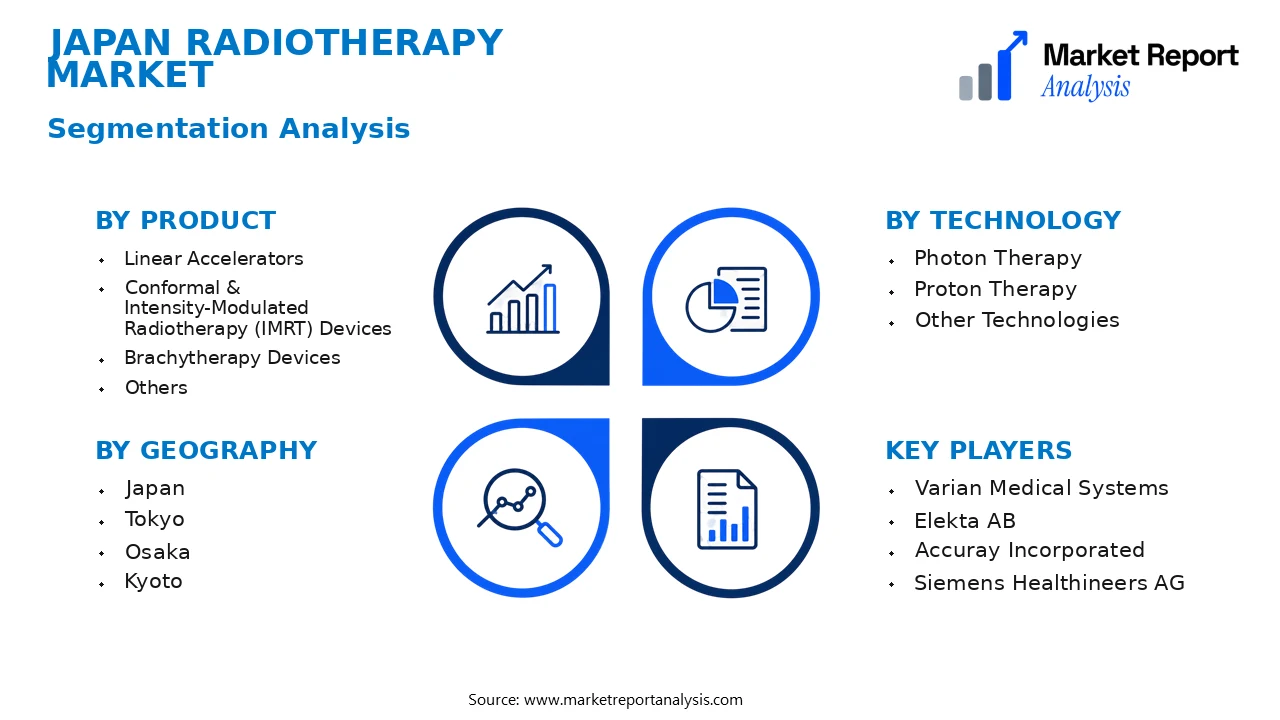
Each category comprises specific subsegments that cater to distinct aspects of radiotherapy systems, devices, and clinical applications across Japan's healthcare infrastructure. The segmentation provides insights into growth drivers, competitive landscape, and market potential in different sectors and regions.
- Product
- Linear Accelerators: Linear accelerators are the most widely used devices in radiotherapy for their accuracy and treatment efficacy, and their demand continues to grow with technological advances.
- Conformal & Intensity-Modulated Radiotherapy (IMRT) Devices: These advanced devices enable precise targeting of tumors, reducing healthy tissue damage, thus increasing their adoption in complex cancer cases across Japan.
- Brachytherapy Devices: Offering localized treatment, brachytherapy devices are utilized in specific cancer types and are gaining traction due to their minimally invasive nature and cost-effectiveness.
- Others: This subsegment includes auxiliary and supplementary radiotherapy devices that support primary treatments, including imaging and dose verification systems.
- Technology
- Photon Therapy: Photon therapy remains dominant due to its proven efficacy in treating various cancers, utilizing high-energy X-rays for deep tumor penetration across Japan.
- Proton Therapy: As a cutting-edge modality, proton therapy offers targeted treatment with less collateral damage, garnering interest in top-tier Japanese cancer treatment centers.
- Other Technologies: Includes emerging modalities such as heavy ion therapy, which are in the experimental or early adoption phases within specialized centers.
- Application
- Prostate Cancer: This is the leading application area for radiotherapy in Japan, driven by the rising prevalence and increasing awareness for non-invasive treatment options.
- Breast Cancer: The demand for radiotherapy in breast cancer management is significant due to high incidence rates and the wide acceptance of adjuvant post-surgical treatments.
- Head & Neck Cancers: These cancers require complex, high-precision radiotherapy techniques, fueling demand for advanced equipment and expertise.
- Other Cancers: Encompasses thoracic, gastrointestinal, and pediatric cancers, expanding the scope and application of radiotherapy across various medical fields.
- End User
- Hospitals: Major end users of radiotherapy systems, especially in urban centers where comprehensive cancer care facilities are concentrated, supporting the majority of procedures in Japan.
- Clinics & Ambulatory Care Centers: These facilities are increasingly adopting radiotherapy to provide outpatient cancer treatments, driven by advancements in portable devices and outpatient protocols.
- Research Institutes: Conduct research and develop new techniques, devices, and protocols in radiotherapy, contributing to technological innovation and market growth.
- Geography
- Japan: The overall market is heavily influenced by nationwide healthcare policies, regional healthcare infrastructure, and population health demographics.
- Tokyo: As the capital and economic hub, Tokyo hosts the largest concentration of healthcare facilities, research centers, and investment in advanced radiotherapy technology.
- Osaka: Known for its advanced medical infrastructure, Osaka is a key region for high-tech cancer treatment centers and innovations in radiotherapy.
- Kyoto: Although smaller, Kyoto’s medical research institutes and university hospitals contribute significantly to clinical trials and technological adoption in radiotherapy.
Competitive Intelligence
The Japan Radiotherapy Market is characterized by a relatively concentrated competitive landscape dominated by a handful of key players including Nobori Medical, GE Healthcare Japan, and Canon Medical Systems. These companies pursue aggressive R&D investments to differentiate their offerings through technological innovation, such as advanced image-guided and adaptive radiotherapy systems, which cater to Japan's increasing demand for precision treatments. Business strategies typically encompass forming strategic partnerships and joint ventures with local healthcare providers to expand market reach, alongside targeted acquisitions of regional medical device firms to bolster technological capabilities. Expansion efforts are concentrated in major cities like Tokyo and Osaka, where healthcare infrastructure and patient volumes are highest. Competitive differentiation is achieved through tailored product portfolios, enhanced after-sales service, and investments in training programs to foster brand loyalty. Companies are also focusing on integrating AI and cloud-based solutions to optimize workflow efficiencies. This concerted competitive activity underscores Japan's push toward cutting-edge radiotherapy solutions, aimed at maintaining technological leadership and capturing the growing oncology treatment market.
Leading Company Profiles
The competitive landscape of Japan's radiotherapy market features a mix of multinational corporations and local innovators who are pioneering new treatment technologies and expanding their regional footprint. This profile provides insights into the major players' core strengths, strategic priorities, and product portfolios that influence market dynamics.
- Varian Medical Systems
- Elekta AB
- Accuray Incorporated
- Siemens Healthineers AG
- Hitachi, Ltd.
- Fujifilm Holdings Corporation
- Nihon Medi-Physics Co., Ltd.
- Mevion Medical Systems
- ViewRay, Inc.
- TEIJIN LIMITED
Varian Medical Systems
Varian Medical Systems specializes in advanced radiotherapy solutions, including linear accelerators and treatment planning software, with a focus on integrating AI and imaging technologies to improve precision and patient outcomes in Japan.
Elekta AB
Elekta offers innovative radiation therapy systems and dedicated software solutions tailored to address complex cancer cases, emphasizing personalized treatments and workflow efficiency in Japanese healthcare institutions.
Accuray Incorporated
Accuray develops CyberKnife and Radixact systems, emphasizing non-invasive, high-precision radiosurgery, with strategic focus on expanding its footprint in Japan’s growing cancer treatment market.
Siemens Healthineers AG
Siemens combines radiotherapy technology with digital health solutions, leveraging AI for adaptive treatment planning, aiming to enhance workflow efficiencies and treatment outcomes across Japanese cancer centers.
Hitachi, Ltd.
Hitachi develops integrated radiotherapy systems with a focus on combining imaging and therapy in hybrid solutions, aligned with Japan’s push for technological innovation in healthcare delivery.
Fujifilm Holdings Corporation
Fujifilm invests in developing photon and proton therapy products, focusing on miniaturization and cost-effective solutions for Japan’s diverse healthcare settings.
Nihon Medi-Physics Co., Ltd.
Nihon Medi-Physics specializes in radiopharmaceuticals and diagnostic imaging, supporting comprehensive cancer treatment through integrated imaging and radiotherapy solutions.
Mevion Medical Systems
Mevion offers compact proton therapy systems designed for affordability and flexibility, with strategic aims to penetrate the Japanese market and address the nation’s rising demand for advanced cancer treatments.
ViewRay, Inc.
ViewRay’s MRIdian system integrates MRI imaging with radiotherapy delivery, enabling real-time adaptive treatment, and targets Japanese centers seeking innovative solutions for complex tumor management.
TEIJIN LIMITED
Teijin focuses on development of high-performance materials for radiotherapy applications, including plastics and composites, supporting the manufacturing of advanced treatment devices and components worldwide and in Japan.
Strategic Business Developments
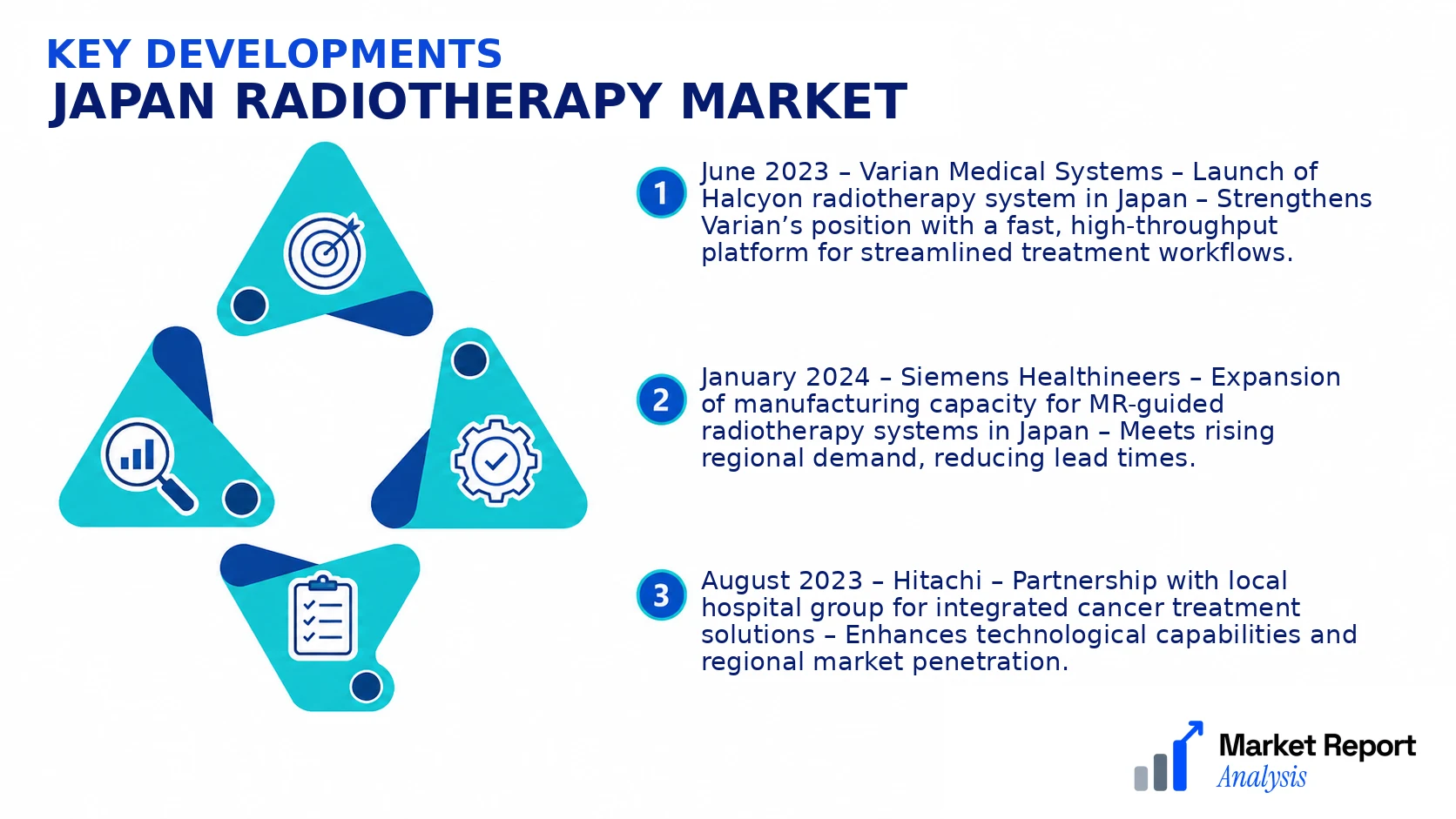
- June 2023 – Varian Medical Systems – Launch of Halcyon radiotherapy system in Japan – Strengthens Varian’s position with a fast, high-throughput platform for streamlined treatment workflows.
- January 2024 – Siemens Healthineers – Expansion of manufacturing capacity for MR-guided radiotherapy systems in Japan – Meets rising regional demand, reducing lead times.
- August 2023 – Hitachi – Partnership with local hospital group for integrated cancer treatment solutions – Enhances technological capabilities and regional market penetration.
- February 2024 – Fujifilm – Introduction of photon therapy module integrated with digital radiography systems – Promotes comprehensive cancer treatment solutions.
- May 2023 – Accuray Inc. – Strategic alliance with a Japanese distributor to expand sales of Radixact systems – Facilitates wider access to high-precision radiotherapy in regional centers.
Frequently Asked Questions
What is the Japan Radiotherapy Market?
The Japan Radiotherapy Market encompasses all commercial activities related to the development, manufacturing, and deployment of radiotherapy devices and services used for cancer treatment in Japan. It includes advanced technologies such as linear accelerators, brachytherapy systems, and associated healthcare services.
What is the current market size of Japan Radiotherapy Market?
As of 2026, the market size of the Japan Radiotherapy Market is valued at approximately USD 2.1 Billion, reflecting steady growth driven by increasing cancer prevalence and technological advancements in radiotherapy equipment across healthcare institutions in Japan.
What factors are driving the Japan Radiotherapy Market?
Factors such as rising cancer incidence, technological innovations in radiotherapy, aging population, and government initiatives promoting cancer care are key drivers boosting market growth. Additionally, expanding healthcare infrastructure and increasing adoption of advanced radiotherapy systems further contribute.
Which region dominates the Japan Radiotherapy Market?
Eastern Japan is the dominant region, primarily due to higher population density, advanced healthcare facilities, and greater adoption of innovative cancer treatment modalities. Tokyo and surrounding prefectures serve as major hubs for radiotherapy services and technological deployment.
Which segment is expected to grow the fastest?
The linear accelerator segment is projected to grow at the fastest pace, driven by technological advancements, increased adoption for precise cancer treatments, and ongoing replacement of older equipment in medical facilities across Japan.
Who are the leading companies operating in the Japan Radiotherapy Market?
Key players include Varian Medical Systems, Elekta, Canon Medical Systems, and Siemens Healthineers, all of which hold significant market share through strategic partnerships, product innovations, and expanding distribution networks within Japan to meet rising demand for advanced radiotherapy solutions.
Analyst Perspective
The Japan Radiotherapy Market is poised for continued expansion through 2034, driven by an aging population with increasing cancer incidences and the adoption of advanced radiotherapy technologies. Long-term growth prospects remain robust as new treatment modalities, such as proton therapy and stereotactic body radiotherapy (SBRT), become more prevalent and accessible in major metropolitan areas like Tokyo and Osaka, which serve as regional hubs for cutting-edge cancer care. The competitive landscape is intensifying with domestic and international players investing heavily in innovation, particularly in precision and minimally invasive treatments, marking Japan as a strategic region for high-tech medical device developers. Market entry strategies should prioritize partnerships with leading hospitals and research centers, especially those focused on personalized medicine. While technological evolution continues at a rapid pace, regulatory complexities and high capital requirements pose challenges. Yet, Japan’s strong healthcare infrastructure and government incentives for technological innovation position it as an attractive landscape for long-term investment and growth, especially in urban centers where demand for state-of-the-art radiotherapy services is concentrated.
