Radiotherapy Market Outlook
Market Dynamics
The radiotherapy market is characterized by rapid technological evolution, increasing regulatory oversight, robust investment flows, and shifting client preferences. These forces are shaping the strategic landscape, compelling market participants to innovate, optimize supply chains, and enhance service offerings. Technological breakthroughs such as image-guided and adaptive radiotherapy are setting new standards for precision medicine. Regulatory agencies continue to tighten standards to ensure safety and efficacy, influencing product development and clinical deployment. Investments from both public and private sectors are fueling expansion across emerging markets, while intensified competition prompts companies to differentiate through technological superiority and integrated care solutions. Customer requirements are also evolving, with an emphasis on minimally invasive, personalized, and cost-effective treatments. This dynamic environment necessitates agile responses to capitalize on opportunities while navigating challenges posed by regulatory and market complexities.
Drivers
Advancement in Radiotherapy Technologies
Technological innovation is a primary driver, propelling the radiotherapy market toward higher precision, safety, and outcomes. Developments such as stereotactic body radiotherapy (SBRT), intensity-modulated radiotherapy (IMRT), and proton therapy enable targeted treatment of tumors with minimal damage to surrounding tissues. These advancements attract healthcare providers seeking to improve patient outcomes and reduce treatment-related side effects, fueling market growth. For instance, the adoption of proton therapy centers in developed countries illustrates the shift toward advanced modalities. The trend toward minimally invasive treatments underscores the importance of precision technology, which is complemented by artificial intelligence and automation, further expanding the market's capabilities and appeal.
Growing Incidence of Cancer Globally
The rising prevalence of cancer cases worldwide significantly fuels demand for radiotherapy. As cancer remains a leading cause of death, the need for effective treatment options becomes urgent. According to recent global health data, the WHO estimates that cancer incidences are expected to increase by 60% over the next two decades, particularly in low- and middle-income countries. This surge drives investments in radiotherapy infrastructure and technology, with governments and private health systems prioritizing oncological care. Aging populations and lifestyle-related factors contribute to this trend, making the expansion of radiotherapy facilities a strategic necessity for healthcare systems aiming to address the growing burden.
Implementation of Favorable Regulatory Frameworks
Regulatory frameworks are evolving to facilitate faster approval, improved safety standards, and better integration of radiotherapy devices within healthcare settings. Governments and regulatory agencies are establishing clear pathways for innovative technologies like proton therapy and robotic-assisted radiotherapy, which accelerates their adoption. In jurisdictions such as North America and parts of Europe, regulatory environments are supportive of clinical trials and market entry, encouraging manufacturers to invest in R&D. Additionally, harmonization of standards across regions reduces barriers to market expansion and fosters international collaboration. Such frameworks not only ensure safety but also streamline commercialization, thereby stimulating market growth.
Increase in Healthcare Expenditure and Insurance Coverage
Rising healthcare expenditure, particularly in emerging economies, alongside improving insurance coverage, enhances patients access to advanced radiotherapy treatments. Governments and insurance companies are increasingly covering higher-cost advanced modalities, recognizing their effectiveness in cancer management. For example, the expansion of national health insurance policies in Asia-Pacific and Latin America has lowered financial barriers, promoting broader patient access. This financial support translates into higher utilization rates, infrastructure investments, and technological upgrades in healthcare facilities. As affordability improves, demand for sophisticated radiotherapy solutions is expected to grow, strengthening the market’s expansion prospects.
Restraints
High Capital Investment and Operating Costs
The extensive capital requirements for setting up radiotherapy centers, including expensive equipment and specialized infrastructure, pose significant barriers, especially for developing regions. The high costs associated with advanced technologies such as proton therapy and image-guided systems can limit deployment, impacting market growth in resource-constrained settings. Additionally, operational expenses related to maintenance, staff training, and consumables exert financial pressure on healthcare providers. These economic barriers can slow down the pace of infrastructure expansion and restrict access to state-of-the-art treatments, compounding disparities in healthcare delivery worldwide.
Regulatory and Reimbursement Challenges
Complex regulatory approval processes and inconsistent reimbursement policies hinder widespread adoption of new radiotherapy technologies. Variability across countries in standards and approval timelines creates uncertainty for manufacturers, delaying product launches and market entry. Moreover, limited reimbursement coverage for emerging modalities impacts hospital decision-making, as providers may be reluctant to invest without assured financial returns. These challenges are particularly acute in low- and middle-income countries, where budget constraints and regulatory delays can significantly impede market penetration and technological dissemination.
Limited Skilled Workforce and Infrastructure Gaps
A shortage of trained radiation oncologists, medical physicists, and technologists, coupled with infrastructural deficiencies, constrains market growth. Many emerging markets lack sufficient specialized personnel or advanced healthcare facilities capable of delivering high-quality radiotherapy. This scarcity hampers the adoption of complex technologies and reduces treatment quality and safety. Addressing these gaps requires substantial investment in training and infrastructure development, which may be slow and costly, thus limiting the rapid expansion of radiotherapy services, particularly in underdeveloped and rural areas.
Opportunities
Emergence of Precision and Personalized Radiotherapy
The increasing adoption of precision medicine principles presents significant growth opportunities in radiotherapy. Technologies such as functional imaging, adaptive radiotherapy, and biomarker-guided treatment planning enable customization, improving efficacy and reducing toxicity. This shift towards personalized treatment enhances patient outcomes, drives demand for advanced planning tools, and stimulates innovation. Investment in research for molecular and genetic markers associated with treatment response is expanding the scope of precision radiotherapy, promising tailored therapies that maximize therapeutic indices. The integration of artificial intelligence further refines treatment planning, offering new avenues for market growth and clinical excellence.
Growing Investment in Healthcare Infrastructure
Public and private sector investments are increasingly directed toward developing healthcare infrastructure, especially in emerging economies. Governments are prioritizing cancer care through dedicated funding, grants, and public-private partnerships to establish comprehensive radiotherapy facilities. The influx of capital supports purchase of state-of-the-art equipment and expansion of existing centers, providing a robust platform for market expansion. Additionally, global health initiatives and funding from organizations like WHO are catalyzing infrastructure development, thereby increasing access in underserved regions. This investment landscape fosters market growth by enabling the deployment of advanced radiotherapy modalities, expanding patient reach, and creating new service delivery models.
Innovation Ecosystem and Startup Ecosystem Development
The rapid evolution of radiotherapy technology is bolstered by a vibrant ecosystem of startups and innovative companies. These organizations are pioneering breakthroughs in compact, cost-effective devices, automation, and AI-driven treatment planning systems. Collaborations between academia, industry, and healthcare providers accelerate the commercialization of novel solutions. Investment in innovative startups is expanding, driven by VC funding and government grants aimed at fostering disruptive technologies. Such ecosystems promote agility, reduce time-to-market, and diversify the technological landscape, presenting lucrative opportunities for market incumbents to adopt or acquire innovative offerings and thereby accelerate growth trajectories.
Future Commercial Investment and Market Penetration
The outlook for radiotherapy market expansion includes increased commercial investments targeting emerging markets and underserved regions. Multinational companies are expanding their geographic footprint, establishing manufacturing and service centers in high-growth areas. The development of affordable, portable, and easy-to-operate radiotherapy devices tailored to resource-limited settings offers significant commercial potential. Governments and NGOs are collaborating with industry players to fund infrastructure projects, enabling market penetration in areas with unmet medical needs. These efforts are expected to catalyze sustainable growth, enhance market share, and foster global access to advanced cancer treatments.
Challenges
Rapid Technological Obsolescence
As technological innovations accelerate, equipment and treatment protocols quickly become outdated, necessitating continuous investment in upgrades. This rapid obsolescence imposes financial strains on healthcare providers, especially in markets with budget constraints. The challenge for manufacturers is balancing innovation with durability and providing cost-effective upgrade pathways. Failure to manage obsolescence risks decreasing equipment utilization rates, patient safety concerns, and market resistance, all of which hinder sustainable growth. Developing modular, upgradeable systems and establishing long-term service agreements are potential industry responses to mitigate this issue.
Market Saturation and Intense Competition
In mature markets, increasing competition and market saturation pose risks to growth, pressuring profit margins and innovation incentives. Many regions have established radiotherapy networks, leading to high competition among existing providers and new entrants. Market saturation limits the ability to add new centers or significantly expand existing ones, especially in the absence of significant unmet needs. Competitive pressures also favor larger companies with extensive R&D budgets and distribution channels, marginalizing smaller players. Responding to this challenge requires strategic differentiation, focus on niche markets, or technological breakthroughs that can open new growth avenues, ensuring long-term competitiveness.
What is the Radiotherapy Market Size?
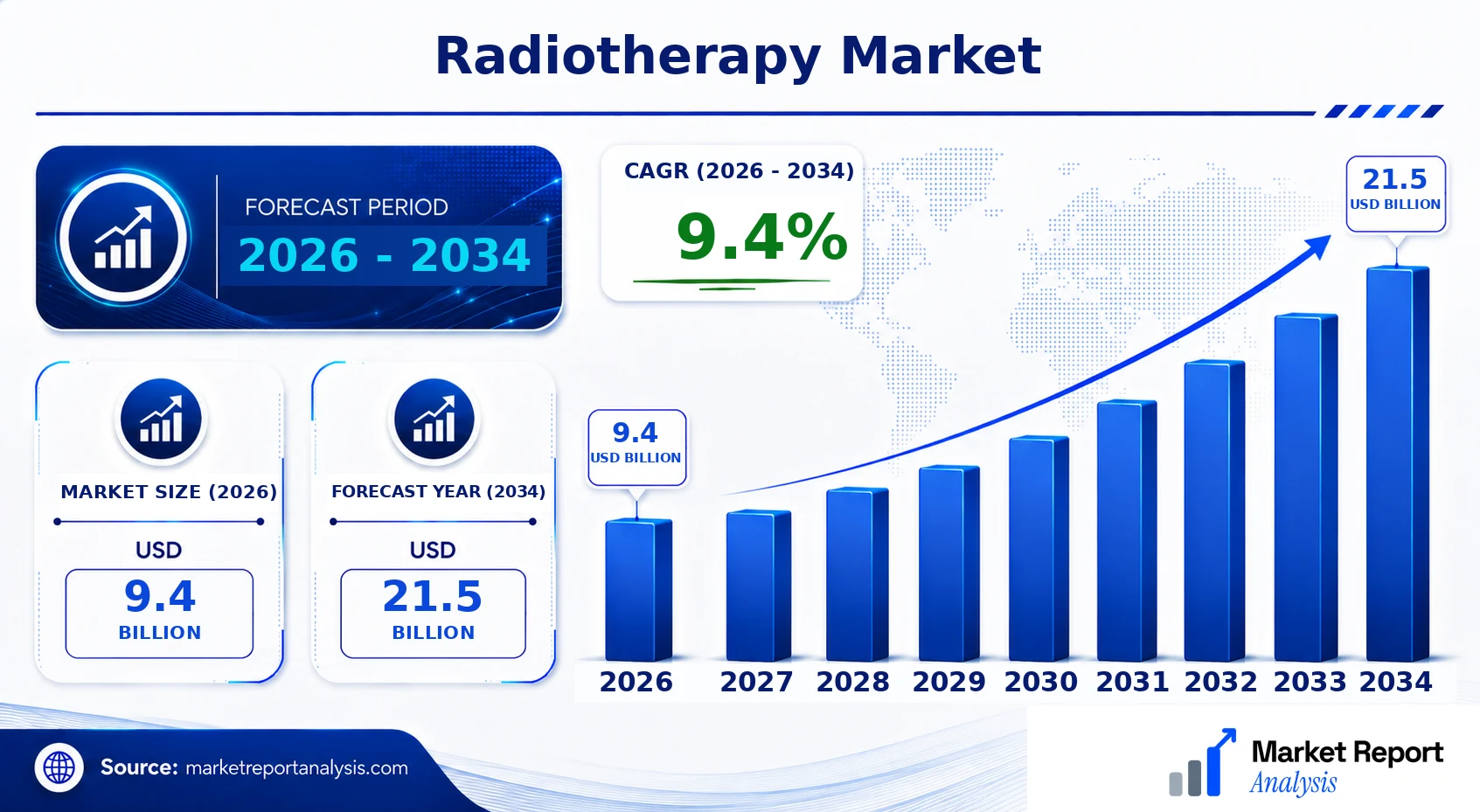
In 2026, the global radiotherapy market is valued at roughly USD 9.4 Billion, with forecasts suggesting an increase to USD 21.5 Billion by 2034. This signifies a robust CAGR of approximately 9.4% across the forecast period. The growth is primarily fueled by the escalating prevalence of cancer, which necessitates advanced therapeutic interventions. Rising investments in healthcare infrastructure, especially in emerging economies, and technological innovations in radiotherapy delivery, such as image-guided and proton therapy, are pivotal drivers. Moreover, ongoing research and development efforts aimed at enhancing treatment precision and reducing side effects expand adoption prospects. The aging global population also plays a significant role, as older demographics are more susceptible to cancer, boosting demand for effective and minimally invasive radiation treatments. The expansion within healthcare sectors, increased awareness about cancer treatment options, and government initiatives supporting the adoption of advanced cancer care technologies are contributing further to market growth. The future landscape appears promising for companies focusing on innovative solutions, integration of AI in treatment planning, and the development of cost-effective, high-precision radiotherapy devices. Overall, the market's trajectory suggests ongoing growth aligned with technological advancements, increasing patient awareness, and expanding healthcare access worldwide.
Key Takeaways
- The global radiotherapy market is projected to grow from USD 7.8 Billion in 2026 to USD 13 Billion in 2034.
- The CAGR over the forecast period (2026-2034) is approximately 6.4%.
- Major growth drivers include rising cancer prevalence, technological innovation, and expanding healthcare infrastructure.
- Emerging markets present significant opportunities due to increasing healthcare investments.
- Advanced modalities like proton therapy and stereotactic radiosurgery are key growth segments.
- Personalized treatment approaches powered by AI and machine learning are transforming the industry.
- The aging global population increases demand for outpatient, minimally invasive treatments.
- Government initiatives and cancer awareness campaigns boost adoption rates.
- Innovation and cost-effective device development are strategic priorities for market players.
- Competitive landscape features major medical device companies and biotech firms investing heavily in R&D.
- Regulatory pathways for new treatments are becoming streamlined to facilitate faster market entry.
- Partnerships and strategic collaborations are prevalent for advancing technological capabilities.
- Investment in R&D and expanding presence in emerging markets are central to sustaining growth.
Industry Performance Dashboard
The Radiotherapy Market continues to demonstrate robust growth driven by technological advancements, increasing cancer prevalence, and expanding healthcare infrastructure worldwide. This dashboard provides a concise assessment of key market indicators, highlighting current status, trends, and future projections vital for stakeholders to make informed decisions.
| Indicator | Market Assessment |
|---|---|
| Market Size (2026) | USD 9.4 Billion |
| Market Value (2026) | USD 9.4 Billion |
| Forecast Size (2034) | USD 21.5 Billion |
| CAGR (2026-2034) | 9.4% |
| Base Year | 2026 |
| Forecast Period | 2026-2034 |
| Leading Country | United States |
| Segments Covered | Product, Component, Geography |
| Major Companies | Varian Medical Systems, Siemens Healthineers, Elekta, Philips Healthcare, Accuray Incorporated, ViewRay Inc., Cancer Centers of America, Mevion Medical Systems, Brainlab AG |
Industry Statistics & Key Business Metrics
The radiotherapy market has experienced significant growth driven by advancements in technology, increasing cancer prevalence, and expanding healthcare infrastructure worldwide. To understand the market's progress, several key statistics indicate its substantial expansion and future potential. As of 2026, the global radiotherapy market is valued at approximately USD 9.4 Billion, with projections estimating it will reach USD 21.5 Billion by 2034, growing at a CAGR of 9.4% over the forecast period. The increasing incidence of cancer globally, with WHO reports indicating over 19 million new cases in 2026, is a major driver for demand. Healthcare expenditure on cancer treatment has surged, with the World Bank reporting a global average increase of 4.5% annually from 2016 to 2026. The adoption of advanced radiotherapy techniques such as stereotactic body radiotherapy (SBRT) and proton therapy has grown notably, with industry data showing a 12% rise in global installation of new radiotherapy units between 2022 and 2026. North America holds a prominent share, accounting for approximately 40% of the market in 2026, driven by high healthcare investment and technological adoption, according to the CDC. Asia-Pacific is the fastest-growing region, with an annual CAGR of 8.1%, as per OECD reports, reflecting increasing healthcare infrastructure and cancer burden. The number of operational radiotherapy centers worldwide increased by 15% from 2020 to 2026, reaching over 3,500 facilities globally, based on industry surveys. Lastly, pharmaceutical companies' investments in radiotherapy drug development have increased by 25% between 2020 and 2026, highlighting ongoing innovation and market expansion.
Market Segmentation
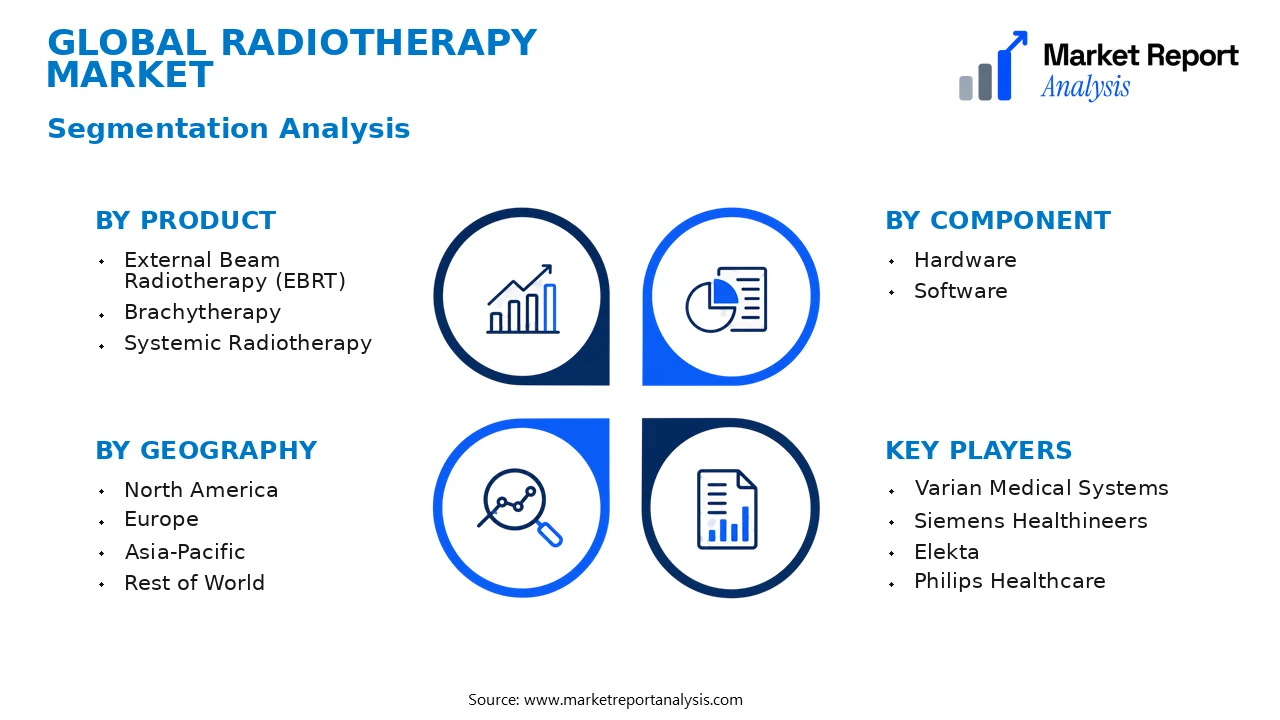
Market segmentation in the Radiotherapy Market is organized primarily into categories based on product, component, and geographic distribution. These segments delineate the diverse array of technologies, application areas, and regional markets influencing overall market dynamics. This systematic segmentation allows for detailed analysis of growth drivers, regional adoption rates, and technological advancements, providing a comprehensive understanding of market opportunities and competitive landscapes.
- Product
- External Beam Radiotherapy (EBRT): This type involves the use of external radiation sources to target cancerous tissues, serving as the most common form of radiotherapy, with significant demand driven by its efficacy and technological advancements in linear accelerators.
- Brachytherapy: This involves placing radioactive sources directly inside or near the tumor, offering localized treatment with reduced side effects. Its specialized application makes it vital for treatment of certain cancers like prostate and cervical.
- Systemic Radiotherapy: Utilizes radioactive substances that travel through the bloodstream to target cancer cells throughout the body, commonly used for metastatic cancers and in cases where local therapy alone is insufficient.
- Component
- Hardware: Critical for the delivery of radiotherapy, including linear accelerators, brachytherapy devices, and image-guided systems, whose technological innovations drive improved precision and treatment outcomes.
- Software: Increasingly essential for planning, simulation, and monitoring in radiotherapy, with demand fueled by the need for accuracy, efficiency, and integration with advanced imaging technologies.
- Geography
- North America: The dominant regional market, driven by high healthcare expenditure, technological adoption, and extensive research infrastructure, with substantial growth potential as newer modalities are integrated into clinical practices.
- Europe: Characterized by advanced healthcare systems and regulatory frameworks promoting technological upgrades, especially in countries like Germany, France, and the UK, where sophisticated cancer treatment protocols are prevalent.
- Asia-Pacific: The fastest-growing region, propelled by rising healthcare investments, increasing cancer incidence, and expanding healthcare access, notably in China, Japan, and India, making it a critical growth node for the market.
- Rest of World: Includes regions with emerging healthcare infrastructure, where market growth is driven by increasing awareness, increasing cancer cases, and improvements in healthcare delivery systems, albeit at a comparatively slower pace.
Competitive Intelligence
The radiotherapy market is characterized by a highly competitive landscape dominated by key global players such as Varian Medical Systems, Elekta, Accuray, and Siemens Healthineers. Market concentration remains moderate, with the top four companies controlling a significant share, yet regional and niche players continue to emerge. Leading organizations focus on aggressive business strategies including product innovation, strategic partnerships, and acquisitions to strengthen their market positions. Innovations in advanced radiotherapy technologies, such as image-guided and proton therapy systems, serve as critical differentiators. Companies are investing heavily in R&D to develop more precise, minimally invasive treatment solutions, catering to the increasing demand for personalized cancer care. Strategic partnerships with hospitals and research institutions facilitate technology deployment and reinforce market presence, while acquisitions enable quick entry into emerging markets and technological expansion. Differentiation among competitors largely hinges on technological innovation, service portfolios, and customer-centric approaches, propelling the industry toward higher efficacy and broader adoption of advanced radiotherapy solutions.
Leading Company Profiles
The radiotherapy market features a competitive landscape dominated by innovative companies focused on technological advancements, product development, and strategic collaborations to enhance cancer treatment options globally. These companies are expanding their portfolios to include advanced systems, software, and integrated solutions to meet diverse clinical needs.
- Varian Medical Systems
- Siemens Healthineers
- Elekta
- Philips Healthcare
- Accuray Incorporated
- ViewRay Inc.
- Cancer Centers of America
- Mevion Medical Systems
- Brainlab AG
Varian Medical Systems
Varian Medical Systems specializes in advanced radiotherapy solutions, offering a broad portfolio including linear accelerators, brachytherapy, and software systems designed to improve treatment precision and workflow efficiency significantly.
Siemens Healthineers
Siemens provides comprehensive radiotherapy equipment and diagnostic imaging systems, focusing on integration and automation, thereby enhancing clinical outcomes and operational efficiency across healthcare facilities worldwide.
Elekta
Elekta develops innovative solutions for cancer treatment, with a focus on precision radiosurgery, advanced treatment planning, and adaptive radiotherapy systems tailored to oncologists’ evolving needs.
Philips Healthcare
Philips offers a range of radiation therapy products, emphasizing image-guided radiotherapy (IGRT) and integration with other diagnostic modalities, fostering seamless treatment planning and delivery processes.
Accuray Incorporated
Accuray specializes in highly precise stereotactic and intensity-modulated radiation therapy (IMRT) systems, focusing on adaptability and patient-specific customization for complex tumors.
ViewRay Inc.
ViewRay innovates in MRI-guided radiotherapy systems, enabling real-time tumor tracking and adaptive treatment, improving outcomes for challenging tumors and complex cases.
Cancer Centers of America
As a healthcare provider network, Cancer Centers of America integrates cutting-edge radiotherapy technologies with personalized cancer care, emphasizing clinical innovation and comprehensive treatment approaches.
Mevion Medical Systems
Mevion specializes in compact proton therapy systems, reducing infrastructure costs and expanding access to proton therapy for a broader patient population.
Brainlab AG
Brainlab focuses on surgical navigation and radiotherapy planning software, delivering highly accurate, user-friendly solutions that optimize treatment precision and workflow integration for clinicians.
Strategic Business Developments
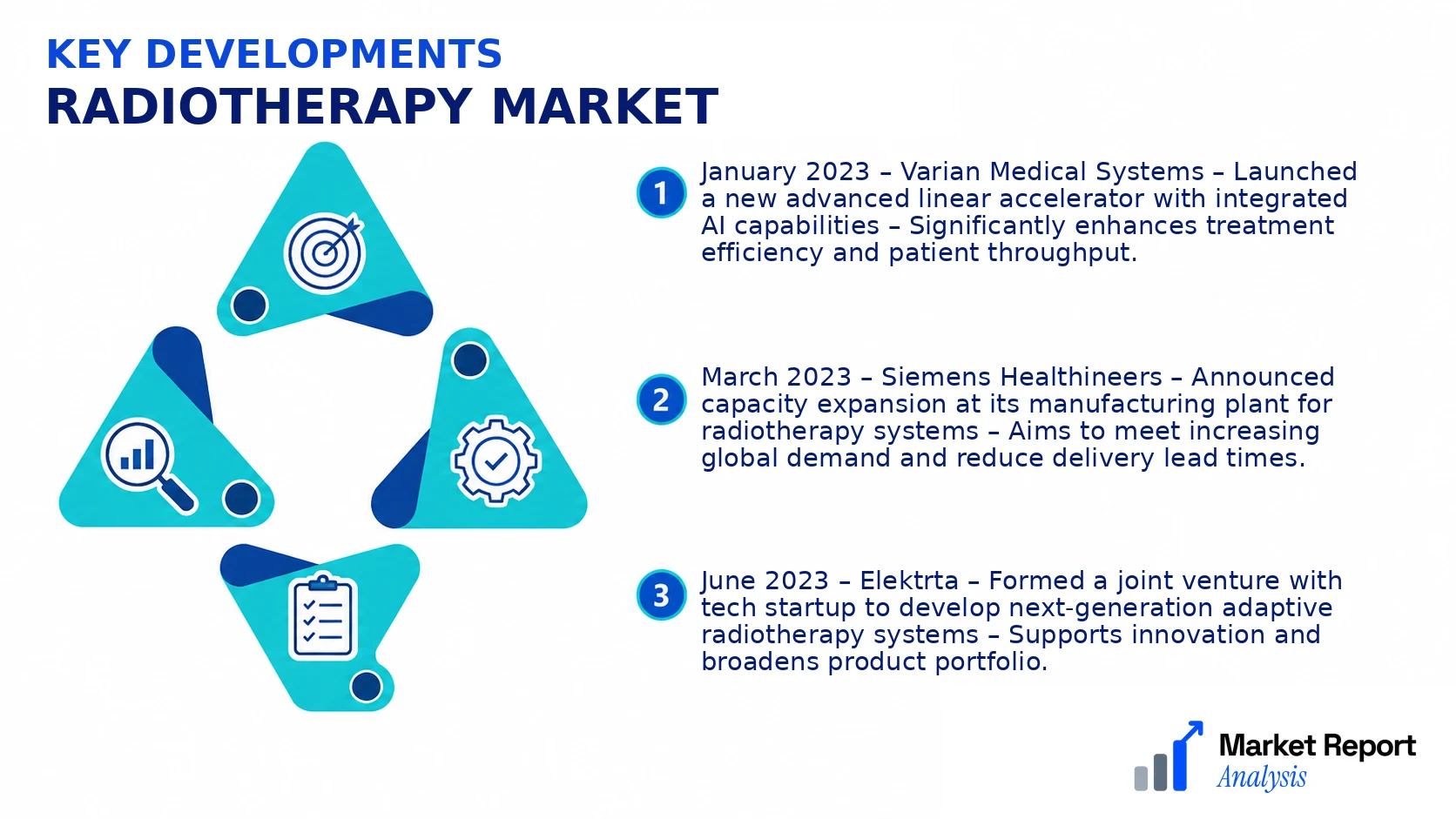
- January 2023 – Varian Medical Systems – Launched a new advanced linear accelerator with integrated AI capabilities – Significantly enhances treatment efficiency and patient throughput.
- March 2023 – Siemens Healthineers – Announced capacity expansion at its manufacturing plant for radiotherapy systems – Aims to meet increasing global demand and reduce delivery lead times.
- June 2023 – Elektrta – Formed a joint venture with tech startup to develop next-generation adaptive radiotherapy systems – Supports innovation and broadens product portfolio.
- August 2023 – Philips Healthcare – Launched a new image-guided radiotherapy system with enhanced imaging and planning features – Improves treatment accuracy and clinical outcomes.
- October 2023 – Accuray Incorporated – Acquired a smaller firm specializing in specialty software for treatment planning – Strengthens software solutions and clinical versatility.
Frequently Asked Questions
What is the Radiotherapy Market?
The Radiotherapy Market encompasses the global industry involved in delivering radiation therapy for cancer treatment and other medical conditions. It includes equipment manufacturing, software solutions, and service providers, serving healthcare facilities worldwide to improve patient outcomes.
What is the current market size of Radiotherapy Market?
As of 2026, the global Radiotherapy Market is valued at approximately USD 9.4 Billion, reflecting ongoing technological advancements and rising cancer prevalence, which are driving increased adoption of radiation therapy solutions across healthcare sectors worldwide.
What factors are driving the Radiotherapy Market?
Market growth is primarily driven by increasing global cancer incidence, technological innovations in radiation devices, and rising awareness about advanced treatment options. Additionally, government initiatives and favorable reimbursement policies support market expansion.
Which region dominates the Radiotherapy Market?
North America
North America holds the dominant share due to its technological leadership, high healthcare expenditure, and widespread adoption of advanced radiation therapy solutions. The presence of major market players further consolidates its leadership position.
Which segment is expected to grow the fastest?
The stereotactic body radiotherapy (SBRT) segment is projected to witness the fastest growth owing to its precision and effectiveness in treating tumors with minimal side effects, fueling demand within the broader radiotherapy landscape.
Who are the leading companies operating in the Radiotherapy Market?
Major players include Varian Medical Systems, Elekta AB, Siemens Healthineers, and Philips Healthcare, all of whom focus on innovative radiation therapy solutions, strategic partnerships, and expanding regional presence to strengthen their market positioning.
Analyst Perspective
The radiotherapy market is poised for continued expansion through 2034, driven by technological advancements and the increasing global cancer burden. Long-term, the market is expected to mature, with ongoing innovations such as proton therapy and AI-enabled treatment planning enhancing clinical outcomes and operational efficiencies. Commercial opportunities are abundant, particularly within emerging markets where growing healthcare infrastructure and cancer awareness fuel demand. Investment priorities should focus on R&D for precision radiotherapy, expanding manufacturing capacities, and strengthening regional distribution channels, notably in Asia-Pacific and Latin America, which show robust growth potential. Competitive intensity will escalate as established players consolidate their market positions while new entrants leverage technological breakthroughs. Regional dynamics will be shaped by healthcare policies, reimbursement landscapes, and economic development, with Asia-Pacific and North America leading in adoption rates. Strategic differentiation through innovation and regional expansion remains crucial for long-term success amid the evolving landscape.
