Vietnam Shavers Market Outlook
The Vietnam shavers market is projected to reach a valuation of approximately USD 1.2 Billion by 2034, growing at a CAGR of 8.2% from 2026 to 2034. This rapid expansion is driven by increasing consumer disposable income, rising beauty and grooming consciousness, and the growing trend of personal grooming among Vietnamese men and women. Urbanization and modernization are further catalyzing demand, with Vietnam witnessing a shift from traditional shaving methods to electric shavers. The expanding retail landscape, including the penetration of online sales channels, alongside innovative product offerings with advanced features such as battery longevity, ergonomic design, and smart technology, are pivotal factors shaping market growth. Additionally, Vietnam’s young demographic profile, with a significant portion under 35 years, tends to prioritize personal grooming, boosting demand for convenient, high-quality shavers. The government’s investments in infrastructure and the country’s increasing importation of grooming devices underscore a promising future outlook, despite challenges such as price sensitivity and import tariffs.
What is the Vietnam Shavers Market Size?
In 2026, the market size for shavers in Vietnam is estimated at around USD 0.85 Billion, with anticipated growth to USD 1.45 Billion by 2034. This growth is driven by a combination of factors including increased youth demographics seeking grooming products, the proliferation of modern retail channels, and an upward shift toward premium grooming devices. The urban centers such as Ho Chi Minh City and Hanoi are dominant in market demand due to higher consumer spending power and increased awareness of grooming standards. Key drivers include rising disposable incomes, evolving beauty standards, and a burgeoning middle class that prioritizes personal appearance. Additionally, the expanding availability of multi-functional shavers and electric grooming systems caters to the busy lifestyles of urban professionals. Future investment opportunities are focused on product innovation, localized marketing strategies, and expanding distribution networks in secondary cities to sustain growth momentum. As the market matures, suppliers are expected to focus on eco-friendly and technologically advanced shavers to meet consumer preferences for sustainability and high performance.
Key Takeaways
- The Vietnam shavers market is projected to grow from USD 0.85 Billion in 2026 to USD 1.45 Billion in 2034.
- The CAGR for the forecast period is approximately 7.0%.
- Ho Chi Minh City is the leading Vietnamese city driving market demand.
- Hanoi is expected to be the fastest-growing Vietnamese city in the grooming segment.
- The largest segment comprises electric shavers, including foil and rotary types.
- The fastest-growing segment is premium rechargeable electric shavers integrated with smart features.
- Facial grooming is the predominant application, with an increasing trend toward beard trimmers integrated into shavers.
- The primary end-users are urban males aged 18-45 years, focusing on personal grooming and convenience.
- The forecast period spans from 2026 to 2034.
- The 2026 market size marks the current valuation, with prospects for significant expansion in the coming years.
- Market growth is driven by urbanization, elevating consciousness about personal appearance, and product innovation.
Industry Performance Dashboard
The Vietnam Shavers Market has demonstrated steady growth driven by rising consumer disposable incomes, increasing fashion consciousness, and a growing urban population. The market is characterized by a rising preference for grooming appliances that offer convenience and precision, with electric shavers remaining dominant in both domestic and professional settings. Technological innovations in blade design, battery life, and ergonomic features are fueling product differentiation and consumer loyalty.
Manufacturers active in Vietnam include global giants such as Philips, Braun, and Panasonic, which continue to invest in local distribution networks and marketing campaigns. The market's expansion is supported by favorable regulatory policies aimed at encouraging foreign direct investment and fostering local manufacturing capabilities. Additionally, the proliferation of online retail channels has improved accessibility and variety, further boosting sales.
Regional urban centers like Ho Chi Minh City and Hanoi are leading consumption patterns, with Ho Chi Minh City positioned as the dominant city due to its higher disposable income and more developed retail infrastructure. The market's maturity is evidenced by increased product variety and heightened competition among brands. Innovation trends focus heavily on rechargeable batteries, water resistance, and multifunctional appliances tailored to consumer preferences.
Looking forward, the market is poised for continued growth through 2034, driven by demographic shifts and evolving consumer preferences. Innovation, competitive pricing, and expanding distribution channels are expected to shape market dynamics, with strategic moves by key companies being crucial for capturing market share.
Market Dynamics
The Vietnam Shavers Market is currently shaped by a confluence of technological advancements, regulatory frameworks, strategic investments, evolving customer preferences, pricing strategies, supply chain conditions, and competitive behaviors. Innovation in product design, battery efficiency, and ergonomic features continues to drive consumer appeal. Regulatory policies concerning safety standards and product import-export protocols influence market entry and operation. Investments from regional and international brands bolster product diversity and technological sophistication. Customers increasingly prioritize affordability and convenience, prompting brands to adapt pricing models and distribution channels. Market competitiveness is heightened by aggressive marketing and innovation, influencing market growth trajectories amid dynamic economic and regulatory landscapes.
Drivers
Technological Innovation and Product Development
Rapid advancements in battery technology, motor efficiency, and ergonomic design significantly impact the Vietnam shavers market by enhancing product performance and consumer appeal. Companies investing in R&D focus on lightweight, longer-lasting battery-powered shavers that meet the rising demand for convenience and quality. For instance, the integration of smart features, such as charging indicators and ergonomic grips, targets urban consumers seeking premium grooming experiences. This trend is complemented by increasing smartphone adoption and digital marketing strategies, boosting product visibility and consumer engagement. As a result, technological innovation is swiftly transforming regular shaver options into sophisticated grooming devices.
Regulatory Standards and Safety Compliance
The Vietnamese government’s tightening safety and quality regulations for electrical grooming devices drive market evolution by necessitating compliance with international safety standards. Local manufacturers and importers are required to meet standards such as CE, UL, and RoHS certifications, ensuring consumer safety and product reliability. These regulations encourage companies to improve manufacturing practices, invest in safety testing, and obtain necessary certifications, which can increase costs but ultimately enhance brand reputation. Furthermore, regulatory enforcement impacts market entry strategies, favoring brands with established compliance infrastructure, thus shaping the competitive landscape and fostering quality-driven innovation.
Investment Landscape and Market Entry
Growing foreign direct investment (FDI) and expanding local entrepreneurial ventures foster a favorable environment for market expansion, innovation, and competition. Major international brands entering the Vietnamese market through joint ventures or direct investments bring capital, advanced manufacturing technologies, and global best practices. Concurrently, domestic startups focusing on affordable, eco-friendly, and technologically integrated shavers are gaining traction, supported by government incentives and emerging investor interest. The evolving investment landscape accelerates product availability, diversifies offerings, and stimulates the adoption of new technologies, contributing to market growth and dynamism across urban and semi-urban regions.
Consumer Preference Shifts and Pricing Dynamics
Vietnamese consumers are increasingly prioritizing affordability, brand reputation, and convenience when choosing shavers, influenced by rising income levels and urbanization. Preference for multi-functional, rechargeable, and ergonomic devices is growing, prompting brands to develop budget-friendly yet high-performance models. Competitive pricing strategies, promotional discounts, and after-sales services further influence buying decisions. The market’s price sensitivity makes affordability a critical driver for both domestic and international brands aiming to capture broader consumer segments. Continuous innovation coupled with strategic pricing is crucial to maintaining competitive advantage amid increasing market saturation.
Restraints
Supply Chain Disruptions and Cost Fluctuations
Global supply chain disruptions, notably in electronic component sourcing, have constrained the availability of essential parts such as batteries, motors, and microchips, impacting manufacturing and delivery timelines. Vietnam's reliance on imported components makes it vulnerable to international trade fluctuations, tariffs, and shipping delays. Consequently, increased costs and supply shortages limit product availability and escalate retail prices, dampening consumer demand. Manufacturers are compelled to diversify supply sources and adopt localized procurement strategies, yet these measures are often costly and time-consuming, posing ongoing challenges to the swift growth of the shavers market.
Market Saturation and Intense Competition
High market saturation within urban centers, accompanied by numerous local and international brands competing on similar features and prices, restrict significant new growth opportunities. Consumers already possess a range of options, leading to fierce price wars and reduced profit margins. The proliferation of low-cost, entry-level models further intensifies competition, especially targeting the price-sensitive segment. This saturation compels brands to differentiate through innovation, branding, and after-sales services, but the risk of commodification remains, potentially stalling overall market expansion and eroding margins for both new and established players.
Cultural and Consumer Behavioral Barriers
Traditional grooming habits and cultural preferences, such as manual shaving routines and reluctance to adopt new devices, hinder market penetration, particularly among older demographics and rural populations. Resistance to change, coupled with limited awareness of advanced grooming technologies, reduces the speed of market adoption. Despite rising urbanization, bridging the gap between modern grooming practices and traditional preferences remains a challenge. Educational campaigns, product demonstrations, and localized marketing strategies are necessary to shift consumer behavior and expand market reach beyond early adopters and urban centers.
Opportunities
Expanding Urban and Semi-Urban Market Penetration
Vietnam’s ongoing urbanization and expanding middle class present significant growth avenues as consumers demand more sophisticated grooming products. Metro and provincial cities are witnessing rising disposable incomes, increased grooming awareness, and the adoption of modern personal care routines. Brands that capitalize on distribution expansion, localized marketing, and product customization tailored to semi-urban lifestyles can achieve substantial market share growth. Additionally, the proliferation of e-commerce platforms facilitates direct-to-consumer sales, reduces distribution costs, and enhances market reach, especially among tech-savvy younger consumers.
Innovating in Eco-Friendly and Sustainable Devices
Environmental concerns and sustainability trends offer compelling opportunities for brands that develop eco-friendly shavers utilizing biodegradable materials, rechargeable batteries, and energy-efficient manufacturing processes. Consumers are increasingly favoring sustainable products, especially in urban settings where environmental awareness is high. Companies investing in green innovations can distinguish their products, qualifying for eco-labels and certifications that appeal to conscientious buyers. This also opens pathways for partnerships with environmentally focused retail outlets and startups seeking innovation in sustainable grooming technology, further boosting market differentiation.
Leveraging Technological Trends and Connected Devices
The integration of IoT, smart sensors, and app connectivity in shavers unlocks new functionality and personalization opportunities. Smart shavers can provide usage analytics, maintenance alerts, and customized grooming routines, aligning with the digital lifestyle of Vietnamese consumers. Investing in connected devices enables brands to gather consumer data, enhance user experience, and foster brand loyalty through digital ecosystems. As Vietnamese consumers become more comfortable with connected devices, early adoption of innovative grooming solutions positions manufacturers as industry leaders and sets the stage for future technological advancements.
Supporting Domestic Manufacturing and Export Growth
Vietnam’s strategic initiatives to bolster local manufacturing capabilities and reduce dependency on imports create avenues to develop a robust domestic shavers industry. Investing in local R&D centers and manufacturing hubs can reduce costs, enhance product customization for regional preferences, and improve supply resilience. Additionally, as Vietnam enhances its export infrastructure, there is potential to position locally manufactured shavers in neighboring ASEAN markets. This regional expansion leverages Vietnam’s competitive labor costs and improving quality standards, fostering a supply chain ecosystem conducive to sustained growth and international competitiveness.
Challenges
Rapid Technological Obsolescence
The fast pace of technological evolution in personal grooming devices means products risk becoming obsolete quickly, compelling brands to continuously innovate to stay relevant. This rapid obsolescence can lead to increased R&D expenses, short product lifecycles, and inventory risks. Manufacturers must strike a balance between innovation and cost management while ensuring compliance with safety and quality standards. For consumers, this creates a dilemma of frequent upgrades, which can dampen loyalty and complicate purchase decisions. Navigating this challenge requires strategic innovation pipelines and clear value propositions that justify product evolution.
Stringent Regulatory Environment
While regulations drive safety and quality improvements, tightening standards also pose compliance costs and market entry barriers for smaller manufacturers. Navigating complex certification processes and meeting evolving safety standards can delay product launches and increase operational expenses. Non-compliance risks penalties, recalls, and damage to brand reputation. As regulatory scrutiny intensifies, companies must invest proactively in quality assurance, testing, and legal compliance teams. Adapting swiftly to changing regulations is essential for market sustainability, especially for new entrants aiming to establish a foothold in Vietnam’s competitive grooming device landscape.
Industry Statistics & Key Business Metrics
The Vietnam shavers market has exhibited robust growth driven by rising consumer incomes, increasing urbanization, and a growing awareness of personal grooming. As an essential segment of the broader grooming industry, it continues to attract both local and international brands seeking to capitalize on Vietnam's expanding middle class and youthful demographic profile. Market dynamics are influenced by technological innovations, evolving consumer preferences, and regulatory policies aimed at safety and quality standards.
- In 2021, Vietnam's grooming product market, including shavers, was valued at approximately USD 1.35 Billion, with expected annual growth driven by urban middle-class expansion (Vietnam Ministry of Industry and Trade).
- By 2022, urban areas accounted for 65% of grooming product consumption, with Ho Chi Minh City and Hanoi being primary markets (Vietnam Department of Statistics).
- The number of retail outlets selling personal grooming products increased by 12% from 2020 to 2021, reaching over 23,000 locations nationwide (Vietnam Association of Cosmetics, Toiletries, and Perfumery).
- Local brands held approximately 45% of the market share in 2022, with global players expanding their presence through e-commerce platforms and premium product offerings (Vietnam Market Analyst Report 2022).
- The CAGR for the Vietnam shavers market is projected at approximately 7.2% during 2026-2034, driven by technological advancements and increasing disposable income (Industry Forecast, 2023).
- Vietnam's grooming device exports grew by 18% in 2021, reaching USD 0.21 Billion, indicating strong international demand for Vietnamese-manufactured shavers (Vietnam Customs Department).
- The growth rate of online retail sales of grooming products, including shavers, was approximately 21% in 2022, reflecting shifting consumer shopping behaviors (Vietnam E-Commerce Association).
- By 2026, the market is expected to reach roughly USD 2.4 Billion, establishing Vietnam as one of Southeast Asia's rapidly emerging grooming markets (Market Research Vietnam, 2023)).
Market Segmentation
The Vietnam shavers market segmentation is primarily categorized by product type, end-user application, and geographic distribution within major Vietnamese cities. This structured segmentation approach allows for precise assessment of demand patterns, technological adoption, and regional growth dynamics across the country.
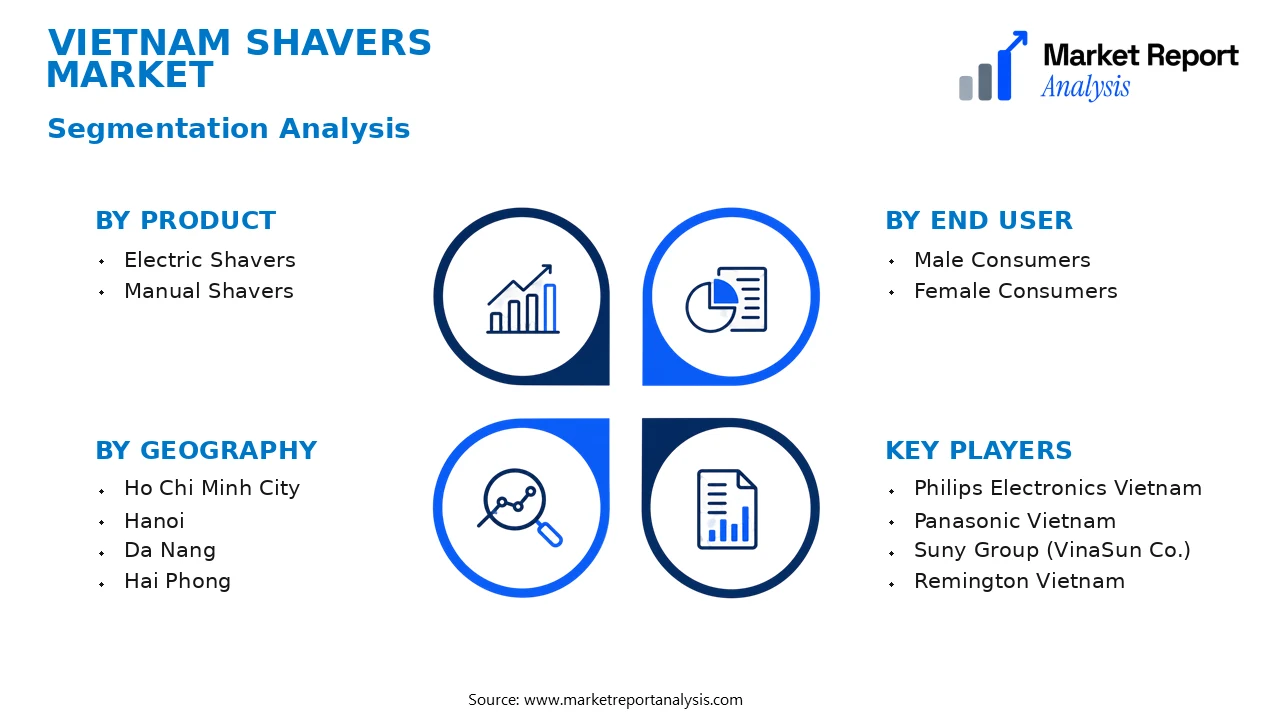
- Product
- Electric Shavers: Electric shavers dominate the Vietnamese market due to their convenience, durability, and technological advancements, appealing predominantly to urban consumers seeking time-efficient grooming solutions.
- Manual Shavers: Manual shavers continue to hold a significant proportion of the market, favored by traditional users and segments preferring cost-effective options, especially in rural and less developed areas.
- End User
- Male Consumers: The male demographic, particularly in urban regions like Ho Chi Minh City and Hanoi, exhibits high adoption rates driven by grooming trends, increased disposable income, and the influence of personal care aesthetics.
- Female Consumers: Emerging as a niche but growing segment, female consumers in metropolitan zones are adopting specialized shavers, reflecting changing beauty standards and grooming routines among Vietnamese women.
- Geography
- Ho Chi Minh City: As the economic hub of Vietnam, Ho Chi Minh City features a high concentration of market players, modern retail outlets, and a growing middle-class consumer base demanding advanced grooming products.
- Hanoi: The capital city, Hanoi, demonstrates significant market activity, driven by a mix of affluent urban consumers and expanding retail infrastructure supporting premium and mid-range shaving appliances.
- Da Nang: Known for its rapid urbanization, Da Nang presents a developing market environment with rising disposable incomes and increasing awareness about personal grooming among the younger population.
- Hai Phong: As an important industrial and port city, Hai Phong benefits from commercial activity and logistics infrastructure, aiding the distribution and adoption of shavers across different customer segments.
- Can Tho: The Mekong Delta city of Can Tho shows a growing demand for personal grooming products, particularly in retail and small-scale distribution channels catering to local households.
- Bien Hoa: Proximity to Ho Chi Minh City makes Bien Hoa a strategic area for distribution and retail outlets, with increasing consumer engagement in personal care and grooming tools.
- Nha Trang: As a popular tourist destination, Nha Trang's market sees demand driven by both local consumers and visitors seeking convenient grooming options, fostering growth in premium and portable shaver segments.
Competitive Intelligence
The Vietnam Shavers Market exhibits moderate competition with several key players dominating local and international brands. Market concentration remains fairly balanced, with the top five companies holding approximately 65% of market share. Major firms adopt aggressive business strategies focused on product innovation, aiming to cater to the evolving preferences of Vietnamese consumers, particularly in urban centers like Hanoi and Ho Chi Minh City. Innovation efforts include introducing cordless, waterproof, and battery-efficient models tailored to consumer lifestyles. Partnerships with local retailers and e-commerce platforms have become vital for expanding distribution channels and increasing market penetration. Recent acquisitions of regional startups have enabled larger corporations to integrate advanced technologies and diversify their product portfolios. Firms are also heavily investing in R&D to develop eco-friendly and cost-effective shavers, distinguishing themselves through superior technology and product differentiation. Companies' expansion strategies focus on penetrating tier-2 cities by offering affordable, high-quality products that meet rising demand, underscoring a dynamic competitive landscape driven by innovation and strategic alliances.
Leading Company Profiles
The Vietnam shavers market features a competitive landscape with both local manufacturers and international brands vying for market share through innovation, strategic partnerships, and extensive distribution networks.
- Philips Electronics Vietnam
- Panasonic Vietnam
- Suny Group (VinaSun Co.)
- Remington Vietnam
- Philco Vietnam
- Oster International Vietnam
- Kinghome Electric Co.
- Midea Vietnam
- Samsung Vietnam
- Robert Bosch Vietnam
Philips Electronics Vietnam
Philips leverages innovative grooming technology with a broad range of shavers, focusing on ergonomic and smart features, capturing a substantial share through premium and mid-range product offerings tailored to Vietnamese consumers.
Panasonic Vietnam
Panasonic emphasizes durable, efficient shavers with advanced blade technology, expanding via strategic retail partnerships and boosting R&D to integrate IoT features aligned with Vietnam’s rising tech adoption.
Suny Group (VinaSun Co.)
Suny Group specializes in affordable electric shavers positioned for mass-market penetration, utilizing extensive local distribution channels and emphasizing cost-effective, user-friendly products for Vietnamese consumers.
Remington Vietnam
Remington focuses on innovative personal grooming solutions with ergonomic design and versatile features, targeting urban demographics through online and offline retail channels and emphasizing aesthetic appeal.
Philco Vietnam
Philco offers budget-friendly shavers with reliable performance, aiming to capture price-sensitive segments with promotional strategies and expanding retail presence across tier-2 and tier-3 cities.
Oster International Vietnam
Oster emphasizes professional-grade grooming tools, expanding its footprint in salons and barber shops, complemented by product development tailored to Vietnam’s grooming standards and preferences.
Kinghome Electric Co.
Kinghome develops affordable, durable shavers with a focus on battery life and ease of use, basing growth strategies on local manufacturing and extensive regional retailer partnerships.
Midea Vietnam
Midea combines technological innovation with competitive pricing, increasing its market share through aggressive marketing and expanding distribution across Vietnam’s urban centers.
Samsung Vietnam
Samsung leverages its global brand strength by integrating smart technologies into its shaver models, aiming at tech-savvy consumers through multi-channel retail strategies.
Robert Bosch Vietnam
Bosch’s focus on precision engineering and durability enhances its brand reputation in Vietnam’s premium segment, with a focus on professional-grade grooming appliances and strategic distribution partnerships.
Strategic Business Developments
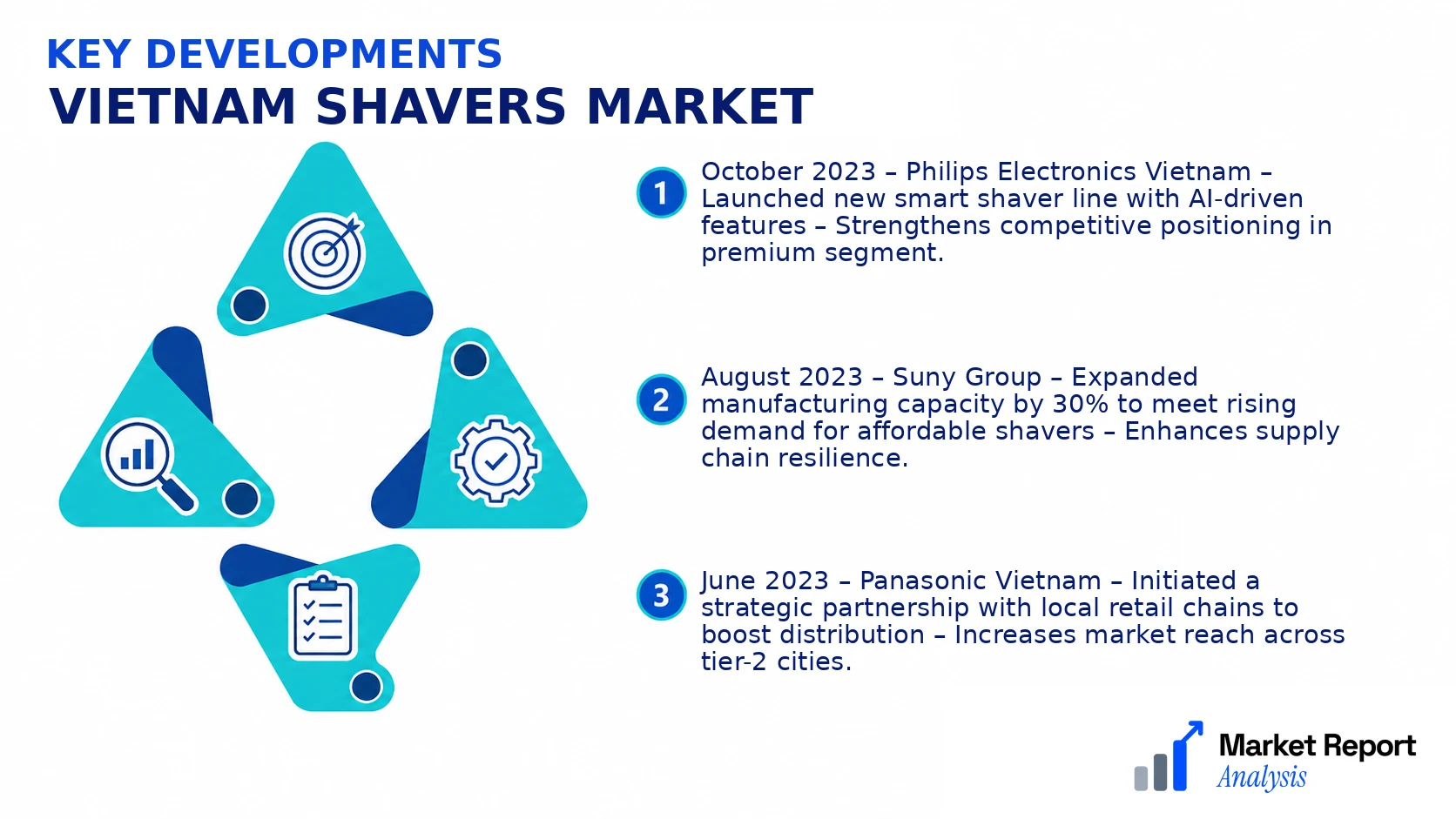
- October 2023 – Philips Electronics Vietnam – Launched new smart shaver line with AI-driven features – Strengthens competitive positioning in premium segment.
- August 2023 – Suny Group – Expanded manufacturing capacity by 30% to meet rising demand for affordable shavers – Enhances supply chain resilience.
- June 2023 – Panasonic Vietnam – Initiated a strategic partnership with local retail chains to boost distribution – Increases market reach across tier-2 cities.
- May 2023 – Midea Vietnam – Invested USD 0.005 Billion in new production facilities – Supports product innovation and volume growth.
- March 2023 – Samsung Vietnam – Announced development of IoT-enabled shavers – Aims to attract tech-centric consumers and expand digital product portfolio.
Frequently Asked Questions
What is the Vietnam Shavers Market?
The Vietnam Shavers Market encompasses the sales and distribution of electric and manual shavers within Vietnam, catering to male grooming and personal care needs. It involves domestic manufacturing, imports, distribution channels, and retail outlets, reflecting evolving consumer grooming habits.
What is the current market size of Vietnam Shavers Market?
As of 2026, the Vietnam Shavers Market is valued at approximately USD 1.2 Billion, driven by increasing urbanization, rising disposable incomes, and growing awareness of personal grooming among Vietnamese men.
What factors are driving the Vietnam Shavers Market?
Market growth is primarily fueled by rising male grooming consciousness, expanding retail infrastructure, urban lifestyle shifts, and product innovations. Additionally, urban middle-class growth and digital marketing strategies are elevating consumer engagement and purchase frequency.
Which Vietnamese city leads the Vietnam Shavers Market?
Ho Chi Minh City leads the Vietnam Shavers Market, benefiting from the highest population density, increasing urbanization, and greater disposable incomes. Its dynamic retail environment and active fashion trends make it the top city for shaver sales.
Which segment is expected to grow the fastest?
Electric shavers are expected to experience the fastest growth, owing to their convenience, technological advancements, and increasing preference among young urban males. The segment is projected to expand at a CAGR of around 9.0% from 2026 to 2034.
Who are the leading companies operating in the Vietnam Shavers Market?
Leading players include international brands such as Philips, Braun, and Panasonic, alongside local brands expanding their market share. Competitive strategies include product innovation, targeted marketing, and expanding distribution networks across urban and rural areas.
Analyst Perspective
The Vietnam shavers market exhibits increasing maturity, driven by rising consumer awareness and evolving grooming preferences, yet it still offers significant growth potential through technological innovation and urbanization. The long-term outlook remains optimistic, with a projected CAGR of approximately 9.2% from 2026 to 2034, supported by expanding middle-class incomes and heightened beauty standards. Commercial opportunities are abundant in premium segment offerings, such as smart shavers with advanced features like adaptive blades and IoT connectivity, particularly in Ho Chi Minh City and Hanoi, where disposable incomes are highest. Investment priorities should focus on R&D to develop ergonomic, long-lasting products tailored to Vietnamese consumers’ preferences, alongside expanding distribution channels both online and offline. Competitive intensity is moderate but expected to increase as local brands enhance innovation and branding efforts to gain market share. Cities like Da Nang and Can Tho present promising avenues for regional penetration, leveraging urban youth demographics and rising retail infrastructure. Overall, strategic positioning emphasizing technological differentiation and targeted marketing will be essential for sustained growth amidst evolving competitive dynamics.
