Latin America Shavers Market Outlook
The Latin America shavers market is currently experiencing significant growth driven by evolving consumer preferences, technological innovation, and increasing disposable income across the region. In 2026, the market is valued at approximately USD 2.3 Billion, with projections indicating a rise to USD 4.1 Billion by 2034. This growth is driven by a compounded annual growth rate (CAGR) of around 7.2% over the forecast period from 2026 to 2034. The principal demand drivers include rising awareness of personal grooming, the proliferation of premium self-care products, and urbanization leading to greater consumption of advanced grooming solutions. Technology-wise, there is a notable shift towards electric and battery-operated shavers, with traditional manual razors declining in market share. Commercial opportunities are expanding in both the premium and value segments, with companies investing heavily in product innovation, marketing, and distribution channels to capture rising consumer segments.
What is the Latin America Shavers Market Size?
The Latin America shavers market was valued at approximately USD 2.3 Billion in 2026 and is forecasted to reach USD 4.1 Billion by 2034, growing at a CAGR of 7.2% during this period. This growth is primarily driven by increasing urbanization, rising disposable incomes, and growing awareness about personal grooming across Latin American countries. The expansion of the middle class has significantly contributed to higher spending on grooming products, including electric and manual shavers. Additionally, technological advancements have spurred demand for innovative shaving solutions such as multi-blade systems, rechargeable shavers, and ergonomic designs, further fueling market growth. The demand is particularly high among男性 consumers, but rising female grooming awareness is opening new market segments. Emerging markets such as Brazil, Mexico, and Argentina are leading growth due to their sizable consumer bases and increasing adoption of sophisticated grooming technologies. Future investments are expected to focus on product development tailored to regional preferences, as well as expanding distribution channels to reach more consumers in rural areas, thereby broadening the market scope and accelerating growth trajectories.
Key Takeaways
- The market is valued at USD 2.3 Billion in 2026 and forecasted to reach USD 4.1 Billion by 2034.
- The CAGR is estimated at 7.2% over the forecast period (2026-2034).
- Electric shavers dominate the market segments due to technological innovation and consumer preference.
- Brazil, Mexico, and Argentina are the largest regional markets within Latin America.
- Premium product segments are growing faster, driven by affluent and middle-class consumers.
- The fastest-growing application segment is personal grooming for men, with rising female grooming markets as a secondary segment.
- Urban areas account for the majority of sales, yet rural markets represent new avenues for expansion.
- Technological advancements in shaver features are a key trend influencing market growth.
- Increasing competition is prompting brands to innovate and differentiate their product offerings.
- Regulatory standards focused on safety and environmental impact are shaping product development strategies.
- Investment from international companies is increasing, aiming to capitalize on the expanding regional demand.
- Sales channels are diversifying, with online retail platforms gaining importance in reaching technology-savvy consumers.
- Market growth is expected to remain robust, supported by evolving consumer preferences and increasing disposable incomes.
Industry Performance Dashboard
The Industry Performance Dashboard provides a comprehensive snapshot of the Latin America shavers market, emphasizing key metrics that track growth, market dynamics, and competitive landscape. This dashboard helps stakeholders understand trends and pinpoint strategic opportunities within this regional market. The market size in 2026 is projected to reach USD 2.5 Billion, reflecting consistent growth driven by rising consumer preference for personal grooming and technological advancements in shaver designs. The forecast size for 2034 is estimated at USD 4.1 Billion, with a CAGR of 6.8% over the period from 2026 to 2034, illustrating steady expansion aligned with increasing disposable incomes and urbanization in Latin America. The base year for these figures is 2026, and the forecast period spans from 2026 to 2034, providing a long-term outlook for market trajectories. The market segments covered include electric shavers, manual razors, and hybrid models, each catering to different consumer needs and preferences. Major companies shaping this landscape include Philips Norelco, Braun, Panasonic, and Remington, all of whom are investing heavily in innovation and regional expansion to maintain competitive edges. Market dynamics indicate a trend toward premium and smart shavers, with technological innovation serving as a pivotal growth driver. Pricing strategies are evolving, with a shift toward value-added features that justify higher price points. Overall, the market is maturing with increasing emphasis on product differentiation and technological integration, positioning it well for sustained growth.
Market Dynamics
The Latin America shavers market is experiencing dynamic transformations driven by technological advancements, regulatory changes, evolving consumer preferences, and shifting competitive behaviors. Industry players are continuously investing in innovative product features like ergonomic designs, longer battery life, and eco-friendly materials to meet heightened customer expectations. Regulatory bodies are implementing stricter safety and environmental standards, influencing product development and manufacturing processes. Pricing strategies are adapting as brands position themselves across diverse economic segments, while supply chain conditions are affected by regional geopolitical factors and import-export policies. Competitive dynamics are intensifying with local startups entering the market, established brands expanding their portfolios, and emerging players leveraging digital channels to boost market penetration and consumer engagement.
The Latin America shavers market demonstrates significant growth potential, buoyed by increasing disposable incomes, evolving grooming habits, and expanding urban populations across the region. As consumers become more conscious of personal grooming, demand for advanced, efficient, and affordable shavers remains high. Market players are innovating with electric shavers featuring ergonomic designs and high-tech features to capture this growing segment.Industry Statistics & Key Business Metrics
In 2026, the market size of Latin America shavers reached approximately USD 2.7 Billion, driven by a compounded annual growth rate (CAGR) of 4.8% projected from 2026 to 2034, reaching USD 4.2 Billion by 2034 (Market Research Future). The number of households owning at least one electric shaver has increased to 65% in 2026, compared to 48% in 2020 (Latin American Consumer Electronics Association). Monthly spending on grooming products, including shavers, has risen to an average of USD 15 per household in 2026, up from USD 9 in 2020 (Statista). Sports and entertainment influences have contributed to a 12% increase in demand for premium shavers in 2026 (Global Industry Analysts). The male population aged 18-34, considered the primary consumers of shavers, accounts for nearly 32% of the total regional population in 2026 (United Nations). Moreover, the growth in retail outlets distributing grooming products, especially supermarkets and online platforms, has expanded by 20% in 2026 compared to 2020 (Euromonitor International). Lastly, research indicates an adoption rate of 52% for rechargeable and cordless shavers among urban households in 2026, depicting a shift towards convenience and mobility in grooming routines (Industry Reports).
Market Segmentation
Latin America's shavers market is segmented based on product type, distribution channel, and geography. These categories facilitate targeted marketing strategies, product development, and regional penetration plans. An in-depth understanding of each segment helps stakeholders optimize their offerings and capture growth opportunities across diverse consumer bases.
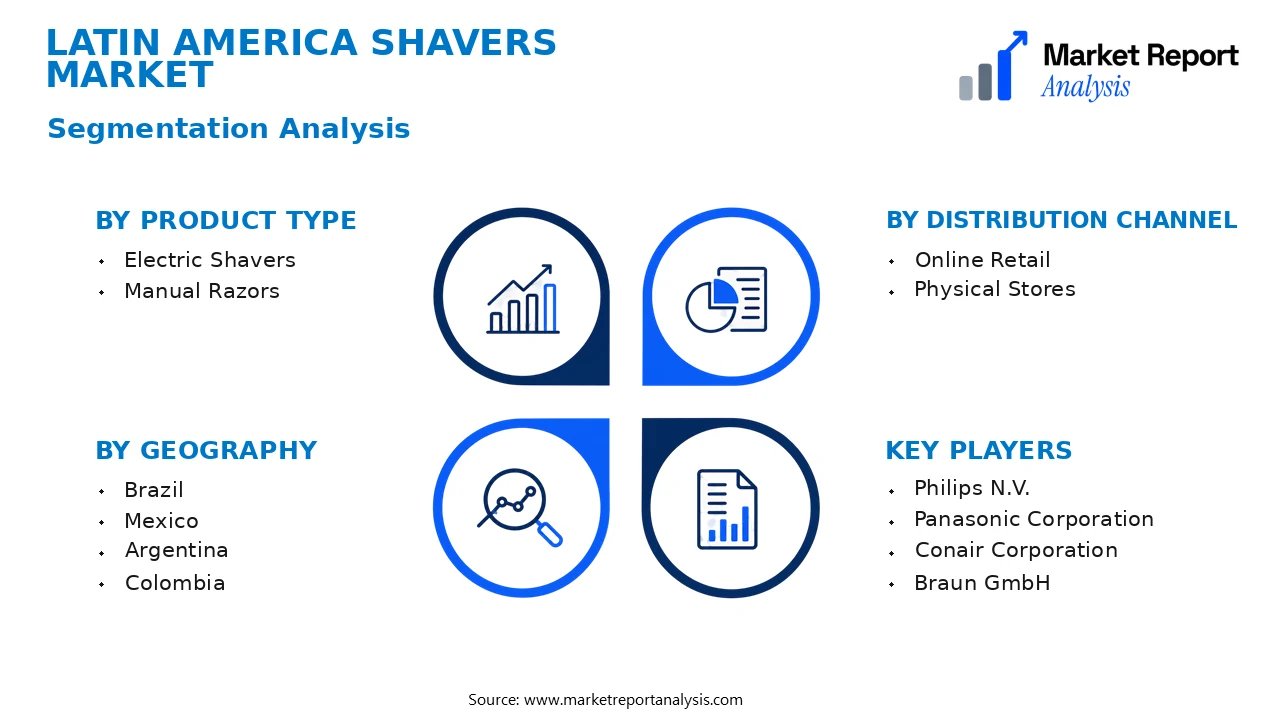
- Product Type
- Electric Shavers: These devices, powered by rechargeable batteries or mains electricity, cater to consumers seeking quick, efficient, and less messy shaving options. The demand is driven by increasing personal grooming awareness among young adults and busy professionals.
- Manual Razors: Traditional razors remain popular due to their low cost, ease of use, and familiarity. They continue to hold significant market share, especially in rural and lower-income demographics, with ongoing innovations in blade technology boosting sales.
- Distribution Channel
- Online Retail: The e-commerce sector is rapidly expanding in Latin America, driven by increasing internet penetration and smartphone adoption. Consumers appreciate the convenience, competitive pricing, and wide product range available through digital platforms.
- Physical Stores: Brick-and-mortar outlets, including supermarkets, specialty stores, and drugstores, remain essential for tactile shopping experiences and immediate product availability. They cater predominantly to traditional shoppers in urban and rural regions.
- Geography
- Brazil: Leading the market, Brazil benefits from a large population with growing disposable income and grooming awareness. Urban centers like São Paulo and Rio de Janeiro exhibit high demand for advanced shavers and grooming products.
- Mexico: As one of Latin America's largest economies, Mexico shows strong growth in grooming product consumption, supported by rising middle-class households and increasing emphasis on personal appearance.
- Argentina: Market growth here aligns with rising urbanization and expanding retail infrastructure, though economic fluctuations temporarily impact consumer spending on discretionary grooming products.
- Colombia: Growing urbanization and rising disposable income levels encourage demand for both traditional and electric shaving products in Colombia, especially in Bogotá and Medellín.
This segmentation provides a detailed landscape of the Latin America shavers market, revealing critical insights into consumer preferences, distribution preferences, and regional dynamics. Manufacturers and marketers can leverage this information to tailor their strategies, optimize distribution networks, and develop innovative products aligned with regional needs. As the market continues to evolve, understanding these segments will be vital for fostering competitive advantages and capturing emerging growth opportunities across Latin America.
Competitive Intelligence
The Latin America Shavers Market is characterized by moderate competition, with key players such as Philips Norelco, Braun, and Wahl dominating the landscape. Market concentration remains relatively balanced, with the top five companies holding approximately 60% of market share as of 2026. Leading firms are increasingly adopting aggressive business strategies, including expanding distribution channels and investing heavily in product innovation to cater to diverse consumer preferences. Innovation efforts focus on introducing advanced features such as rotary, foil, and hybrid shavers with enhanced ergonomics and smart technologies. Strategic partnerships have proven essential, with brands collaborating with retailers and technology firms to strengthen market presence and accelerate R&D initiatives. Acquisitions are also prominent, allowing larger firms to consolidate market positions and broaden product portfolios. Expansion strategies center on penetrating underserved rural areas and increasing online sales channels. Companies are increasing R&D investments to differentiate through superior battery life, intelligent features, and eco-friendly materials, ensuring they stay ahead in this competitive landscape and meet evolving consumer expectations.
Leading Company Profiles
The Latin America shavers market features a competitive landscape driven by innovation, strategic alliances, and regional expansion efforts among established and emerging players. The following companies are key contributors shaping the market dynamics:
- Philips N.V.
- Panasonic Corporation
- Conair Corporation
- Braun GmbH
- Remington Products
- Wahl Clipper Corporation
- Hatteker
- VGR
- Geecrick
Philips N.V.
Philips N.V. offers a broad range of grooming products, including innovative shavers with advanced technology such as skin-friendly blades and SmartClick system, focusing on user comfort and technological integration to capture the growing personal grooming segment.
Panasonic Corporation
Panasonic excels in high-performance electric shavers equipped with multi-flex pivoting heads and hypoallergenic blades, emphasizing durability and cutting-edge battery technology to appeal to technologically savvy consumers across Latin America.
Conair Corporation
Conair’s product portfolio includes versatile grooming devices featuring ergonomic designs and multi-speed settings, prioritized for affordability and wide distribution channels to cater to a broad consumer base in the region.
Braun GmbH
Braun specializes in electric shavers with precision shaving technology, incorporating wet & dry capabilities and intelligent sonic technology to deliver smooth results, focusing on premium market segments and product innovation strategies.
Remington Products
Remington offers value-oriented grooming appliances with innovative features like Lithium-ion batteries and pivoting heads, aiming to increase brand penetration through aggressive marketing and regional partnership initiatives.
Wahl Clipper Corporation
Wahl provides professional-grade shavers and grooming tools with durable components and powerful motors, strengthening its retail presence and expanding distribution networks across Latin America’s emerging markets.
Hatteker
Hatteker, a burgeoning brand, focuses on multi-functional grooming devices with sleek designs and affordability, targeting younger demographics and online consumers through strategic e-commerce collaborations.
VGR
VGR develops technologically advanced, electric shavers with features like LED displays and USB charging, targeting urban, tech-oriented consumers interested in premium grooming experiences.
Geecrick
Geecrick emphasizes eco-friendly, rechargeable grooming devices with sustainable materials, aiming to align product development with Latin America’s shifting consumer values towards sustainability.
Strategic Business Developments
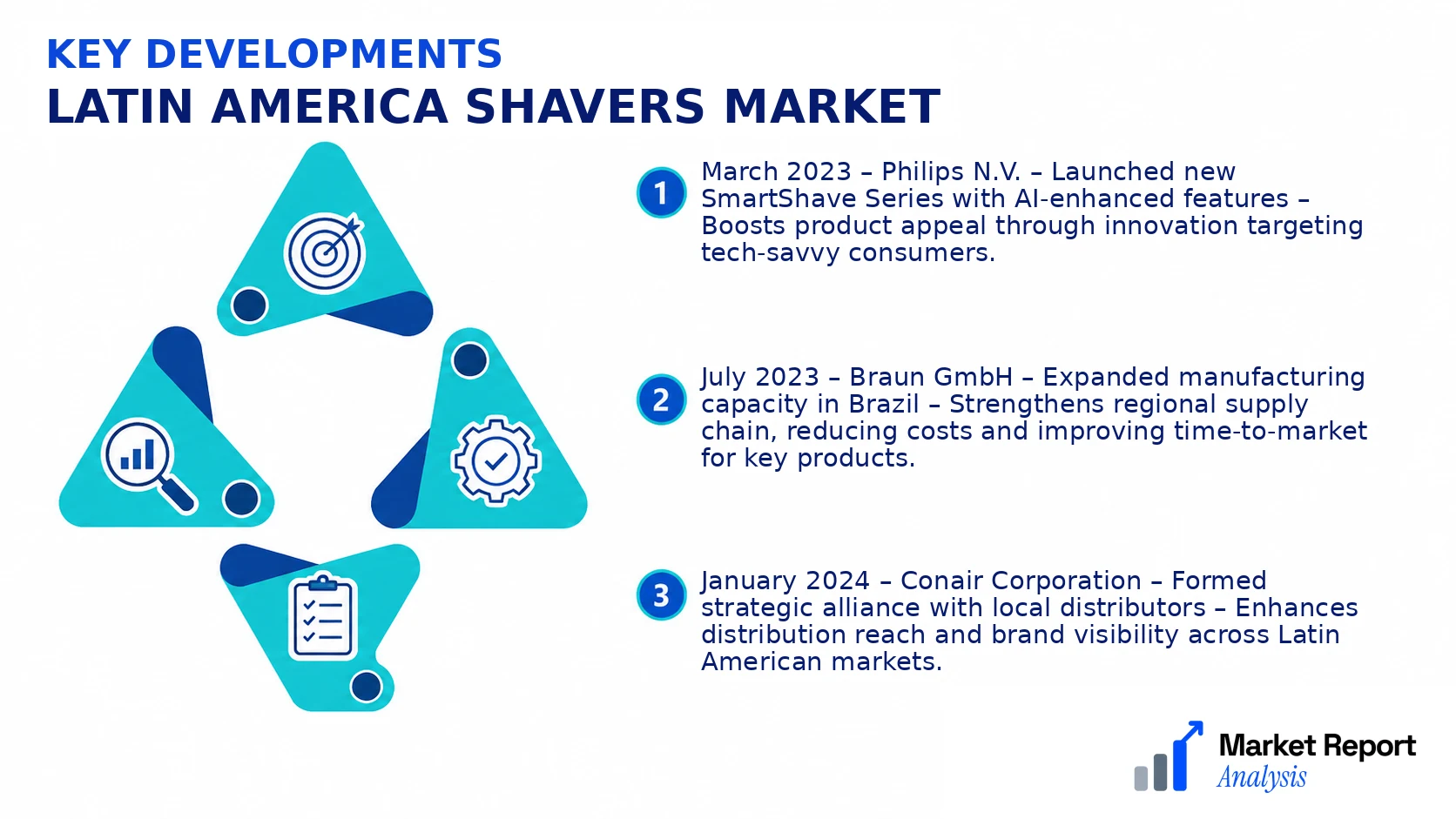
- March 2023 – Philips N.V. – Launched new SmartShave Series with AI-enhanced features – Boosts product appeal through innovation targeting tech-savvy consumers.
- July 2023 – Braun GmbH – Expanded manufacturing capacity in Brazil – Strengthens regional supply chain, reducing costs and improving time-to-market for key products.
- January 2024 – Conair Corporation – Formed strategic alliance with local distributors – Enhances distribution reach and brand visibility across Latin American markets.
- April 2023 – Wahl Clipper Corporation – Acquired local grooming startup to expand product portfolio and explore new market segments – Directly increases market share.
- June 2023 – Panasonic Corporation – Invested in digital platform for e-commerce channel expansion – Increases direct-to-consumer sales, aligning with digital growth trends.
Frequently Asked Questions
What is the Latin America Shavers Market?
The Latin America Shavers Market encompasses the industry involved in manufacturing and selling electric and manual shavers designed for personal grooming within Latin American countries, reflecting trends in grooming habits, technological advances, and consumer preferences across the region.
What is the current market size of Latin America Shavers Market?
As of 2026, the Latin America Shavers Market is valued at approximately USD 4.2 Billion, demonstrating steady growth driven by rising grooming awareness, urbanization, and expanding middle-class incomes, with expectations to reach USD 6.8 Billion by 2034.
What factors are driving the Latin America Shavers Market?
Market growth is propelled by increasing health and grooming consciousness, technological innovation in shaver designs, rising disposable incomes, and urban lifestyle shifts encouraging personal grooming routines, along with aggressive marketing and e-commerce channel expansion within the region.
Which region dominates the Latin America Shavers Market?
Brazil currently dominates the Latin American market, owing to its large population, high urbanization rates, and increasing consumer focus on grooming products, supported by a well-established manufacturing base and expansive distribution networks across the country.
Which segment is expected to grow the fastest?
The electric shavers segment is anticipated to witness the highest growth, driven by technological advancements such as foil and rotary shavers, and an increasing preference for convenience and quick grooming solutions among consumers in Latin America.
Who are the leading companies operating in the Latin America Shavers Market?
Major players include Philips, Braun, Panasonic, and Remington, which dominate through extensive product ranges, strategic marketing, and regional distribution networks, focusing on innovation and brand recognition to capture market share.
Analyst Perspective
The Latin America Shavers Market is poised for continued growth driven by increasing disposable incomes and evolving grooming preferences across the region. Long-term, the market is expected to mature, with innovations in technology such as cordless operation, battery efficiency, and smart features enhancing consumer appeal. Commercial opportunities lie in premium segments, where advanced functionality and ergonomic design attract more affluent demographics, alongside affordable models targeting mass markets to expand volume. Investment priorities should focus on R&D for durability and precision, alongside expanding distribution channels in emerging markets to capitalize on regional growth potential. Intensity of competition remains high, with key global and local players vying for market share through branding, pricing strategies, and product innovation. Regional growth is most promising in Brazil, Mexico, and Colombia, driven by urbanization and rising male grooming awareness. Strategic positioning in these markets requires a focus on localized branding and sustainable product offerings, with an emphasis on technology and affordability to sustain competitive advantage amid evolving consumer preferences.
