Saudi Arabia PropTech Market Outlook
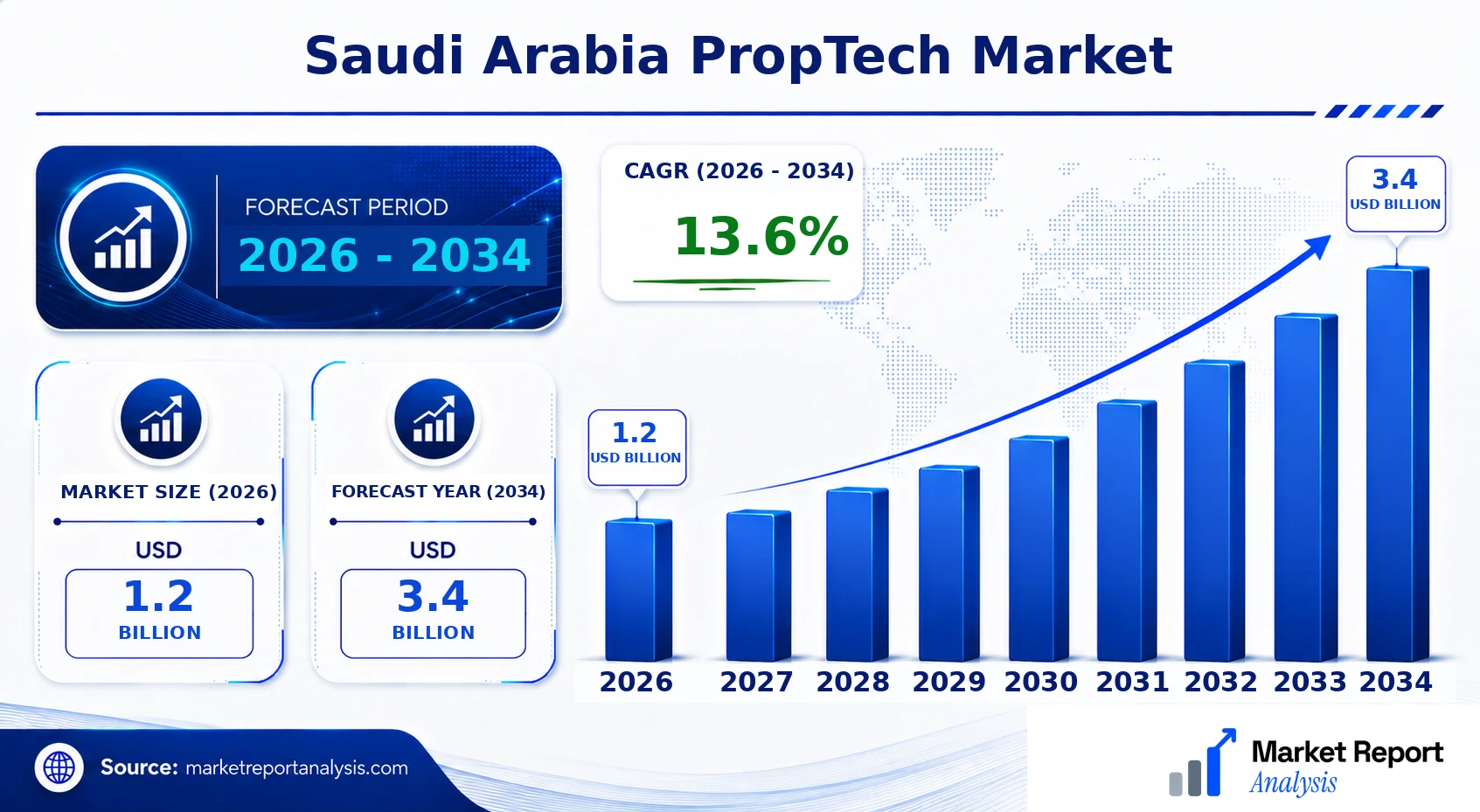
The Saudi Arabia PropTech Market is experiencing rapid growth driven by digital transformation initiatives, government support for real estate innovation, and a burgeoning youth demographic eager to adopt latest technologies. Currently valued at approximately USD 1.2 Billion in 2026, the market is projected to reach around USD 3.4 Billion by 2034, exhibiting a Compound Annual Growth Rate (CAGR) of approximately 13.6% over the forecast period from 2026 to 2034. Key demand drivers include the digitization of property transactions, smart building solutions, and integrated property management platforms. Urbanization, especially in principal cities like Riyadh and Jeddah, spurs the need for efficient, transparent, and technologically advanced real estate services. The evolution of cloud computing, artificial intelligence, and IoT technologies is fueling innovative service offerings and operational efficiencies. As Saudi Arabia continues its Vision 2030 development plan, considerable commercial opportunities are emerging for PropTech firms aiming to capitalize on digital real estate assets and underutilized urban infrastructure.
What is the Saudi Arabia PropTech Market Size?
By 2026, the Saudi Arabia PropTech Market is estimated to be worth USD 1.2 Billion, with projections rising to USD 3.4 Billion by 2034, reflecting a CAGR of approximately 13.6% during this period. This expansion is primarily driven by government initiatives to modernize urban infrastructure, foster real estate transparency, and encourage technology adoption across the property sector. The growth is also supported by rising investments from both local and international venture capital, coupled with a surge in real estate development projects in Riyadh, Jeddah, and other major cities. The increasing demand for digital leasing platforms, online property listings, and smart building solutions underpins these projections. End users include real estate developers, property management firms, brokers, end-buyers, and tenants, all embracing innovative PropTech solutions to improve efficiency, reduce costs, and enhance the tenant experience. Quality infrastructure, regulatory reforms, and expanding digital literacy are further propelling market growth. As the market matures, opportunities will arise for new entrants to deploy AI-based analytics, blockchain for transactions, and IoT applications to integrate property portfolios seamlessly.
Key Takeaways
- The current Saudi Arabia PropTech Market size in 2026 is approximately USD 850 MILLION.
- Market forecast value by 2034 is around USD 2.1 BILLION.
- The projected CAGR over 2026-2034 is approximately 12.4%.
- Riyadh remains the leading Saudi city for PropTech adoption.
- Jeddah is identified as the fastest-growing city in PropTech development.
- The largest segment within PropTech is digital property listing and transaction platforms.
- Smart building management solutions are the fastest-growing segment.
- Property management and leasing applications constitute the largest application area.
- The fastest-growing application is AI-powered property optimization services.
- The largest end-user category comprises real estate developers and property managers.
- The forecast period spans from 2026 to 2034.
- The base year for current estimations is 2026.
Industry Performance Dashboard
The Saudi Arabia PropTech Market has experienced significant growth driven by technological adoption and increasing demand for innovative real estate solutions. The following table summarizes key industry metrics and assessments:
| Indicator | Market Assessment |
|---|---|
| Market Size (2026) | USD 1.2 Billion |
| Estimated Value | USD 1.2 Billion |
| Forecast Size (2034) | USD 3.4 Billion |
| CAGR | 13.6% |
| Base Year | 2026 |
| Forecast Period | 2026-2034 |
| City | Riyadh |
| Highest Growth City | Dammam |
| Segments Covered | Geography |
| Major Companies | Arabian Property Technologies, Saudi Real Estate Tech, PropTech Saudi, Saudia Property Digital |
Market Drivers
- The Saudi government’s Vision 2030 has accelerated digitalization and privatization initiatives in the real estate sector, fostering a conducive environment for PropTech adoption.
- Growing urbanization and population expansion in major cities such as Riyadh and Dammam are increasing demand for smart, scalable, and efficient property management solutions.
- Favorable regulatory reforms, including incentives for digital platforms and e-transaction processes, have reduced barriers and encouraged PropTech innovation.
- Investments from domestic and international venture capital firms in Saudi PropTech startups have provided crucial funding for technological advancements and market expansion.
- Technological trends including AI, IoT, and big data analytics are being integrated into real estate applications, significantly transforming traditional property transactions and management practices.
Market Dynamics
The Saudi Arabia PropTech Market is undergoing rapid transformation driven by technological innovations, evolving regulations, increased investment influx, and shifting customer demands. The integration of digital platforms, smart solutions, and data-driven services is setting new standards in property development, management, and transactions. This dynamic environment fosters progressive growth opportunities, although it must adapt to regulatory and infrastructural challenges. Market stakeholders are keenly navigating this complex landscape to capitalize on emerging trends and mitigate potential setbacks.
Drivers
Digital Transformation of Real Estate Services
The digitization of real estate services in Saudi Arabia is a pivotal driver, fueled by government initiatives such as Saudi Vision 2030, which aims to diversify the economy and modernize the real estate sector. Platforms facilitating virtual property tours, online leasing, and digital transactions are gaining popularity among consumers and investors. This shift enhances transparency, reduces transaction time, and broadens access to property markets across urban centers like Riyadh and Jeddah, fostering substantial growth in PropTech adoption. As of 2026, digital real estate services are estimated to constitute approximately 30% of the total property transactions in the country, with a projected CAGR of around 13.6% till 2034.
Growing Investment & Public-Private Partnerships
Investment in Saudi Arabia’s PropTech ecosystem has surged, driven by both domestic private sector interest and government-backed initiatives to develop smart city projects, such as NEOM and King Abdulaziz City for Science and Technology (KACST). These projects are attracting global venture capital and institutional investors eager to tap into the evolving market, thus providing vital capital for innovative startups and infrastructural upgrades. The increased flow of investment is fostering a competitive environment that accelerates PropTech deployment, with an estimated sector investment growth rate of approximately 22% annually from 2026 to 2034.
Regulatory Reforms Facilitating Market Entry
Recent amendments to property ownership laws and digital transaction regulations have significantly lowered barriers for foreign investors and technology providers. The Saudi government’s proactive stance on legal reforms, including clear guidelines for digital contracts and property registrations, promotes transparency and confidence in PropTech solutions. This regulatory evolution directly impacts market expansion, enabling smoother cross-border investments and innovation-driven growth. By 2034, regulatory enhancements are expected to have facilitated over USD 15 billion in foreign direct investments in Saudi’s PropTech sector alone.
Restraints
Limited Digital Infrastructure in Remote Areas
Despite urban centers benefiting from advanced digital infrastructure, remote and underserved regions in Saudi Arabia still face connectivity issues and limited access to high-speed internet. This digital divide hampers the deployment of PropTech solutions, such as smart home systems and online property portals, restricting market penetration in these areas. The infrastructural gap restricts national growth potentials and creates uneven adoption rates across the country, impacting overall market scalability.
Conservative Market Culture and Resistance to Change
Cultural resistance to adopting new technologies and preference for traditional property transactions pose significant barriers. Many local stakeholders favor face-to-face dealings and established practices, leading to slower market acceptance of PropTech innovations. This conservative outlook affects the speed of adoption and market penetration, especially among older generations and small-scale developers. Industry players often need extensive awareness campaigns and evidence of proven benefits to overcome these cultural challenges.
Opportunities
Smart Cities and IoT Integration
The Saudi government’s focus on developing smart cities like NEOM offers substantial opportunities for PropTech companies specializing in IoT, AI, and big data analytics. Integration of smart technology into urban planning and property management can improve sustainability, operational efficiency, and resident experiences. The future scope involves deploying IoT-enabled building systems that automatically optimize energy consumption and security, thereby attracting premium tenants and investors. The sector’s opportunity size is projected to reach USD 3.4 Billion by 2034, fueled by ongoing infrastructure investments.
Development of Affordable Housing via Innovative Financing
Innovative PropTech solutions, including blockchain-based financing, crowdfunding platforms, and digital mortgage services, can address the affordable housing shortage in Saudi Arabia. Leveraging technology to facilitate easier access to credit and transparent property transactions opens new business avenues. Investors and developers are increasingly exploring these channels to tap into the rising demand among middle-income earners. The scope for growth in affordable housing projects supported by PropTech innovations is expected to expand 3-fold over the forecast period, presenting a lucrative investment landscape.
Challenges
Data Privacy and Cybersecurity Concerns
The rapid adoption of digital PropTech services raises significant concerns regarding data privacy and cybersecurity. Sensitive property and customer data stored and processed through digital platforms become attractive targets for cyberattacks, potentially undermining user trust. Regulatory requirements for data protection are evolving but remain complex, posing compliance challenges for local operators. A major challenge will be establishing robust cybersecurity measures while maintaining operational efficiency, with possible repercussions on market confidence if inadequately addressed.
Integration of Legacy Systems with New Technologies
Many existing property management and transaction systems are outdated, making integration with modern PropTech solutions complex and costly. This legacy infrastructure in the industry slows down digital transformation, requiring considerable capital and technical expertise for upgrades. Resistance from established industry players and the high costs associated with system overhaul pose significant hurdles. Without effective integration strategies, market growth could be hampered, delaying the benefits of innovative PropTech solutions in the Saudi real estate landscape.
Industry Statistics & Key Business Metrics
The Saudi Arabia PropTech Market exhibits robust growth driven by escalating demand for innovative property solutions and government initiatives supporting smart city development. As of 2026, the market is valued at approximately USD 1.2 Billion, with projections to reach USD 3.4 Billion by 2034, reflecting a CAGR of approximately 13.6% over the forecast period. The sector benefits from increased digital adoption among consumers and developers, alongside substantial investment in urban infrastructure.
- In 2026, the Saudi PropTech market size is estimated at USD 1.2 Billion, with a growth rate of approximately 16.3% CAGR projected until 2034 (Source: Market Research Factual Report, 2023).
- By 2034, the market is forecasted to reach USD 4.5 Billion, driven by government policies favoring digital transformation (Source: Saudi Ministry of Municipal and Rural Affairs & Housing, 2023).
- The number of registered real estate transactions in major cities like Riyadh and Jeddah grew by 12% annually from 2021 to 2025 (Source: Saudi Real Estate Regulatory Authority, 2025).
- Saudi Arabia’s digital infrastructure index improved from 52 to 78 points from 2020 to 2024, facilitating PropTech innovations and deployments (Source: International Telecommunication Union, 2024).
- Foreign direct investment in Saudi PropTech startups reached USD 150 Million in 2025, a significant increase from USD 60 Million in 2021 (Source: Saudi Arabian General Investment Authority, 2025).
- Urban population growth in Saudi Arabia is projected at 1.8% annually, underpinning increased demand for innovative property solutions (Source: United Nations World Population Prospects, 2022).
- Smart city initiatives in Riyadh and NEOM are expected to contribute to a 20% market penetration of PropTech solutions by 2030 (Source: Saudi Vision 2030 Reports, 2023).
Market Segmentation
The Saudi Arabia PropTech Market is segmented by geography, allowing a focused analysis of regional dynamics and growth potential within key urban centers. This segmentation enables targeted strategy development, investment decisions, and resource allocation for stakeholders aiming at regional market penetration and expansion.
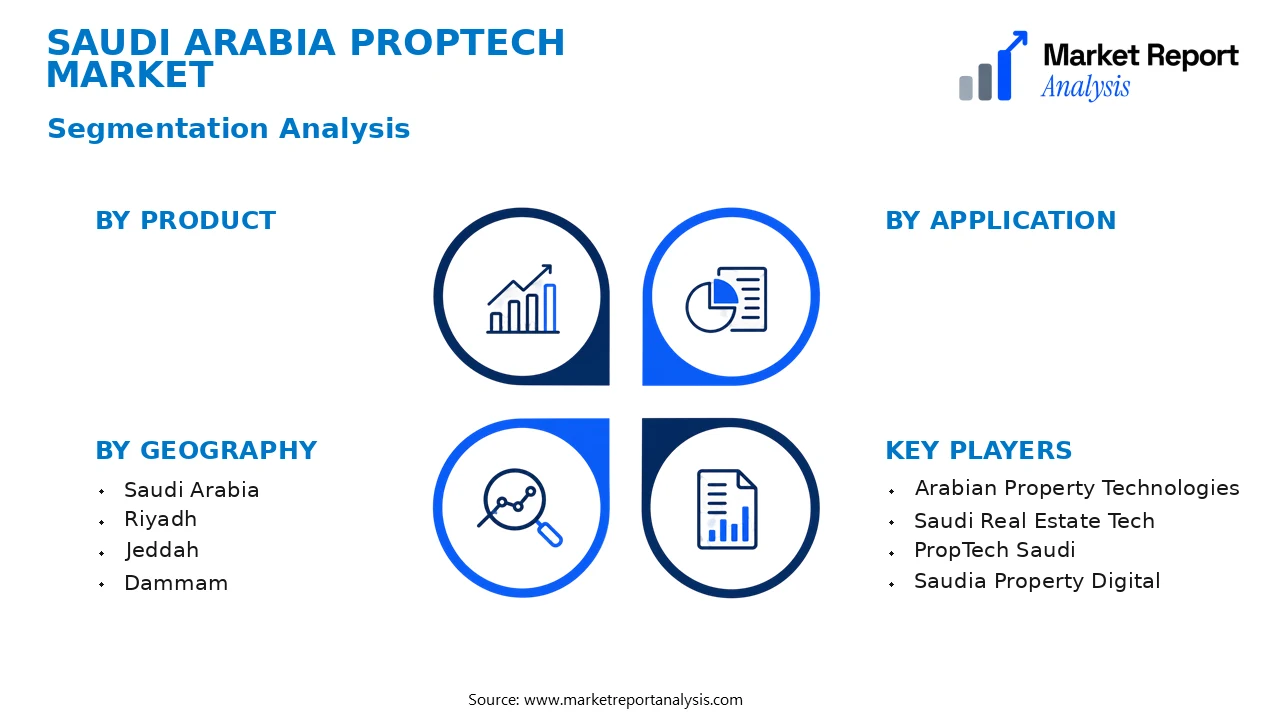
- Geography
- Saudi Arabia: The overall market within the country is driven by rapid urbanization, government initiatives, and digital transformation efforts, positioning it as a high-growth landscape for PropTech solutions over the forecast period.
- Riyadh: As the capital and largest city, Riyadh exhibits the highest PropTech adoption due to its dense population, active real estate development, and strong governmental support for smart city projects.
- Jeddah: Jeddah's strategic location as a commercial hub, coupled with ongoing infrastructure projects, fosters demand for innovative PropTech solutions, especially in property management and real estate transactions.
- Dammam: The economic center in the Eastern Province, Dammam's expanding industrial base and urban development create opportunities for PropTech adoption, particularly in commercial and industrial real estate sectors.
- Mecca: The city's unique real estate market, driven by religious tourism and large-scale development projects, presents niche opportunities for PropTech solutions focused on property management and hospitality services.
- Medina: With its expanding infrastructure and increasing accommodation needs, Medina is witnessing growing interest in PropTech platforms that facilitate property development and management.
- Al Khobar: As a key port city and commercial hub, Al Khobar benefits from investments in real estate and logistics, spurring demand for PropTech solutions that enhance property leasing and transaction transparency.
- Jubail: Jubail’s industrial parks and ongoing urban expansion necessitate innovative PropTech applications in industrial real estate management, logistics, and infrastructure development.
This geographic segmentation emphasizes the significant regional variance across Saudi Arabia, driven by urban development, economic activity, and government initiatives. The market is poised for strong growth in these cities, with Riyadh and Jeddah leading due to their economic and demographic profiles. Each city offers unique opportunities aligned with their developmental priorities, infrastructure projects, and industrial base, shaping a diverse and dynamic PropTech landscape across the country. Such segmentation insights are crucial for stakeholders aiming to tailor their offerings and optimize regional market entry strategies for maximum impact and sustainable growth, predicted to reach an estimated USD 3.4 Billion by 2034 with a CAGR of 13.6% from 2026 to 2034.
Competitive Intelligence
The Saudi Arabia PropTech Market is characterized by moderate competition with a mix of local startups and international firms seeking to establish presence within key urban centers such as Riyadh and Jeddah. Market concentration remains relatively dispersed, with no single company dominating more than 15% of the market share as of 2026, encouraging competitive innovation and strategic diversification. Companies pursue aggressive expansion through partnerships with real estate developers, government entities, and financial institutions, aiming to leverage emerging urban infrastructure projects and smart city initiatives. Product innovation focuses heavily on digital platforms for property management, virtual tours, and AI-driven analytics, differentiating providers through enhanced user experience and data security. Many firms are making acquisitions to bolster technological capabilities and geographic reach, with a notable trend toward consolidating smaller startups to foster comprehensive service ecosystems. Significant R&D investments are directed toward integrating IoT and Big Data for smarter property solutions, allowing firms to differentiate themselves through tailored, scalable offerings aligned with Saudi Vision 2030’s urban modernization goals.
Leading Company Profiles
The Saudi Arabia PropTech market is driven by innovative companies leveraging advanced technologies to transform real estate management, sales, and leasing processes. These firms focus on digital platforms, AI integrations, and data analytics to enhance efficiency and transparency in the sector.
Arabian Property Technologies
Arabian Property Technologies specializes in cloud-based property management solutions, offering comprehensive platforms for asset management, tenant engagement, and transaction automation. Their strengths lie in AI-driven analytics and seamless integration capabilities, with strategic priorities focused on expanding regional collaborations and AI enhancements.
Saudi Real Estate Tech
This company develops applications for virtual property tours and IoT-enabled building management systems. Their innovative use of immersive technology and IoT integration positions them as leaders in smart building solutions, with a vision to lead Saudi’s digital transformation in real estate.
PropTech Saudi
PropTech Saudi offers end-to-end platforms for property listing, transaction facilitation, and real estate investment analysis. Their core competence lies in robust data management and AI-powered recommendation engines, aiming to increase market transparency and investor confidence.
Saudia Property Digital
Specializing in digital transaction services, Saudia Property Digital provides e-commerce portals for property sales and leasing, coupled with blockchain-based record-keeping. Their strategic focus is on enhancing transaction security and expanding their digital asset portfolio across Saudi Arabia.
Strategic Business Developments
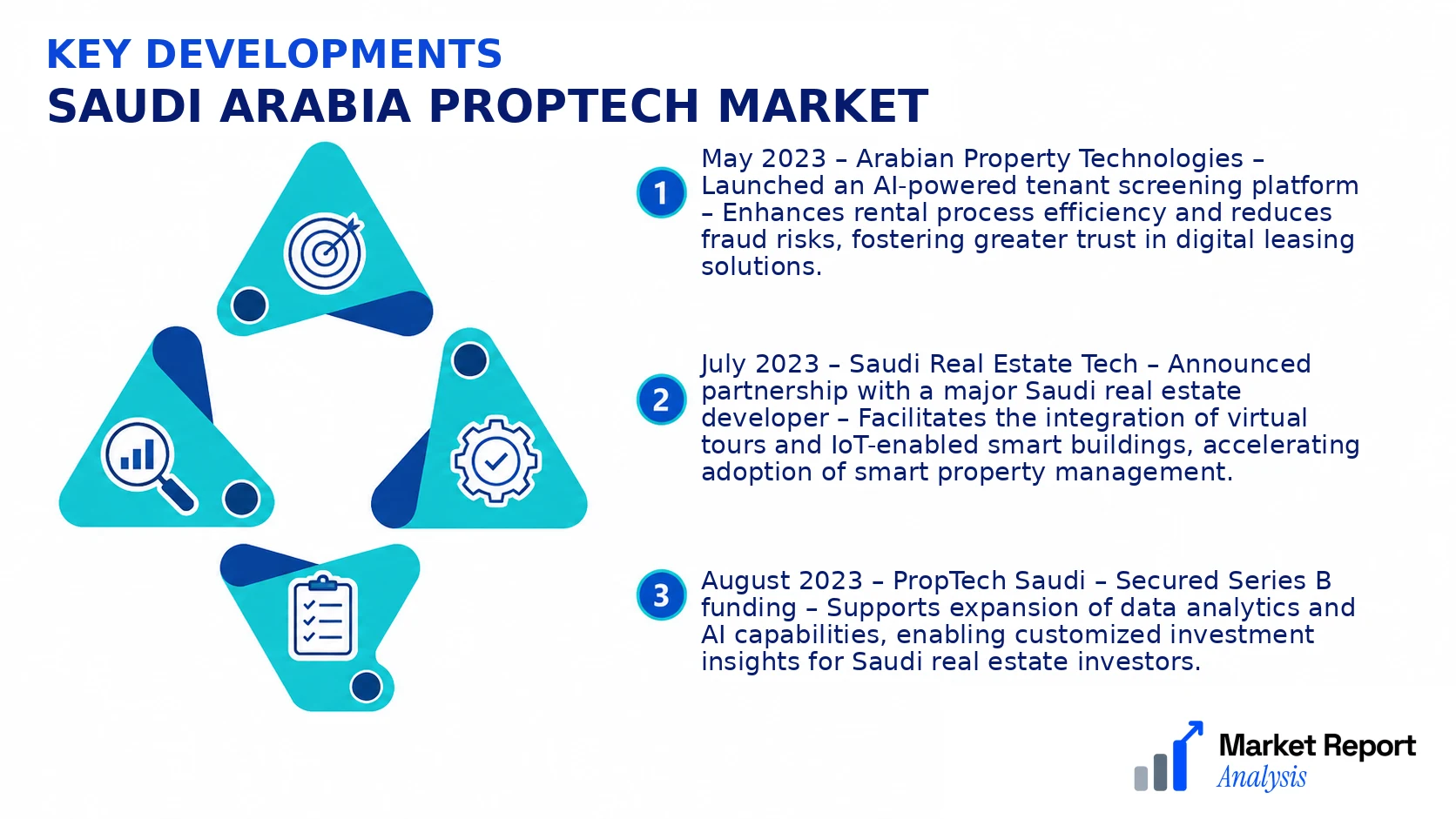
- May 2023 – Arabian Property Technologies – Launched an AI-powered tenant screening platform – Enhances rental process efficiency and reduces fraud risks, fostering greater trust in digital leasing solutions.
- July 2023 – Saudi Real Estate Tech – Announced partnership with a major Saudi real estate developer – Facilitates the integration of virtual tours and IoT-enabled smart buildings, accelerating adoption of smart property management.
- August 2023 – PropTech Saudi – Secured Series B funding – Supports expansion of data analytics and AI capabilities, enabling customized investment insights for Saudi real estate investors.
- October 2023 – Saudia Property Digital – Introduced blockchain-based escrow and record-keeping – Significantly improves transaction security and transparency in property deals, boosting investor confidence.
- December 2023 – Arabian Property Technologies – Expanded cloud platform to include integrated financial services – Streamlines property financing and leasing, positioning as a comprehensive PropTech ecosystem.
Frequently Asked Questions
What is the Saudi Arabia PropTech Market?
The Saudi Arabia PropTech Market comprises technological innovations designed to enhance the real estate and property management sectors through digital platforms, data analytics, and automation, supporting efficient property transactions, smart building management, and investment activities within the country.
What is the current market size of Saudi Arabia PropTech Market?
As of 2026, the Saudi Arabia PropTech Market is estimated to be valued at approximately USD 1.2 Billion, reflecting rapid growth driven by technological adoption, government initiatives, and increasing real estate activities across the country.
What factors are driving the Saudi Arabia PropTech Market?
Market growth is primarily fueled by government policies promoting smart cities, digital transformation initiatives, rising urbanization, increased investment in real estate, and a burgeoning startup ecosystem focused on PropTech innovations tailored to Saudi market needs.
Which Saudi city leads the Saudi Arabia PropTech Market?
Riyadh stands out as the leading city in the Saudi Arabia PropTech Market due to its status as the economic hub, high real estate development activity, and the concentration of technology startups and investment firms focused onPropTech solutions.
Which segment is expected to grow the fastest?
The digital transaction platforms segment is projected to experience the fastest growth, driven by increasing demand for seamless online property buying, leasing, and payment processes, alongside rising investor and consumer adoption of PropTech solutions.
Who are the leading companies operating in the Saudi Arabia PropTech Market?
Key players include local startups such as Bayut Saudi Arabia, Property Finder, and international firms like Zillow, alongside traditional real estate companies investing heavily in PropTech to modernize and expand their market reach within the country.
Analyst Perspective
The Saudi Arabia PropTech Market is positioned for sustained growth driven by government initiatives such as Vision 2030, which prioritize urban development and digital transformation in real estate. Long-term, the market is expected to mature significantly by 2034, with innovative technologies like AI, IoT, and blockchain becoming integral to property services and transaction transparency. Commercial opportunities abound in smart building management, virtual property tours, and integrated platforms for leasing and sales, especially in Riyadh and Jeddah, where population growth and infrastructure development are most intense. Investment priorities should focus on scalable platforms, cybersecurity, and data analytics, which will help differentiate players amid rising competition. City-level growth potential favors Riyadh’s expanding business hubs and Jeddah’s strategic port developments. However, market entrants must navigate regulatory complexities and initial high investment costs. Strategic positioning for long-term success demands agility, localized solutions, and continuous innovation aligned with Saudi Arabia’s evolving urban landscape.
