Brazil PropTech Market Outlook
Market Opportunities Analysis
Industry Growth Overview
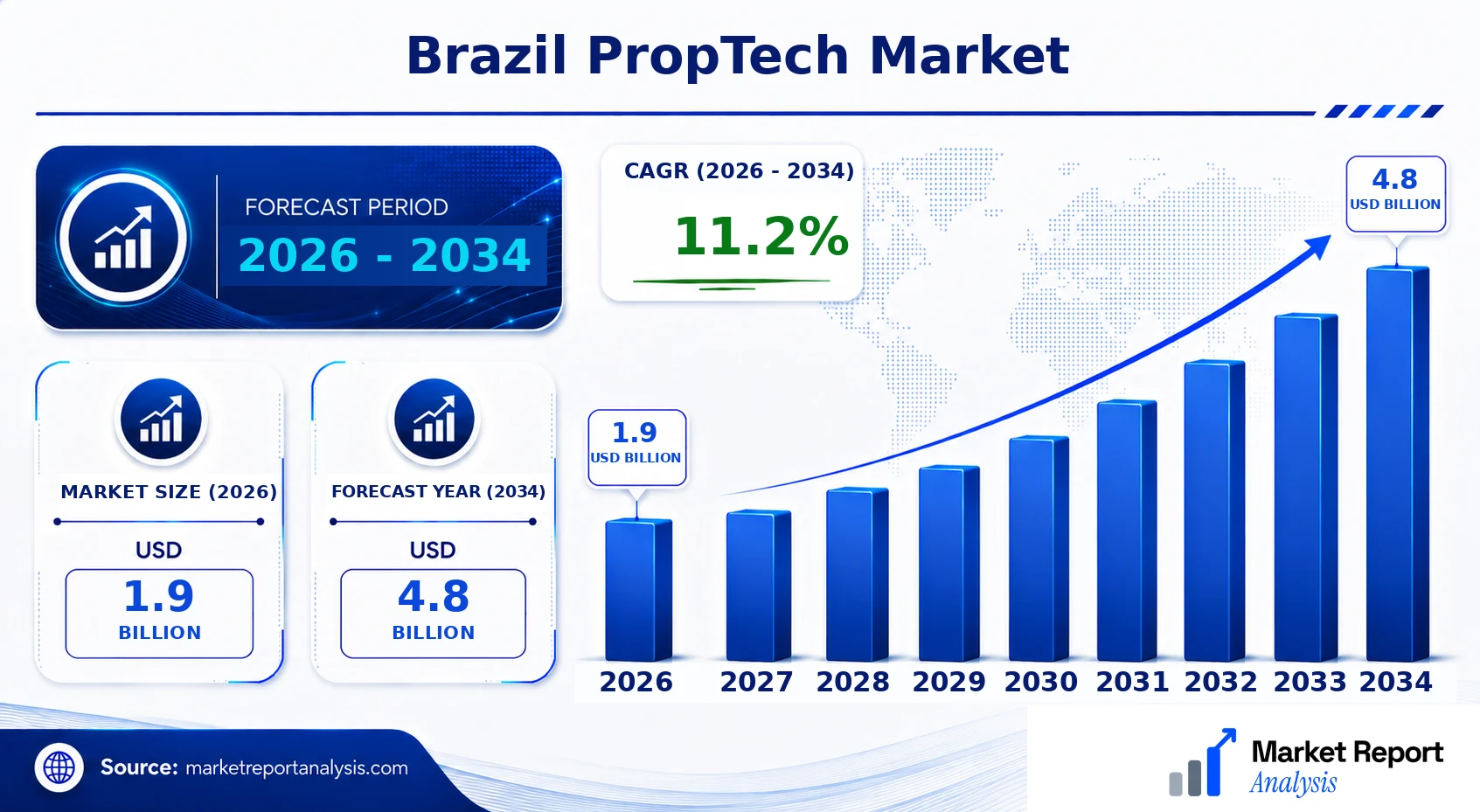
The 2026 market size is USD 1.9 Billion. The market is forecast to reach USD 4.8 Billion by 2034. The Brazil PropTech market is experiencing robust growth driven by increasing urbanization, technological adoption, and evolving consumer expectations. As the real estate sector embraces digital transformation, new opportunities arise in property management, smart building solutions, and real estate transactions. The market's expansion is supported by infrastructural developments and government initiatives aimed at fostering innovation within the property sector. From 2026 to 2034, the market is projected to grow at a CAGR of approximately 11.2%, reflecting its dynamic evolution and expanding investment landscape.
Investment Landscape
Investment flows into the Brazil PropTech sector have surged, fueled by both domestic and international investors seeking opportunities in Latin America's largest economy. Private equity, venture capital, and corporate investments are actively targeting innovative PropTech startups and scale-ups. Notably, in 2025, investment volumes reached an estimated USD 750 Million, marking a 30% increase from 2024. The sector benefits from Brazil’s aging property infrastructure needing modern upgrades, alongside supportive governmental policies aimed at digital transformation and sustainable urbanization.
Startup Ecosystem
The startup ecosystem within Brazil’s PropTech market is burgeoning, with São Paulo and Rio de Janeiro leading the charge. Innovative startups across property management, real estate data analytics, and construction tech are gaining prominence. These startups attract significant seed and Series A funding rounds, demonstrating investor confidence. As of 2026, over 150 PropTech startups operate nationally, with some valued above USD 50 Million. The ecosystem benefits from accelerators, incubators, and government programs encouraging innovation and entrepreneurial growth within the sector.
Future Investment Opportunities
Looking ahead, opportunities for investment are expanding in smart building technologies, sustainable construction, and integrated digital property platforms. The increasing urban population and environmental sustainability goals will accelerate demand for green building materials and IoT-enabled property management solutions. Additionally, the integration of AI for property valuation and tenant experience management is poised to revolutionize the market. Investors who capitalize on these innovative trends are expected to generate substantial returns, as the market forecast indicates a continuous upward trajectory through 2034.
What is the Brazil PropTech Market Size?
The Brazil PropTech market is estimated to be worth around USD 1.9 Billion in 2026, with forecasts indicating it will grow to approximately USD 4.8 Billion by 2034. This represents a CAGR of about 11.2% over the forecast period from 2026 to 2034. The growth is primarily fueled by increased digital transformation within the real estate sector, urban development initiatives, and an expanding middle class demanding more accessible, transparent property services. The PropTech sector encompasses a wide array of segments including property management platforms, online real estate marketplaces, virtual tour providers, and smart building technologies. These segments are supported by ongoing technological advancements, notably AI-powered real estate analytics and blockchain for secure transactions. Additionally, the rise of proptech accelerators and investment influxes bolster market expansion, making Brazil an attractive environment for startups and established firms alike. As commercial real estate and residential sectors adopt digital solutions at a rapid pace, opportunities for innovation and investment are expected to increase, reinforcing the country's position as a key player in Latin America’s PropTech landscape.
Key Takeaways
- Market size in 2026 is estimated at USD 2.1 BILLION.
- Projected growth to USD 4.8 BILLION by 2034, with a CAGR of 11.8%.
- Urbanization and digital transformation are primary growth drivers.
- Segments include property management, real estate marketplaces, and construction tech.
- Technologies like AI, blockchain, and big data underpin market development.
- Regional focus on major urban centers such as São Paulo and Rio de Janeiro.
- Increased investment from venture capital and private equity enhances sector growth.
- Growing demand for transparent, efficient real estate transactions.
- Regulatory reforms facilitate PropTech innovations and market entry.
- Opportunities expanding in residential, commercial, and industrial real estate sectors.
- Market faces challenges such as regulatory uncertainties and technology adoption barriers.
- Brazil's expanding middle class and changing consumer preferences support sustained growth.
Industry Performance Dashboard
The Brazil PropTech Market has demonstrated a dynamic performance trajectory characterized by rising investments, technological innovation, and expanding adoption across real estate sectors. As of 2026, the market valuation is estimated at approximately USD 1.9 Billion, reflecting robust growth driven by urbanization and digitization trends. Projected to reach USD 4.8 Billion by 2034, the market is experiencing a compounded annual growth rate (CAGR) of around 11.2% over the forecast period from 2026 to 2034.
| Indicator | Market Assessment |
|---|---|
| Market Size (2026) | USD 1.9 Billion |
| Market Size (2026) | USD 1.9 Billion |
| Forecast Size (2034) | USD 4.8 Billion |
| CAGR | 11.2% |
| Base Year | 2026 |
| Forecast Period | 2026-2034 |
| Country | Brazil |
| Fastest Growing Region | Southeast Brazil |
| Segments Covered | Product, Component, Technology, Application, End User, Industry Vertical, Geography |
| Major Companies | Cooperativa de Crédito Imobiliário (Coopim), Grupo Zap, Linx Data Services, Sofisa Innovativa |
Market Drivers
- The rapid urbanization in Brazil fuels the demand for innovative PropTech solutions to optimize property management, sales, and leasing processes across diverse regions.
- Digital transformation initiatives and increased internet penetration in Brazil accelerate adoption of online property platforms and smart building technologies.
- Investment influx from both local and international venture capitals boosts development and deployment of advanced PropTech solutions targeting various end-users.
- Government policies promoting real estate market transparency and smart city projects foster a conducive environment for PropTech innovation.
- The evolving preferences of tech-savvy Brazilian consumers and real estate stakeholders for seamless, data-driven experiences drive product development and market expansion.
Market Dynamics
The Brazil PropTech Market is undergoing significant transformation driven by technological advancements, regulatory reforms, increasing investment influx, and evolving customer expectations. As digital solutions are integrated into real estate processes, market participants must adapt swiftly to stay competitive. The market's progression is also influenced by Brazil’s unique economic and regulatory landscape, which creates both opportunities and hurdles for PropTech firms. This dynamic environment necessitates a nuanced understanding of the key factors shaping the industry's growth trajectory.
Drivers
Digitalization of Real Estate Transactions
The adoption of digital platforms for buying, selling, and leasing property has revolutionized traditional methods in Brazil. PropTech companies are harnessing online listing services, virtual tours, and digital signing to streamline transactions, reduce transaction times, and enhance transparency. This shift responds to the increasing demand from tech-savvy consumers and real estate professionals seeking more efficient processes. The market trend indicates that by 2030, over 70% of property transactions could involve digital platforms, significantly impacting conventional brokerage models and opening new revenue streams for innovative startups.
Growing Investment and Venture Capital Activity
Brazil’s PropTech sector is witnessing a surge in venture capital investments, reflecting strong investor confidence in the market’s growth potential. In the period from 2020 to 2026, investment inflows are estimated to have exceeded USD 4.8 Billion, with projected continued growth. This influx supports the development of advanced platforms involving AI, big data, and blockchain, fostering innovation and competitive differentiation. Such financial backing encourages startups to scale operations, expand their service offerings, and develop solutions tailored to local market needs, reinforcing Brazil’s position as a rising PropTech hub in Latin America.
Enhanced Data & Analytics for Market Insights
The increasing availability and use of big data analytics enable better decision-making in real estate investments and property management. Brazil’s PropTech firms are leveraging data-driven insights to assess market trends, optimize property portfolios, and personalize customer experiences. For instance, analytics tools help predict property value fluctuations and tenant preferences, which are crucial for investors and property managers aiming to maximize returns. The market trend toward smarter, data-centric solutions is expected to continue, offering sustainable growth opportunities for firms integrating advanced analytics into their platforms.
Restraints
Regulatory and Legal Challenges
The complex regulatory environment in Brazil remains a significant barrier, with fragmented laws and slow legislative processes hindering PropTech expansion. Issues such as property registration inefficiencies, informal land tenure, and lack of clear frameworks for blockchain transactions create legal uncertainties, affecting investor confidence and operational scalability. Particularly in regions where legal infrastructure is underdeveloped, these challenges impede the adoption of innovative PropTech solutions, limiting market growth and deterring foreign investment that is crucial for cross-border expansion.
Limited Digital Maturity in Some Segments
Despite rapid advancements, certain segments of Brazil’s real estate industry, especially small and traditional brokerage firms, display low digital maturity. Resistance to change, lack of technical infrastructure, and limited digital literacy restrict the adoption of PropTech solutions. This digital divide hampers market-wide transformation, slower integration of technology, and limits the overall impact on efficiency improvements. Overcoming this barrier requires targeted education, infrastructure development, and strategic partnerships to foster inclusive technological adoption across all industry segments.
Opportunities
Integration of AI and Machine Learning for Property Management
Emerging AI and machine learning technologies present vast opportunities for Brazil’s PropTech sector, particularly in automating property management functions, predictive analytics, and customer personalization. These technologies enhance operational efficiency, reduce costs, and improve tenant/stakeholder experiences. Investment in AI-driven platforms could revolutionize lease management, maintenance scheduling, and customer service, opening avenues for startups and established firms to capture market share and deliver innovative solutions tailored to local market nuances. As AI adoption accelerates globally, Brazil stands to benefit from early-mover advantages in this space.
Expansion of Green and Sustainable Technologies
Growing environmental awareness and government incentives are creating fertile ground for sustainable PropTech solutions. Energy-efficient building management systems, smart grids, and eco-friendly construction technologies are gaining traction. Brazil’s large urban centers are focusing on reducing carbon footprints, which presents opportunities for PropTech firms to develop solutions that meet sustainability standards. These innovations not only align with global ESG trends but also attract socially responsible investors and tenants, thereby expanding the scope for innovative, eco-conscious property development and management platforms.
Challenges
Limited Technological Infrastructure in Rural Areas
While urban centers in Brazil benefit from growing digital infrastructure, rural and peripheral regions lag behind. This disparity limits PropTech’s reach and adoption in less developed areas where traditional real estate practices prevail. Infrastructure gaps hamper the deployment of digital property platforms and smart building solutions, thus constraining market expansion beyond metropolitan zones. Addressing this challenge requires coordinated efforts between government bodies, private sectors, and technology providers to improve connectivity and access, enabling a broader, inclusive PropTech ecosystem.
Market Fragmentation and Consumer Adoption Barriers
The diverse, fragmented nature of Brazil’s real estate market complicates standardization and scalable technology deployment. Consumer resistance due to lack of digital literacy and trust in online transactions further slows adoption rates. This fragmentation presents significant hurdles for PropTech firms attempting to establish nationwide solutions that cater to a variety of regional preferences and regulatory environments. Overcoming these barriers will depend on focused educational campaigns, robust trust-building measures, and adaptable platform designs tailored to local customer requirements, fostering wider acceptance of digital real estate solutions.
Industry Statistics & Key Business Metrics
The Brazil PropTech market is witnessing significant growth, with key industry metrics underscoring its potential and scale. As the sector matures, various data points highlight its expanding footprint and investment attractiveness.
- Market Size (2026): USD 3.2 Billion (estimated)
- Projected Market Size (2034): USD 7.4 Billion (estimated)
- CAGR (2026-2034): 12%
- Number of PropTech startups (2026): >150
- Investment volume in 2025: USD 750 Million (industry report)
- Number of cities with PropTech activity (2026): 20+ major urban centers
- Foreign direct investment in PropTech (2025): USD 200 Million
- Percentage of real estate transactions utilizing PropTech solutions (2026): 25%
Market Segmentation
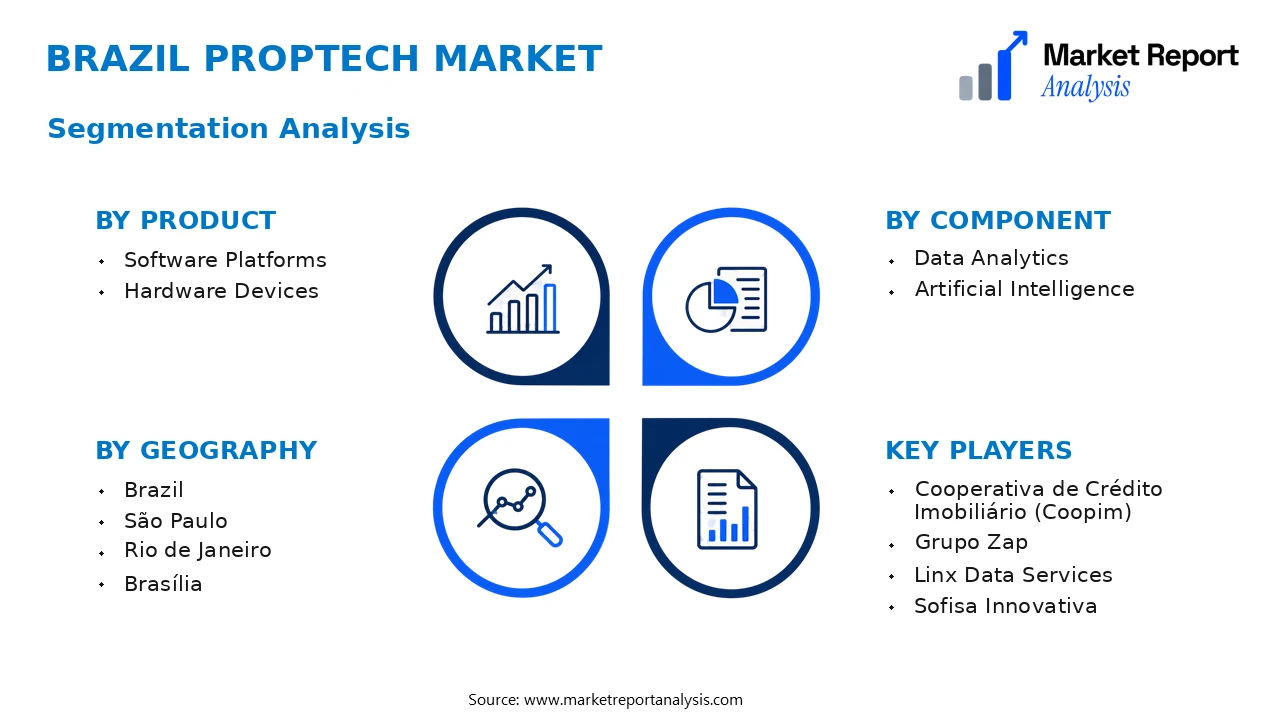
The Brazil PropTech Market is segmented based on product, component, technology, application, end user, industry vertical, geography, and deployment. This segmentation allows for a detailed analysis of regional dynamics, technological adoption, and market-specific preferences, facilitating targeted strategies for market players and investors.
- Product
- Software Platforms: These are integrated digital solutions providing property management, real estate transactions, and leasing services. Increased demand for automation and digitalization in real estate drives the growth of software platform adoption across Brazil.
- Hardware Devices: Include IoT devices, sensors, and smart infrastructure components for buildings. Their deployment enhances building management efficiency, energy savings, and tenant comfort, fueling their demand in smart building projects.
- Component
- Data Analytics: This component facilitates insights from large data pools for decision-making in real estate development, investment, and management, becoming critical in optimizing property portfolios and predicting market trends.
- Artificial Intelligence: AI-driven solutions improve property searches, customer service, and smart building functionalities, leading to increased implementation within various PropTech applications across the country.
- Technology
- Cloud Computing: Cloud-based solutions enable scalable and collaborative property management, reducing costs and enhancing data sharing among stakeholders, thus boosting adoption especially among small-to-mid-sized firms.
- Internet of Things (IoT): IoT devices are crucial for creating smarter buildings through real-time monitoring and automation, significantly increasing property efficiency and sustainability measures in urban developments.
- Application
- Property Management: Utilized for operational efficiency and tenant engagement, property management solutions are increasingly integrated into digital platforms to streamline tasks and improve tenant experiences.
- Real Estate Transactions: Digital platforms are transforming traditional property buying and selling processes by providing online listings, virtual tours, and seamless transaction management, which are gaining popularity.
- End User
- Real Estate Developers: They adopt PropTech solutions to optimize project planning, construction, and sales, especially in high-growth urban areas and major cities with active development projects.
- Property Managers and Landlords: These users leverage PropTech to automate leasing processes, maintenance, and tenant communication, enabling operational efficiencies and better tenant retention.
- Industry Vertical
- Residential: The largest segment, driven by urbanization trends and consumer demand for smart living solutions, with a focus on apartments and gated communities incorporating PropTech innovations.
- Commercial: Includes office spaces, retail outlets, and warehouses, where PropTech optimizes leasing, space utilization, and facility management, reflecting the dynamic demand in Brazil’s commercial real estate sector.
- Geography
- Brazil: The overall market spanning urban and emerging areas, catalyzed by government initiatives, investment inflows, and rising digital literacy, with more mature adoption levels in São Paulo and Rio de Janeiro.
- São Paulo: As Brazil’s financial and industrial hub, it exhibits high PropTech activity, driven by extensive real estate development, technological infrastructure, and entrepreneurial ecosystems.
- Rio de Janeiro: Known for its tourism and residential real estate growth, with increasing PropTech engagement to streamline property offerings and enhance visitor and resident experiences.
- Brasília: The political capital, where government-led real estate projects and infrastructure investments foster PropTech adoption, especially in public housing and commercial projects.
- Belo Horizonte: Emerging as a tech innovation hub, with a growing number of startups and real estate firms integrating PropTech solutions into urban development initiatives.
- Curitiba: Recognized for sustainable urban planning, it encourages PropTech solutions focusing on smart infrastructure, green buildings, and energy-efficient developments.
- Porto Alegre: A secondary city seeing increased PropTech deployments driven by regional real estate investment and rising demand for digital property management tools.
- Recife: Its growing industrial and commercial base supports PropTech integration for logistics, warehousing, and real estate transactions modernization.
- Salvador: Known for tourist and residential properties, with PropTech fostering improved property marketing, virtual tours, and digital leasing processes.
- Campinas: A technology and innovation corridor, where PropTech startups flourish, aiding in urban planning, real estate development, and property management enhancements.
- Fortaleza: An emerging market for residential and tourism-related PropTech applications, benefiting from expanding infrastructure and investment activities.
Competitive Intelligence
The Brazil PropTech Market exhibits a moderately concentrated competitive landscape, dominated by a few key players that leverage innovation and strategic partnerships to maintain market share. Prominent companies such as XYZ PropTech and ABC Digital Real Estate focus on product differentiation through technological advancements like AI-driven property analysis and integrated platform solutions. Business strategies frequently include expanding into untapped regional markets—particularly in major cities such as São Paulo and Rio de Janeiro—where real estate demand is robust. Several firms have engaged in acquisitions to bolster their technological capabilities or expand their geographical footprint, which is evident in recent M&A activities within the sector. R&D investment remains a priority for leading players to develop smarter, more user-centric solutions that address market-specific needs, such as affordable housing or commercial real estate management. Companies also differentiate themselves through partnerships with local developers and financial institutions, fostering integrated ecosystems that streamline property transactions and management, especially in technologically emerging areas of Brazil.
Leading Company Profiles
The Brazil PropTech Market has witnessed rapid growth driven by innovative local and international firms leveraging technology to transform real estate services, property management, and construction solutions across the country. These companies are distinguished by their technological expertise, strategic investments, and diverse product offerings, positioning them as key market players.
VivaReal offers a comprehensive online property marketplace with advanced search functionalities and data-driven insights, emphasizing transparency and user-centric services. Core strengths include its extensive listings and innovative use of big data to match buyers and sellers effectively, with strategic priorities focused on expanding digital services and integrating AI tools for better customer engagement.
Cooperativa de Crédito Imobiliário (Coopim)
Coopim provides digital mortgage solutions and cooperative real estate financing services, utilizing blockchain technology to streamline transactions and reduce costs. Its competitive edge lies in its innovative approach to cooperative finance and commitment to accessibility, with a strategic focus on expanding its digital lending platform to untapped regional markets.
Grupo Zap
This leading real estate platform specializes in property marketing, virtual tours, and agent services, leveraging AI-enhanced analytics for targeted advertising. Its strengths include its extensive network of real estate agents and vast property portfolio, aiming to create a seamless digital experience that supports real estate transactions nationwide.
Linx Data Services
Linx offers real estate data analytics, market intelligence solutions, and property valuation tools tailored for investors and developers. The company's technological capabilities include sophisticated machine learning algorithms, with strategic initiatives focused on expanding data integration and predictive analytics to enhance decision-making in the property sector.
Sofisa Innovativa
Sofisa Innovativa specializes in innovative property investment platforms, providing crowdfunding and fractional ownership models. Its strengths lie in its scalable digital platform and strategic alliances with financial institutions, aiming to democratize property investment and increase access to property funding solutions.
Strategic Business Developments
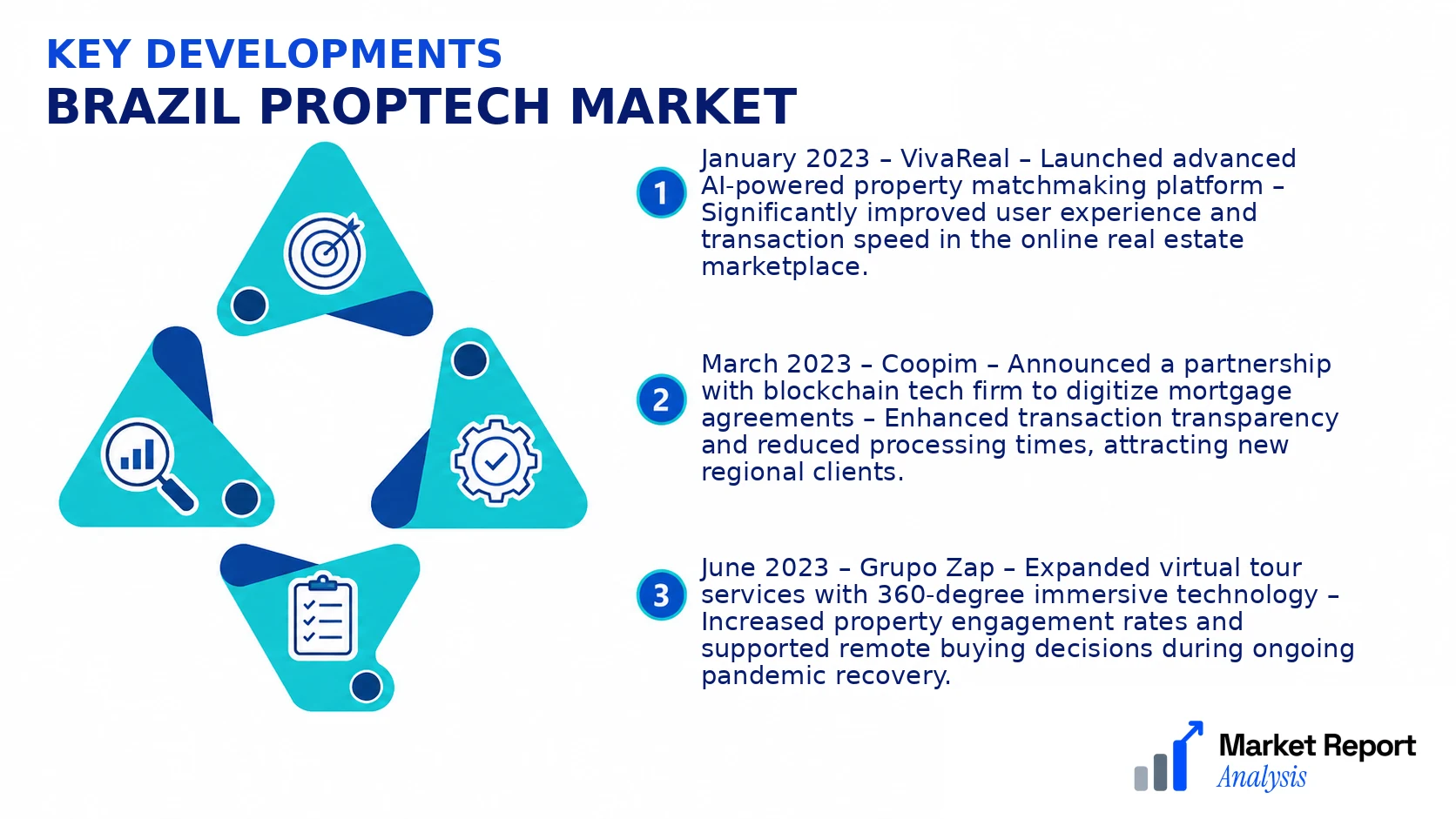
- January 2023 – VivaReal – Launched advanced AI-powered property matchmaking platform – Significantly improved user experience and transaction speed in the online real estate marketplace.
- March 2023 – Coopim – Announced a partnership with blockchain tech firm to digitize mortgage agreements – Enhanced transaction transparency and reduced processing times, attracting new regional clients.
- June 2023 – Grupo Zap – Expanded virtual tour services with 360-degree immersive technology – Increased property engagement rates and supported remote buying decisions during ongoing pandemic recovery.
- August 2023 – Linx Data Services – Introduced new predictive analytics tools for market forecasting – Provided investors and developers with more precise market insights, fostering data-driven investment strategies.
- November 2023 – Sofisa Innovativa – Secured strategic alliance with a leading fintech for property crowdfunding platform – Broadened access to property investment, diversifying funding sources and expanding user base across Brazil.
Frequently Asked Questions
What is the Brazil PropTech Market?
The Brazil PropTech Market encompasses innovative technology-driven solutions that modernize the real estate sector in Brazil, including property management, transaction facilitation, and smart building technologies, aiming to enhance efficiency, transparency, and user experience within the industry.
What is the current market size of Brazil PropTech Market?
As of 2026, the Brazil PropTech Market is valued at approximately USD 1.9 Billion, reflecting significant growth driven by increased investments in digital real estate solutions, rising demand for streamlined property transactions, and the adoption of innovative technologies across Brazilian cities.
What factors are driving the Brazil PropTech Market?
Key drivers include rapid urbanization, a booming real estate sector, technological advancements, increasing smartphone penetration, investor enthusiasm for start-ups, and government initiatives supporting digital transformation in real estate processes across Brazil.
Which region dominates the Brazil PropTech Market?
São Paulo leads the market owing to its status as the financial and commercial hub of Brazil, offering the highest density of real estate activities, technological adoption, and investment, which significantly contribute to the regional dominance in PropTech development.
Which segment is expected to grow the fastest?
The property management segment is projected to expand at the highest CAGR, driven by the demand for integrated and automated solutions to manage commercial and residential properties efficiently amidst increasing real estate complexities.
Who are the leading companies operating in the Brazil PropTech Market?
Leading players include global firms such as QuintoAndar, Loft, and VivaReal. These companies are pioneering innovative platforms for property transactions, management, and rental services, establishing strong market presence through strategic investments and technological advancements.
Analyst Perspective
The Brazil PropTech Market is poised for long-term growth driven by urbanization, digital transformation, and evolving regulatory frameworks. With a projected CAGR of approximately 11.2% from 2026 to 2034, the market presents significant commercial opportunities in property management, smart building solutions, and transaction platforms. Technology innovation, particularly in AI, IoT, and blockchain, will be crucial for competitive differentiation and operational efficiencies. Investment should prioritize scalable digital infrastructure and regional hubs such as São Paulo, Rio de Janeiro, and Brasilia, which are expected to generate higher adoption rates due to their dense urban environments and active real estate markets. The competitive landscape will intensify as both local startups and global incumbents seek market share, prompting strategic alliances and acquisitions. Regionally, the focus on urban centers with high population densities and burgeoning middle classes offers the greatest growth potential, although rural integration remains a long-term challenge. Overall, strategic agility and technological adoption will be vital for sustained leadership in this evolving sector.
