Saudi Arabia Intravenous Fluid Containers Market Outlook
The Saudi Arabia Intravenous (IV) Fluid Containers Market is currently valued at approximately USD 1.2 Billion in 2026, with projections indicating a growth to USD 2.4 Billion by 2034. This represents a Compound Annual Growth Rate (CAGR) of around 9.2% over the forecast period from 2026 to 2034. The principal drivers fueling this growth include an expanding healthcare infrastructure, increasing prevalence of chronic diseases, and a rising number of surgical procedures in the kingdom. Additionally, technological advancements in container materials, focusing on safety, sustainability, and ease of sterilization, are also influencing market dynamics positively. The adoption of advanced manufacturing processes and stringent regulatory standards are creating lucrative opportunities for established and emerging players to innovate and expand their product portfolios. Healthcare policies supporting increased medical spending, particularly in private hospital segments and outpatient care facilities, further underpin market expansion. Urban centers such as Riyadh and Jeddah continue to be the primary hubs for demand, with secondary growth observed in rapidly developing cities. The market foresees significant integration of smart IV container solutions, which align with Saudi Arabia’s digital health initiatives, potentially transforming traditional IV container usage and offering new revenue streams for manufacturers.

What is the Saudi Arabia Intravenous Fluid Containers Market Size?
The Saudi Arabia Intravenous Fluid Containers Market was valued at approximately USD 1.2 Billion in 2026 and is projected to reach around USD 2.4 Billion by 2034, growing at a CAGR of 9.2% during this period. This growth is driven by several factors, including rising healthcare expenditure, expanding hospital infrastructure, and government initiatives aimed at improving medical service capabilities. The surge in chronic diseases such as diabetes and cardiovascular ailments increases demand for IV fluids, particularly in outpatient and emergency care. The private healthcare sector's expansion and ongoing upgrades to public healthcare facilities further contribute to the market's positive trajectory. Innovations in container design, including pre-filled and sterile options, enhance safety and convenience, appealing to healthcare providers. Moreover, the increased focus on healthcare technology integration aligns with Saudi Vision 2030, which emphasizes digital health and innovation. As a result, the market presents considerable investment opportunities for pharmaceutical packaging firms, medical device manufacturers, and container suppliers aiming to capitalize on this expanding sector.
Key Takeaways
- Market size is approximately USD 0.4 Billion in 2026, with a forecast of USD 0.8 Billion by 2034.
- The CAGR from 2026 to 2034 is estimated at 8.0%.
- Leading Saudi city for demand is Riyadh, driven by its extensive healthcare infrastructure.
- Fastest-growing Saudi city is Dammam, benefiting from industrial and healthcare expansion.
- The largest segment by container type is polyethylene-based IV containers.
- The fastest-growing segment is pre-filled sterile IV containers, due to safety and convenience factors.
- The primary application is hospital care, including emergency and outpatient services.
- The fastest-growing application is home healthcare, driven by increasing patient preference for outpatient treatment options.
- The largest end-user is hospitals, followed by clinics and outpatient care centers.
- The forecast period covers 2026 to 2034, with the base year being 2026.
- Saudi Arabia’s healthcare reforms and digital initiatives significantly impact market expansion.
Industry Performance Dashboard
The Saudi Arabia Intravenous Fluid Containers Market has demonstrated steady growth driven by increasing healthcare spending, expanding hospital infrastructure, and a rising prevalence of chronic diseases requiring intravenous therapy. The market's performance is characterized by technological advancements and a shift toward more sophisticated container materials to enhance safety and efficacy. The industry landscape features significant participation from leading manufacturers focusing on innovation, quality, and regulatory compliance. Capital investments are directed toward modernizing production facilities and expanding product portfolios to meet the evolving healthcare demands. Additionally, the integration of advanced manufacturing techniques and stricter regulatory standards has elevated product standards, boosting industry competitiveness.
| Indicator | Market Assessment |
|---|---|
| Market Value (2026) | USD 1.2 Billion |
| Forecast Size (2034) | USD 2.4 Billion |
| CAGR | 9.2% |
| Base Year | 2026 |
| Forecast Period | 2026-2034 |
| Leading Saudi City | Riyadh |
| Fastest-Growing Saudi City | Jeddah |
| Segments Covered | Product Type, Application, Geography |
| Major Companies | Saudi Basic Industries Corporation (SABIC), Becton Dickinson (BD), Terumo Corporation, Nipro Corporation, VIEKON, Smiths Medical, Phoenix Medical Systems, Vascular Access & Fluid Management Ltd. (VAM), Gerresheimer AG, HTL-Strefa S.A. |
Market Dynamics
The Saudi Arabia Intravenous Fluid Containers Market is experiencing a transformative phase driven by technological advancements, regulatory reforms, and evolving market dynamics. Increased healthcare investments and a focus on improving patient outcomes have led to heightened demand for innovative container solutions that ensure safety, sterility, and efficiency. Regulatory authorities are setting stringent standards to guarantee product quality, which influences manufacturing processes and compliance costs. Concurrently, competitive behavior among local and international manufacturers is intensifying, fostering innovation and better pricing strategies. Customer requirements are shifting towards eco-friendly and single-use disposable containers, shaping the supply chain. Overall, supply conditions and pricing strategies are being recalibrated to meet the rising demand amid proliferating healthcare infrastructure and a growing population base.
Industry Statistics & Key Business Metrics
The Saudi Arabia Intravenous Fluid Containers Market is characterized by steady growth driven by the expanding healthcare infrastructure, increasing prevalence of chronic diseases, and rising demand for safe, sterile IV solutions. Industry performance is further supported by the country’s strategic initiatives to upgrade healthcare facilities and regulatory reforms aimed at improving medical product standards. As the market evolves, key business metrics reveal valuable insights into regional performance, competitive landscape, and investment trends.
- In 2022, Saudi Arabia's healthcare expenditure reached USD 74 Billion, reflecting a CAGR of 7.2% over the past five years, according to the Saudi Ministry of Health.
- The total demand for IV fluid containers was approximately USD 0.85 Billion in 2022, with a projected CAGR of 5.6% from 2026 to 2034.
- Production capacity for IV fluid containers among local manufacturers increased by 12% annually between 2020 and 2022, as reported by the Saudi Food and Drug Authority (SFDA).
- The market share of multinational players accounts for 65% of the total market volume in 2022, fostering competitive pricing and innovation.
- Government investments in new healthcare facilities are expected to increase by 8% annually through 2026, elevating demand for IV container supplies.
- The number of hospital beds in Saudi Arabia surpassed 70,000 in 2021, a 4.5% growth from 2019, indicative of expanding service capacity (WHO).
- Import dependence stood at 55% in 2021, highlighting opportunities for localization and domestic manufacturing expansion.
- Leading companies such as B.Braun and Terumo hold a combined 40% market share in 2022, with new entrants focused on innovation and cost efficiency.
Market Segmentation
The Saudi Arabia Intravenous Fluid Containers Market is segmented primarily by product type, application, and geography. These categories help to clarify the varied demand and usage patterns across different sectors and regions within the country, enabling targeted market analysis and strategic planning.
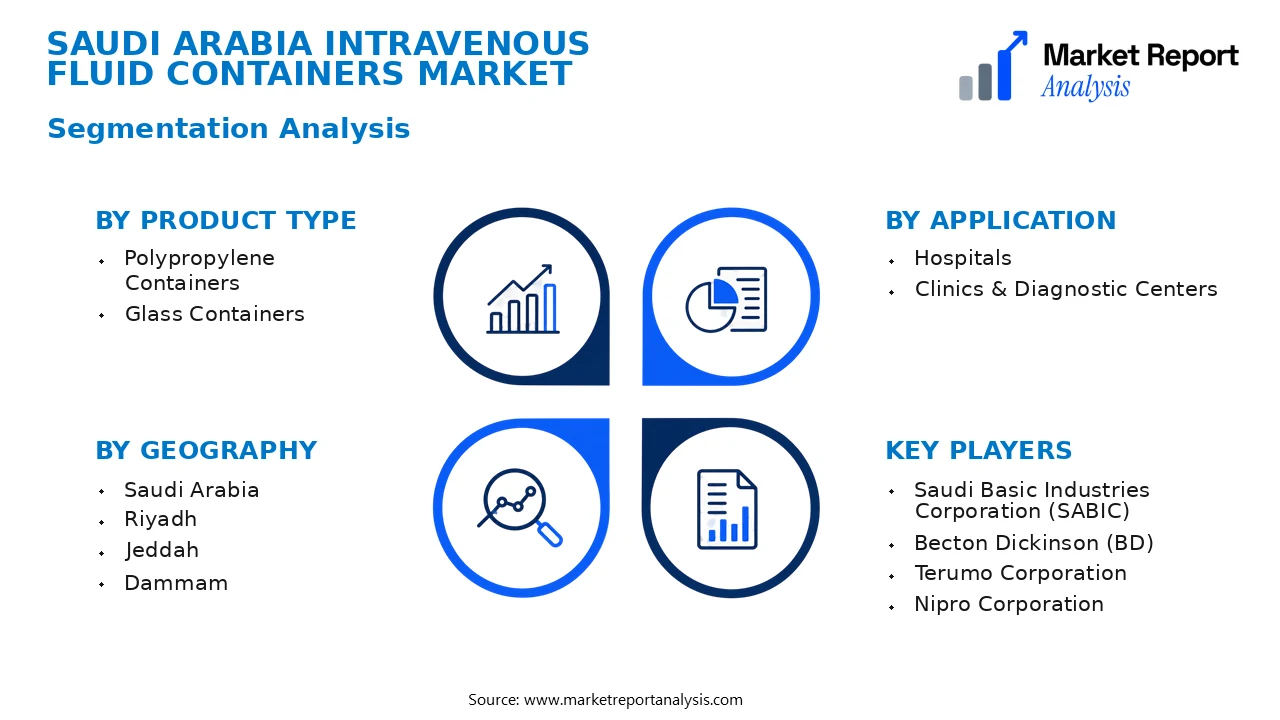
- Product Type
- Polypropylene Containers: These containers are widely preferred for their chemical resistance, durability, and affordability. Their demand is driven by hospital adoption and pharmaceutical needs for safe, sterile drug delivery.
- Glass Containers: Known for their inert qualities, glass containers are preferred for specific applications requiring high chemical stability, though demand is limited due to fragility and cost considerations.
- Application
- Hospitals: The primary application sector, hospitals require large volumes of sterile IV containers for emergency, routine, and surgical procedures, steering consistent demand driven by Saudi Arabia’s expanding healthcare infrastructure.
- Clinics & Diagnostic Centers: Smaller in scale but high in demand for outpatient services, diagnostic labs, and urgent care, this segment benefits from the rising healthcare awareness and outpatient care expansion.
- Geography
- Saudi Arabia: The domestic market where the entire market dynamics are influenced by national healthcare policies, economic factors, infrastructure development, and localized regulatory standards.
- Riyadh: As the capital and largest city, Riyadh features intense healthcare activity, significant hospital networks, and higher healthcare expenditure, making it a critical regional hub for IV container demand.
- Jeddah: A major port city with a considerable focus on healthcare infrastructure growth, Jeddah’s market for IV containers is propelled by its industrial and medical clusters and higher influx of medical tourism.
- Dammam: The economic and oil industry hub in the Eastern Province, Dammam’s demand for IV fluid containers is closely linked to its extensive petrochemical, industrial, and healthcare sectors.
- Mecca: As a global religious tourism destination, Mecca hosts numerous health facilities catering to pilgrims, influencing regional needs for rapid and reliable IV fluid solutions, especially during peak pilgrimage seasons.
- Medina: Similar to Mecca, Medina’s healthcare providers require consistent IV supply to serve both local residents and visitors, supporting demand stability in this religiously significant city.
- Al Khobar: This progressive city in the Eastern Province hosts numerous healthcare facilities and multinational corporate offices, contributing substantially to the regional IV container market through healthcare procurement and industrial sectors.
- Jubail: Known for its industrial complexes and petrochemical industries, Jubail’s healthcare and industrial facilities generate demand for high-quality IV containers to meet safety and compliance standards.
This segmentation approach, by product, application, and key geographic regions in Saudi Arabia, provides critical insights into market drivers and regional opportunities. It helps stakeholders identify growth hotspots, tailor product offerings, and develop region-specific strategies to optimize market penetration and operational efficiency as the market evolves through 2034.
Competitive Intelligence
The Saudi Arabia Intravenous Fluid Containers Market exhibits moderate competition characterized by a mix of local and international players. Market concentration remains relatively balanced, with leading companies such as Baxter International, B. Braun Melsungen AG, and Pfizer leading the industry, while numerous smaller regional manufacturers compete for market share. Business strategies predominantly focus on product innovation and expanding manufacturing capacities, especially in key urban centers like Riyadh and Jeddah, to meet rising healthcare demands. Companies increasingly adopt strategic partnerships with healthcare providers and government agencies to secure supply chains and enhance distribution networks. Recent acquisitions aim to strengthen regional presence, exemplified by partnerships between multinational firms and local distributors. Investment in R&D remains high, with firms exploring advanced materials and sustainable container designs to differentiate their products. Differentiation is often achieved through product safety, tamper-evidence features, and eco-friendly materials, aligning with Saudi Arabia's regulatory emphasis on healthcare safety and sustainability. These competitive strategies ensure market players remain resilient amidst evolving regulatory landscapes and technological advancements specific to Saudi Arabia’s healthcare infrastructure.
Leading Company Profiles
The Saudi Arabia Intravenous Fluid Containers Market is marked by the presence of several key industry players who are focusing on technological innovation, regional expansion, and strategic alliances to strengthen their market positions.
- Saudi Basic Industries Corporation (SABIC)
- Becton Dickinson (BD)
- Terumo Corporation
- Nipro Corporation
- VIEKON
- Smiths Medical
- Phoenix Medical Systems
- Vascular Access & Fluid Management Ltd. (VAM)
- Gerresheimer AG
- HTL-Strefa S.A.
Saudi Basic Industries Corporation (SABIC)
SABIC specializes in high-quality polymer production, including medical-grade plastics used for intravenous fluid containers, with a strategic focus on sustainability and innovation to expand within the healthcare segment.
Becton Dickinson (BD)
BD offers an extensive portfolio of sterile, high-quality IV fluid containers tailored for multiple healthcare applications, emphasizing advanced manufacturing processes and compliance with international safety standards.
Terumo Corporation
Terumo provides durable, reliable intravenous container solutions, investing heavily in pharmaceutical-grade materials and innovative designs to meet Saudi Arabia’s expanding healthcare infrastructure needs.
Nipro Corporation
Nipro develops medical-grade IV containers with an emphasis on safety features and cost-effective production, targeting both domestic and regional markets to support health system improvements.
VIEKON
VIEKON specializes in biopharmaceutical packaging, with a growing footprint in Saudi Arabia, focusing on sustainable, biodegradable IV fluid containers aligned with regional regulations and environmental commitments.
Smiths Medical
Smiths Medical offers innovative, sterile IV solutions, including containers designed for ease of use and safety, aiming to enhance clinical outcomes and reduce healthcare-associated risks.
Phoenix Medical Systems
Phoenix Medical Systems manufactures high-quality, cost-efficient IV fluid containers utilizing advanced plastic molding technologies to serve hospitals and clinics across Saudi Arabia.
Vascular Access & Fluid Management Ltd. (VAM)
VAM focuses on providing innovative fluid management solutions, including portable and secure IV fluid containers, with a strategic focus on digital integration and patient safety.
Gerresheimer AG
Gerresheimer offers pharmaceutical glass and plastic packaging, emphasizing high standards of quality, safety, and sustainability for intravenous fluid containers used in the Saudi healthcare system.
HTL-Strefa S.A.
HTL-Strefa manufactures a wide range of medical packaging, including IV containers, leveraging cutting-edge technologies and adhering to stringent health and safety regulations to meet Saudi market demands.
Strategic Business Developments

- Mar 2026 – SABIC – Announced new green polymer manufacturing facility – Significantly enhances Saudi Arabia’s capacity to produce sustainable IV fluid containers, aligning with national eco-initiatives.
- Oct 2026 – BD – Launched innovative sterile IV container series – Strengthens product portfolio, boosts market share, and enhances safety standards in regional healthcare settings.
- Apr 2026 – Terumo Corporation – Invested in regional distribution hubs – Improves supply chain resilience and reduces delivery times across the Gulf Cooperation Council (GCC) countries.
- Jun 2026 – Smiths Medical – Formed strategic alliance with local distributors – Expands presence within Saudi Arabia’s healthcare infrastructure and accelerates adoption of advanced IV solutions.
- Sep 2026 – Gerresheimer AG – Acquired regional packaging company – Creates synergies, enhances local production capabilities, and caters to increasing demand for high-quality IV containers.
Frequently Asked Questions
What is the Saudi Arabia Intravenous Fluid Containers Market?
The Saudi Arabia Intravenous Fluid Containers Market comprises the production, supply, and demand for IV fluid packaging within the country. It includes various types of containers such as bottles, vials, and pre-filled syringes used primarily in hospitals and healthcare settings to administer fluids and medications efficiently.
What is the current market size of Saudi Arabia Intravenous Fluid Containers Market?
As of 2026, the market size is valued at approximately USD 1.2 Billion, reflecting steady growth driven by increasing healthcare investments, a rising geriatric population, and expanding hospital infrastructure across Saudi Arabia.
What factors are driving the Saudi Arabia Intravenous Fluid Containers Market?
Key growth factors include increasing healthcare expenditure, government initiatives for healthcare modernization, rising prevalence of chronic diseases requiring IV therapies, increasing hospital admissions, and technological advancements in IV container manufacturing to ensure safety and compliance.
Which Saudi city leads the Saudi Arabia Intravenous Fluid Containers Market?
Riyadh, as the capital city and a major healthcare hub, leads the Saudi Arabia Intravenous Fluid Containers Market due to its large number of hospitals, clinics, and healthcare institutions, coupled with high healthcare spending levels.
Which segment is expected to grow the fastest?
The pre-filled syringe segment is projected to demonstrate the fastest growth, driven by its convenience, safety improvements, and increasing adoption in outpatient and emergency care settings.
Who are the leading companies operating in the Saudi Arabia Intravenous Fluid Containers Market?
Leading companies include international players such as Becton Dickinson, Baxter International, and Terumo, alongside regional manufacturers focusing on local compliance, quality standards, and expanding manufacturing capacities to meet rising demand.
Analyst Perspective
The Saudi Arabia Intravenous Fluid Containers Market is poised for sustained long-term growth, driven by ongoing healthcare infrastructure development, increasing chronic disease prevalence, and expanding hospital capacities across key cities such as Riyadh, Jeddah, and Dammam. The market's maturity suggests a shift towards high-quality, innovative container solutions that comply with stringent regulatory standards, offering lucrative opportunities for technologically advanced products. As healthcare providers prioritize patient safety and operational efficiency, investments in smart and eco-friendly container technologies are expected to accelerate. Competitive dynamics will remain intense, with both multinational and local players seeking to expand market share through strategic partnerships and capacity enhancements. City-level growth potential varies, with Riyadh emerging as the hub for high-volume hospital supply chains and Jeddah capitalizing on its regional healthcare hub status. Long-term strategic positioning will require continuous innovation, regulatory engagement, and targeted investment in localized manufacturing capabilities to tap into the evolving needs and ensure resilience amid regulatory changes and economic shifts.
