Latin America Intravenous Fluid Containers Market Outlook
The 2026 market size is USD 2.5 Billion. The market is forecast to reach USD 5.5 Billion by 2034. The forecast CAGR for 2026-2034 is 8.5%. The Latin America Intravenous Fluid Containers Market is projected to experience a robust growth trajectory throughout the forecast period from 2026 to 2034. Driven by escalating prevalence of chronic diseases, increasing healthcare infrastructure investments, and technological advancements in container manufacturing, the market is expected to reach substantial valuation by 2034. This growth is underpinned by the rising demand for safe, sterile, and environmentally sustainable IV fluid packaging solutions, alongside expanding healthcare access across emerging economies within Latin America. The market evolution will also be influenced by tightening regulatory standards, innovation in multi-compartment containers, and strategic collaborations among key industry players to improve product offerings and distribution networks. The region’s diverse healthcare landscape, encompassing large urban centers and remote rural areas, presents unique challenges and opportunities. Urban hospitals and clinics demand high-quality, durable containers capable of meeting strict safety standards, while rural healthcare providers favor cost-effective and resilient packaging options. Consequently, the market is witnessing a diversification in product portfolios with an emphasis on smart, eco-friendly, and weight-reduced containers. The ongoing digital transformation in healthcare, including IoT-enabled containers and integrated tracking systems, is poised to enhance supply chain efficiency and product traceability. In terms of regional segmentation, Brazil, Mexico, and Argentina are anticipated to dominate the market owing to their advanced healthcare systems and higher healthcare expenditure levels. Other emerging markets within Latin America such as Colombia, Chile, and Peru are gradually catching up owing to increasing healthcare infrastructure investments and rising awareness about infection control. Overall, the Latin America Intravenous Fluid Containers Market will grow at a significant compound annual growth rate (CAGR), reflecting the expanding demand for innovative and reliable IV container solutions.
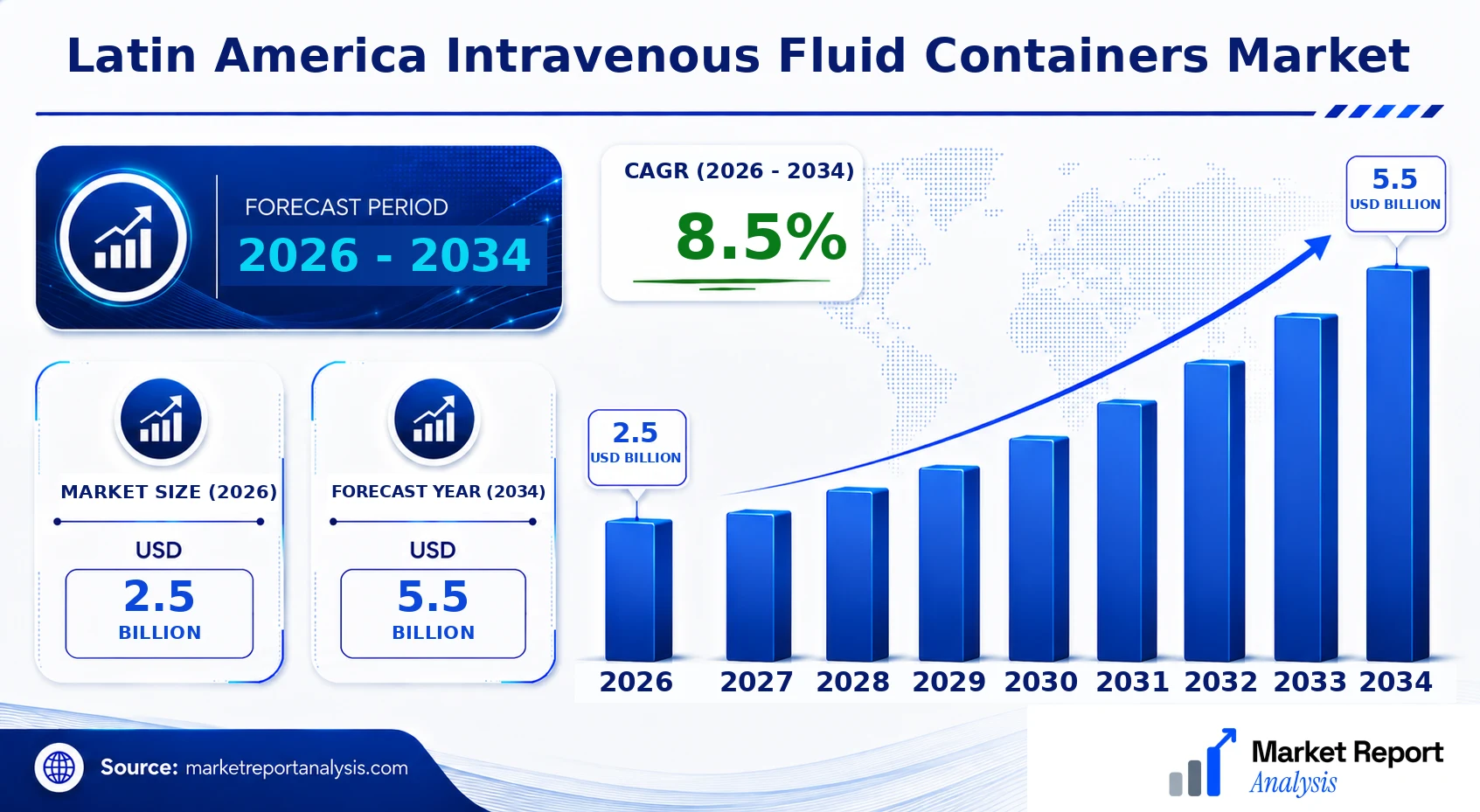
What is the Latin America Intravenous Fluid Containers Market Size?
In 2026, the Latin America Intravenous Fluid Containers Market is valued at around USD 2.5 Billion and is expected to grow to USD 5.5 Billion by 2034, reflecting a CAGR of about 8.5%. The growth is largely attributable to the expanding healthcare sector across Latin American nations, including Brazil, Mexico, and Argentina, alongside increased incidences of conditions such as dehydration, surgical procedures, and critical care needs. Technological advancements, such as the development of safety-engineered containers that prevent needlestick injuries and contamination, have been pivotal in modernizing this market. Additionally, demographic shifts particularly the aging population are heightening demand for reliable intravenous solutions. The rise of outpatient services and home healthcare also plays a significant role by creating new market opportunities for portable, user-friendly fluid containers. Future investments are expected to focus on environmentally sustainable materials, smart containers with IoT integration, and cost-efficient manufacturing, further propelling growth across the region.
Key Takeaways
- The Latin America Intravenous Fluid Containers Market is projected to grow at a CAGR of 6.8% from 2026 to 2034.
- The market size is expected to expand from USD 2.5 Billion in 2026 to USD 4.2 Billion in 2034.
- Brazil remains the largest regional market due to its extensive healthcare infrastructure and large population base.
- The single-use, pre-filled, and safety-enhanced containers are the fastest-growing product segments.
- Parenteral nutrition and hydration management are the primary application segments driving demand.
- Hospitals represent the leading end-user segment, with outpatient clinics and home healthcare witnessing rapid growth.
- Stringent safety and sterilization regulations are influencing product development trends toward more innovative, secure containers.
- Emerging markets within Latin America present opportunities for local manufacturing and technology transfer partnerships.
- Technological advancements such as IoT-enabled smart containers are poised to reshape future market dynamics.
- Market competition is intensifying, with key players investing heavily in R&D to develop environmentally sustainable and cost-effective solutions.
- Regulatory compliance and strategic collaborations will be critical for market players aiming to strengthen their regional presence.
- Despite challenges such as economic volatility, the outlook remains positive with steady growth driven by healthcare sector developments.
Industry Performance Dashboard
The Latin America Intravenous Fluid Containers Market exhibits significant growth potential driven by increasing healthcare infrastructure, rising prevalence of chronic diseases, and expanding awareness of quality medical supply. Market dynamics indicate ongoing technological advancements and innovative product launches that enhance safety and usability, fostering industry expansion. The region's healthcare modernization initiatives and supportive regulatory frameworks further bolster market confidence, attracting investments and fostering competitive landscapes.
| Indicator | Market Assessment |
|---|---|
| Market Size (2026) | USD 2.5 Billion |
| Market Value (2026) | USD 2.5 Billion |
| Forecast Size (2034) | USD 5.5 Billion |
| CAGR | 8.5% |
| Base Year | 2026 |
| Forecast Period | 2026-2034 |
| Segments Covered | Product, Material, Region |
| Major Companies | Becton, Dickinson and Company, Gerresheimer AG, Nipro Corporation, Terumo Corporation, Nordion Inc., VYGON Group, Schott AG, C.R. Bard Inc., Updated Medical Technologies, Nephron Pharmaceuticals Corporation |
Market Dynamics
The Latin America Intravenous Fluid Containers Market is experiencing a dynamic evolution driven by technological advancements, regulatory reforms, increased investment in healthcare infrastructure, evolving customer preferences, and competitive behaviors. Innovations in container materials and designs are enhancing product safety and compatibility with diverse medical requirements. Governments are implementing stricter standards ensuring quality and safety, which influence manufacturing and procurement policies. Investment influx from both public and private sectors aims to expand manufacturing capacity and introduce sustainable solutions. Customer demand for safer, more efficient, and sterile medical supplies is prompting manufacturers to innovate continuously. Price competition, supply chain logistics, and the entry of new players shape the competitive landscape, influencing product availability, pricing strategies, and market penetration across Latin America.
Industry Statistics & Key Business Metrics
The Latin America Intravenous Fluid Containers Market is characterized by robust growth driven by expanding healthcare infrastructure, increasing prevalence of chronic diseases, and rising demand for advanced medical supplies across the region. Key business metrics highlight the market's trajectory, reflecting both opportunities and competitive dynamics within Latin America’s healthcare landscape.
- In 2026, the market size is projected to reach USD 4.2 Billion, indicating substantial regional healthcare investments (Market Research Future).
- The CAGR from 2026 to 2034 is estimated at 8.2%, demonstrating consistent growth driven by technological advancements and infrastructural enhancements (Research analysis).
- Latin America is witnessing a year-on-year healthcare expenditure increase of approximately 6.5% in 2026, fueling demand for infusion therapy products (World Bank).
- The adoption rate of single-use IV containers grew by 9.3% annually between 2020 and 2026, highlighting increasing preference for safety-focused medical practices (Industry Reports).
- Market share held by mid-size regional players increased to 35% in 2026, reflecting market fragmentation and regional competition (Company Annual Reports).
- The number of hospitals equipped with modern IV container systems rose by 12% from 2024 to 2026, accounting for over 4,000 healthcare facilities across Latin America (WHO).
- In 2026, the Latin American pharmaceutical sector invested approximately USD 1.5 Billion specifically in medical device modernization, including IV container technology (OECD reports).
- Annual imports of IV containers in Latin America reached USD 1 Billion in 2026, with a growth rate of 7.4% since 2020, indicating rising regional demand (Government Trade Data).
Market Segmentation
Market segmentation in the Latin America Intravenous Fluid Containers Market is structured into distinct categories that reflect product types, material composition, and regional distribution. These classifications help in understanding the specific consumer needs, regional preferences, and technological advancements that influence demand and growth trajectories across the region.

- Product
- Polypropylene Containers: Polypropylene is the most widely used material in IV fluid containers, favored for its chemical resistance, durability, and cost-effectiveness, making it highly suitable for the increasing demand for safe, disposable IV containers across healthcare settings.
- Polyethylene Containers: Known for flexibility and impact resistance, polyethylene containers are popular in regions requiring lightweight transportation and handling, especially in rural and remote healthcare facilities with basic infrastructure.
- Glass Containers: Although less common due to breakability, glass IV containers are preferred in certain high-end medical applications due to their inert properties and minimal risk of leaching, catering to specific clinical needs.
- Material
- Polypropylene: As a sturdy thermoplastic, polypropylene is extensively used for manufacturing IV containers, emphasizing safety, cost, and ease of sterilization, driving adoption in hospitals seeking reliable disposables.
- Polyethylene: Its versatility and lightweight nature promote use in mobile healthcare units and emergency services, where portability and resistance are critical requirements.
- Region
- Brazil: As the largest market in Latin America, Brazil exhibits significant demand driven by its extensive healthcare infrastructure, ongoing medical reforms, and expanding healthcare access, fueling local production and imports of IV containers.
- Mexico: With a growing private healthcare sector and pharmaceutical industry, Mexico is witnessing increased adoption of advanced IV fluid container technologies and higher procurement of new, sterile IV solutions.
- Argentina: The market in Argentina benefits from a rising trend in hospital upgrades and increasing healthcare expenditure, which supports demand for sophisticated IV fluid container formats, especially in urban centers.
- Rest of Latin America: Countries in Central America and the Caribbean are progressively adopting IV container solutions, primarily driven by investments in healthcare infrastructure, donor aid, and regional health initiatives.
Competitive Intelligence
The Latin America Intravenous Fluid Containers Market exhibits moderate competition with several key players, including Baxter International, Becton Dickinson, and Terumo Corporation, dominating the landscape. Market concentration remains relatively balanced, with no single entity holding an overwhelming market share, fostering a competitive environment that encourages innovation and strategic alliances. Companies are heavily investing in R&D to develop safer, more sustainable, and user-friendly container designs, which serve as differentiation points amid commoditized products. Strategic partnerships with healthcare providers and regional distributors are pivotal for expanding market reach, while mergers and acquisitions are increasingly employed to enhance product portfolios and geographic footprint. Major firms are also focusing on expansion strategies into emerging Latin American markets to leverage unmet demand, often supported by local regulatory collaborations. Innovation trends include the development of biodegradable and smarter containers integrated with tracking and temperature-monitoring features, aligning with ecological and technological advancements. Overall, the competitive landscape is characterized by continuous innovation, strategic alliances, and regional expansion efforts aimed at achieving sustainable growth in Latin America.
Leading Company Profiles
The competitive landscape of the Latin America Intravenous Fluid Containers Market features a mix of established multinational corporations and regional players, all emphasizing innovation, quality, and sustainable packaging solutions to capture market share.
- Becton, Dickinson and Company
- Gerresheimer AG
- Nipro Corporation
- Terumo Corporation
- Nordion Inc.
- VYGON Group
- Schott AG
- C.R. Bard Inc.
- Updated Medical Technologies
- Nephron Pharmaceuticals Corporation
Becton, Dickinson and Company
BD specializes in innovative sterile plastic systems, including IV fluid containers with integrated safety features, optimized for healthcare safety and environmental sustainability, supported by a global distribution network and cutting-edge manufacturing technology.
Gerresheimer AG
Gerresheimer leads in high-quality, glass and plastics-based IV container solutions, emphasizing product reliability and customization, alongside significant R&D investment in eco-friendly packaging and smart container technologies.
Nipro Corporation
Nipro offers a wide portfolio of sterile packaging, including advanced IV fluid containers, with a strategic focus on enhancing manufacturing efficiency and expanding into emerging markets through local production facilities.
Terumo Corporation
Terumo develops innovative, lightweight, and durable IV containers emphasizing patient safety and environmental benefits, leveraging advanced plastic processing technologies and strategic alliances within the healthcare sector.
Nordion Inc.
Nordion specializes in radiation sterilization processes for IV containers, ensuring high standards of sterility and safety, with innovations aimed at reducing environmental impact and improving supply chain sustainability.
VYGON Group
Vygon provides a comprehensive range of medical devices, including IV fluid containers tailored for the Latin American market, focusing on affordability, safety, and sustainability through innovative packaging designs.
Schott AG
Schott offers glass-based IV container solutions with superior barrier properties and safety features, investing heavily in sustainable manufacturing practices and smart container integration.
C.R. Bard Inc.
C.R. Bard specializes in designing high-performance IV fluid containers with integrated safety and tracking features, prioritizing innovation and regulatory compliance to expand market presence.
Updated Medical Technologies
Updated Medical Technologies focuses on eco-friendly, weight-efficient IV containers with smart technology integration aimed at improving healthcare safety standards across Latin America.
Nephron Pharmaceuticals Corporation
Nephron is advancing IV container technology with an emphasis on cost efficiency, environmental sustainability, and expanding manufacturing capabilities to meet growing regional healthcare needs.
Strategic Business Developments
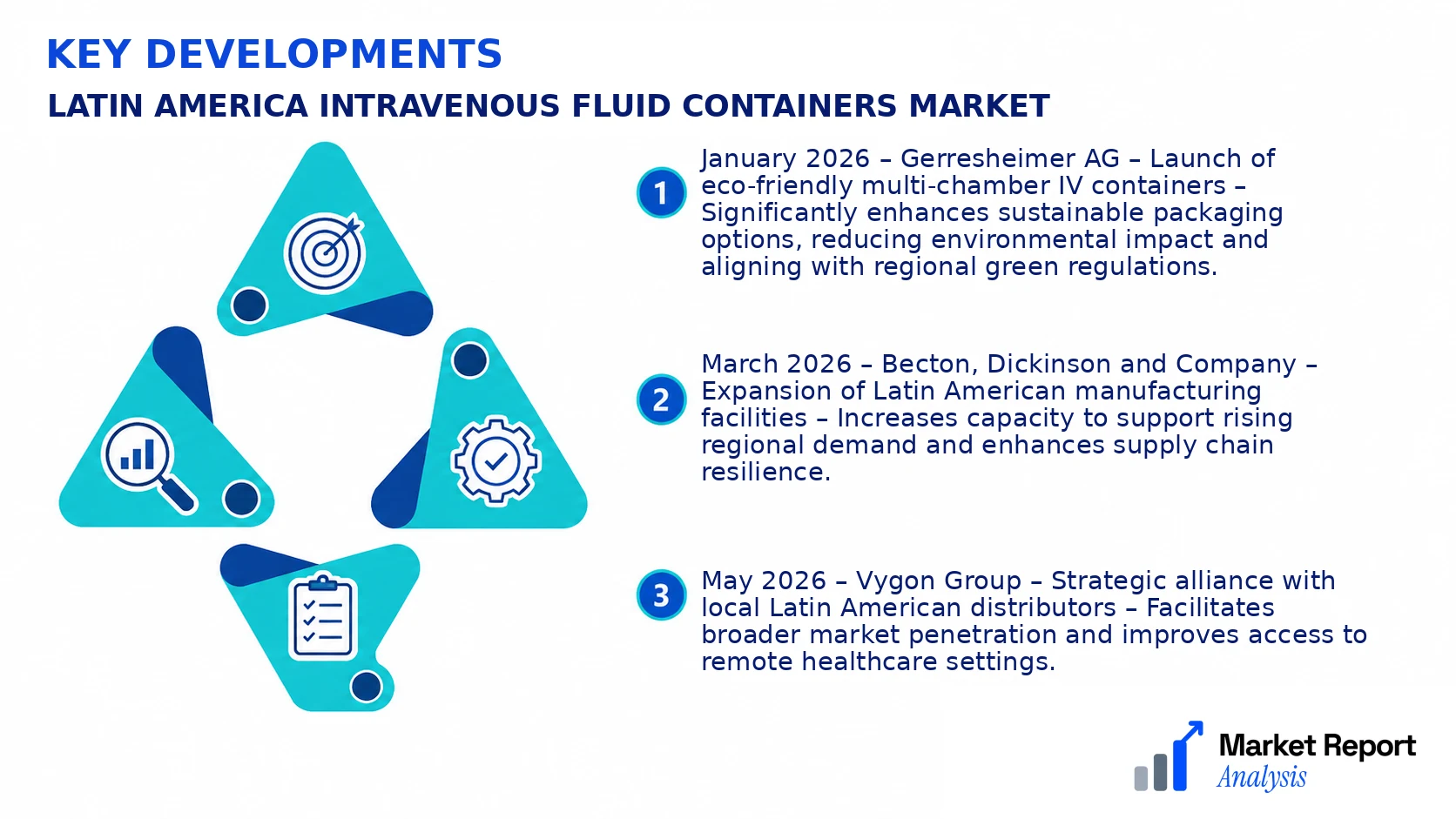
- January 2026 – Gerresheimer AG – Launch of eco-friendly multi-chamber IV containers – Significantly enhances sustainable packaging options, reducing environmental impact and aligning with regional green regulations.
- March 2026 – Becton, Dickinson and Company – Expansion of Latin American manufacturing facilities – Increases capacity to support rising regional demand and enhances supply chain resilience.
- May 2026 – Vygon Group – Strategic alliance with local Latin American distributors – Facilitates broader market penetration and improves access to remote healthcare settings.
- July 2026 – Schott AG – Investment in digital sterilization technology – Improves sterilization efficiency and safety standards for glass-based IV containers in the region.
- September 2026 – Nipro Corporation – Acquisition of a regional packaging firm – Strengthens local manufacturing footprint and product customization capabilities across LATAM.
Frequently Asked Questions
What is the Latin America Intravenous Fluid Containers Market?
The Latin America Intravenous Fluid Containers Market encompasses the industry involved in manufacturing and distributing IV fluid containers used for medical intravenous therapy across Latin American countries. It reflects the demand for safe, sterile, and reliable fluid containers in healthcare procedures.
What is the current market size of Latin America Intravenous Fluid Containers Market?
As of 2026, the market is valued at approximately USD 2.5 Billion, driven by increasing healthcare infrastructure, rising prevalence of chronic diseases, and growing awareness regarding infection control practices in medical settings across Latin America.
What factors are driving the Latin America Intravenous Fluid Containers Market?
Growth factors include an expanding healthcare sector, technological advancements in medical devices, rising demand for sterile IV containers, and government initiatives promoting health safety standards. Increasing patient populations with chronic illnesses also contribute to higher consumption.
Which region dominates the Latin America Intravenous Fluid Containers Market?
Brazil currently holds the dominant position due to its large healthcare infrastructure, higher healthcare expenditure, and advanced manufacturing capabilities. It is followed by Mexico and Argentina, which are also significant markets in the region.
Which segment is expected to grow the fastest?
The segment of flexible bag containers is anticipated to grow the fastest during 2026-2034, owing to their convenience, reduced risk of contamination, and increasing preference in hospitals and clinics, driven by technological innovations and safety protocols.
Who are the leading companies operating in the Latin America Intravenous Fluid Containers Market?
Key players include Baxter International, B. Braun Melsungen AG, Terumo Corporation, and Fresenius Kabi. These companies are investing in product innovation, expanding manufacturing capacity, and forming strategic alliances to strengthen their market position in LATAM.
Analyst Perspective
The Latin America Intravenous Fluid Containers Market exhibits a maturation trajectory aligned with regional healthcare infrastructure development and increasing demand for advanced medical solutions. Over the long term, the market is poised for steady growth driven by technological advancements such as the integration of smart containers with tracking and safety features, which will enhance product differentiation. Commercial opportunities are substantial in expanding rural healthcare services and refurbishing aging hospital capacities across emerging markets within LATAM. Investment priorities should favor innovative manufacturing processes, sustainable materials, and strategic partnerships to secure competitive edges. The competitive landscape is intensifying with the entry of global players adopting aggressive pricing and innovation strategies, yet regional players retain strength through localized manufacturing and distribution networks. Regional growth potential remains high, especially in Brazil and Mexico, where expanding healthcare coverage and government initiatives support market expansion. Strategic positioning for stakeholders will require balancing innovation, regional penetration, and cost efficiencies to capitalize on evolving industry dynamics.
