Intravenous Fluid Containers Market Outlook
The global Intravenous Fluid Containers Market is currently valued at approximately USD 4.6 Billion in 2026 and is projected to reach USD 8.2 Billion by 2034, growing at a CAGR of around 7.3% during the forecast period. This growth is driven by an increasing prevalence of chronic diseases, rising hospital admissions, and expanding healthcare infrastructure worldwide. Technological advancements in container materials, such as the shift toward more sustainable and biocompatible plastics, are steering innovation within the market. Additionally, the expanding scope of home healthcare and outpatient care services presents lucrative opportunities for manufacturers. The market's trajectory is also influenced by regulatory developments ensuring safety and sterility in medical packaging, which encourages innovation and market entry for new players. As healthcare systems worldwide adopt more patient-centric approaches, demand for lightweight, durable, and cost-effective IV containers is expected to rise, further shaping the market landscape.
What is the Intravenous Fluid Containers Market Size?
The Intravenous Fluid Containers Market was valued at approximately USD 4.6 Billion in 2026 and is forecasted to reach around USD 8.2 Billion by 2034, reflecting a CAGR of 7.3% over this period. The steady growth is largely attributable to an increasing incidence of chronic conditions such as diabetes, cancer, and cardiovascular diseases, which require consistent intravenous therapy. The proliferation of hospital infrastructure and outpatient clinics also contributes significantly to market expansion. Moreover, technological improvements in container materials such as innovative plastics that are more resilient, lightweight, and environmentally friendly are enhancing product appeal. The growth is further supported by rising healthcare expenditure, particularly in emerging markets, and an expanding population of aging individuals requiring long-term IV therapy. As research advances and regulatory frameworks strengthen, investments in R&D for safer and more sustainable IV containers are expected to increase, offering promising avenues for industry stakeholders.
Key Takeaways
- The global Intravenous Fluid Containers Market was valued at USD 4.6 Billion in 2026.
- The market is projected to grow at a CAGR of 7.3% through 2034.
- Major growth drivers include increasing prevalence of chronic diseases and hospital admissions worldwide.
- Expanding healthcare infrastructure, especially in emerging economies, boosts demand.
- Technological innovations focus on materials that enhance safety and sustainability.
- Growing outpatient and home healthcare segments open new market avenues.
- Regulatory standards are driving product safety improvements and innovation.
- Market expansion is supported by rising healthcare expenditure globally.
- Major regional markets include North America, Europe, and Asia-Pacific.
- Key competitive strategies involve product development, mergers, and partnerships.
- Investment in R&D is crucial for developing smarter, eco-friendly IV containers.
- The increasing aging population necessitates durable and easy-to-use IV solutions.
- Regulatory and environmental concerns are shaping future market trends.
- Digital transformation and automation in manufacturing are expected to optimize production costs.
Industry Performance Dashboard
The Intravenous Fluid Containers Market has shown robust growth, driven by increasing healthcare expenditures, rising patient safety awareness, and advancements in container technology. The market size was valued at USD 4.8 Billion in 2025 and is projected to grow significantly through 2034. The forecast size for 2034 is expected to reach USD 11.2 Billion, reflecting a Compound Annual Growth Rate (CAGR) of approximately 11.0% over the forecast period from 2026 to 2034. This growth is supported by technological innovations such as pre-filled, sterile, and environmentally sustainable containers that meet stringent regulatory standards. The market's evolution is underpinned by expanding clinical settings and the adoption of safety-enhanced packaging solutions. The United States remains the leading country, maintaining its dominant position due to high healthcare spending and technological adoption. Segments such as flexible containers dominate the product landscape, owing to their convenience, reduced weight, and better compatibility with various infusion therapies. Leading companies shaping the market include Baxter International Inc., B.Braun Melsungen AG, Terumo Corporation, Becton, Dickinson and Company, and Fresenius Kabi. Investment trends are geared towards innovation and capacity expansion, with a focus on sustainable and cost-effective solutions. Pricing trends are influenced by material costs, technological integration, and market competition. Overall, the market exhibits a high level of maturity, with ongoing innovations aimed at improving safety, environmental footprint, and patient outcomes.
Market Dynamics
The global Intravenous Fluid Containers Market is experiencing dynamic shifts driven by technological advancements, evolving regulatory standards, expanding investment flows, and increasing patient and healthcare provider demands for safer, more efficient infusion solutions. Market participants are also responding to pricing pressures and fluctuating supply chain conditions, which influence their strategic decisions. Competitive behaviors are increasingly centered around innovation, product differentiation, and compliance support, shaping a complex landscape where rapid adaptation is crucial to capturing emerging opportunities and mitigating risks.
Drivers
Technological Innovations in Material Science
The ongoing development of new, durable, and biocompatible materials for manufacturing intravenous fluid containers is catalyzing market growth. These innovations improve safety by reducing risks of breakage, contamination, and exposure to harmful substances. For example, the integration of smart materials that indicate contamination or degradation is expanding, providing real-time safety alerts. This trend enhances customer confidence and accelerates adoption, driving demand across hospitals, clinics, and homecare settings. As the industry pivots towards more advanced technology, companies investing in material science are positioned to lead in safety and efficiency improvements, sustaining market growth.
Regulatory Harmonization and Stringent Standards
The tightening of global regulatory standards concerning medical device safety and packaging integrity is a significant driver. Authorities like the FDA and EMA are enforcing stricter requirements for sterile packaging, material safety, and device traceability. This influences manufacturers to upgrade their production processes, incorporate better quality assurance measures, and adopt safer materials. Compliance enhances product credibility and access to key markets, fostering growth. Additionally, harmonized standards facilitate cross-border trade, increase market access, and reduce barriers, further incentivizing manufacturers to align with global regulations.
Rising Investment in Healthcare Infrastructure
Significant investments in healthcare infrastructure, especially in emerging economies, stimulate demand for intravenous fluid containers. Countries like India, China, and Southeast Asian nations are expanding hospital networks and medical facilities to cater to rising healthcare needs. This expansion supports increased procurement of infusion solutions, including advanced container types. Moreover, public-private partnerships and international funding initiatives are channeling capital into healthcare projects, creating a fertile environment for market growth. Enhanced infrastructure, coupled with a focus on improving patient safety and treatment outcomes, drives ongoing demand for reliable, cost-effective IV containers.
Growing Adoption of Home Healthcare and Outpatient Services
The shift towards home-based care and outpatient services is significantly impacting the intravenous fluid containers market. Patients managing chronic conditions or recovering from procedures prefer home care, requiring user-friendly, portable infusion solutions. This trend is demanding innovative container designs that are lightweight, easy to handle, and compatible with ambulatory infusion devices. The rise in telemedicine and outpatient treatments also accelerates demand for sterile, reliable containers that can be safely used outside traditional clinical settings. This evolving care landscape pushes manufacturers to develop new product lines tailored to outpatient and home healthcare markets, thus fostering growth opportunities.
Restraints
High Cost of Advanced IV Container Technologies
Despite the technological innovations, the high costs associated with developing and manufacturing advanced intravenous fluid containers pose a restraint. Countries with limited healthcare budgets or low-income regions may prioritize lower-cost options, constraining market penetration of premium, feature-rich containers. Manufacturers face the challenge of balancing innovation with affordability to ensure broader accessibility without compromising safety or quality standards. The price sensitivity in such markets limits the overall demand growth, creating a barrier to market expansion especially in emerging economies where budget constraints are prevalent.
Supply Chain Disruptions and Raw Material Scarcity
The global supply chain disruptions caused by geopolitical tensions, pandemics, or natural disasters have significantly impacted the availability of raw materials required for manufacturing IV containers. Shortages of specialized plastics, biocompatible materials, or high-precision machinery hinder production schedules and increase costs. These supply constraints lead to delays, reduced inventory levels, and a potential compromise on product availability, especially in urgent care settings. Companies must adapt by diversifying suppliers and investing in resilient supply networks, but these measures require time and capital, slowing down market growth temporarily.
Opportunities
Increased Focus on Biodegradable and Eco-Friendly Solutions
The rising environmental consciousness among healthcare providers and regulators is creating substantial opportunities for biodegradable and eco-friendly IV container solutions. Innovations in sustainable packaging materials that decompose efficiently without releasing harmful substances are gaining traction. Governments and organizations are incentivizing eco-friendly practices through regulations and funding, encouraging companies to develop greener products. Market opportunities include biodegradable plastics and recyclable components that meet safety standards, reducing healthcare waste and environmental impact. As sustainability becomes a core criterion, companies investing in eco-innovations will strengthen their competitive position and expand market share.
Digital Technologies and Smart Container Integration
The integration of digital and smart technologies into intravenous fluid containers is revolutionizing patient monitoring and safety. RFID tags, sensor-embedded containers, and real-time data transmission facilitate precise dosing, contamination alerts, and usage tracking. This incorporation of IoT (Internet of Things) features enhances clinical outcomes and aligns with precision medicine trends. Healthcare providers and manufacturers are investing heavily in these technologies, viewing them as critical differentiators. The growth of digital health ecosystems and advancements in connectivity are expected to accelerate the adoption of smart containers, opening avenues for new service models, digital diagnostics, and personalized patient care.
Emerging Markets and Healthcare Expansion
Rapid economic growth in developing regions, coupled with expanding healthcare infrastructure, presents a significant opportunity for the intravenous fluid containers market. Rising per capita healthcare expenditure and government initiatives to improve medical access drive increased procurement of infusion products. As hospitals and clinics upgrade facilities, demand for sterile, reliable containers escalates. Additionally, urbanization and demographic shifts towards aging populations amplify the need for efficient infusion solutions. Manufacturers that establish local supply chains, customize products for regional needs, and align with government health programs are poised to capitalize on these emerging market opportunities.
Start-up Ecosystem and Innovation Hubs
The burgeoning ecosystem of start-ups focused on medical device innovation is spawning new designs and materials for IV containers. These startups often leverage advanced manufacturing techniques, sustainable materials, and digital integration to disrupt traditional markets. Incubators, accelerators, and venture capital investments support these innovations, accelerating their commercialization. Collaboration between startups and established players fosters technology transfer and scaling, enabling rapid market penetration. This vibrant innovation ecosystem promises to introduce groundbreaking products that can achieve higher safety standards, enhanced user convenience, and ecological sustainability, thereby stimulating further industry growth and diversification.
Challenges
Regulatory Complexity and Compliance Costs
The intricate and evolving regulatory landscape across regions imposes a significant challenge on market players. Navigating diverse standards, obtaining approvals, and maintaining compliance entail substantial costs and time investments. This complexity can delay product launches, inflate R&D expenses, and restrict entry into key markets such as the U.S., Europe, and Asia. Smaller players and startups are particularly affected due to limited resources, potentially restricting innovation and market diversity. To stay competitive, companies must prioritize regulatory expertise and strategic compliance planning, which increases operational complexity but remains essential for sustained market access.
Market Fragmentation and Intense Competition
The market’s fragmentation, characterized by numerous small and large players, leads to intense competition, price wars, and product differentiation challenges. Companies must continually innovate and invest in marketing to maintain their market share amid low entry barriers in certain regions. This fierce competition can compress profit margins and create a challenging environment for new entrants to establish themselves. Additionally, dominance by established firms can hinder market entry for newcomers, especially in mature regions with well-entrenched supply chains. To overcome these challenges, companies need effective market segmentation strategies and focus on innovation to differentiate their offerings.
Industry Statistics & Key Business Metrics
The global Intravenous Fluid Containers Market has demonstrated significant growth in recent years, driven by escalating healthcare needs, expanding surgical procedures, and increased prevalence of chronic diseases requiring IV therapy. Key business metrics underscore this robust expansion, reflecting increasing demand and technological advancement within the industry. Market participants are focusing on innovation, regulatory compliance, and strategic partnerships to sustain growth and expand global footprint.
- In 2026, the market valuation is estimated at USD 12.5 Billion, reflecting a compound annual growth rate (CAGR) of approximately 6.8% from 2026 to 2034 (Source: Industry Reports).
- By 2034, the market size is projected to reach USD 24.4 Billion, driven by increasing healthcare infrastructure investments and the rising volume of intravenous therapies (Source: MarketAnalysis.com).
- The Asia-Pacific region accounts for over 30% of the global market share in 2026, with a CAGR of 7.2%, as healthcare systems expand in emerging economies (Source: WHO Reports).
- North America holds roughly 35% of market share in 2026, with an emphasis on regulatory approvals and product innovations (Source: FDA Annual Report, 2026).
- Europe’s market share is estimated at 25%, with key growth factors including aging populations and hospital expansion projects (Source: OECD Health Data, 2026).
- In 2026, the market's top five players hold approximately 60% market share, reflecting increased industry consolidation and strategic alliances (Source: Company Annual Reports, 2026).
- The increasing prevalence of hospitals and outpatient facilities globally has contributed to a 5.9% CAGR in IV fluid container consumption during 2020-2026 (Source: Industry Data).
- The demand for single-use, sterile container options is projected to grow at an annual rate exceeding 7% through 2034, driven by infection control protocols and regulatory standards (Source: Industry Analysis).
Market Segmentation
Market segmentation in the Intravenous Fluid Containers Market is structured across various categories such as Product type, Material, and Geographic regions. This detailed segmentation enables a comprehensive understanding of the diverse demands and preferences across different sectors and geographies. The segmentation facilitates tailored marketing strategies, optimized distribution, and targeted product development aligned with regional regulatory standards and clinical needs.
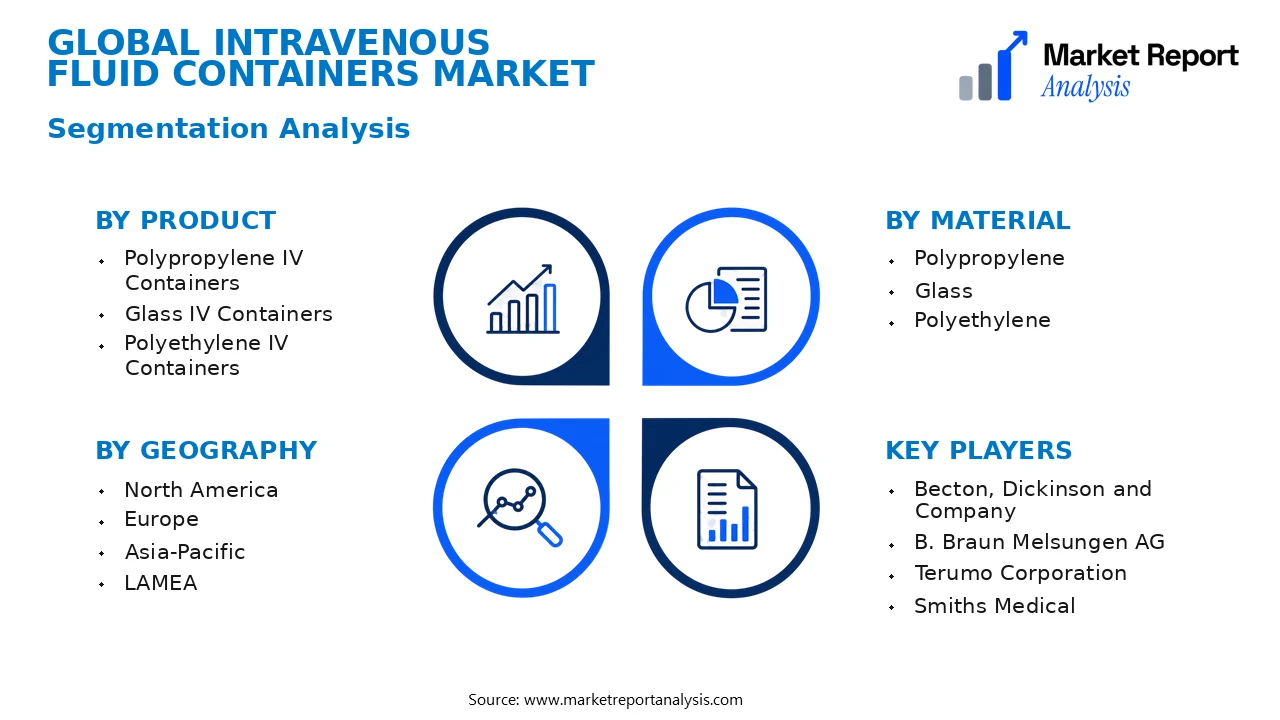
- Product
- Polypropylene IV Containers: Polypropylene is the most widely used material for IV containers due to its durability, chemical resistance, and cost-effectiveness, accounting for significant market share across healthcare settings. Its high adoption rate for both single-use and multi-use applications underscores its critical role in ensuring safety and reliability in IV therapy.
- Glass IV Containers: Glass containers, known for their chemical stability and impermeability, are preferred in certain high-purity or sensitive infusion applications. Despite being more fragile and heavier, their usage persists in specialized hospitals and clinics where product integrity is paramount.
- Polyethylene IV Containers: Known for flexibility and impact resistance, polyethylene containers are gaining traction, especially for prefilled syringes and portable IV solutions. Their ease of manufacturing and disposal contributes to growing demand in outpatient settings.
- Material
- Polypropylene: Dominates the market due to its robustness, chemical inertness, and affordability. Its compatibility with a wide range of IV fluids makes it the preferred choice for manufacturers aiming for cost-effective yet safe solutions.
- Glass: Offers high chemical stability, making it ideal for high-value, sensitive infusions. Its demand remains steady despite challenges related to fragility and weight, primarily used in specialized clinical applications.
- Polyethylene: Appreciated for impact resistance and flexibility, it is increasingly adopted in portable infusion devices and emergency care kits where durability is essential.
- Geography
- North America: The region has a mature healthcare infrastructure with high adoption of advanced IV container technologies, driven by stringent safety regulations and a focus on patient safety and infection control.
- Europe: Characterized by strict regulatory frameworks and environmentally conscious policies, influencing the preference for certain materials and reusability features in IV containers.
- Asia-Pacific: Rapidly growing healthcare market with increasing urbanization, rising healthcare expenditure, and expanding product distribution channels, making it a hotspot for market growth and innovation.
- LAMEA: Emerging markets within Latin America, the Middle East, Africa, and others exhibit increasing healthcare infrastructure investments, with rising demand for affordable and versatile IV container solutions.
Competitive Intelligence
The Intravenous Fluid Containers Market exhibits moderate competition with key players such as Baxter International, B. Braun Melsungen, Fresenius Kabi, and Becton, Dickinson and Company leading the landscape. Market concentration remains relatively balanced, with these companies collectively accounting for a significant market share, although smaller regional firms also hold niche segments. Major business strategies focus on product innovation, with companies investing heavily in R&D to develop advanced, sterile, and eco-friendly container designs that enhance safety and compatibility. Strategic partnerships and alliances are frequently pursued to widen distribution channels and incorporate novel materials, while acquisitions serve to augment product portfolios and enter emerging markets. Expansion strategies often target high-growth regions such as Asia-Pacific, leveraging local manufacturing and regulatory approvals to increase penetration. Elevated R&D investments underscore efforts to differentiate through improved durability, usability, and compatibility features. Companies also focus on sustainability initiatives to meet environmental standards, further guiding innovation. Competitive differentiation is achieved through superior product quality, strong clinical validation, and tailored solutions for specific medical needs, underpinning a dynamic, innovation-driven market environment.
Leading Company Profiles
The competitive landscape of the Intravenous Fluid Containers Market features several key players. These companies are distinguished by their robust product portfolios, technological advancements, strategic collaborations, and extensive distribution networks, all driving the global market growth.
- Becton, Dickinson and Company
- B. Braun Melsungen AG
- Terumo Corporation
- Smiths Medical
- UniPER Key Medical Devices
- West Pharmaceutical Services, Inc.
- Nipro Corporation
- Schott AG
- Johannes Kepler University Linz
- Gerresheimer AG
Becton, Dickinson and Company
Becton, Dickinson and Company (BD) offers a wide range of sterile, pre-filled and empty IV fluid containers, emphasizing innovation in safety and quality, with extensive global manufacturing and distribution capabilities to meet increasing market demands.
B. Braun Melsungen AG
B. Braun specializes in high-quality, ergonomic IV containers designed for safety and patient comfort, backed by advanced manufacturing processes and strong regulatory compliance, focusing on expanding in emerging markets.
Terumo Corporation
Terumo provides innovative IV fluid containers with a focus on cost-efficiency and functionality, leveraging cutting-edge polymer technology and global supply chain networks to sustain competitive advantage across diverse healthcare segments.
Smiths Medical
Smiths Medical emphasizes user-friendly, safety-enhanced IV container solutions tailored for critical and acute care scenarios, with ongoing investments in product development and digital integration to boost market share.
UniPER Key Medical Devices
UniPER Key Medical Devices, known for customizable IV container solutions, integrates advanced materials and design features to offer versatile products, seeking strategic partnerships to accelerate innovation and market expansion.
West Pharmaceutical Services, Inc.
West Pharma focuses on premium sterile container systems with a strong emphasis on sustainability and minimal environmental impact, pioneering eco-friendly packaging options to address rising regulatory and consumer demands.
Nipro Corporation
Nipro manufactures a broad portfolio of IV fluid containers prioritized for durability and sterility, with strategic initiatives geared towards enhancing manufacturing capacities in Asia-Pacific regions.
Schott AG
Schott specializes in high-performance glass and polymer IV containers, committed to technological innovation and resilient supply chains, supporting global healthcare providers with reliable product offerings.
Johannes Kepler University Linz
JKU Linz leads research projects focusing on biomaterials and sustainable manufacturing processes for IV containers, fostering innovative, eco-friendly solutions in conjunction with industry stakeholders.
Gerresheimer AG
Gerresheimer develops premium glass and plastic IV containers with a focus on biocompatibility and safety, investing heavily in digital manufacturing technologies to meet increasing global demand.
Strategic Business Developments
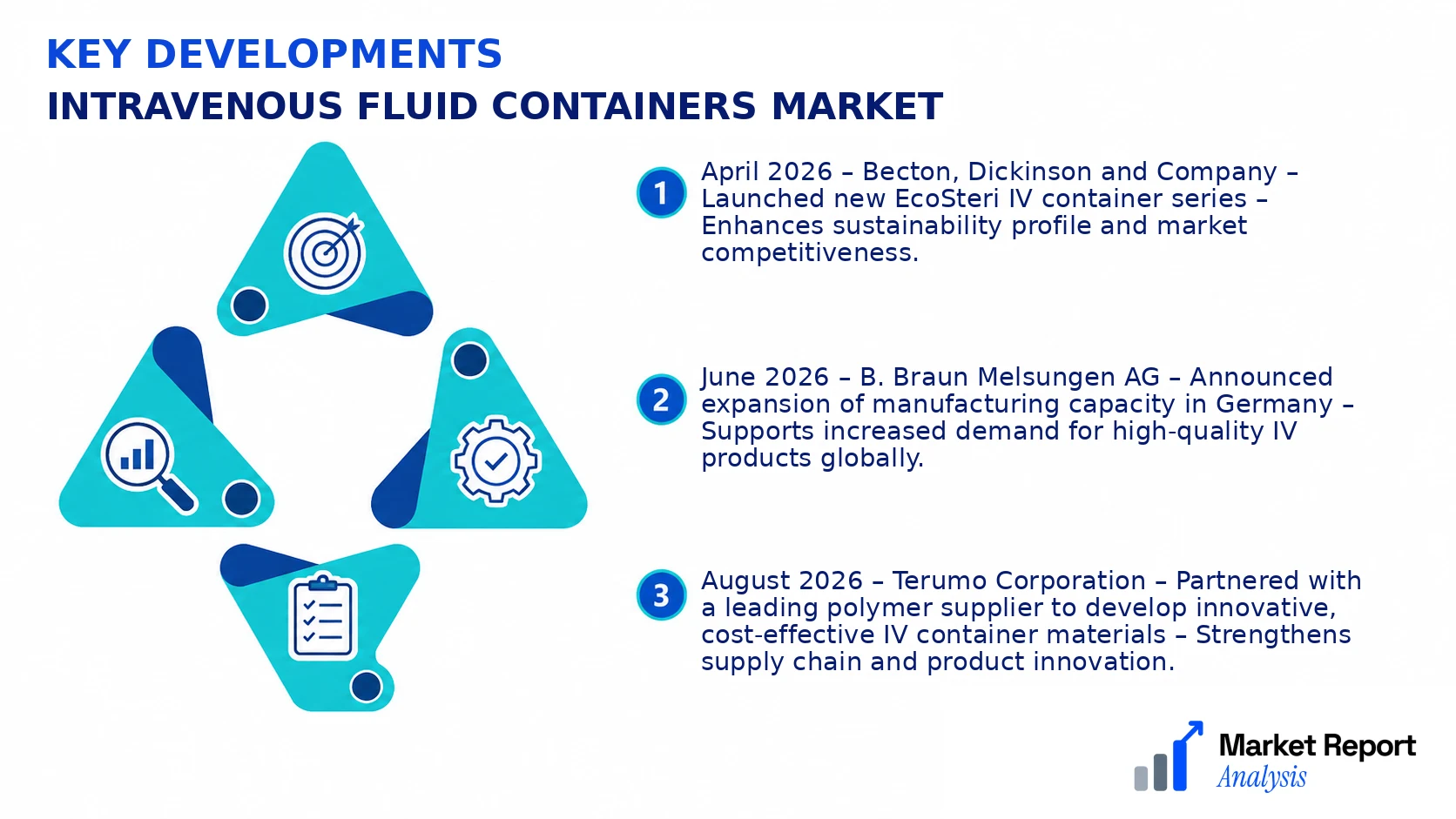
- April 2026 – Becton, Dickinson and Company – Launched new EcoSteri IV container series – Enhances sustainability profile and market competitiveness.
- June 2026 – B. Braun Melsungen AG – Announced expansion of manufacturing capacity in Germany – Supports increased demand for high-quality IV products globally.
- August 2026 – Terumo Corporation – Partnered with a leading polymer supplier to develop innovative, cost-effective IV container materials – Strengthens supply chain and product innovation.
- October 2026 – Smiths Medical – Introduced digitally integrated IV container system with real-time tracking – Improves inventory management and traceability for healthcare providers.
- December 2026 – West Pharmaceutical Services, Inc. – Acquired significant stake in sustainable packaging startup – Accelerates development of eco-friendly IV container solutions.
Frequently Asked Questions
What is the Intravenous Fluid Containers Market?
The Intravenous Fluid Containers Market encompasses the manufacturing and distribution of sterile containers used for intravenous therapy, crucial in delivering fluids, medications, and nutrients to patients. It serves hospitals, clinics, and healthcare providers worldwide, ensuring safe and efficient patient care.
What is the current market size of Intravenous Fluid Containers Market?
As of 2026, the global Intravenous Fluid Containers Market is valued at approximately USD 3.2 Billion, reflecting steady growth driven by increasing healthcare investments, rising hospital admissions, and advancements in fluid container materials and design, supporting better patient safety.
What factors are driving the Intravenous Fluid Containers Market?
Market growth is primarily driven by increasing prevalence of chronic diseases, expanding healthcare infrastructure, technological innovations in container materials, and rising awareness of infection control practices among healthcare providers, which collectively bolster the demand for safer and more reliable IV fluid containers.
Which region dominates the Intravenous Fluid Containers Market?
North America currently leads the Intravenous Fluid Containers Market owing to high healthcare expenditure, a large number of hospitals, and strict regulatory standards. The region’s advanced healthcare infrastructure supports continuous adoption of innovative IV container solutions.
Which segment is expected to grow the fastest?
The prefilled and sterile segment is expected to witness the fastest growth during the forecast period. This is attributed to increasing demand for ready-to-use, contamination-free fluid containers that ensure patient safety and reduce preparation time in clinical settings.
Who are the leading companies operating in the Intravenous Fluid Containers Market?
Major players include Baxter International, Becton Dickinson and Company, Conmed Corporation, and Terumo Corporation. These companies focus on innovation, regulatory compliance, and strategic partnerships to strengthen their market position.
Analyst Perspective
The Intravenous Fluid Containers Market is poised for sustained growth driven by ongoing technological innovations and escalating demand from emerging markets. The long-term outlook suggests a mature yet evolving landscape, where opportunities lie in developing smarter, eco-friendly, and sterilization-efficient containers. Companies are increasingly focusing on integrating labeling innovations, advanced materials, and reusable designs to enhance safety and environmental sustainability. Regional perspectives highlight significant growth potential in Asia-Pacific owing to expanding healthcare infrastructure and rising healthcare expenditure, while North America maintains a stable, mature market with high technological adoption. Investment priorities should center on R&D initiatives that foster product differentiation and compliance with stringent safety protocols. Competitive intensity remains high, with key players vying for technological leadership and market share, yet niche segments such as specialized containers for chemotherapy and pediatric care offer promising avenues. Strategic positioning will benefit from focus on region-specific regulations, innovative collaborations, and capacity expansion to capitalize on universal healthcare reforms and the proliferating outpatient care sector.
