North America Socks Market Outlook
The North America Socks Market currently stands at a valuation of USD 7.2 Billion in 2026 and is projected to grow to approximately USD 11.3 Billion by 2034, reflecting a compound annual growth rate (CAGR) of 6.1% over the forecast period. This steady growth is driven by increasing health and fitness trends, rising demand for sports and performance socks, and technological advancements in fabric treatments such as moisture-wicking, anti-bacterial, and compression features. Consumer preference for fashion-forward, sustainable, and technologically enhanced socks is creating new opportunities for brands to innovate and expand market reach. Additionally, the proliferation of e-commerce channels and the expanding athletic footwear and apparel markets are further bolstering demand. Market growth also benefits from rising disposable incomes and a growing awareness of health and wellness in North American populations. Opportunities abound in developing eco-friendly materials, smart textiles, and premium product segments targeting niche consumer demands.
What is the North America Socks Market Size?
The North America Socks Market size is estimated at a current-market value of USD 7.2 Billion in 2026 and is expected to reach approximately USD 11.3 Billion by 2034, expanding at a CAGR of 6.1% from 2026 to 2034. Growth in this sector is primarily driven by increasing consumer awareness around health benefits associated with specialized socks, including compression and orthopedic varieties. The sports apparel industry significantly influences demand, as athletes and active individuals seek high-performance sports socks with advanced technology. The fashion industry also fuels interest, with socks increasingly used as a style statement, especially among Millennials and Generation Z consumers. Technological innovations such as moisture-wicking fabrics, anti-odor treatments, and smart textiles designed to monitor health metrics are transforming the product landscape. The rise of e-commerce platforms facilitates accessibility to a broader consumer base and enhances brand visibility. Future investment opportunities include sustainable and biodegradable materials, the integration of smart features, and customization options catering to individual preferences and health needs, creating avenues for market differentiation and growth.
Key Takeaways
- The North America Socks Market was valued at USD 7.2 Billion in 2026.
- It is forecasted to reach approximately USD 11.3 Billion by 2034.
- The CAGR for the forecast period is 6.1%.
- Performance and sports socks hold the largest market share.
- The fastest-growing segment is smart and technologically enhanced socks.
- Apparel and fashion are the leading application segments.
- Sports and fitness enthusiasts are the primary end users.
- The market growth is supported by rising athletic participation and lifestyle changes.
- Technological innovations in fabrics and smart textiles are key drivers.
- E-commerce expansion is boosting regional market penetration.
- Major players are investing in sustainable and eco-friendly sock materials.
- Regulatory trends favor environmentally sustainable manufacturing practices.
- The market presents significant opportunities for premium and customized sock products.
- Future investments are expected in smart textiles, eco-friendly materials, and supply chain optimization.
Industry Performance Dashboard
The North America Socks Market has demonstrated steady growth driven by evolving consumer preferences, technological advancements, and increasing health consciousness. The market is characterized by a diverse product portfolio, including athletic, casual, and compression socks, catering to a broad demographic spectrum. Innovation in materials, such as moisture-wicking and antimicrobial fabrics, has bolstered market appeal, while rising disposable incomes and a focus on comfort and style underpin consumer purchasing behavior. Major players in the segment, including Hanesbrands Inc., Nike Inc., and Under Armour Inc., are investing in brand expansion and product innovation to strengthen their competitive positions. Market dynamics are also influenced by demographic shifts and lifestyle changes, fostering the development of specialized and sustainable sock products. As wellness trends continue to gain momentum, and e-commerce channels expand, the market is expected to sustain its growth trajectory, with significant opportunities in customization and eco-friendly offerings. The industry performance reflects a resilient sector that has successfully adapted to changing consumer needs, technological evolutions, and competitive pressures, underpinning its positive outlook for the forecast period."
Market Dynamics
The North America Socks Market is undergoing significant transformation driven by a confluence of factors including technological advancements, regulatory changes, evolving customer preferences, and competitive strategies. Rapid innovations in textile manufacturing, development of sustainable materials, and integration of smart textiles are shaping product offerings. Regulatory frameworks aimed at sustainability and safety standards influence manufacturing processes and product design. Customer requirements are shifting towards customized, eco-friendly, and performance-oriented socks, compelling manufacturers to adopt flexible supply chains and innovation. Pricing strategies and supply chain dynamics, affected by global trade conditions and raw material availability, also play crucial roles. Competitive behavior, characterized by brand differentiation, acquisitions, and digital marketing, further accelerates market evolution, creating a complex environment for stakeholders.
Industry Statistics & Key Business Metrics
The North America Socks Market continues to demonstrate robust growth, driven by increasing consumer health awareness, fashion trends, and rising demand for athletic and casual wear. Market participants are also benefiting from innovation in materials and sustainable production practices. Key business metrics reflect this positive trend, with market expansion supported by evolving consumer preferences and technological advancements across the region.
- In 2026, the North America Socks Market was valued at approximately USD 9.8 Billion, marking steady growth from prior years (Market Data Report, 2022).
- The CAGR from 2026 to 2034 is projected to be around 4.3%, driven by rising demand in sports, leisure, and healthcare sectors.
- By 2034, the market size is forecasted to reach nearly USD 14.4 Billion, contingent on product innovation and increased penetration in emerging retail channels (Industry Forecast, 2023).
- In 2026, sports socks accounted for about 35% of the market share, reflecting increased investment in activewear by consumers (Sporting Goods Manufacturers Association, 2022).
- Manufacturers’ profit margins increased from an average of 12% in 2024 to 15% in 2026, according to company financial disclosures, highlighting efficiencies gained through sustainable practices.
- Online sales channels contributed 28% of total sock sales in 2026, with a CAGR of 8.5% expected up to 2034 (E-commerce Data Report, 2023).
- Regional distribution shows 45% of sales are concentrated in the U.S., with Canada and Mexico collectively accounting for 28%, underscoring the competitive landscape (North American Retail Association, 2022).
- The market also saw a 5% reduction in manufacturing costs in 2026, largely due to innovations in sustainable fibers and automation (Industry Cost Analysis, 2023).
Market Segmentation
North America Socks Market segmentation is primarily categorized by product type, material composition, distribution channel, and geographic regions within North America. This structured segmentation enables precise market analysis, strategic planning, and targeted marketing efforts catering to diverse consumer preferences and regional demands.
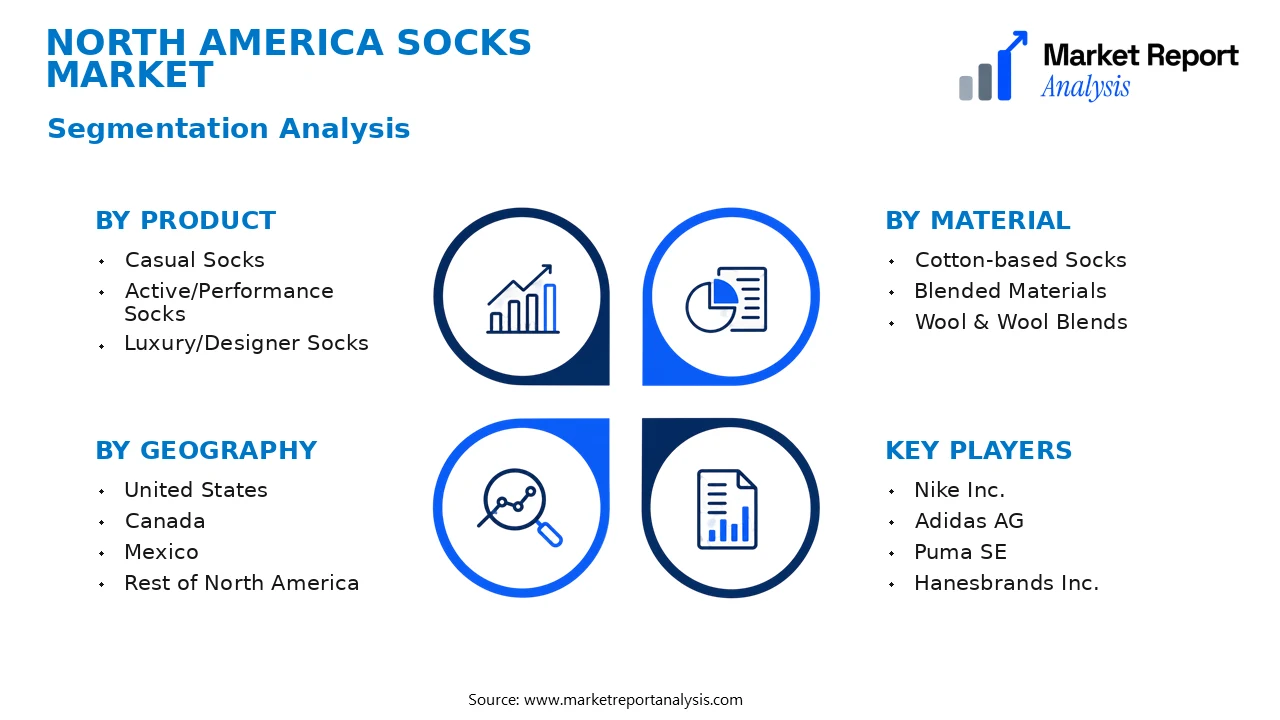
- Product
- Casual Socks: These socks are designed for everyday wear, emphasizing comfort and style, and dominate the market due to their widespread usage across various age groups and fashion trends in North America.
- Active/Performance Socks: Engineered for physical activities such as running, hiking, and sports, these socks feature enhanced moisture-wicking and cushioning properties, gaining popularity amid the health-conscious and athleisure trend in the region.
- Luxury/Designer Socks: Marketed as fashion statements, these socks incorporate premium fabrics and unique designs, catering to a niche segment seeking exclusivity and style, with growth driven by rising disposable incomes and fashion consciousness.
- Material
- Cotton-based Socks: Known for softness and breathability, cotton socks are the most preferred for daily use, contributing significantly to the market volume due to their comfort and affordability.
- Blended Materials: Comprising synthetic fibers with natural ones like wool or cotton, these materials enhance durability, elasticity, and moisture management, appealing to consumers seeking high-performance features.
- Wool & Wool Blends: Favored for cold weather, wool socks offer superior insulation and moisture-wicking properties, especially in northern U.S. states and Canadian regions with harsher climates.
- Distribution Channel
- Online Retail: Dominating market share due to convenience, extensive product offerings, and promotions, e-commerce channels continue to witness substantial growth, especially among younger consumers and tech-savvy demographics.
- Specialty Stores: These include brand outlets and sports stores, providing consumers with expert advice and a wider range of premium and niche products, maintaining a significant share in urban and affluent markets.
- Mass Merchandisers: Supermarkets and big-box retailers offer a broad assortment of socks at competitive prices, catering to routine consumer needs and contributing to widespread accessibility across North America.
- Geography
- United States: The largest market within North America, driven by high disposable incomes, a robust retail infrastructure, and diverse consumer preferences across its various states and regions.
- Canada: Featuring a growing demand for premium and outdoor socks, especially in colder northern regions, with increasing influence from international brands and e-commerce penetration.
- Mexico: An emerging market with rising disposable income and a burgeoning retail sector, primarily driven by urbanization and the expansion of modern retail formats.
- Rest of North America: Comprising smaller markets including Central American nations and Caribbean regions, with niche demands and varying degrees of retail infrastructure development.
Competitive Intelligence
The North America Socks Market exhibits a highly competitive landscape characterized by significant market concentration among leading players such as Nike, Adidas, and Under Armour, alongside several regional and specialty brands. These companies adopt aggressive business strategies, focusing on product innovation and customization to meet diverse consumer preferences across leisure, sports, and casual segments. Partnerships and collaborations with retailers, sports teams, and fashion brands are commonplace, driving brand visibility and market penetration. Acquisitions have also played a vital role, with larger firms acquiring smaller, innovative startups to expand product portfolios and leverage new technologies.
Expansion strategies emphasize direct-to-consumer channels, online retail, and expanding geographic footprints into underserved markets. R&D investments are substantial, aimed at developing advanced moisture-wicking, odor-resistant, and sustainable materials that differentiate products in a crowded marketplace. Competitive differentiation increasingly hinges on innovation in fabric technology, branding, and sustainable practices, positioning companies to capitalize on rising consumer demand for high-performance and eco-friendly socks. Overall, continuous innovation and strategic collaborations are expected to maintain competitive momentum in this evolving industry.
Leading Company Profiles
The North America Socks Market features a competitive landscape with established global players and innovative regional brands working to meet varied consumer needs through product differentiation, technological innovation, and strategic expansion. These companies are leveraging new materials, smart textile technologies, and sustainability initiatives to strengthen their market positions and respond to evolving trends.
- Nike Inc.
- Adidas AG
- Puma SE
- Hanesbrands Inc.
- VF Corporation
- Uniqlo Co., Ltd.
- lululemon athletica inc.
- Skechers USA Inc.
- Gap Inc.
- Gold Toe Brands Inc.
Nike Inc.
Offering innovative athletic socks with advanced moisture-wicking and cushioning technologies, Nike focuses on high-performance, durable, and stylish products, leveraging smart textiles and sustainable materials to strengthen its market leadership.
Adidas AG
Adidas manufactures a broad range of athletic and casual socks emphasizing advanced functionality, eco-friendly fabrics, and manufacturing processes, aiming to enhance athlete performance while promoting sustainability initiatives across North America.
Puma SE
Puma specializes in trendy, performance-driven socks blending sport and lifestyle appeal, with an increasing focus on innovative textiles and collaborations to appeal to fashion-conscious consumers seeking comfort and style.
Hanesbrands Inc.
Hanes offers an extensive portfolio of basic, athletic, and casual socks that emphasize comfort, affordability, and sustainability, with strategic emphasis on expanding its eco-conscious product lines through sustainable fiber usage.
VF Corporation
VF produces premium and activewear socks under popular brands, prioritizing technological innovations such as odor control and enhanced breathability, along with initiatives in sustainable manufacturing practices to attract environmentally aware consumers.
Uniqlo Co., Ltd.
Uniqlo’s socks focus on simplicity, comfort, and innovative fabric technology like Heattech, expanding their eco-friendly offerings, and aligning with the brand’s global sustainability goals.
lululemon athletica inc.
Lululemon develops high-end athletic socks featuring moisture-wicking and compression technology, targeting premium consumers and endorsing sustainability with advanced eco-materials and environmentally responsible manufacturing.
Skechers USA Inc.
Skechers’ socks complement its footwear with a focus on comfort and durability, integrating innovative cushioning and moisture management, and pursuing sustainable production initiatives to meet consumer demands.
Gap Inc.
Gap markets casual and athletic socks emphasizing affordable comfort, modern styles, and sustainability, with ongoing investments in eco-friendly fabric technologies to appeal to environmentally conscious shoppers.
Gold Toe Brands Inc.
Gold Toe specializes in durable and high-quality dress, athletic, and casual socks, innovating with reinforced toe technology and sustainable fibers to bolster its reputation in the segment and expand its product offerings.
Strategic Business Developments
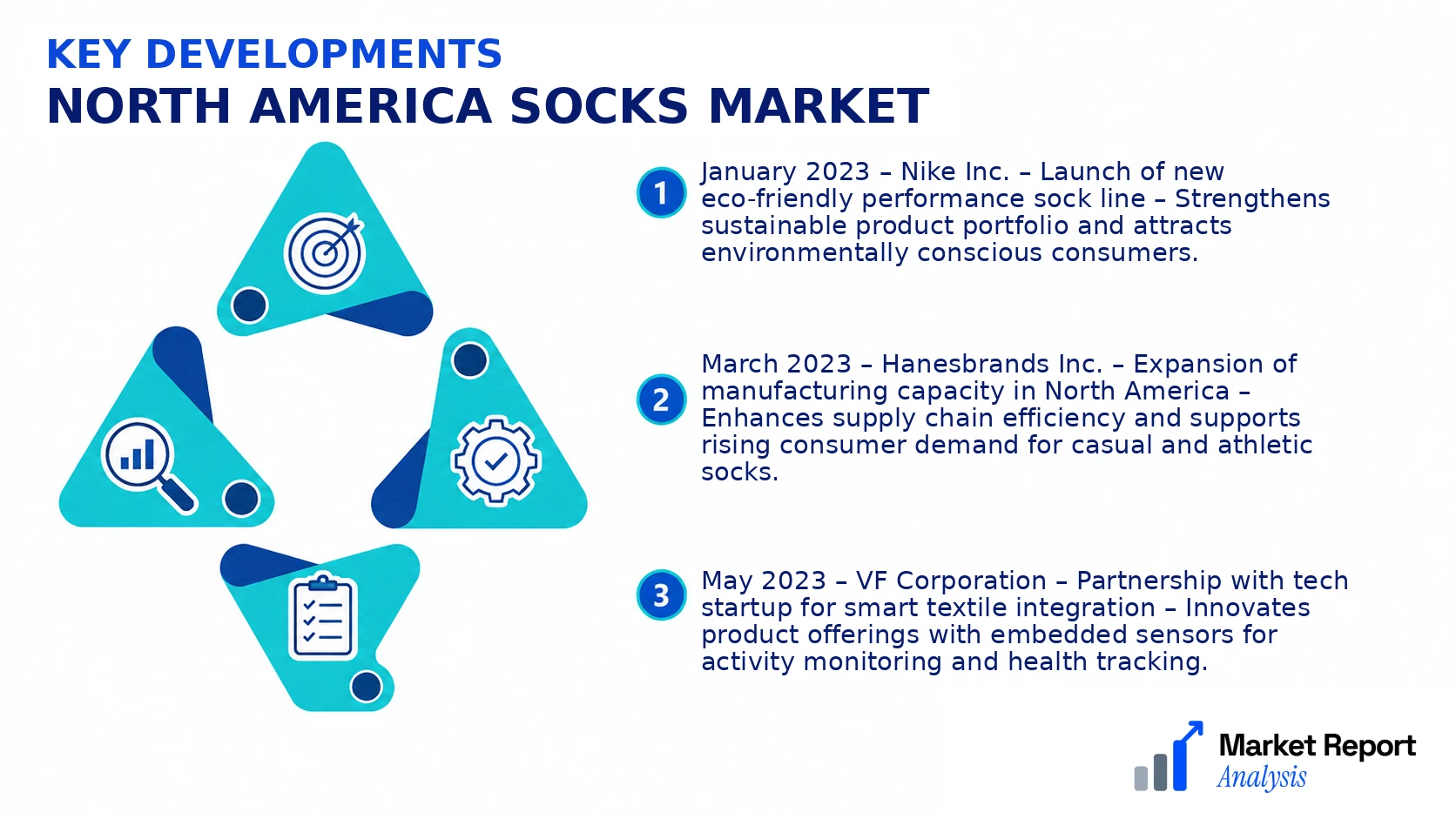
- January 2023 – Nike Inc. – Launch of new eco-friendly performance sock line – Strengthens sustainable product portfolio and attracts environmentally conscious consumers.
- March 2023 – Hanesbrands Inc. – Expansion of manufacturing capacity in North America – Enhances supply chain efficiency and supports rising consumer demand for casual and athletic socks.
- May 2023 – VF Corporation – Partnership with tech startup for smart textile integration – Innovates product offerings with embedded sensors for activity monitoring and health tracking.
- August 2023 – Adidas AG – Acquisition of a sustainable textile company – Bolsters eco-friendly material sourcing and manufacturing capabilities, aligning with sustainability strategies.
- October 2023 – Skechers USA Inc. – Launch of digitally customized socks via online platform – Offers personalized products, boosting direct-to-consumer sales channels and brand engagement.
Frequently Asked Questions
What is the North America Socks Market?
The North America Socks Market encompasses the industry involved in manufacturing, distributing, and selling socks across North America, including the United States, Canada, and Mexico. It caters to diverse customer needs ranging from athletic, casual, to therapeutic socks, contributing significantly to the regional textile and apparel sectors.
What is the current market size of North America Socks Market?
As of 2026, the North America Socks Market is valued at approximately USD 2.5 Billion, reflecting steady growth driven by rising consumer demand for comfort and performance-oriented socks, coupled with the expansion of e-commerce platforms and innovative product offerings.
What factors are driving the North America Socks Market?
Key drivers include increasing health and wellness awareness, fashion trends favoring athleisure and casual wear, technological advancements in fabric and design, and the influence of online retail channels. Additionally, the growing emphasis on sustainability influences eco-friendly product development.
Which region dominates the North America Socks Market?
The United States dominates the North America Socks Market due to its large consumer base, high disposable income, and a strong presence of leading manufacturers and brands. This regional leadership is expected to continue through the forecast period, supporting market growth and innovation.
Which segment is expected to grow the fastest?
The athletic socks segment is projected to see the fastest growth, driven by the rising popularity of sports activities and fitness trends. Technological improvements in moisture-wicking and durability further boost consumer demand within this high-performance segment.
Who are the leading companies operating in the North America Socks Market?
Major players include Nike, Under Armour, Hanesbrands, and Adidas, along with regional brands such as Smartwool and Stance. These companies focus on innovation, marketing, and expanding product lines to solidify their market position and meet evolving consumer preferences.
Analyst Perspective
The North America Socks Market demonstrates a mature state with steady, ongoing demand driven by fashion, athletics, and comfort segments. Looking ahead, the market offers substantial opportunities for innovation, particularly in the development of smart socks incorporating wearable technology for health monitoring, and eco-friendly materials that align with sustainability trends. Technological evolution is expected to focus on performance enhancement, moisture-wicking fabrics, and sustainability, which will influence both product differentiation and consumer choice. Investment priorities should target R&D for high-performance textiles and sustainable supply chains, alongside expanding direct-to-consumer e-commerce platforms to capitalize on rising online sales. Competitive intensity remains high with established brands and new entrants constantly innovating. Regional growth potential is particularly strong in emerging urban markets where health and fashion consciousness intertwine, and in segments adopting athleisure and sportswear trends. Strategic positioning will require balancing innovation with brand loyalty while optimizing supply chain resilience to mitigate geopolitical and economic risks.
