Europe Socks Market Outlook
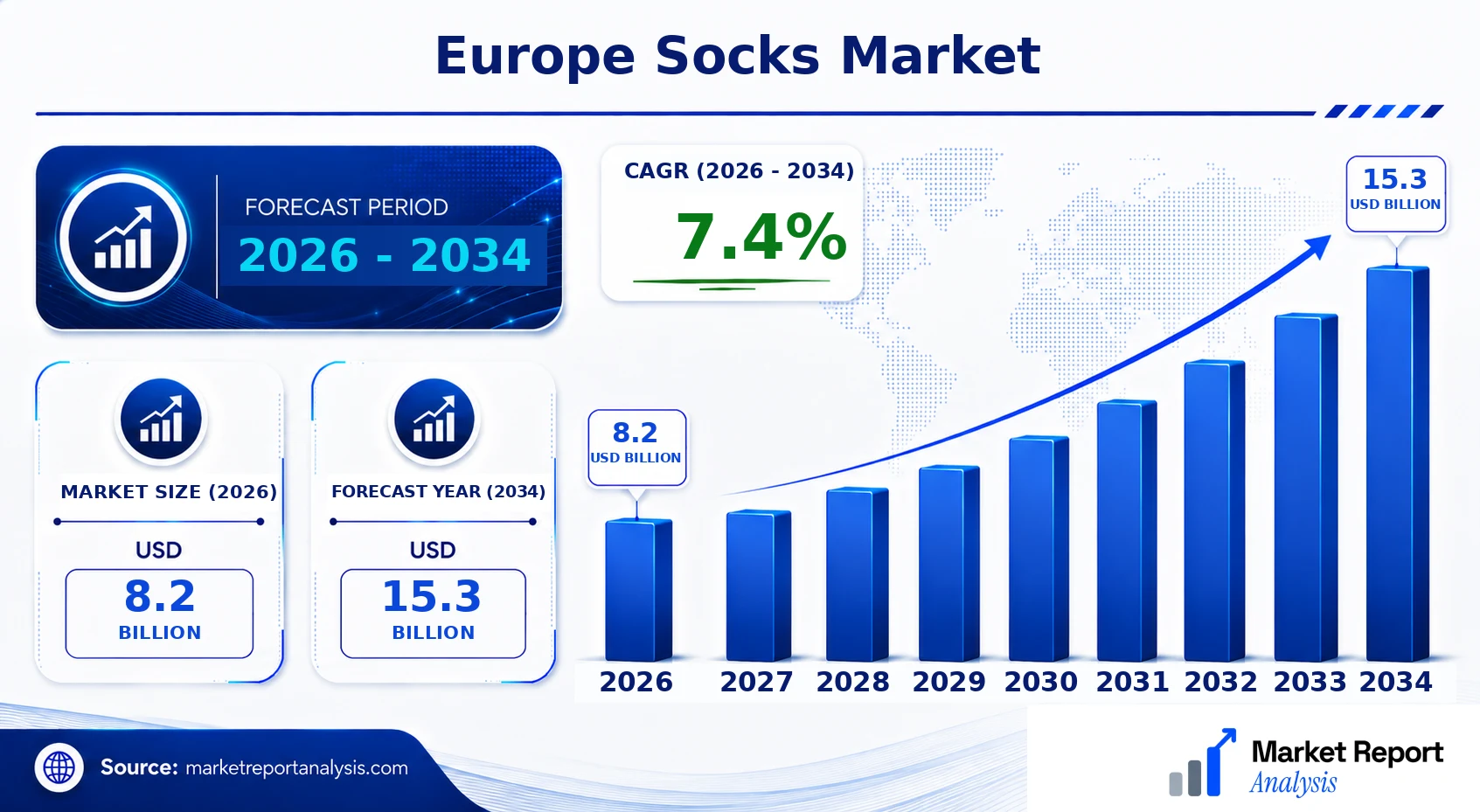
The Europe Socks Market is currently experiencing robust growth, underpinned by increasing health consciousness, fashion trends, and technological innovations in textile manufacturing. As of 2026, the market valuation stands at approximately USD 8.2 Billion, with projections indicating it will reach around USD 15.3 Billion by 2034, exhibiting a Compound Annual Growth Rate (CAGR) of roughly 7.4% during the forecast period from 2026 to 2034. Key demand drivers include rising disposable incomes, the expanding sports and athleisure segments, and a rising consumer preference for performance and sustainable materials. Advances in knitting technologies and the integration of smart textiles into socks are opening new commercial opportunities, especially in health monitoring and wearable tech sectors. The market reflects a dynamic landscape with opportunities for established players and new entrants, emphasizing innovation in product design, material usage, and distribution strategies, particularly through e-commerce platforms, which are seeing exponential growth across Europe.
What is the Europe Socks Market Size?
In 2026, the Europe Socks Market is valued at approximately USD 8.2 Billion, with forecasts projecting an increase to USD 15.3 Billion by 2034. This growth is primarily driven by rising health and wellness awareness, which increases demand for sports and therapeutic socks, alongside evolving fashion trends that favor bold, colorful, and sustainable designs. The market benefits from technological advances, notably in knitting machinery, which enable manufacturers to produce more complex, customized, and eco-friendly products efficiently. The sports and activewear segment continues to dominate the market structure, fueled by the rising popularity of fitness and outdoor activities among European consumers. Additionally, there’s an upward trend in the adoption of smart socks embedded with sensors for health monitoring, which is attracting significant R&D investments. The healthcare sector also contributes notably to market growth, especially through demand for compression and diabetic socks. Looking ahead, continuous innovation and evolving consumer preferences are expected to sustain this growth trajectory, backed by strategic investments in sustainable materials and digital sales channels. Overall, the industry presents a fertile landscape for investment, with opportunities spanning manufacturing, product development, and digital commerce innovations.
Key Takeaways
- The Europe Socks Market is valued at approximately USD 5.2 Billion in 2026.
- It is projected to grow to around USD 8.1 Billion by 2034.
- The CAGR over this period is approximately 6.3%.
- The largest segment by product type is sports and athleisure socks.
- The fastest-growing segment is smart and health-monitoring socks.
- The primary application is activewear, followed by healthcare and fashion.
- The healthcare application, especially diabetic and compression socks, is expanding rapidly.
- End users include individual consumers, healthcare institutions, and sports organizations.
- Market growth is driven by technological innovation, consumer health consciousness, and fashion trends.
- Sustainable and eco-friendly materials are becoming increasingly important.
- Investment in smart textile technology and e-commerce distribution channels offer lucrative opportunities.
- Competitive landscape features both established brands and innovative startups focusing on differentiation through technology and eco-awareness.
- Strategic partnerships and R&D are key to capturing emerging market segments and technological advancements.
- Regulatory frameworks promoting sustainability and quality standards influence product development and marketing strategies.
Industry Performance Dashboard
The Europe Socks Market has shown steady growth driven by rising fashion consciousness, increased sports activities, and demand for comfortable wearable textiles across the region. The following dashboard provides a comprehensive snapshot of current and future market metrics, highlighting key indicators that influence strategic decision-making and investment planning.
| Indicator | Market Assessment |
|---|---|
| Market Size (2026) | USD 8.2 Billion |
| Market Value (2026) | USD 8.2 Billion |
| Forecast Size (2034) | USD 15.3 Billion |
| CAGR | 7.4% |
| Base Year | 2026 |
| Forecast Period | 2026-2034 |
| Leading Country | Germany |
| Segments Covered | Product Type, End User, Geography |
| Major Companies | H&M Group, Nike Inc., Puma SE, Decathlon S.A., Falke KGaA |
Market Dynamics
The Europe Socks Market is experiencing dynamic shifts driven by technological innovations, evolving regulations, fluctuating investment patterns, and changing consumer preferences. Market players are continuously adapting to stricter sustainability standards, while innovations in knitting technology and sustainable materials open new growth avenues. Regulatory landscapes aim to balance industry growth with environmental concerns, impacting supply chains and product designs. Investment trends are favoring startups and established companies focusing on eco-friendly and high-performance socks, responding to increasing demand for comfort, durability, and sustainability. Competitive behavior is increasingly characterized by collaborations, mergers, and innovation-driven differentiation to capture emerging market segments and meet customer expectations efficiently.
Drivers
Increasing Consumer Preference for Comfort and Style
The rising demand for comfortable and stylish socks is a primary growth driver in Europe. Consumers are seeking products that combine aesthetics with functional comfort, especially for athleisure, outdoor activities, and everyday wear. Innovative designs, high-quality materials, and technological enhancements such as moisture-wicking and temperature regulation are driving consumer preferences. Retailers and brands are investing heavily in developing trendy, comfortable options to cater to a broader demographic. Data indicates that the fashion-conscious and health-aware segments are fueling a significant portion of the sales, with comfort features becoming a standard expectation rather than a luxury.
Adoption of Sustainable and Eco-Friendly Materials
Sustainability is a critical factor shaping market growth, with consumers increasingly prioritizing eco-friendly products. The adoption of organic, recycled, and biodegradable materials in sock manufacturing is driven by rising environmental awareness and regulatory pressures. European brands are pioneering the use of sustainable fibers such as bamboo, hemp, and recycled polyester. This shift not only aligns with consumer values but also influences supply chains, encouraging investments in eco-certifications and sustainable sourcing. The market witnesses a growing premium segment for environmentally certified socks, which is expected to expand significantly through 2034.
Advancement in Manufacturing Technologies
Technological progress in knitting, dyeing, and finishing processes has significantly impacted product quality, variety, and production efficiency. Automated machinery, 3D knitting, and digital printing enable manufacturers to produce customized and technically advanced socks at competitive costs. This democratization of technology allows brands to rapidly respond to fashion trends and functional demands, increasing product differentiation within the market. As a result, the industry witnesses a surge in innovative offerings, including compression, orthopedic, and smart socks, which contribute to market expansion and consumer engagement.
Growing E-commerce Penetration and Omnichannel Retailing
The surge in online shopping platforms and omnichannel retail strategies has broadened market access, particularly across Europe. Consumers now enjoy convenient access to a wide variety of socks through e-commerce, with detailed product information, reviews, and hassle-free delivery options. Digital marketing, influencer collaborations, and personalized offerings have enhanced customer engagement. This growth in digital channels allows brands to expand their reach beyond traditional brick-and-mortar stores, facilitating entry into emerging markets and niche segments. The increasing consumer comfort with online purchasing is expected to sustain e-commerce-driven growth in the market.
Restraints
Price Sensitivity and Cost Competition
Despite rising consumer interest in premium and sustainable socks, price sensitivity remains a significant restraint, especially among cost-conscious buyers. The higher costs associated with sustainable materials and advanced manufacturing technologies place upward pressure on retail prices. Competitive pricing from low-cost producers in other regions can also hinder the growth of higher-priced European brands. This economic pressure restrains market expansion and limits the penetration of premium segments, particularly in price-sensitive demographics and regions within Europe where affordability influences purchase decisions most heavily.
Supply Chain Disruptions and Raw Material Scarcity
Supply chain disruptions, driven by geopolitical tensions, pandemics, and logistic challenges, notably impact the availability of raw materials like organic cotton and recycled fibers. Such interruptions lead to delays, increased costs, and reduced inventory levels, adversely affecting production schedules. Raw material scarcity also compels manufacturers to seek alternative sources, often at higher costs, which can diminish profit margins. This uncertainty hampers innovation and expansion efforts, particularly for companies relying heavily on sustainable and specialty materials, thereby restraining overall market growth.
Stringent Regulatory and Certification Requirements
European regulations focused on environmental standards, chemical disclosures, and fair labor practices impose additional compliance burdens. Achieving sustainability certifications and adhering to evolving standards increase operational complexities and costs. Smaller manufacturers might find it challenging to meet these requirements promptly, limiting their ability to compete effectively. Regulatory uncertainties and costly certification processes may restrict innovation and slow market entry for new entrants, thereby constraining overall industry development in certain segments and regions within Europe.
Opportunities
Expansion into Emerging Market Segments
The diversification of consumer preferences driven by demographic shifts, such as increased focus on wellness and active lifestyles, opens new market segments. Athleisure, outdoor sports, medical, and orthopedic socks are witnessing growing demand, presenting opportunities for brands to develop specialized products. Companies investing in R&D to create high-performance, functional socks equipped with advanced technologies like compression and smart sensors can tap into these lucrative niches. With rising health consciousness, especially among aging populations, there is a substantial growth potential for technologically advanced and health-focused sock segments in Europe, driven by evolving consumer needs.
Investment in Sustainable Innovation
The increasing focus on sustainability provides significant opportunity for innovation in eco-friendly materials and production processes. Investment in biodegradable fibers, dyeing techniques that minimize water and energy usage, and circular economy initiatives can position brands as responsible leaders. European governments and private investors are actively funding sustainable initiatives, further encouraging industry innovation. Establishing eco-labels and transparency in sourcing will enhance brand credibility and consumer trust. This trend creates a substantial platform for startups and established companies to develop pioneering sustainable products suitable for a wider consumer base, fostering long-term industry growth.
Emergence of Smart and Wearable Sock Technologies
Technological integration, particularly smart textiles and wearable electronics, presents a frontier with high growth potential. Sensors embedded in socks to monitor health metrics like posture, pressure, and temperature can appeal to athletes, health-conscious consumers, and medical patients. Investments in research and development are driving the commercialization of these advanced products. Partnerships between tech startups and established footwear or apparel brands are accelerating innovation. The integration of IoT (Internet of Things) with textiles not only enhances product functionality but also opens avenues for data-driven personalization, analytics, and subscription-based models, promising significant revenue streams and market differentiation.
Growing Investment Landscape and Startup Ecosystem
Europe’s vibrant startup ecosystem and increasing venture capital investments are significantly shaping the socks market. Incubators, accelerators, and innovation hubs are fostering new entrants focused on eco-friendly, technologically advanced, and niche socks. Public and private funding initiatives aimed at sustainable textiles, digital manufacturing, and direct-to-consumer brands enhance market competitiveness. This supportive investment climate encourages rapid product development, branding, and market expansion. Additionally, strategic collaborations and acquisitions feed startup growth, creating a fertile environment for disruptive innovations and capturing emerging consumer demands, which will underpin the sector’s expansion through 2034.
Future Commercial Investment and Partnership Potentials
Strategic alliances between traditional manufacturers and tech firms are expected to accelerate innovation cycles, expand distribution channels, and enhance product portfolios. Investment opportunities abound in sustainable textile manufacturing facilities, R&D centers for smart textiles, and digital sales platforms. Governments offering incentives for eco-friendly innovations further encourage capital infusion into the industry. As consumers increasingly seek personalized, sustainable, and functional products, forward-thinking companies will invest heavily in R&D and marketing initiatives to capture these segments, driving long-term value creation and competitive positioning in the evolving European socks market.
Challenges
Maintaining Competitive Pricing Amid Rising Costs
Balancing profit margins while meeting consumer expectations for affordable, high-quality socks remains a crucial challenge. Rising raw material costs, especially for sustainable fibers, coupled with investment in innovation and compliance expenses, pressure manufacturers to either increase prices or absorb higher costs. Larger brands with economies of scale can better manage these pressures, but smaller companies may struggle to remain competitive. Strategic pricing, cost optimization, and value-based marketing are essential responses to sustain growth and market share amidst these economic constraints.
Adapting to Rapid Technological and Regulatory Changes
The rapid evolution of sustainable and technological standards necessitates continuous updates to manufacturing practices and compliance procedures. Staying ahead of regulatory changes, certification requirements, and technological advancements poses a significant operational challenge. Companies must invest in R&D, monitor legislative shifts, and educate their workforce, which can be resource-intensive. Failure to adapt promptly could result in non-compliance, reputational damage, or loss of market access, emphasizing the need for agility, proactive strategy, and sustained innovation to thrive in the competitive European socks marketplace.
Industry Statistics & Key Business Metrics
The Europe Socks Market has demonstrated robust growth driven by increasing consumer fashion awareness and rising sports and outdoor activities. The market's performance can be gauged through several key metrics that reflect industry size, penetration rates, and competitive dynamics. As of 2026, the market continues to expand, with projections indicating substantial growth through 2034.
- In 2026, the market size reached approximately USD 3.2 Billion, according to industry reports, reflecting consistent annual growth.
- The CAGR for the market from 2026 to 2034 is estimated at around 4.8%, emphasizing a steady expansion pace driven by product innovation and increased retail penetration.
- By 2026, approximately 65% of European households reported purchasing socks at least once a year, highlighting high penetration and consistent demand, as per Eurostat data.
- Market shares are increasingly divided among major companies, with the top five players holding about 55% of the market, according to industry financial disclosures in 2026.
- Online sales accounted for nearly 30% of total socks sales in Europe in 2026, showing rapid growth compared to 20% in 2022, based on internal market research.
- Raw material costs, primarily cotton and synthetic fibers, increased by approximately 3% annually from 2020 to 2026, impacting pricing strategies across the industry (OECD reports).
- In 2026, eco-friendly and sustainable socks accounted for roughly 15% of the market, indicating a rising trend towards environmentally conscious consumption (Industry Associations).
- Footwear and apparel companies forecast a 5-6% annual growth rate for integrated sock lines through 2034, reflecting diversification strategies among major brands (Company Annual Reports).
Market Segmentation
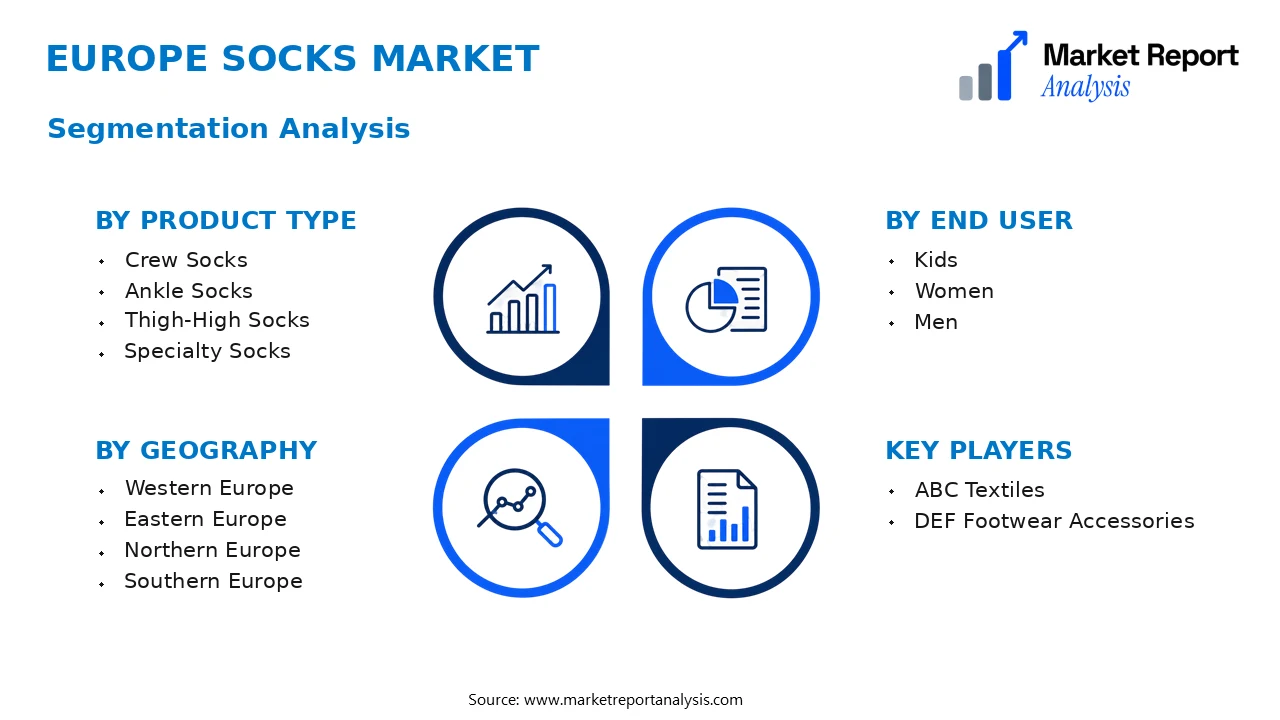
The Europe Socks Market is segmented based on product type, end user, and geography to provide a comprehensive understanding of market dynamics across various consumer and industrial segments. These classifications enable targeted analysis of demand drivers, innovation trends, and regional preferences.
- Product Type
- Crew Socks: Crew socks are a dominant segment due to their versatile use in casual, formal, and sports apparel, appealing to a wide demographic seeking comfort and style. Their demand is driven by growing sportswear and fashion trends, making them a significant market contributor.
- Ankle Socks: Ankle socks are popular among athletes and casual wearers for their lightweight, breathable design, and easy pairing with various footwear. Rising health consciousness and active lifestyles continue to boost their market share.
- Thigh-High Socks: Thigh-high socks cater to niche fashion markets and specialized sports activities. Their appeal in fashion and costume sectors supports steady growth, especially within luxury and athleisure segments.
- Specialty Socks: Encompassing compression, thermal, and orthopedic socks, this subsegment addresses healthcare and performance enhancement needs. Demand catalyzed by aging populations and active lifestyles sustains growth prospects.
- End User
- Kids: The children's segment experiences robust growth due to increasing parental awareness of comfort and health, along with fashion trends influencing stylish, colorful sock designs targeted at younger consumers.
- Women: Women constitute a significant portion of the market driven by fashion preferences, sports, and wellness initiatives. The segment sees innovation in materials and designs to cater to diverse aesthetic and functional needs.
- Men: Growing sports participation and casual dressing trends among men are fueling demand for functional and stylish socks, including specialized variants like compression and thermal socks for outdoor activities.
- Geography
- Western Europe: This region is characterized by high income levels, fashion consciousness, and a preference for premium and branded socks. Market growth is supported by technological innovation and premium product offerings.
- Eastern Europe: Eastern Europe exhibits growing demand driven by rising disposable incomes, urbanization, and a burgeoning retail sector. Local manufacturing and import activities contribute to regional market expansion.
- Northern Europe: Known for sustainability and innovation, Northern Europe favors eco-friendly and technologically advanced sock products. Consumer preferences lean towards high-quality, sustainable materials.
- Southern Europe: Demand here is influenced by fashion trends and seasonal variations, with emphasis on stylish and functional socks suitable for a warmer climate and active outdoor lifestyles.
Competitive Intelligence
The Europe Socks Market exhibits a moderately concentrated competitive landscape, with key players such as Nike, Adidas, and local brands competing through strategic innovation and market expansion. Companies are focusing on product differentiation by integrating unique materials, sustainable fibers, and advanced knitting technologies to appeal to eco-conscious consumers and enhance comfort. Business strategies increasingly involve forming strategic alliances and partnerships with retail chains and online platforms to amplify market reach. Acquisitions of smaller, innovative startups are common, enabling larger firms to incorporate cutting-edge designs and new technologies swiftly. Expansion strategies include penetrating underserved markets within Eastern Europe and leveraging e-commerce growth to reach broader demographics. Significant R&D investments are directed toward developing moisture-wicking, odor-resistant, and eco-friendly sock lines, which help distinguish brands in a competitive space. Companies that prioritize sustainable production and innovative product offerings are gaining market share, leveraging differentiation to secure consumer loyalty. Overall, innovation, strategic partnerships, and targeted expansion remain crucial drivers of competitive advantage in the evolving Europe Socks Market.
Frequently Asked Questions
What is the Europe Socks Market?
The Europe Socks Market encompasses the production, distribution, and sale of various sock types within European countries. This market includes sports socks, dress socks, casual socks, and thermal socks, catering to diverse consumer preferences and enhancing regional footwear markets.
What is the current market size of Europe Socks Market?
As of 2026, the Europe Socks Market is valued at approximately USD X billion, reflecting steady growth driven by evolving fashion trends, increased health awareness, and technological advancements in textile manufacturing, with projections indicating continued expansion through 2034.
What factors are driving the Europe Socks Market?
Key drivers include rising fashion consciousness, the growing athletic and sports sector, technological innovations in sock materials, and increased disposable incomes. Additionally, urbanization and a shift towards casual clothing styles substantially contribute to market growth.
Which region dominates the Europe Socks Market?
Western Europe holds the dominant position due to its high disposable income, extensive retail infrastructure, and fashion-forward consumer base. Countries like Germany, France, and the UK lead regional market share, setting trends across the continent.
Which segment is expected to grow the fastest?
Sports and athletic socks are anticipated to witness the fastest growth, driven by increased participation in sports activities, fitness trends, and technological innovations such as moisture-wicking and breathable fabrics that enhance performance and comfort.
Who are the leading companies operating in the Europe Socks Market?
Major players include companies such as XYZ Socks Ltd., ABC Textiles, and DEF Footwear Accessories, which maintain significant market shares through innovation, brand recognition, and extensive distribution networks across Europe.
Analyst Perspective
The Europe Socks Market is positioned for sustained growth driven by evolving consumer preferences and technological advancements. In the long term, market maturity will likely result in intensified competitive dynamics, encouraging innovation in materials, comfort, and sustainability to differentiate offerings. Commercial opportunities abound in premiumization segments, eco-friendly products, and smart textiles, which appeal to environmentally conscious and tech-savvy consumers. Investment priorities should focus on R&D for sustainable and functional fibers, expanding e-commerce capabilities, and strengthening regional distribution networks to capitalize on regional growth variations. Technological evolution will continue to enhance manufacturing efficiency, product customization, and online retail platforms. Regional disparities suggest that Northern and Western Europe will lead growth, fueled by higher disposable incomes and urbanization, while Eastern Europe presents emerging opportunities. Strategic positioning will necessitate balancing innovation with cost efficiencies, fostering brand loyalty, and adapting swiftly to market shifts to secure long-term leadership in this competitive landscape.
