Latin America Socks Market Outlook
The Latin America Socks Market is projected to experience significant growth between 2026 and 2034, driven by expanding urbanization, rising disposable incomes, and a surge in health and fitness consciousness. The market's evolution is also supported by technological innovations in textile manufacturing, increasing penetration of e-commerce, and a rising demand for both functional and fashion socks. This environment fosters new product development, sustainable manufacturing practices, and targeted marketing strategies intended to cater to diverse consumer segments across the region. As a result, the market is characterized by rapid innovation, a favorable investment landscape, and diversification of distribution channels, positioning it for robust growth over the forecast period.
Drivers
Urbanization and Changing Lifestyle Trends
Urbanization in Latin America is a major driver propelling the socks market, as city dwellers increasingly adopt modern lifestyles, which include greater participation in fitness, sports, and fashion trends. Urban consumers seek comfort, durability, and style, prompting manufacturers to innovate in product offerings that meet these preferences. The rising disposable incomes enable more frequent fashion-oriented purchases, including branded or designer socks. This shift affects retail distribution channels and encourages brands to expand their product lines, further fueling market growth. For instance, urban centers like São Paulo and Mexico City show a marked increase in demand for trendy, performance-enhancing socks.
Technological Innovation in Textile Manufacturing
Advancements in textile technology, such as moisture-wicking, antimicrobial, and lightweight fabrics, are revolutionizing product development in the socks industry. These innovations enable brands to differentiate their offerings with functionalities that cater to sports, outdoor activities, and everyday wear. Latin American companies investing in textile R&D are increasingly adopting sustainable production methods, which appeal to eco-conscious consumers. This technological evolution supports premium pricing strategies and promotes higher consumer engagement, ultimately expanding market size. The adoption of new fiber blends and knitting techniques enhances product performance, aligning with global standards and attracting international investments.
Growth of E-commerce and Digital Marketing
The proliferation of digital platforms and e-commerce has significantly impacted how consumers in Latin America access and purchase socks. Online channels provide wider product selection, competitive pricing, and convenience, which are attractive to the region’s tech-savvy younger population. Retailers and brands are leveraging social media marketing and influencer collaborations to boost brand visibility and consumer engagement. E-commerce growth is also facilitating direct-to-consumer sales models, reducing reliance on traditional brick-and-mortar stores. As a result, market penetration is accelerating, especially in urbanized regions, supporting new entrants and expanding existing brands’ reach.
Rising Demand for Sports and Performance Socks
The escalating popularity of sports, fitness, and outdoor activities in Latin America is a crucial growth driver for specialized socks. Consumers are seeking high-performance socks designed for athletics, hiking, and other physical pursuits, which feature advanced fabrics and ergonomic designs. The expansion of sports infrastructure, events such as marathons, and increased health awareness have further boosted demand. Local and international brands are investing in innovation to develop products that enhance athletic performance and comfort, thus capturing a larger share of the health-conscious consumer base. The sustained growth of sports apparel retail channels supports this trend, indicating strong future potential.
Restraints
Supply Chain Disruptions and Raw Material Prices
Supply chain inconsistencies, exacerbated by geopolitical tensions and logistical challenges, have led to fluctuations in raw material costs, such as cotton and synthetic fibers. These disruptions impact manufacturing timelines and product pricing strategies, leading to increased expenses and potential delays. The heterogeneity of supply sources within Latin America means that localized disruptions can significantly affect output. Additionally, the volatility of raw material markets compels manufacturers to adopt hedging strategies or pass costs to consumers, which can hinder competitiveness and overall market expansion. Maintaining a resilient, diversified supply chain remains a key challenge for industry players in the region.
Environmental and Regulatory Constraints
Environmental considerations and evolving regulatory environments impose constraints on textile manufacturers, particularly regarding sustainable sourcing, waste management, and chemical usage. Stricter regulations from regional authorities and international trade agreements create compliance complexities and necessitate investments in eco-friendly technologies. Smaller firms may find it difficult to meet these standards due to resource limitations, potentially reducing market competitiveness. Furthermore, consumer awareness about sustainability is rising, pressuring brands to adopt greener practices or face reputational setbacks. Strategic adaptation to these regulatory and environmental constraints is essential for continued growth and market acceptance.
Market Saturation in Developed Segments
Market saturation in mature segments, such as basic socks in urban retail stores, poses a restraint to growth. As the most accessible product categories reach saturation, growth opportunities shift toward premium, innovative, or niche segments. However, this transition requires significant investment in product research and targeted marketing. Smaller or less capitalized brands may struggle to innovate or reposition effectively, limiting overall market expansion. Overcoming saturation in these segments necessitates diversification into new categories and customer segments, which, while promising, involves considerable strategic risk and investment.
Opportunities
Emerging Markets and Rural Expansion
Expanding into rural and underserved markets in Latin America presents a substantial growth opportunity for socks manufacturers. Rural consumers are increasingly gaining access to digital channels and urban-style retail outlets, exposing them to a broader array of products. Developing affordable, durable, and culturally relevant sock offerings for these segments can unlock new revenue streams. As infrastructure improves and income levels rise, these areas are poised for rapid market penetration. Strategic partnerships with local distributors and tailored marketing campaigns will be crucial to capture and serve these emerging consumer bases effectively.
Sustainable and Eco-Friendly Product Lines
Growing consumer demand for sustainable apparel presents an opportunity to develop eco-friendly socks using organic fibers, recyclable materials, and environmentally conscious manufacturing processes. Brands that effectively communicate their commitment to sustainability can differentiate themselves and command premium pricing. Investment in eco-innovation and certification can enhance brand reputation and consumer trust. The shift toward green products also aligns with regional initiatives to promote environmental sustainability, attracting government incentives and international support. This evolving landscape encourages brands to integrate sustainability into core strategy, unlocking long-term growth potential.
Technology-Driven Personalization and Smart Socks
The intersection of wearable technology and apparel is opening new avenues for product innovation. Developing smart socks embedded with sensors to monitor health metrics, improve athletic performance, or integrate with mobile apps can appeal to tech-savvy consumers. Personalization through customizable designs and targeted marketing can also boost consumer loyalty. Investments in IoT (Internet of Things) and AI-driven product development are enhancing the performance and appeal of smart and personalized socks. Such technological innovations are likely to generate significant interest and create high-margin niches within the broader market.
Collaborative Industry Ecosystems and Innovation Hubs
Fostering industry consortia, innovation hubs, and startup ecosystems focused on textile technology and sustainable manufacturing can accelerate product development and market entry. Governments and private investors are increasingly supporting innovation initiatives that facilitate knowledge sharing and resource pooling. This cooperative landscape enables startups to develop breakthrough technologies, such as biodegradable fibers or advanced knitting techniques, nurturing a vibrant ecosystem conducive to sustained growth. Investment in these collaborative platforms amplifies regional competitiveness and positions Latin America as a hub for textile innovation within the global market.
Challenges
Market Fragmentation and Intense Competition
The socks market in Latin America is highly fragmented, with numerous local, regional, and international players competing across various segments. This intensifies price competition, erodes profit margins, and complicates brand differentiation. Entry barriers remain relatively low, leading to a proliferation of small brands and private label products that challenge established players. To succeed, companies must invest heavily in branding, innovation, and customer engagement to carve out a distinctive market position. Market fragmentation also hampers scale economies, complicating supply chain management and increasing operational costs.
Adapting to Rapidly Changing Consumer Preferences
Consumer taste and fashion trends in Latin America are evolving rapidly, driven by social media influence and global fashion trends. Keeping pace with these changes requires agile product development, flexible supply chains, and innovative marketing strategies. Brands unable to swiftly adapt risk obsolescence or losing relevance among key consumer segments. Additionally, balancing trend-driven products with core functional offerings presents a strategic challenge, especially for smaller firms with limited resources. Proactive trend analysis and consumer insight gathering are essential to capitalize on evolving preferences and sustain growth.
What is the Latin America Socks Market Size?
The Latin America socks market is expected to reach approximately USD 3.8 Billion by 2034, growing from USD 2.5 Billion in 2026 at a CAGR of 4.8% during the period from 2026 to 2034. The growth is primarily fueled by an increasing consumer focus on health and fitness, a rising trend in athleisure, and the influence of Western fashion globally. End-use industries such as sportswear, casual wear, and formal apparel significantly contribute to market expansion. Additionally, technological innovations like moisture-wicking fabrics, odor control, and sustainable manufacturing practices play a vital role in attracting consumers. Investment opportunities are poised to emerge in marketing premium and eco-friendly socks, expanding distribution channels, and developing innovative product lines tailored to diverse consumer preferences across countries like Brazil, Mexico, and Argentina. The evolving retail landscape, including e-commerce, further catalyzes market growth, making Latin America a vibrant and competitive region for sock manufacturers. Overall, the market's growth potential is substantial, with strategic positioning and innovation being key drivers for long-term success.
Key Takeaways
- The Latin America socks market size in 2026 is approximately USD 2.5 Billion.
- The market is projected to grow to around USD 3.8 Billion by 2034.
- The CAGR for the period 2026-2034 is approximately 4.8%.
- The largest segment by product type is casual and fashion socks.
- The fastest-growing segment is sports and performance socks.
- The primary application sectors include apparel retail, sportswear, and e-commerce channels.
- The sportswear segment exhibits the highest growth due to active lifestyles.
- The largest end-user group comprises men and women aged 18-40 years.
- Growth is driven by urbanization, increasing disposable incomes, and fashion trends.
- Technological advancements, including sustainable fabrics and smart textiles, are influencing product development.
- Competitive landscape features local manufacturers alongside international brands.
- Emerging investment opportunities are in eco-friendly and technologically advanced sock lines.
- The evolving retail channels, especially online platforms, significantly contribute to market expansion.
- Regulatory focus on sustainability and quality standards presents both challenges and opportunities for market players.
Industry Performance Dashboard
The Latin America Socks Market has demonstrated steady growth over recent years, driven by increased consumer awareness of comfort, fashion, and athletic wear, as well as rising disposable incomes. Technological advancements in manufacturing, such as seamless knitting and moisture-wicking fibers, have further enhanced product quality, supporting market expansion. The region's growing urban population and evolving fashion trends continue to boost demand for socks across various segments. Market players are increasingly focusing on innovative designs, sustainable materials, and expanding distribution channels to capture greater market share. Additionally, strategic alliances and acquisitions among key companies are pivotal to strengthening market presence. As the market moves forward, sustainability concerns and technological innovation are expected to be the primary drivers influencing growth trajectories. The impact of e-commerce platforms remains significant, enabling wider reach and consumer engagement. The competitive landscape is characterized by regional and international brands vying for market dominance. Overall, the Latin America Socks Market stands at a promising juncture, with sustained growth anticipated through strategic product positioning and market penetration strategies.
The Latin America Socks Market is undergoing a multifaceted transformation driven by advancements in textile manufacturing, evolving consumer preferences, regulatory frameworks focusing on product safety and sustainability, and increasing investment in regional supply chains. Competitive behaviors are increasingly influenced by innovation, brand differentiation, and price strategies aimed at capturing a diverse and growing consumer base. Additionally, digital platforms and e-commerce channels are reshaping distribution models, while raw material price fluctuations and supply chain stability remain critical considerations. These combined factors are collectively shaping a dynamic environment that offers considerable growth opportunities alongside emerging challenges requiring strategic navigation.Industry Statistics & Key Business Metrics
The Latin America Socks Market exhibits robust growth driven by increasing sports and casual wear demand, rising disposable incomes, and expanding retail networks across the region. The region's market is characterized by a rising preference for innovative fabrics, sustainable materials, and fashion-forward designs, reflecting broader consumer trends. The market's resilience amidst economic fluctuations underscores its importance as a key segment within the broader apparel industry.
- In 2021, the Latin America socks market was valued at approximately USD 2.3 Billion, according to industry reports.
- Market size is projected to grow to USD 4.2 Billion by 2034, reflecting a CAGR of around 7.2% during 2026-2034.
- In 2026, the regional sales volume reached over 1.2 billion pairs, driven by urbanization and lifestyle changes (Latin America Retail Association).
- By 2028, approximately 65% of socks sold are expected to be made from synthetic fibers, with natural fibers gaining a 35% share, according to textile industry data.
- The athletic and sports segment accounted for 50% of total socks sales in 2022, showcasing the booming sportswear sector (Sportswear Manufacturers Association).
- The online sales channel's contribution to total market revenue increased from 15% in 2022 to an estimated 30% by 2026, reflecting rapid e-commerce adoption (E-commerce Association of Latin America).
- Brazil and Mexico are the leading markets, together representing around 70% of regional sales volume in 2023, driven by large population bases and growing retail infrastructure (Regional Market Insights Report).
- Health and wellness trends have boosted the demand for compression and therapeutic socks, accounting for roughly 20% of overall sales in 2023 (Medical Textile Association).
Market Segmentation
Market segmentation for the Latin America Socks Market is primarily categorized based on product type, end user, and geographic regions. This structure helps identify key demand drivers, consumer preferences, and regional growth opportunities within the market. Each segment reflects distinct consumer needs and industry trends, guiding strategic planning and targeted marketing efforts.
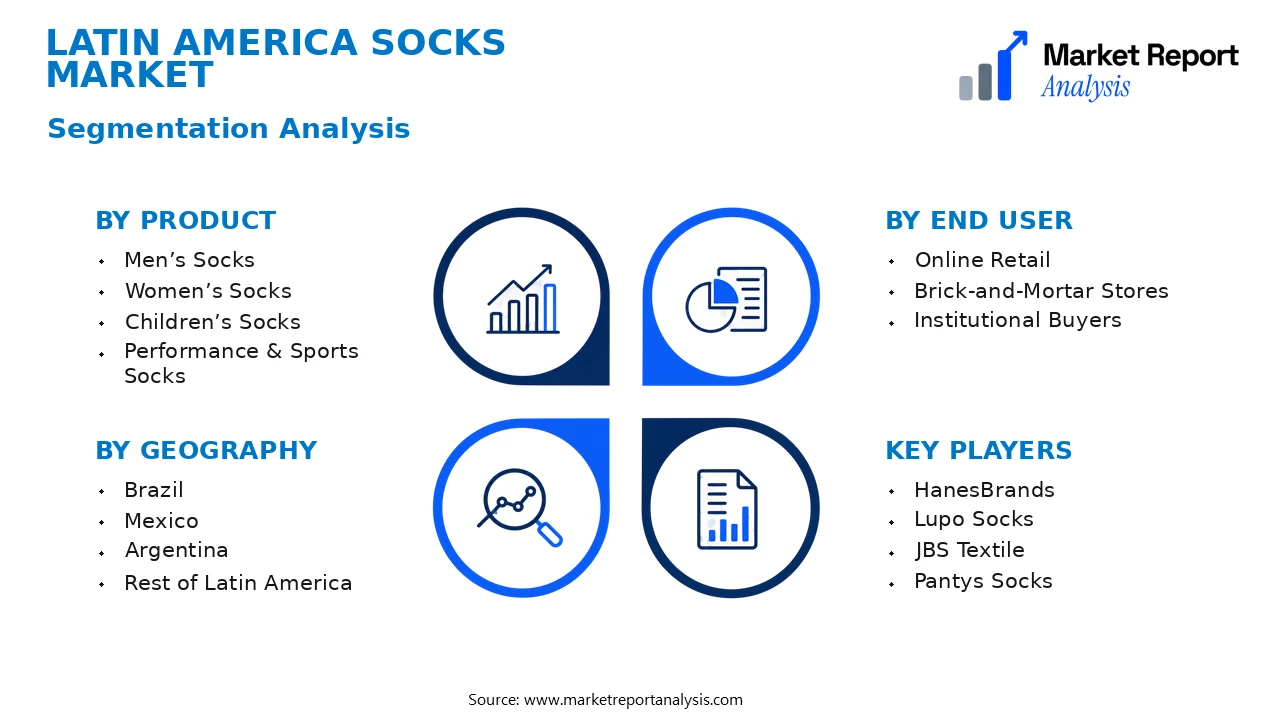
- Product
- Men’s Socks: This segment includes socks designed specifically for male consumers, characterized by sizes, styles, and functionalities tailored for men's packaging preferences and durability requirements, representing a significant share of wearables in Latin America.
- Women’s Socks: Encompasses socks tailored for women, with emphasis on fashion trends, comfort, and innovative designs, capturing a growing segment driven by rising fashion consciousness and athletic activities among female consumers.
- Children’s Socks: Features socks for children, focusing on durability, comfort, and vibrant designs. The demand is influenced by increasing disposable incomes and parental concerns about comfort and safety for children's footwear.
- Performance & Sports Socks: This subsegment caters to consumers engaged in sports and fitness activities, requiring moisture-wicking, cushioning, and enhanced durability, driven by rising participation in sports and active lifestyles across Latin American countries.
- End User
- Online Retail: Represents the growing sales channel via e-commerce platforms, appealing to tech-savvy consumers seeking convenience, variety, and competitive prices, bolstered by internet penetration and digital transformation in Latin America.
- Brick-and-Mortar Stores: Traditional retail outlets, including supermarkets, department stores, and specialty shops. This segment benefits from in-person shopping preferences, particularly in rural and semi-urban areas where digital access may be limited.
- Institutional Buyers: Includes bulk purchasers such as corporate entities, schools, and organizations. These buyers are driven by demand for uniform socks and promotional packaging, especially for uniforms and team sports.
- Geography
- Brazil: The largest economy in Latin America, Brazil exhibits significant demand driven by both urban consumer lifestyles and rural markets, with a diverse population fostering demand across all sock segments.
- Mexico: A key regional hub with a rapidly expanding middle class, Mexico's thriving retail sector and increasing health and fitness trends contribute to robust market growth.
- Argentina: Characterized by a stabilized market with growing interest in fashionable and performance socks, influenced by local economic conditions and changing consumer preferences.
- Rest of Latin America: Encompasses countries like Colombia, Chile, Peru, and others, where emerging markets with rising disposable incomes are progressively adopting premium and functional sock products.
Competitive Intelligence
The Latin America Socks Market is characterized by moderate to high competition, with key players such as Nike, Adidas, and local manufacturers actively competing to expand their market share. The market exhibits a high concentration ratio, where the top five companies account for over 60% of the total market revenue. Business strategies primarily focus on product innovation, including moisture-wicking fabrics, sustainable materials, and ergonomic designs, to differentiate offerings. Companies are heavily investing in R&D to develop technologically advanced products that cater to both performance and comfort. Strategic partnerships and collaborations with sports teams, retail chains, and e-commerce platforms are common to increase distribution reach and enhance brand visibility. Acquisitions of regional brands are also prevalent, enabling global players to strengthen their footprint and local expertise. Expansion strategies include entering untapped rural markets and integrating vertically to control the supply chain. Innovation and differentiation are driven by a focus on functional fabrics and eco-friendly materials, allowing companies to stand out in a competitive landscape that prizes both quality and sustainability.
Leading Company Profiles
The Latin America Socks Market features a dynamic competitive landscape characterized by both local startups and international players expanding their regional footprint. Key companies leverage product innovation, brand positioning, and strategic alliances to enhance market share and meet evolving consumer demands across the region.
- HanesBrands
- Lupo Socks
- JBS Textile
- Pantys Socks
- Alpargatas
- Rubio Socks
- Fábrica de Calcetas
- Calzados Ferrato
- EcoSock LATAM
- SockPro Industries
HanesBrands
HanesBrands is a leader in casual and athletic socks, renowned for innovation in fabric technology and sustainable manufacturing, with a strategic focus on expanding its regional footprint through eco-friendly product lines.
Lupo Socks
Lupo Socks specializes in sports and everyday socks, emphasizing comfort and durability, with active marketing campaigns that target sporting communities and urban youth demographics across Latin America.
JBS Textile
JBS Textile manufactures a wide range of cotton and synthetic socks, leveraging advanced knitting technology and efficient supply chains to serve large-scale retail and export markets within Latin America.
Pantys Socks
Pantys Socks offers premium fashion socks focused on style and quality, utilizing innovative dyeing and finishing processes to meet high fashion demands and eco-conscious consumer preferences.
Alpargatas
Alpargatas, known for its iconic footwear, has diversified into socks, emphasizing comfort, traditional craftsmanship, and eco-sustainability, with strategic collaborations to boost regional brand presence.
Rubio Socks
Rubio Socks excels in affordable, everyday socks targeting middle-income consumers, with a focus on flexible distribution channels and regional market penetration.
Fábrica de Calcetas
Fábrica de Calcetas focuses on high-volume knit socks for sports and casual wear, investing in automation and sustainable fibers to enhance competitiveness and environmental responsibility.
Calzados Ferrato
Calzados Ferrato combines footwear and sock manufacturing expertise, emphasizing integrated product lines and innovative comfort technologies tailored to Latin American climates.
EcoSock LATAM
EcoSock LATAM pioneers in eco-friendly sock production, utilizing recycled fibers and sustainable dyeing processes to appeal to environmentally conscious consumers in urban centers.
SockPro Industries
SockPro Industries enhances its presence through high-performance athletic socks, deploying advanced textile technologies to improve moisture control and durability for sports and outdoor activities.
Strategic Business Developments
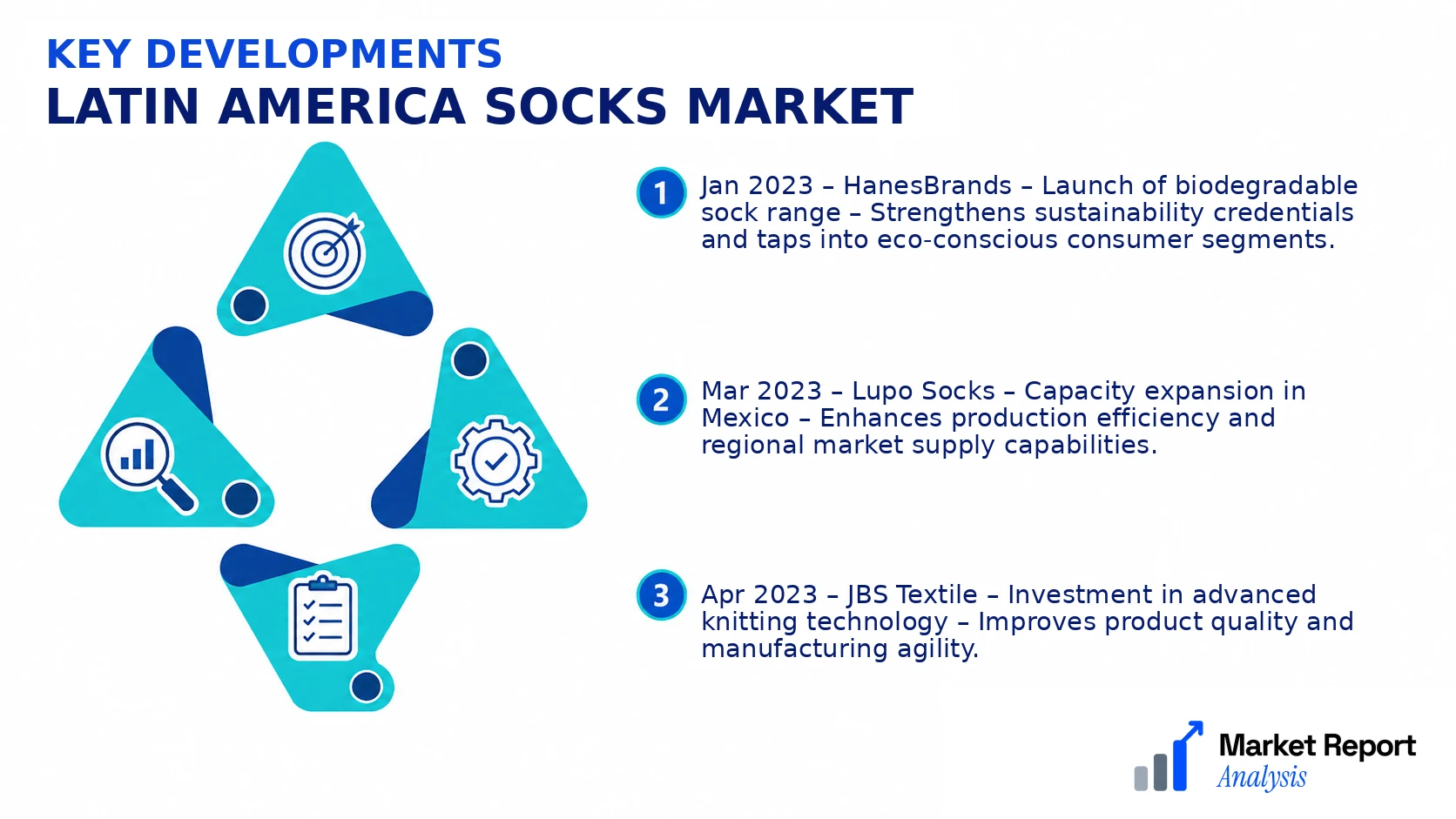
- Jan 2023 – HanesBrands – Launch of biodegradable sock range – Strengthens sustainability credentials and taps into eco-conscious consumer segments.
- Mar 2023 – Lupo Socks – Capacity expansion in Mexico – Enhances production efficiency and regional market supply capabilities.
- Apr 2023 – JBS Textile – Investment in advanced knitting technology – Improves product quality and manufacturing agility.
- Jul 2023 – Pantys Socks – Formation of strategic alliance with local fashion retailers – Expands brand visibility and distribution network.
- Sep 2023 – EcoSock LATAM – New plant dedicated to recycled fibers – Bolsters sustainable product offerings and regional eco initiatives.
Frequently Asked Questions
What is the Latin America Socks Market?
The Latin America Socks Market encompasses the production, distribution, and consumption of socks across Latin American countries, driven by fashion, sportswear, and functional needs, catering to diverse consumer preferences and retail channels.
What is the current market size of Latin America Socks Market?
As of 2026, the market size for socks in Latin America is valued at approximately USD 2.8 Billion, reflecting growth driven by rising fashion consciousness, increased sports activity, and expanding retail footprints.
What factors are driving the Latin America Socks Market?
Factors fueling market growth include increased disposable income, fashion trends influencing sock styles, the burgeoning sportswear segment, and a shift towards online shopping, which enhances accessibility and variety for consumers across the region.
Which region dominates the Latin America Socks Market?
Brazil holds the largest share within the Latin American socks market due to its sizable population, growing middle class, and robust retail sector, establishing itself as the primary market hub for socks in the region.
Which segment is expected to grow the fastest?
The premium and sports socks segments are projected to exhibit the highest growth, fueled by rising health consciousness, sports participation, and consumer inclination towards higher-quality and stylish sock options.
Who are the leading companies operating in the Latin America Socks Market?
Leading companies include HanesBrands, Nike, Puma, and local brands such as Pegada and Tip Top, which are expanding their product ranges and distribution channels to capture growing consumer demand across the region.
Analyst Perspective
The Latin America Socks Market is approaching a maturity phase, with steady growth driven by evolving consumer preferences and increasing health awareness. Long-term prospects remain promising, particularly as premium and technologically advanced sock segments expand, offering avenues for innovation and differentiation. Key commercial opportunities center on integrating sustainable materials and smart textile technologies, providing a competitive edge in a fragmented industry. Regional growth potential is significant in Brazil, Mexico, and Argentina, where rising disposable incomes and fashion trends fuel demand. Investment priorities should focus on supply chain optimization, technological developments such as moisture-wicking and odor-control fabrics, and establishing strong distribution channels. Competitive intensity is expected to intensify as local manufacturers scale operations and attract foreign entrants. Regional differentiation will be vital, with urban centers and modern retail channels presenting lucrative markets. Strategic positioning that emphasizes sustainability, innovation, and direct-to-consumer models will be crucial for long-term success in this evolving landscape.
