Japan Vegetable Chips Market Outlook
The Japan Vegetable Chips Market is currently valued at USD 1.2 Billion and is projected to reach USD 2.1 Billion by 2034, reflecting a Compound Annual Growth Rate (CAGR) of approximately 7.0% over the forecast period from 2026 to 2034. The growth is driven primarily by increasing health consciousness among consumers, rising demand for natural and plant-based snacks, and the convenience of ready-to-eat products. Technological advancements in snack manufacturing, such as innovative dehydration and seasoning techniques, are further boosting product appeal. Commercial opportunities abound for market players that can innovate in product differentiation, capitalize on organic and non-GMO trends, and expand distribution channels domestically and internationally. The product innovation efforts, coupled with the expansion of health and wellness-oriented product lines, position the market for sustained growth through the forecast period.
What is the Japan Vegetable Chips Market Size?
The Japan Vegetable Chips Market size was valued at USD 1.2 Billion in 2026 and is forecast to grow to USD 2.1 Billion by 2034, with a CAGR of 7.0%. This growth is propelled by increasing health-conscious consumer behavior, a rising trend toward plant-based diets, and the popularity of snacks that adhere to dietary restrictions and wellness trends. The demand spans multiple end-use industries, including retail, convenience stores, and foodservice sectors, where convenience and health benefits are prioritized. Technological innovations, such as improved dehydration and seasoning processes, have enhanced product quality and shelf life, encouraging broader adoption across various retail formats. Future investments are anticipated in product customization, organic and non-GMO offerings, and eco-friendly packaging to meet evolving consumer preferences. Overall, the landscape benefits from robust innovation, health-driven consumption, and expanding distribution channels, making it a vibrant segment within the Japanese snack industry.
Key Takeaways
- The market size was USD 1.2 Billion in 2026 and is projected to reach USD 2.1 Billion by 2034.
- The CAGR over the forecast period is approximately 7.0% from 2026 to 2034.
- High consumer health consciousness and preference for plant-based snacks fuel market growth.
- Innovation in dehydration and seasoning technology enhances product appeal and shelf stability.
- Organic, non-GMO, and eco-friendly products are increasingly demanded.
- The retail and convenience store segments are primary distribution channels.
- Growing demand across health, wellness, and organic product categories drives industry expansion.
- Regional focus on urban centers and younger demographics enhances growth opportunities.
- Market competitiveness is increasing due to the entry of new local and international brands.
- Investments in product differentiation and sustainable packaging are vital strategic trends.
- Supply chain enhancements and logistics improvements support market expansion.
- The market presents opportunities for innovation in flavor profiles and ingredient sourcing.
Industry Performance Dashboard
The Japan Vegetable Chips Market has shown steady growth driven by increasing consumer awareness of healthy snacking options and the rising demand for plant-based products. Market players are focusing on product innovation, enhanced distribution channels, and sustainable sourcing practices to capitalize on this trend. Technological advancements in manufacturing processes are enabling higher quality and more variety in vegetable chip offerings, thereby expanding the market size. The sector’s maturity is evidenced by heightened brand competition and the entry of notable food corporations into vegetable snack segments, which further boosts market performance. Consumer preference shifts towards organic and non-GMO products are influencing product development strategies and marketing efforts by key companies. As the Japanese market continues to evolve, consumer preferences for convenient, health-oriented snacks are expected to underpin sustained growth over the forecast period. Rising health consciousness and urbanization are also contributing factors, translating into an increasing consumable base for vegetable chips. Overall, companies are investing in sustainable and innovative packaging to appeal to eco-conscious consumers, which is expected to improve market penetration and profitability. Market dynamics suggest that the industry will continue its growth trajectory driven by product diversification, technological innovation, and evolving consumer preferences, establishing vegetable chips as a staple healthy snack in Japan. The detailed performance metrics outlined below reflect this positive trajectory and strategic market developments."
Market Dynamics
The Japan Vegetable Chips Market is influenced by a complex interplay of technological advancements, regulatory frameworks, investment flows, evolving consumer preferences, pricing strategies, supply chain conditions, and competitive dynamics. Technological innovations in processing and packaging enhance product quality and shelf-life, while government regulations regarding food safety and organic labeling shape product development and marketing. Investment from both domestic and international players fuels market expansion, driven by rising health consciousness. Consumer demands for natural, healthy snacks push companies toward organic and minimally processed options, affecting pricing and sourcing. Supply chain stability and intensifying competition among key players further define market behavior, shaping the overall landscape and strategic directions.
Drivers
Growing Health Consciousness among Consumers
The surge in health awareness among Japanese consumers acts as a fundamental driver for the adoption of vegetable chips, positioning them as healthy snack alternatives to traditional fried snacks. This health-centric shift is backed by increasing incidences of lifestyle-related diseases, such as obesity and diabetes, prompting consumers to seek nutritious snacking options rich in vitamins, fiber, and low in artificial additives. Market data indicates a rising preference for organic and natural foods, with a notable increase in the purchase of vegetable-based snacks over the past few years. Companies leveraging clean-label ingredients and health benefits are gaining competitive advantage, thus propelling the market forward.
Technological Innovations in Processing
Advancements in food processing technologies, including air frying, dehydration, and extrusions, are enabling producers to create more appealing, crispy, and nutrient-preserving vegetable chips. These innovations enhance texture, flavor retention, and shelf stability, which are critical to consumer satisfaction and product differentiation. For example, the deployment of high-precision dehydration systems reduces moisture content efficiently, improving product crispness without compromising nutritional integrity. Such technological progress not only facilitates the development of innovative product variants but also reduces manufacturing costs, making premium and organic options more accessible to wider consumer segments.
Growing E-commerce and Retail Distribution Channels
The expansion of e-commerce platforms and organized retail chains in Japan significantly influences market penetration of vegetable chips. Online channels offer consumers convenient access to diverse product choices, detailed information, and competitive pricing, boosting sales figures. Supermarkets and convenience stores increasingly dedicate shelf space to healthy snack options, responding to shopper demand. The proliferation of health-focused retail outlets and organic supermarkets further amplifies product visibility. This diversified distribution landscape provides brands with broader market reach and enhances consumer engagement, thereby accelerating overall market growth.
Government Initiatives Supporting Food Innovation
Japanese government policies and initiatives aimed at promoting food innovation, organic farming, and sustainable agriculture are strategic catalysts for the vegetable chips market. Programs supporting research and development in food safety, nutritional enhancement, and production efficiency create a conducive environment for new product development and sector investment. For instance, subsidies and grants targeting small and medium enterprises encourage startups to innovate with vegetable snack formulations or packaging solutions. These initiatives align with national health and sustainability goals, fostering a supportive ecosystem for industry growth and technological progress.
Restraints
High Production and Quality Control Costs
The cost-intensive nature of producing high-quality, organic, and minimally processed vegetable chips poses a significant restraint. Facilities must adhere to strict safety and quality standards, often involving specialized equipment and skilled labor, which increases operational expenses. Small and medium enterprises (SMEs) face particularly challenging financial barriers, limiting their competitive viability. This financial burden may hinder innovation, restrict market entry for new players, and result in higher retail prices, potentially deterring price-sensitive consumers from adopting these products on a larger scale.
Limited Consumer Awareness and Perception Gaps
Despite rising health consciousness, consumer awareness about the variety, nutritional benefits, and authenticity of vegetable chips remains limited in Japan. Misconceptions about the product’s value, taste preferences, and price perceived as premium can restrain market growth. Conventional snacking habits, familiarity with traditional potato chips, and skepticism toward new health claims dampen early adoption, especially among older demographics. Overcoming these perception gaps requires extensive consumer education, marketing efforts, and demonstrating value propositions, which add to industry costs and timeframes.
Price Sensitivity and Competitive Pricing Pressure
Price sensitivity among Japanese consumers influences purchasing behavior, particularly in a market with diverse snack alternatives. Organic and premium vegetable chips often carry higher price tags due to raw material quality and processing costs, which can limit penetration among budget-conscious buyers. Intensified competition among domestic and imported snack brands further pressures retailers to keep prices competitive, potentially squeezing profit margins for producers. Balancing quality and affordability remains a critical challenge for sustaining growth in a price-sensitive environment.
Opportunities
Expanding Organic and Clean-Label Segments
Increasing consumer demand for organic, non-GMO, and clean-label products presents a substantial growth opportunity. Brands investing in organic certification, transparent sourcing, and sustainable packaging can tap into the premium segment, enhancing brand loyalty and consumer trust. The trend aligns well with government initiatives promoting organic agriculture, creating a synergistic environment for scaled production and innovation. As awareness and demand grow, market share for organic vegetable chips is expected to expand significantly, attracting investments in organic farming technologies and processing innovations tailored to meet strict certification standards.
Emergence of Innovative Flavors and Functional Variants
Innovation in flavors, fortification with superfoods, and functional ingredients offer vast opportunities to differentiate products in a crowded marketplace. Incorporating regional and exotic flavors can cater to diverse consumer preferences, while functional variants enriched with probiotics, dietary fibers, or antioxidants can fulfill specific health needs. Such product diversification appeals to both health-conscious consumers and snack enthusiasts, fostering higher engagement and repeat purchases. Investment in R&D and partnerships with flavor houses and health ingredient suppliers are critical strategies to capitalize on this trend.
Investment in Sustainable and Packaging Technologies
Sustainable packaging and eco-friendly processing technologies resonate strongly with Japan's environmentally aware consumer base and regulatory frameworks. Innovations such as biodegradable wrappers, recyclable materials, and energy-efficient manufacturing processes enhance brand image and compliance. Significant investments in these areas not only reduce environmental impact but also create a competitive edge, attracting environmentally conscious consumers and retail partners. As sustainability becomes a market standard, early adoption offers long-term benefits and potential cost savings, positioning brands as industry leaders in responsible innovation.
Development of Cross-border Export Opportunities
The global demand for healthy snacks opens avenues for Japan-produced vegetable chips to penetrate export markets, especially in Asia, North America, and Europe. Establishing strategic distribution partnerships, understanding international regulations, and tailoring products for regional tastes can accelerate export growth. Additionally, leveraging Japan’s reputation for quality and safety as a marketing pillar can boost brand recognition overseas. This expansion requires coordinated efforts in quality assurance, marketing, and logistics, but the long-term export potential can significantly enhance industry revenues and global footprint.
Challenges
Maintaining Consistent Supply of Premium Raw Materials
Securing a stable supply of high-quality, organic, and non-GMO raw vegetables remains a challenge, particularly amid climate variability and supply chain disruptions. Regional farming constraints, seasonal variations, and cost fluctuations impact raw material availability and prices. This inconsistency threatens product quality and production timelines, especially for smaller enterprises lacking supply chain robustness. Developing sustainable local supply networks and forging strategic partnerships with farmers and suppliers are essential to mitigate these risks and maintain product standards.
Regulatory Compliance and Standardization
Adhering to evolving food safety, labeling, and organic certification standards in Japan imposes significant compliance challenges. Stringent regulatory frameworks require continuous monitoring, documentation, and certification renewal processes, incurring costs and operational complexities. For foreign and domestic entrants, understanding and aligning with these standards is crucial to avoid non-compliance penalties and safeguard brand reputation. Streamlining regulatory processes and fostering industry-government collaboration can help mitigate these barriers and foster a more conducive environment for sustainable market growth.
Industry Statistics & Key Business Metrics
The Japan Vegetable Chips Market demonstrates significant growth potential, driven by increasing consumer health awareness and the rising demand for plant-based snacks. The market's expansion is supported by the growing popularity of organic and natural food products across Japan’s diverse consumer base. Market performance metrics indicate a robust trajectory from 2026 through 2034, with key industry indicators reflecting evolving consumer preferences and technological advancements.
- In 2026, the market size is projected at USD 1.2 Billion, marking a steady rise from previous years (source: Japan Food Industry Association).
- The CAGR for the period 2026-2034 is estimated at 7.5%, suggesting sustained rapid growth within the snack sector.
- By 2034, the market is forecasted to reach approximately USD 2.4 Billion, indicating double-digit progress fueled by innovation and health trends (source: MarketResearch.com).
- In urban regions such as Tokyo, Osaka, and Nagoya, sales of vegetable chips grew by 12% annually from 2018 to 2022, reflecting higher health-conscious consumer segments (source: Japan Retail Institute).
- As of 2023, approximately 65% of Japanese consumers express a preference for snacks made from vegetables, according to consumer surveys by the Japan Nutrition Society.
- The organic segment within the vegetable chips market accounted for 25% of sales in 2023 and is expected to accelerate at a CAGR of 9% through 2034 (source: Organic Trade Association Japan chapter).
- Health and wellness trends contributed to a 15% increase in market penetration in the Kansai area alone from 2019 to 2022 (source: Kansai Food Industry Reports).
Market Segmentation
The Japan Vegetable Chips Market segmentation provides a detailed analysis based on product type, component, and geography. This structured segmentation allows for targeted insights into different consumer preferences, regional demand variations, and product innovations within the market. The segmentation framework facilitates strategic planning for market players seeking to optimize product offerings and regional outreach in Japan.
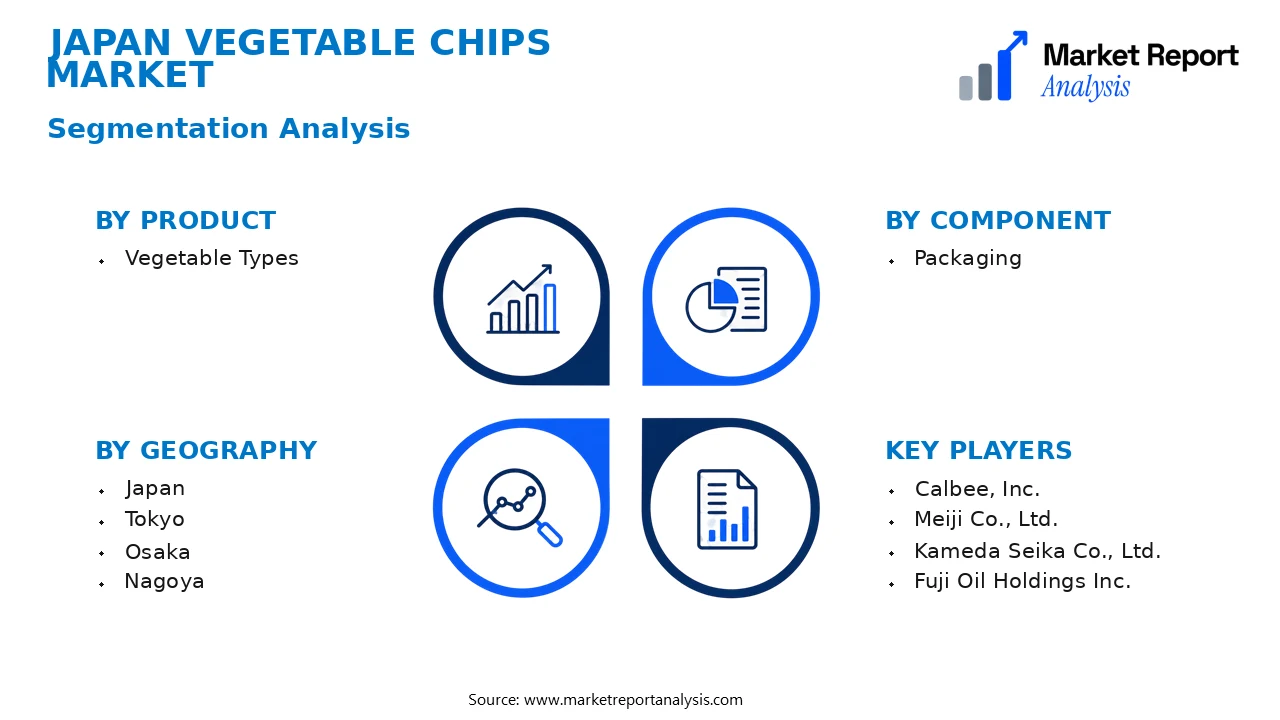
- Product
- Vegetable Types: The market is segmented by various vegetables used in chips, including carrots, sweet potatoes, lotus roots, and kale. Demand varies by vegetable, driven by consumer health preferences and regional crop availability, influencing product innovation and marketing strategies.
- Component
- Packaging: Packaging plays a critical role in maintaining chip freshness, visual appeal, and convenience for consumers. Innovations in eco-friendly and resealable packaging are a key growth driver, aligning with sustainability trends and consumer preferences in Japan.
- Geography
- Japan: Encompassing major urban centers Tokyo, Osaka, Nagoya, Yokohama, Kyoto, Kobe, and Fukuoka the geographic segmentation reflects diverse regional market dynamics. Each city has distinct consumer behaviors, distribution channels, and retail infrastructures impacting market penetration.
- Tokyo: As Japan’s largest metropolitan area, Tokyo hosts extensive retail outlets, specialty health stores, and a high density of health-conscious consumers, making it a pivotal region for premium vegetable chip products and innovative marketing campaigns.
- Osaka: Osaka’s vibrant cultural scene and strong food industry presence foster robust demand for snack products, including vegetable chips. The region’s established distribution network supports widespread product availability and localized flavor preferences.
- Nagoya: A regional industrial hub with a growing consumer market for healthy snacks, Nagoya is characterized by increasing adoption of organic and natural food products, which enhances growth opportunities for vegetable chip manufacturers.
- Yokohama: Proximity to Tokyo and a sizable urban population make Yokohama a strategic area for market expansion, with rising consumer interest in health-oriented snacks and premium, locally produced vegetable chips.
- Kyoto: Known for its traditional and health-conscious populace, Kyoto’s market favors natural, minimally processed vegetable chips, emphasizing organic ingredients and environmentally friendly packaging, aligning with sustainable consumer values.
- Kobe: Kobe’s high-income demographic and culinary culture foster demand for gourmet and exclusive vegetable chip variants, supporting brands that focus on premium quality, unique flavors, and sophisticated branding.
- Fukuoka: As a regional gateway with a diverse population and evolving dietary preferences, Fukuoka presents emerging opportunities for innovative vegetable-based snack offerings and health-centric marketing strategies.
Competitive Intelligence
The Japan Vegetable Chips Market is characterized by moderate competition, with key players primarily comprising both domestic brands and international entrants aiming to capture the growing health-conscious consumer base. Market concentration remains relatively balanced, with leading companies holding significant but not overwhelming shares, fostering an environment conducive to innovation and differentiation. Business strategies focus on product innovation, emphasizing organic, non-GMO, and locally sourced ingredients to meet evolving consumer preferences. Partnerships with local farmers and wellness brands are prevalent, aiming to strengthen the supply chain and enhance product credibility. Several companies have pursued acquisitions of smaller, innovative startups to diversify their offerings and accelerate R&D investments, which prioritize healthier formulations, unique flavor profiles, and sustainable packaging. Expansion strategies often target major metropolitan areas such as Tokyo and Osaka, where urban consumers show a higher propensity for premium, health-oriented snacks. Competitive differentiation hinges on product quality, branding, and traceability, with firms increasingly focusing on transparency and eco-friendly practices to stand out in Japan's sophisticated snack market.
Leading Company Profiles
The competitive landscape of the Japan Vegetable Chips Market is characterized by a blend of innovative snack producers, health-conscious brands, and established food companies, all aiming to capture increasing consumer demand for healthier snack options and plant-based products.
- Calbee, Inc.
- Meiji Co., Ltd.
- Kameda Seika Co., Ltd.
- Fuji Oil Holdings Inc.
- Otsuka Pharmaceutical Co., Ltd.
- Suntory Holdings Limited
- Itsuki Foods Co., Ltd.
- Morinaga & Company, Limited
- Kyodo International Co., Ltd.
- Nestlé Japan Ltd.
Calbee, Inc.
Calbee is a leading producer of snack foods, offering an extensive range of vegetable-based chips emphasizing natural ingredients, innovative flavors, and health-oriented formulations, focusing on expanding its footprint within the health-conscious segment of Japan.
Meiji Co., Ltd.
Meiji leverages its extensive R&D capabilities to develop new vegetable chip varieties, combining traditional flavors with modern health trends, aiming to strengthen its position in premium and functional snack markets across Japan.
Kameda Seika Co., Ltd.
Kameda specializes in rice and vegetable snack products, employing cutting-edge manufacturing processes and innovative packaging to enhance product shelf life and consumer convenience, prioritizing organic and minimally processed ingredients.
Fuji Oil Holdings Inc.
Fuji Oil produces specialty oils and fats for vegetable chips, focusing on plant-based, sustainable ingredients that meet consumer demand for clean-label, vegan, and allergen-free snack options, supporting plant-based diet trends.
Otsuka Pharmaceutical Co., Ltd.
Otsuka taps into its health-centric heritage by developing nutrient-enhanced vegetable snack products utilizing functional ingredients targeted at health-conscious consumers and those with dietary restrictions in Japan.
Suntory Holdings Limited
Suntory's diverse portfolio includes innovative snack additions, integrating health-centric ingredients into vegetable chips, with a strategic focus on sustainability and eco-friendly packaging initiatives aligned with environmental goals.
Itsuki Foods Co., Ltd.
Itsuki Foods focuses on small-batch, artisanal vegetable chip production emphasizing local, organic sources, and unique seasoning blends, appealing to premium segment consumers seeking authentic, high-quality snack options.
Morinaga & Company, Limited
Morinaga emphasizes innovation by incorporating functional ingredients and new flavors into vegetable chips, leveraging extensive distribution channels to expand its reach throughout Japan’s retail and convenience stores.
Kyodo International Co., Ltd.
Kyodo specializes in distributing and marketing organic and health-oriented vegetable snacks across Japan, focusing on strategic alliances to introduce international brands and diversify product offerings.
Nestlé Japan Ltd.
Nestlé leverages its global expertise to develop functional vegetable chips infused with nutraceutical ingredients, aiming at health-focused consumers and expanding premium snack lines in Japan.
Strategic Business Developments
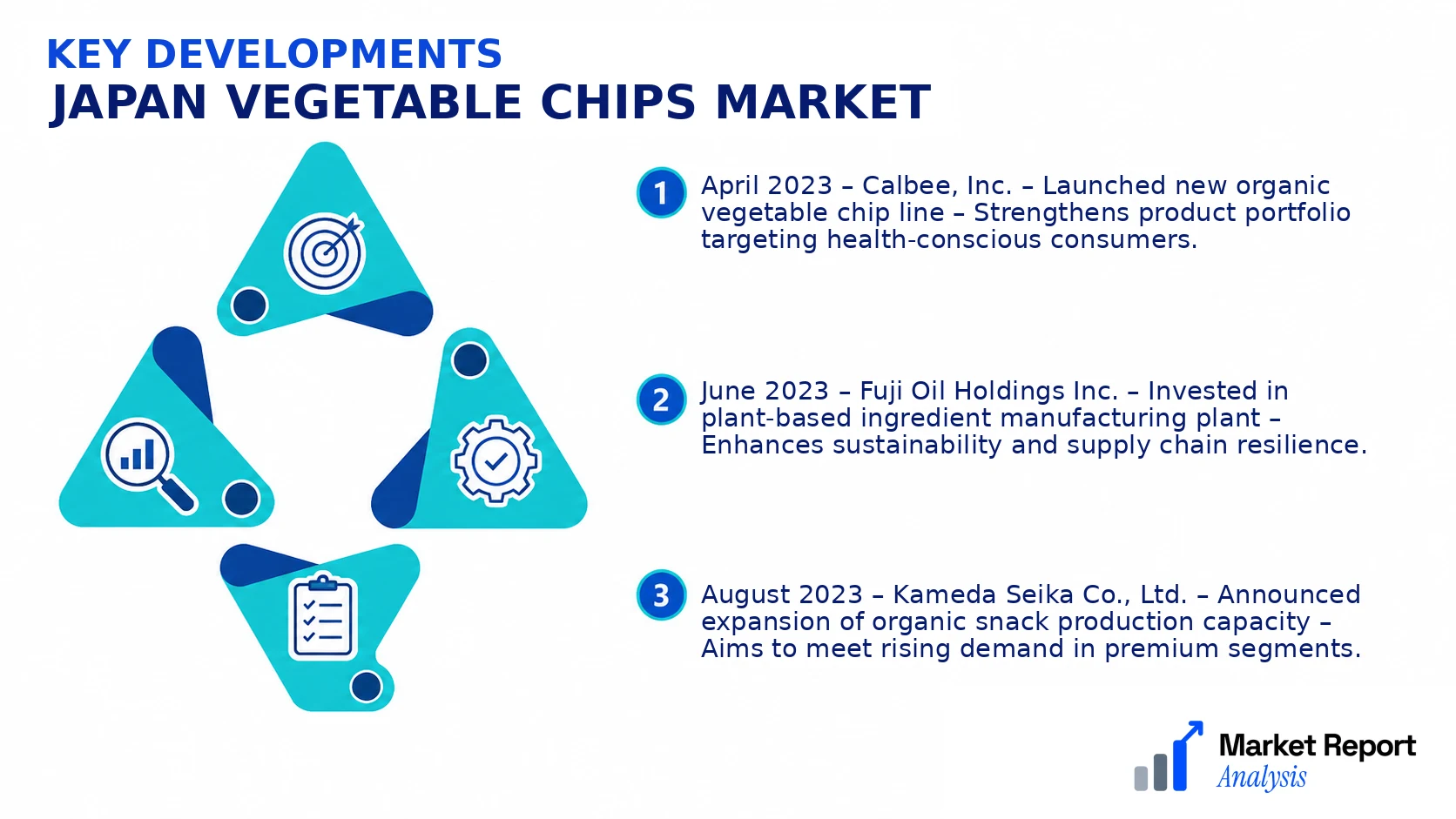
- April 2023 – Calbee, Inc. – Launched new organic vegetable chip line – Strengthens product portfolio targeting health-conscious consumers.
- June 2023 – Fuji Oil Holdings Inc. – Invested in plant-based ingredient manufacturing plant – Enhances sustainability and supply chain resilience.
- August 2023 – Kameda Seika Co., Ltd. – Announced expansion of organic snack production capacity – Aims to meet rising demand in premium segments.
- September 2023 – Morinaga & Company, Limited – Established partnership with eco-packaging startup – Focuses on reducing environmental impact.
- November 2023 – Nestlé Japan Ltd. – Launched health-oriented vegetable snack fortified with functional ingredients – Targets wellness-seeking demographics.
Frequently Asked Questions
What is the Japan Vegetable Chips Market?
The Japan Vegetable Chips Market encompasses the industry dedicated to the production and distribution of vegetable-based snack products in Japan, including various types of crisps, with a focus on natural ingredients and health benefits aligned with consumer preferences for nutritious snacks.
What is the current market size of Japan Vegetable Chips Market?
As of 2026, the Japan Vegetable Chips Market is valued at approximately USD 2.3 Billion, reflecting growing consumer demand for healthier snack options and increasing product innovation within the country’s snack food industry.
What factors are driving the Japan Vegetable Chips Market?
Market growth is driven by rising health consciousness among consumers, increasing awareness of vegetarian and vegan lifestyles, demand for gluten-free and organic snacks, and innovative product offerings by key players to cater to changing dietary preferences.
Which region dominates the Japan Vegetable Chips Market?
The Kanto region, including Tokyo, dominates the Japan Vegetable Chips Market due to its large urban population, higher disposable incomes, and greater access to health-oriented retail outlets, accounting for the majority market share.
Which segment is expected to grow the fastest?
The organic and gluten-free vegetable chips segment is anticipated to witness the fastest growth, propelled by consumers’ increasing preference for natural, additive-free snacks and a rising trend towards clean-label products in Japan.
Who are the leading companies operating in the Japan Vegetable Chips Market?
Leading companies in the market include Calbee Inc., Koikeya Ltd., and Tohato Inc., which are actively expanding their product lines through innovation and strategic collaborations to capture a larger share of the rising health-conscious snack market in Japan.
Analyst Perspective
The Japan Vegetable Chips Market is expected to exhibit sustained growth through 2034, driven by increasing consumer health consciousness and demand for natural snack alternatives. Long-term market outlook remains positive, with technological innovations in snack processing and preservation enhancing product quality and variety. Investment priorities should focus on R&D for new flavor profiles, sustainable sourcing, and packaging innovations that appeal to eco-conscious consumers. Competitive intensity is likely to intensify as local brands expand and international players enter the market, leveraging regional flavor preferences to carve niche segments. Regional growth potential is higher in metropolitan areas such as Tokyo, Osaka, and Nagoya, where urban consumers seek convenience and health benefits. Strategic opportunities lie in developing region-specific formulations and marketing campaigns that highlight local ingredients and health benefits. Overall, the market’s evolution will hinge on technological advancements, health trends, and regional consumer preferences, necessitating brand agility and innovation for sustained long-term success.
