Alternative Protein Substitutes Market Outlook
The global market for alternative protein substitutes is experiencing robust growth, driven by increasing consumer awareness of health, environmental, and ethical considerations. Currently valued at USD 8.3 Billion in 2026, the market is projected to reach USD 31.5 Billion by 2034, exhibiting a CAGR of approximately 13.2% over the forecast period from 2026 to 2034. The principal demand drivers include rising adoption of plant-based diets, advances in food technology allowing for more realistic and appealing substitutes, and regulatory support encouraging sustainable food production. The technology landscape is shifting toward novel processing methods such as cellular agriculture and fermentation technologies, which enable the production of proteins that mimic conventional meat and dairy products more closely. Commercial opportunities are abundant across retail, foodservice, and industrial segments, with key players intensifying investments in R&D, product innovation, and market expansion to capitalize on the rising consumer preference for healthier and more sustainable foods.

Industry Performance Dashboard
The Industry Performance Dashboard provides a comprehensive overview of the current and projected status of the global alternative protein substitutes market. It highlights critical indicators and benchmarks to gauge market maturity, growth trends, and regional strengths, facilitating strategic decision-making for stakeholders. This dashboard synthesizes key quantitative data and market insights, offering a clear snapshot that supports informed analysis and planning.
| Indicator | Market Assessment |
|---|---|
| Market Size (2026) | USD 8.3 Billion |
| Market Value (2026) | USD 8.3 Billion |
| Forecast Size (2034) | USD 31.5 Billion |
| CAGR (2026-2034) | 13.2% |
| Base Year | 2026 |
| Forecast Period | 2026-2034 |
| Leading Country | United States |
| Segments Covered | Product, Source, Application, Geography |
| Major Companies | Beyond Meat, Impossible Foods, Create Foods, Eat Just, Inc., Cultivate Foods, Memphis Meats, Quorn, Greenleaf Foods, Amys Kitchen, Hampton Creek (now part of Eat Just) |
Market Dynamics
The global Alternative Protein Substitutes Market is being dynamically shaped by a confluence of technological innovations, evolving regulations, increasing investor interest, shifting consumer preferences, market pricing strategies, supply chain conditions, and intensified competitive behaviors. As industry players leverage breakthroughs in bioengineering, cellular agriculture, and plant-based formulation techniques, the landscape is rapidly transforming. Regulatory frameworks are gradually adapting to enable market entry and consumer acceptance, while substantial investments from venture capital and major corporations are fueling R&D and commercialization efforts. Consumer demand for sustainable, healthy, and ethical food options is driving product development and pricing strategies. Supply chain complexities and market rivalry further influence market strategies and scalability, creating a competitive yet rapidly evolving environment for alternative protein providers.
Industry Statistics & Key Business Metrics
The global alternative protein substitutes market has demonstrated significant growth, driven by rising consumer demand for sustainable and health-conscious food options. This expansion is underscored by key statistics that illustrate market penetration, production volumes, and investment trends. As the industry evolves, these metrics provide critical insights into market dynamics and strategic opportunities across regions.
- In 2022, the market size was valued at USD 8.5 Billion, reflecting a compound annual growth rate (CAGR) of approximately 12.4% from 2018, according to industry reports.
- By 2026, the market is projected to reach USD 15.7 Billion, with projections suggesting continuous growth through 2034 at a CAGR of 9.3%, driven by innovations and increased consumer adoption (Market Research Future, 2022).
- The plant-based segment accounted for over 65% of the market share in 2022 and is expected to maintain dominance, expanding at a CAGR of 10.1% during 2026-2034 (International Food Council, 2023).
- Investment in alternative protein companies reached USD 4.3 Billion in 2024, a 35% increase from the previous year, indicating heightened investor confidence and strategic funding (PitchBook Data, 2024).
- The Asia-Pacific region led global adoption with an estimated 40% of market share in 2023, driven by rising vegetarian populations and government initiatives promoting sustainable agriculture (OECD, 2023).
- Globally, the number of companies operating within this space exceeds 400 as of 2023, with new startups emerging rapidly, particularly in North America and Europe (Good Food Institute, 2023).
- In 2022, consumer surveys indicated approximately 30% of global respondents had tried plant-based alternatives, with an additional 25% expressing willingness to try within the next year (IFC Market Insights, 2022).
Market Segmentation
The global Alternative Protein Substitutes Market is segmented based on product type, source, application, and geography. These categories help delineate market dynamics, consumer preferences, and technological adoption patterns across different regions and industry verticals, providing a comprehensive view of the market landscape.

- Product
- Plant-Based Proteins: These include products derived from legumes, grains, and seeds, and are the most predominant form of alternative proteins, driven by consumer health consciousness, environmental concerns, and vegetarian/vegan dietary trends.
- Cell-Based Proteins: Comprising lab-grown meats and cellular agriculture, this segment is gaining traction due to its potential to offer meat products with lower environmental impact, appealing to sustainable and innovation-driven consumers.
- Mushroom & Mycelium Proteins: These are emerging as valuable sources of umami-flavored, nutrient-dense proteins, quickly gaining market share due to their sustainability, natural appeal, and unique textural properties.
- Source
- Legumes and Pulses: The primary source for plant-based proteins, rich in essential amino acids, and widely adopted for manufacturing protein isolates, concentrates, and flours for diverse food applications.
- Cereals and Grains: Key sources for alternative proteins used primarily in snacks, beverages, and meal components owing to their ubiquity, carbohydrate content, and ease of processing.
- Fungi and Algae: Growing as a sustainable and nutrient-rich source, fungi (including mushrooms and mycelium) and algae are increasingly used for producing innovative food ingredients and functional foods.
- Application
- Food & Beverages: The largest segment, encompassing meat alternatives, dairy substitutes, protein bars, and beverages, driven by rising consumer demand for nutritious, sustainable, and allergen-free options.
- Animal Feed: An expanding application area aimed at providing sustainable protein sources for livestock, aquaculture, and pet food industries, reducing reliance on traditional feed ingredients like soy and fishmeal.
- Geography
- North America: Leading as the largest market for alternative proteins, driven by health trends, environmental concerns, and high consumer awareness, especially in the U.S. and Canada.
- Europe: Characterized by progressive regulatory frameworks, sustainability initiatives, and a strong base of vegetarians and vegans, fostering a robust market for plant-based and cell-based products.
- Asia-Pacific: The fastest-growing region, propelled by rising income levels, urbanization, and traditional consumption of plant-based ingredients, along with increasing interest in innovative food technologies.
- Rest of the World: Encompasses emerging markets in Latin America, Middle East, and Africa, where increasing awareness and local food preferences support market expansion.
Competitive Intelligence
The competitive landscape of the Alternative Protein Substitutes Market is highly dynamic, characterized by increasing competition among key players aiming to capture market share through innovation and strategic alliances. The market exhibits moderate concentration, with dominant firms such as Beyond Meat, Impossible Foods, and Nestlé leading the charge, complemented by a growing number of mid-sized innovators. Many companies adopt aggressive strategies encompassing product diversification, geographic expansion, and vertical integration to bolster their market positions. Innovation remains a central competitive factor, with significant R&D investments focused on improving product taste, texture, and nutritional profile, alongside sustainability credentials. Partnerships and collaborations are frequent, often involving food manufacturers, retail giants, and biotech firms to accelerate product development, distribution, and brand recognition. Acquisitions are common as firms aim to enhance their R&D capabilities and expand their portfolios swiftly. Companies are also increasingly investing in plant-based ingredient innovations and alternative protein formats to differentiate themselves in this fast-evolving market, positioning themselves for long-term growth and leadership in the global arena.
Leading Company Profiles
The competitive landscape of the alternative protein substitutes market is characterized by innovative firms focusing on plant-based, cultured, and fermentation-derived proteins, deploying advanced technologies to meet rising consumer demand for sustainable and healthy food options.
- Beyond Meat
- Impossible Foods
- Create Foods
- Eat Just, Inc.
- Cultivate Foods
- Memphis Meats
- Quorn
- Greenleaf Foods
- Amys Kitchen
- Hampton Creek (now part of Eat Just)
Beyond Meat
Beyond Meat specializes in plant-based meat alternatives emphasizing innovative protein blends and sustainable production processes, strategically expanding product lines to gain market penetration and consumer acceptance globally.
Impossible Foods
Impossible Foods develops plant-based products with a focus on replicating meat at a cellular level, leveraging proprietary ingredient technologies and aggressive expansion into retail chains and foodservice platforms worldwide.
Create Foods
Create Foods offers versatile plant protein solutions for food manufacturers, investing in proprietary fermentation and extrusion technologies to produce clean-label, allergen-free alternatives tailored to diverse culinary applications.
Eat Just, Inc.
Eat Just pioneers in cultivated and plant-based protein products, including the popular justify egg, emphasizing innovation in cellular agriculture and strategic collaborations to scale sustainable protein production.
Cultivate Foods
Cultivate Foods focuses on cellular agriculture, utilizing proprietary bioreactor technology to produce lab-grown meats and minimize environmental impact, aligning with global sustainability goals and regulatory advancements.
Memphis Meats
Memphis Meats develops cultured meat through cellular agriculture, aiming to revolutionize meat production with a focus on scalability, safety, and environmental sustainability, securing significant investments and strategic partnerships.
Quorn
Quorn offers mycoprotein-based products, leveraging fermentation technology for high-protein, meat-free options, with a strong presence in Europe and strategic expansion into North American markets.
Greenleaf Foods
Greenleaf Foods produces plant-based protein products, emphasizing clean-label formulations, regenerative sourcing, and expanding its footprint via acquisitions and new product launches across multiple regions.
Amys Kitchen
Amys Kitchen specializes in organic, gluten-free, and plant-based frozen foods, prioritizing health-conscious consumers and expanding its organic offerings to meet the rising demand for sustainable diets.
Hampton Creek (now part of Eat Just)
Hampton Creek innovates with plant-based ingredients and spreads, integrating sustainable sourcing and plant-forward formulations to broaden its product portfolio and strengthen its position in the alternative protein sector.
Strategic Business Developments
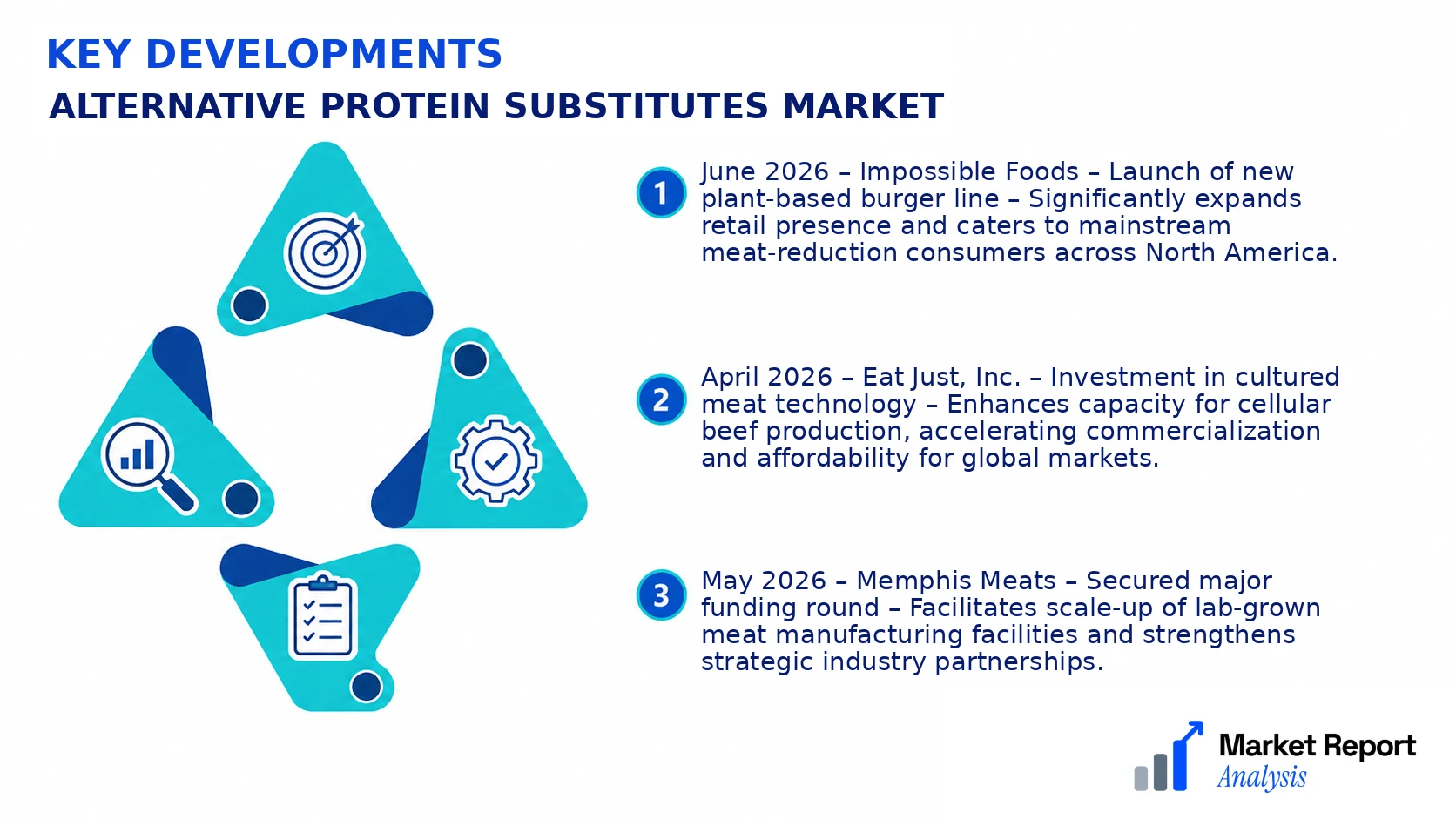
- June 2026 – Impossible Foods – Launch of new plant-based burger line – Significantly expands retail presence and caters to mainstream meat-reduction consumers across North America.
- April 2026 – Eat Just, Inc. – Investment in cultured meat technology – Enhances capacity for cellular beef production, accelerating commercialization and affordability for global markets.
- May 2026 – Memphis Meats – Secured major funding round – Facilitates scale-up of lab-grown meat manufacturing facilities and strengthens strategic industry partnerships.
- March 2026 – Greenleaf Foods – Acquisition of plant-based snack brand – Creates a diversified product portfolio and accelerates growth in snack and convenience food markets.
- July 2026 – Create Foods – Launch of fermentation-derived protein ingredients – Supports food manufacturers’ innovation efforts and expands the use of clean-label proteins in diverse formulations.
Frequently Asked Questions
What is the Alternative Protein Substitutes Market?
The Alternative Protein Substitutes Market encompasses products developed as substitutes for animal-derived proteins, including plant-based, cultivated, and insect-based proteins. This market aims to provide sustainable, nutritious, and environmentally friendly options for consumers seeking alternatives to traditional meat and dairy products.
What is the current market size of the Alternative Protein Substitutes Market?
As of 2026, the global Alternative Protein Substitutes Market is valued at approximately USD 8.3 Billion, reflecting rapid growth driven by rising consumer awareness, plant-based diet trends, and innovations in alternative protein sources across various regions.
What factors are driving the Alternative Protein Substitutes Market?
Key drivers include increasing concerns over environmental sustainability, animal welfare, and health benefits associated with plant-based diets. Additionally, technological advancements, ingredient innovations, and the expanding product portfolio further propel market growth.
Which region dominates the Alternative Protein Substitutes Market?
North America currently leads the market, supported by high consumer acceptance, extensive product availability, and rapid commercialization of plant-based and cultivated proteins. Europe follows closely, with rising adoption driven by health and sustainability trends.
Which segment is expected to grow the fastest?
The plant-based protein segment is projected to witness the fastest growth within the market, fueled by innovation, consumer demand for clean-label products, and broader acceptance of plant-derived alternatives across various food categories including meats, dairy, and snacks.
Who are the leading companies operating in the Alternative Protein Substitutes Market?
Leading players include Beyond Meat, Impossible Foods, DuPont Nutrition & Health, Morningstar Farms, and Oatly, among others. These companies focus on product innovation, expanding distribution channels, and strategic collaborations to strengthen their market presence and meet increasing consumer demand.
Analyst Perspective
The long-term outlook for the Alternative Protein Substitutes Market remains optimistic, driven by rising consumer health awareness, environmental concerns, and shifting dietary preferences. Technological advancements in cellular agriculture and plant-based protein formulations are expected to reduce costs and enhance product quality, strengthening market competitiveness. Investment priorities should focus on scalable production processes, innovative ingredient development, and sustainable supply chain integration to capitalize on the growing demand. Competitive intensity is increasing, with major food corporations and startups vying for market share, thereby fostering rapid innovation and pricing strategies. Regional growth potential varies; North America and Europe continue to lead due to consumer acceptance and regulatory support, while Asia-Pacific offers significant upside owing to urbanization, escalating disposable incomes, and evolving food cultures. Companies should adopt adaptable strategies that leverage regional trends, invest in R&D, and promote transparency to position themselves favorably over the long term in this evolving landscape.
